Quick Summary: Utah has no state breeder license, so you have to verify the seller yourself through the Utah business registry and local city licensing, then get refund terms, health records, ownership details, and pickup dates in writing before any money moves. State rules require a dated receipt for every deposit that includes the payment date, amount, what the deposit holds, and refund terms, and a blanket non-refundable clause does not erase that. Your payment method decides how strong your paper trail is, since credit card and PayPal goods-and-services give you the best recourse while Zelle, wire, and cash give you almost none. Ask first, pay second, and keep the receipt, contract, payment confirmation, and messages.
A breeder’s email can look complete and still leave you exposed. One page, a deposit amount, a pickup date. No refund clause covering a small litter or a failed vet exam. The five minutes you spend on the deposit questions to ask before you pay are the only moments you still have leverage.
Utah adds a layer most buyers miss. The state issues no general breeder license, so the real checks are local: city dog licensing and a Utah business registry search. State rules also shape how you pay a puppy deposit, including a dated receipt for the money you hand over. Those details belong in writing, not in a phone call.
This guide walks through that sequence step by step. You’ll see what to ask, what a good written answer looks like, and how Sage Puppies’ own application and reservation flow models the terms worth confirming. Nothing here promises a refund. It shows you how to know your terms before money moves.
Step 1: Confirm Who You Are Actually Paying
Before you pay a puppy deposit in Utah, ask who the seller actually is. Get their full legal name, business name, address, and phone number in writing. A verbal “we’re a licensed breeder” is not enough, because Utah does not work the way many buyers assume.
What Utah Does and Does Not Require of Breeders
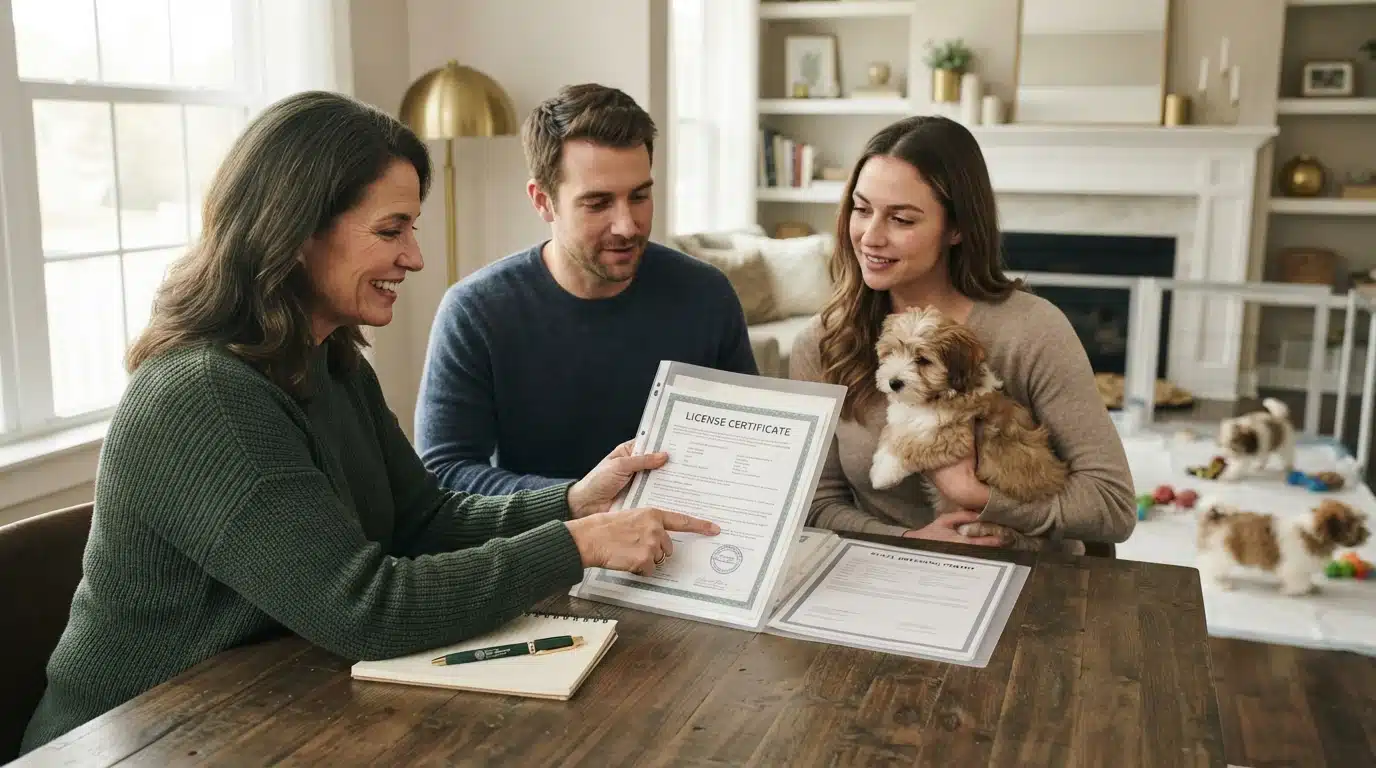
Utah has no state breeder license. Licensing happens at the city and county level instead, so rules change from one town to the next. Salt Lake City, for example, requires an annual dog breeder license under its animal services ordinance. Face-to-face sales also fall outside USDA licensing rules, which cover breeders who sell sight unseen or wholesale. This means a Utah seller can be fully legal with no state paperwork to show you.
Questions to Ask About Business Registration and Local Licensing
Ask before paying deposit money:
- Is your breeding business registered with the Utah Division of Corporations, and under what exact name?
- Does your city require a breeder or kennel license, and do you hold a current one?
- What is your physical address, and can I visit before paying anything?
- Do you issue a dated receipt for the deposit?
Utah’s own rules note that it has no state breeder license or fee, with local cities setting their own requirements. Salt Lake City’s breeder license code is public record, so a real answer is easy to confirm.
How to Verify the Seller in Five Minutes
A solid written answer includes an exact legal name, a matching address, and a license number where one applies. Here is the quick check:
- Search the seller’s name in Utah’s business registry and confirm the entity is active.
- Call or check the city clerk to confirm any local breeder license.
- Match the name on the deposit receipt to the registered business name.
If those three items line up, you are paying a real, reachable business rather than a phone number.
Step 2: Get the Deposit Terms in Writing Before You Pay
Verbal promises fade fast once money moves. Before you pay a puppy deposit, ask the breeder to put the terms in a message or contract you can keep. This is how to pay a puppy deposit safely: confirm the terms first, then send the payment.
The Four Documents to Request in One Message
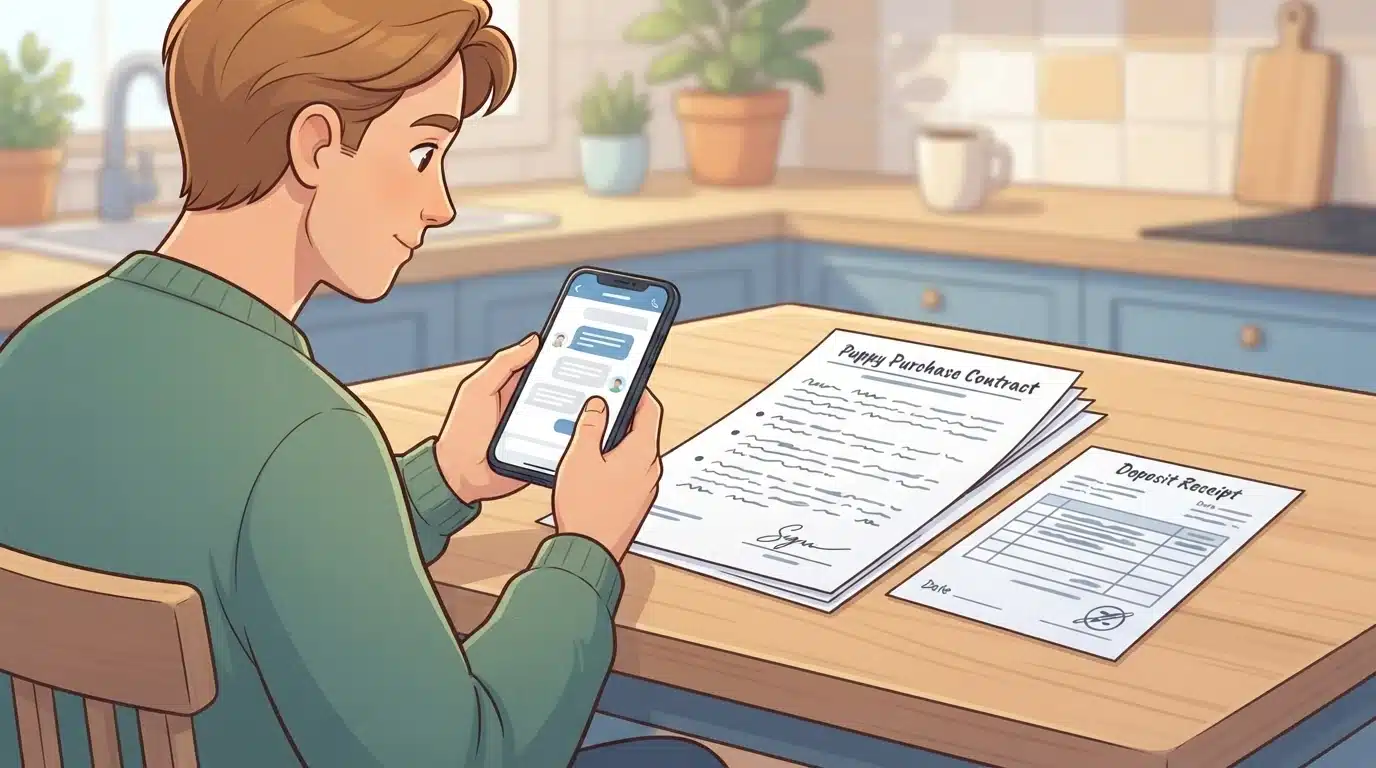
Send one short message asking for four things:
- The full purchase contract
- The deposit receipt format they use
- Their health guarantee and vet exam terms
- Pickup or delivery terms with dates and balance due
A breeder who answers all four quickly is showing you how they handle everything else, too.
What Utah’s Deposit and Refund Rules Ask For
Utah sets a clear baseline for deposits. Under Utah Admin. Code R152-11-10, every deposit a supplier takes must be backed by a dated receipt given to you at the time of the transaction. So your receipt should show:
- The date of payment
- The amount you paid
- What the deposit holds, such as the puppy’s name or litter
- The refund terms that apply
A blanket “non-refundable” line in a contract does not erase what the rule requires, so keep that receipt even after pickup.
The Six Clauses a Complete Agreement Contains
A complete written agreement covers:
- Deposit amount and what it applies toward
- Refund terms, including what happens if your vet exam fails
- Pick and pass clause, or what occurs if you decline your pick
- Balance due date and accepted payment methods
- Delivery or pickup terms, dates, and who pays fees
- Ownership transfer, including registration paperwork
Compare terms side by side before deciding, since deposit and contract practices in Utah vary from breeder to breeder.
Step 3: Ask the Refund and Cancellation Questions That Decide Your Money
Ask these questions to ask before paying deposit money, and get every answer in writing. Verbal promises about refunds are hard to prove later, so send the questions by text or email and keep the replies.
The Refund Questions to Ask in Writing
Send these five questions together:
- Under what exact conditions is my deposit refunded in full?
- Which conditions make it nonrefundable, and are those words printed in the contract?
- If the puppy fails my vet exam, what happens to the deposit and the balance I already paid?
- What is the deadline for the vet exam, and who pays for it?
- What is the balance due date, and what happens if pickup slips past it?
A good answer names each condition and points to the clause number. “You’ll get it back, don’t worry” is not a good answer. Dogs are legally treated as goods in a sale, so a written agreement is what you can actually enforce if things go wrong, as this legal Q&A on puppy deposit contracts explains.
Seller-Caused and Buyer-Elected Refunds Are Different Things
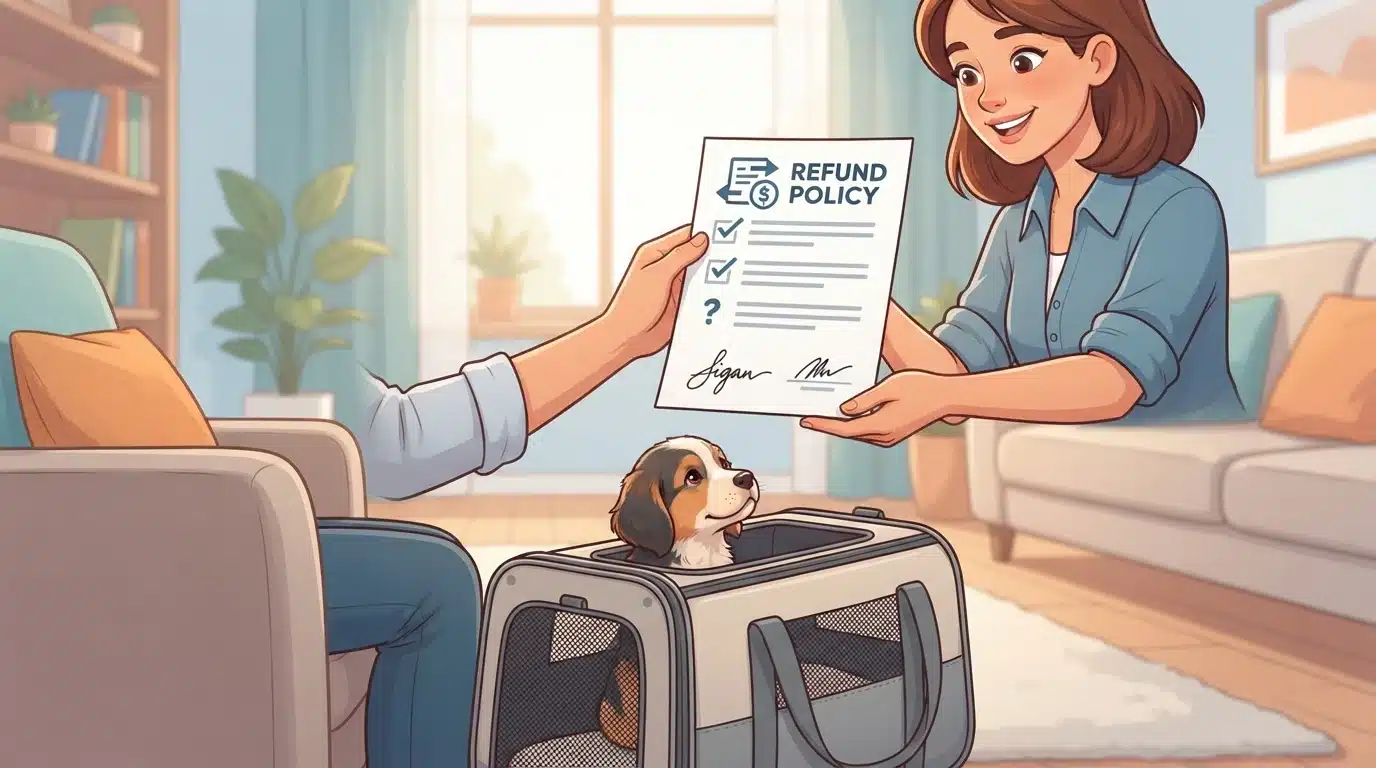
- Seller-caused refund: the breeder cancels, the litter is smaller than planned, or no puppy is available. A fair seller returns the deposit, usually within a set number of days.
- Buyer-elected refund: you change your mind. Many contracts call the deposit nonrefundable here, though some refund part of it. State rules vary, and state-by-state deposit rules show how much terms can differ.
Can I get my deposit back if the breeder cancels or has no puppy? Yes, in a fair deal. Seller-caused cancellations should return your money; buyer-elected cancellations usually do not unless the contract says so.
The Question That Ends Most Negotiations
Ask this: “If you cancel or have no puppy, by what date will my deposit be refunded, and how?” A serious breeder answers with a number of days and a payment method. A vague or defensive reply tells you where you stand, and it costs you nothing to walk away before money moves.
Step 4: Ask the Health, Records, and Ownership Questions
Questions About the Puppy’s Own Records
Ask for paperwork in writing, not over the phone. Good questions include:
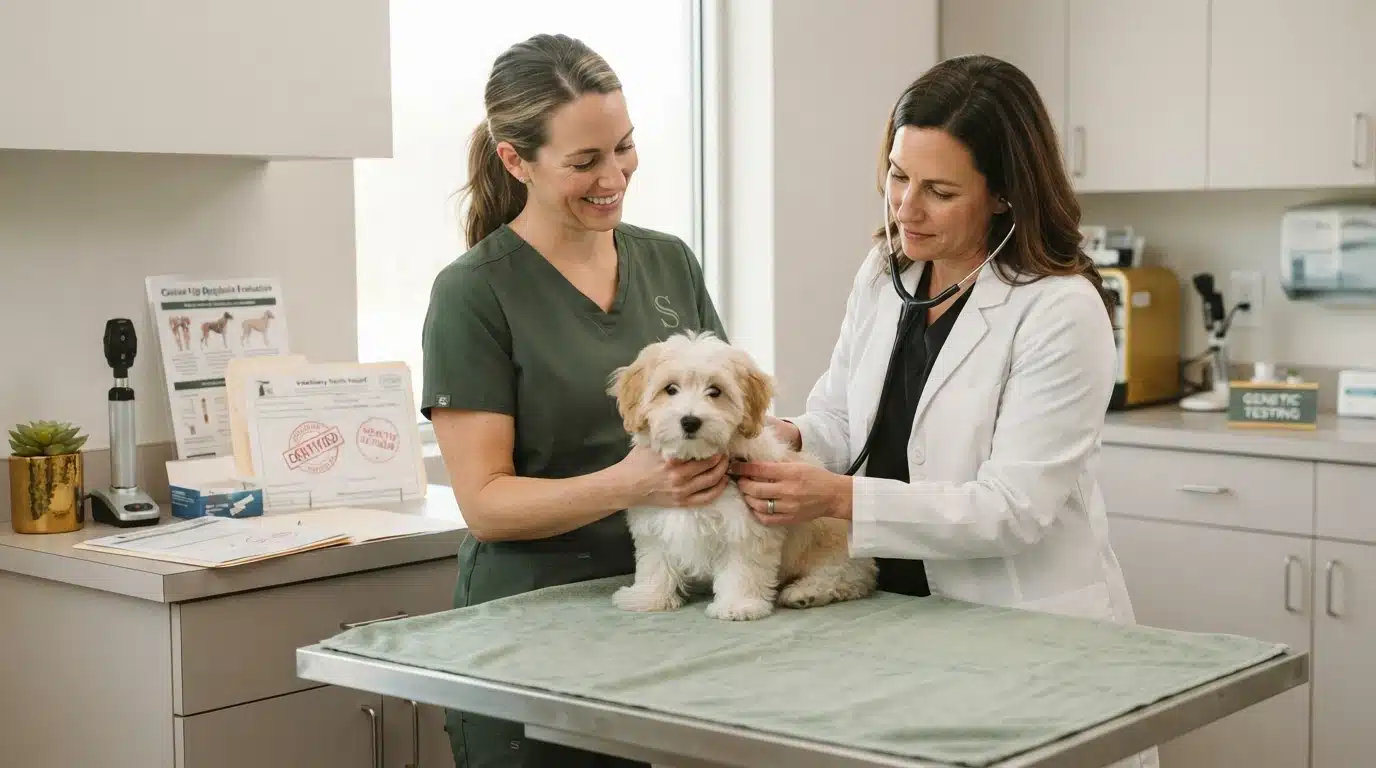
- Has a licensed veterinarian examined this puppy, and can you share that record?
- Which vaccines were given, on what dates, and which are still due?
- What deworming was used, and when?
- Do you microchip, and is the chip already registered?
- When is the puppy’s next vet visit, and who covers it?
A serious breeder answers these the same day. If a vendor hesitates to send a dated vaccine record, treat that as a warning sign before your money moves.

Questions About Parent Screening and DNA Results
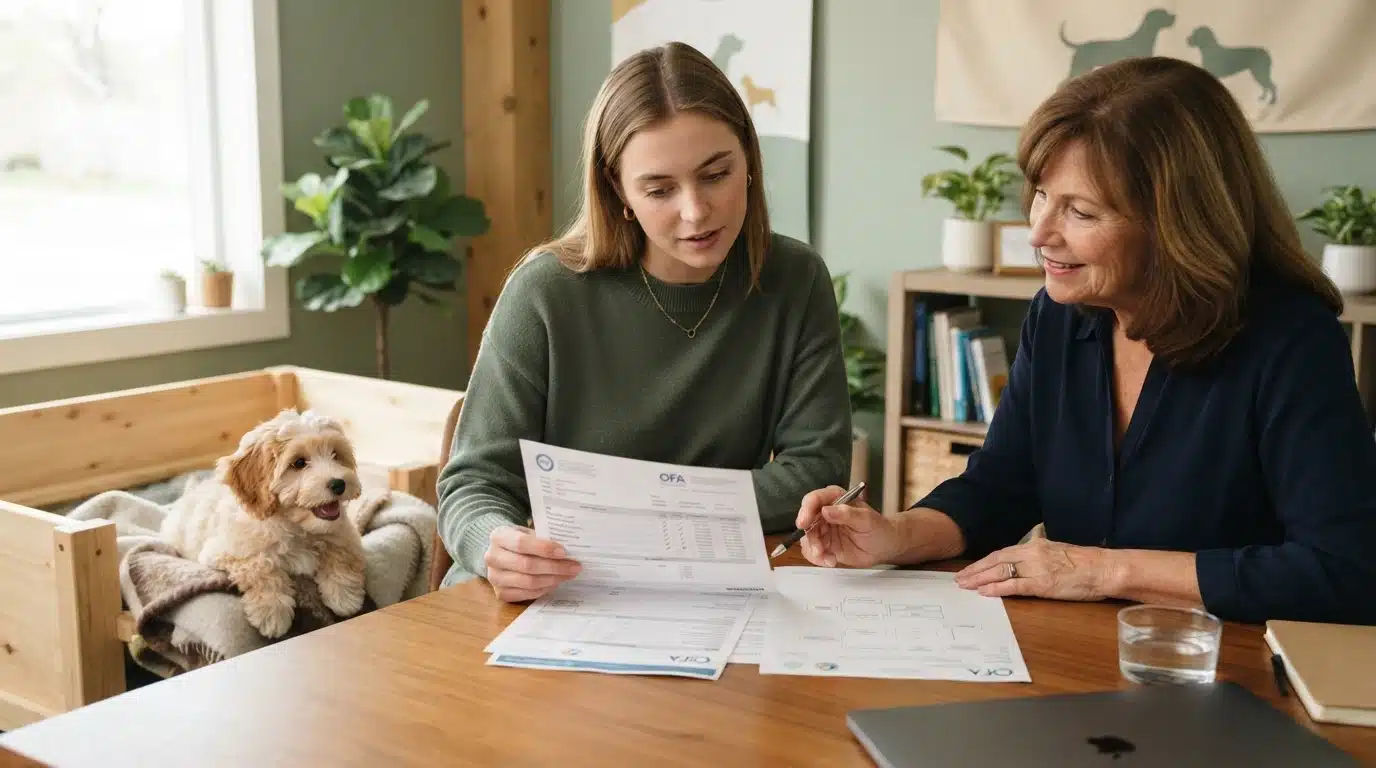
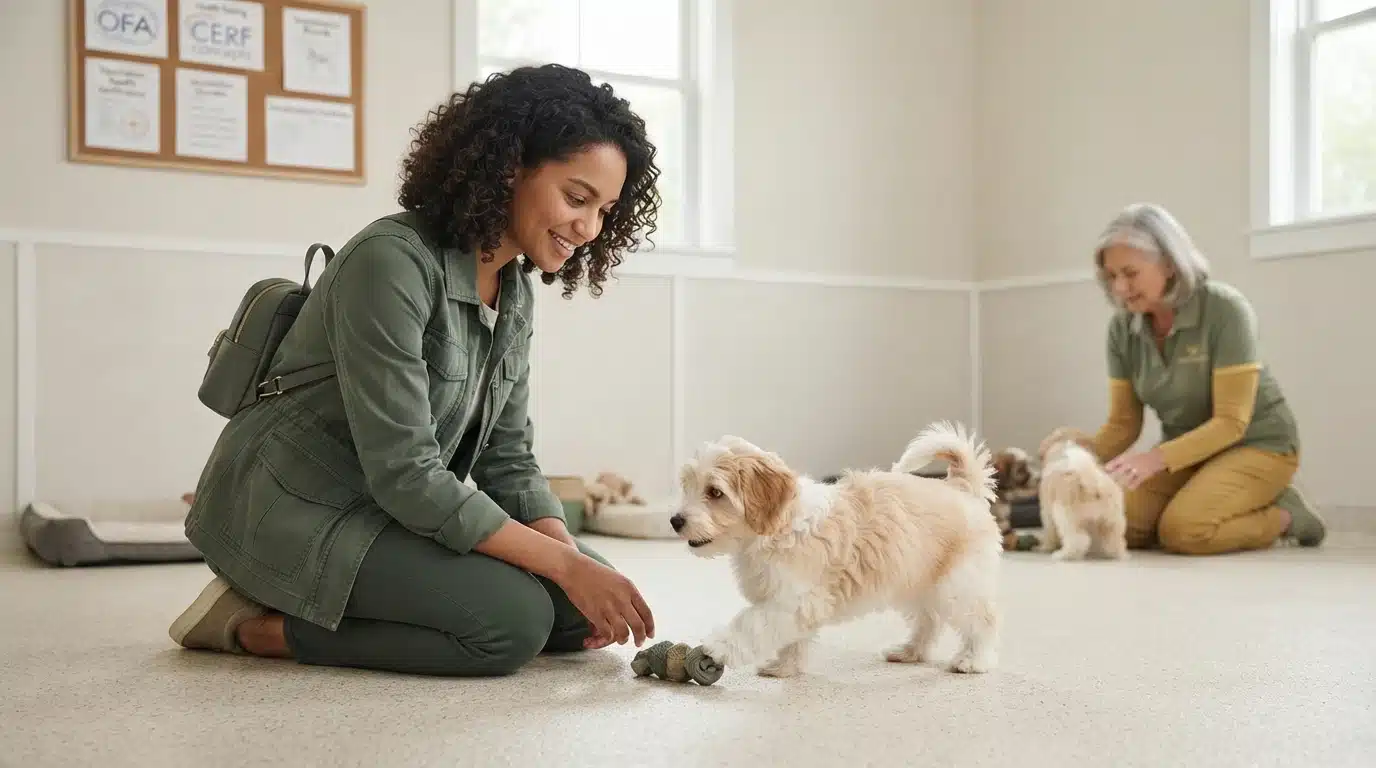
The puppy’s papers tell part of the story. The parents’ test results tell the rest. For Havanese lines, the breed club’s guide lists OFA patella and eye screening among the core tests, so ask which tests each parent passed and at what age. Then ask for proof you can verify yourself, because results can be checked in the public OFA database.
For Havapoo and Cavapoo litters, ask which DNA panel the parents took and whether any disease markers came back as carriers. A written answer listing the exact test names, dates, and outcomes beats a promise that “both parents are healthy.”
Questions About Ownership, Registration, and Paperwork
Last, confirm who actually owns the puppy and what you will receive. Ask:
- Is the puppy owned outright, or is a co-ownership or guardian arrangement in place?
- What registration papers apply, and when do you hand them over?
- Does the written agreement include a spay or neuter requirement, and with what deadline?
- What happens if the puppy’s vet exam fails after pickup, and is the puppy deposit refunded in that case?
Get each answer into the contract or a signed message before you pay anything. When a breeder, including smaller programs like Sage Puppies, explains how its health testing records are documented, you can compare that standard against anyone you are talking to.
Step 5: Ask About Timing, Pickup, and Delivery
Timing Questions to Put in the Contract
Ask exactly when the puppy can go home. Then ask what date the balance is due and what happens if you miss it. A clear contract states the go-home window, the payment deadline, and who keeps the puppy if a date slips. Get the answers in writing before you pay anything, since timing disputes are common after a deposit changes hands.
Also ask when you can visit or see updated photos. Reputable breeders welcome this. Ask what triggers a delay, such as a litter arriving late or a health hold, and who covers costs if the wait stretches. Put each answer in the written agreement, not in a text you cannot enforce later. Some programs, including Sage Puppies, set these dates during matching so buyers know the plan up front.

Delivery, Travel, and Extra Costs
Decide between pickup and delivery, then price both. Ask who travels, who pays, and what the flight or ground transport costs. You can compare options in this overview of puppy delivery versus pickup.
Ask how the puppy will travel: crate size, food, water, and any health certificate the airline requires. Finally, confirm what you pay at handoff and get the receipt then.
Step 6: Pay the Deposit Using a Method That Leaves a Paper Trail
Knowing how to pay a puppy deposit comes down to two things: a written amount you both agreed to, and a payment record you can trace. Verbal deals and cash vanish the moment a dispute starts.
What to Ask About Deposit Amount First
Ask directly: how much is the deposit, is it part of the full price or extra, and what date is the balance due? Get each answer in writing before you send money. There is no Utah law fixing a deposit amount, so most breeders set their own. Many reputable programs ask $300 to $500, and boutique programs charge more; Sage Puppies, for example, applies deposits toward the full purchase price. What matters is not the number but that it matches the contract exactly.
Payment Methods and What Each One Actually Gives You
| Method | Paper Trail | Risk If Things Go Wrong |
|---|---|---|
| Credit card | Statement plus lender records | You can file a credit card dispute for a puppy deposit |
| PayPal goods and services | Transaction record | Buyer protection may apply |
| Zelle or wire | Bank record only | Little recourse once sent |
| Cash | Nothing unless you get a receipt | Weakest position by far |
Pay only after your written agreement names the deposit amount, refund terms, and pickup date.
Under Utah Admin. Code R152-11-10, every deposit must be backed by a dated receipt given at the time of payment. If a breeder hesitates to provide one, treat that as an answer.
The Paperwork to Keep From the Moment You Pay
Save four things: the dated receipt, the signed contract, your payment confirmation, and any messages confirming refund terms. Keep copies outside your phone, such as email or cloud storage. If a dispute ever arises, this file is your case.
Common Mistakes to Avoid
Paying on Excitement Before the Contract Arrives
A puppy photo can move your heart faster than your judgment. Some buyers send money the same day, then discover the puppy purchase contract clauses they cared about were never in writing. Slow down for one business day. Know exactly how to pay puppy deposit money safely, because the FTC warns that scammers push gift cards, wire transfers, and payment apps, which leave you no way to reverse a charge when a deal goes bad.
Accepting a Verbal Refund Promise
“Yes, the deposit is refundable” means little once money changes hands. Ask before paying deposit funds whether refunds appear in the written agreement, including a puppy deposit refunded if the vet exam fails. Get the exact terms, the timeline, and any pick and pass clause on paper. If a seller resists putting refund terms in writing, treat that as your answer. A credit card dispute for a puppy deposit is far easier when the terms were documented up front.

Ready to bring a Havanese, Havapoo, or Cavapoo home? Sage Puppies walks Utah families through every deposit question, in writing, before money moves. Visit sagepuppies.com to review the application, current litter information, and pricing details. Your deposit goes toward the full purchase price, and you will get clear answers at each step, not verbal promises. Wisely Bred. Beautifully Loved.
Frequently Asked Questions
Q1: What questions should I ask before paying a puppy deposit in Utah?
Ask who the seller legally is, whether their city license and Utah business registration are active, and what refund, health, and pickup terms appear in the written agreement. Get a dated receipt when you pay.
Q2: How much should a puppy deposit be when buying a puppy in Utah?
Utah sets no fixed amount. Many reputable breeders ask $300 to $500; boutique programs charge more. Confirm in writing whether the deposit applies toward the full purchase price.
Q3: Can I get my deposit back if the breeder cancels or has no puppy?
- Seller-caused refund: the breeder cancels or no puppy is available, so a fair seller returns your deposit within a set number of days.
- Buyer-elected refund: you change your mind, and many contracts call the deposit nonrefundable unless the written terms say otherwise.
Q4: Does Utah require breeders to have a state license?
No. Utah issues no state breeder license, so check city licensing, such as Salt Lake City’s breeder ordinance, plus the Utah business registry.
Q5: What should a dated deposit receipt include?
The payment date, amount, what the deposit holds, and the refund terms that apply. Keep it even after pickup.
Conclusion
Utah gives you no state breeder license to lean on, so your protection comes from what you confirm yourself. Verify the seller through the Utah business registry and local licensing, then get refund terms, health records, ownership, and pickup dates in writing before you pay. Utah’s dated receipt rule gives you a paper trail; your payment method choice decides how strong it is.
None of this promises a refund outcome. It does something more useful: it shows you which sellers answer clearly and which ones stall. A breeder who sends the contract, names the refund conditions, and issues a dated receipt on request is telling you how the whole relationship will go. Ask first, pay second, and keep every document.