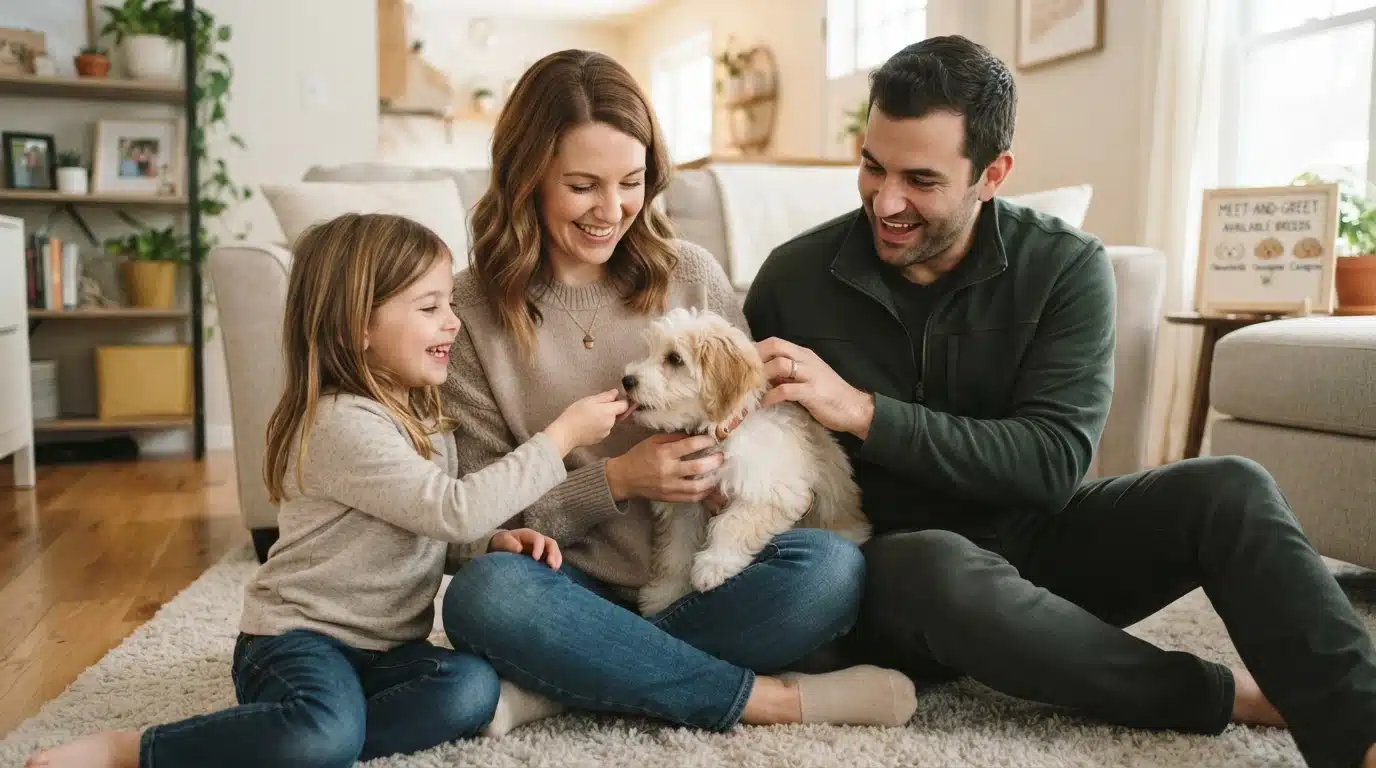
Quick Summary: Sage Puppies fits most apartment households because it focuses on Havanese, Havapoo and Cavapoo puppies that typically reach only 7 to 20 pounds, shed little and need modest exercise. Home Raised Puppies is the better choice if you specifically want a Goldendoodle or prefer its lower $3,250 to $3,500 starting price, though Goldendoodles may become much larger and need more space. Before choosing, compare your budget, lease weight limit and work schedule, then request specific health records and deposit terms in writing.
If your lease allows a dog but your walls are thin and there is no yard, the winner is not the breeder with the nicer website. It is the puppy whose breed, energy and coat you can actually live with. Our honest answer: Sage Puppies fits most apartment households because it raises only Havanese, Havapoo and Cavapoo companions. Home Raised Puppies is the better pick if you specifically want a Goldendoodle or a home raised puppy apartment match in the $3,250 to $3,500 range. Both Utah programs look credible online, but generic breed lists will not tell you which delivers a dog that suits a small space, a work schedule and close neighbors. We compared adult size, noise, alone time, grooming, full cost and health testing, then built this guide to the real needs of first-time puppy owner apartment life.
Sage Puppies vs Home Raised Puppies for Apartments: At a Glance
| Sage Puppies | Home Raised Puppies | |
|---|---|---|
| Breeds Offered | Havanese, Havapoo and Cavapoo only | Goldendoodle and Havapoo |
| Adult Size and Apartment Fit | Small companion breeds, typically 7 to 20 pounds | Havapoo small; Goldendoodles vary widely and often land larger |
| Noise and Barking Tendency | Generally moderate; Havanese most alert, Havapoo and Cavapoo typically calmer | Breed dependent, Goldendoodles often more energetic and vocal |
| Price and Deposit | $3,500 to $4,500, deposit and reservation details on the pricing page | $3,250 to $3,500, $500 deposit holds the puppy |
| Health Testing and Screening | Health-tested parents with published health and screening information | Embark DNA health panel on every parent dog |
| Pickup and Delivery | South Jordan, Utah pickup plus nationwide delivery | Eagle Mountain, Utah pickup or in-cabin flight nanny to major U.S. airports |
How Sage Puppies and Home Raised Puppies Compare
Sage Puppies
Sage Puppies is a boutique program in South Jordan, Utah that raises Havanese, Havapoo and Cavapoo puppies only, with owner-managed applications and nationwide delivery. It suits apartment dwellers who want small companion dogs, typically 7 to 20 pounds, from health-tested parents.

Key strengths
- Three proven apartment friendly puppies breeds in one place
- Health-tested parents with published screening details
- Pickup in Utah or delivery across the U.S.
Home Raised Puppies
Home Raised Puppies is a Utah breeder in Eagle Mountain offering Goldendoodle and Havapoo puppies from health-tested parents, with pickup or in-cabin flight nanny puppy delivery. It fits buyers drawn to a home raised puppy apartment setting, though Goldendoodle apartment suitability varies because adults often land larger. Puppies are priced at $3,250 to $3,500, and a $500 deposit holds the puppy.

Key strengths
- Embark DNA health panel on every parent dog
- Lower starting price with a fixed deposit
- In-cabin flight nanny to major U.S. airports
Is It Better to Get a Sage Puppy or a Home Raised Puppy for an Apartment?
The short answer for apartment households
For most apartments, a small companion breed fits better than a larger home raised puppy. Sage Puppies raises only Havanese, Havapoo and Cavapoo litters, so every puppy is small by design. Pick a home raised program if you want a Goldendoodle or a specific parent dog you can visit. Pick a small breed program if quiet, compact and easy to lift matters more.
- Sage leans small: 7 to 20 pounds as adults, which suits stairs and elevators.
- Home raised wins when a specific breed or a meet-the-parents visit drives your choice.
- Both can work; size and noise tolerance decide it.

Three variables that decide it before you look at any puppy photos
- Adult size. Small breed puppies for apartments handle tight hallways and shared walls better than large mixes.
- Noise. Some breeds bark less; temperament testing and early socialization matter more than the breeder’s label.
- Alone time. Match the puppy’s expected independence to your actual workday, not your ideal one.
What changes if you rent versus own
Renters face pet deposits, weight limits and breed rules in the lease, so a small, quiet dog keeps more doors open. Owners mainly manage their own noise and space limits. Either way, apartment puppy training basics apply from day one.
Breed Mix and Adult Size: Where the Two Programs Diverge
The easiest apartment puppy here comes down to size you can predict. Sage Puppies sticks to Havanese, Havapoo and Cavapoo, small companion breeds that land between 7 and 20 pounds. Home Raised Puppies breeds Havapoos plus Goldendoodles in petite, miniature and medium sizes, so adult weight depends heavily on which parents are behind the litter.
Three companion breeds versus a mix that includes Goldendoodles
One program stays narrow. Its three breeds were all developed as companions, so temperament and size stay fairly consistent. The other pairs home-raised Havapoos with Goldendoodles, which brings more variety and more guesswork. If you want a predictable small dog, the narrower list helps. If you want a Goldendoodle specifically, only one program offers one.
Why adult size prediction matters in a small space
A 15-pound Havapoo fits a studio, an elevator and a carrier under an airplane seat. A medium Goldendoodle can top 40 pounds, which changes everything: crate size, stairs, lap space and how much exercise the dog needs indoors. In apartments, the smaller predicted range usually means fewer problems later.
Coat type and how much hair lands in a small home
All these mixes trend toward low-shedding, wavy coats, but none are maintenance-free. In a small space, brushing happens on your couch and grooming visits matter more. Havanese coats need regular combing; doodle coats mat without trims every six to eight weeks. Budget for grooming either way.
Noise, Barking and Close Quarters
Thin walls turn a barking habit into a neighbor problem fast. The good news: all three of these breeds can live quietly in an apartment, but they get there in slightly different ways.
Which of these breeds is the quietest in a building
Havanese tend to alert-bark: they watch the door and announce visitors, then usually settle. The AKC breed profile notes they take watchdog duty seriously but generally keep barking in check. Havapoos and Cavapoos often inherit a softer voice from the poodle side, though individual dogs vary more than breeds do. Ask to hear the parents; a calm dam usually raises calm puppies.

How socialization to household noise changes barking
Puppies raised inside a busy home hear doorbells, TVs, vacuums and kids before they ever meet you. That early exposure teaches them hallway sounds are normal, so they react less. A kennel-raised puppy meeting elevator dings for the first time at twelve weeks will startle more, and startled puppies bark. When comparing breeders, ask where the puppies sleep and what they hear daily.
Talking to neighbors and protecting your deposit
Give your neighbors a heads up before the puppy arrives, and share your number so small issues never reach the landlord first. The first two weeks matter most: train a quiet cue early, and never leave a new puppy alone to cry through the night. If your lease mentions pets, keep your puppy deposit and reservation paperwork handy, since many buildings require a pet addendum. Our guide to small breeds for apartments covers lease questions in more depth.
Exercise Needs and Hours Your Dog Spends Alone
Daily walks versus daily mental work
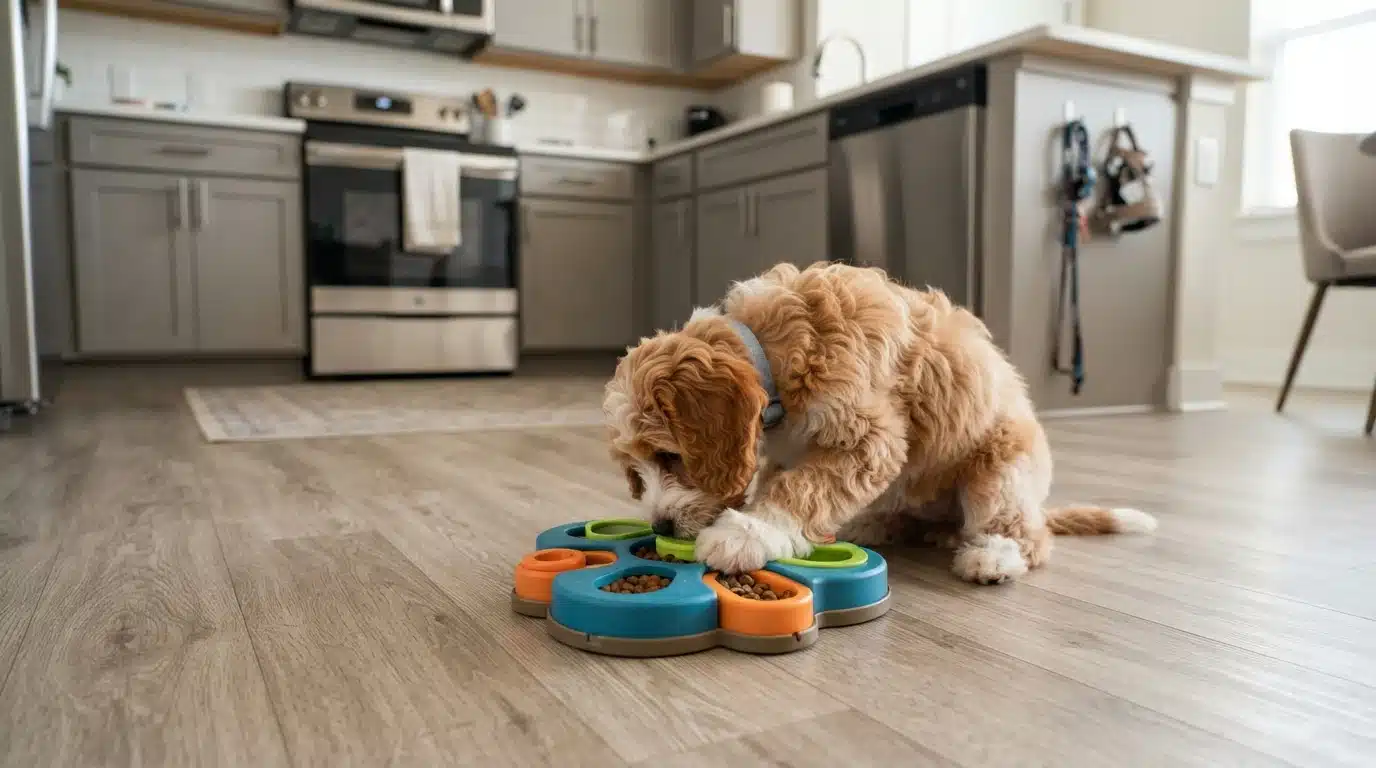
A Havanese, Havapoo or Cavapoo needs modest walks: two short outings a day usually cover it. Mental work matters more in an apartment. Food puzzles, short training sessions and sniffy walks tire a small dog faster than distance. Ten minutes of brain work often beats a long block walk.
What a workday alone really looks like
Be honest about your schedule before you commit. An adult can manage six to eight hours with a midday break or dog walker. A young puppy cannot; bladders and patience run out around three or four hours. Plan time off, a neighbor, or daycare for the first months. Crate training helps here, and the brand’s guide to crate training a Havanese puppy walks through the steps.
Stairs, elevators and the first months
Stairs are hard on puppy joints, so carry a small breed up and down until growth plates close. That is easy with a 7 to 20 pound dog. Elevators add noise and strangers, so treat rides as short training outings. Many first-time puppy owners in apartments find this lifting phase brief but tiring.
Grooming, Shedding and Keeping a Small Home Clean
Shedding load in a small space
All three breeds shed very little, which is the main reason they work so well in apartments. Havanese carry a silky double coat, while Havapoo and Cavapoo coats lean curlier and hold loose hair until you brush it out. Less hair on the couch, fewer sweep-outs, and no lint roller ritual before guests arrive.
Grooming frequency and who handles it
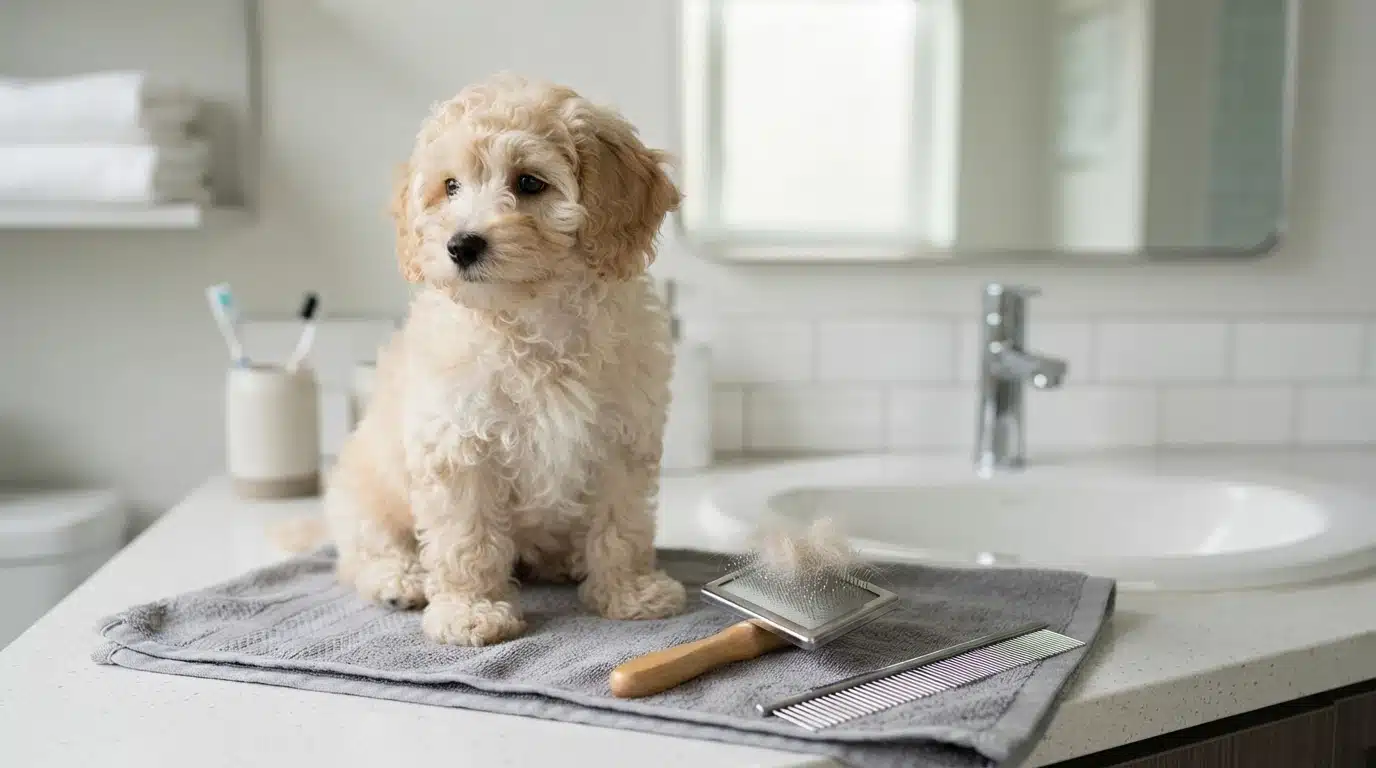
Brushing does the real work. Plan on two to three sessions a week for a Havanese, and closer to daily brushing for a curly Havapoo or Cavapoo, since those coats mat fast. Per a Havapoo grooming guide, most owners also book a professional haircut every four to eight weeks. Fifteen minutes at a small table beats a full groom room.
Budgeting year one of coat care
Set aside a grooming kit upfront: slicker brush, comb, puppy shampoo, nail clippers, around $75 to $150 total. Then add professional trims. Six to eight visits a year at roughly $60 to $90 each puts year one near $500 to $800, though mobile groomers and city salons often charge more. Label these as budget examples and check local prices before you commit.
Coat notes reflect general breed guidance for these mixes, not a grooming guarantee.
Price, Deposits and the True Cost of an Apartment Puppy
Published price bands side by side
A small breed puppy from Sage Puppies costs $3,500 to $4,500, while Home Raised Puppies lists puppies at $3,250 to $3,500. Both bands sit in the normal range for health-tested Havanese, Havapoo and Cavapoo programs, so treat the gap as roughly one modest grooming-kit purchase.
| Program | Puppy Price | Total-Cost Notes |
|---|---|---|
| Sage Puppies | $3,500 to $4,500 | Deposit and reservation details listed on the pricing page |
| Home Raised Puppies | $3,250 to $3,500 | A $500 deposit holds the puppy |
Deposits, reservations and the application process
Sage runs an application first, then owner-managed matching, so the deposit conversation happens after your home and apartment setup fit the breed. Current bands, reservation steps and payment timing sit on the pricing and reservation page. Home Raised uses a simpler route: a $500 deposit reserves the puppy once you choose.
Costs that outlast the puppy price
The purchase price is only the opening bill. Budget for the grooming kit at $75 to $150, six to eight professional grooms a year near $500 to $800, food, vet visits, and an emergency reserve. Those recurring costs dwarf the price difference between the two programs.
Health Testing, Records and Breeder Support
What each program publishes about parent health
Both programs describe their parents as health screened, but the detail level differs. Sage keeps its program small and owner-run, so Cassie can talk you through each named parent’s screening and DNA results directly. Home Raised lists parent information on its site, though you should confirm which tests each parent actually has. Keep three records separate: the puppy’s exam history, each parent’s clinical screening, and DNA panel results.
Questions to ask before you pay anyone
Ask which specific tests each parent completed, when, and the actual results. For Havanese lines, current CHIC requirements include annual eye exams, hips and patellas, so ask for proof rather than a blanket “health tested” claim. Request the puppy’s vet exam date, vaccines given, and deworming schedule in writing. A breeder who shares records happily is easier to trust than one who resists.
Support after the puppy comes home
Support matters most in week one, when a condo puppy cries at 2 a.m. Ask both programs: Can I text photos or questions? What happens if a health issue appears in the first days? Sage’s small scale means Cassie stays involved after go-home day. Whoever you choose, get the support terms in writing before your deposit leaves your account.
Which Should You Choose: Sage Puppies or Home Raised Puppies?
Both programs raise healthy, well-socialized puppies. The right pick comes down to breed, size and how each process fits your life in a condo or apartment.
Choose Sage Puppies if
You want a small companion breed that thrives in tight quarters. Sage Puppies focuses on Havanese, Havapoo and Cavapoo litters only, with adults that land between 7 and 20 pounds. That means easier stair climbs, a smaller crate, and a dog that fits under an airline seat. You also get health-tested parents, an application and matching process, and delivery options for families outside Utah. Pick this route if breed predictability matters more to you than the lowest price.
Choose Home Raised Puppies if
Your heart is set on a Goldendoodle, or you simply want the lower entry price. Home Raised lists puppies at $3,250 to $3,500, and a $500 deposit reserves your pick. Just weigh the size honestly first. A medium Goldendoodle can top 40 pounds, which changes crate space, elevator etiquette and daily exercise needs. Ask which litters are actually small, because “home raised puppy apartment fit” depends on the adult weight, not the puppy you meet at eight weeks.
Your next step this week
Write down three numbers: your budget ceiling, the maximum adult weight your unit can handle, and the hours the puppy will be alone. Then compare each program’s current litters against those numbers. Request health-testing records from whichever breeder you contact, and confirm deposit terms in writing before you pay anything.

If a small, health-tested companion fits your condo life better, Sage Puppies can help. Browse current Havanese, Havapoo and Cavapoo litters, check pricing and deposit details, then submit an application so Cassie can match you with the right puppy.
Frequently Asked Questions
Q1: Is it better to get a Sage Puppy or a home raised puppy for an apartment?
For most apartments, yes to Sage Puppies: every puppy is a small companion breed. Choose Home Raised only if you want a Goldendoodle.
Q2: Are Sage Puppies good for apartments?
Yes. Adults stay between 7 and 20 pounds, shed little, and need modest walks, which suits stairs, elevators and close neighbors.
Q3: Which small breed puppy is easiest to raise in an apartment?
A Cavapoo or Havapoo usually works best. Both stay small, bark less than most, and settle quickly with early training.
Q4: How much does a Sage puppy cost?
Puppies run $3,500 to $4,500. Deposit and reservation details sit on the pricing page.
Q5: Can a puppy be left alone during a full workday?
Not at first. Young puppies need a break every three to four hours; adults manage six to eight with a midday visit.
Conclusion
For apartment life, size and temperament beat price. Sage Puppies fits most households because every puppy is a small companion breed, 7 to 20 pounds, from health-tested parents. Home Raised Puppies suits buyers set on a Goldendoodle or the lower $3,250 to $3,500 entry price. Decide with three numbers: your budget, your unit’s weight limit, and the hours your puppy will be alone. Then request health records and confirm puppy deposit and reservation terms in writing before you pay anyone.