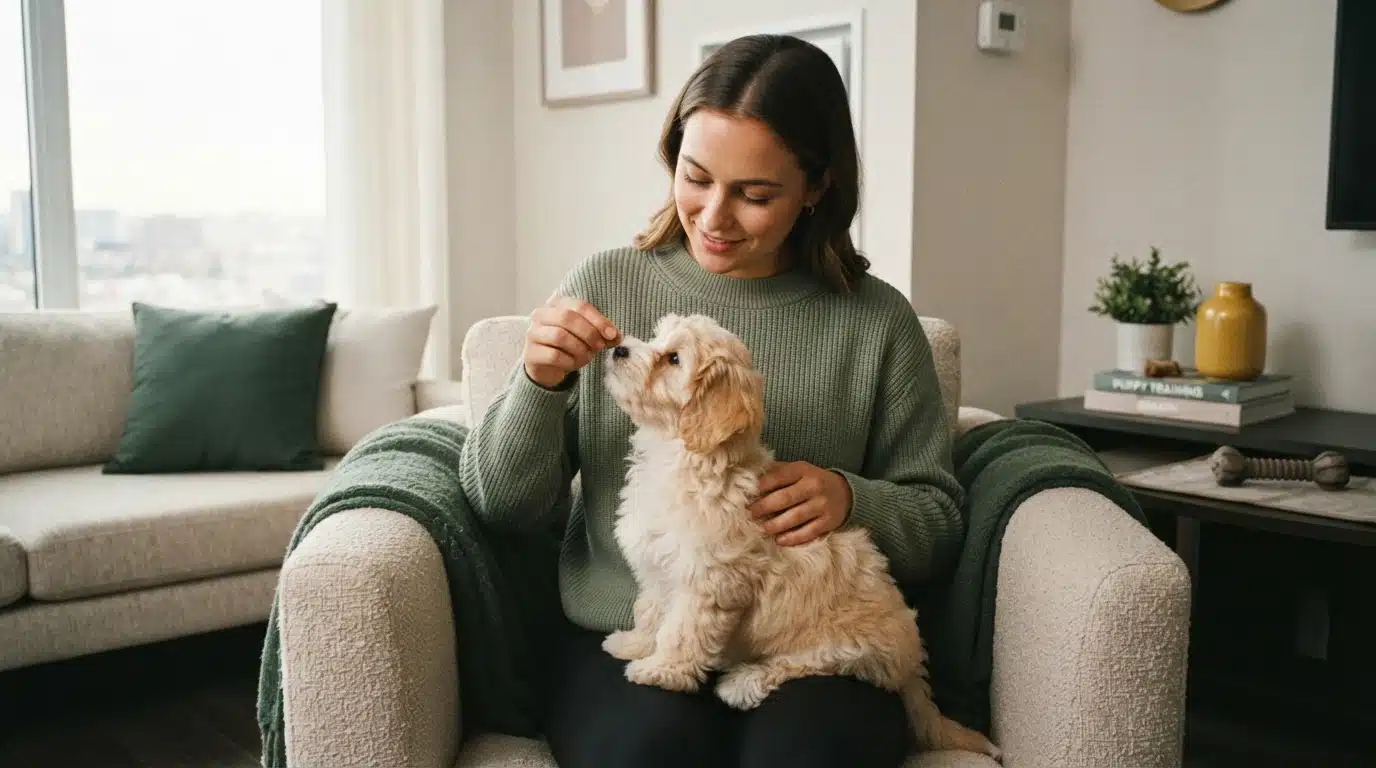
Quick Summary: The best small breed puppy for young children is calm, people-oriented, quick to recover from surprises, and comfortable around food, toys, and gentle handling. Havanese, Havapoo, and Cavapoo puppies often fit these traits, but breed labels alone do not guarantee a good match, so evaluate each puppy and the breeder’s socialization practices. Children under five must never be left alone with a puppy, and families should use gates, feed the puppy away from children, and teach gentle handling from day one.
A Havanese curled under a table while a three-year-old climbs over him looks like proof of a perfect family dog. It is often the start of a problem: the dog had nowhere to go, and the child had not learned that a resting dog means no touching. Most small dog and child incidents come from exactly that setup, not from a “bad” breed. So the real question is not which puppy looks patient but which temperament traits predict calm life with a toddler: noise sensitivity, how fast a puppy settles after excitement, sociability, play style, trainability, and how he feels about food and toys. This guide defines those traits, then rates Havanese, Havapoo and Cavapoo puppies against them as some of the best puppies for kids, with supervision rules parents can use from day one. It draws on the AVSAB socialization position statement, veterinary guidance, and Cassie Milar’s documented experience raising these three breeds at Sage Puppies in South Jordan, Utah.
What Temperament Traits Actually Matter in a Small Dog With Children
The calmest, gentlest small puppies show a few observable signs: they recover fast after a loud noise, they approach new people rather than hide, they pause and settle on their own during play, they relax when a hand takes their bowl away, and they watch a toddler calmly instead of jumping. These signs predict daily life far better than breed lists. The best puppies for kids are the individual puppies that pass this checklist.
Noise sensitivity and startle response
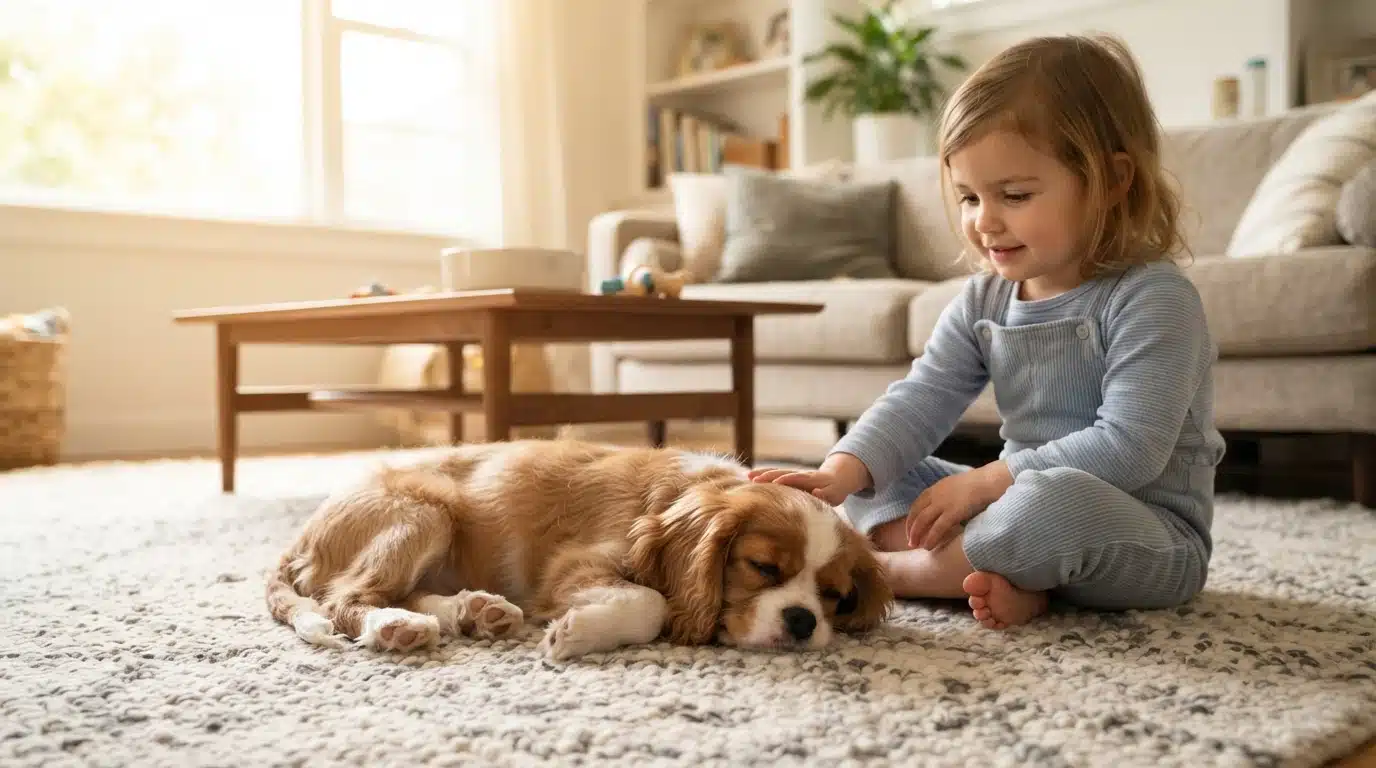
A toddler’s world is loud: dropped cups, shrieking, sudden doorbells. A puppy that freezes, bolts or growls at these sounds will struggle, no matter how sweet the breed. Watch how a puppy reacts to a pan clattering on the floor. The dog you want startles for a second, then returns to sniffing or playing. That recovery speed matters more than the startle itself, because every home with young kids produces dozens of small shocks each day. Gentle dog breeds for kids give you a head start, but noise recovery is still an individual trait. Ask a breeder which puppies in a litter bounce back from surprises and which ones stay rattled.
Sociability, play style and arousal recovery
Good signs include a puppy that walks toward a stranger’s outstretched hand and stays loose-bodied while doing it. Play style tells you more: soft mouths, play bows and frequent pauses point to a puppy that can live beside a crawling child. Then watch what happens when play gets exciting. Does the puppy settle within a minute or two, or does it stay amped and mouthy? Arousal recovery is the trait most parents overlook, and it matters most with calm puppies for toddlers, who move slowly and can be knocked over. The first three months of life carry the most weight here, because AVSAB’s socialization position statement identifies that window as when sociability outweighs fear.
Resource interest, trainability and the limits of breed labels
Resource guarding, stiffening or snapping when a person nears food or a toy, is the riskiest behavior in a home with a toddler on the floor. Test it early: drop a hand near the bowl while the puppy eats and note the reaction. Trainability is the trait you can grow, and steady progress on basics like leave-it and settle is realistic when you follow a plan such as how to train a small breed puppy. Breed labels help, but no label is a guarantee. Judge the puppy in front of you.
Which Small Breed Puppies Work Best for Children Under Five?
The small breeds that handle toddlers best share four things: a calm temperament, a high tolerance for clumsy handling, low noise sensitivity, and quick recovery after a startle. Havanese, Havapoo, and Cavapoo puppies check those boxes more reliably than most, but the puppy’s early socialization matters as much as the breed on paper. Any puppy raised without gentle exposure to children can struggle later, so ask how each litter was raised before you compare breeds.
The four traits that decide whether a small breed works with a toddler
- Arousal and recovery: the puppy ramps up in play, then settles fast instead of staying wound up
- Noise sensitivity: a dog that startles at every shriek stays on edge in a loud house
- Sociability: genuine interest in people, not just tolerance of them
- Resource interest: how likely the puppy is to guard food, toys, or stolen snacks
The AVSAB position statement on puppy socialization supports early, positive exposure during the first three months, when puppies form most of their lasting views about the world.
Small breeds families commonly consider, and the catch in each
| Breed | Strengths | The catch |
|---|---|---|
| Havanese | People-focused, sturdy for the size, quick to learn | Coat needs regular grooming |
| Cavapoo | Soft temperament, tolerant of gentle handling | Can be shy without early socialization |
| Havapoo | Playful but settles easily, trains fast | Energy varies by parent lines |
| Chihuahua | Tiny, easy to carry | Often intolerant of rough play and noise |
| Shih Tzu | Calm, affectionate lapdog | Stubborn about house training |
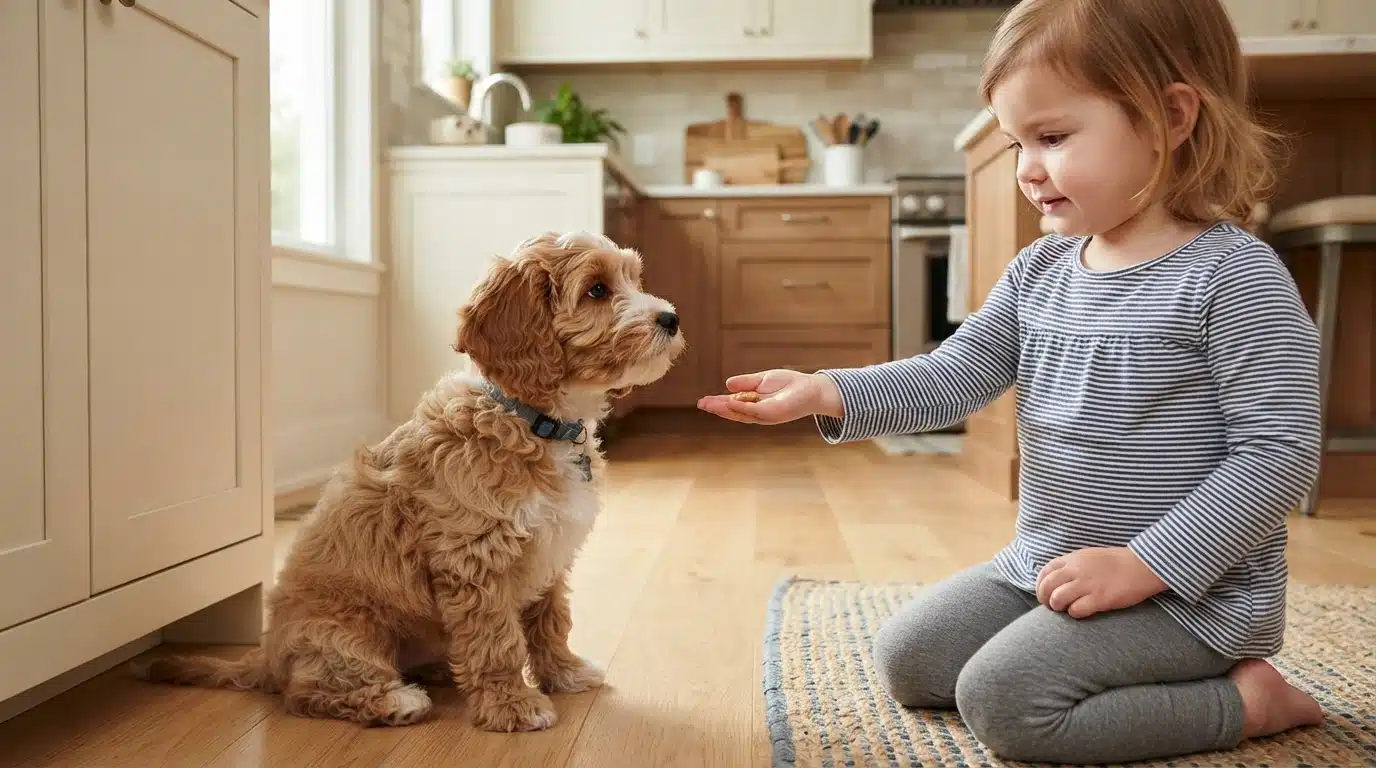
Chihuahuas and similar toy breeds often do poorly with children under five because they are small enough to injure and bold enough to snap when cornered. Larger, sturdier companions like the Havanese absorb an accidental bump and move on.
When a small breed is the wrong choice for your household
Skip a small companion breed if your children cannot follow gentle-handling rules, if nobody is home most of the day, or if a family member wants a running or hiking partner. A dog that gets dropped, squeezed, or constantly left alone learns to avoid children, and that setback is hard to undo.
How age changes the answer
A toddler’s needs differ from a seven-year-old’s. Under five, supervision and structure matter more than breed, because young children cannot yet read a dog’s signals. Match the puppy to the household you have now, not the one you expect in a few years.
Havanese, Havapoo and Cavapoo Temperament Compared for Family Homes
All three breeds rate among the best puppies for kids in a small package, but they reach that goal in different ways. Havanese are born clowns. Havapoos and Cavapoos mix poodle thinking with Cavalier softness, and each cross leans slightly differently. Here is how each one tends to behave in a home with a toddler.
Havanese puppies and young children
Havanese puppies are playful, gentle, and very good with children when raised with them, according to VCA Hospitals. They love being the center of attention and will follow kids from room to room. Their arousal levels rise fast during games, but they also settle quickly, which matters when a toddler shrieks or drops a toy. The main caveat is size: a sturdily built toy breed still needs gentle handling and adult supervision. If you want a deeper look at daily life with the breed, our Havanese family compatibility review covers temperament, care, and supervision in detail.
Havapoo puppies in a family with kids
Havapoos blend the Havanese’s sociability with poodle trainability. That mix usually produces a puppy that learns house rules fast and recovers from excitement without long zoomie sessions. Noise sensitivity runs low in well-socialized lines, so hallway crashes and crying babies bother them less than many small breeds. Watch play style, though: a Havapoo can outlast a preschooler at fetch, so you set the end point, not the dog. They want company, so plan for company most of the day.
Cavapoo puppies and busy households
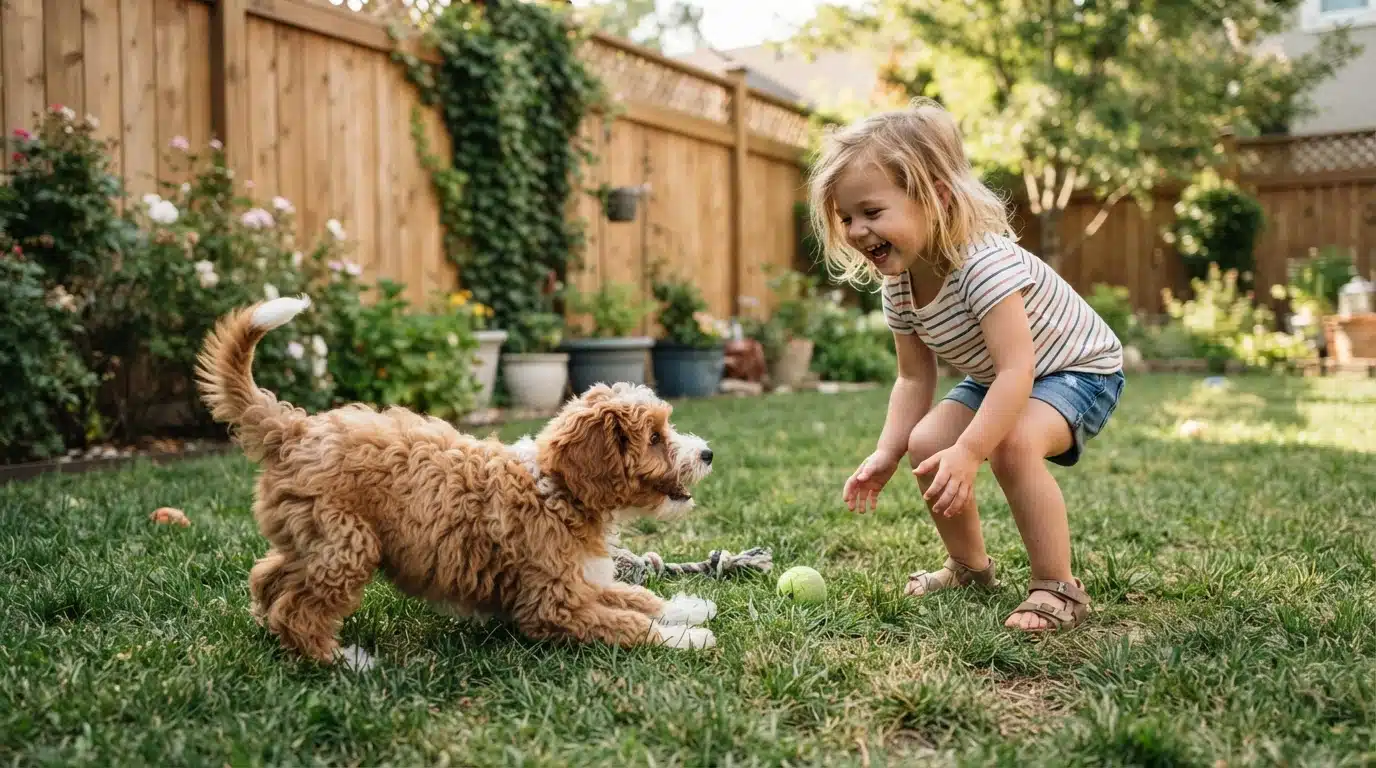
Cavapoos inherit the Cavalier’s soft, people-first nature, which is why they appear on so many lists of the best puppies for kids. They tolerate handling well and read the room, often resting at your feet during a noisy dinner instead of joining the chaos. The trade-off is a lower tolerance for being left alone, so busy households need a routine that includes company or short absences. Early socialization in the puppy window keeps their sensitivity low as adults.
Evaluating Temperament in the Individual Puppy Before You Commit
Breed traits set the range, but the puppy in front of you lands somewhere inside it. Ask a breeder about temperament using questions that test for specifics: How does this puppy recover when startled? Who handled the puppies, and how often? What happens when a puppy is near food or a favorite toy? A breeder who answers with concrete, everyday examples knows the litter far better than one who says only “they’re all sweet.” Treat vague answers as a reason to keep looking.
What to watch for during a visit or video call
Watch the litter for a few minutes before anyone picks a puppy up. You want to see how each one reacts to a dropped spoon, a new person walking in, or a sibling grabbing its ear. A good candidate notices, maybe startles, then goes back to play within seconds. That quick recovery matters more than boldness. Shy puppies can bloom, but a puppy that stays frozen or snaps needs an experienced home.
Questions to ask about early handling and household exposure
The puppy socialization window closes fast, so ask what the breeder did during it. Good answers include: puppies were handled daily by adults and supervised children, they heard household noise like vacuums and doorbells, and they met new surfaces and gentle strangers. Ask who lives in the breeder’s home and whether kids visited. Puppies raised in quiet, isolated spaces often need extra work with AVSAB-recommended socialization once home.
Health and paperwork questions that belong in the same conversation
Temperament and health travel together, so ask about parent health testing, vaccinations, deworming records, and any vet exam before pickup or delivery. Request the litter’s vet contact and a written health record you can hand your own vet. And ask the breeder what support looks like after you take the puppy home, because a program that documents its process, as Sage Puppies does, makes those answers easy to verify.
Setting Up the Home for a Small Puppy and a Young Child
The right setup does most of the safety work before either child or puppy has a bad moment. A small breed puppy good with children under five still needs a home that separates the two when nobody is watching.
Zones, gates and a safe place to retreat
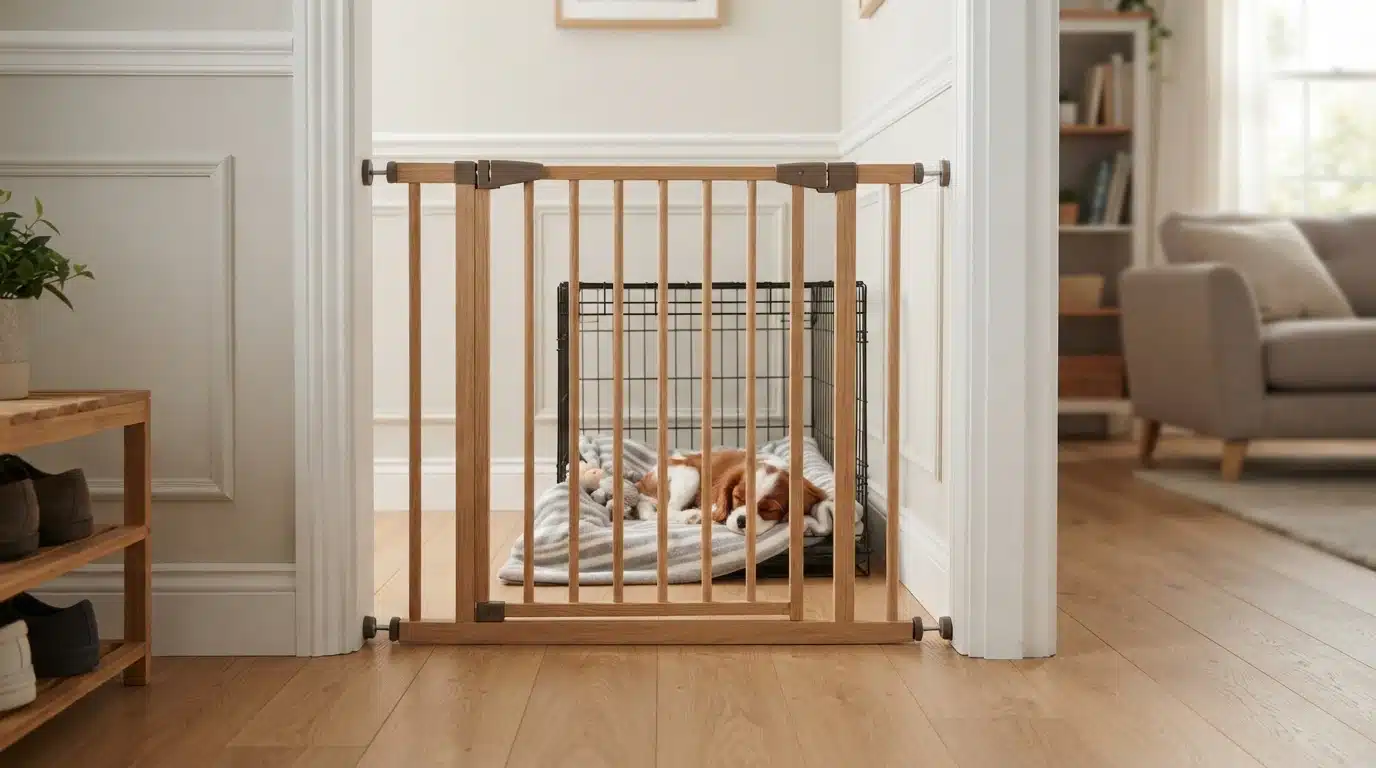
Start by dividing the house. A baby gate blocks the puppy from the playroom, and a second gate can keep a toddler out of the puppy’s zone during meals. The crate or playpen belongs in a quiet corner: it is the puppy’s room, not a punishment spot. When the house gets loud, a Havanese or Cavapoo can walk away and nap without being followed. Doorway gates cost little and prevent most chasing accidents. Before puppy day, walk your home at knee height and pick up cords, small toys and anything swallowable, as a step-by-step puppy-proofing checklist covers in detail.
Supervision rules that match the child’s age
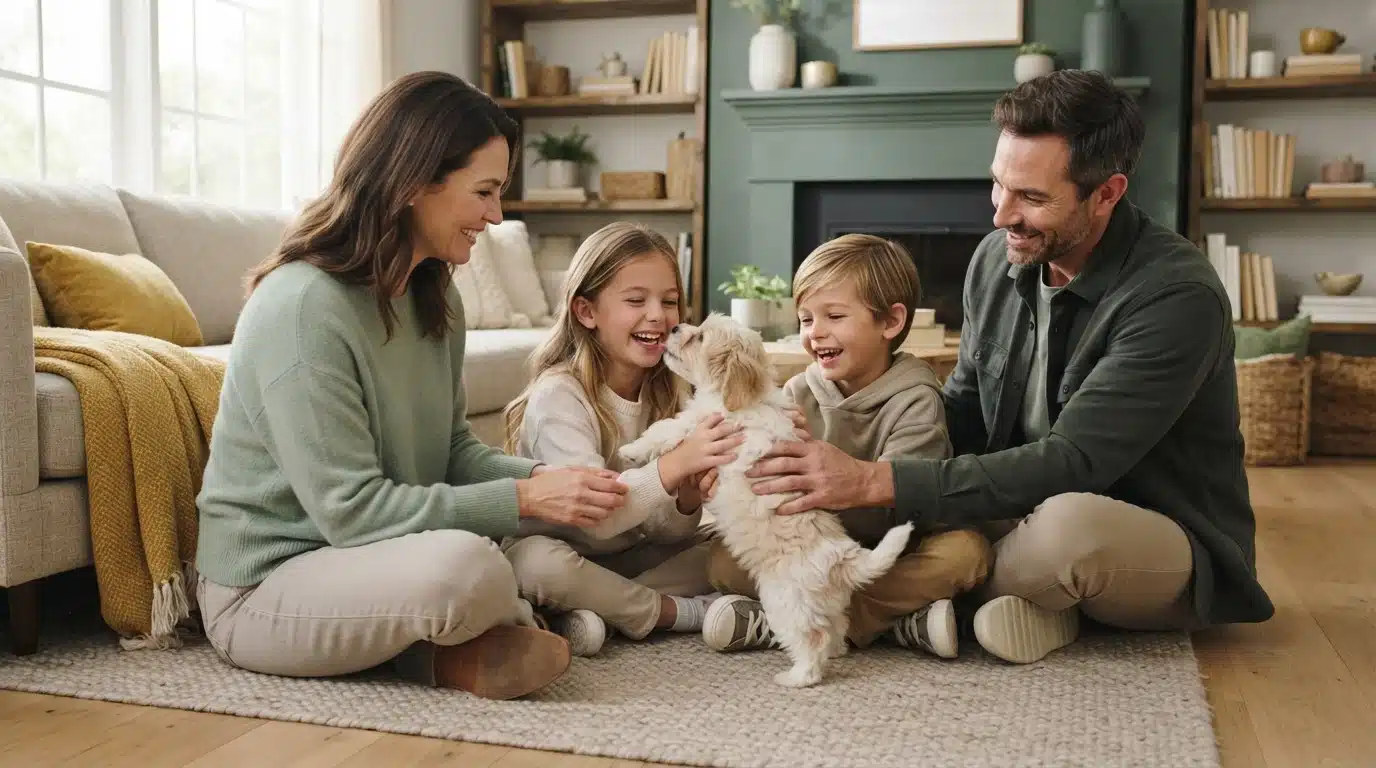
No child under five is alone with the puppy, ever, even for a minute. That rule answers most of it. Under age three, hold the child’s hand while the puppy is loose, or keep them on opposite sides of a gate. Ages four to five can pet the puppy while you sit beside them and narrate what you see. Puppies nip hardest when tired or overexcited, so end sessions after ten minutes. Feed the puppy behind a gate so no child reaches into the bowl, which removes the main resource guarding risk around toddlers.
Teaching a child to handle a small dog gently
Show, then practice, then repeat. Model the gentle stroke on your own arm, then guide your child’s flat hand down the puppy’s back. Banish grabbing ears, tails and fur by giving one clear phrase, “pet soft,” every time. Teach that a puppy walking away means “done,” and no one follows. Practice with a stuffed dog first, so mistakes cost nothing. When your child holds the puppy, keep both seated on the floor; a dropped Havanese can break a leg. Praise calm hands immediately, because small children repeat what earns your attention.
Common Mistakes to Avoid
Mistakes that come from over-trusting the breed label
Parents often assume a Havanese, Havapoo or Cavapoo puppy is safe by default. A breed tilts the odds. It never replaces the individual puppy, the breeder’s socialization work, or your supervision. Each puppy has its own noise sensitivity, arousal level and recovery speed, so judge the dog in front of you, not the label on the litter. Good breeders will tell you which puppy fits a busy home and which one does not.
Mistakes in the first ninety days
The first weeks home carry the most weight. Common errors include:
- Waiting until shots are complete. The AVSAB socialization position statement supports safe socialization before full vaccines, because the window closes early.
- Leaving puppy and child alone together. Every interaction needs an adult within arm’s reach.
- Letting the child interrupt meals. Feed the puppy in a quiet spot to prevent resource guarding.
- Skipping alone-time practice and crate training while everyone dotes on the new pup.
- Rough play that teaches jumping and mouthing. Trade wild games for gentle handling rules the whole family follows.
Fix these early and the breed’s best traits get room to show.

Want a puppy whose temperament fits a busy household with young kids? Sage Puppies matches families with well-bred Havanese, Havapoo and Cavapoo puppies using an owner-managed application and matching process. Visit Sage Puppies to start your application and ask about temperament, socialization and pickup or delivery options.
Frequently Asked Questions
Q1: What small dog breeds work best for children under five years old?
Havanese, Havapoo, and Cavapoo puppies handle toddlers best because they’re sturdy, people-focused, and recover quickly from noise and rough handling. Toy breeds like Chihuahuas often struggle, since they’re small enough to injure and more likely to snap when cornered.
Q2: Are Havanese puppies good with young children?
Yes, when raised with them. They’re playful, gentle, and settle quickly after excitement. Their sturdier build absorbs accidental bumps better than most toy breeds, though they still need supervision and gentle handling from your kids.
Q3: Which small breed puppies have the calmest, gentlest temperament?
Cavapoos typically show the softest temperament, resting nearby during chaos instead of joining it. Judge the individual puppy too: quick startle recovery, soft play, and no food guarding matter more than the breed label.
Q4: Can a child under five and a puppy ever be left alone together?
No. Keep an adult within arm’s reach for every interaction. Even a calm puppy can nip when tired, and a fall can injure a small dog badly.
Q5: How long does the puppy socialization window last?
The most important period runs through the first three months. AVSAB recommends safe, positive exposure to children, noises, and handling before full vaccines, since waiting closes the window.
Conclusion
The best small breed puppies for children under five share a few traits: fast recovery from startle, soft play style, real sociability, and no food guarding. Havanese, Havapoo and Cavapoo puppies check those boxes, but the individual puppy and the breeder’s socialization work matter just as much as the breed label. Keep an adult within arm’s reach of every puppy and child interaction, feed behind a gate, and teach gentle handling from day one. Judge temperament with your own eyes, ask specific questions, and set up the home before puppy day. Small dog breeds good with children under five give families a strong start, so the right match plus steady supervision turns those odds into a safe, happy daily life.