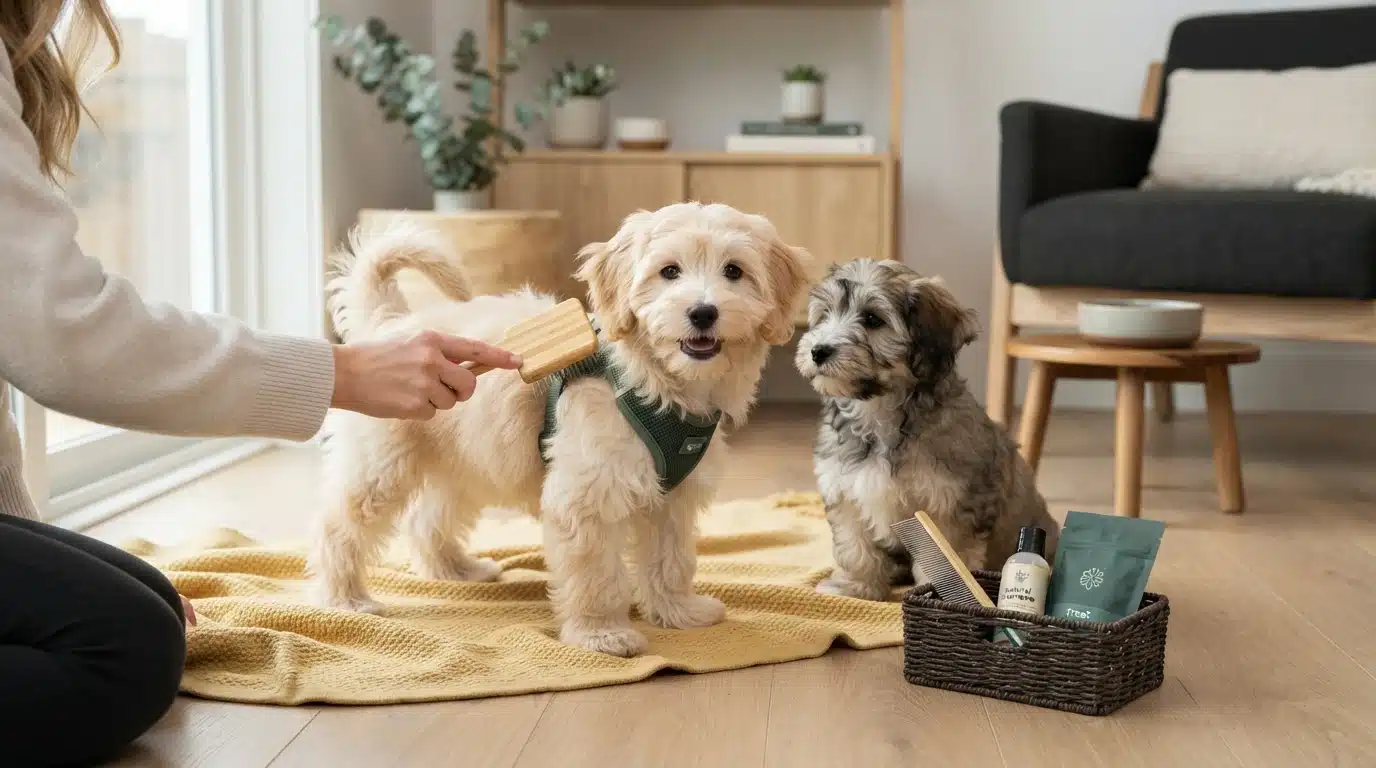
Quick Summary: Quieting a small-breed puppy in an apartment starts with identifying whether the barking comes from alarm, attention, boredom, or separation distress. Reward quiet pauses, gradually desensitize your puppy to hallway and door sounds, use short alone-time sessions for distress, and rule out illness if barking begins suddenly. Most puppies improve within one to two weeks of consistent, reward-based work, with the realistic goal being a quieter response rather than complete silence.
Your Havanese or Cavapoo settles into a third floor apartment, and within a week the barking starts. The elevator chime sets it off, then the hallway door, then the 6 a.m. garbage truck, and a neighbor has already asked how long you plan to keep the puppy. The real challenge is that generic tips rarely work, because apartment barking has several different causes. To stop puppy barking for good, you first need to know which kind you’re hearing. This guide walks you through a quick bark-type check, a reward-based plan to train puppy to stop barking, and a graded hallway and door routine built for shared walls. It also covers separation distress without guessing at timelines, and it cites established veterinary and behavior guidance so you can separate proven steps from individual variation. Small companion breeds like Havanese, Havapoos and Cavapoos were bred to alert, so the goal is a quieter response, not silence.
Step 1: Work Out Why Your Small Breed Puppy Is Barking
Why does my Havanese or Cavapoo puppy bark so much in an apartment?
Short answer: apartments concentrate noise, so your puppy hears and reacts to far more triggers than a house dog would. The Cornell Riney Canine Health Center notes that even small sounds, like a neighbor’s car door, can set alert barking off. Three apartment-specific causes show up most often:
- Shared-wall noise: hallway steps, elevator chimes, muffled conversations
- Repeated triggers: the same door sounds pass by all day
- Close quarters: every bark reaches a neighbor, so pressure builds fast
Havanese, Havapoo and Cavapoo puppies were bred to be companion dogs, so their alerting instinct runs strong. That is the breed, not a flaw.
The bark types and how to tell them apart
| Bark type | Body language cue | Matching fix |
|---|---|---|
| Alarm | Stiff body, ears forward, gaze fixed on the door | Desensitization and counter-conditioning |
| Attention | Direct eye contact, pawing, pauses for your reaction | Ignore fully, reward quiet |
| Separation distress | Whining first, pacing, scratching at exits | Gradual alone-time training |
| Boredom | Repetitive, even rhythm while idle | Enrichment and exercise |
Watch the whole body, not just the sound. The AKC lists fear, excitement, frustration and territorial behavior as common drivers, and each one calls for a different response.
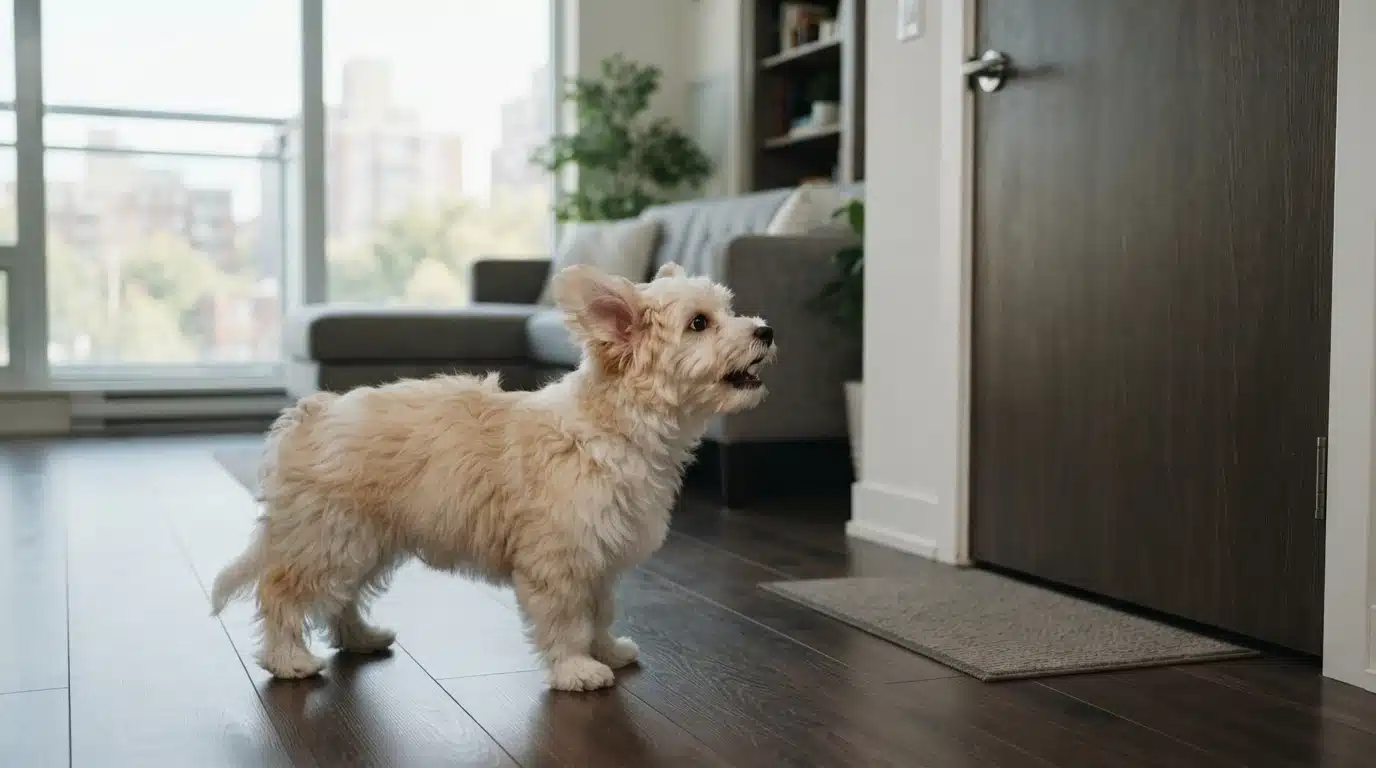
The first five seconds after a bark starts
Log what happened just before the bark: the sound, the time, and where your puppy stood. One or two days of notes usually reveals a pattern. A quiet apartment puppy plan starts with this log, because the fix for alarm barking differs completely from the fix for attention barking. If you need structure for the later stages, our small breed puppy training guide walks through the core skills in order.
When to rule out a medical cause first
Sudden barking, barking with house soiling, appetite loss, or a house-trained puppy who suddenly cries at night deserves a vet visit first. Pain and illness change vocalization. Rule out health before you assume behavior.
Step 2: Build a Household Where Quiet Is the Easy Choice
A daily rhythm your puppy can predict
Puppies bark more when life feels random. Feed, potty, play, train and nap on a steady schedule so your puppy can guess what comes next. A predictable routine lowers baseline arousal, and a calm puppy has less fuel for stopping the barking you can’t stop anyway. Write the schedule down and stick to it for two weeks.
Exercise and enrichment that actually absorb energy
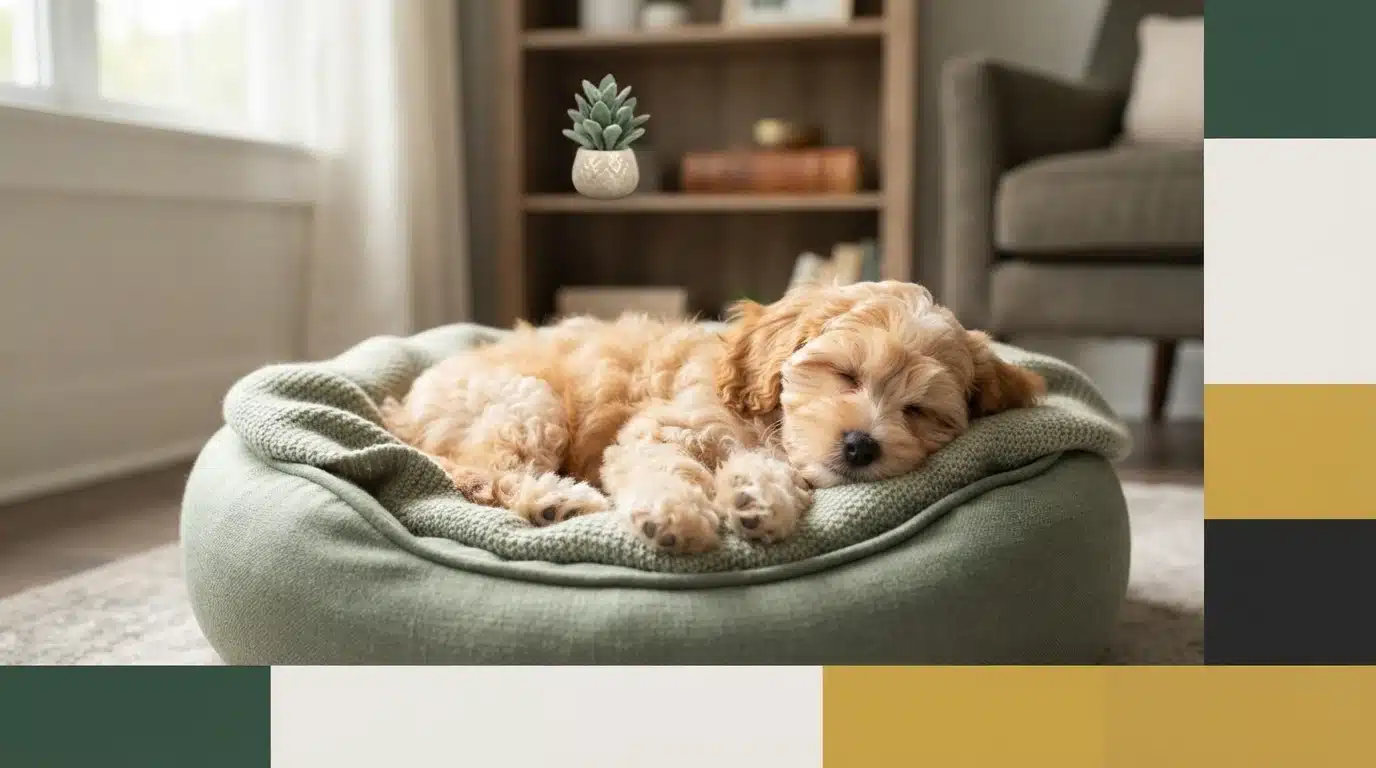
Two short walks rarely tire a Havanese or Cavapoo. What works is brain work: sniff walks, a snuffle mat, a frozen stuffed Kong, and three five-minute training games spread through the day. Rotate toys weekly so nothing goes stale. A mentally tired puppy naps instead of patrolling the front door. Skip marathon play sessions, since overtired puppies bark more, not less.
Soundproofing the apartment and masking hallway noise
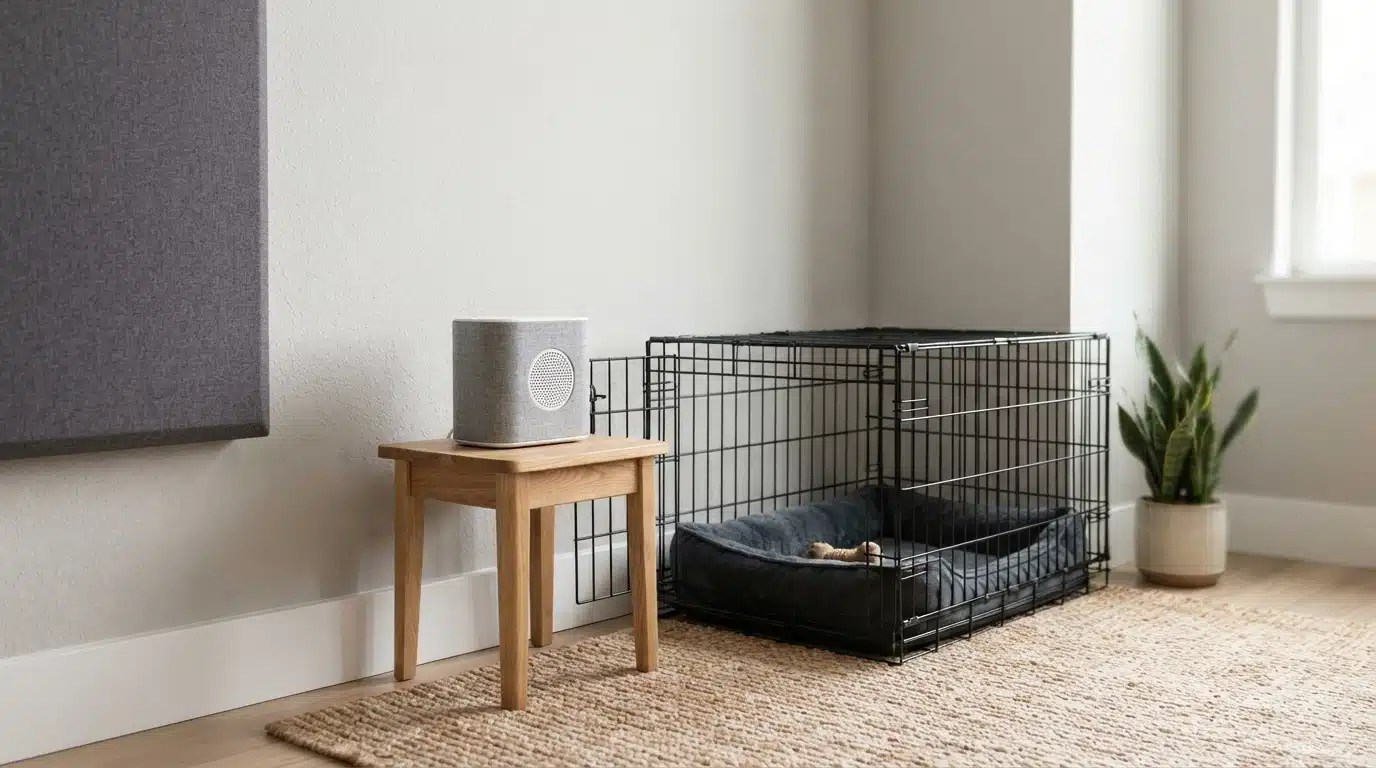
Layer soft surfaces first: a rug by the door, curtains, and a blanket over your puppy’s crate side. These absorb the slap of footsteps in the hallway. Then add a steady white noise machine for apartment dogs near the door and the crate. Constant sound hides the sudden door slams and elevator chimes that trigger alarm barking. Masking beats blocking, because walls in most apartments let high frequencies through.
Crate setup that reduces noise instead of causing it
Put the crate away from the front door and away from windows. Cover three sides, leave the front open, and add a worn shirt that smells like you. A covered, quiet crate becomes a sleep cue instead of a lookout post. If your puppy fusses in the crate, shorten the sessions before adding covers. For crate choice, compare wire and soft-sided puppy crates to match your space.
Step 3: Train a Replacement Behavior With Rewards
Punishing barking rarely works, but you can train puppy to stop barking by rewarding the quiet moments instead. The best way to train a puppy to be quiet follows a short sequence: (1) set up a quiet spot, (2) capture silent pauses, (3) mark each one with a cue word, (4) reward, then (5) fade treats on a variable schedule. Here is each step in detail.
Set up a quiet spot and a marker before you start
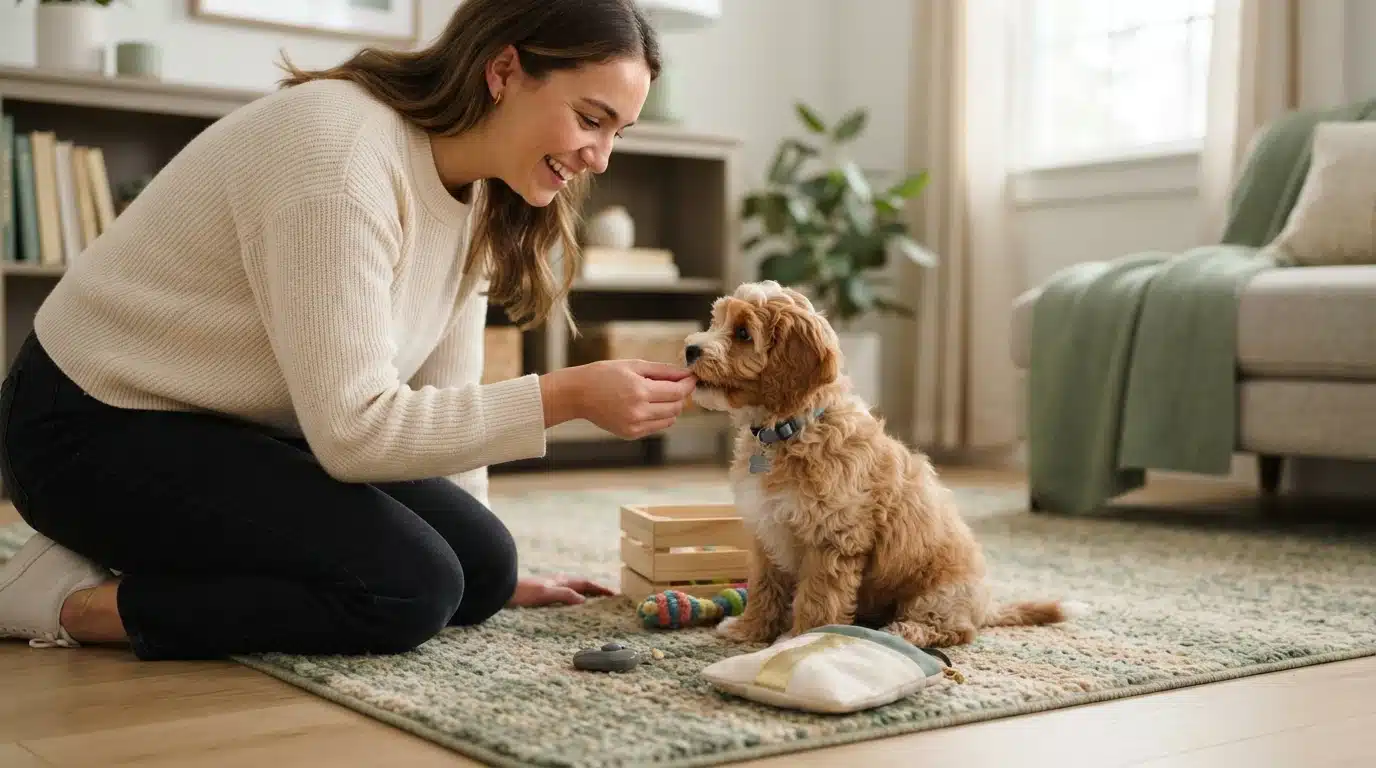
Pick a mat or bed away from the window and door. Feed a few treats there so the spot feels like a good place to be. Choose one marker word, such as “yes,” or a clicker. The marker tells your puppy the exact instant she earned a reward, which matters more in barking training than in almost any other skill.
Capture the pause: how to mark and reward quiet
Wait for a natural lull in the barking. The moment she is silent for one or two seconds, say your marker and deliver a treat at the mat. Repeat, and slowly ask for longer silences before marking: three seconds, then five, then ten. You are teaching a clear chain: quiet leads to the mat, and the mat leads to good things.
Keep sessions to three to five minutes. Several short sessions beat one long, frustrating one for both of you.
Fading the treats without losing the behavior
Once your puppy pauses reliably, switch to rewarding every second or third quiet stretch rather than all of them. This variable schedule actually strengthens behavior, because the puppy keeps guessing when the payoff comes. Trade some food rewards for praise or a quick scratch. If quiet slips, go back to paying for every pause for a few days.
Building duration and distance
Ask for longer quiet before you mark. Then practice with mild triggers in view: a knock on your own table, footsteps recorded on your phone, then real hallway sounds at low intensity. Reward calm at each stage before moving up.
When the puppy will not bark or will not learn the cue
Some puppies freeze instead of barking, and some never connect the marker to quiet. Slow down, mark smaller wins, or ask a certified trainer for help. For a Havanese, Havapoo or Cavapoo raised well, this usually clicks within a couple of weeks of short, cheerful sessions.
Step 4: Desensitize Your Puppy to Hallway and Door Noises
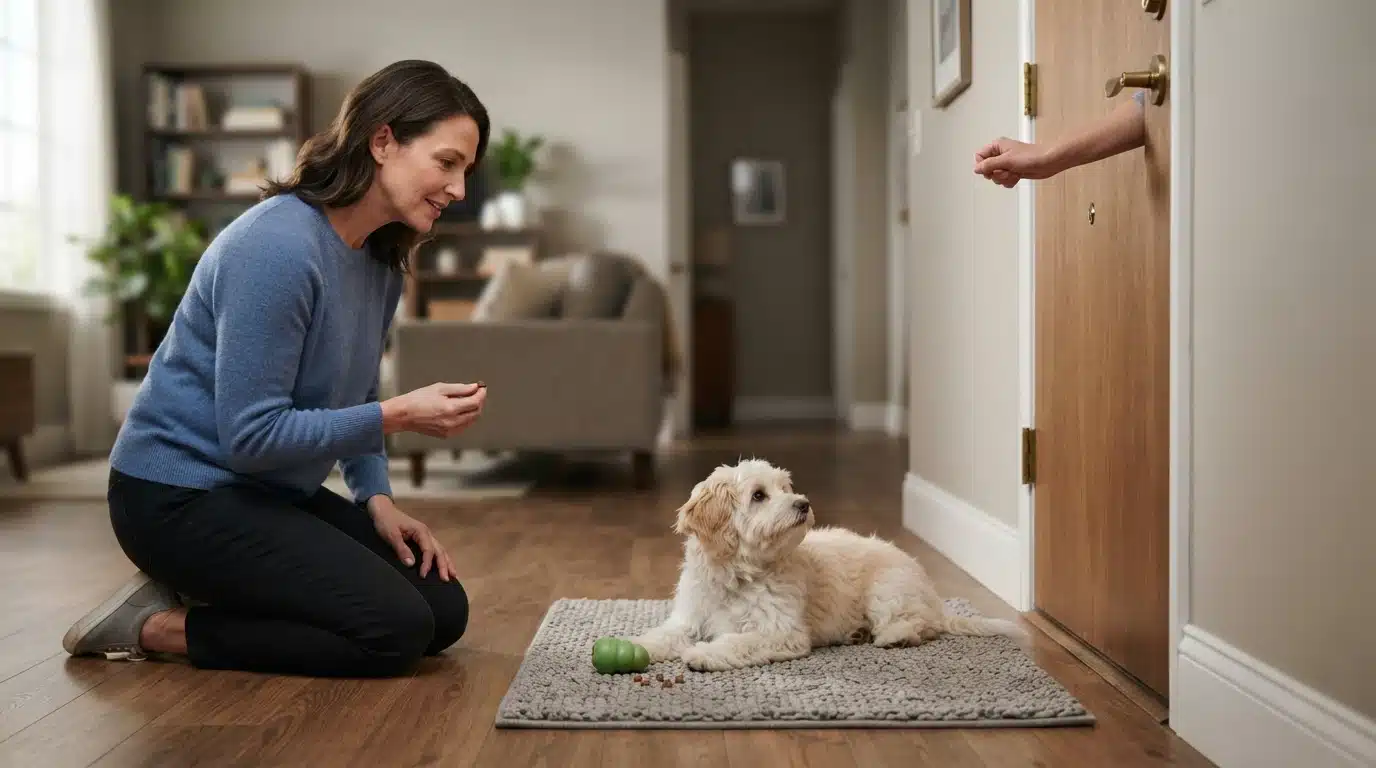
To stop puppy barking at hallway sounds, replay each trigger at low volume and pair it with treats. Start so quiet your puppy barely notices, then increase loudness over days, never in the same session. If barking starts, you moved too fast, so drop back a step and rebuild.
The doorbell and door knock ladder
Record your doorbell and a knock on your phone. Play the knock at near-silent volume while your puppy eats dinner. Feed a treat after each sound. When your puppy hears it and stays relaxed, raise the volume one small notch. Ten calm repeats per level, over several days, builds a dog who hears a knock and looks to you instead of shouting about it.
Working on hallway and elevator sounds
Apartment triggers stack up: footsteps, the elevator chime, voices in the corridor. Record them live, or use free sound apps. Run the same routine at breakfast, when your puppy is hungry and settled. If a Havanese, Havapoo or Cavapoo already barks at the real hallway, keep sessions going so the sound predicts food, not alarm.
How to tell when you are working too hard
Watch your puppy’s body, not just the bark. Pinned ears, lip licking, panting, pacing or refusal of treats mean the sound is too loud. Drop two volume levels back. Good sessions look boring: your puppy notices the sound, glances at you, and gets paid. If you need to coax attention back, the session is over.
Night barking through walls and shared hallways
Late elevators and 6 a.m. doors hit hardest. A white noise machine near the sleep area muffled the trigger sounds for the night, and a stuffed food toy keeps the brain busy.
When the reaction is fear rather than vigilance
Some puppies tremble or hide at these sounds instead of barking at them. That is fear, not alerting, and deserves gentler volumes and a veterinary behaviorist if it does not improve.
Step 5: Address Barking That Comes From Distress
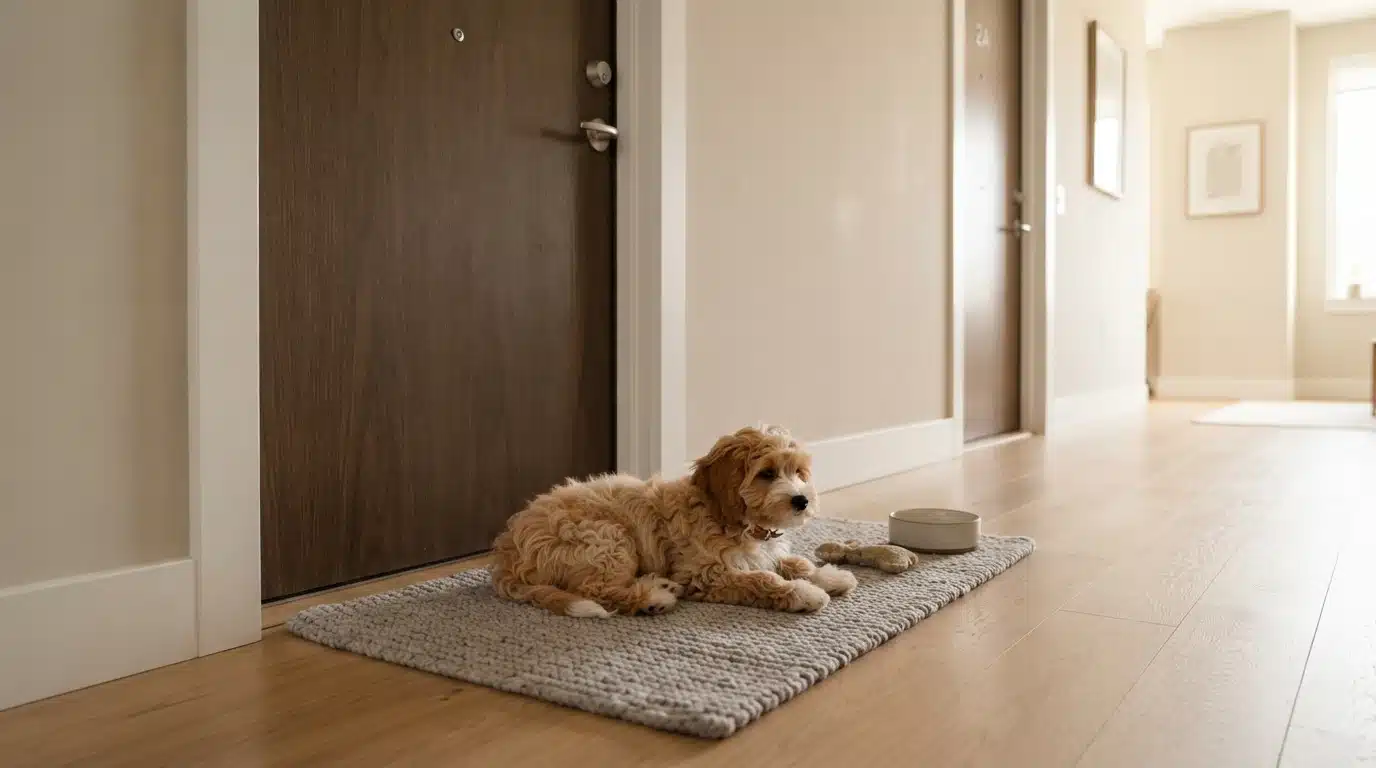
Settling vocalization or real separation distress?
Most puppies grumble for a few minutes after you leave, then settle. True separation-related distress is different: barking or howling that continues, plus pacing, drooling, scratched doors or house soiling. Watch on a camera, because the video tells you which problem you have. To stop puppy barking when you leave, start with a short routine: (1) settle your puppy on a mat with a food toy, (2) touch keys without leaving, (3) step out for seconds, (4) return calmly, (5) repeat, slowly adding time.
A calm departure routine
Keep departures flat and boring. The VCAs guidance on separation anxiety suggests ignoring the puppy for a short window before you go and after you return, so your exit stops predicting drama. Skip big goodbyes, avoid switching on radios or lights only when you leave, and give the food toy as you step out rather than after barking starts.
Building back to comfortable alone time
Work below the barking threshold. Leave for ten seconds, return before vocalizing starts, and repeat that length until your puppy stays relaxed. Then stretch to thirty seconds, two minutes, five. If barking reappears, drop back a step. Progress is not linear, so a rough week means shorter reps, not a stalled plan. Systematic desensitization like this remains the backbone of published treatment approaches for separation-related problems.
Calm-down products and supplements: what the evidence supports
Adaptil-style pheromone diffusers, snug vests and L-theanine chews show mixed or modest results in studies, so treat them as helpers, never as the training plan. For persistent distress, ask your veterinarian; a veterinary behaviorist referral can open the door to medication alongside behavior work when needed.
Step 6: Manage the Building, the Neighbors and Your Records
What to say when a neighbor complains
Respond fast and kindly. Knock, apologize once, and share the plan: “We know the barking has been loud. We’re working with a trainer and expect real progress in a few weeks.” A specific plan calms most people faster than excuses. Offer your number so they can text you directly instead of filing a complaint.
Building rules, leases and what is enforceable
Read your lease and any pet addendum. Most leases set a nuisance standard, not a silence one, so steady training progress protects you. Learn your HOA or building’s complaint process before it’s used against you, and know your local noise ordinance hours. If a complaint becomes formal, show your log and training notes. For more detail on apartment-specific fixes, see our guide to small breed puppies barking and whining in apartments.
Keep a barking log and watch real progress
Log each session for two weeks: time, trigger, how long it lasted, and what you did. Most puppies show a clear drop within one to two weeks of consistent work. Share short wins with your neighbor, since a “much quieter this week” text goes a long way.
Common Mistakes to Avoid
Punishment, sprays and devices
Yelling, spray collars and shake cans teach a puppy that barking leads to scary things. That often adds a second problem: anxiety on top of alarm, so the barking gets louder, not quieter. Positive reinforcement dog training works better because it rewards the quiet moments you want. Avoid any device marketed as quick silence for small breeds; with a Havanese or Cavapoo, it usually damages trust and slows real progress.
Reinforcing barking by accident, and chasing silence
The second trap is paying attention to barking. If you pick up a whining puppy every time, you teach that noise works. Wait for a pause first, then reward. The third trap is chasing total silence. A quiet apartment puppy still needs to alert once; your goal is one or two barks, then quiet on cue, not a dog afraid to make a sound. That’s a realistic outcome within weeks of steady practice, and it keeps both your puppy and your neighbors calmer.

A noisy neighbor complaint does not fix itself, but your puppy can learn quiet habits with a little patient, reward-based practice. If you want a well-bred companion raised with calm foundations from the start, see Sage Puppies. Apply today, and keep working through the steps above.
Frequently Asked Questions
Q1: Why does my Havanese or Cavapoo puppy bark so much in an apartment?
Apartments concentrate noise, so shared-wall sounds and repeated triggers hit far more often. These companion breeds were also bred to alert, so alarm barking comes naturally.
Q2: What is the best way to train a puppy to be quiet?
Reward the pause, not the bark. Mark silent moments with “yes,” treat at the mat, then lengthen the quiet needed before each reward.
Q3: How can I stop my puppy barking at hallway and door noises?
Play recorded knocks and elevator chimes at near-silent volume while she eats, then raise volume over days. Each sound should predict food, not alarm.
Q4: How long before my puppy stops barking in the apartment?
Most puppies improve within one to two weeks of consistent work. Keep a log to track real progress.
Q5: Should I ignore barking completely?
Only attention barking. Distress barking needs gradual alone-time training instead, so watch the body language first.
Q6: When should I call a trainer or vet behaviorist?
If fear signs, persistent distress, or sudden vocal changes appear, involve your vet or a certified professional rather than pushing harder.
Conclusion
Quieting a barking small breed puppy in an apartment starts with diagnosis, not volume control. Identify the bark type, then match it to the right fix: reward the quiet pause, desensitize hallway and door sounds gradually, and treat distress barking with slow alone-time work rather than ignoring it. Expect a quieter response, not silence, because Havanese, Havapoo and Cavapoo alerting behavior runs deep in the breed. Most puppies show real progress within one to two weeks of short, consistent sessions. Skip punishment devices, keep a simple log, and share wins with your neighbors. With patience, your quiet apartment puppy and your lease can peacefully coexist.