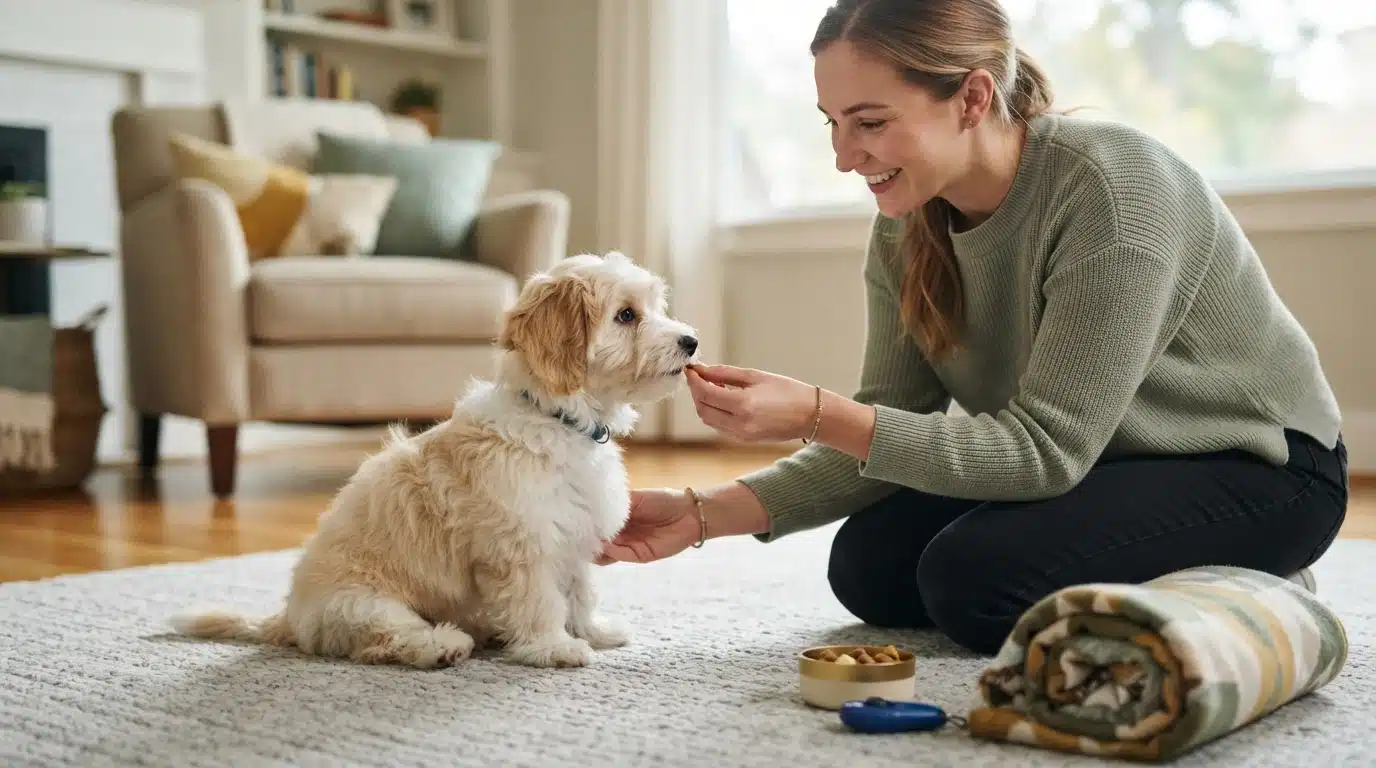
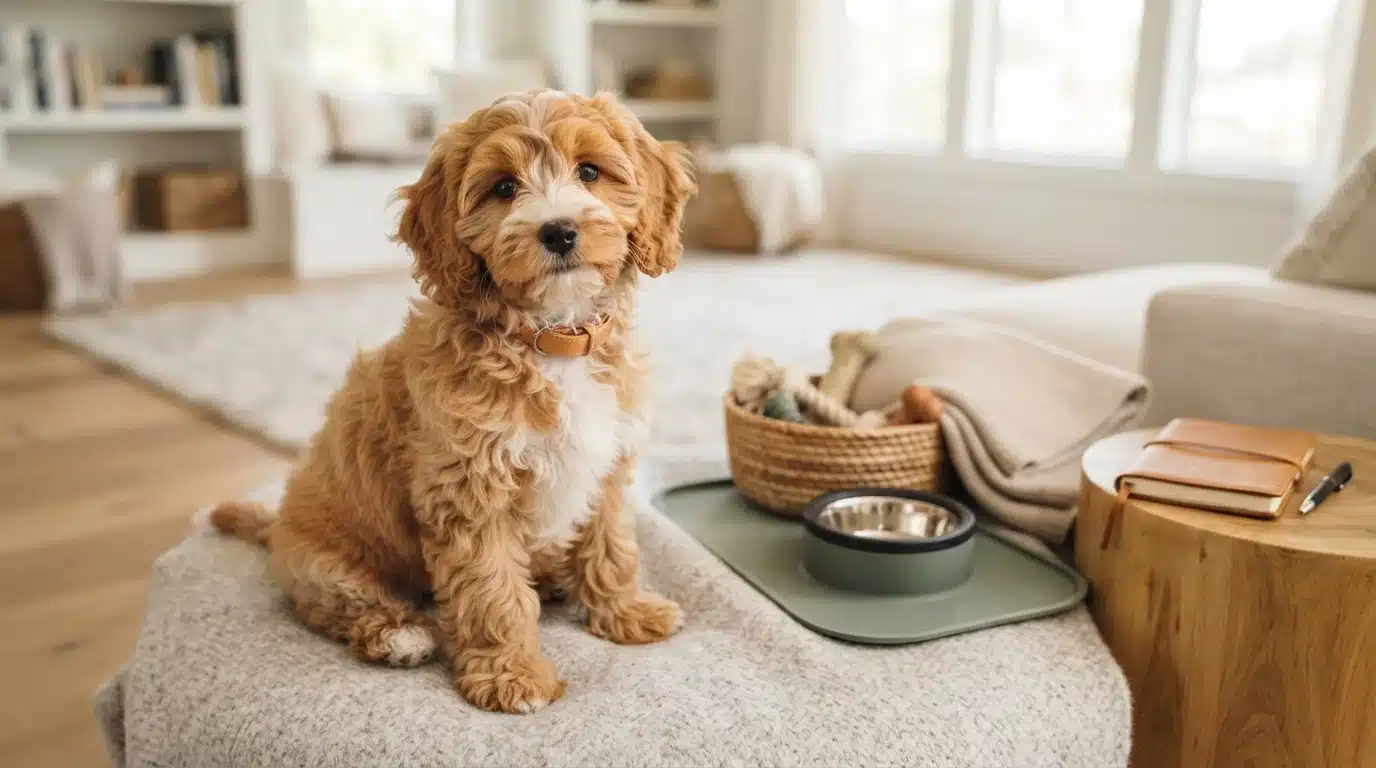
Quick Summary: Small breed puppies learn best through brief, frequent training built around their short attention spans, tiny mouths, and small bodies. Start with name response and a marker, then teach sit, hand targeting, recall, leave it, drop it, and a mat settle in that order, using soft pea-sized treats and three to five minute sessions for young puppies. Build toilet routines, calm door behavior, and positive socialization around the puppy’s age and limits, and check for health problems if progress suddenly stalls.
A Havanese or Havapoo puppy can learn to sit, settle on a mat, and answer their name in one five minute session. But only if the treats in your pocket are small enough to be worth the effort, and the sessions are short enough that their attention survives them. Most first-time owners skip that sizing step, so training stalls and small nuisance habits turn into big ones. This guide lays out a sequence for toy breed training: which essential puppy skills to teach first, how long each session should run, the right treats and tools for tiny mouths, plus house training, socialization, and fixes for common roadblocks. It comes from Sage Puppies, a small Utah program that raises Havanese, Havapoo, and Cavapoo puppies and walks new families through these first weeks.
Why Small Breed Puppies Need Their Own Training Plan
Small breed puppies are not harder to train than large breeds. They learn just as quickly. The difference is in the details: shorter sessions, smaller treats, and a world built for someone ten inches tall. A plan designed for a Golden Retriever simply does not fit a Havanese.
Short attention spans are the real limit
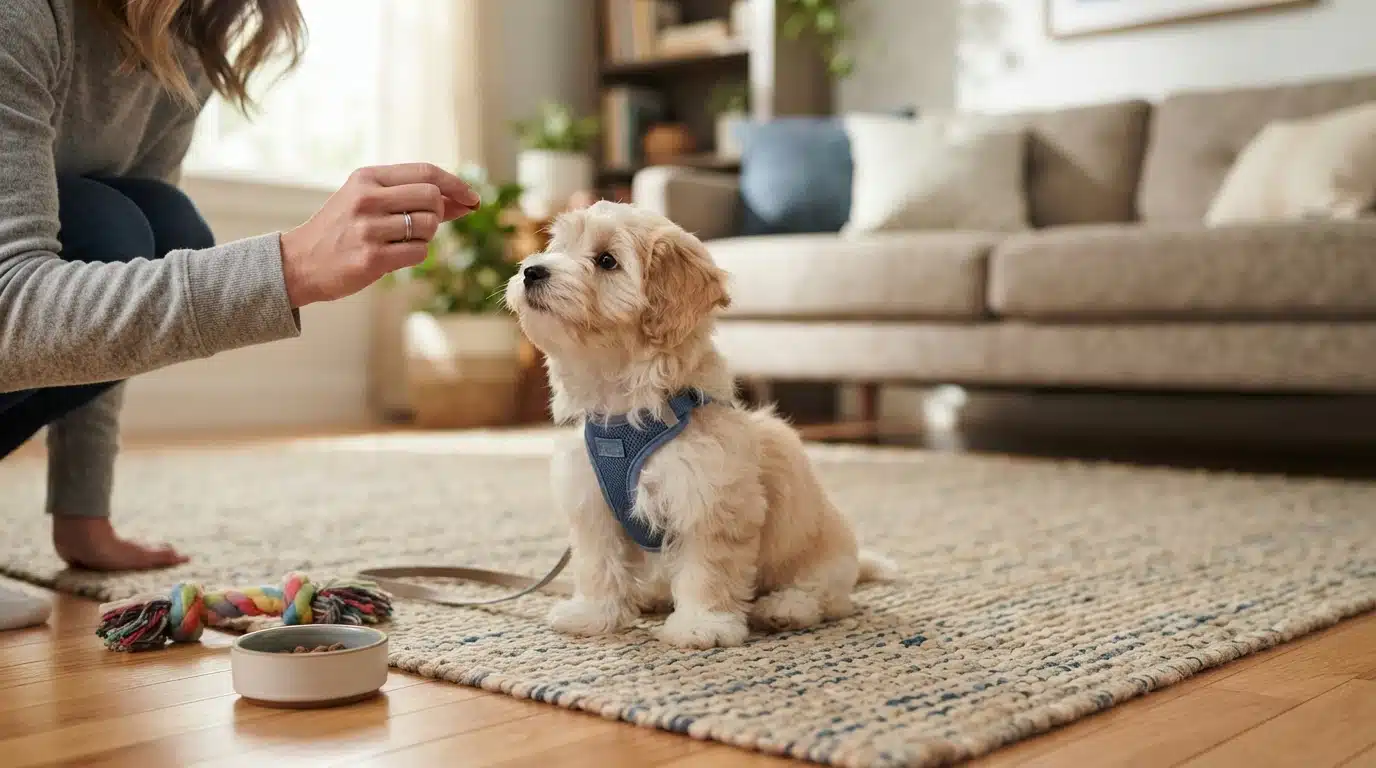
A toy breed puppy can focus for one to three minutes at a time, sometimes less. That is not stubbornness; it is development. Five short sessions beat one long one every time. End each session while your puppy still wants more, and training stays fun instead of becoming a chore.
Bigger bodies, bigger expectations, same rules
People often skip puppy obedience with tiny dogs because laps are easier than crates. That shortcut creates barking, nipping, and pushy behavior later. A five-pound puppy grows into an adult with opinions. Teach sit, come, and settle from day one, exactly as you would with a large breed. Consistency matters more than size, so hold the same standards from the start.
Low to the ground, learning from a different angle
Your puppy experiences the world at ankle height: shoes, chair legs, and knees everywhere. Get down on the floor for toy breed training so your cues and treats arrive where your puppy can actually see and reach them. The families who pick up their puppy in South Jordan, Utah hear this first from Cassie, because it changes everything.
The Essential Puppy Skills to Train First
Small breed puppy training works best when you teach skills in order. Start with name response and a marker word, add sit and a hand target, then recall and the “leave it” and “drop it” pair, and finally a settle on a mat. Each skill builds on the one before it, so resist the urge to skip ahead.
Name response and a marker word come first
Your puppy’s name is the foundation of every later cue. Say the name once, mark the moment your puppy looks at you with a short word like “yes,” then pay with a tiny treat. Trainers at VCA Hospitals recommend markers such as “yes” or a clicker because they tell the puppy exactly which action earned the reward. Practice in quiet rooms before you expect the name to work near distractions, since name recognition builds the communication line everything else depends on.
Sit, then name plus a hand target
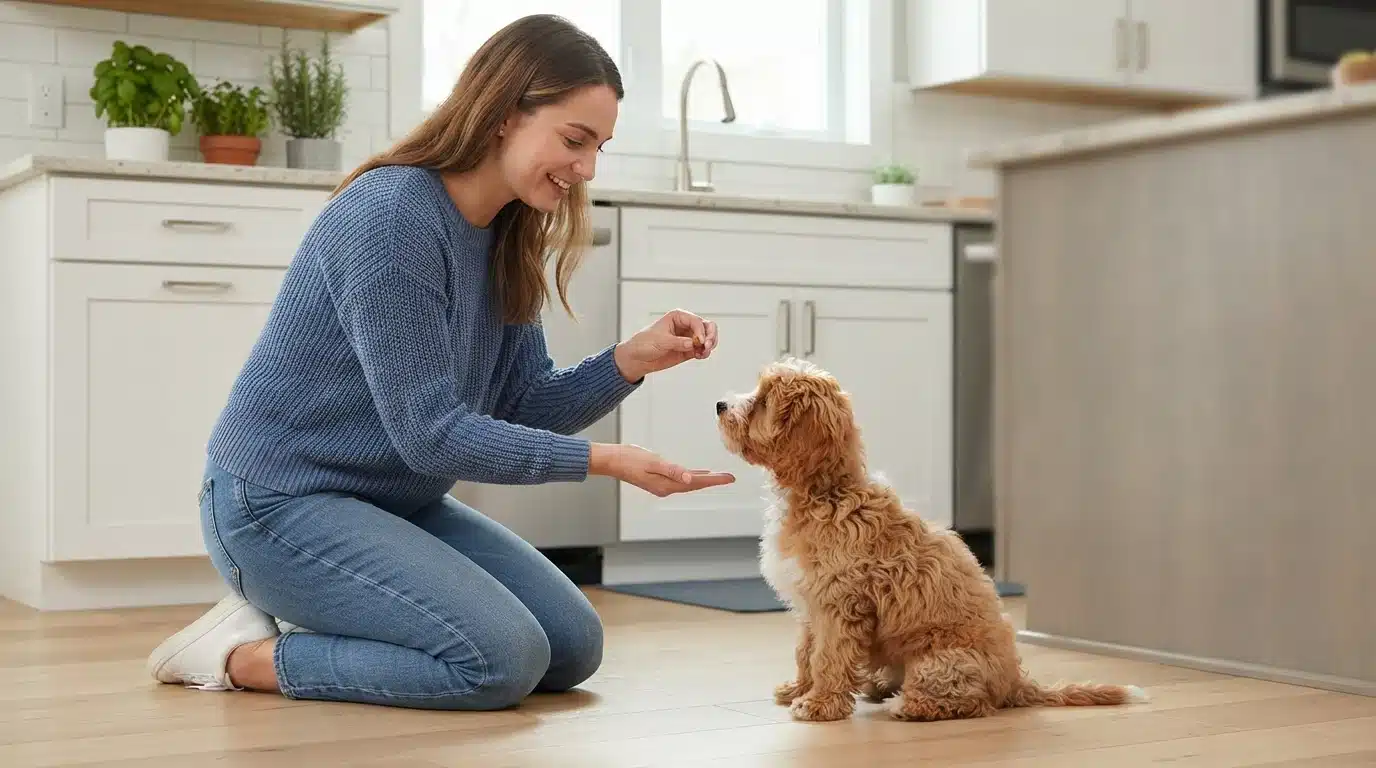
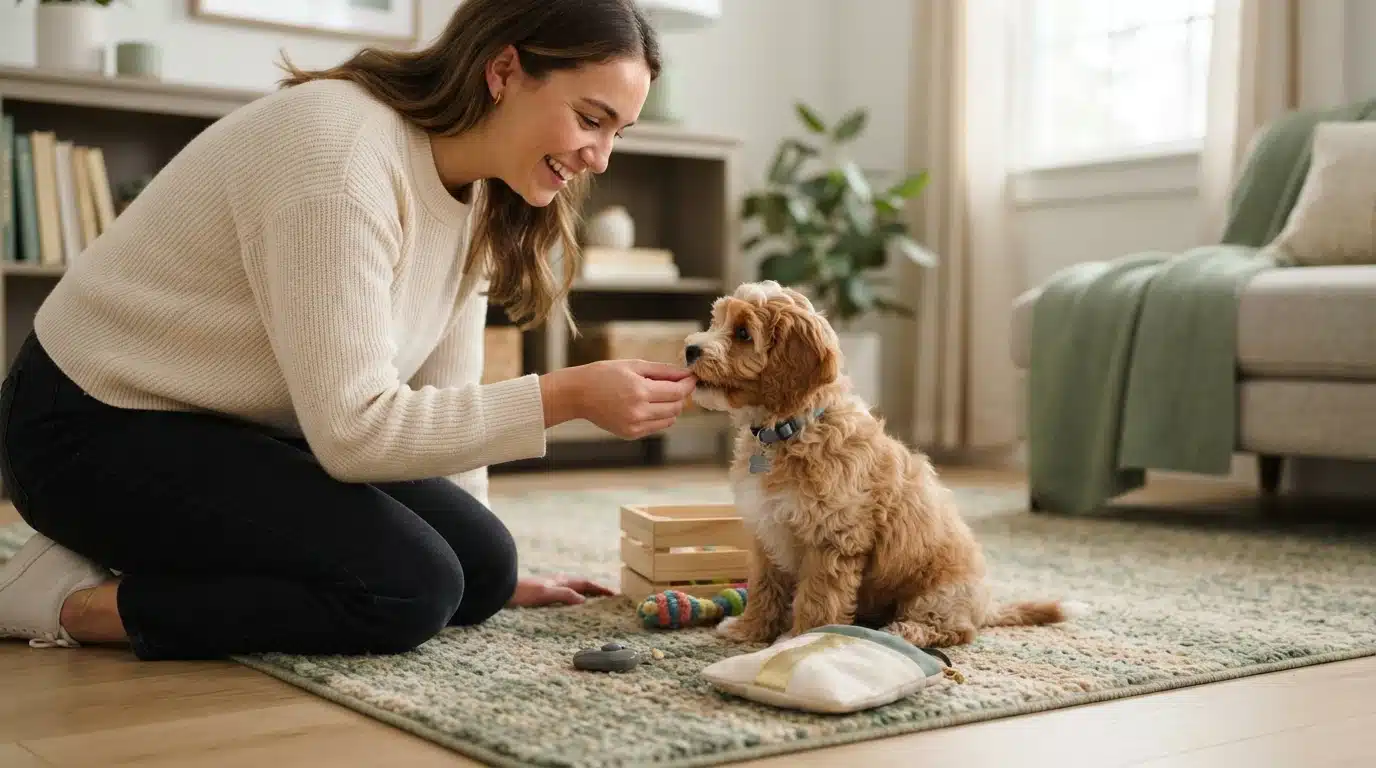
Sit comes next because you can lure it in under a minute. Hold a pea-sized treat at your puppy’s nose, lift it slowly back over the head, and mark the instant the bottom touches the floor. Once sit is solid, add a hand target: present your flat palm and reward any nose touch. Toy breed training leans heavily on this pair, because name plus sit lets you pause jumping, door bolting, and food begging without ever lifting your puppy off the floor.
Recall, leave it, and drop it
Come is the skill that keeps a small dog alive, so start it early. Crouch, sound happy, and reward every turn toward you. The AVSAB supports reward-based methods for recall, never corrections. Then trade games teach leave it and drop it, so a dropped pill or chicken bone ends in a swap, not a chase.
A settle on a mat, plus the skills that run in the background
Last, teach a calm down-stay on a mat so your puppy learns to do nothing on cue. Housetraining, crate comfort, and handling practice run alongside all of this daily. For the full sequence week by week, see our small breed puppy training timeline.
How Long Should Small Breed Puppy Training Sessions Be?
Keep small breed puppy training sessions to 3 to 5 minutes for an 8 to 10 week old puppy, building up to about 10 minutes by four or five months. Aim for three or four short sessions spread through the day. Toy breeds like Havanese, Havapoos and Cavapoos have small bladders, big energy dips and short focus windows, so brief sessions work better than one long block. AKC trainers recommend keeping sessions around 5 to 10 minutes to hold a dog’s focus and enthusiasm.
Short and frequent beats long and rare
Three minutes of sit and recall practice, repeated four times a day, teaches more than a 20 minute session on Saturday. Frequent reps help your puppy store each skill in memory before the next one starts. Slot training into moments that already happen: before meals, after a potty break, or during play. For a breed-by-age breakdown, the Havapoo puppy schedule for the first 8 weeks maps short sessions to real days.
Know when to stop early
End a session before your puppy checks out, not after. Sniffing the floor, scratching, yawning or walking off all mean focus is gone. Stop on a win: one easy cue your puppy already knows, then a treat and play. According to Chewy’s training guide, puppies may only tolerate a couple of minutes of learning at a time, so quitting early is smart, not lazy.
Choosing Training Treats and Tools for Small Breeds
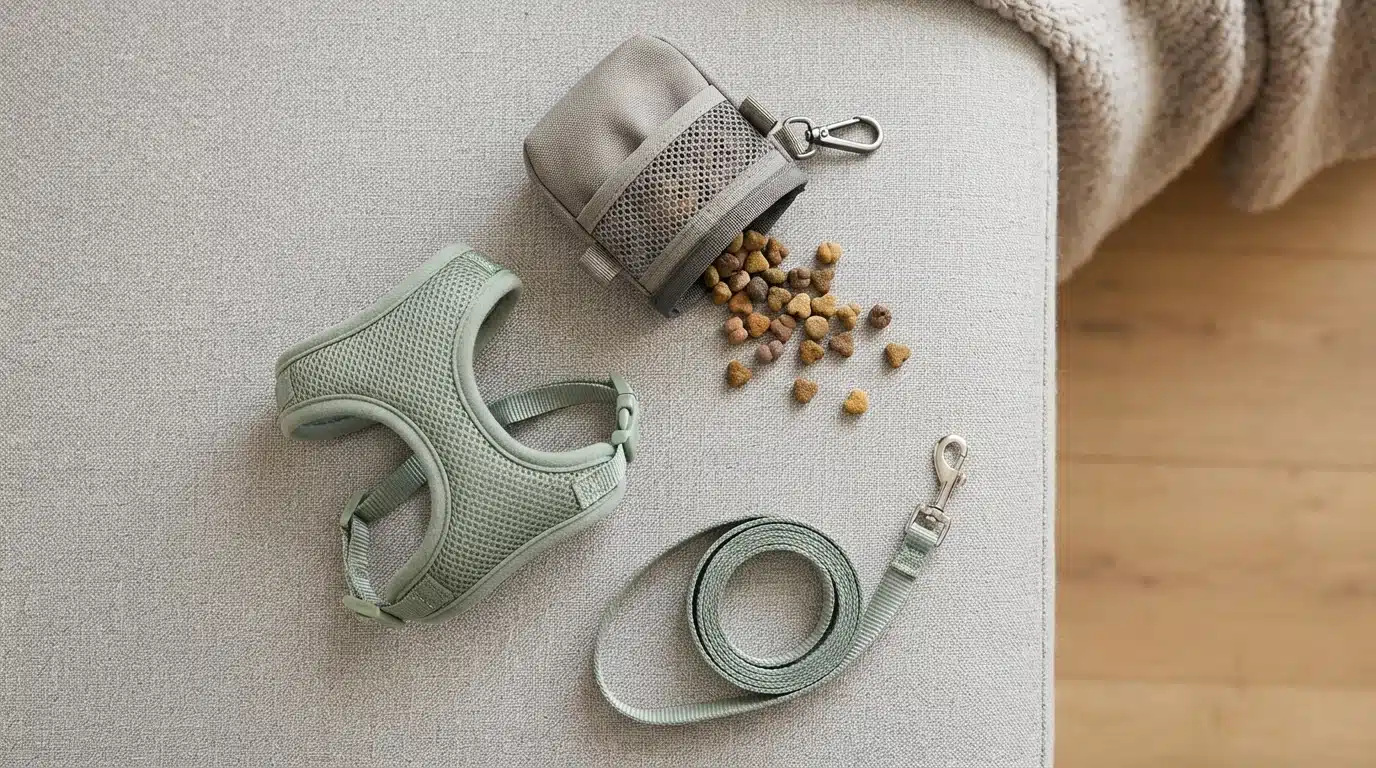
The best setup for a Havanese, Havapoo or Cavapoo is simple: soft, tiny treats, a lightweight harness and leash, and a crate or pen sized for a small dog. Anything bigger slows training down.
Small treats, and how many is too many
Use treats pea-sized or smaller. A toy breed puppy eating a few hundred calories a day fills up fast, and a big biscuit per repetition ruins the math. Soft training treats work better than crunchy ones because your puppy swallows them in a second and gets back to the lesson. Vets recommend that treats stay under 10 percent of daily calories, which is easy to hit with pea-sized pieces, per AKC guidance. Balance it by cutting kibble from the next meal on heavy training days.
The short list of tools worth buying
Skip the gadget aisle. You need four things: a treat pouch that clips to your belt, a lightweight harness, a six-foot leash, and a small crate or playpen. A clicker is optional but useful for marking the exact moment your puppy gets it right. Treat pouches keep your hands free, so rewards come within one second of the behavior.
Gear that changes as your puppy grows
A collar that fit at eight weeks is useless by four months. Check harness fit monthly, because a loose harness lets a small dog slip backward out of it. Swap to a longer line outdoors when you start real recall work. For harness choices by breed, our guide to the best Havanese puppy harness covers what to look for.
House Training and the Potty Routine
A schedule that matches a small puppy’s bladder
House training works when the schedule fits your puppy’s body, not the clock. A simple rule: puppies can hold their bladder about one hour per month of age, plus one, so a two-month-old puppy gets roughly three hours at most, according to AKC guidance. Toy breeds like Havanese, Havapoos and Cavapoos often land at the low end, so plan on more trips, not fewer.
Take your puppy out first thing in the morning, after every meal, nap, and play session, and right before bed. Use the same door and the same spot each time. Feed on a fixed schedule so potty times stay predictable.
Rewarding outdoors and handling accidents
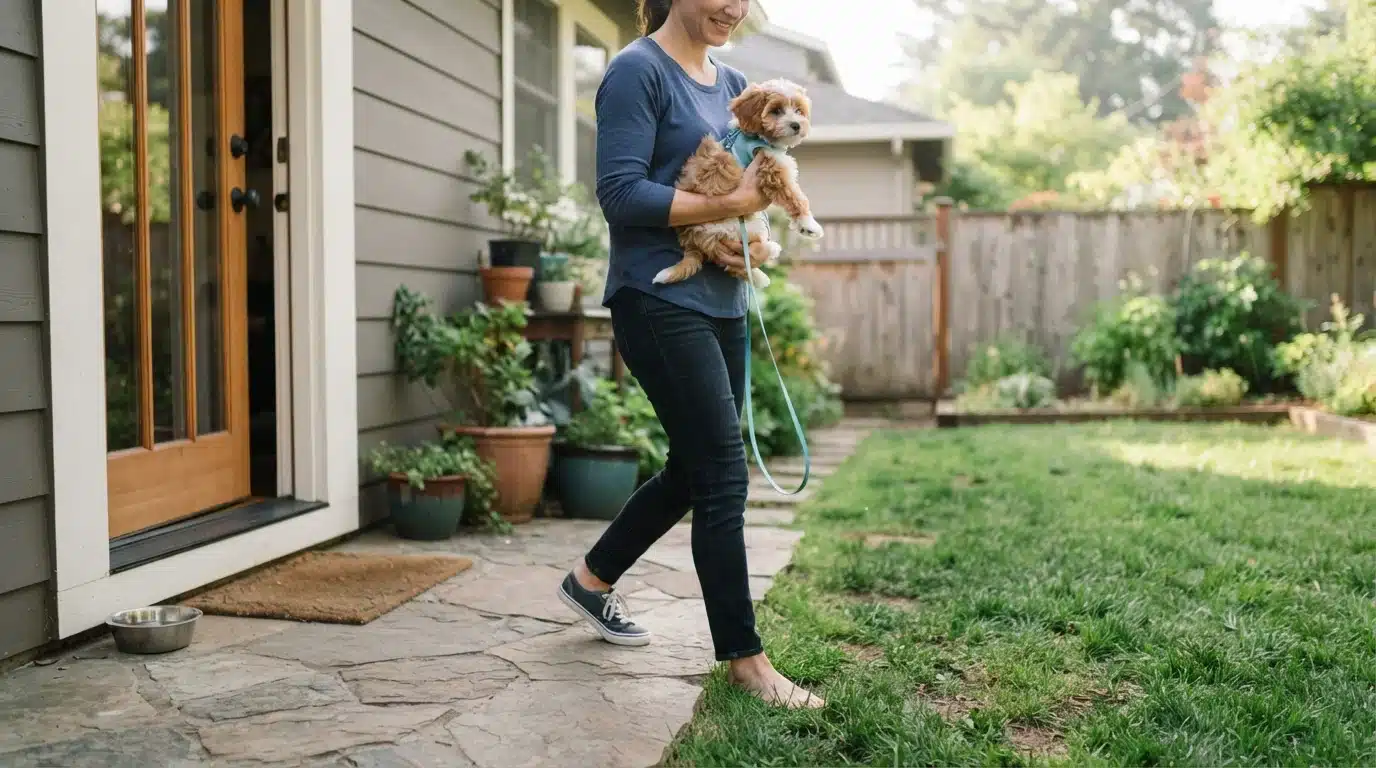
Reward the moment your puppy finishes going outside. Praise and a small treat within one or two seconds tells her exactly what earned it. Wait until she is done, though, or she may learn to pee a little just to collect the reward.
When accidents happen, skip the scolding. Punishing after the fact only teaches your puppy to hide from you. If you catch her mid-accident, scoop her up calmly and carry her outside, then reward there. Clean messes with an enzymatic cleaner so lingering scent does not call her back to the same spot.
Barking, Jumping, and Bolting Through Open Doors
Small breed puppies often act up most at the front door. The fix for all three habits is the same pattern: reward the calm version, manage the setup, and practice in short sessions.
Alarm barking
How do I stop my small dog from barking at the door? Work the steps in order:
- Let your puppy hear a knock, then scatter a few pea-sized treats on the floor before the barking starts.
- Open the door while she eats, so the arrival predicts food, not frenzy.
- Cue “quiet” once she pauses, then reward the silence.
- Repeat daily until she looks to you instead of barking.
Never yell, because your puppy hears it as you joining in. Small dog barking training depends on rewarding quiet moments fast, and the Humane World guide covers reward-based options for persistent barkers.
Jumping up
Tiny dogs jump because it gets attention, and most families reward it by picking them up. Change the payoff instead. When your puppy jumps, turn away and step back. The moment all four paws land, crouch and greet her calmly. Ask family members and guests to follow the same rule, since one person rewarding jumps teaches her that persistence works. For extra control, cue a sit at the door and pay her there.
Bolting through open doors
A small puppy that slips past your legs is hard to catch, so treat door boundaries as a safety skill. Teach a solid sit-stay at thresholds first. Then open the door an inch, close it, and reward stillness. Build to wider openings and real exits. A long line in the yard adds backup during puppy recall training, which pairs well with these door drills.
Socialization, Handling, and Meeting People and Dogs
Socialization means teaching your puppy that new people, dogs, sounds, and surfaces are safe. The window is short: most vets agree the key period runs from about 3 to 14 weeks of age, so the weeks right after your puppy comes home matter most.
Short, positive socialization visits
Keep every new experience brief and upbeat. One calm visitor, a short car ride, or a walk on a new surface beats a long outing that overwhelms a small puppy. Pair each new thing with a treat, and let your puppy retreat if it feels unsure. Never force an interaction. If your puppy hangs back, give it space and try again another day. Progress looks relaxed, not perfect.
Handling and grooming you will need later
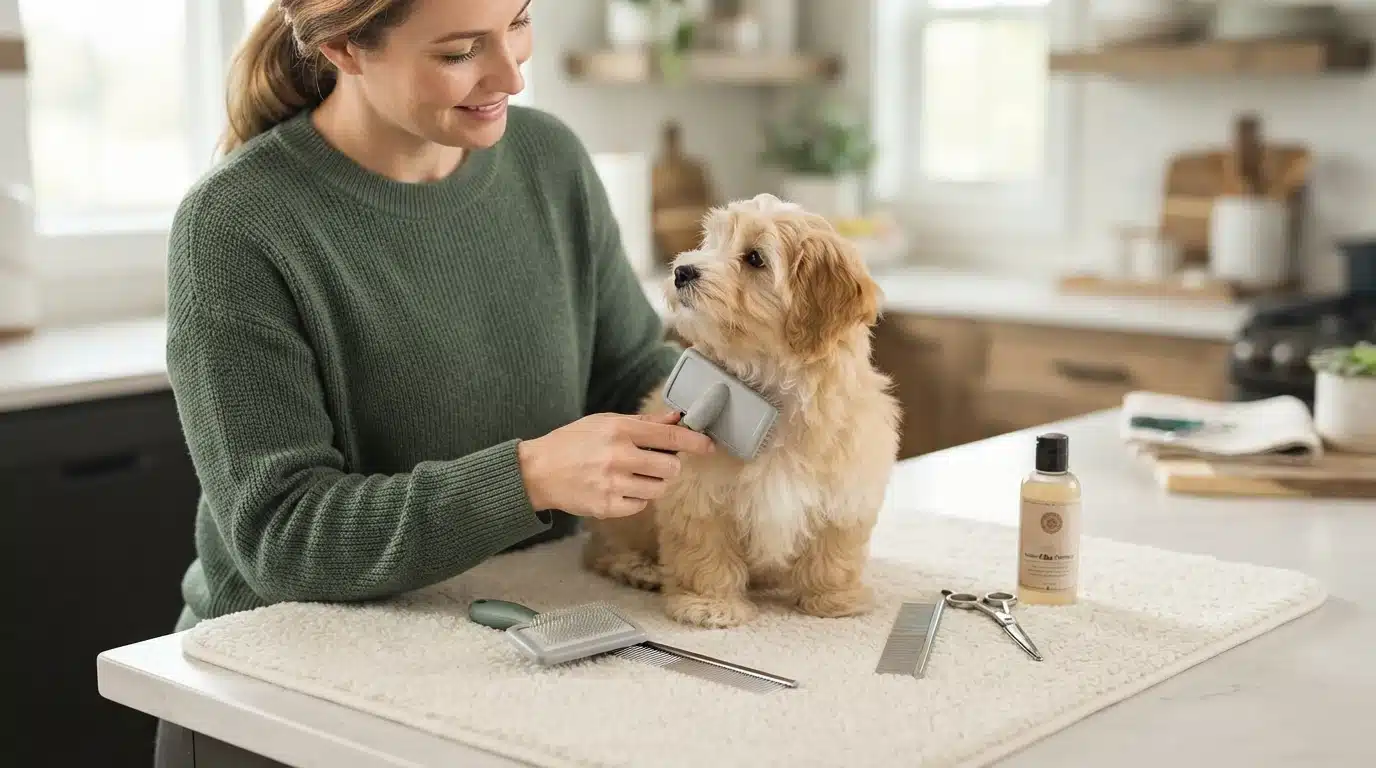
Havanese, Havapoos, and Cavapoos need regular brushing, nail trims, and ear care for life. Teach this now in tiny steps. Touch a paw, then reward. Handle the ears, then reward. Add the brush and clippers slowly over a few weeks. Five calm minutes a day prevents the squirming and snapping that makes grooming a battle later.
Small dogs need people trained too
Train your guests, not just your puppy. Ask visitors to ignore the puppy until it settles, avoid looming over it, and never grab or pick it up without warning. Also protect its confidence around big dogs: a lively large dog can frighten a toy breed in seconds, so arrange calm, size-appropriate playdates instead.
Common Training Mistakes and How to Recover
The mistakes that stall progress
Most stalls come from a handful of habits. Sessions run too long, so your puppy checks out. Cues get repeated five times until “sit, sit, sit” becomes the real command. Treats are too big, so meals get filled before training does. And owners skip steps, asking for a reliable stay before the puppy can hold one for two seconds. Fix one habit at a time.
When it is not a training problem
Sometimes the puppy needs a vet, not more reps. Sudden house soiling, a drop in appetite, or a puppy who stops responding altogether can point to pain, a urinary infection, or tummy trouble. Small breeds hide discomfort well. Rule out health first, then look at stress: a new home, a missed nap, or a loud week can undo a month of progress.
A simple weekly review
Once a week, jot down three things: which cues are solid, which are shaky, and what changed in your puppy’s world. Keep what works, drop what you have not practiced, and lower the difficulty on shaky skills. Progress in small breed puppy training rarely moves in a straight line, so expect a good week to follow a rough one.

Training works best when it starts in the first weeks home. The skills above fit short daily sessions, so you can begin today. Ready to bring home a well-started Havanese, Havapoo, or Cavapoo? See Sage Puppies and start your application.
Frequently Asked Questions
Q1: What are the essential skills to train a small breed puppy first?
Start with name response and a marker word, then sit and a hand target. Next comes recall, the leave it and drop it pair, and finally a settle on a mat. Each skill builds on the last, so keep the order.
Q2: How long should training sessions be for a small breed puppy?
Keep sessions at 3 to 5 minutes for an 8 to 10 week old puppy, building toward 10 minutes by four or five months. Aim for three or four short sessions a day, and stop before your puppy loses focus.
Q3: What training treats and tools are best for small breed puppies?
Use soft, pea-sized treats that stay under 10 percent of daily calories, plus a treat pouch, lightweight harness, six-foot leash, and a small crate or pen. A clicker is optional but handy for marking exact moments.
Q4: How do I house train a small breed puppy faster?
Match the schedule to the bladder: about one hour per month of age, plus one. Go out after meals, naps, and play, reward outdoors within two seconds, and clean accidents with an enzymatic cleaner.
Q5: When should my puppy start a socialization class?
The key window runs from about 3 to 14 weeks, so classes can begin once your vet clears vaccines. Keep visits short, pair new experiences with treats, and let your puppy retreat if unsure.
Q6: What if my puppy stops making progress?
Rule out health first, since pain or a urinary infection often looks like a training stall. Then check session length, treat size, and stress. Lower the difficulty and rebuild one skill at a time.
Wrapping Up Your Small Breed Puppy Training Plan
Small breed puppy training works when you size everything down: short sessions of three to five minutes, pea-sized treats, and one skill at a time, taught in order from name response to a settle on a mat. Match potty trips to your puppy’s bladder, socialize during the 3 to 14 week window, and reward calm behavior at doors instead of fuss. When progress stalls, check health first, then trim the difficulty. Keep sessions brief, end on a win, and practice daily. Small steps, repeated often, build a well-mannered companion.