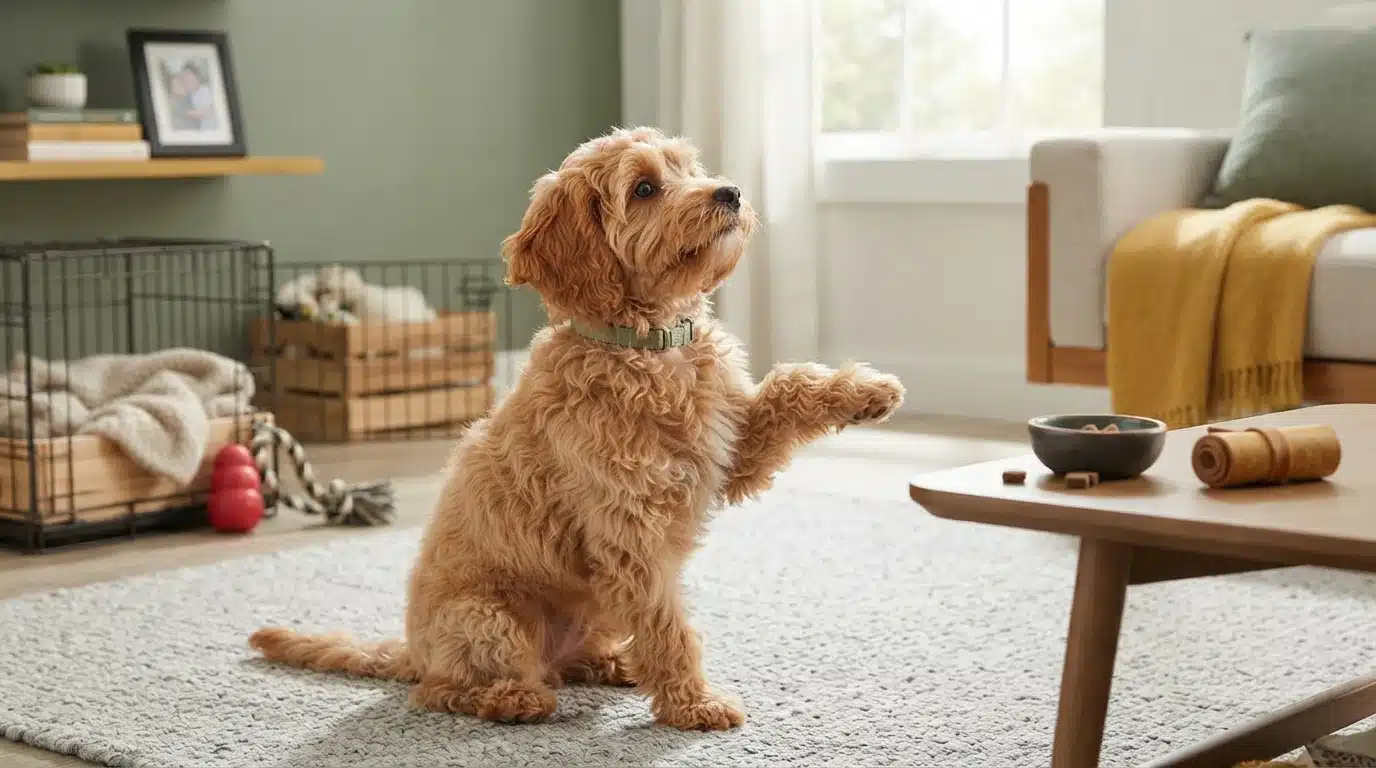
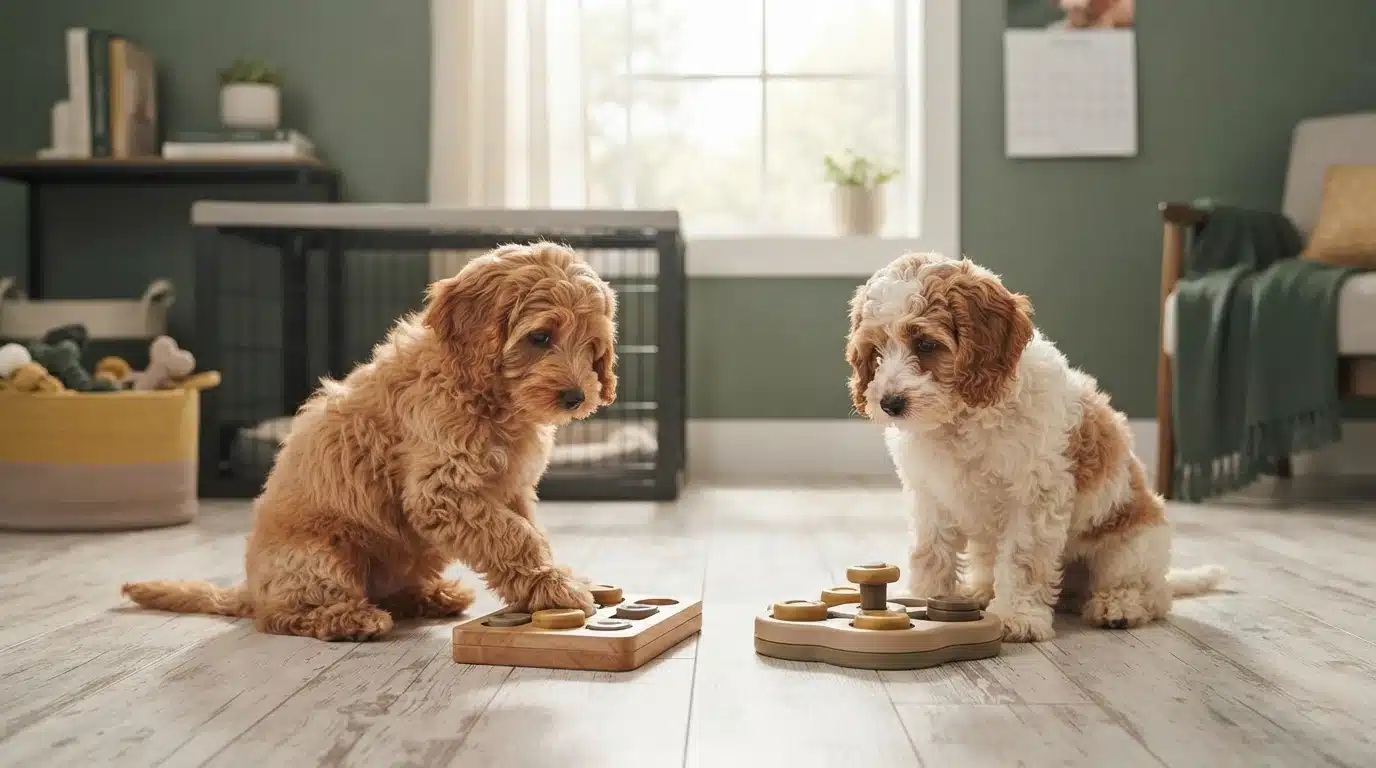
Quick Summary: Start training a Havanese puppy on day one by teaching name response, a consistent potty routine, and crate comfort in that order. Build from there with a marker word, gentle handling, short obedience sessions, everyday socialization, and gradual alone-time practice. Sage Puppies emphasizes that consistency matters more than speed: housebreaking may take four to six months or longer, while crate and separation habits should increase slowly over several weeks.
The puppy is asleep in the crate, the house is finally quiet, and you are wondering which single thing to teach a Havanese puppy first. Every guide says start on day one. Few explain what “start” means for a breed this small and this attached to people.
That gap causes most early mistakes, because Havanese puppy training age matters less than order: which habit goes first, so potty breaks, crate time, and short absences build on each other instead of clashing. This guide walks through day one to the first year in sequence, including workday routines and grooming cooperation. It draws on Cassie Milar’s documented experience raising Havanese, Havapoo, and Cavapoo puppies at Sage Puppies in South Jordan, Utah, where each litter starts these foundations before going home.
Step 1: Start on Day One and Teach the Right Thing First
Start training a Havanese puppy on the day it comes home, usually around eight weeks. Puppies learn from every interaction, so your job is to teach the right habits first: a potty spot, a name, and gentle handling. Small steps now prevent bigger problems later.
When to Begin and How to Know Your Puppy Is Ready
Training starts the moment your puppy steps into your home, not after a settling-in grace period. Readiness looks like curiosity, eating well, and following movement with its eyes. If your puppy seems tired or overwhelmed, keep sessions short. A few calm minutes beat a long lesson.
The First Three Things to Teach
Work on these in order, a few minutes at a time:
- Name recognition. Say the name, then reward the moment your puppy looks at you.
- Potty routine. Take your puppy out after waking, eating, and playing, and praise successes outdoors.
- Crate comfort. Feed meals near or inside the crate so it becomes a safe place.
If you want a head start before pickup day, Sage Puppies’ new puppy preparation guide walks through what to have ready.
Why Havanese Learn Quickly and Where They Need More Time
Havanese are bright and people-focused, so basic obedience training tends to click fast. Housebreaking and alone-time training need more patience because small bladders and Velcro tendencies take weeks to settle. Adjust to your puppy, not a fixed calendar.
Step 2: Build a Reliable Name Response, Marker Word and Handling Routine
The first week home, focus on three basics: name response, a marker word, and gentle handling. They take minutes a day and make every later lesson easier when you teach a Havanese puppy.
Teaching the Name Response
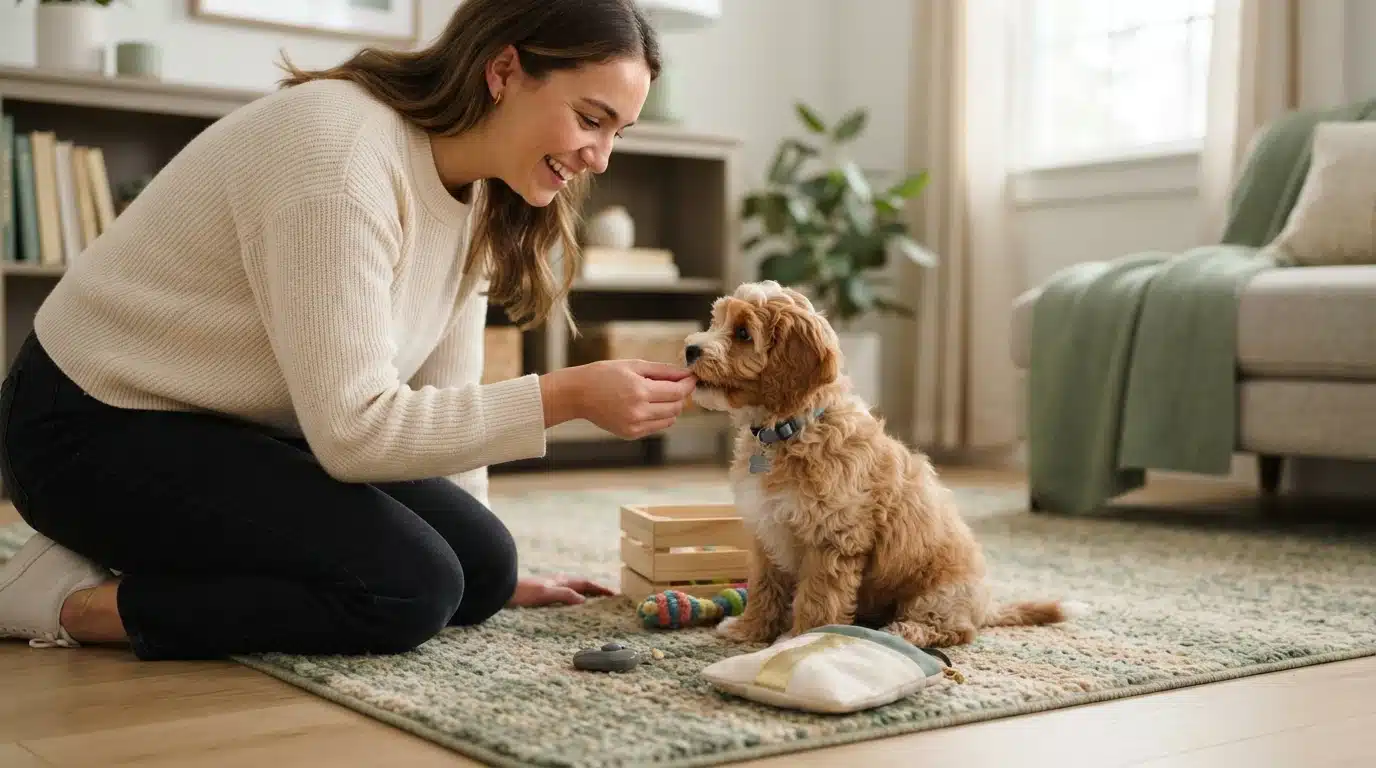
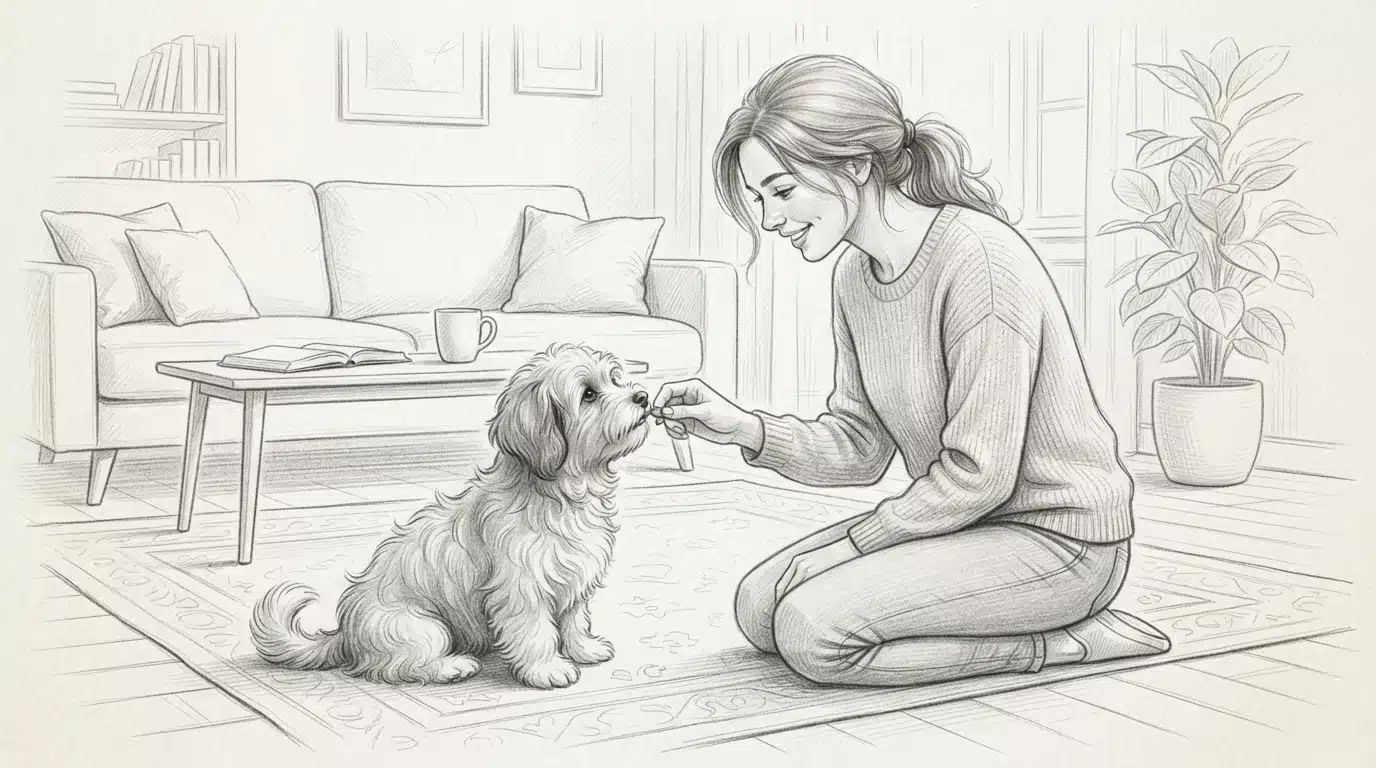
Say your puppy’s name once, in a happy voice. The moment she looks at you, mark it and give a treat. Practice five times, two or three sessions a day, in quiet rooms first. Then add mild distractions. Never repeat the name like a chant; that teaches her to tune it out. This is the foundation of Havanese recall training later.
Introducing a Marker Word
Pick one short word, such as “yes,” and use it the instant your puppy does something right. Say the word, then deliver the treat within a second or two. That timing is what connects the sound to the reward. Everyone in the family uses the same word, so your puppy gets a consistent signal.
Gentle Handling for Grooming and Vet Visits
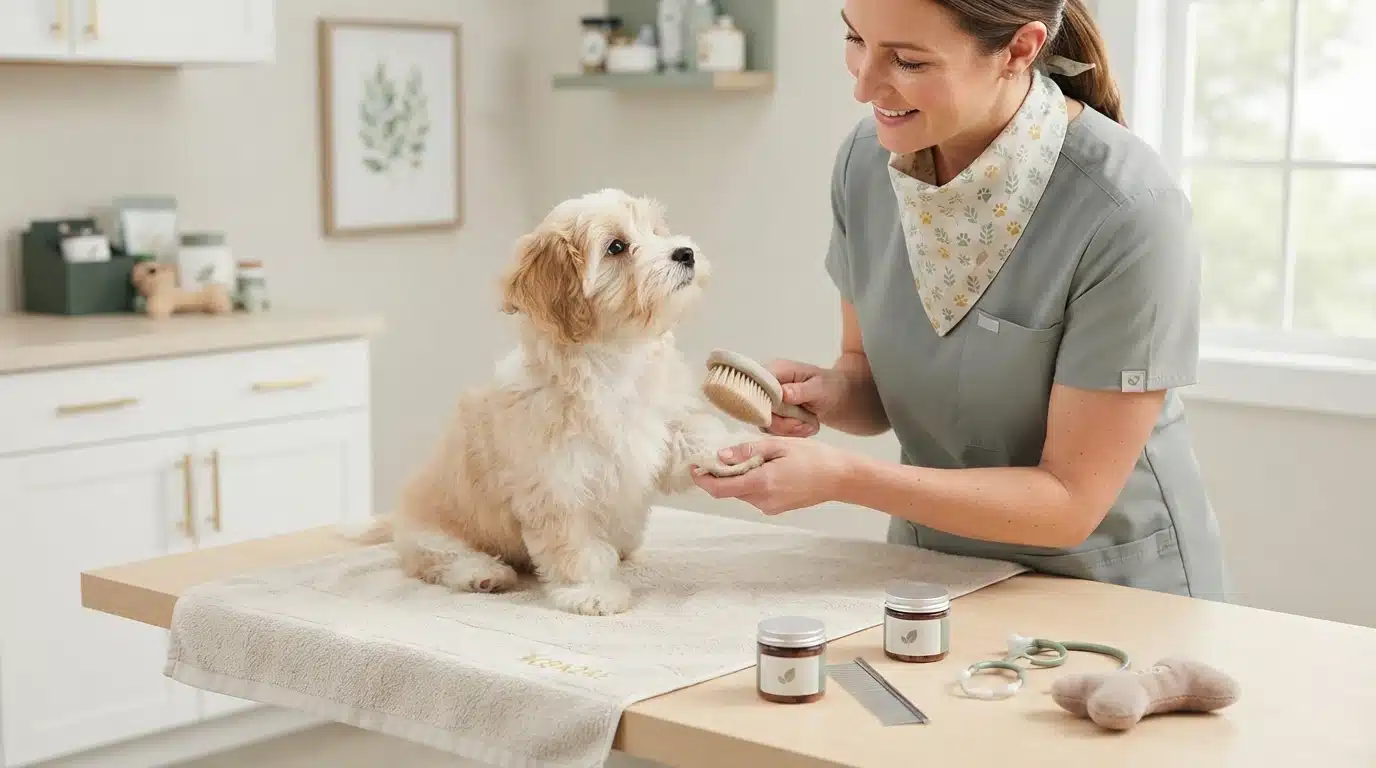
Handle paws, ears, teeth and belly briefly each day, pairing each touch with a treat and calm praise. Havanese coats need regular brushing, so early cooperation pays off for life. Short, easy sessions prevent wiggling from becoming a struggle. This groundwork also makes Havanese obedience training smoother, and gentle handling at home prepares your puppy for first vet visits and nail trims.
Step 3: Set Up the Toilet Routine That Drives Housebreaking
Housebreaking runs on rhythm, not lectures. Take your Havanese puppy out at the same moments every day, reward success outdoors, and prevent sneaky accidents in between. A predictable schedule teaches the bladder faster than anything else.
The Daily Toilet Schedule
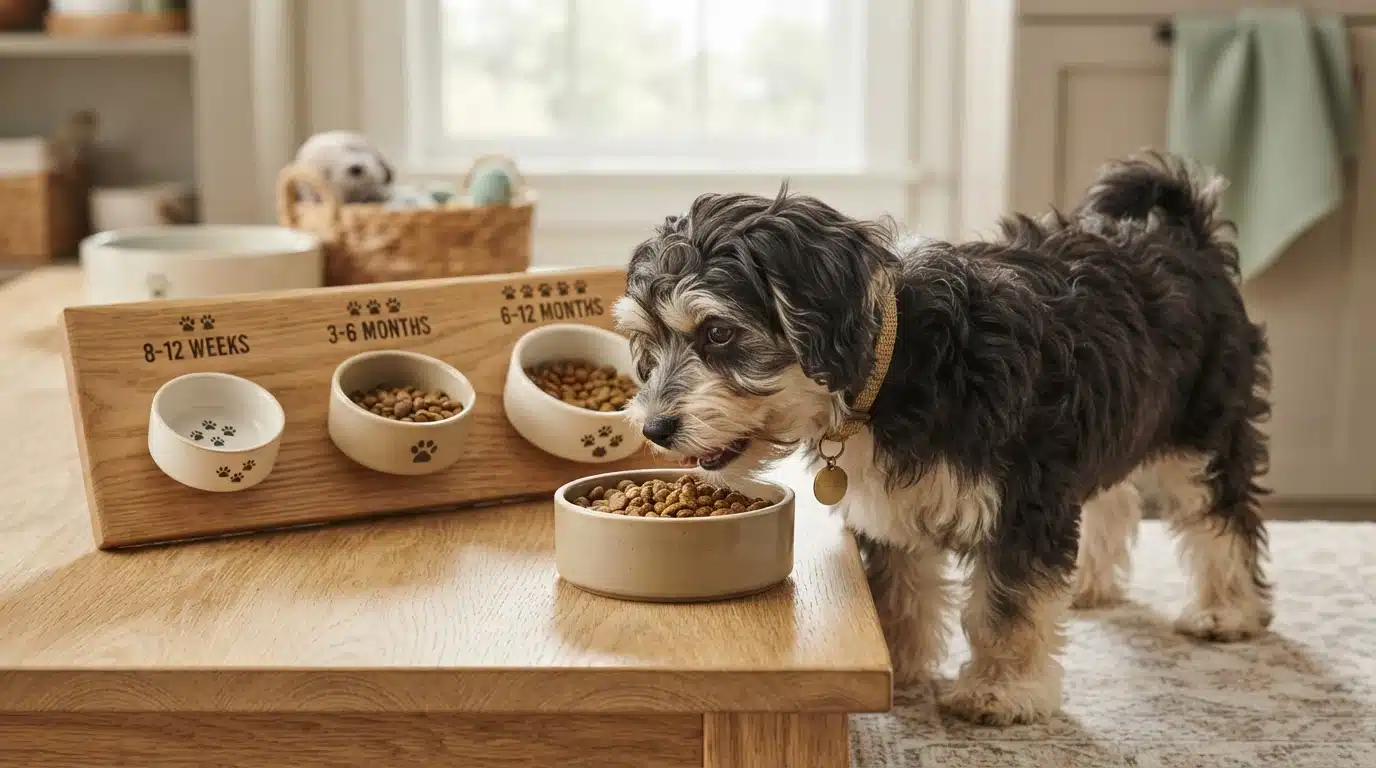
Carry your puppy out on waking, after every meal, after play, and right before bed. A rough rule: puppies can hold it about one hour per month of age, so a nine-week-old needs a break roughly every two hours. Go to the same door and the same grassy spot each time, then praise quietly once they finish. AKC’s potty timeline guidance stresses that the schedule you keep drives the results. For an hour-by-hour plan built for toy breeds, this small breed puppy potty schedule matches the routine above.
How Long Housebreaking Usually Takes
Most Havanese get reliable between four and six months old, though some are steady closer to a year. Small bladders, big feelings, and rainy-day refusals all stretch the timeline. Expect steady progress, not a magic week. If accidents spike suddenly, restart the basics rather than assuming a setback. What matters is consistency across everyone in the house, not speed.
Using Pads and Indoor Toilet Options
Pads, turf trays, or a litter box work well for apartment families and workday absences. Place the pad far from the bed and food, and reward pad hits just like outdoor ones. If you start indoors, moving the pad gradually toward the door makes the later switch outside easier. Pick one system and stay with it. Mixing pads and yard access in week one confuses most puppies.
Pick one toilet spot and one system, then let repetition do the teaching.
Step 4: Make the Crate a Calm, Predictable Place
Sizing and Introducing the Crate
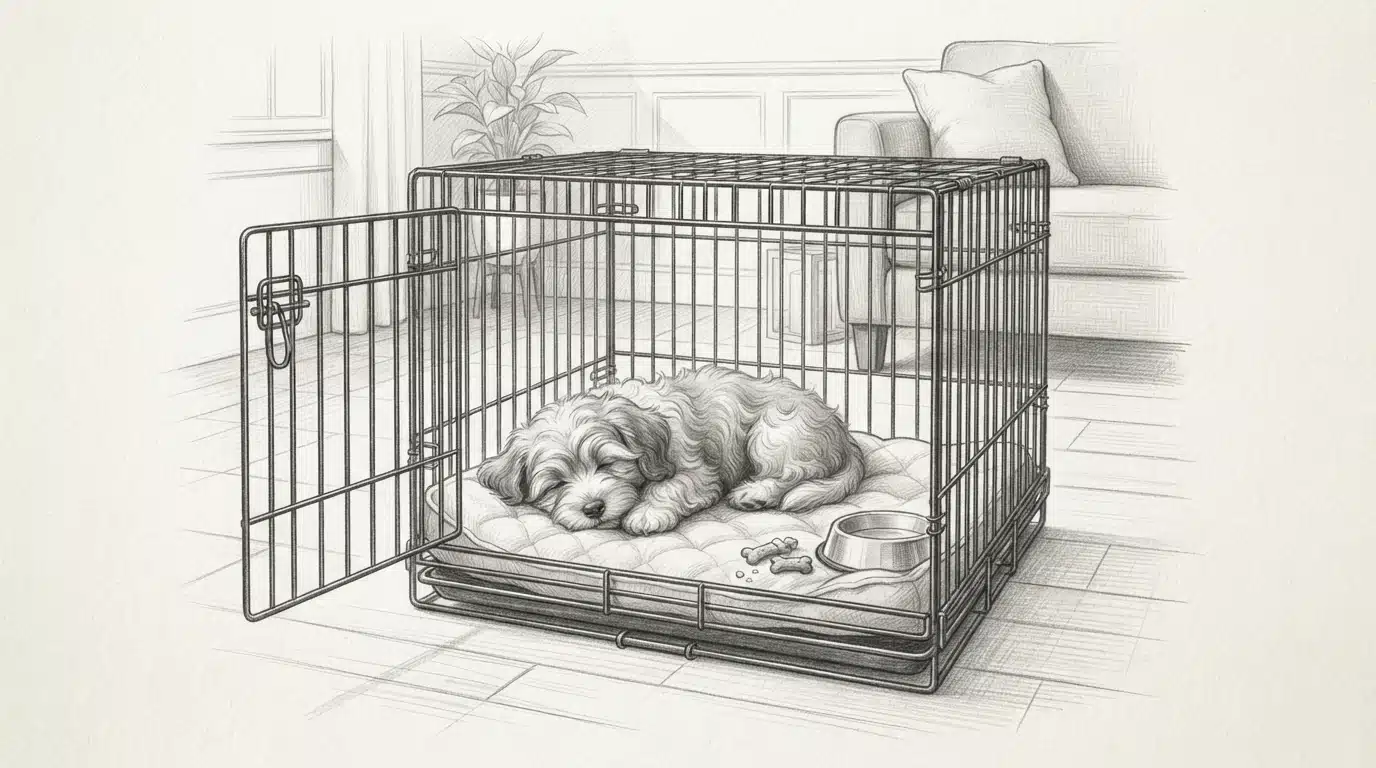
A crate should be big enough to stand up and turn around in, but not much bigger. Too much space invites potty accidents in one corner and sleep in the other. Introduce it with the door open, treats tossed inside, and meals served there so good things happen near it from day one. Our detailed guide to crate training a Havanese puppy covers this without stress.
Building Calm Rest and a Bed Routine
Havanese puppies need a lot of sleep, usually 18 to 20 hours a day, and overtired puppies get mouthy and wild. Watch for yawning, slow blinks, or frantic zoomies, then quietly settle your puppy in the crate. Keep a short cue like “kennel up,” reward calm entry, and use the same pre-nap pattern each time so rest becomes predictable.
Using the Crate for Short Absences
Start with a few minutes while you stay in the room. Build up slowly, and give a frozen stuffed toy only for these sessions. This teaches your Havanese that being alone is safe and boring, not scary, which protects you from separation trouble later.
Step 5: Teach the Core Cues of Havanese Obedience
The best way to teach a Havanese puppy is short, happy sessions built on treats and praise. Positive reinforcement works well with this breed because Havanese want to be with you and will repeat anything that earns your attention, a method the AKC explains as rewarding a behavior so it happens more often. Keep each session to three to five minutes.
Sit, Down and Stay
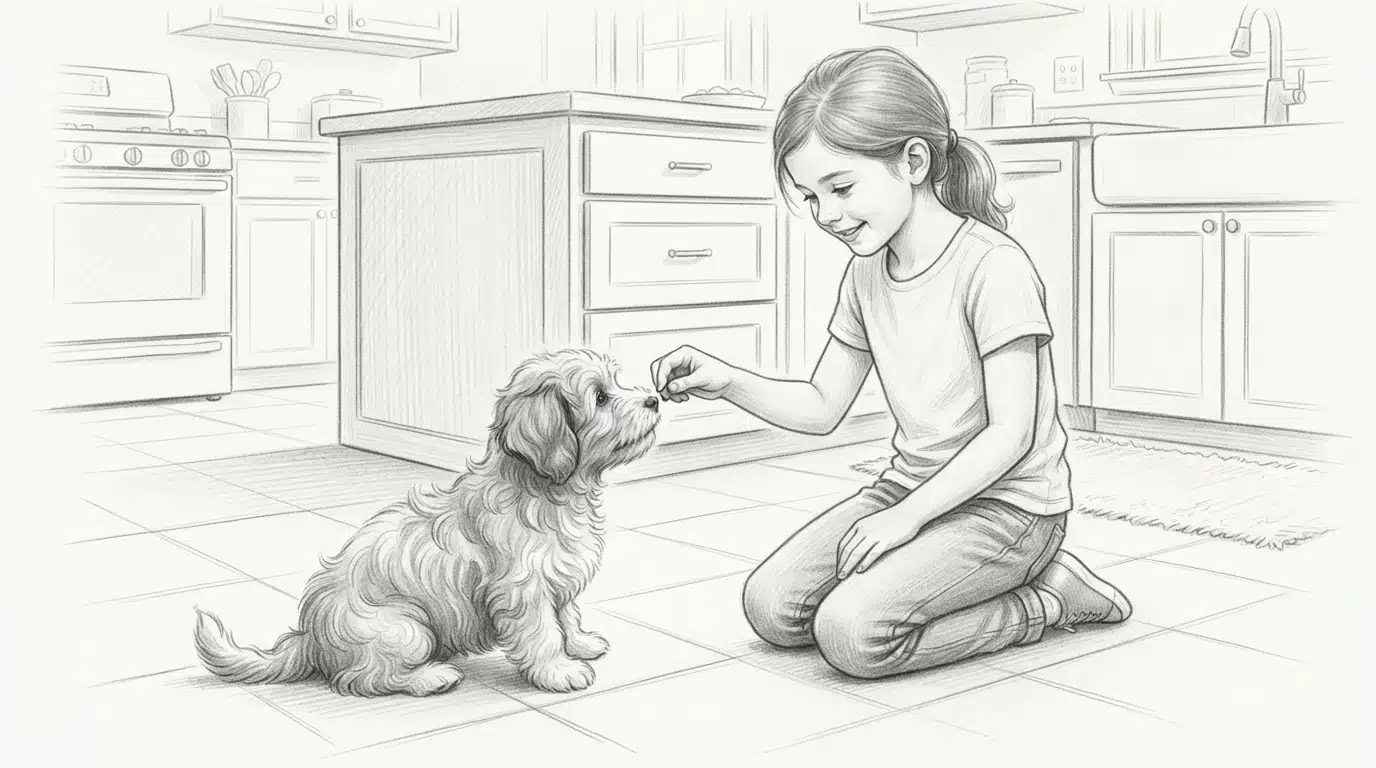
Lure your puppy into a sit by moving a treat slowly over her head so her nose points up and her bottom drops. For down, draw the treat to the floor and slightly forward. Once she offers either position quickly, fade the lure and use the word alone, then reward every other rep. Teach stay last. Ask for a sit, pause one second, treat, then release with a word like “free.” Build duration and distance slowly, and always return to your puppy to reward rather than calling her out of a stay.
Come, the Cue That Takes the Longest
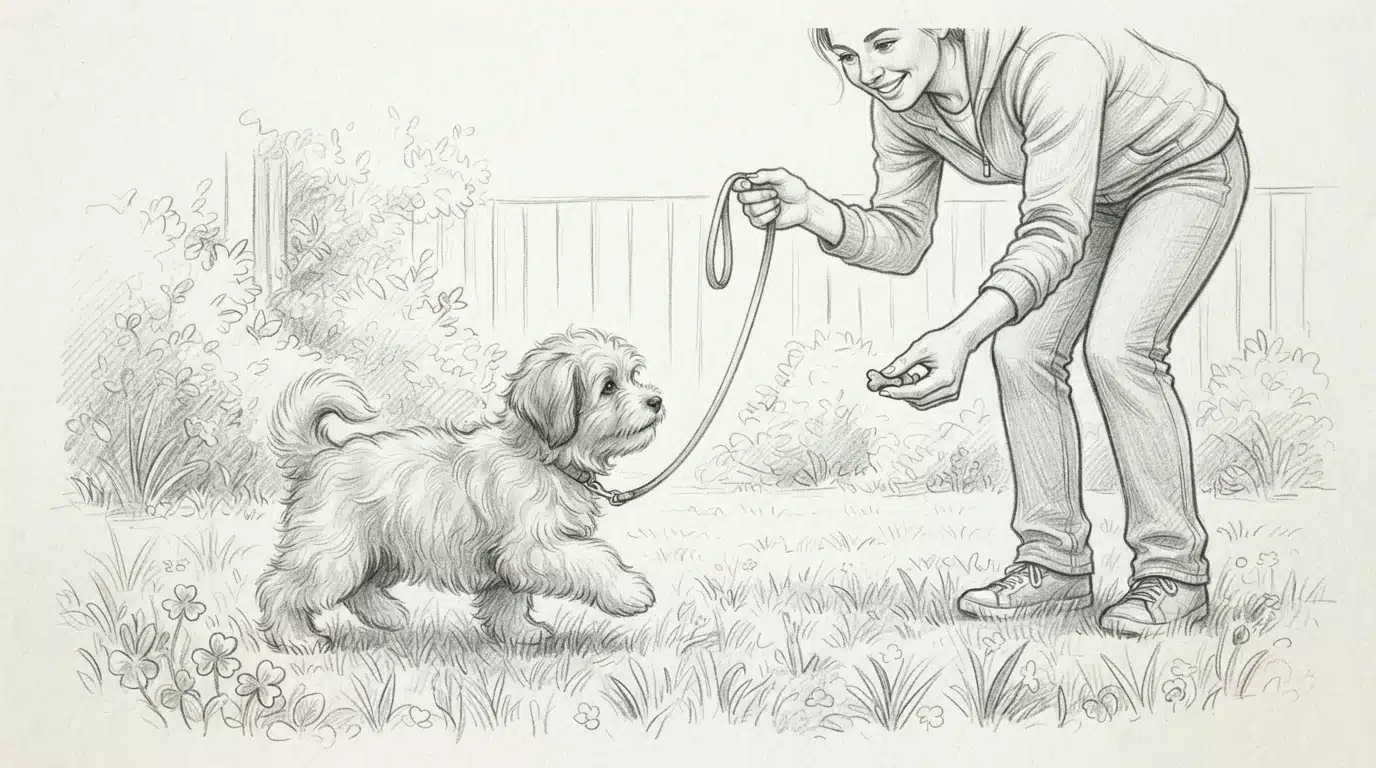
Reliable recall is the hardest cue to teach a Havanese, so start easy and never punish a slow return. Say your puppy’s name once, crouch, cheer, and reward her the moment she reaches you, as the AKC’s basic cues guide recommends. Practice indoors, then in a fenced yard. A long line helps outdoors. Come should always mean good things happen, so skip it when you plan to end fun, grab her for a bath, or leave the park.
Leave It, Drop It and Loose-Leash Walking
Leave it protects a puppy who samples everything. Show a treat in a closed hand, wait for eye contact away from the fist, then reward from your other hand. Trade up for drop it: offer a better treat in exchange for the toy she releases. For walking, reward at your side and stop when the leash tightens. Harnesses suited to small breeds make loose-leash work far easier for Havanese and their Havapoo and Cavapoo cousins.
Step 6: Socialize for Real Life, Not Just for Puppy Class
Puppy class is a start, but most of your Havanese’s social life happens outside it. The goal is simple: help your puppy see everyday life as normal, one calm experience at a time.
The Socialization Window and Vet Guidance
The most sensitive period for puppy socialization is the first three months, when sociability outweighs fear, so exposure starts the day your puppy comes home. Ask your vet how to balance this with vaccine safety. The AVSAB position statement supports safe socialization before a puppy finishes shots, since the window closes too fast to wait.
A Practical Socialization Checklist
Work through new experiences in short, happy sessions:
| Category | Examples |
|---|---|
| Surfaces | Grass, tile, gravel, carpet, wet pavement |
| Sounds | Dishwasher, doorbell, traffic, kids playing |
| People | Men with beards, children, someone in a hat |
| Handling | Paws, ears, teeth, brushing position |
A Havanese puppy socialization checklist works best when it covers daily life, not just dog parks, and the week you bring your puppy home is the natural time to start one. Keep the list on your fridge and tick items off weekly.
Socializing Without Overloading
More is not better. Watch for stress signals: yawning, lip licking, or hiding means pause. Let your puppy approach new things at their own pace and pair each encounter with treats. Then end the session while your puppy still feels confident.
Step 7: Build Comfort With Alone Time From the Start
Havanese are Velcro dogs, so alone-time practice should start in week one, not after a problem shows up. The goal is simple: your puppy learns that your leaving is boring and your coming back is no big deal.
Short, Low-Key Departures
Start while you are still home. Put your puppy in the crate or playpen for a few minutes, walk to another room, and return without a fuss. Skip long goodbyes, because emotional departures teach your puppy that leaving means something scary. The AKC recommends starting alone practice inside the house with a safe confinement area, then building up. Calm in, calm out.
Planning the Workday
If you work away from home, plan before pickup day. A young puppy cannot hold it all day, so arrange a midday visit from a neighbor, dog walker, or family member. Leave a puzzle toy or frozen stuffed Kong so departure has a payoff, and give exercise and a potty break first. The AKC notes both tactics ease the stress of time alone. Build duration slowly over weeks, not days.
Watch for pacing, nonstop howling, drooling, or house soiling right after you leave. Those are stress signs, not spite.
When to Ask for Help
Some puppies still panic no matter how careful you are. If your Havanese cannot settle within a few minutes, escalate gently: shorten absences, and ask your vet or a certified trainer about separation anxiety support. Early help works far better than waiting it out.
Training Mistakes That Quietly Slow Your Havanese Down
Over-Coddling and Inconsistent Rules
Havanese are companion dogs, and it is easy to soothe every whine. The problem? Coddling teaches your puppy that fussing works, which feeds clinginess and separation stress. Pick one set of house rules, then have everyone in the family follow them the same way, every time.
Long Sessions, Repeated Cues and Scolding
Keep sessions to about five minutes, two or three times a day. Say a cue once; if your puppy ignores it, help her succeed instead of chanting “sit, sit, sit.” Scolding teaches a Havanese to shut down, since these dogs read your tone closely and learn fastest when training feels like play.
Practicing Only in One Room
A recall that works in the kitchen fails in the yard. Puppies do not carry lessons to new places on their own, so practice each skill in several rooms, then outside, with mild distractions before hard ones. That steady generalization is what makes obedience hold up anywhere.

Training works best when it starts on day one with the right puppy. If your family is ready for a well-bred Havanese, Havapoo, or Cavapoo, see the available puppies at Sage Puppies and start your application today.
Frequently Asked Questions
Q1: When should I start training a Havanese puppy and what should it learn first?
Start the day your puppy comes home, usually around eight weeks. Teach name recognition, the potty routine, and crate comfort first, in that order.
Q2: How long does it take to potty train a Havanese puppy?
Most Havanese become reliable between four and six months, though some need closer to a year. Consistency matters more than speed.
Q3: What should I work on with my Havanese puppy in the first week home?
Name response, a marker word, gentle handling, the toilet schedule, crate comfort, and brief alone-time practice.
Q4: How long can a Havanese puppy hold its bladder?
About one hour per month of age, so plan breaks accordingly.
Q5: When should I start crate and alone-time training?
Both begin in week one, building duration slowly over weeks.
Conclusion
Training a Havanese puppy comes down to order, not speed. Start on day one with name response, a potty routine, and crate comfort, then layer in markers, handling, core cues, socialization, and short absences. Progress follows your puppy, not a fixed calendar, so expect housebreaking to take months and alone-time practice to build slowly over weeks. Keep sessions short, keep family rules consistent, and reward calm behavior every time. Adjust the plan to your individual dog, and the same foundations carry Havanese, Havapoo, and Cavapoo puppies through a calm, well-trained first year.