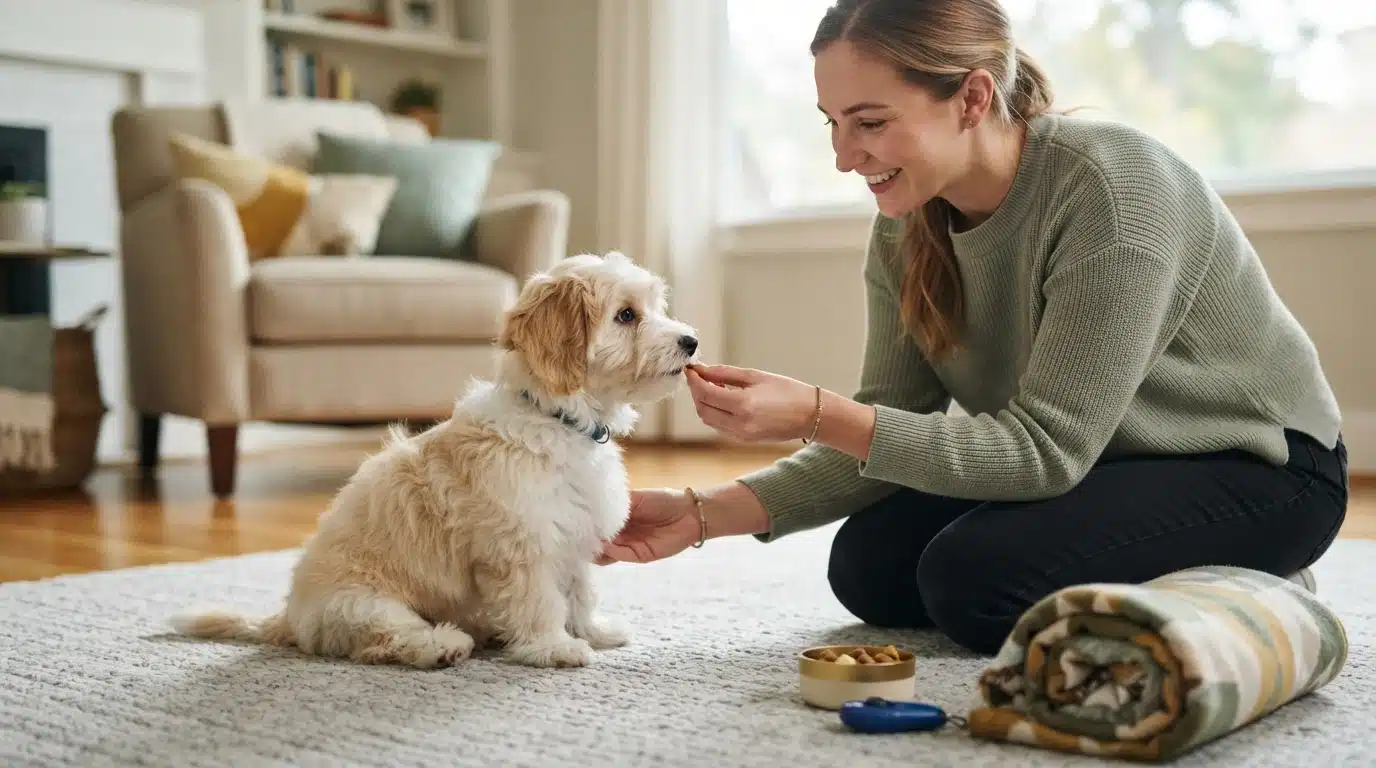
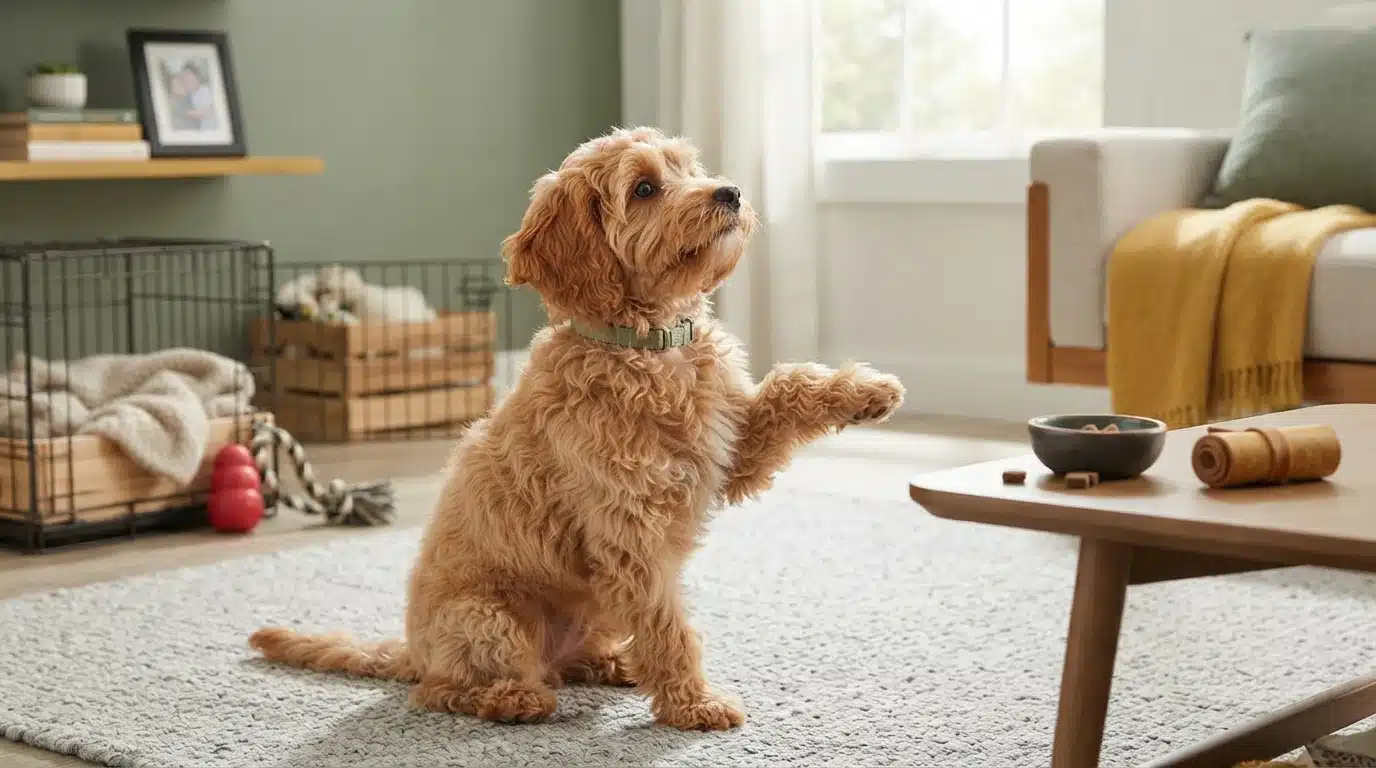
Quick Summary: Crate train a Havanese puppy by making the crate comfortable, rewarding voluntary entry, and feeding meals inside before closing the door for very short sessions. Increase crate time or distance in small steps only while the puppy remains calm, and treat fading whines as normal settling but back off if crying becomes frantic scratching, panting, or drooling. Never use the crate as punishment, and use an exercise pen or professional help if distress continues.
A Havanese puppy who bolts from his crate, plants his feet at the door, then cries himself hoarse is not stubborn. He is telling you the door closed before he ever had a reason to love the crate. Most crate problems are shaping problems, not willpower contests between you and a nine-pound puppy.
Havanese puppy crate training works when you go slow and measure fit before you measure time. Pick the right crate size, teach him to go in and out freely, build short happy sessions, and learn to tell distress from normal settling. This guide shows how to crate train a puppy step by step, without stress, based on current veterinary and humane training guidance and the routines Cassie uses with Sage Puppies litters in South Jordan, Utah.
Before You Start: Crate, Bedding, and Rewards Worth Buying
Start crate training a Havanese puppy in the first week home, often at eight to ten weeks old, when habits form fastest. Set up the crate before your puppy arrives so the routine starts on day one. Preparation like this is also part of a small breed puppy adoption checklist.
Choosing a Crate Your Havanese Will Grow Into
Adult Havanese usually need about a 24-inch crate. Fit matters more than brand: your puppy should stand, turn around, and lie stretched out without extra room. A wire crate with a divider panel lets you shrink the space now and expand it later. See PetMD’s crate sizing chart for measurements by weight.
Bedding, Water, and the Setup That Stays Put
Use a thin, washable mat rather than thick padding. Clip a water bowl to the crate door to avoid spills, and pick one quiet spot that stays put.
Rewards Worth Having on Hand
Stock small soft treats, a stuffed chew toy, and your puppy’s favorite food. Reward calm behavior inside the crate every single time.
Step 1: Make the Crate the Best Place in the Room
Havanese puppy crate training starts before the puppy ever walks in. The crate has to earn his interest first, so spend the first few days making it a place he chooses on his own. Rescue groups and trainers agree on this order: setup, exploration, then short rewards. Here is how it looks in a Utah family room or wherever your puppy lands.
Place the Crate Where You Are
Put the crate where your family actually spends time. The Humane Society recommends the family room, not a distant bedroom or garage. A Havanese bred for companionship settles faster when he can hear you nearby. If you brought your puppy home through our delivery program, set the crate up in your living space on day one, not in a quiet back room.
Open Door, Free Exploration, No Commands
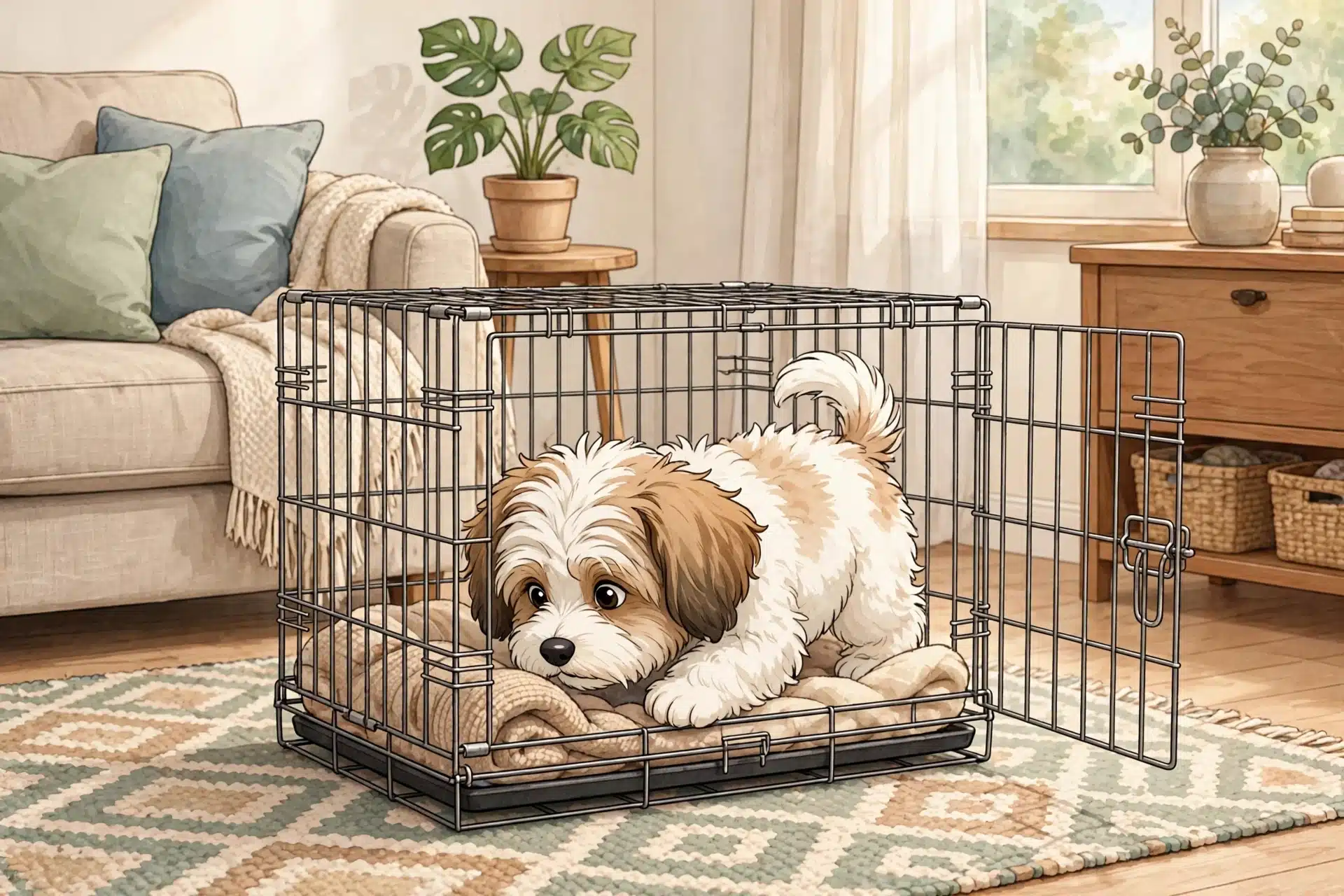
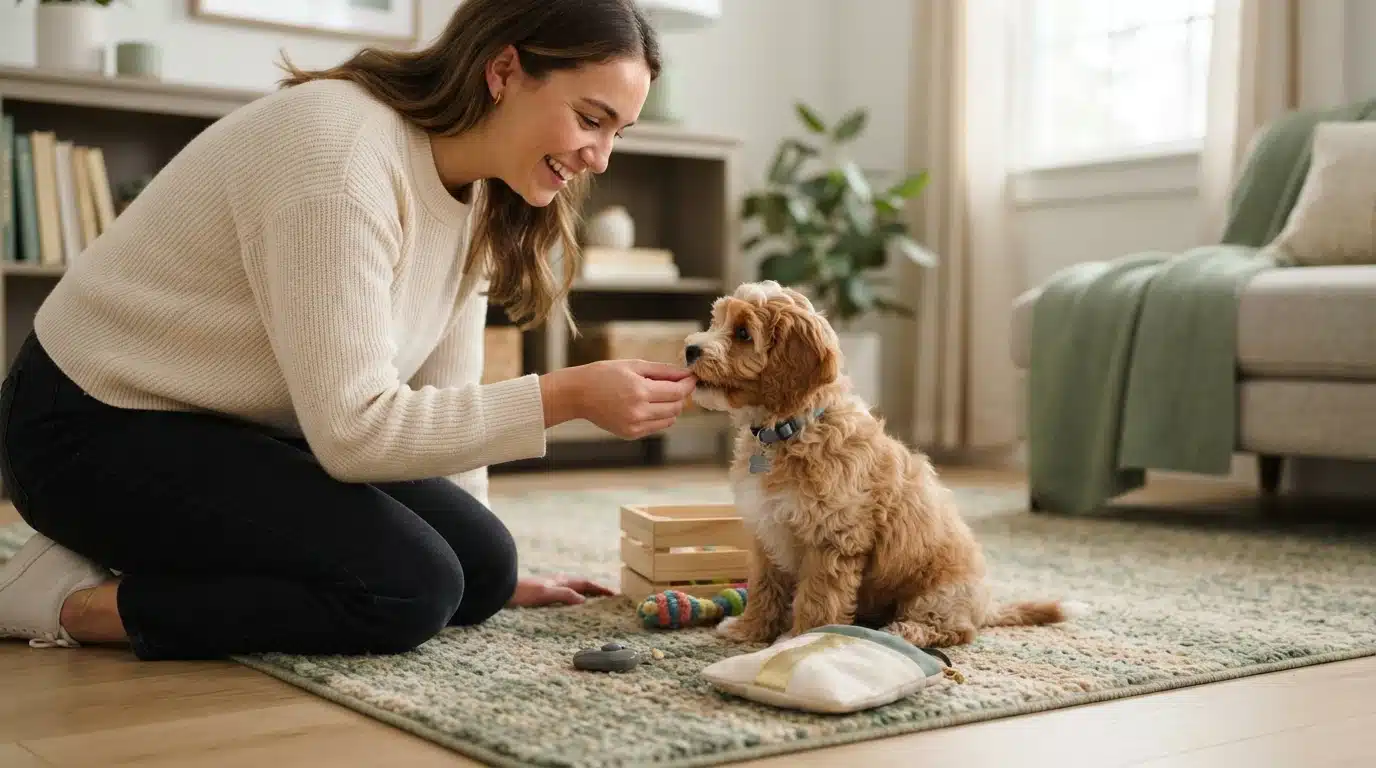
Tie the door open or remove it. Scatter a few treats just inside, then let him wander in and out with no “kennel” cue at all. Humane groups suggest rewarding a puppy when he enters and stays willingly. Never push, lure with your hand, or shut him in during these first sessions.
Add a Chew He Is Motivated to Stay With
Once he enters easily, feed meals near the crate and toss a stuffed chew or food puzzle to the back. He learns that going in means good things happen, and staying in means they keep happening. End each session before he gets bored or fussy.
Step 2: Move His Meals Into the Crate
Food is the fastest way to make crate training a Havanese puppy feel safe. A Havanese who eats every meal inside the crate stops seeing it as a trap and starts seeing it as the place where good things happen.
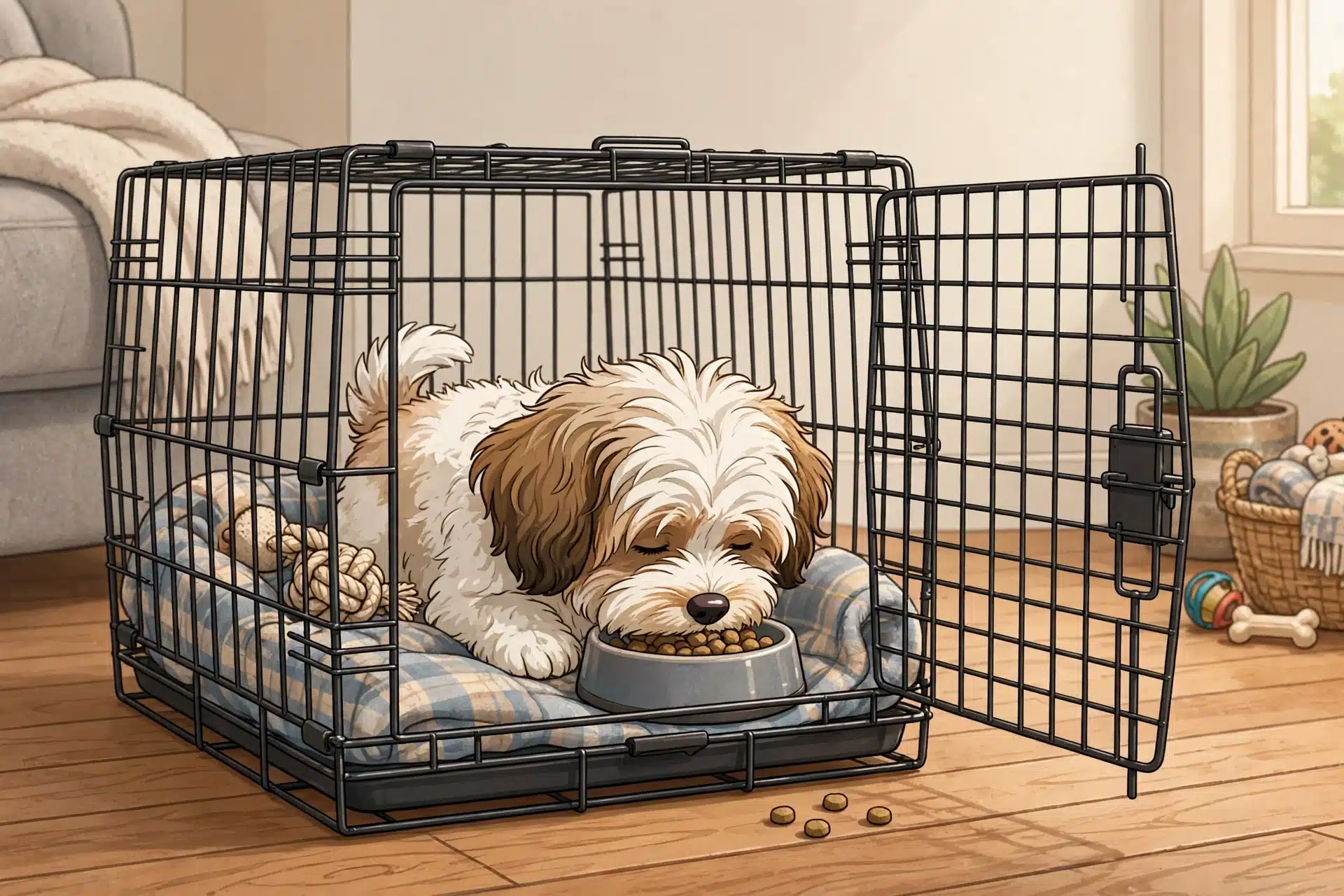
First Meals With the Door Open
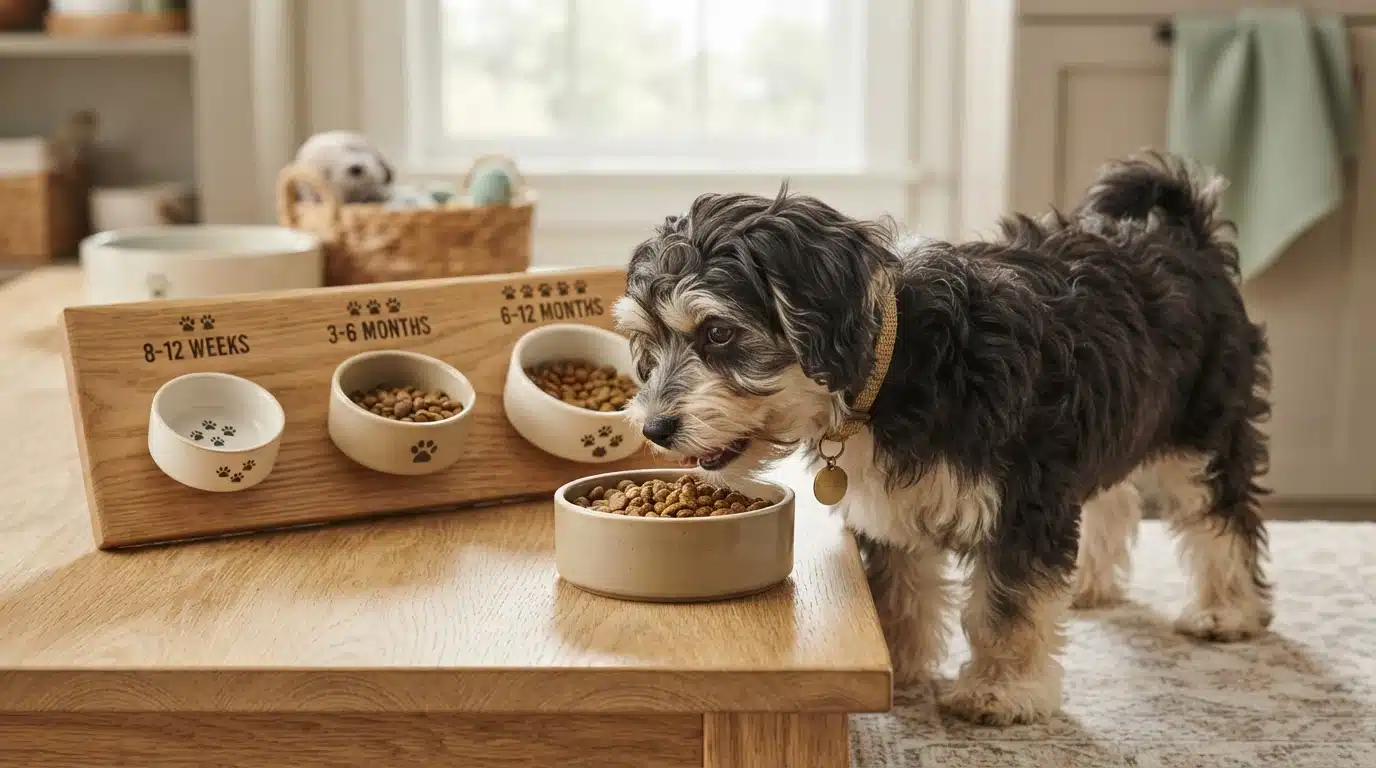
Start by feeding him in front of the crate, then place the bowl just inside the doorway. After a day or two, push the bowl toward the back so he steps fully in to eat. Keep the door open the whole time. He can walk out whenever he wants, which builds trust before you ask for anything more.
Closing the Door While He Eats
Once he trots in without hesitating, close the door while he eats. Open it before he finishes, then stretch the time a little each meal. The goal is simple: he stays busy chewing, so the closed door barely registers. If he whines, you moved too fast, so go back a step.
Watch the Body Language, Not the Clock
Progress is measured in relaxed shoulders, not minutes. A settled puppy lies down, takes the food, and eats with a soft face. Tense signs like a tucked tail, refusal to enter, or frantic scratching mean slow down. Reward-based crate training works because he chooses to stay, and each calm meal cements that choice.
Step 3: Add Duration in Small, Reversible Steps
Once your Havanese pup is comfortable going in and out freely, you can stretch the time. Crate training a Havanese puppy works best when each jump is small enough to reverse. If a session goes badly, you simply drop back to the last duration that ended well.
Short Sessions With You Beside Him
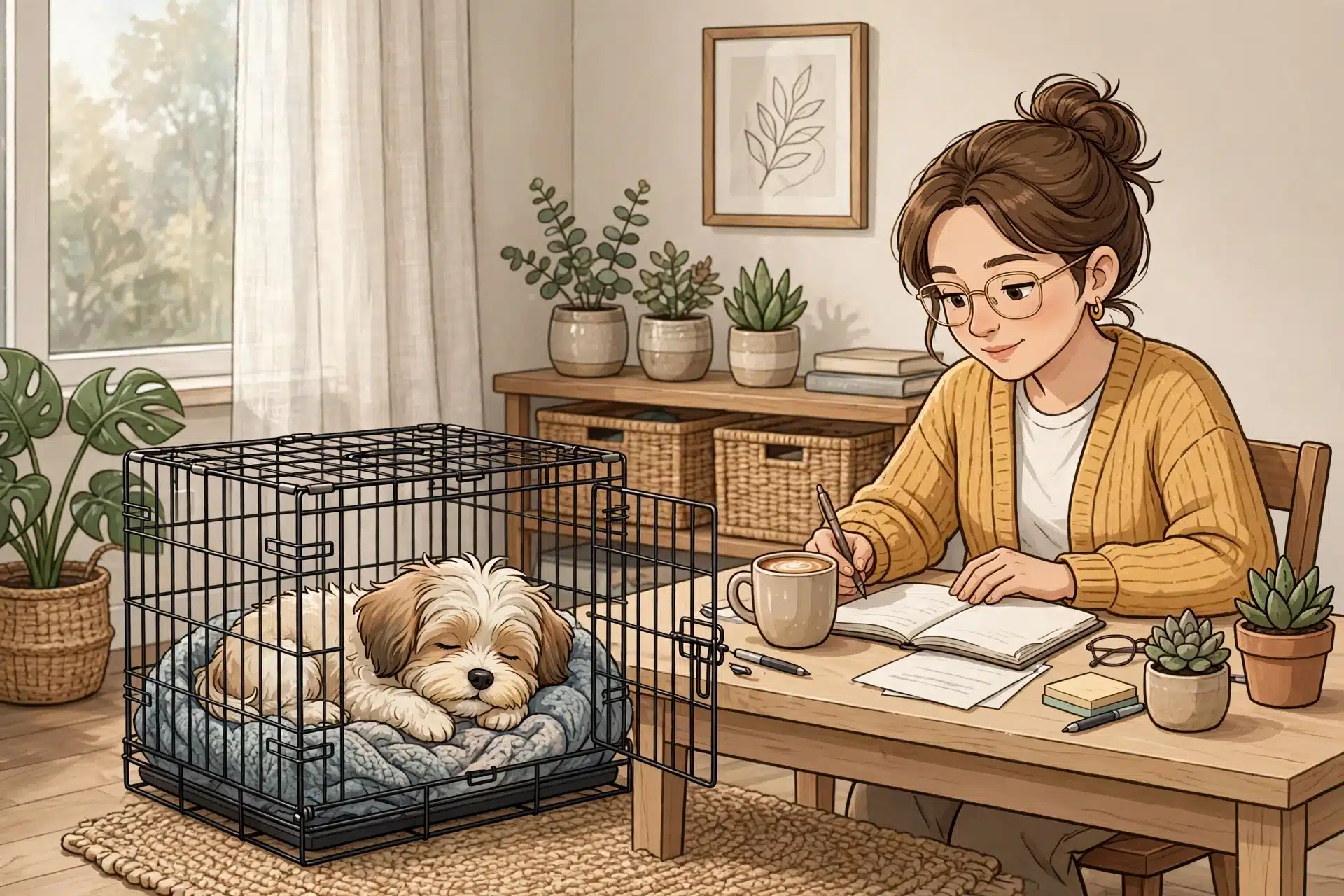
Start with the door closed while you sit within sight, reading or working. Try two to three minutes first, then release him before he gets restless. A Havanese is a companion breed, so your presence makes the closed door feel normal instead of like isolation. Repeat a few times across the day. When he settles quickly with you there, you have a base to build on, and sites like Sage Puppies’ new owner guidance cover.
The One-Condition Rule for Adding Time
Add time only when the last step met one condition: he stayed calm for the full session. Then increase by one to three minutes, not five. Change one variable at a time, so add duration or distance from the crate, never both in the same session. If he whines partway through, repeat that length until it feels easy before moving up again.
Retreat Without Making It Feel Like a Win
When you hit a step he cannot settle at, step back two durations rather than one. Keep your departures and returns boring, with no fuss or treats right at release, so coming out never becomes the highlight. Short, calm exits teach him that the door always opens again on an ordinary schedule.
Step 4: Build Up to Stepping Out of Sight
Once your puppy naps happily behind a closed crate door, start erasing you from the picture. Havanese puppy crate training reaches its real test here, because these dogs bond hard and notice the moment you vanish.
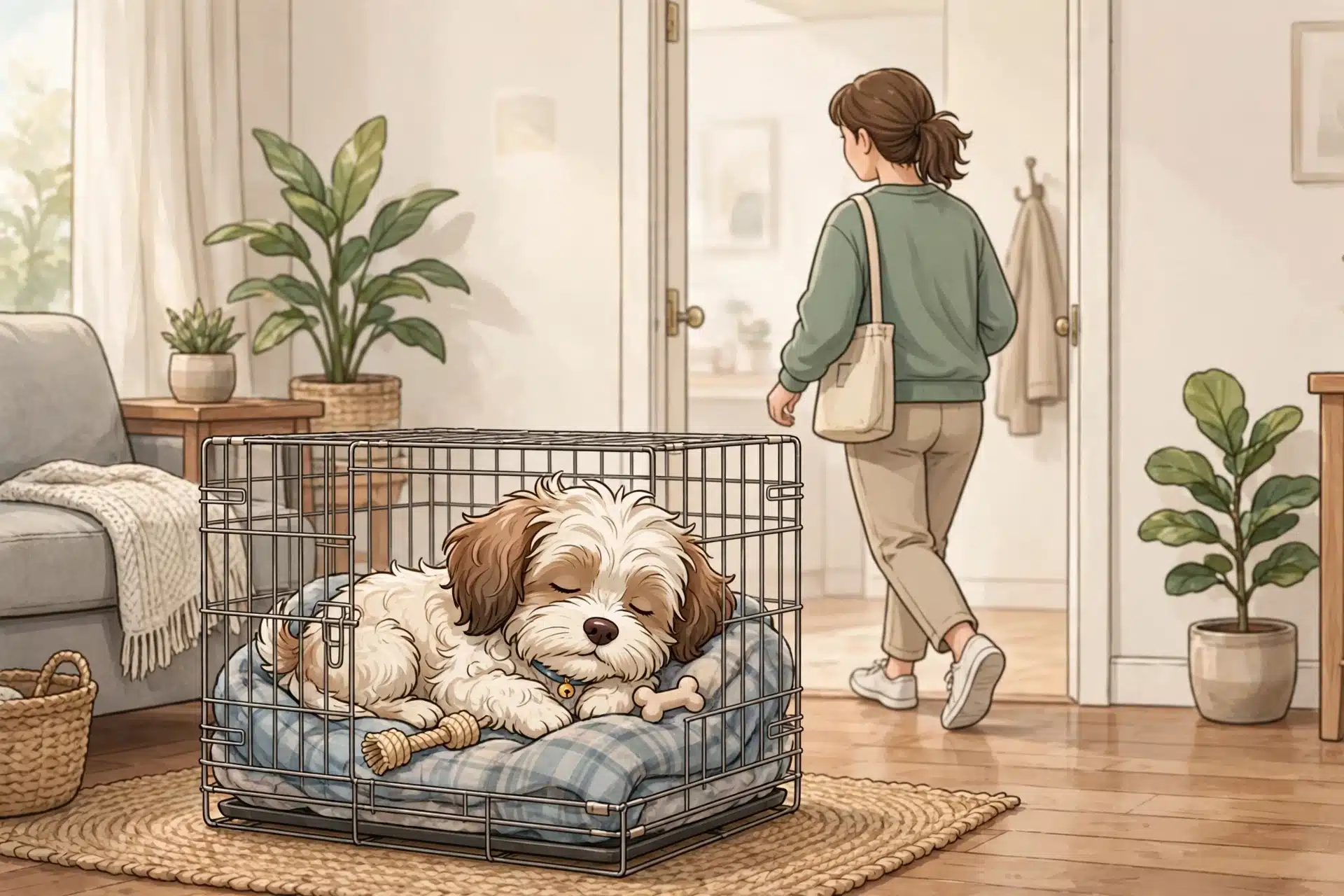
Step Out of Sight, Stay in the Room
Close the door, then step behind a wall or into a hallway for a few seconds. Return before any whining starts, and treat quietly if your puppy stayed settled. Repeat with longer gaps: ten seconds, thirty, a full minute. Work at this level until your puppy ignores your comings and goings, then move on.
Leaving the Home for Short Absences
Next, walk out the front door and come straight back. Build to five minutes, then fifteen, then a short errand. Trainers recommend starting with tiny absences of just seconds so you always return before panic sets in, which keeps the crate paired with good outcomes. A stuffed chew or safe toy helps the time pass. For extra background on preparing a pup for this stage, Sage Puppies covers the basics in its step-by-step crate training guide for small breeds.
Coming Home Without Making a Scene
Greet your puppy calmly, not with a party. Big reunions make arrivals exciting and departures feel dramatic. Wait for all four paws down, open the door, and let a potty break be the first event. Your flat, boring return teaches the best lesson: you always come back.
How Long Can a Havanese Puppy Stay in the Crate?
There is no single safe number for every puppy. A common guide is about one hour of crate time per month of age, and many trainers add one, so an eight-week-old puppy gets roughly three hours between potty breaks. The Humane Society also notes that adult dogs should not spend more than 4-5 daytime hours crated, and puppies need far more breaks.
Your puppy’s actual limit depends on:
- Bladder capacity, which grows slowly through the first year
- Whether the crate time follows play, food, and water
- Temperament, since some Havanese settle fast and others fuss first
- Night versus day, because longer stretches happen while everyone sleeps
Why There Is No Single Number for Your Puppy
Two four-month-old puppies can differ by two hours. One may nap quietly after a potty break; the other, raised in a busier litter, may still be learning that the crate means rest. Published guidance is a starting point, not a deadline. A toy breed like the Havanese has a small bladder and a social nature, so most need shorter daytime sessions than the top of any chart suggests.
Reading Your Own Havanese Puppy Instead of the Calendar
Watch what your puppy does, not what the clock says. Whining that fades within a few minutes means settling. Whining that builds into scratching, drooling, or frantic pacing signals real distress, and time is up. If your puppy stays calm, add five to ten minutes to the next session. That steady progression, not a fixed schedule, is what crate training a Havanese puppy is built on. Keep a simple log for a week; most families find a clear pattern within days.
When a Playpen or Exercise Pen Fits Better
Sometimes a crate is the wrong tool for the job. If you need to leave a young puppy for longer than its bladder allows, or your puppy shows confinement anxiety even after careful shaping, an exercise pen gives room to move, stretch, and reach a potty pad without teaching the crate is bad. The crate keeps its role as a calm sleeping spot, and the pen covers the gaps. UC Davis lists overuse of confinement as one of the most common crate training mistakes, and pairing crate with pen avoids it.
Telling Settling Apart From Genuine Distress
How do you know if your puppy is stressed in the crate? Watch what the first few minutes look like. A puppy who grumbles, then lies down and sleeps is learning. A puppy who screams without pause, pants, drools, or throws herself at the door is in trouble. Compare the two:
| Settling | Genuine Distress |
|---|---|
| Whining that fades within a few minutes | Steady screaming that builds instead of fades |
| Circling, then lying down to sleep | Pacing, panting, drooling, or pawing at the bars |
| Calm body, loose posture when you return | Injury risk: forcing the latch or chewing the crate |
The Ohio State University Indoor Pet Initiative lists panting, yawning, and salivation as anxiety signs, so watch the body, not just the noise.
Settling Looks Like Quiet
True settling is boring. Your Havanese pouts for a minute, checks the door, then flops over and sleeps. A short protest followed by quiet means the plan is working. If the noise returns every time you walk past, you may be reinforcing it with attention, so wait for a calm moment before you greet him.
Confinement Distress Versus Separation Distress
Crate training a Havanese puppy gets confusing when the crate is not the real problem. Confinement distress shows up the moment the door shuts, even if you sit beside it. Separation distress appears when you leave the room, and the puppy settles fine if you stay nearby. Test both: sit next to the crate with the door closed, then step away with the door open. Where the panic starts tells you which issue to work on, and PetMD notes uncrated puppies often cry simply from being left alone. Each problem needs a different plan.
When to Call a Veterinarian or Behavior Professional
Get help if distress escalates over days instead of improving, if your puppy injures herself trying to escape, or if she drools, trembles, or cannot settle even with you beside the crate. A vet first rules out pain or illness, then a force-free trainer or veterinary behaviorist builds a gentler plan.
Common Mistakes to Avoid
Using the Crate as Punishment
Sending your Havanese to the crate after an accident or a chewed shoe teaches the wrong lesson fast. The crate should predict naps, treats, and calm, never scolding. Once a puppy links the crate with trouble, she may fight the door or whine every time. Keep corrections out of the routine and reward-based crate training stays easy.
Outgrowing the Crate Too Fast
Havanese puppies start small, so buyers often grab a tiny crate and replace it in weeks. Better plan: buy the adult size, about 24 inches, and use the divider panel to shrink the space while she grows. A crate that is too big invites a potty corner at the far end. Adjust the divider as she fills out.
Buy once, divide often. The panel matters more than the crate brand.
Skipping Bathroom Breaks to Save Time
A puppy’s bladder sets the schedule, not your calendar. Stretching crate time past her capacity almost guarantees an accident, and accidents inside the crate slow the whole process down. Follow the Humane Society’s guidance: adult dogs should not spend more than 4-5 daytime hours crated, and puppies need far more breaks. Before crating, always offer a potty trip. If she just went and still cries, treat it as settling practice rather than an emergency.

Crate training works best when it starts the day your puppy comes home. If you’re still choosing a breeder, Sage Puppies raises well-socialized Havanese, Havapoo, and Cavapoo puppies and shares preparation guidance with every family. Browse available puppies, submit an application, and start your crate routine with a confident, calm companion.
Frequently Asked Questions
Q1: How do I crate train a Havanese puppy without stressing him out?
Go slow and reward calm moments. Let him explore the open crate first, feed meals inside, then close the door briefly while he eats and build up one to three minutes at a time.
Q2: When should I start crate training my Havanese puppy?
Start the first week home, usually at eight to ten weeks old, when habits form fastest. Set up the crate before he arrives so day one already follows the routine.
Q3: How long can a Havanese puppy stay in a crate?
Roughly one hour per month of age, plus one, so an eight-week-old gets about three hours. Puppies need far more breaks than adult dogs.
Q4: Should my Havanese puppy sleep in the crate at night?
Yes. Keep the crate near your bedroom so he can hear you. Offer a potty break before bed and once or twice overnight at first.
Q5: What if my puppy cries every time I close the door?
Check whether it fades or builds. Fading whines mean settling; steady screaming, panting, or scratching means step back two durations and rebuild.
Conclusion
Crate training a Havanese puppy without stress comes down to four things: a crate that fits, meals that build trust, short sessions that grow one to three minutes at a time, and your ability to read settling versus real distress. Fit matters more than brand, the door only closes after the crate has earned his interest, and no chart beats your own puppy’s body language. If he cries and quiets down, keep going. If panic builds instead of fading, step back two durations or reach for a playpen. Go slow, stay boring at exits, and the crate becomes the safe place he chooses on his own.