Quick Summary: A responsible small breed puppy adoption starts with confirming household readiness, vetting the seller, and collecting written contracts and dated health records before paying. New owners should puppy-proof the home for a tiny dog, then establish calm feeding, potty, crate, and sleep routines during the first 72 hours, with a vet visit within two or three days. Cassie Milar of Sage Puppies also stresses small breeds’ ongoing needs, including regular grooming, dental care, joint monitoring, booster shots, and long-term budgeting.
The first thing Cassie Milar tells families is simple: the puppy you bring home should arrive with a folder, not just a feeling. That folder holds the puppy health records, vaccine dates, and deworming notes where most small breed adoptions quietly fall apart. A missed booster here, a vague screening answer there, and suddenly a joyful homecoming turns stressful.
This small breed puppy adoption checklist walks you through the whole process in order: vetting a breeder before you pay, reviewing health paperwork, setting up a safe home for a tiny Havanese, Havapoo, or Cavapoo, and planning the first week with a puppy. Cassie founded Sage Puppies in South Jordan, Utah in 2025, and this guide draws on the questions real puppy families ask her most.
Is Your Household Ready? The Match Questions to Answer Before You Look at Puppies
Before any deposit, work through a small breed puppy adoption checklist that starts with honest household questions:
- Who covers care on busy days?
- Which breed fits your space?
- Do current pets and kids welcome a puppy?
- Can your budget absorb vet visits?
- Who takes over when you travel?
Answer these first. The puppy search gets much easier.

Who Handles Care When Life Gets Busy
Name the people who will feed, train, and walk the puppy on ordinary days. Puppies need potty breaks every couple of hours at first, so someone must be home or reachable. Plan for work trips, school pickups, and sick days now. If everyone assumes someone else will handle it, wait until the plan is real.
Matching the Breed to Your Home
Small breeds still differ. Havanese, Havapoos, and Cavapoos are companion dogs that want people nearby, not hours alone. Apartment living works well if you meet exercise and potty needs; our guide to small dog breeds for apartments covers the specifics. Match energy level and grooming time to your actual routine.
Household and Pet Compatibility
Talk with everyone in the house, including kids, about rules and responsibilities. Then check the pets you already own: an older dog may or may not welcome a bouncy puppy. Agree on sleeping spots, off-limits rooms, and who handles training before the puppy arrives, not after.
Choosing a Seller: The Questions to Ask Before You Pay Anyone
A good breeder welcomes specific questions. Before you send any money, ask about daily life, health testing and payment terms, and see how each answer holds up.
Questions About the Puppy’s Daily Life and Upbringing
Start with routine. Where do the puppies sleep, and where do they spend the day? How many litters live in the home? Ask who handles the puppies, how often, and what sounds and surfaces they already know. A seller who can describe an ordinary Tuesday in detail is raising puppies, not warehousing them. Vague answers are a signal to keep looking.
Health Testing You Can Actually Verify
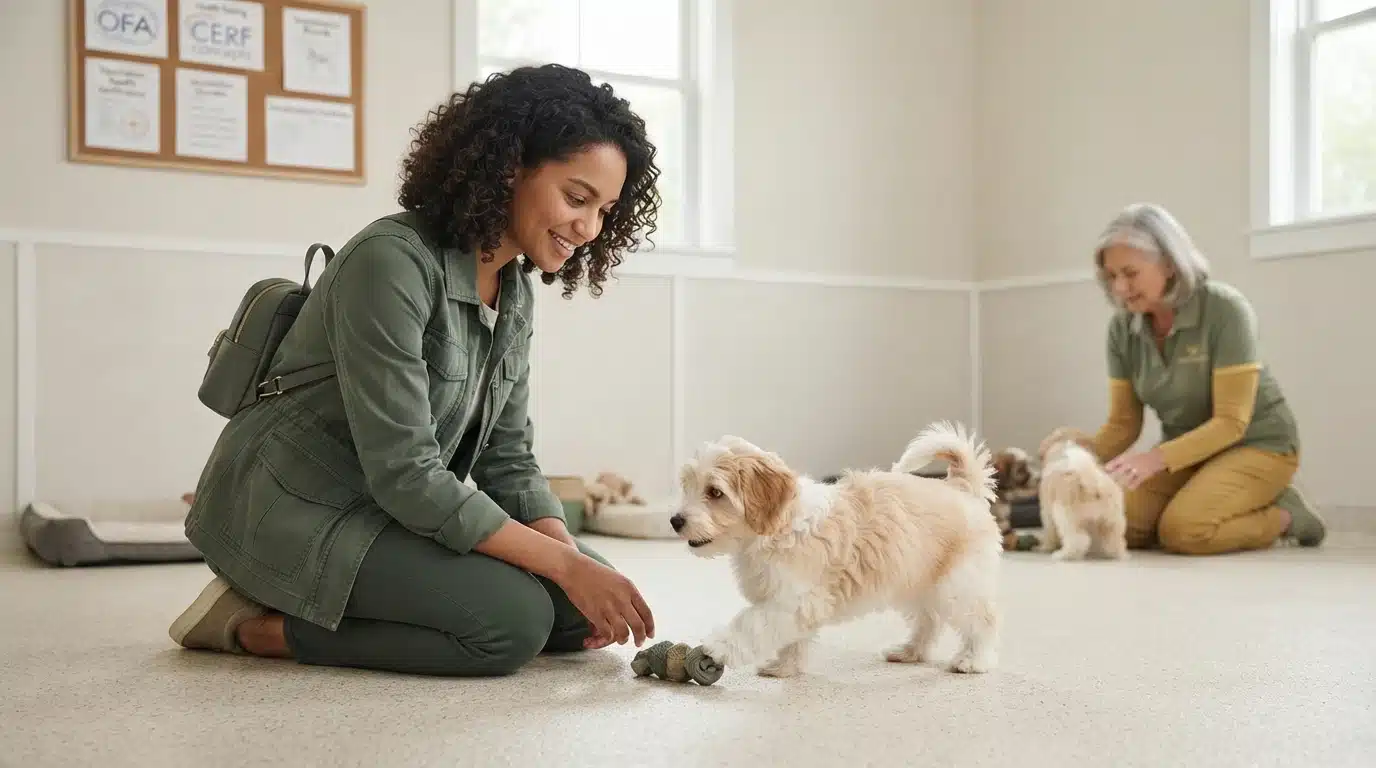
Ask to see the parents’ records, not just hear about them. Responsible breeders share proof of screening, such as OFA certificates for patellas, eyes and breed-specific genetic tests, as the OFA advises prospective owners to request. Puppies should come with dated deworming records, fecal test results and their first vaccinations. If a seller says “the vet checked them,” ask when, and ask for paperwork to match.
Deposits, Contracts and Payment Safety
Get the deposit and contract terms in writing before you pay. The contract should state the price, what the deposit covers, health provisions and a return policy. Pay with a traceable method, never gift cards or wire transfers, and keep every receipt. Our guide to Utah puppy deposits and payment terms shows what to look for on paper. A puppy is a big purchase, so treat it like one.
The Paperwork Folder: Health Records, Vaccines and Microchip
Before payment, know exactly which documents to collect. Your folder should hold:
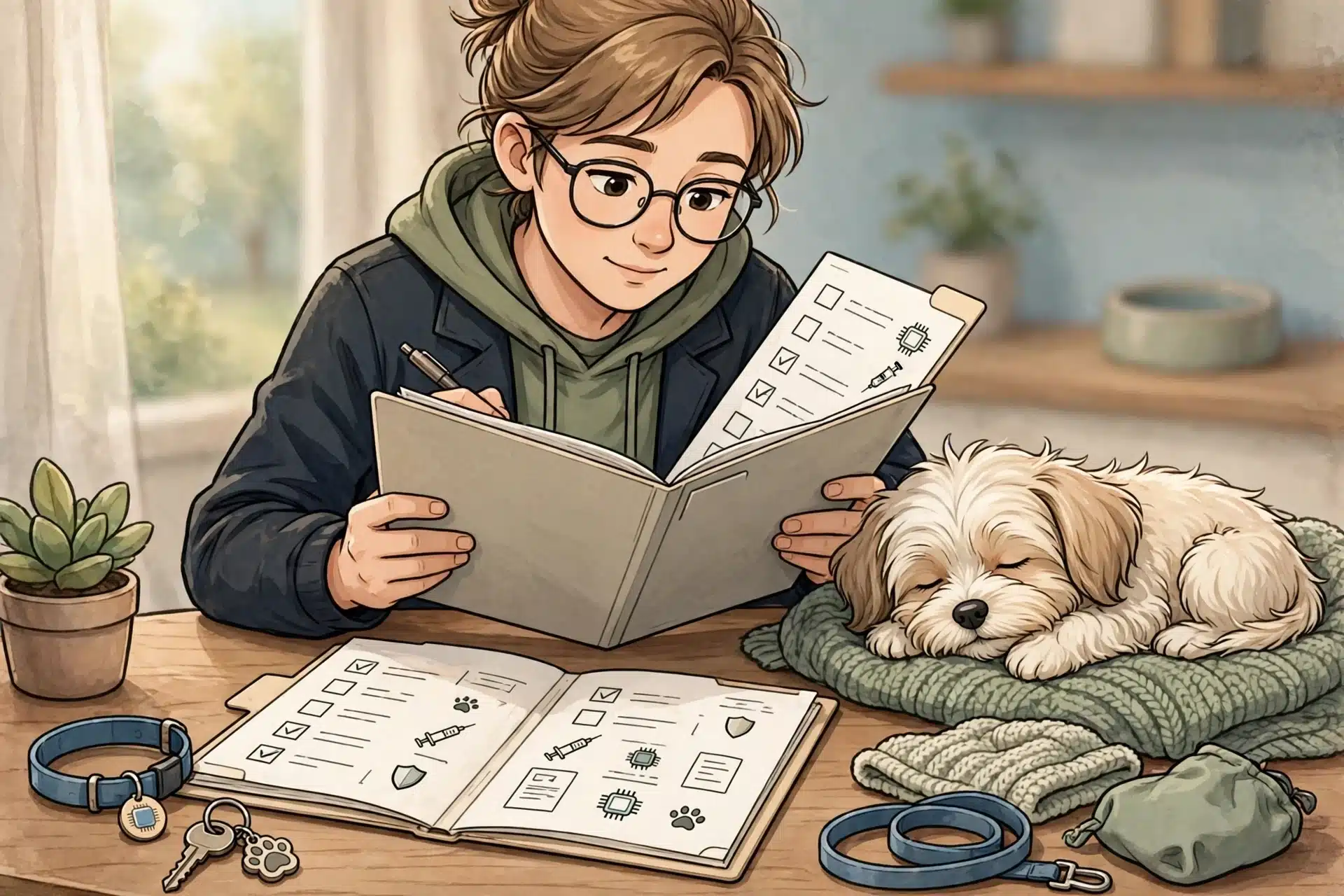
- Vaccination record with dates, vaccine type and the vet or breeder’s details
- Deworming and fecal test notes from the breeder’s vet
- A signed health certificate from a licensed veterinarian
- Microchip number with registration instructions
- Purchase contract covering spay or neuter terms
Ask for copies, not promises. A breeder who keeps good records has nothing to hide.
Reading the Vaccination Record Line by Line
Puppies get their first shots between six and eight weeks, usually distemper, parvovirus and parainfluenza in one combination shot. Check each line for three things: the date given, the vaccine name and who gave it. Breeders who vaccinate themselves keep the vial stickers in the folder, so the lot number should match. If dates are missing or typed neatly after the fact, ask for the vet’s own copy. Sage Puppies walks buyers through the full record before pickup, line by line, and you can learn more about reading a breeder’s health record before you commit.
Exam Records, Deworming and the Health Certificate
A physical exam note should list weight, heart and lung sounds, eyes, ears and teeth. Deworming entries matter too, because roundworms pass to puppies before birth. For travel or pickup in some states, ask whether a veterinary health certificate is needed; the USDA outlines certificate requirements for pet travel.
Microchip, Spay or Neuter Status and the Signed Contract
Most small breed puppies are chipped before they leave, often around eight weeks. Get the 15-digit number in writing, then register it in your name with your phone number; an unregistered chip is just a buried serial number. Read the contract for spay or neuter timelines, health terms and return clauses. Never sign anything with blank lines left open. The final rule: every claim a breeder makes verbally should appear somewhere in that folder or contract, in writing.
Home Setup and Supplies: A Checklist Built for Small Breeds
The answer to “what supplies do I need?” comes down to three groups: everyday core items, small breed specific gear, and proofing tasks. Get all three ready before pickup day, and your puppy’s first week gets much calmer.
The Core Supply List
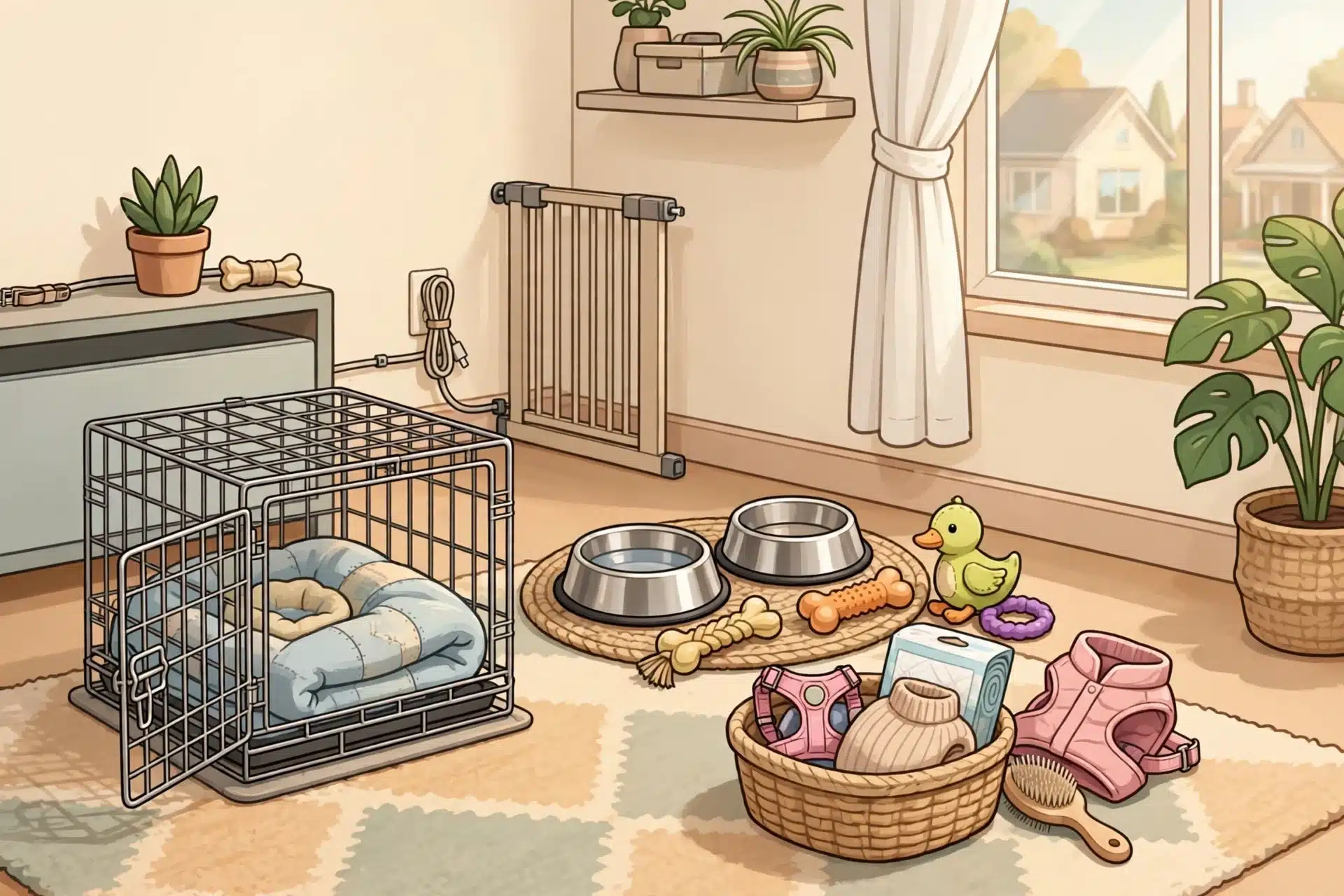
Start with the basics every puppy needs. Most families spend $200 to $400 on startup gear, so budget for it alongside the purchase price.
- Wire or plastic crate sized for an adult under 15 pounds
- Food and water bowls, plus the food your breeder already feeds
- Flat collar or harness and a lightweight 6-foot leash
- Pee pads and enzyme cleaner for accidents
- A few soft toys and one teething chew
- Blanket, towel, and grooming brush
Check whether your breeder sends a starter kit; some include a familiar-smelling blanket that eases the first nights.
Gear That Matters More for Small Breeds
Some items matter far more for a 6-pound Havanese than for a Labrador:
| Item | Why Small Breeds Need It |
|---|---|
| Harness, not collar | Fragile tracheas damage easily on leash pulls |
| Step-over baby gates | Puppies slip through wide bar gaps |
| Low-sided litter tray or pads | Short legs miss tall entry points |
| Non-slip rugs | Smooth floors strain loose knee joints |
Keep food portions measured by weight. A tablespoon too much matters at this size.
Puppy-Proofing the Small Breed Hazards
Crawl the house at puppy height. Tape or hide loose cords, since teething puppies chew them. Block gaps behind furniture where a tiny puppy wedges and gets stuck. Lift houseplants; many common ones are toxic. Secure recliners and rocking chairs, which crush small dogs unnoticed.
Never leave a small puppy alone on a bed or couch. Falls cause broken legs in breeds this size.
Cover your checklist one room at a time, and keep the crate zone ready before homecoming day.
The First 72 Hours: An Hour-by-Hour Homecoming Checklist
Your first 72 hours with a new puppy come down to three time blocks: settle your puppy into one quiet space on arrival, build a predictable routine over the first day, then widen that world slowly. Small breeds tire fast and stress faster, so pace beats coverage every time.
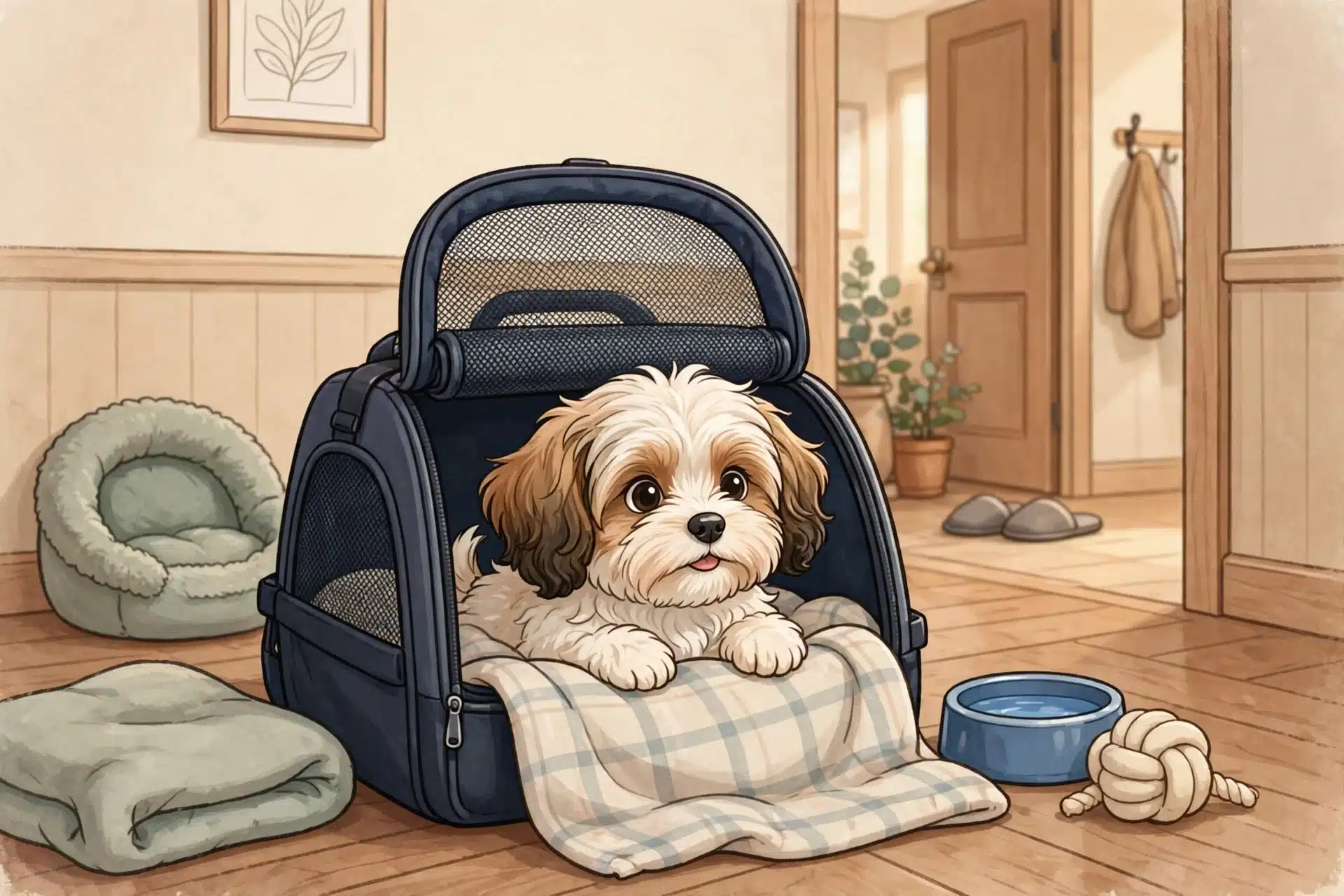
Hour Zero: Arrival and Decompression
Carry your puppy straight to the prepared space. Offer water and a short bathroom break outside, then let rest win. Skip visitors, baths, and endless photos for now. A calm first hour sets the tone for the whole first week with a puppy.
Hours Six to Twenty-Four: Routines Begin
Start the pattern you will keep: potty after every nap and meal, gentle play, then crate time. Keep meals small and on schedule. Begin puppy crate training for small dogs with short, positive sessions so the crate becomes a safe spot, not a punishment.
Days Two and Three: Widening the World Slowly
Add one new room or experience per day, always supervised and on-leash. Watch for stress signals like lip licking or hiding, and give a retreat when you see them. Keep exploring easy, keep naps protected, and let confidence build at your puppy’s pace.
First-Week Care Checklist: Vet, Food, Potty Training and Sleep
Your first week sets the pattern for everything after it. Three things matter most: a vet visit, a feeding and potty routine, and calm nights.
The Vet Plan and the Vaccine Timeline You Own Now
Book a vet exam within your first two or three days. Bring every health record you received, including vaccine dates, deworming and fecal test records. Ask the vet to confirm the shot schedule and give you the dates in writing, because you own the timeline now, not the breeder.
Feeding and the Potty Schedule
Feed the same food the puppy already eats, and switch brands slowly if you must. Small breeds do better on three or four small meals a day. House train a small breed puppy with a simple loop: out after every meal, nap, and play session, then praise calmly when she goes. Expect accidents and never punish them.
Sleep, Chewing and Handling Practice
Puppies this size need 18 to 20 hours of sleep, so protect nap time. Crate training for small dogs works best when the crate becomes the sleep spot from night one. Offer safe chew toys for teething, and handle paws and ears briefly each day. This gentle routine builds trust fast.
Small Breed Commitments: Grooming, Teeth, Joints and the Long View
Small breeds carry a few lifelong health needs that big dogs mostly skip. Havanese, Havapoos and Cavapoos need coat care, dental habits and joint awareness from week one, so it helps to know what you’re signing up for before the puppy comes home.
Grooming From Day One
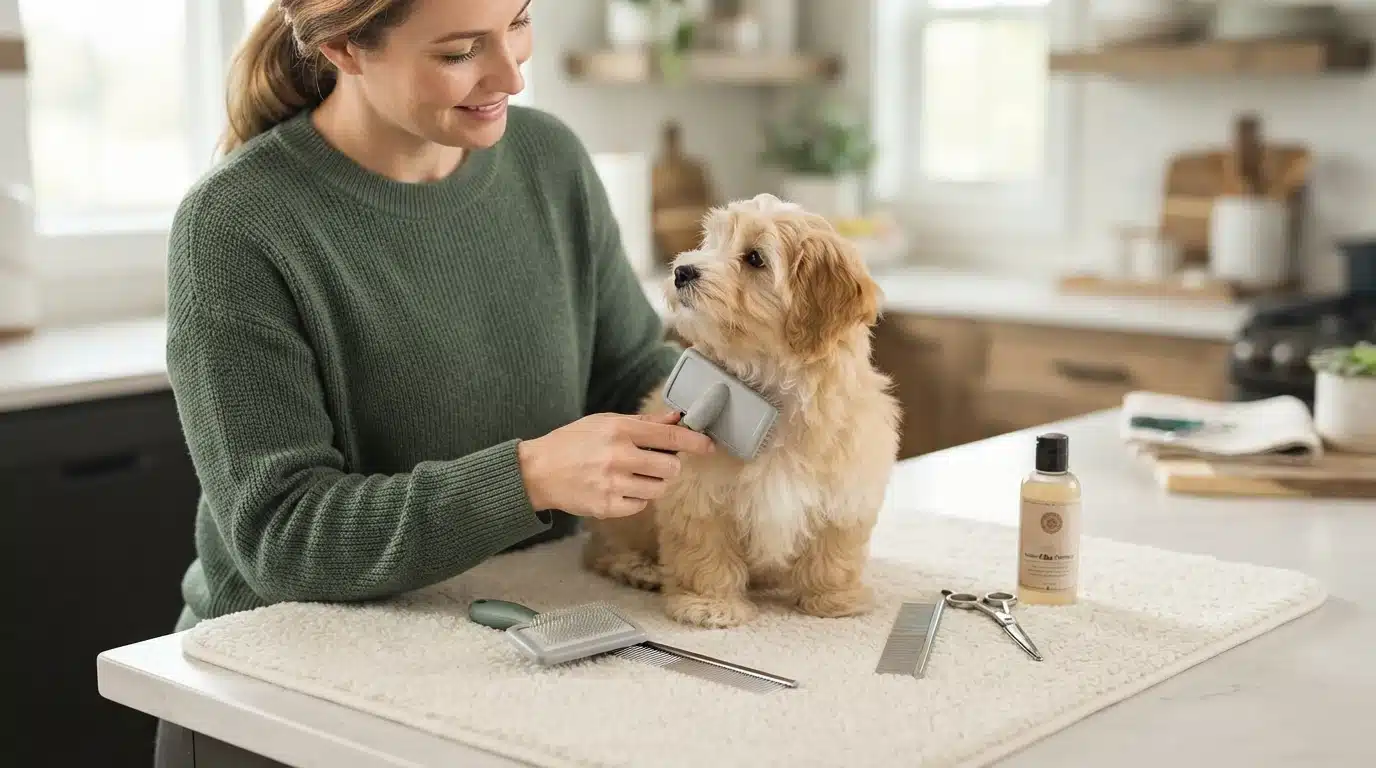
Start brushing in the first week, even if your puppy’s coat is still short. Cassie’s Havanese grooming routine covers the basics: a slicker brush, a metal comb, short daily sessions and treats. The goal isn’t a perfect coat yet. It’s teaching a young puppy that handling feels safe, which pays off at every future groom.
Teeth and Joints
Small dogs are prone to dental disease, so brushing a few times a week matters more than it sounds. Small breeds also risk patellar luxation, a kneecap that slips out of place. Ask any breeder whether parents were evaluated, and mention limping or bunny-hopping to your vet early.
The Long View
Budget beyond the purchase price. A small breed’s lifetime cost often runs higher than expected once grooming, dental cleanings and vet visits add up. Commit to gentle training and daily attention, and a well-bred companion can share your home for 14 years or more.
Tip: Every vet visit is a chance to catch small problems while they’re still small.
Budgeting and Long-Term Costs: An Illustrative First-Year Plan
One-Time Costs Versus Recurring Costs
Split your budget into two buckets. One-time costs include the purchase price, startup gear, the first vet visit and spay or neuter surgery. Recurring costs keep coming: food, preventive medication, grooming, licensing and training classes. Small breeds live long lives, often 14 years or more, so recurring costs usually exceed one-time spending.
A Planning Example, Clearly Labeled
The numbers below are an illustrative budget example, not a quote. Actual prices vary by your vet, region and choices.
| Item | Type | Example Range |
|---|---|---|
| Startup gear | One-time | $200 to $400 |
| First-year vet care | One-time plus visits | $100 to $500 |
| Pet insurance | Recurring | About $46 per month |
| Food and preventives | Recurring | Varies by brand |
| Grooming | Recurring | Every 4 to 8 weeks |
Industry data puts typical first-year dog costs between roughly $1,500 and $5,000, and Rover’s 2026 breakdown estimates $1,460 to $6,745 for a puppy year. Puppies from programs like Sage Puppies price between $3,500 and $4,500, which sits on top of these care costs; details appear on the pricing and reservation page.
Getting Local Quotes and Checking Insurance Terms
Call two or three local vets for puppy package pricing before pickup. For insurance, read the fine print on waiting periods, hereditary-condition exclusions and reimbursement caps, since the average accident-and-illness policy runs about $836 per year for dogs. Enroll early, before problems appear, because insurers exclude pre-existing conditions.
Common Mistakes to Avoid in Your First Month
Mistakes in the Decision and Payment Phase
Skipping breeder questions and puppy health records is the costliest early error. Paying a deposit without written puppy deposit and contract terms leaves you no recourse. Read the health guarantee before you send money, not after.
Mistakes in the First Two Weeks
New owners often rush socialization, skip naps, and free-feed. Keep crate training for small dogs short and positive, and guard the 18 to 20 hours of sleep your puppy still needs. Skip strenuous stairs and jumping until growth plates close; teething puppies chew whatever they reach.
Mistakes That Follow You for Years
Failing to register the microchip, delaying vaccination boosters, or ignoring positive reinforcement training basics creates problems that last. Reward good behavior early, and keep deworming and fecal test records in one file. Small breed homecoming, done right, saves years of cleanup.

Ready to bring home a Havanese, Havapoo or Cavapoo? Apply through Sage Puppies and Cassie will match you with a well-bred puppy and guide your first weeks. Use this checklist, then take the next step.
Frequently Asked Questions
Q1: What should an adoption checklist for a small breed puppy include?
Cover five stages in order:
- Household readiness questions
- Breeder vetting and payment safety
- Health records, vaccines and microchip
- Home setup and puppy-proofing
- First-week vet, feeding and sleep routines
Q2: Which health records should I get before paying a deposit?
Ask for dated vaccine records, deworming and fecal test notes, a signed vet health certificate, the microchip number and the purchase contract.
Q3: What gear matters most for tiny breeds?
Use a harness instead of a collar, step-over baby gates, non-slip rugs and low-sided potty trays. Fragile tracheas and loose knees make small-breed gear different.
Q4: How soon should I book the first vet visit?
Within two or three days of homecoming. Bring every record so your vet confirms the booster schedule in writing.
Q5: What does a first week with a puppy look like?
Potty after every nap and meal, three or four small meals, short crate sessions, 18 to 20 hours of sleep, and one new room per day.
Conclusion
A solid small breed puppy adoption checklist comes down to five stages done in order. Vet the breeder before any money moves, and get deposit and contract terms in writing. Collect dated vaccine records, deworming and fecal test notes, a signed health certificate and the microchip number. Set up a home built for a tiny body: harness, gates, non-slip rugs, cords hidden. Then protect the first week with a puppy through calm routines, early vet visits and plenty of sleep. Work the folder, not the feelings, and your Havanese, Havapoo or Cavapoo starts life with you on solid ground.