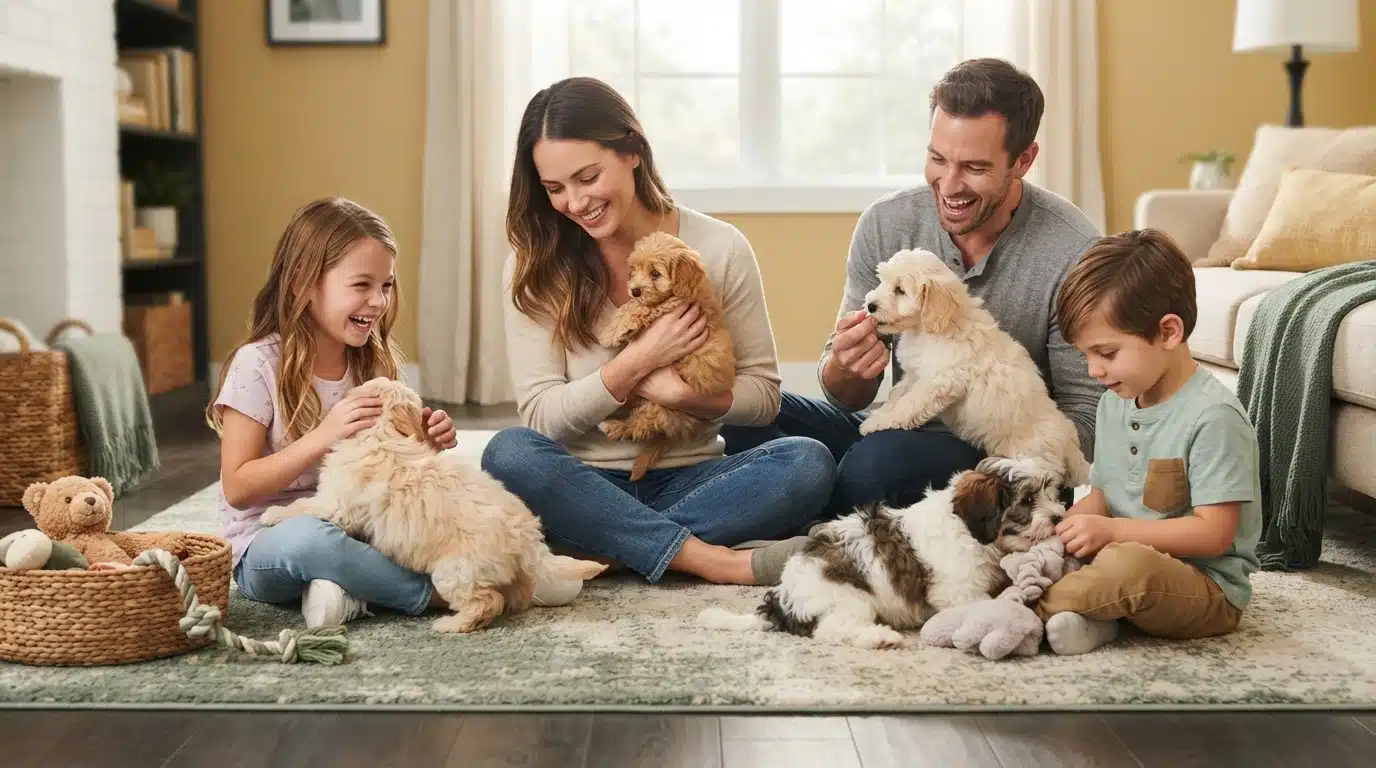
Quick Summary: A calm, clean kennel, curious puppies, a healthy dam you can meet, and complete health records are the clearest signs of a responsible breeder. Walk away if a breeder hides the mother, pressures you to pay, dodges health questions, lacks paperwork, or shows several warning signs at once. Sage Puppies, which raises Havanese, Havapoo, and Cavapoo litters in South Jordan, Utah, encourages families to apply this same checklist to every breeder, including itself.
Most breeders look charming on a website. The truth shows up when you stand in their kitchen and the puppies run to greet you. Visiting a puppy kennel in person is the single best way to spot trouble before you hand over a deposit.
The problem is that most families do not know what normal looks like. A dirty run, a dam who hides from visitors, or a breeder who rushes your questions can all signal bigger issues, but they are easy to miss when a litter of fluffy faces is climbing your leg. People fall in love first and ask questions later.
This guide walks you through the visit itself. You will learn what a healthy setup should look and smell like, why you need to see the parent dogs, and which answers should roll off a good breeder’s tongue without hesitation. We also cover the smaller tells, from paperwork habits to how the puppies respond to being handled.
The advice here comes from daily work with Havanese, Havapoo, and Cavapoo litters at Sage Puppies in South Jordan, Utah. Cassie Milar has raised these breeds since founding her program in 2025, and she knows exactly what a responsible breeder’s home looks like because hers follows the same standards. Use this checklist on any breeder you visit, including us. A confident breeder will welcome every question.

Spotting red flags when visiting a puppy kennel takes practice, and the best safeguard is a breeder who invites every question. When you meet the dam alongside her litter, you see the temperament and care your puppy has known from day one. That openness is exactly what Cassie Milar builds into Sage Puppies. Her boutique program in South Jordan, Utah, raises Havanese, Havapoo and Cavapoo puppies with an owner-managed matching process, so you know who is raising your dog and how. Wisely Bred. Beautifully Loved. If you want a breeder who welcomes your checklist instead of dodging it, start with the application at Sage Puppies and ask us anything.
Frequently Asked Questions
Q1: What are the red flags when visiting a puppy breeder?
The biggest red flags cluster around secrecy. A breeder who will not let you inside the home or kennel area, who wants to meet you in a parking lot, or who offers to ship the puppy before you visit is hiding something. Watch for these specific warning signs:
- You can see the puppies but not the mother, or she is kept behind a closed door with a vague excuse
- A strong ammonia or waste smell that hits you at the door
- Puppies that cower, tremble, or retreat instead of showing normal curiosity
- Multiple litters of several different breeds all the same age
- Pressure to pay a deposit on the spot, or a discount if you decide today
- No vaccination records, vet contact, or written health history for the litter
- A breeder who waves off your questions about health testing or ancestry
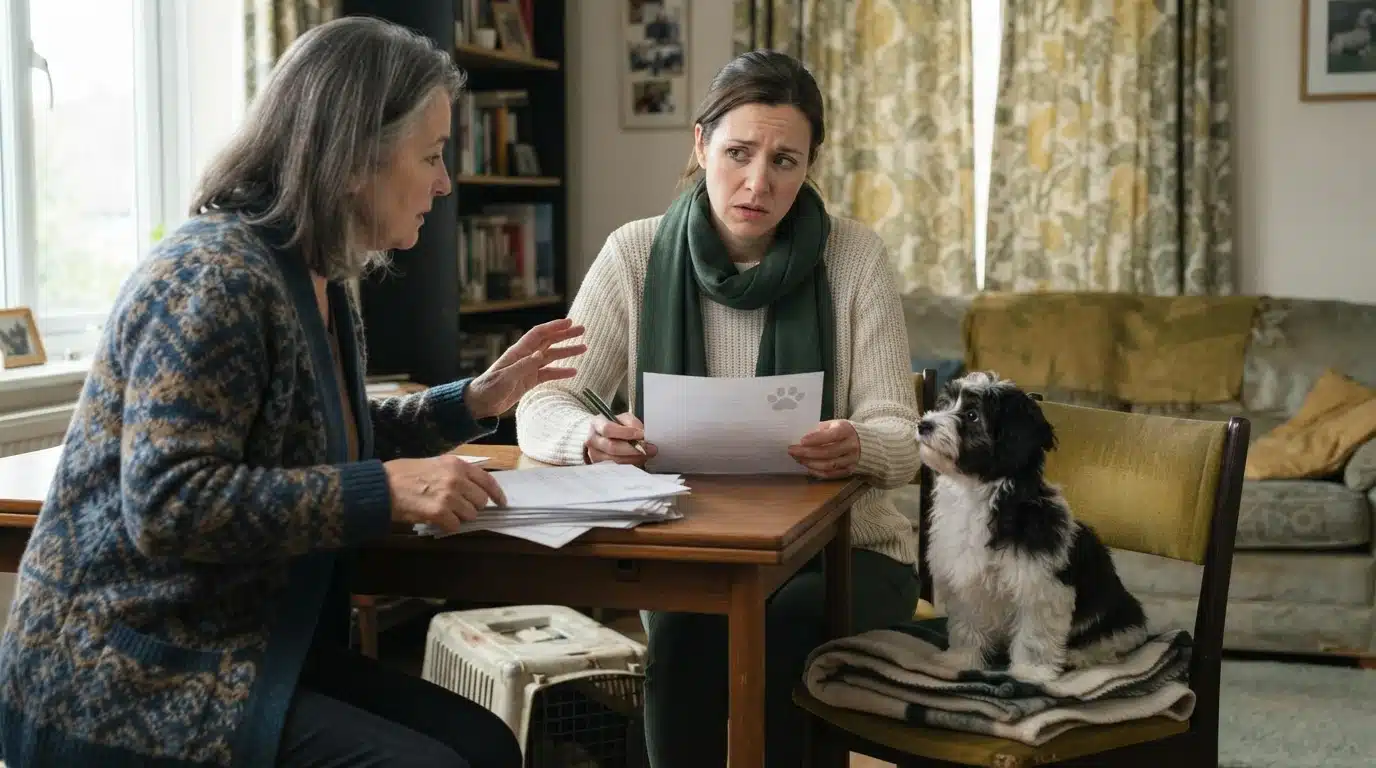
One warning sign alone does not always mean trouble. A shy dam with a new litter may just be protective. But when three or four of these show up in a single visit, walk away. No puppy is worth supporting a careless or cruel operation, and a good breeder will still have puppies next month.
Q2: What should I look for when I tour a breeder’s home and kennels?
Look at cleanliness, space, and how the dogs live day to day. A responsible setup smells clean, has dry bedding, fresh water in every run, and toys or enrichment items the puppies actually use. Floors should be disinfected but not sterile-looking; a home with dogs in it shows honest wear, not hospital polish.
Ask to see where the puppies sleep, eat, and play, and where the mother stays. Puppies raised only in a garage or barn with no household noise often struggle to settle into family life later. In a good program, puppies hear vacuums, doorbells, and children long before they meet you.
Pay attention to the dogs themselves. Coats should be free of matted clumps and feces. Eyes should be bright, with no discharge. Check that each puppy has its own space and that shy puppies are not being bullied off food. A clean, calm, socialized kennel takes real daily work, and you can usually feel that effort within five minutes of walking in.
Q3: Should a puppy breeder let me meet the mother and father?
You should always meet the mother, and any breeder who refuses deserves your suspicion. The dam’s temperament is the single best predictor of your puppy’s adult personality, and her condition tells you how the breeder cares for breeding dogs. She should look healthy, well fed, and comfortable with people. If she just weaned a litter, she may be thinner and a bit ragged, which is normal. What is not normal is a mother who is fearful, aggressive, or absent altogether.
The father is a fair exception. Many small breeders use a stud dog from another program, sometimes across the country, so he may not live on site. A good breeder will still show you his photos, health testing results, and registration or ancestry paperwork, and will happily arrange a video call if the owner allows it. Ask why he is not present. “He lives with his co-owner in Denver” is a normal answer. “We don’t do visits” is not. If both parents are on site but you cannot meet either one, treat that as a serious red flag and keep looking.
Q4: What questions should I ask the breeder during the visit?
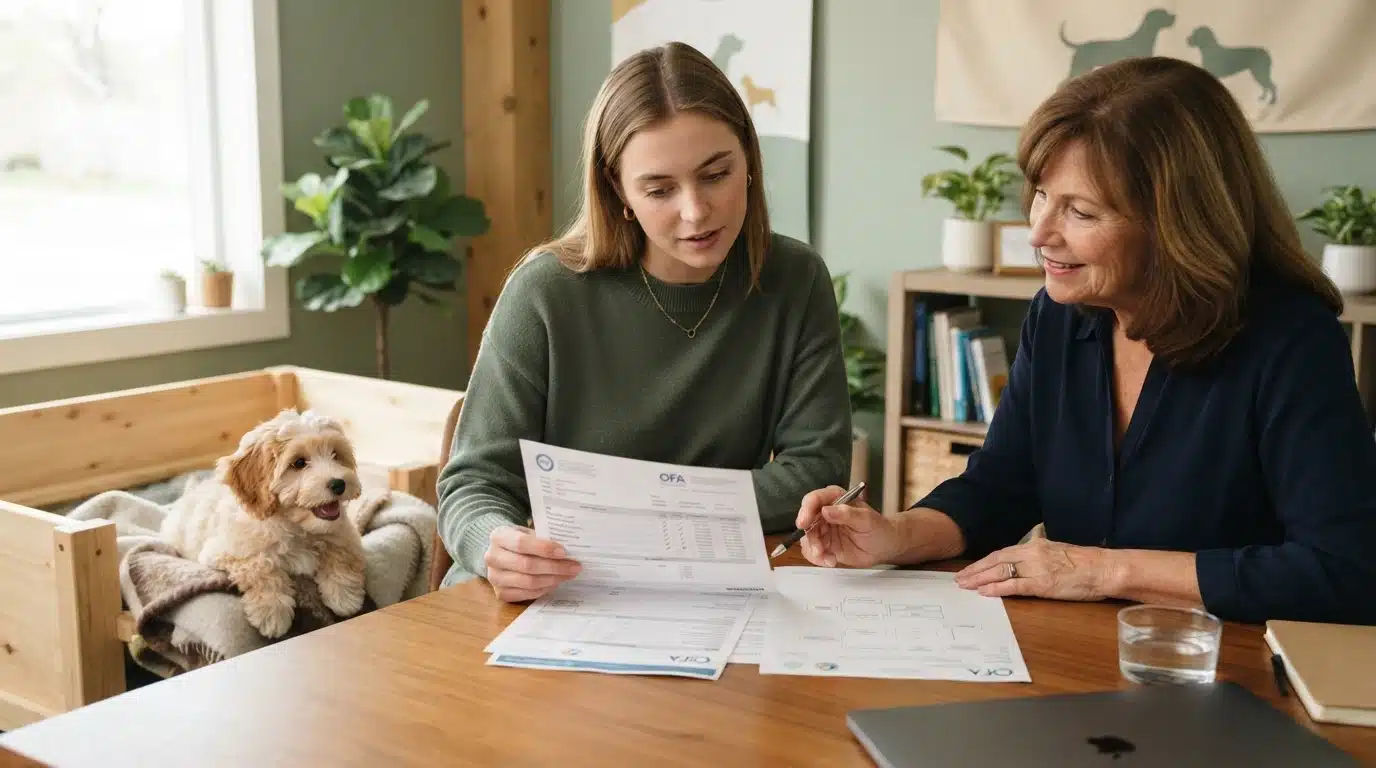
Bring a short list and watch how the breeder answers, not just what they say. Start with health: what testing has been done on both parents, can you see the results, and has the litter had a vet exam? Then ask about socialization: how are the puppies raised, what sounds and handling have they experienced, and are they litter trained at all?
Next, cover the practical details:
- Vaccination and deworming schedule for the litter so far
- What food the puppies eat, and whether the breeder sends a starter supply
- The age puppies go home, which should be no earlier than eight weeks
- What support the breeder offers after you take the puppy home
- What happens if your situation changes and you cannot keep the dog
That last question matters more than most families expect. Responsible breeders contractually require a dog to come back to them rather than end up in a shelter. A breeder who hesitates or has no return policy is telling you where their priorities sit.
Q5: How can I tell if puppies are healthy when I meet them?
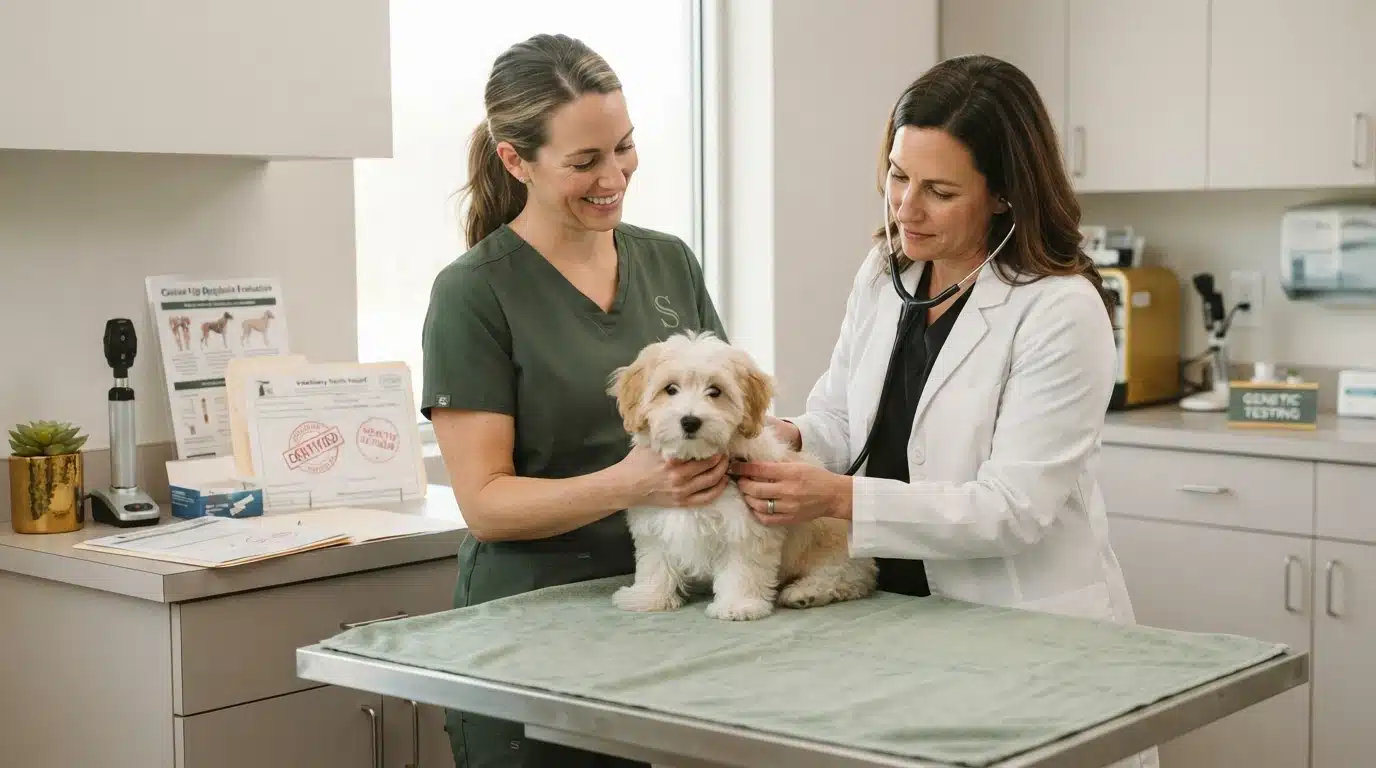
Healthy puppies look, move, and act a certain way, and once you know the pattern it is easy to spot. Each puppy should be plump but not bloated, with a clean coat, clear eyes, and clean ears. Check the belly for a swollen or rounded look, which can mean worms or a hernia. Watch them walk and play; there should be no limping, head shaking, or labored breathing.
Ask to hold a puppy. It should squirm a little, then settle and possibly sniff or lick you. Full collapse, rigid stiffening, or frantic scratching at your arms for a full minute all deserve a closer look. Some puppies are simply sleepy after a meal, so check more than one puppy and ask about each one’s history.
A healthy litter is not identical. You will still see a bold puppy, a cautious one, and a clown. Variety is normal. Uniform fearfulness across the whole litter is not.
Ask to see the vet record with dates for exams, vaccinations, and deworming. A breeder who keeps tidy, dated records is usually a breeder who keeps tidy, healthy dogs.
Q6: Is it a red flag if a breeder has multiple breeds or litters?
Not always, but the scale matters. A family program with two or three breeds and one or two litters a year can raise every puppy well. Small breeds like Havanese, Cavapoos, and Havapoos are often raised this way by experienced breeders who keep mother dogs in the home.
The red flag appears when the numbers stop adding up. If a facility advertises eight breeds, keeps several litters of the same age, and always has puppies available year round, that pattern matches commercial volume breeding more than family raising. Ask how many adult dogs they keep, how many litters they produce each year, and how many litters each mother has had. A dam should not be bred on every heat cycle, and breeders following breed club guidance retire mothers well before old age.
Also notice who does the work. If the person showing you the puppies cannot answer basic questions about the litter and has to call someone else, you may be talking to a broker rather than a breeder. Brokers buy litters from elsewhere and resell them, which means nobody involved knows the puppies’ first weeks.
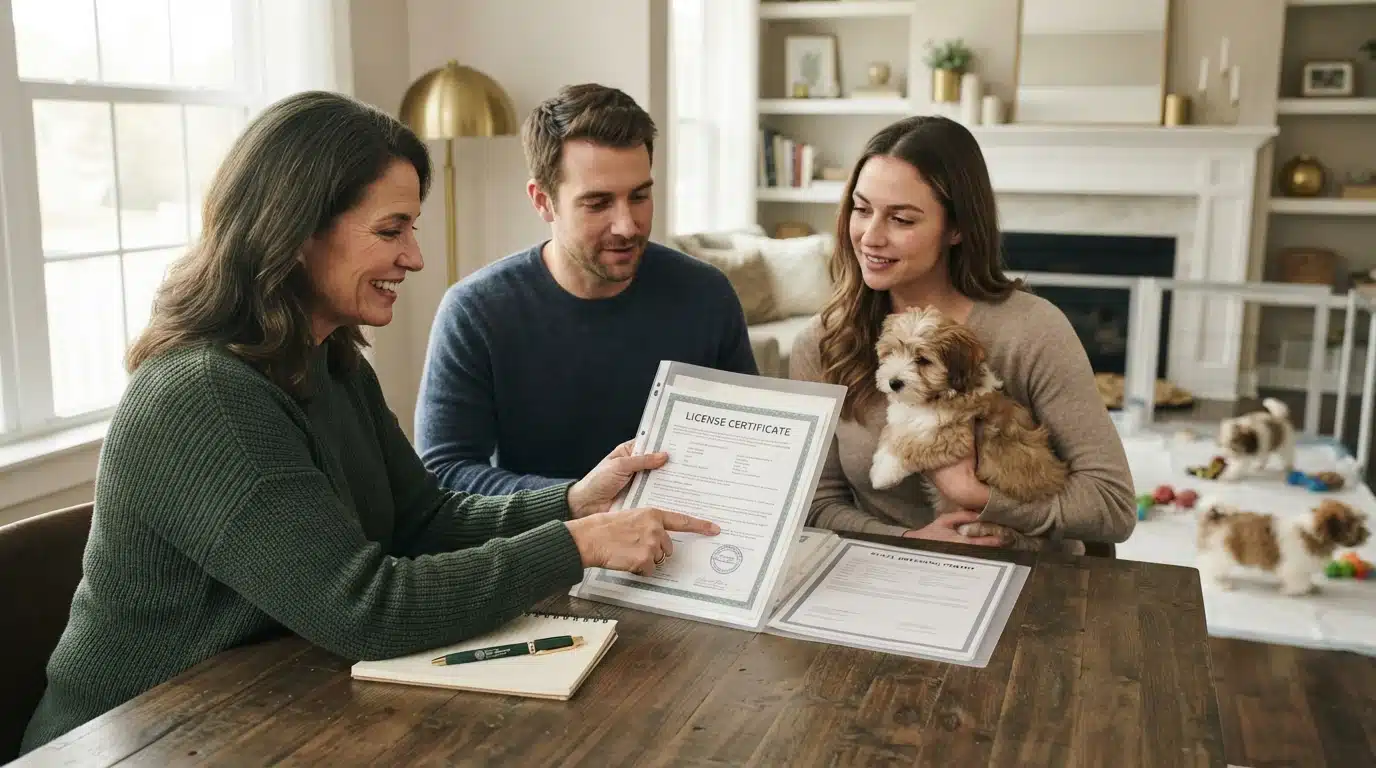
Q7: What paperwork should a breeder provide before I take a puppy home?
Expect a short stack of documents, and treat a missing one as a signal to slow down. At minimum you should receive:
| Document | What It Confirms |
|---|---|
| Vet health record | Exam dates, vaccinations, and deworming given so far |
| Parent health testing results | Screening for breed-specific conditions in both parents |
| Purchase contract | Price, spay or neuter terms, and both parties’ responsibilities |
| Health guarantee terms | Exactly what is covered and for how long |
| Return or rehoming clause | The breeder takes the dog back if you cannot keep it |
Read the contract before you pay anything, not at pickup. A guarantee that covers nothing, expires in 72 hours, or requires you to use only the breeder’s vet is designed to protect the breeder, not the puppy. Registration papers alone prove ancestry, not health or care, so never accept papers as a substitute for the rest of the list. Keep digital copies of everything, and confirm the breeder’s contact information is current before you leave. Good paperwork is boring on purpose. It exists so that six months later, everyone knows exactly what was promised.
Conclusion
Visiting a puppy kennel in person remains the best filter you have, and the red flags follow a pattern once you know it. Trust your senses first: a clean, calm space with healthy dams, curious puppies, and dated paperwork. Trust your gut second. Secrecy, pressure, missing records, and a mother you cannot meet all point the same direction.
Keep the core checklist in mind:
- See the mother and judge her health and temperament for yourself
- Ask about health testing and expect to see real results, not promises
- Read the contract before any money changes hands
- Confirm a return clause, so the dog never lands in a shelter
- Walk away if several warning signs show up in one visit
Scale matters too. A small program with a few litters a year can raise puppies beautifully, while constant availability across many breeds usually signals volume breeding. The difference shows in who answers your questions and how the dogs live.
You do not need to memorize every warning sign before your first visit. A shorter version of this checklist works well on your phone, and the fuller breakdown of breeder red flags covers situations this article only touches. Any breeder confident in their care will welcome your questions, and the ones who bristle have already answered you.