Quick Summary: Finding a reputable family-raised puppy breeder requires proof, not reassuring words: verify the breeder’s identity, review health and vaccination records, meet the dam and litter, and get a written contract with a health guarantee and return clause. Avoid paying before seeing records, taking a puppy home before eight weeks, or relying on verbal promises. Sage Puppies highlights this transparent approach by raising Havanese, Havapoo, and Cavapoo puppies in a home setting and sharing records before buyers commit.
Ask a breeder where their puppies are raised and you may get a warm answer that means nothing. The real answer sounds like this: a specific room in the house, this litter, a vaccination log on the counter, and a mother dog you can watch with her pups.
That gap between vague comfort and proof is the problem. Many “family-raised” listings hide puppy-mill conditions behind a cozy word.
This guide gives you a six-step way to verify any claim. You will learn which documents to request, how to read health test results, what a fair contract includes, and how Utah’s permit rules apply.
Cassie Milar runs Sage Puppies in South Jordan, Utah, a small program that raises Havanese, Havapoo and Cavapoo litters in her home. The steps below reflect what a reputable family breeder should be able to show you, and what we ask of ourselves.
Step 1: Define What Family-Raised Actually Means Before You Search
“Family-raised” appears on almost every breeder’s website, so it tells you little on its own. Before you compare litters, decide what the phrase should mean in practice. A reputable family breeder raises puppies inside a home, with the dam present and daily handling from birth.

The Difference Between a Breeder, a Household and a Reseller
A true household breeder keeps mother dogs as pets and raises each litter in the family’s living space. A commercial kennel houses many breeding dogs in runs, which can still be licensed and clean but is not family-raised. A reseller brokers puppies from third parties and never sees the birth or early socialization. Ask where the puppies spend their first eight weeks. The answer separates all three.
Household Indicators Versus Kennel Indicators
Household signs include a single litter at a time, puppies familiar with vacuums, children and carpet, and an open invitation to meet the dam and litter. Kennel signs include always-available litters, several breeds mixed under one name, and pickup at a neutral location. neither is automatically wrong, but only one matches the family-raised model you came for.
Write Down Your Non-Negotiables
List your must-haves before inquiries start: health testing proof, the dam on site, one breed at most, and a written contract. Sage Puppies, for example, limits its program to Havanese, Havapoo and Cavapoo, so a short list like this keeps your search honest.
Step 2: Build and Verify a Shortlist of Family Breeders Near You
A reputable family breeder is easiest to find through breed parent clubs, local kennel club referrals, and word of mouth from vets or trainers, then verified with consistent online details and a direct conversation. Start with the AKC’s breeder referral search and narrow to three or four names before you fall in love with any single puppy.
Where Family Breeders Actually Advertise
Small in-home programs rarely run big ads. Look at breed club breeder lists, local Facebook groups, and referrals from your veterinarian or trainer. The AKC recommends asking breeders active in your breed and researching through the breed’s national parent club. If you want a sense of what a transparent program looks like, Sage Puppies publishes its breeds, prices, and meet-and-greet details openly.

Verify the Business Exists and Answers Consistently
For each name, confirm a real address or city, a working phone number, and a registered business name where the state offers a lookup. Call or email and note how they respond. The AKC’s guidance on responsible breeders stresses that good breeders answer questions readily and interview you back. Vague replies, pressure to pay fast, or requests for payment apps only are reasons to walk.
Check the Consistency Between Site, Social and Live Conversation
Compare their website, social posts, and what they tell you. Litter counts, ages, and health testing claims should match everywhere. Gaps or shifting stories are a red flag.
Step 3: Request and Read the Health and Vet Records
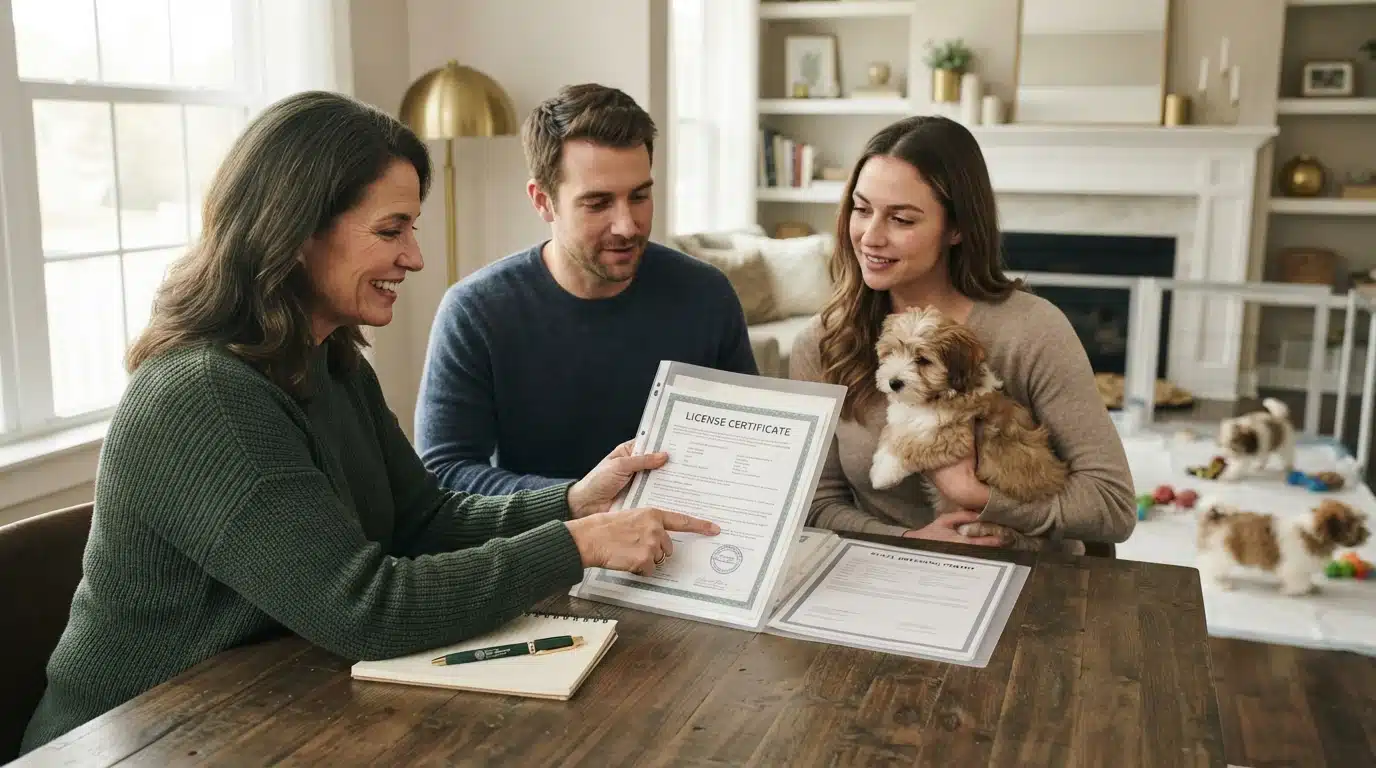
A reputable breeder shares records before money comes up. Ask for the documents below as a package. If a breeder stalls, edits, or offers “everything at pickup,” treat that as a red flag.
What documents should a family-raised puppy breeder provide?
- A vet exam record for each puppy, with the clinic’s contact details
- Parent health screenings, such as OFA or CHIC results
- Genetic test results for both parents
- Vaccination and deworming dates for the litter
- A written health history for the dam, including any C-sections
The Documents to Request Before Discussing Price
Ask for the puppy’s first vet exam, the parents’ OFA or CHIC listings, and both parents’ genetic panels. You want clinic names and dates, not summaries typed into a text message. Real clinics issue invoices and exam notes. Ask to see the dam in person or on video, since a live dam with matching records is hard to fake. A transparent program, like the one behind Sage Puppies, shares parent health details during matching.
How to Read Screening Results and Genetic Tests
OFA results live in a public database, so verify them yourself. Look for the parent’s registered name, then check hip, elbow, eye, and cardiac entries. For genetic tests, match the lab and the breed. Havanese, Havapoo, and Cavapoo breeders should screen for breed-relevant conditions, not just run a general panel. A “clear” result means nothing without the parent’s name attached to it.
Questions That Separate Testing From Marketing
Ask three things. Which lab ran the tests, and can I see the reports? Which conditions did you screen for, and why those? Can I call your vet? Breeders who test answer within a day and hand over PDFs. Breeders who market answer with adjectives. Keep a breeder health question list handy and compare answers across litters.
Age, Vaccination and Deworming Timing
Puppies stay with the dam until at least eight weeks. Record-keeping should show deworming at two, four, and six weeks, with the first vaccination around six to eight weeks. Dates should line up with the puppy’s age and your pickup date. Gaps or vague entries mean sloppy care.
Step 4: Meet the Litter and the Dam Yourself
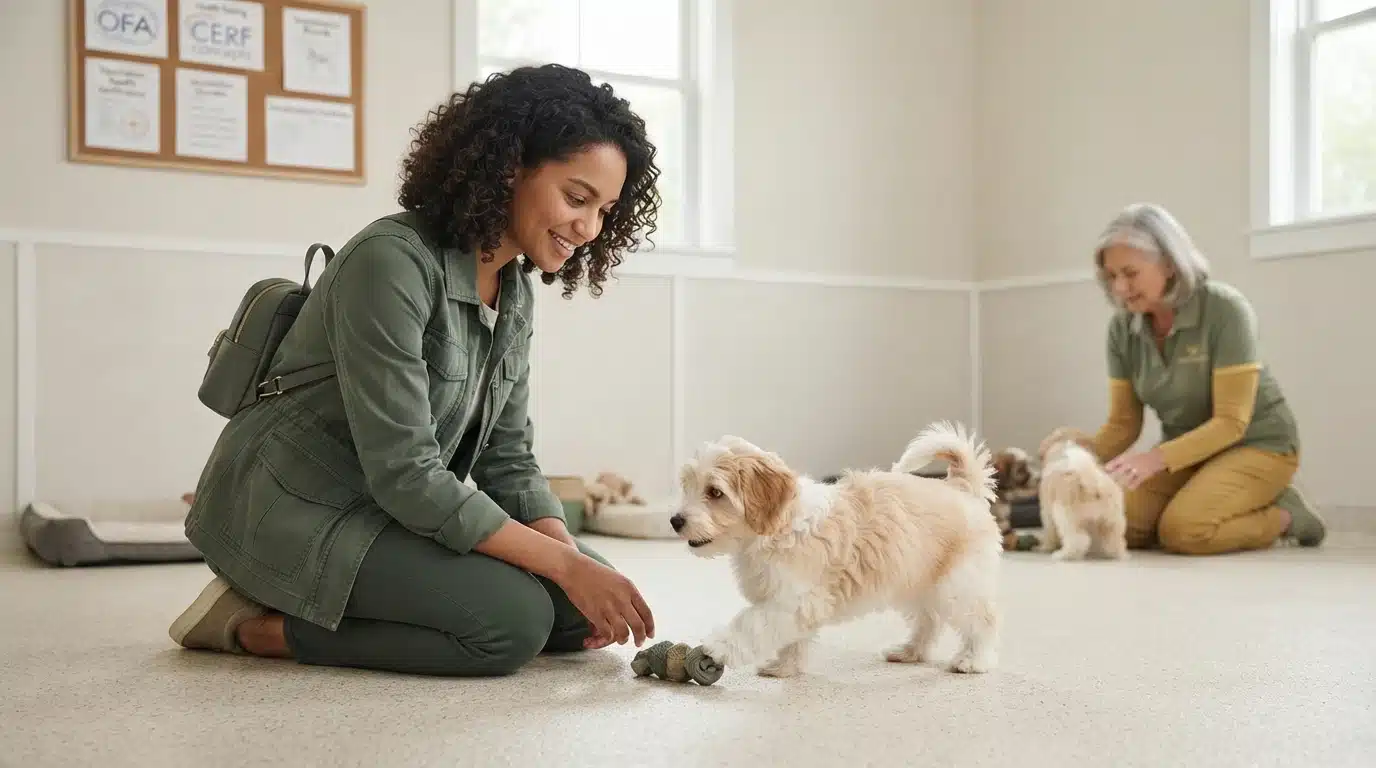
When you visit a family breeder, look at four things: the home (clean, safe, no smell), the dam (friendly, healthy, eager to greet you), the litter (bright eyes, steady movement, no discharge), and behavior (puppies that approach people rather than hide). A reputable breeder invites this visit. One who refuses without good reason is telling you something.
If you adopt from a family program like Sage Puppies, ask for a live video tour when distance makes the trip hard to schedule.
A Live Video Call Works, With Limits
Video calls help you rule out red flags. Ask the breeder to walk the whole area on camera, not just hold up one puppy. You can see the nursery, the dam, and how the litter moves. What video cannot show you is smell, temperament at full speed, or how the dam acts with strangers. Treat the call as a filter, not proof.
What to Observe in the Home or Nursery

| Area | What Healthy Looks Like |
|---|---|
| Environment | Clean bedding, fresh water, room to play, no strong odor |
| Dam | Friendly, well-groomed, comfortable around people |
| Litter | Clear eyes, shiny coats, even weight, no coughing |
| Behavior | Curious puppies that approach you without panic |
Ask to Handle the Puppies Yourself
Hold each puppy. Feel its body for ribs, hips, and any swelling. Watch how it reacts to being lifted and set down. A slightly wiggly puppy is normal. A limp, trembling, or fearful reaction deserves a question.
Expect the Breeder to Interview You
Good breeders screen buyers too. Expect questions about your home, work schedule, children, and plans for training. At Sage Puppies, the application and matching process works this way, and detailed guidance on visiting a family-raised puppy shows what to check. Answer honestly. A breeder who interviews you is protecting the puppy, not making you jump through hoops.
Step 5: Review the Contract, Deposit and Post-Purchase Support
A good contract protects both sides. Reputable breeders put their promises in writing, so read every page before you pay anything.

The Elements a Written Contract Should Contain
A puppy contract from a reputable breeder should include:
- Health guarantee terms, usually covering genetic conditions for the first one to two years
- A return-to-breeder clause, requiring the breeder to take the dog back if you cannot keep it
- Vaccination and deworming records with dates
- Microchip and registration details
- Spay or neuter requirements, if any
- The purchase price, deposit amount, and any refund conditions
If a breeder refuses to put these in writing, walk away.
How Deposits Should Work
A deposit holds your spot in line for a litter or a specific puppy. Ask what it covers, whether it transfers to another litter, and under what conditions it becomes non-refundable. Get the receipt in writing. Avoid breeders who ask for the full balance through gift cards or wire apps with no paper trail, since those payment methods offer no protection. A clear deposit policy is a small document that tells you a lot about how a breeder operates.
A Labeled Budget Example for a Small-Breed Puppy
Here is a labeled first-year budget example for a family-raised Havanese or Cavapoo:
| Item | Example Cost |
|---|---|
| Puppy purchase price | $3,500 to $4,500 |
| Initial vet exam and vaccines | $200 to $400 |
| Spay or neuter | $300 to $600 |
| Crate, bed, and supplies | $250 to $400 |
| Food and treats | $300 to $500 |
| Training classes | $150 to $300 |
| Estimated first-year total | $4,700 to $6,700 |
Your actual costs will vary by vet pricing and the supplies you already own, so treat this as a planning example, not a quote.
Support After the Puppy Goes Home
Strong breeders stay in touch. Ask whether the breeder answers questions after pickup, how long the health guarantee runs, and what happens if a health issue appears in the first weeks. Sage Puppies, for example, keeps an owner-managed application and matching process, which means you deal with one accountable person from reservation through pickup. That kind of access matters most when something unexpected comes up.
Step 6: Compare Your Finalists and Make a Decision You Can Defend
Build a Side-by-Side Comparison
Put your last two or three breeders on one sheet. Score each on health testing records, contract terms, how openly they answer questions, and how the dam and litter behave when you visit or video chat. A simple table turns gut feelings into a choice you can explain to your family later.
| Factor | Breeder A | Breeder B |
|---|---|---|
| OFA and genetic test results | Shared, easy to read | Vague |
| Meets dam and litter | Yes | Photos only |
| Contract and return clause | Written, clear | Verbal only |
| Total cost | $4,200 | $3,800 |
Research the Pedigree Before You Commit
Ask for the puppy’s pedigree and read it alongside the health results. Knowing how to read OFA and genetic test results matters here: confirm the parents’ clearances match what the breeder claimed in Step 2. If lines seem incomplete or names don’t line up, ask why. A trustworthy breeder explains ancestry without hesitation.
The Final Questions Before You Sign
Before you pay a deposit, ask three last questions. Who keeps the puppy if your family cannot, and does the contract include a return-to-breeder clause? What shots and vet checks has this puppy had so far? When and how do you take it home? Clear answers to all three mean you can sign with confidence and start planning pickup day.
Common Mistakes to Avoid
Mistakes That Cost Buyers the Most
Most buyer mistakes involve money and paperwork. Paying a deposit before you see health records leaves you no leverage if something is wrong. Skipping the written contract removes your puppy deposit safety net, since verbal promises about refunds or health guarantees are hard to enforce. Another costly error is budgeting only for the purchase price and forgetting the first-year total, which can reach $4,700 to $6,700 once vet visits, supplies, and training are added.
Mistakes That Harm the Dog
The other mistakes affect the puppy itself. Choosing the cheapest or fastest available litter often means skipping health testing, and that shows up later as inherited problems. Taking a puppy home before eight weeks cuts short socialization and littermate learning, which shapes behavior for life. Some buyers also ignore the contract’s return-to-breeder clause or rehome the dog privately when life gets busy, leaving a young dog without support. Meet the dam and litter, ask questions, and keep the breeder as your backup.
Keep for reference:
- Note which option performed better.
CUT ALL OF THE ABOVE.

Ready to meet a breeder who does it the right way? At Sage Puppies, every Havanese, Havapoo, and Cavapoo is family-raised in South Jordan, Utah, with health records you can review before you commit. Start the simple application today and take the first honest step toward your puppy.
Frequently Asked Questions
Q1: How do I find a reputable family-raised puppy breeder?
Start with breed parent clubs and vet referrals. Verify health records, meet the dam and litter, and get everything in writing before paying.
Q2: What documents should I ask for before paying a deposit?
Request the puppy’s vet exam record, parents’ OFA or CHIC results, genetic panels, and vaccination dates, all with clinic names and dates.
Q3: What questions should I ask a puppy breeder?
Ask which lab ran health tests, whether you can meet the dam, what the contract covers, and how the deposit works.
Q4: How much does a family-raised puppy cost in the first year?
Budget $4,700 to $6,700 total for a small breed, including the purchase price, vet care, supplies, food, and training.
Q5: Can I verify a breeder if I live far away?
Yes. Ask for a live video tour of the nursery, the dam, and the litter, then confirm records independently before reserving.
Q6: What should a puppy contract include?
Look for a health guarantee, a return-to-breeder clause, deposit and refund terms, vaccination records, and microchip details in writing.
Conclusion
Finding a reputable family breeder comes down to proof, not promises. Define what family-raised means to you, verify the breeder’s details, and read the health and vet records before any money changes hands. Meet the dam and litter in person or on video, review the contract and deposit terms in writing, and compare your finalists side by side before you sign. Expect a first-year total near $4,700 to $6,700 so nothing surprises you. Ask a lot of questions along the way; a good breeder will welcome every one of them, and many will interview you right back. For a look at how a transparent home program handles matching families with litters, compare it against any breeder you are considering.