Quick Summary: A safe puppy buyer should verify where puppies are raised, meet the mother, obtain vet and parent health records, and review a written contract before paying. Warning signs include pressure tactics, vague answers, missing records, shipping-only sales, many breeds, no visits or video calls, and unclear refund terms. Sage Puppies is presented as a transparent alternative that shows health records, parent dogs, and its application process upfront.
It is the message that finally gets you, not the photo. You have spent two evenings comparing Havapoo puppies, and the seller replies within four minutes: yes, you can reserve your puppy today, the deposit is refundable only if the vet clears her, and pickup is Saturday at a strip mall parking lot behind the laundromat.
Those details feel like great service. They are actually a puppy breeder red flag checklist rolled into one text thread. Fast pressure, vague refund terms, and a neutral meeting spot are how unsafe sellers hide where puppies really come from.
This guide gives you a twelve-item breeder red flag checklist for 2026, updated for current federal and Utah licensing rules. Each warning sign comes with the exact verification step that resolves it, so you know how to spot a puppy mill and spot an unsafe puppy breeder before money moves. We breed Havanese, Havapoo, and Cavapoo puppies in South Jordan, Utah, and we will show you everything a transparent breeder should.
The 12 Red Flags Every Buyer Should Watch For
A quick breeder red flag checklist: no vet records, no meeting the mother, always “ready now” litters, no home visits or video calls, shipping-only sales, no health testing, multiple breeds constantly available, no contract, cash-only deposits, pressure tactics, no license when one is required, and vague answers about where puppies live. Use it as your puppy buyer checklist for every breeder you contact.

How to spot a puppy mill before you send money
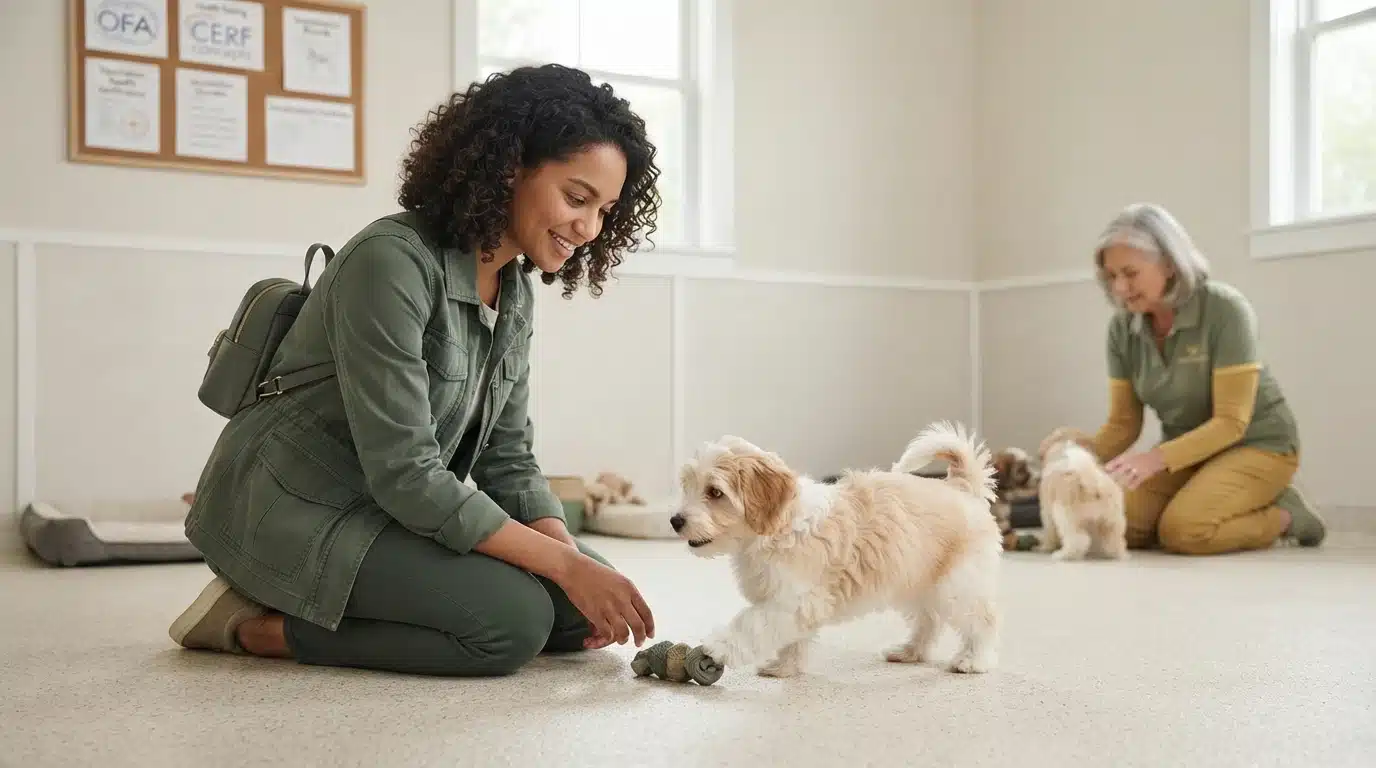
Spotting one takes three steps. First, ask where the puppies are born and raised, and require photos or a video call from inside the home. Second, ask to see the mother with her puppies. Third, ask for vet records and parent health testing before you pay anything. A mill stalls on all three. A transparent program, like the application process behind available puppies, answers without hesitation.
What a puppy mill looks like from the outside
Watch the listing, not just the puppy. Stock photos, recycled litters, a dozen breeds for sale at once, and “ship today” wording all point to volume breeding. So does a seller who dodges questions about parent dogs or never mentions socialization.
Red flags in the listing, in the call, and in the paperwork
On the phone, listen for pressure: “three other families want this pup today.” In writing, refuse contracts with no health terms, deposits with no refund policy, and cash-only payment. Paperwork problems now become vet bills later.
Red Flags You Can See in the Listing Before You Reply
Most breeder red flags show up before you ever send a message. A careful read of the listing itself, especially the photos and wording, tells you whether the litter came from a home or a warehouse.

Photos that should not pass inspection
Look closely at where the puppies sit. Stock photos, reused images, or shots with no home details deserve doubt. Watermarks from other breeders mean the listing stole the pictures, so run them through a reverse image search. Kennel runs, wire cages, or wire crate rows point to volume breeding, not a family kitchen. A breeder raising Havanese, Havapoo, and Cavapoo puppies in a home shares real photos of that home.
Words that signal volume instead of care
Wording can be a puppy mill warning sign even when photos look fine. Vague phrases like “several breeds available” or “litter ready now” suggest a broker reselling dogs rather than a breeder who knows each puppy. Missing details are telling too: no mother’s photo, no vet name, no mention of health testing such as OFA or CHIC records. A listing that names the dam, describes her temperament, and lists screening dates shows real involvement. “Always have puppies” is another phrase to treat carefully.
Pressure tactics in the first message
Speed is a classic pressure tool. “Two families are sending deposits today” pushes you to pay before verifying anything. So do requests for gift cards, wire transfers, or Zelle only. A breeder confident in their process invites questions and walks you through their deposit and payment steps. If someone dodges basic questions about the mother, the vet, or pickup, walk away.
Red Flags in the Conversation: Deposits, Contracts, and Payment
How deposits go wrong
A breeder who pressures you to wire money or pay by gift card is not running a real program. Wire transfers and prepaid cards offer no protection once you send them. Ask how the puppy breeder deposit and refund policy works before you pay anything. A reputable breeder explains when a deposit is refundable, what it holds, and puts it in writing.
Contracts that say nothing
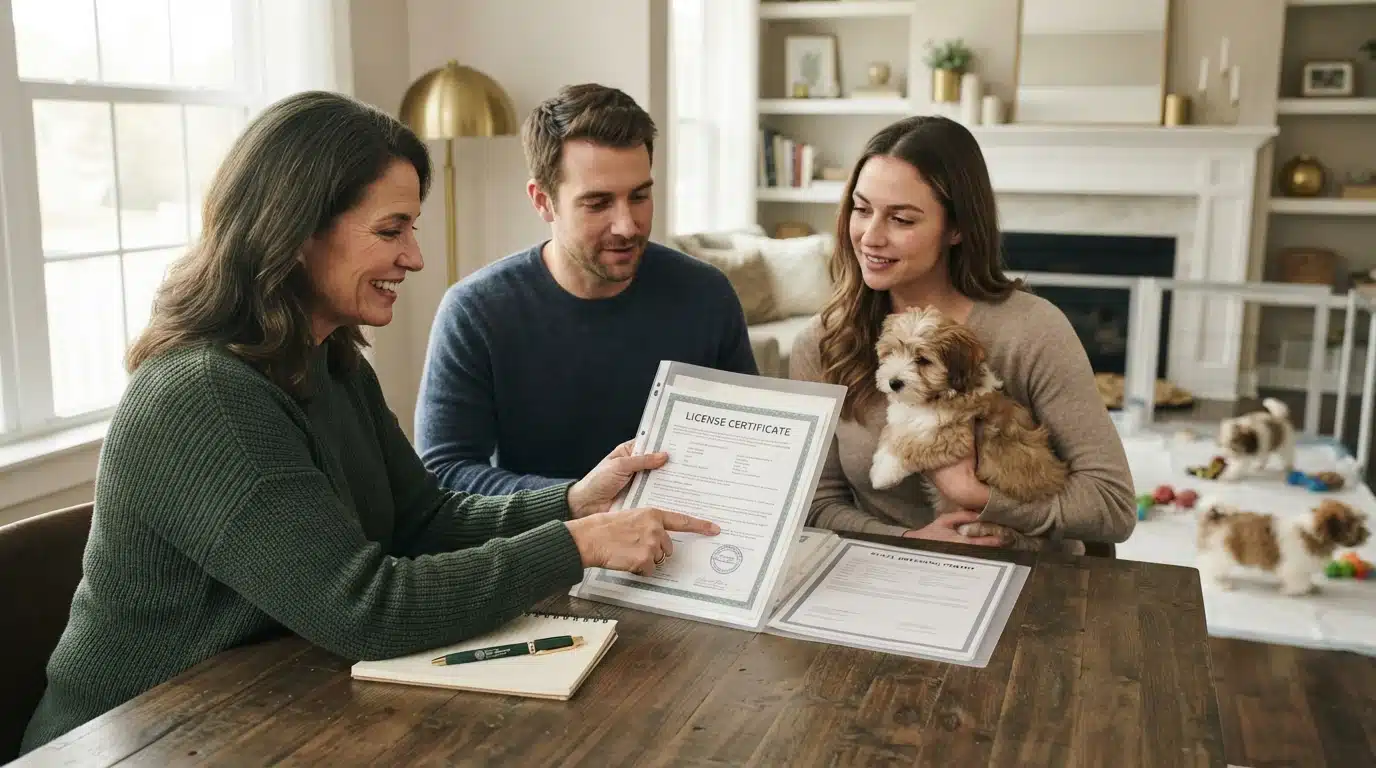
A one-page contract with no health terms, no return clause, and no breeder contact details protects only one side. Read every line before you sign. You want the breeder’s full name, the puppy’s known health history, and clear terms if the match fails. If a breeder resists putting anything in writing, walk away.
Guarantees that sound generous and protect nobody
Watch for promises like “lifetime guarantee” with no definitions attached. A real health guarantee names the conditions covered, the timeframe, and what documentation backs it, such as vet exam records. Vague wording lets a breeder decline every claim later. Ask exactly which health checks the parents passed and see the results, not just the summary.
Ask for the contract sample before you pay. Any breeder with nothing to hide sends it the same day.
Red Flags You Can Only See Where the Dogs Live
Photos can lie. The dogs themselves cannot. When you visit, look at the adults first, because they show you how every puppy here was raised.
Reading the condition of the adult dogs
A healthy mother dog has clear eyes, clean ears, and a coat without bald patches. She should walk up to you with curiosity, not cower in a corner. Watch her weight too. An overly thin dam who just weaned a litter may signal poor feeding or constant breeding. Ask to meet the sire when he lives on site. Any breeder who keeps the adults hidden from you is hiding something.

Counting litters, breeds, and litters per year
Ask one direct question: how many litters do you raise each year? A mother should not have back-to-back litters, and a small program usually runs just a few breeds. If a breeder offers Havanese, Cavapoos, and Huskies at once, ask where those puppies actually come from. That pattern often means a broker reselling for someone else.
The puppy’s own behavior on the visit
Watch the puppy, not the sales pitch. A well-socialized pup approaches you, accepts handling, and recovers fast from a startle. Flinching, freezing, or hiding suggests little human contact. Puppies raised in a home hear vacuums, doorbells, and kids, so normal household noise should not send them into a panic. This is why programs that raise litters inside the house, the way small Utah breeders like Sage Puppies do, can show you calm puppies on day one.
Should a Reputable Breeder Let You Visit? And How to Read a Virtual Visit
Yes. A reputable puppy breeder should let you visit in person, or offer a live video call when distance or timing rules that out. Most open their homes gladly; the honest exceptions are limited, and a good breeder explains them plainly instead of stalling.
The case for visiting, and the honest exceptions
Nothing replaces seeing puppies where they live. You can watch the mother’s condition, check clean flooring, and note how dogs react to people. Legitimate exceptions do exist: vaccines protecting very young litters, parvo risk on shoes, or a kennel’s safety rules. The difference is that real breeders offer an alternative, such as a video call, rather than refusing everything. Some breeders also meet families away from the home, which shows you the adult dogs without exposing newborns to strangers.

How to audit a live video walkthrough
Ask for the call, not a recorded clip. Recordings hide what is off camera. Then guide it:
- Request a slow pan of the whelping area and the yard
- Ask to see the mother and, if present, the father
- Ask the breeder to pick up a puppy so you see its coat and movement
- Notice whether they refuse a pan or move the camera away
A confident breeder answers freely and welcomes the questions.
When a visit is genuinely not possible
Distance, newborn litters, and disease precautions are the usual reasons. In those cases, ask for an unedited live call plus vet records and references from past puppy families. Refusal of both visits and video, with excuses that keep changing, is a red flag worth walking away from.
Red Flags in Paperwork: Registration, Health Records, and Screening
Paperwork tells you more than any photo gallery. A breeder red flag checklist should treat documents as proof you can check, not claims you take on faith.
Registration is not a health report
Registration papers prove pedigree, nothing else. The AKC does not require health screening as a condition of registration, so “AKC registered” tells you nothing about the parents’ hips, eyes, or heart, according to the AKC’s own puppy buyer fact sheet. When registration is the only document offered, that is the red flag.
Three kinds of health paperwork, kept separate
To verify health testing, request three document types and keep them straight:
- Parent health screenings: OFA or CHIC records you can look up by the dog’s registered name
- Veterinary exam records: your puppy’s own checkup, vaccination dates, and deworming history
- Written health terms: what the breeder covers after pickup, in writing
Missing parent screening records is the biggest warning sign. Photos of “health tested parents” mean nothing; verifiable certificate numbers mean everything. A transparent small-breed program, such as Sage Puppies’ Havanese, Havapoo, and Cavapoo litters, walks buyers through each record before any money changes hands.
Checking the seller against public records
Verify claims independently. Search the breeder’s state kennel or business registration, confirm the veterinary clinic named on records actually exists, and cross-check OFA numbers on the OFA site. A registry paper cannot be transferred to substitute for screening, as Lancaster Puppies explains, so test each claim separately. If a seller’s story and the public record disagree, walk away.
Common Mistakes Buyers Make While Vetting a Breeder
Most buyers vet with their hearts instead of a process, and that’s where mistakes start. Two habits cause the most trouble.
Soft flags add up faster than hard flags
Buyers often wait for one dealbreaker, like a missing health record, and excuse everything short of it. That’s risky. A breeder who dodges a video call, won’t name the vet, or always “has one puppy left” may pass each check alone, but stacked together they tell the real story. The AKC’s guidance on responsible breeders points to consistency as the marker, not any single proof. Keep a simple tally. Three or four soft flags should stop you just as fast as one hard one.
Good questions, asked badly, still get good answers
The second mistake is asking vague questions and accepting vague answers. “Are your dogs healthy?” invites a yes from anyone. Instead, ask things a real breeder can document: Which parent has OFA results? Can I meet the mother on video? What exactly does your contract require if this fails? Vague or defensive replies are warning signs, as puppy mill awareness groups note, because honest breeders welcome specifics. A transparent program, like any careful Havanese and Havapoo breeder in Utah, answers these without hesitation. Write your questions down and record what you actually hear, not what you hoped for.
What To Do When You Spot a Red Flag
One red flag is not always proof of a problem, but a pattern is. Here is what to do when several warning signs add up, whether you suspect a puppy mill or an unsafe puppy breeder.
- Stop the conversation. Do not send a deposit or share payment details.
- Save your evidence: screenshots, texts, photos, and listings.
- Report it. File an Animal Welfare Act complaint with USDA APHIS if the seller claims a USDA license, and use Humane World’s puppy mill report form for unlicensed operations. Your state attorney general handles pet scams.
Walking away feels harsh, but every deposit funds the next litter. Reporting protects the dogs still there and the families behind you.
Starting over with a transparent process
Then restart your search with a breeder who volunteers what others hide: health testing records, a written puppy breeder deposit and refund policy, and a real look at the mother. Ask your questions early and watch how they answer. A confident breeder welcomes them; a defensive one stalls.
Transparency is the whole test. Programs like Sage Puppies build it into their application and matching process, so you never have to guess what happens between deposit and pickup.
Take your time. The right breeder will still be there next week.

Ready to skip the red flags entirely? Sage Puppies invites you to see everything up front: health records, parent dogs, and honest answers. Apply today, or ask us anything about bringing a Havanese, Havapoo, or Cavapoo home.
Frequently Asked Questions
Q1: What are the 12 red flags to watch for when choosing a puppy breeder?
The twelve: no vet records, no meeting the mother, always “ready now” litters, no visits or video calls, shipping only, no health testing, too many breeds, no contract, cash-only deposits, pressure tactics, missing licenses, and vague answers.
Q2: How do I spot a puppy mill before I send money for a puppy?
Ask three things: where puppies are raised, to see the mother, and for vet records. A mill stalls on all three before any payment.
Q3: Should a reputable puppy breeder let me visit their home or kennel in person?
Yes. Honest breeders welcome visits or offer a live video call, and explain any real exceptions plainly.
Q4: What questions should I ask a puppy breeder before paying a deposit?
Ask which parent has OFA results, whether you can meet the dam on video, and exactly what the contract covers if the match fails.
Q5: Is a puppy broker the same as a breeder?
No. A broker resells puppies from multiple sources, which is why listings offering many breeds at once deserve extra scrutiny.
Conclusion
The same breeder red flag checklist works every time: verify where puppies live, meet the mother, read the paperwork, and refuse pressure. No vet records, no visits, cash-only deposits, and vague health terms are the twelve puppy mill warning signs that matter most in 2026. Stack soft flags the way you would hard ones, and walk away when answers get defensive. A reputable puppy breeder proves claims with OFA records, written refund policies, and open homes. That transparency is what separates a family program raising Havanese, Havapoo, and Cavapoo puppies from a reseller listing a dozen breeds. Ask your questions, keep your standards, and the right litter will still be waiting.