Quick Summary: Havanese puppies generally need slightly more activity than Shih Tzus, about 30 to 60 minutes of daily movement versus 20 to 30 minutes plus indoor play, but the key difference is engagement rather than mileage. Both breeds need short, frequent exercise sessions, non-slip surfaces, and plenty of rest during their first year, while flat-faced Shih Tzus require extra caution in heat and cooler walking times. Match the routine to the individual puppy, and Sage Puppies notes that honest energy observations can help families choose a breed that fits their lifestyle.
The Havanese usually wins the exercise comparison, but by a narrower margin than most breeder pages admit. Both are companion breeds with modest daily needs, and the real divider is when that activity happens. Midday heat and hard pavement carry extra risk for a flat-faced Shih Tzu, whose Shih Tzu exercise needs come with limits a longer-nosed Havanese doesn’t face. Published figures range wildly, from 30 to 60 minutes a day down to a couple of short walks, so honest answers need sources, not adjectives. Stereotypes like the “energetic Havanese” and the “lazy lap Shih Tzu” push families in the wrong direction, because neither predicts how a specific puppy behaves in a specific home. This comparison works from primary sources, including AKC breed pages and Havanese Club of America guidance, then translates the Havanese activity level and Shih Tzu energy level into minutes per day, puppy-stage structure, warm-weather cautions, and questions worth asking any breeder.
Havanese vs Shih Tzu Puppies: Energy and Exercise at a Glance
| Havanese | Shih Tzu | |
|---|---|---|
| Typical adult energy level | Moderate, toward the lively end of small companion breeds | Low to moderate; content with less activity and often more independent |
| Daily exercise requirement | Short walks plus indoor play; breed club guidance cites 15-20 minute walks a couple of times a week, other breed guides cite 30-60 minutes a day | AKC describes minimal exercise, with short daily walks and indoor play; commonly cited at about 20-30 minutes a day |
| Puppy exercise pattern (first six months) | Frequent short bouts of play and training with regular potty breaks, not endurance walks | Short, frequent play sessions on non-slip surfaces with close monitoring for fatigue and overheating |
| Mental stimulation needs | High for a companion breed; sniffing, training games and puzzle feeders channel the energy | Moderate; puzzle feeders and short training sessions help with a tendency toward stubbornness |
| Exercise constraints (heat and health) | Normal muzzle, so fewer breathing and heat concerns than brachycephalic breeds; long silky coat needs heat and coat management | brachycephalic: elevated risk of breathing difficulty, overheating, eye injury and joint stress, so timing and surface matter |
| Best fit for activity level | Households wanting an interactive, trainable dog without long daily mileage | Calmer households and owners seeking a lower-activity companion dog |
How Havanese and Shih Tzu Compare
Havanese
Cuba’s national companion breed, the Havanese is a vivacious, sociable small dog that thrives indoors but leans toward interactive play with its people. Its adult energy is moderate and lively, so it suits families wanting a trainable, engaged dog without long daily mileage.
Key strengths
- High mental stimulation needs that puzzle feeders and training games channel well
- Normal muzzle, so fewer breathing and heat concerns than flat-faced breeds
Shih Tzu
An ancient Chinese and Tibetan palace companion, the Shih Tzu is affectionate and people-focused, with a flat face that shapes both its energy pattern and its exercise limits. Its energy level runs low to moderate, fitting calmer households seeking a lower-activity dog.
Key strengths
- Content with short daily walks and indoor play, around 20-30 minutes
- Often more independent, which suits quieter homes
What Breed Energy Actually Means
“Energy” gets used loosely, so start by splitting it apart. Two Havanese or Shih Tzu puppies from the same litter can behave very differently, and that’s normal.
Energy, Activity Level and Exercise Need Are Three Different Things
Energy level describes temperament, how lively a dog acts around the house. Activity level is the Havanese activity label you see on breed pages, how much a breed tends to move overall. Exercise need is the practical number: minutes of daily walking, play and mental work your dog requires. A dog can be bouncy indoors yet satisfied with short walks, or calm in temperament while still needing real daily movement. The AKC defines energy level as the amount of exercise and mental stimulation a breed needs, which shows how easily the terms blur together (AKC). When you compare breeds, match the term to the question you’re actually asking.
Why Published Figures for Both Breeds Conflict
You’ll see the Shih Tzu energy level described as low and its exercise needs listed anywhere from two short walks to 30-60 minutes a day. Part of the gap is definition: sources measure different things. Research also shows breed alone explains less daily variation than owners assume, and USDA-backed exercise advice rests largely on anecdote, not trials (NIH/PMC). So read figures as ranges tied to a specific adult dog, age and climate, not guarantees.
Shih Tzu Exercise Needs and Havanese Activity Level, Side by Side
Put the two breeds next to each other and the gap is real but smaller than most comparison posts claim. An adult Havanese needs about 30 to 60 minutes of daily activity; a Shih Tzu does well with 20 to 30 minutes plus indoor play. Neither is a running partner, and neither will wear you out. The difference shows up in how each breed asks for that activity, not in how much total time it takes.

How Much Daily Exercise Does a Havanese Puppy Need?
- Morning: a 10 to 15 minute walk or sniff session before breakfast
- Midday: two or three short play bursts, 5 minutes each
- Evening: another short walk plus a puzzle feeder or foraging game
- All day: free play on non-slip floors, never forced long exercise while joints are still growing
The Havanese Club of America describes a moderately active companion breed, so the goal is steady, varied activity rather than one long workout.
Shih Tzu Exercise Needs in Practice
- One or two short walks, 10 to 20 minutes each
- Indoor play sessions for the remainder of the day’s movement
- Extra care in warm weather, because this flat-faced breed overheats fast
The AKC’s Shih Tzu breed profile rates the breed’s activity needs low, and owners consistently report the same pattern: a Shih Tzu is happy with less, as long as it is regular.
Where the Real Difference Shows Up
A Havanese’s higher activity level means more engagement, not more miles. Skip the games and a Havanese gets creative; a Shih Tzu simply naps. If your family enjoys daily play and training, the Havanese fit comes easily, which is why Sage Puppies matches energy expectations during its application process. The comparison table above sums up both breeds at a glance.
Play Style, Mental Work and How Energy Is Actually Spent
Interactive Play Versus Solo Entertainment
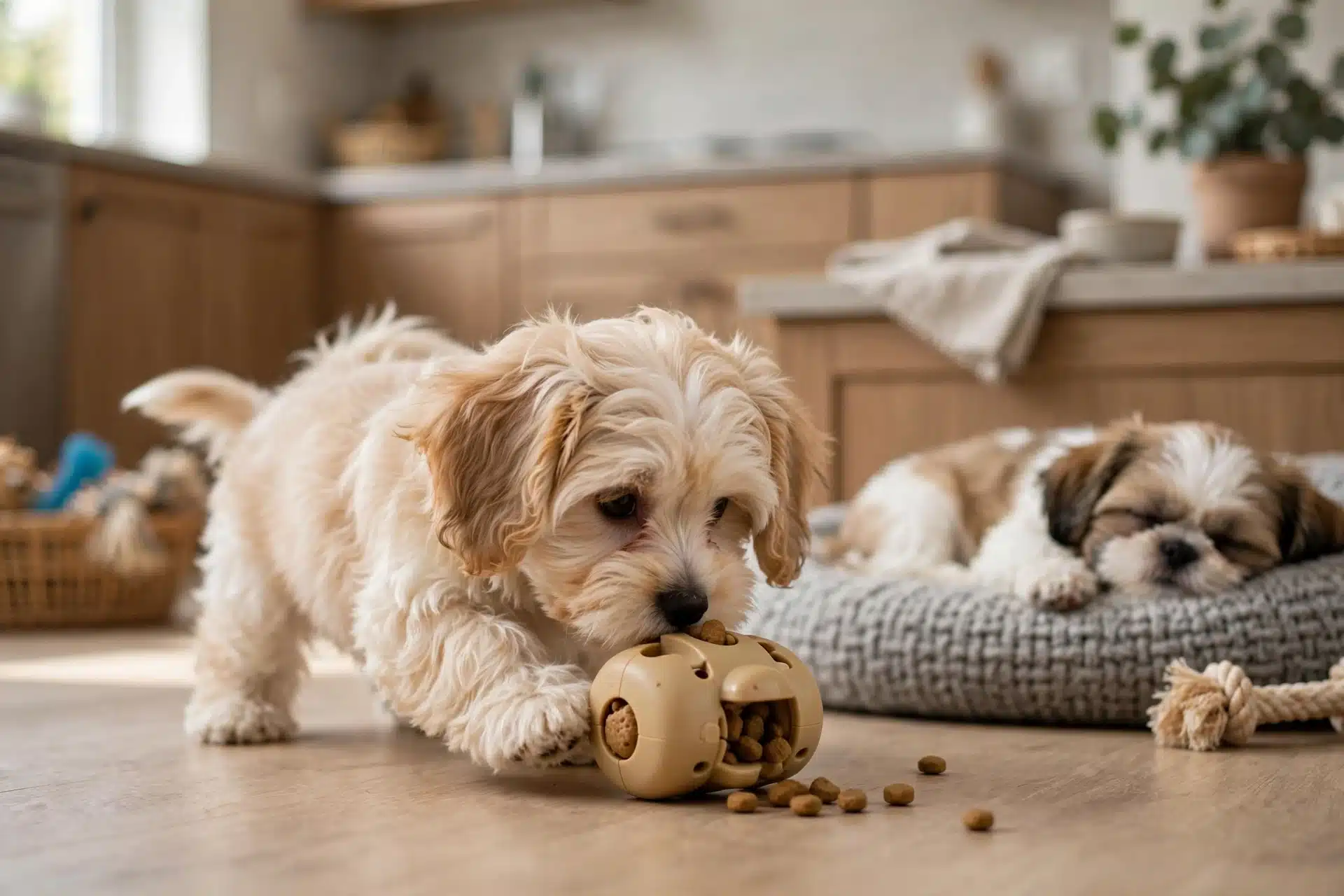
Both breeds want you in the game. A Havanese will chase a ball down the hall until your arm gives out, then ask for a round of tug. That is the Havanese activity level showing up as play, not stamina for hikes. A Shih Tzu plays too, just in shorter bursts, and usually decides when the game ends. Leave either breed alone with toys all day and the energy turns into mischief instead. Chew toys and food puzzles help, but they work best as fillers between sessions with you, not replacements.
Using Food and Sniffing to Move Energy Without Extra Miles
Sniff walks are the quiet trick here. Letting a puppy sniff a mailbox, a bush and the curb burns real mental energy, and the AKC notes sniffing is genuinely tiring work for dogs. Ten minutes of slow sniffing can settle a puppy more than a brisk mile. Add a puzzle feeder at dinner, hide a few kibble pieces around the room, and you have covered most of the day’s mental work. When you plan a feeding routine, structure like this matters as much as the walk itself. A well-fed, well-nosed puppy naps. A bored one remodels your baseboards.
Puppies Specifically: Managing Energy in the First Year
Puppy Versus Adult Energy: Why the First Year Looks Different
A puppy’s energy comes in bursts, not steady blocks. Havanese puppies often sprint, crash, then sprint again, while Shih Tzu puppies may act calm until a sudden zoomie session takes over the room. Both breeds need far less formal exercise as puppies than as adults, because young bodies tire fast and need long naps to recover.
Growth, Joints and Safe Surfaces
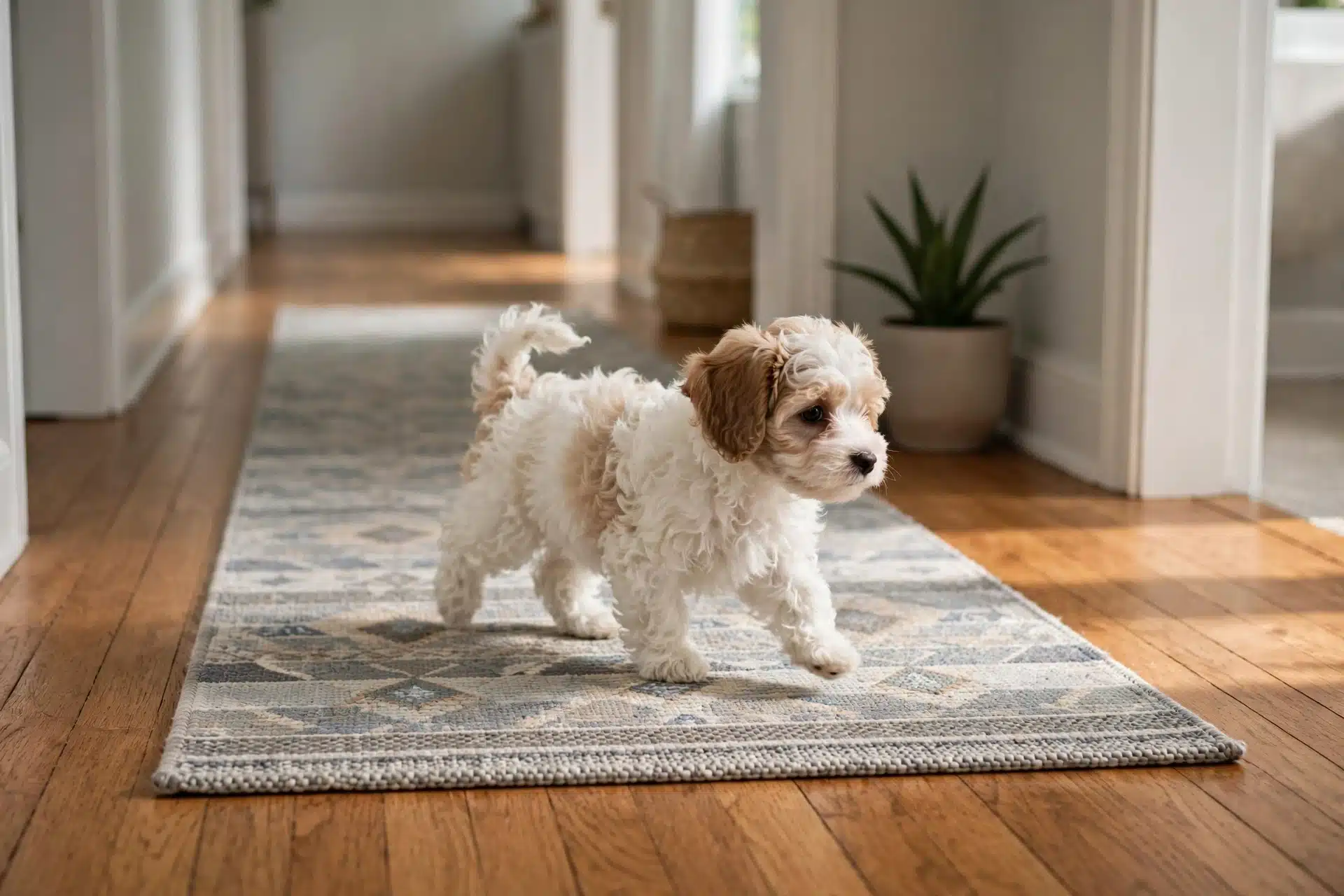
Until growth plates close, forced exercise does more harm than good. Skip long hikes, stairs and jumping off furniture, and let the puppy set the pace. Hardwood and tile can be slippery for small growing joints, so add rugs or runners on main play paths. Ask your vet before any new activity, since a checklist like the one for choosing a healthy Havanese puppy covers what to discuss at early visits.
Building a Routine the Puppy Can Grow Into
Start smaller than the adult targets and stretch them slowly. A first-year day might hold one 10 to 15 minute sniff walk, a few 5 minute play bursts, and short reward-based training sessions that tire the brain. Add five minutes of walking each month as your vet approves. Consistency matters more than distance, so a repeatable rhythm beats occasional long outings.
Heat, Weather and the Limits That Shape the Routine
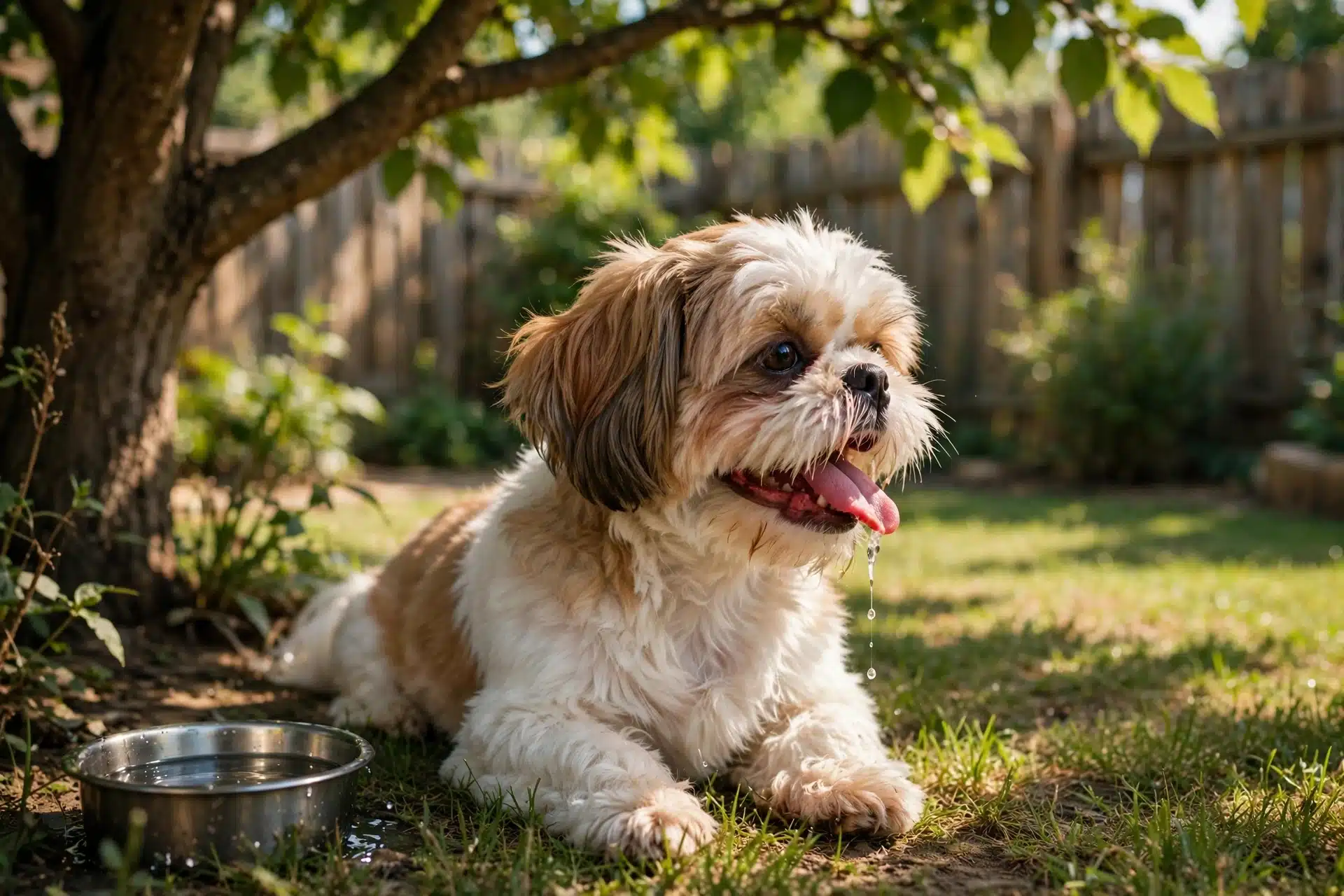
Weather caps both breeds’ exercise before energy levels even come into play. Shih Tzus are brachycephalic, meaning flat-faced, and research shows flat-faced dogs are over-represented in heatstroke cases because their short airways shed heat poorly. So yes, you can walk a Shih Tzu in warm weather, but keep it short: go early or late, stay on grass, carry water, and stop at heavy panting, loud breathing, drooling, or bright red gums. Those signs mean rest and shade, or a vet call if they worsen.
| Weather | Havanese | Shih Tzu |
|---|---|---|
| Hot days (80°F+) | Shorten walks, shift to morning | Mostly indoor play; walk only before 9 a.m. |
| Mild days | Full 30-60 minute routine | 20-30 minutes plus play |
| Cold snaps | Coat helps, but boots help ice melt | Shortest outings of the year |
The Havanese handles heat better but still follows the same rules as a puppy. Its double coat insulates against cold, so winter walks rarely need cutting short, though a towel-off after wet snow keeps the coat healthy. For summer planning, Sage’s seasonal puppy safety guide walks through timing, shade and water in detail.
What Energy Research Means for Training and Everyday Handling
Energy as a Training Asset
A Havanese’s higher activity level is a training advantage, not a problem. Energetic dogs usually want to work with you, so short reward-based sessions land well. The AKC notes that reward-based training helps dogs understand which behaviors you want repeated, and it fits both breeds. Keep sessions to about five minutes, a few times a day. A Shih Tzu learns the same skills, just with a calmer pace and fewer reps. For week-one structure with either breed, our first weeks with a small breed puppy guide walks through daily rhythm basics.
Household Realities: Boring Days and Busy Homes
Both breeds handle quiet households, but they fill slow days differently. A Havanese left idle invents games, so rotate puzzle feeders and sniff walks to keep the brain busy. A Shih Tzu tends to nap through lulls, which suits apartment life. Busy families should still protect two short walks a day; neither breed thrives on zero outings. On hot days, shorten both routines, since flat-faced Shih Tzus overheat faster.
Match the routine to the dog in front of you, not the breed average.
Which Should You Choose: Havanese or Shih Tzu?
Both breeds fit small homes and gentle routines. Pick by how much activity you want to share, not by which one is “better.”
Choose the Havanese If
A Havanese suits you if you want a playful partner in a compact body. This breed keeps a moderate Havanese activity level for life: roughly 30 to 60 minutes of daily movement, split into walks, games and training. You enjoy that time instead of squeezing it in.
They also learn fast. Reward-based training sessions double as exercise and build the manners a family dog needs. If you like teaching tricks, playing fetch down a hallway, or rotating puzzle feeders, the Havanese rewards the effort.
They want company, though. A Havanese left alone all day often gets restless, so this breed fits households where someone is usually home. First-time families do well here because the breed is biddable and eager. It is one reason Sage Puppies breeds Havanese puppies alongside Havapoos and Cavapoos.
Choose the Shih Tzu If
A Shih Tzu suits you if your ideal day is calmer. Its low Shih Tzu energy level pairs with about 20 to 30 minutes of easy activity plus indoor play: a short morning walk, a few toy sessions, and long naps at your feet.
That said, the flat face matters. As a brachycephalic breed, a Shih Tzu overheats quickly, so summer walks must come early and stay short. Grooming is another real commitment; daily brushing or regular trims keep the coat manageable.
Pick the Shih Tzu if you want affection without a fitness plan. Pick the Havanese if you want a small dog that keeps up. Either way, ask a breeder what each puppy’s energy looks like day to day, then match it to your honest routine.

Still torn between a Havanese’s 30 to 60 active minutes and a Shih Tzu’s easier 20 to 30? The puppies at Sage Puppies come with honest energy notes from Cassie, so you can match temperament to your routine. Start the application today.
Frequently Asked Questions
Q1: Which breed needs more exercise, a Havanese or Shih Tzu puppy?
The Havanese needs slightly more. Adults run 30 to 60 daily minutes versus a Shih Tzu’s 20 to 30, but the gap is engagement, not miles.
Q2: Are Havanese puppies more energetic than Shih Tzu puppies?
Usually, yes. Havanese puppies play in longer, more interactive bursts, while Shih Tzu puppies settle faster. Individual puppies vary, so ask a breeder about daily behavior.
Q3: How much daily exercise does a Havanese puppy need?
Split activity into short bouts: one 10 to 15 minute sniff walk, a few 5 minute play bursts, and brief training games. Never force long walks while joints grow.
Q4: Can a Shih Tzu puppy walk in summer heat?
Carefully. This brachycephalic breed overheats fast, so walk before 9 a.m., stay on grass, carry water, and stop at heavy panting or bright red gums.
Q5: Do either of these breeds suit apartment living?
Both do. A Shih Tzu naps through quiet days; a Havanese needs puzzle feeders and sniff walks to stay settled in smaller spaces.
Conclusion
The Havanese and Shih Tzu differ less in total exercise than most comparisons claim. An adult Havanese wants about 30 to 60 minutes of daily movement; a Shih Tzu does well with 20 to 30 plus indoor play. The real gap is engagement, not miles, since a Havanese channels energy into games and training while a Shih Tzu naps between short walks. Heat matters too: the flat-faced Shih Tzu carries brachycephalic limits the longer-nosed Havanese avoids. In the first year, both need short bursts, non-slip floors and rest, never forced distance. Match the dog in front of you to your honest daily routine, and the right breed becomes obvious.