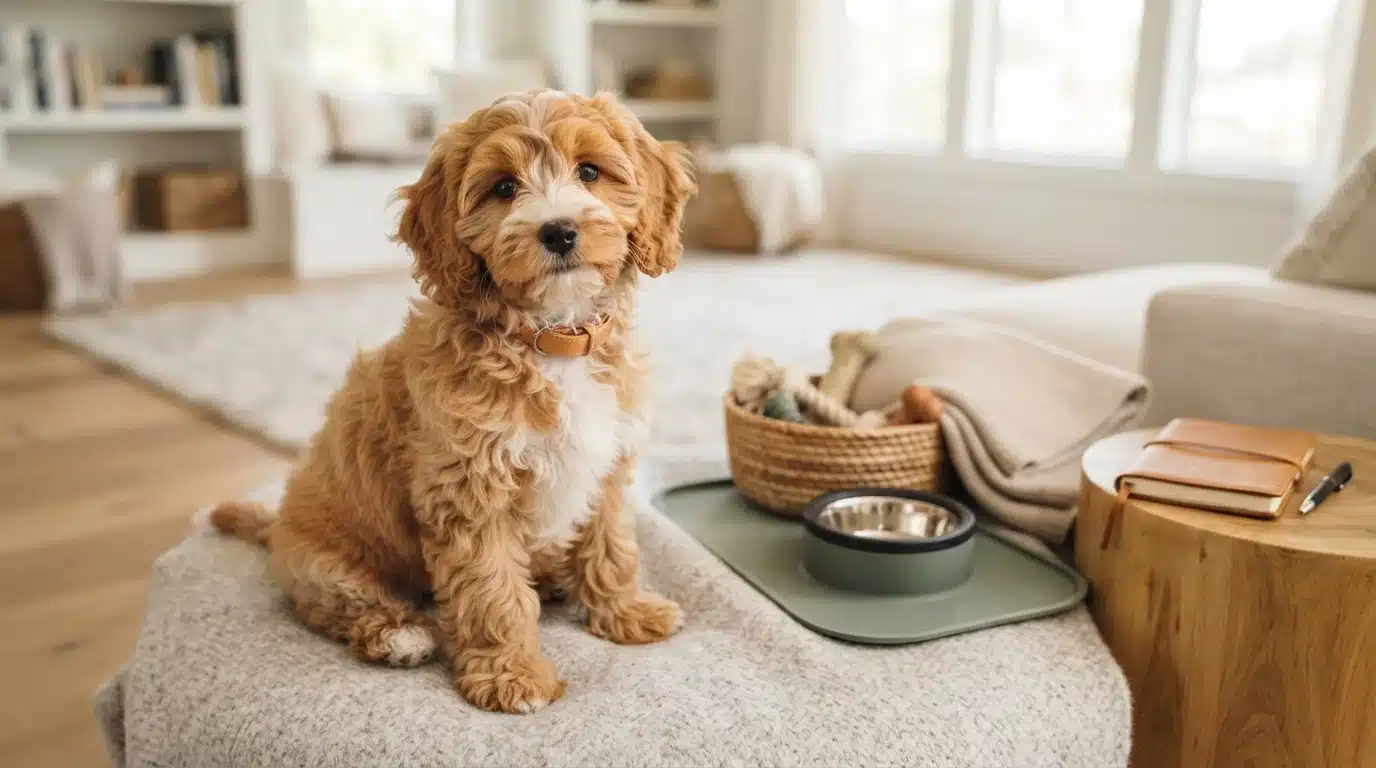
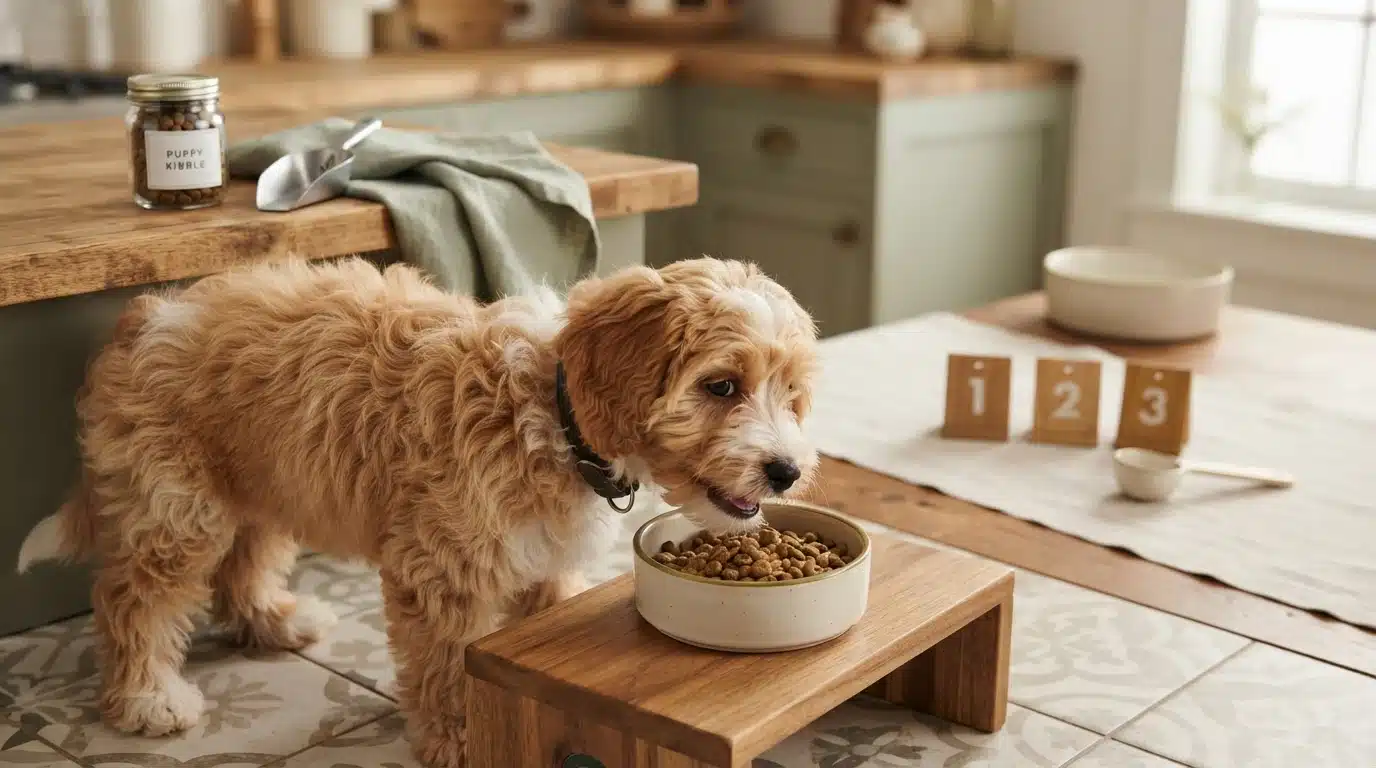
Quick Summary: A Havapoo puppy typically sleeps 18 to 20 hours a day at 8 weeks, easing to 17 to 19 hours around 3 to 4 months and 14 to 16 hours by one year. Keep wake windows to 60 to 90 minutes early on, use regular crate naps and calm bedtime routines, and treat night waking as a quick, boring potty break rather than playtime. Crankiness, biting, zooming, or difficulty settling can signal overtiredness, so adjust naps and consult a veterinarian if unusually low sleep or hourly nighttime waking continues.
The first night a Havapoo puppy comes home, many families expect a dog-sized sleep schedule. Instead they get a 45-minute nap, three hours of restless circling, a midnight potty trip, and a 6 a.m. wake-up call. It feels chaotic, but it is normal.
A healthy Havapoo puppy sleeps 18 to 20 hours a day. The problem is that sleep comes in scattered chunks, and most new owners do not know how those chunks should shift as the weeks pass.
This guide lays out a Havapoo sleep schedule that works, with Havapoo sleep hours broken down by age, a sample plan for the first three months, and fixes for night waking. You will also learn the warning signs of an overtired puppy, so you can tell a rough night from a real problem.
How Many Hours a Day Should a Havapoo Puppy Sleep?
The short answer most owners need on day one
A healthy Havapoo puppy sleeps 18 to 20 hours a day, and that is normal, not a problem. New owners often worry their puppy is too tired or too lazy, but puppies this age burn enormous energy in short wake windows and need long rest between them. Expect your puppy to play hard for an hour, then crash for a nap. The hours dip slowly as your Havapoo grows, so what looks like endless sleeping at 8 weeks is a healthy foundation for an adult dog.
Havapoo sleep by age: from 8 weeks to one year
This age-based breakdown gives you realistic Havapoo sleep hours to plan around:
| Age | Hours Per Day | What It Looks Like |
|---|---|---|
| 8 to 10 weeks | 18 to 20 | Naps every waking hour, short evening play |
| 3 to 4 months | 17 to 19 | Longer wake windows, two solid naps plus dozing |
| 4 to 6 months | 15 to 18 | More sustained play, settling into a routine |
| 6 to 12 months | 14 to 16 | Near-adult pattern, one or two naps daily |
The drop is gradual, so a puppy sleeping 19 hours at 10 weeks and 16 hours at 8 months is right on track.
Why small companion puppies sleep in short bursts
Havanese and Poodle mixes are small companion breeds, and tiny bodies use energy in fast cycles. A Havapoo puppy wakes, plays, eats, potties, and then needs sleep again, often within 60 to 90 minutes. Skipping that nap triggers crankiness, biting, and zoomies, because an overtired puppy acts much like an overtired toddler. Protecting short, frequent naps keeps behavior calm and helps the brain settle what it just learned.
What Changes Week by Week in the First Three Months
Your Havapoo will not keep the same sleep pattern from week eight to week sixteen. The hours dip slowly as the brain matures, the wake windows stretch, and the naps consolidate. Here is what to expect in each stretch, so a change in routine reads as growth rather than trouble.
Weeks one and two at 8 weeks old
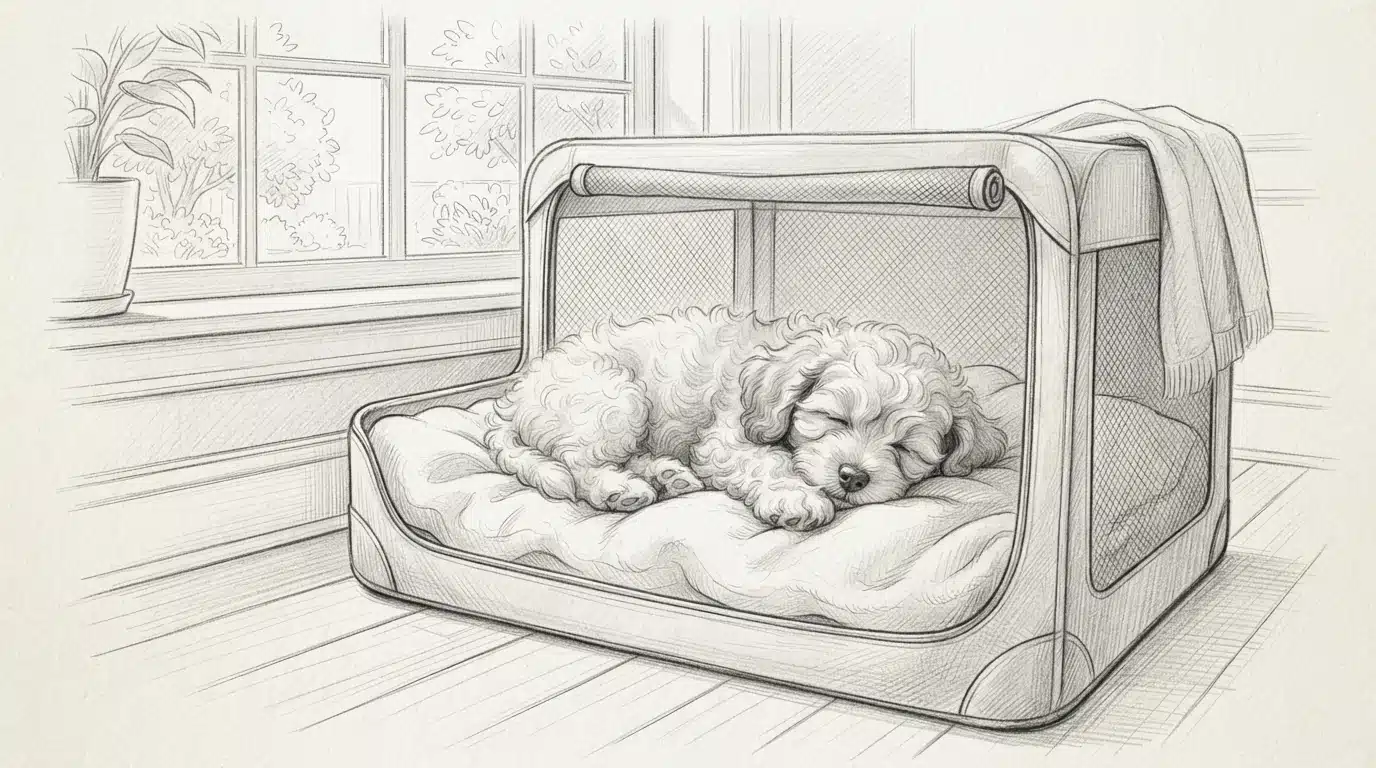
A newly home puppy runs on the deepest sleep of its life. Expect 18 to 20 hours a day, which the AKC confirms is normal for pups this young. Wake windows run 60 to 90 minutes at most: potty, a short play session, a meal, then a nap. Naps are frequent and often crash-like, because an overtired puppy cannot settle on its own. Keep the crate in your bedroom, handle night waking calmly, and let sleep do the developmental work.
Weeks three to four as naps lengthen
Around 10 to 12 weeks, the pattern starts to organize. Total sleep eases toward 17 to 19 hours, but the bigger change is the shape of it: instead of dozing after every meal, your puppy takes two or three real naps of one to two hours each. Wake windows stretch to about two hours. This is the window for gentle crate practice, since a tired puppy settles far more easily than a wired one. Most pups also start sleeping a longer stretch at night here.
Weeks five to twelve and the three-month mark
By 12 to 16 weeks, expect 16 to 18 hours with clearly defined naps and longer evening calm. Wake windows can reach two to three hours, and play gets more physical, which burns energy faster. The 3 to 4 month range in the table above, 17 to 19 hours, covers pups whose naps have not fully consolidated yet, and that is still on track. Keep the routine steady even as hours drop, because predictability is what tells your puppy when to sleep.
A Sample Havapoo Sleep Schedule for the First Three Months
Here is the schedule in one view, built around 60 to 90 minute wake windows:
- Morning: potty, breakfast, gentle play, first nap
- Midday: potty, short training, lunch, nap
- Afternoon: potty, play, nap, more play
- Evening: dinner, calm play, final potty, overnight sleep with one wake-up
That is the whole template. Now let’s walk through each block so you know what “gentle play” and “calm play” actually look like at each age from 8 weeks to about 4 months.
Morning: wake, breakfast, activity, first nap
Start the day the same way every morning. Carry your puppy out for a potty break the moment she wakes, around 6 to 7 a.m., then give breakfast right after. While food digests, keep activity low key: a short play session with a soft toy or a few minutes of name practice works well. Within an hour of eating, she will start slowing down, rubbing her eyes, or plopping down mid-play. That is your cue. Guide her into the crate for a nap of one to two hours. Puppies this age rarely put themselves to bed, so you make the call for them.
Midday and afternoon: play, naps, and toilet breaks
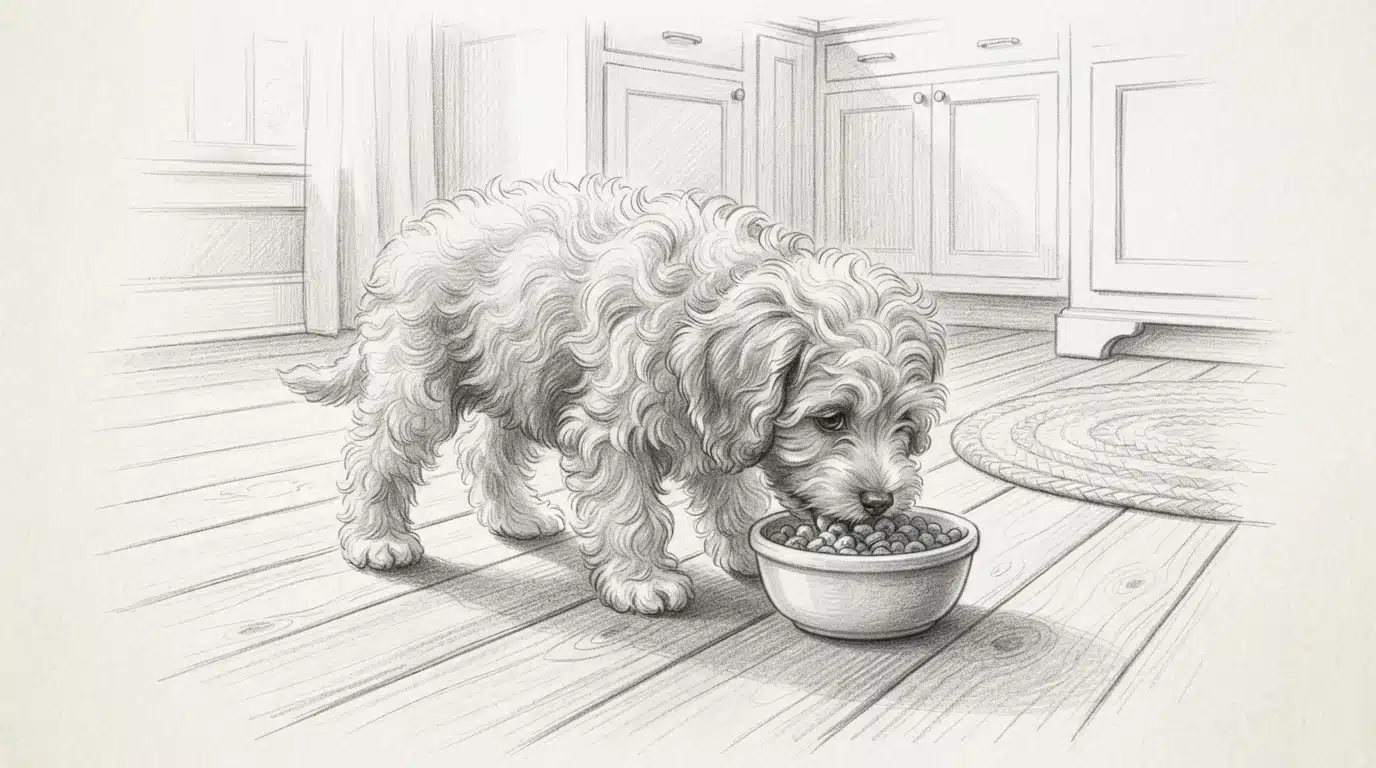
The middle of the day runs on repeat: potty on waking, a short activity burst, then back down. Aim for a second nap around 11 a.m. to noon, lunch or a snack if your breeder’s feeding guide calls for it, and a third nap in the early afternoon. Between naps, mix up the activity. Ten minutes of puzzle toy time tires a puppy faster than an hour of zoomies, and short handling sessions build the calm behavior you will want later. Expect a potty trip after every single wake-up, every meal, and every play session at this stage.
Evening and the overnight window
Wind the day down on purpose. Serve dinner around 5 to 6 p.m., follow it with a potty trip, then keep play quiet: a chew, gentle petting, no rowdy games after 7 p.m. One last potty break right before bed, then crate her for the night. Most 8 to 10 week old puppies still need one overnight potty trip, often around 2 to 3 a.m. Keep it boring: no lights, no play, no talking beyond a soft praise. By 12 to 16 weeks many puppies sleep straight through, so that midnight alarm fades on its own.
How to adapt the template to your puppy
Treat this schedule as a starting shape, not a rulebook. Some Havapoos nap 90 minutes; others need a solid two hours after every meal. Watch your puppy instead of the clock. If she wakes cranky, bites everything, and fights the crate, she is probably overtired, so make the next nap earlier. If she lies awake whining, stretch the wake window by 15 minutes. Mealtimes and the last potty should stay fixed, though, because those anchors keep the whole routine predictable. Naps, play blocks, and wake windows can flex around them.
Why Havapoo Puppies Need So Much Rest
A Havapoo puppy sleeps 18 to 20 hours a day because her body and brain are growing fast. Sleep is not laziness. It is the work of early puppyhood, and cutting it short causes the very behavior problems new owners worry about.
What happens during sleep
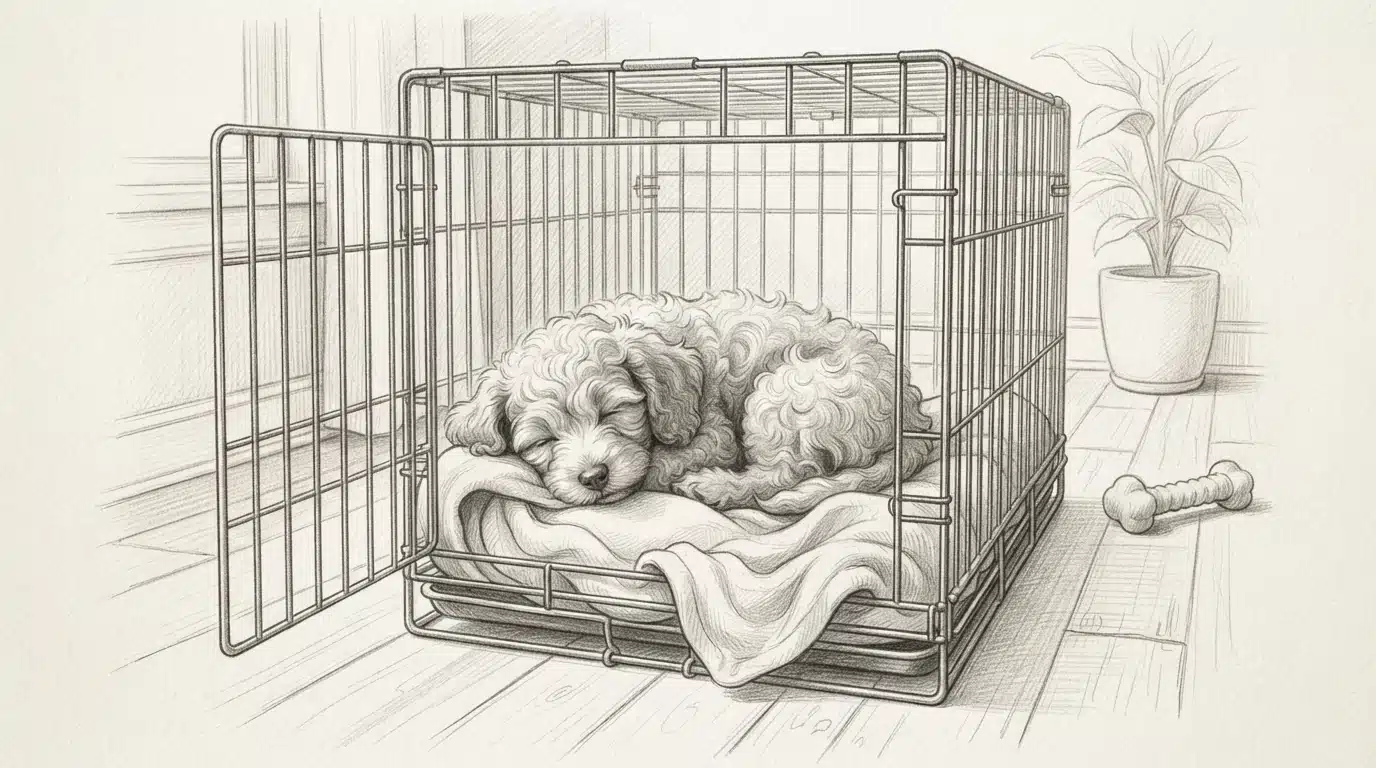
While your puppy dozes, her brain files away new skills and her body releases growth hormone that builds muscle, bone, and a mature immune system. Rest also resets her nervous system after each burst of play and learning. Skip the nap, and you get a cranky, mouthy puppy who cannot settle. Studies of puppy development show sleep supports memory formation, which is why a well-rested pup retains training better than a tired one.
Why a people-oriented breed tires out mentally faster
The Havanese and Poodle mix was bred to be a companion, so your puppy reads your face, follows your voice, and tracks every movement in the room. That constant attention is real work. Ten minutes of household bustle can drain her as much as a longer walk would tire an adult dog, which is why wake windows stay short even on quiet days.
Sleep and training go hand in hand
Every new skill, from crate settling to potty routines, depends on a rested brain. The AKC notes puppies need far more sleep than adults, so protecting naps is protecting your training investment. Plan sessions right after she wakes, keep them short, and end before she fades. A puppy who naps on schedule learns faster, fusses less at night, and grows into a calmer companion, a pattern we see often at Sage Puppies with litters raised on steady rest routines.
Nighttime Sleep: Getting Through the First Few Weeks
Your Havapoo’s first nights home set the pattern for months ahead. Puppies this age cannot hold their bladder all night, so the goal is not a full eight hours of sleep. It is calm wake-ups, quick potty trips, and a fast return to the crate. A predictable routine makes that happen sooner.
Building a bedtime routine that transfers to night waking
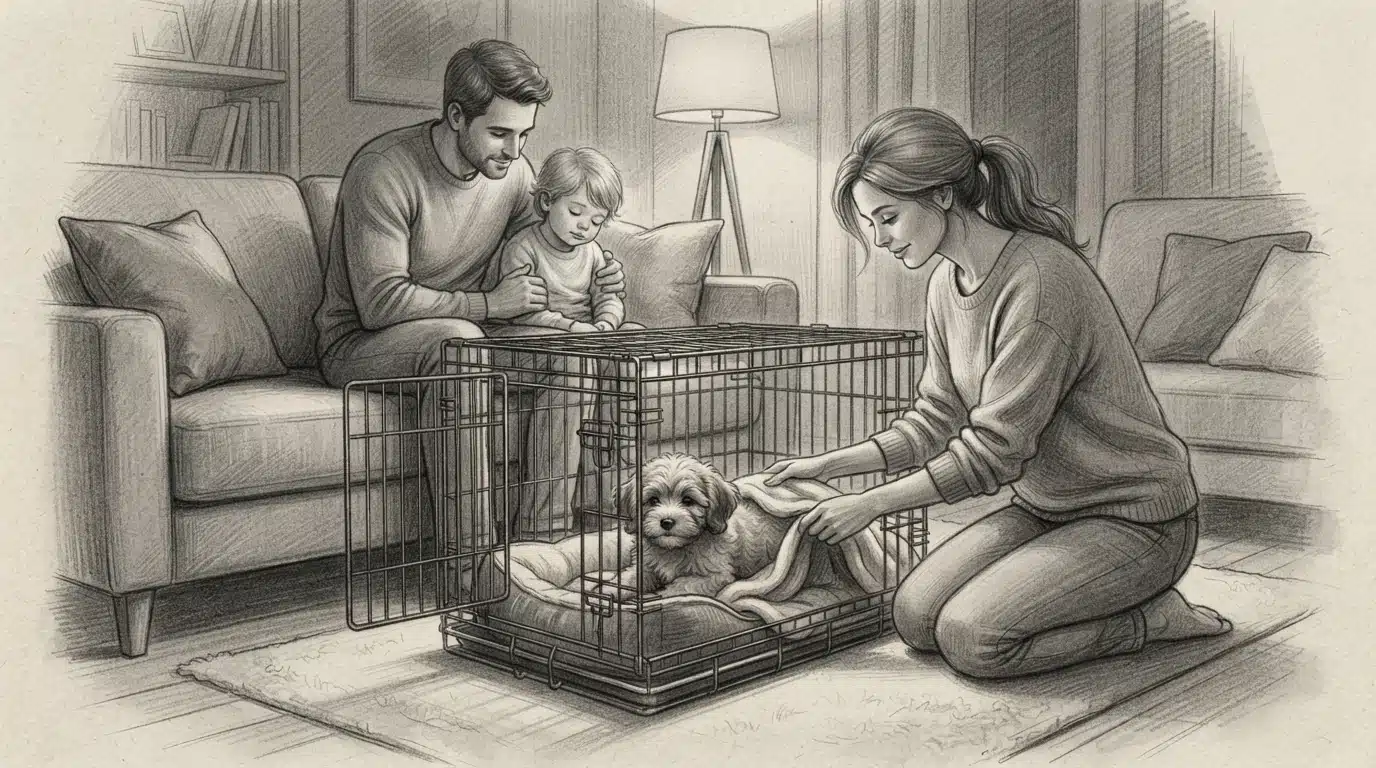
Keep the last hour before bed quiet and repeat it every night. Turn off rough play around 8 p.m., take a final potty trip, offer a small water stop, then settle her in the crate with the lights low. Puppies learn through repetition, so the same three or four steps in the same order become a sleep signal. When she wakes at night, skip the play. Carry her out, give her two to five minutes to potty, and bring her straight back. No chatting, no lights, no treats. She learns that night waking means business only, which is exactly the crate settling pattern doodle breeders recommend families prepare for before pickup.
Where your Havapoo should sleep
A crate is the safest spot, placed near your bed for the first few weeks. The AKC notes that crate training gives puppies a den-like space and helps with house training from night one. Line it with a soft bed, and skip stuffed toys she could chew apart. If she cries, a hand near the crate or a ticking clock often settles her. By 12 weeks, many Havapoos sleep through with just one early-morning potty break.
Handling whining, barking, and the 3 a.m. potty trip
Whining means one of two things: a full bladder or a puppy testing the rules. Learn the difference. A sharp, urgent cry usually means she needs out, so take her, then return her without fuss. Steady, repetitive barking often stops on its own within ten minutes. Wait it out rather than letting her out, because that teaches her crying opens the door. If the 3 a.m. trip drags on past 16 weeks, try an earlier dinner and a final potty at your own bedtime.
Is Your Havapoo Getting Too Little Sleep?
Signs a Havapoo puppy is not getting enough sleep include:
- Nipping and biting that spikes out of nowhere
- Zoomies late at night instead of winding down
- Ignoring cues she normally knows
- Whining, pacing, or trouble settling in the crate
- Clumsiness, yawning, and crankiness during the day
If these last more than a few days, or she seems tired rather than wild, your veterinarian should weigh in.
Telltale signs of an overtired puppy
An overtired puppy rarely acts sleepy. She acts wild. Watch for harder bites, sudden zoomies, barking at nothing, and a puppy who stops listening. Some pups get clingy or clumsy instead. Vets list irritability, hyperactivity, and slower reactions as common signs of a short-slept dog, so treat these as a nap request, not bad behavior.
Fixing short naps and restless evenings
Most short-nap problems fix themselves with structure. Cap wake windows at 60 to 90 minutes, dim the lights before naps, and take a potty break first. A crate helps a lot here, because a dark, quiet space tells her brain it is sleep time. Our guide to crate training without stress walks through the settling routine step by step. Enforced naps in the crate are the simplest fix for a puppy who fights sleep, since crated pups settle faster.
When a veterinarian should take over the question
Call your vet if she sleeps far below her age range for several days, wakes hourly at night past 16 weeks, or seems exhausted while awake. Sudden changes can point to pain, stomach upset, or illness, not just a schedule issue. Rule out health causes before adjusting training, and bring a simple sleep log to the appointment.

A predictable sleep plan changes everything: fewer 3 a.m. wake-ups and a puppy who settles fast. If you’re still choosing your pup, Sage Puppies raises Havapoo puppies that start life with steady routines. Browse available puppies, then apply to reserve your match. Your well-rested family starts here.
Frequently Asked Questions
Q1: How many hours a day should a Havapoo puppy sleep?
A healthy Havapoo puppy sleeps 18 to 20 hours a day. That total dips gradually to 14 to 16 hours by the time she turns one, so scattered naps at 8 weeks are exactly what you want.
Q2: How much do Havapoo puppies sleep at 8 weeks or 3 months old?
At 8 weeks, expect 18 to 20 hours with 60 to 90 minute wake windows. By 3 months, sleep eases to 17 to 19 hours, and naps consolidate into one or two longer stretches.
Q3: What is a sample Havapoo puppy sleep schedule for the first three months?
Anchor the day with potty on waking, breakfast, a short play burst, and a crate nap. Repeat that cycle at midday and afternoon, then wind down after dinner with quiet play and a final potty.
Q4: Should I wake my Havapoo puppy from a nap?
Usually no. Let naps run one to two hours, but wake her for meals, potty trips, or short training sessions so her routine stays predictable.
Q5: When should night waking concern me?
If hourly wake-ups continue past 16 weeks, try an earlier dinner and a bedtime potty trip. If that fails, or she seems exhausted while awake, bring a sleep log to your veterinarian.
Conclusion
A Havapoo puppy’s sleep schedule is simple once you know the numbers: 18 to 20 hours a day at 8 weeks, easing to 14 to 16 by her first birthday. Sleep comes in short bursts early on, with 60 to 90 minute wake windows, then naps consolidate into one or two long stretches by 3 to 4 months.
Anchor the day with fixed meals, a final potty, and crate naps. Keep night wake-ups boring, and watch for overtired signs like nipping and late-night zoomies. Most schedule trouble fades with structure, not more training. If low sleep lasts days, let your veterinarian take over. Puppies raised on steady rest, like our Havapoos, settle into family life faster.