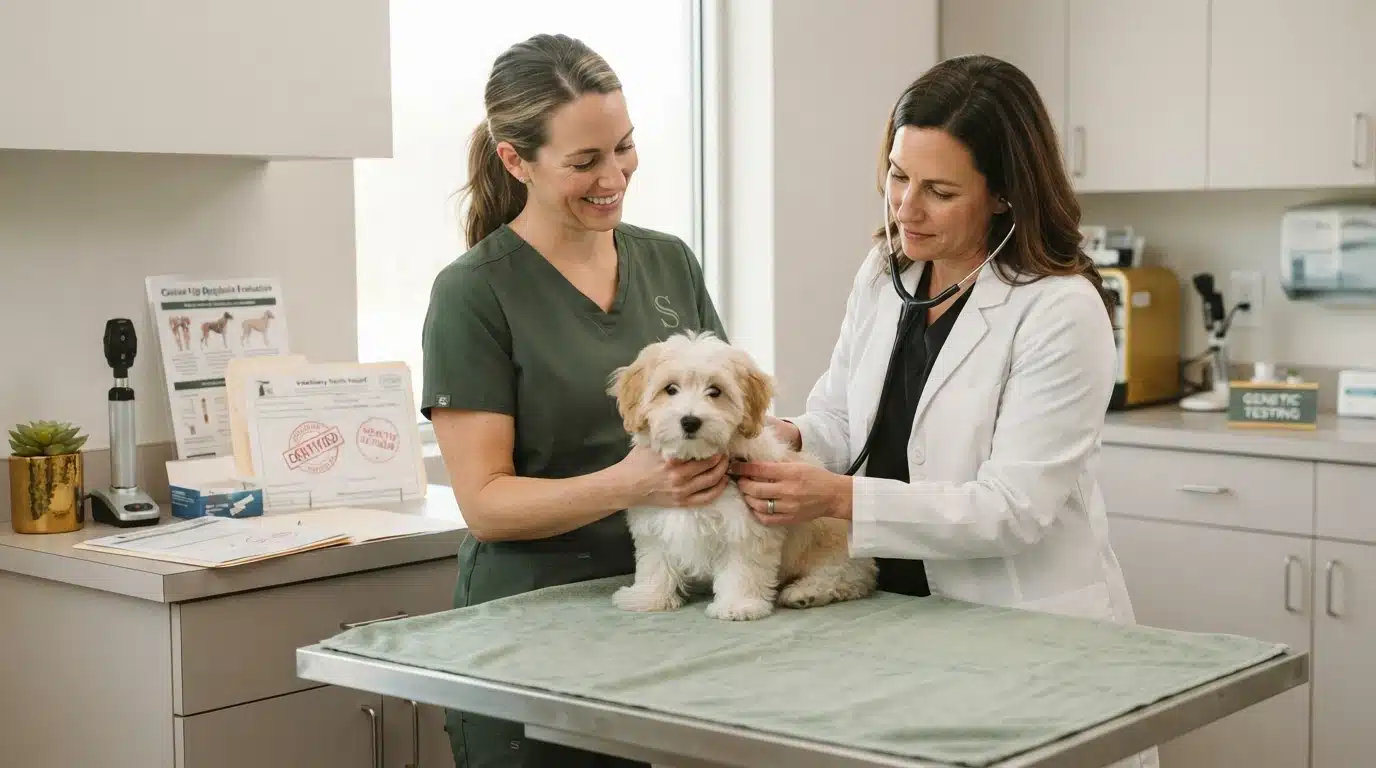
Quick Summary: A Havapoo appears to start with a slightly lower documented risk of patellar luxation than a Cavapoo, but no study has directly measured either mix, and both inherit risk from the Poodle parent. Parent patella screening, especially written OFA results obtained after age two, matters more than the mix name. Keep puppies lean, use non-slip rugs and ramps, watch for skipping or hopping, and expect grades 1 and 2 to need monitoring while grades 3 and 4 often require surgery.
On paper, a Havapoo carries less patellar luxation risk than a Cavapoo. The Havanese side shows only a modest documented signal, while the Cavalier side shows a large one, and both mixes share the same Poodle-related skeletal traits. But here is the honest part: no published study has measured havapoo patellar luxation or patellar luxation Cavapoo rates directly. What matters most is not the breed name. It is the patella records attached to the parents of the exact litter you are considering.
You have probably heard “patellar luxation” once too often by now, and you want to know if one mix is more likely to skip on a hind leg or need surgery. You also want a plan for the first six months. This comparison covers what the research actually shows, why mix numbers are less certain than breed numbers, early signs in young puppies, home protection for Cavapoo joint health, and the documents to request before you pay a deposit. Sage Puppies has matched families with Havanese, Havapoo, and Cavapoo litters since 2025, and this guide reflects that breeding focus rather than generic small-breed advice.
Cavapoo vs Havapoo Joint Health: Patellar Luxation At a Glance
| Cavapoo | Havapoo | |
|---|---|---|
| Documented parent-breed signal | Cavalier side carries a strong signal; 12.5% ten-year prevalence in Australian CKCS primary-care records | Havanese side shows a smaller signal; one screening study noted grade 1 increases of 2.7% in Havanese |
| Overall patellar luxation tendency | Moderate to high compared with the Havanese side, given the Cavalier contribution | Lower on the documented parent signal, but Poodle ancestry still carries shared skeletal risk |
| Severity pattern and related joint issues | Bilateral cases more likely to be higher grade; ligament and joint risks rise with higher grades | Same grade framework applies; many findings are mild and intermittent rather than dramatic |
| Screening records to ask for | Parent patella results, sire and dam weights, and full puppy exam records from a veterinarian | Havanese parent patella certification and hip records, plus poodle parent weights and exams |
| Home knee-care effort | Extra attention early on because of typical spaniel frame and weight drift risk | Standard small-breed puppy care with careful floor, stair and weight management |
| Best fit for joint-focused buyers | Only with documented patella-clear parents and a written plan for monitoring | Better starting odds, still requiring patella records and a healthy-weight plan |
How Cavapoo and Havapoo Compare
Cavapoo
A Cavapoo crosses the Cavalier King Charles Spaniel with a Toy or Miniature Poodle, blending spaniel warmth with poodle smarts. It suits families who want a playful companion and will ask breeders for patella results before committing. Its knee-care angle: watch weight and grade progression closely, since the Cavalier side carries a stronger documented signal.
Key strengths
- Poodle intelligence and trainability
- Affectionate, family-friendly temperament
Havapoo
A Havapoo pairs the Havanese, a sturdy small companion breed, with a Toy or Miniature Poodle. It fits buyers who want a lower-maintenance joint-health starting point without skipping screening records. Its knee-care angle: many findings stay mild, so standard puppy care plus weight control goes a long way.
Key strengths
- Lower documented patellar luxation signal on the Havanese side
- Trainable, people-focused companion nature
Which Is More Likely to Develop Patellar Luxation, a Havapoo or a Cavapoo?
Both mixes carry real risk, but the research points slightly toward the Havapoo. That is because its Havanese parent breed shows one of the strongest patellar luxation signals of any small breed, while the Cavalier side of a Cavapoo shows a milder one. The difference is modest, though, and the breeder you pick matters more than the mix.
What the parent breeds actually show in the research
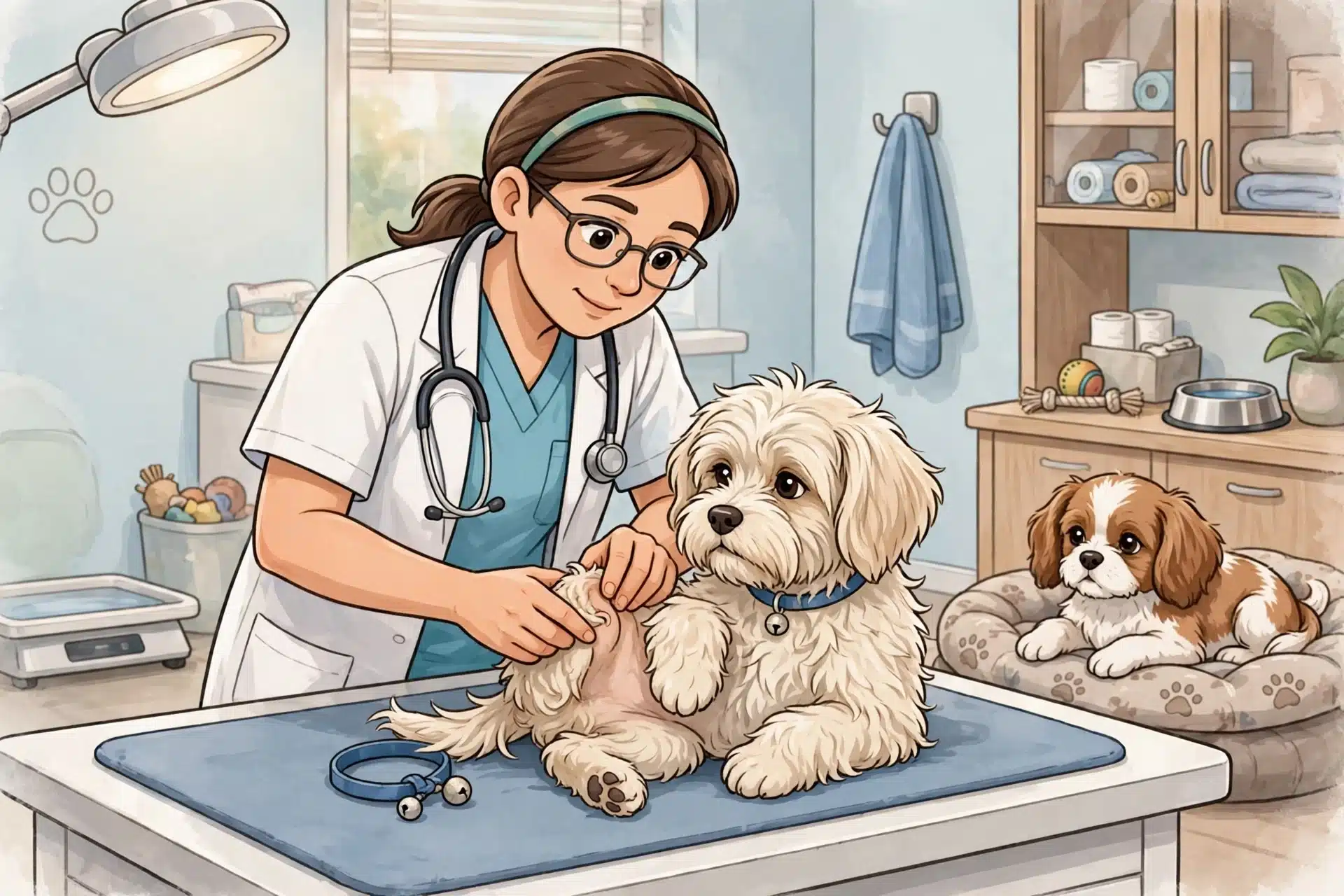
Patellar luxation means the kneecap slips out of its groove. It is partly inherited, so parent breeds tell you where each mix starts. The Havanese tops veterinary breed lists, with 25.6% affected in one commonly cited dataset. Cavaliers show a smaller but real signal, with the 12.5% ten-year prevalence already noted above. Both breeds sit well above the roughly 1.3% all-dog rate seen in UK primary-care records, so neither mix is low risk.
Why the Poodle half changes the math for both mixes
The Toy or Miniature Poodle lowers the inherited dose in each mix, but it does not erase it. Poodles carry their own luxation history in small sizes, so crossing dilutes the signal rather than removing it. First-generation puppies also vary: each one inherits a different blend of knee structure from its parents. This is why keeping a puppy lean from the start matters for both mixes, since extra weight loads the same joints.
How the two compare once you put them side by side
| Factor | Havapoo | Cavapoo |
|---|---|---|
| Higher-risk parent breed | Havanese (25.6% signal) | Cavalier (12.5% signal) |
| Overall likelihood | Somewhat higher | Somewhat lower |
| Poodle influence | Dilutes risk | Dilutes risk |
| Main control you hold | Breeder screening plus weight | Breeder screening plus weight |
The honest answer: the Havapoo edge is small, and a screened puppy from either mix beats an unscreened one from the other.
Why Breed Averages Are Harder to Read Than They Look
Breed-level percentages tell you where risk starts, not what your dog’s odds actually are. Three factors move an individual puppy’s risk up or down, and knowing them helps you read any breeder’s health claims with a sharper eye.
Weight and neuter status change the odds
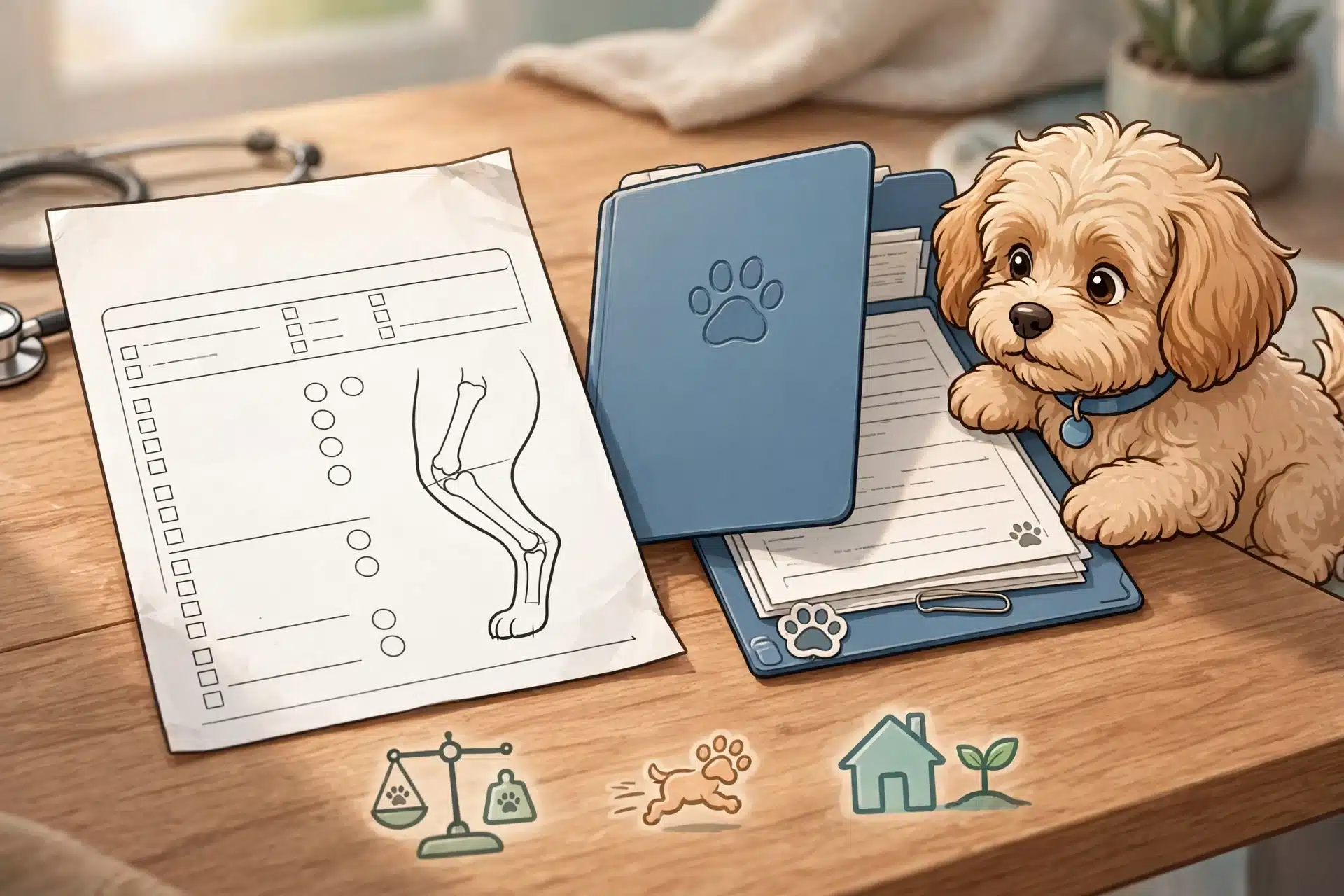
Extra weight loads the knee joint every single day, so keeping a small breed lean is one of the few risk factors you fully control. Early neuter timing matters too, because sex hormones influence how the leg bones grow and align before maturity. Studies of risk factors note that body condition and growth patterns shape whether a loose kneecap ever becomes a limping one. Ask your vet to time any spay or neuter around skeletal maturity.
Grades 1 through 4, explained like a human
Vets grade a luxating kneecap on a scale of one to four. Per the OFA’s explanation:
- Grade 1: the kneecap slips only under finger pressure and pops right back.
- Grade 2: it slips on its own at times; your dog may skip or hop.
- Grade 3: it sits out most of the time but can be pushed back in.
- Grade 4: it stays out and the leg may not bear weight.
Grades 1 and 2 often need watching, not surgery. Grades 3 and 4 usually do.
Screening changes the odds for a litter
Breeding two screened parents with normal knees lowers the odds, but it does not erase them, because the condition is polygenic. That is why a breeder’s records matter more than a promise. When you compare breeders, ask whether both parents were formally examined and graded, and ask to see the paperwork rather than a summary. A litter from unscreened parents carries whatever hidden risk both lines hold, no matter what the breed average suggests.
Early Signs of Patellar Luxation in Cavapoo and Havapoo Puppies
The classic early sign is a skip. Your puppy runs along, lifts one back leg for two or three strides, then lands and keeps going as if nothing happened. Because each episode lasts seconds, many families miss it for months.
What to watch for in the first year
Keep an eye out for these everyday clues:
- Skipping or hopping on one hind leg mid-play, the most common sign of a slipping kneecap
- A brief limp that clears up on its own
- Holding one back leg up for a few steps, then using it again
- A bow-legged stance or stiff, awkward walk
- Hesitating at stairs, sofas, or jumps your puppy used to handle easily
Note how often you see it. A once-a-month skip means something different from a daily one, and that pattern helps your vet decide whether to watch or act. Small-breed vets describe this hop-skip pattern as the telltale presentation of luxating patella.

A gentle at-home check you can do safely
You can look for early hints without forcing anything. Sit your puppy down and run a thumb along each knee while the leg relaxes. Feel for a small pop or a click as the kneecap slides. Never push hard or hold the kneecap out of place. If anything feels loose or your puppy flinches, describe what you felt at the next vet visit.
When to call the vet right away
Most skips are mild, but some signs need a same-week appointment or faster:
- Your puppy stops bearing weight on a leg for more than a few minutes
- The knee looks swollen, hot, or painful to touch
- Sudden limping after a fall or hard landing
- Both back legs seem affected, or the gait keeps getting worse
Puppies grumble at leg handling, so mild squirming is normal. Crying, snapping, or refusing to stand is not. Bring a phone video of the skip if you can catch one; vets find it far more useful than a description from memory.
Protecting Your Puppy’s Knees at Home
Good genes matter, but daily habits shape how your puppy’s knees hold up. Three things do the most work at home: safer surfaces, lean weight and steady, low-impact exercise.
Flooring, ramps and stairs
Slippery floors force your puppy’s legs to splay and strain with every step. Put down non-slip rugs or runners on hardwood and tile, especially along routes your puppy runs daily. Add ramps or pet steps next to the couch and bed, and train your puppy to use them from day one. Jumping off furniture is the most common way small dogs hurt a knee, so teach a habit of lifting or ramping down instead.
Weight, food and body condition
Extra weight multiplies knee stress. Keep your puppy lean: you should feel ribs easily under a light fat layer and see a waist from above. Measure meals rather than free-feeding, and skip table scraps. For portion help, the small breed puppy feeding checklist covers measured meals and treats in daily totals.
Exercise and play without overdoing it
Build muscle with leash walks on soft ground; strong thigh muscles support the kneecap. Avoid high-impact play: fetch down stairs, hard landings off furniture, and long sessions of jumping or twisting. Short, steady movement beats bursts. Watch for the skip-and-hop step described earlier, and rest your puppy if you see it.
Ramps, rugs and lean weight cost little now. Knee surgery later costs thousands, so prevention pays for itself.
What to Ask a Breeder About Joint Health Records
A serious breeder should hand you papers, not promises. Before you put money down, ask for these records in writing.
The documents worth asking for, in writing
Ask for patellar luxation screening on both parents, ideally an OFA evaluation with the registry number so you can verify it yourself. Request eye clearances and heart checks too, since small breeds carry other inherited risks. For each parent, you want the exam date, the dog’s age at screening, and the result by grade. Written records matter because verbal “parents are healthy” claims can’t be checked later. Screens done before age two are less useful, since patellar luxation often appears as dogs mature.

Reading a health guarantee honestly
A guarantee should state what it covers, for how long, and what proof it requires. Watch for vague terms like “healthy at time of sale” with no follow-up structure. A fair one covers serious hereditary conditions such as Grade 3 or 4 patellar luxation, sets a clear window, and spells out vet documentation needs. Any buyer financing the purchase should confirm the guarantee survives payment plans and applies regardless of pickup or delivery.
What a transparent breeder actually sends you
Expect answers within a day or two, sent without hesitation. Good breeders share parent photos, screening results, and a short health history of prior litters, including any kneecap issues that surfaced later. If someone deflects, cites “champion lines” instead of test results, or refuses written copies, treat that as a red flag and keep looking.
Planning for Care If Luxation Does Develop
Monitoring versus surgery
Most low-grade cases never need an operation. Watch for skipping steps, bunny-hopping, or a leg your dog favors after naps, and keep a short log. Your vet grades the knee at each visit. Grades 1 and 2 usually get managed with weight control and exercise, while grades 3 and 4, or painful flare-ups that keep returning, point toward surgical repair.
Budgeting with honest labels
If surgery does come up, plan for real numbers. Repair typically runs $1,500 to $3,000 per knee, and quotes climb higher in some regions, according to PetMD. Two affected knees can nearly double that, so ask your vet whether both legs can be done in stages. Label this a worst-case fund, not a routine expense, and set it alongside your regular budget. Our year-one cost guide for small breed puppy costs helps you see where a joint fund fits.
Pet insurance picked up before diagnosis covers future luxation in most plans. After a diagnosis, that knee is usually excluded, so timing matters.
The long view on quality of life
A luxating kneecap is not a life sentence. Small dogs with stable grades stay comfortable for years, and surgical outcomes are generally good. Keep your dog lean, follow your vet’s schedule, and enjoy your pup.
Which Should You Choose: Cavapoo or Havapoo?
Both mixes carry some patellar luxation risk, so the choice comes down to which risk profile and which paperwork you can actually verify.
Choose a Havapoo if joint risk is your top filter
The Havanese parent line is the deciding factor here. Havanese show a smaller documented patellar signal in several datasets than Cavaliers do, even though both parent breeds sit above the 1.3% all-dog baseline. That makes a Havapoo a reasonable pick when you want the lower statistical starting point. Just remember the mix still carries a Poodle parent, and small Poodle lines show luxation too, so screening records matter as much for a Havapoo as for any small breed.
Choose a Cavapoo when the records are clean and you stay involved
Cavaliers carry the 12.5% ten-year prevalence figure, which sounds concerning until you look at what it means for a cross. A breeder who screens both parents and can show you kneecap exams gives you a Cavapoo with a far lower real-world risk than the parent-breed average suggests. Cavapoos also tend toward a calmer temperament many first-time owners want. If you commit to keeping your dog lean and watching for early skipping or hop steps, a well-bred Cavapoo is a sound choice.
The decision checklist before you apply
Run through this list with any breeder before you put money down.
| Question | What a good answer looks like |
|---|---|
| Patellar screening on both parents | Written exam results, not verbal reassurance |
| Health coverage in the contract | Covers Grade 3 or 4 luxation with a clear window |
| Weight guidance | A feeding and growth plan you can follow |
| Follow-up access | The breeder answers questions after pickup |
Ask for parent kneecap records in writing before your deposit clears. A breeder who balks at that request is telling you something.
Your weight management and early-observation habits will shape your dog’s joint health more than the mix itself.

Joint health starts with the breeder, not the vet bill. When you apply through Sage Puppies, Cassie shares parent records and matches you with a litter suited to your home, in Utah or delivered nationwide. Ask your questions early, and bring the breeder-record checklist from above to the call.
Frequently Asked Questions
Q1: Which is more likely to develop patellar luxation, a Havapoo or a Cavapoo?
The Havapoo carries a lower documented signal because the Havanese side shows smaller rates than the Cavalier side. The gap is small, though, and screened parents matter more than the mix.
Q2: What are the early signs of patellar luxation in Cavapoo and Havapoo puppies?
Watch for skipping or hopping on one back leg mid-play, a brief limp that clears itself, or hesitation at stairs. Film any skip and note how often it happens.
Q3: How can I protect my Cavapoo or Havapoo puppy’s knees at home?
Keep your puppy lean, add non-slip rugs on hard floors, use ramps instead of couch jumps, and favor short leash walks over stair fetch.
Q4: When does a luxating kneecap need surgery?
Grades 1 and 2 usually need only monitoring and weight control. Grades 3 and 4, or repeated painful flare-ups, typically point toward surgical repair.
Q5: What patella records should I ask a breeder for?
Request written OFA screening results for both parents, including the registry number, exam date, and grade. Screens done before age two carry less weight.
Conclusion
The Havapoo starts with a slightly lower documented patellar luxation signal, but the gap is small and neither mix escapes the risk. Breed averages are a starting point, not a verdict. What actually moves your puppy’s odds is screening: written patella results for both parents, ideally OFA-graded after age two. Then your daily habits take over. Keep your puppy lean, add rugs and ramps, favor short walks, and watch for that early skip. Grade 1 and 2 findings often need only monitoring, and knowing the $1,500 to $3,000 worst-case surgery range lets you plan calmly. Paperwork first, habits second, and either mix can thrive.