Quick Summary: Small breed puppies need a size-specific vet plan: a first exam within 24 to 72 hours, DHPP shots every 2 to 4 weeks until 16 to 18 weeks, and parasite prevention dosed by weight. Ask the vet to check the knees for patellar luxation and the teeth for crowding, and feed toy breeds three to four small meals daily to reduce hypoglycemia risk. Sage Puppies provides documented health records that can help your vet plan follow-up care from the first appointment.
A four-month-old Havapoo can be fully vaccinated, dewormed, and at a healthy weight, yet still skip on a hind leg mid-play. That hitch often means the kneecap has slipped out of a shallow groove, a problem Cornell says shows up far more often in small breeds than in large dogs. Good small breed puppy vet care catches it early, before the habit of favoring the leg sets in.
This guide walks through the first year: the paperwork a good breeder hands you, a first vet visit checklist for puppy appointments, vaccination timing, parasite dosing built for tiny bodies, and the orthopedic, dental, and blood sugar risks specific to Havanese, Havapoo, and Cavapoo puppies. If you are bringing home a puppy from Sage Puppies in South Jordan, Utah, or anywhere else, this is the plan to bring to your first appointment.
Why Small Breed Puppies Need a Tailored Vet Plan
A Havanese puppy’s first year of small breed puppy vet care looks different from a Lab’s. The risks shift with the size, so the plan should shift too.
How Size Changes the Risk Profile
Small breeds carry a distinct set of health risks. Their blood sugar drops fast, so puppy hypoglycemia is a real emergency in tiny puppies that skip meals. Their kneecaps can slip out of place, a condition called patellar luxation that shows up as skipping or a hitch in the gait. Teeth crowd small jaws, which sets up early tartar and gum trouble. And many need anesthesia for spay, neuter, or dental work at a size where dosing has little margin for error, so toy breed anesthesia safety matters from day one.
What That Means for the First Year of Visits
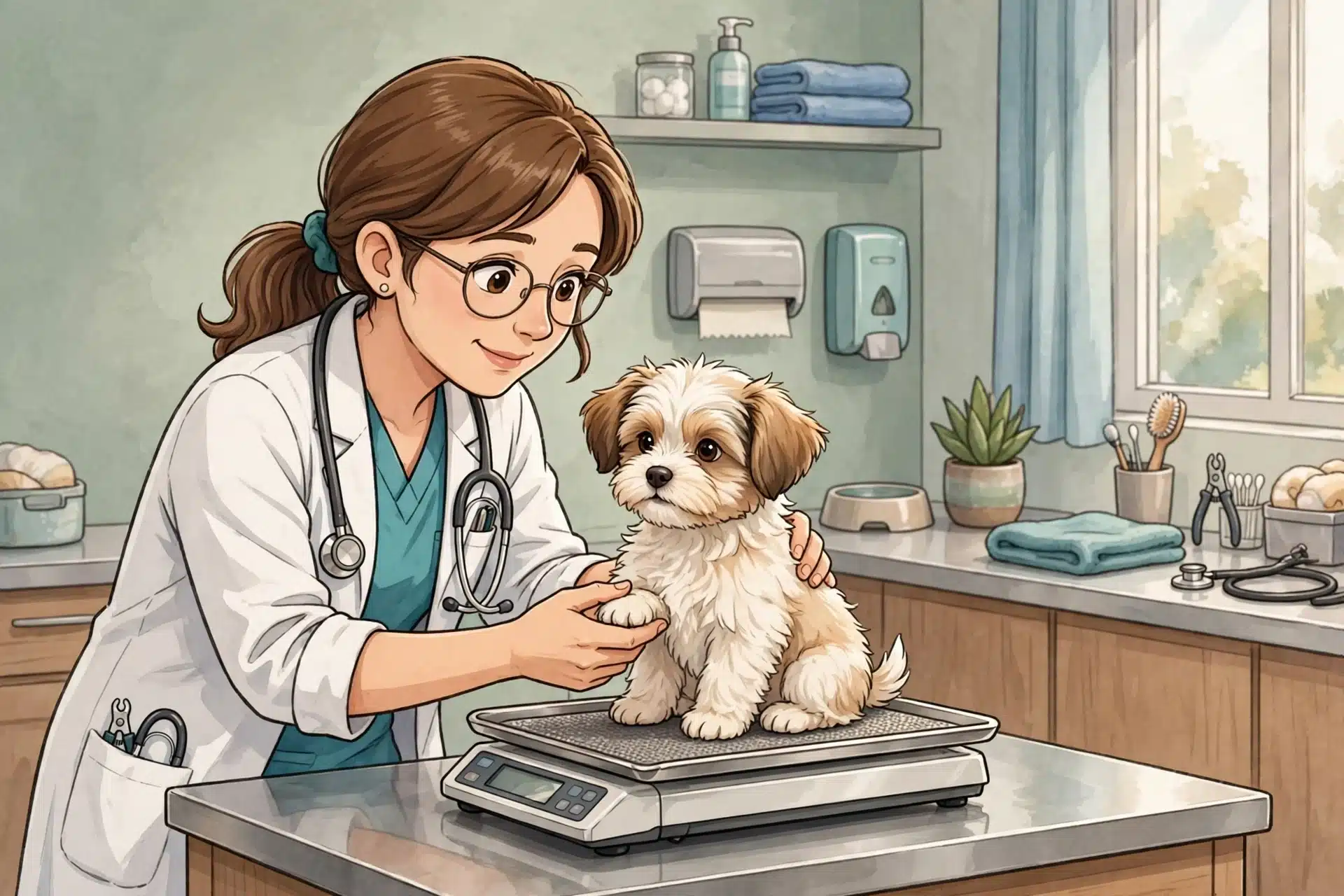
Expect weight-based parasite prevention dosing, since one dose size does not fit a four-pound puppy and a ten-pound one. Follow the puppy vaccination schedule closely: DHPP shots in a series, with rabies timing set by your state, and most puppies count as fully vaccinated at 16 to 18 weeks. Book a dental check around the first birthday, and ask your vet to watch the hind legs at every visit. If your puppy comes from a breeder like Sage Puppies, bring the puppy health records to that first appointment so your vet starts with the full picture.
Your Puppy’s First Vet Visit: What Actually Happens
Good small breed puppy vet care starts with one well-run appointment. Book it within a few days of bringing your puppy home, ideally within 24 to 72 hours. Your vet checks what the breeder’s records show, sets a baseline, and maps out the next few months.
What to Bring to the First Appointment
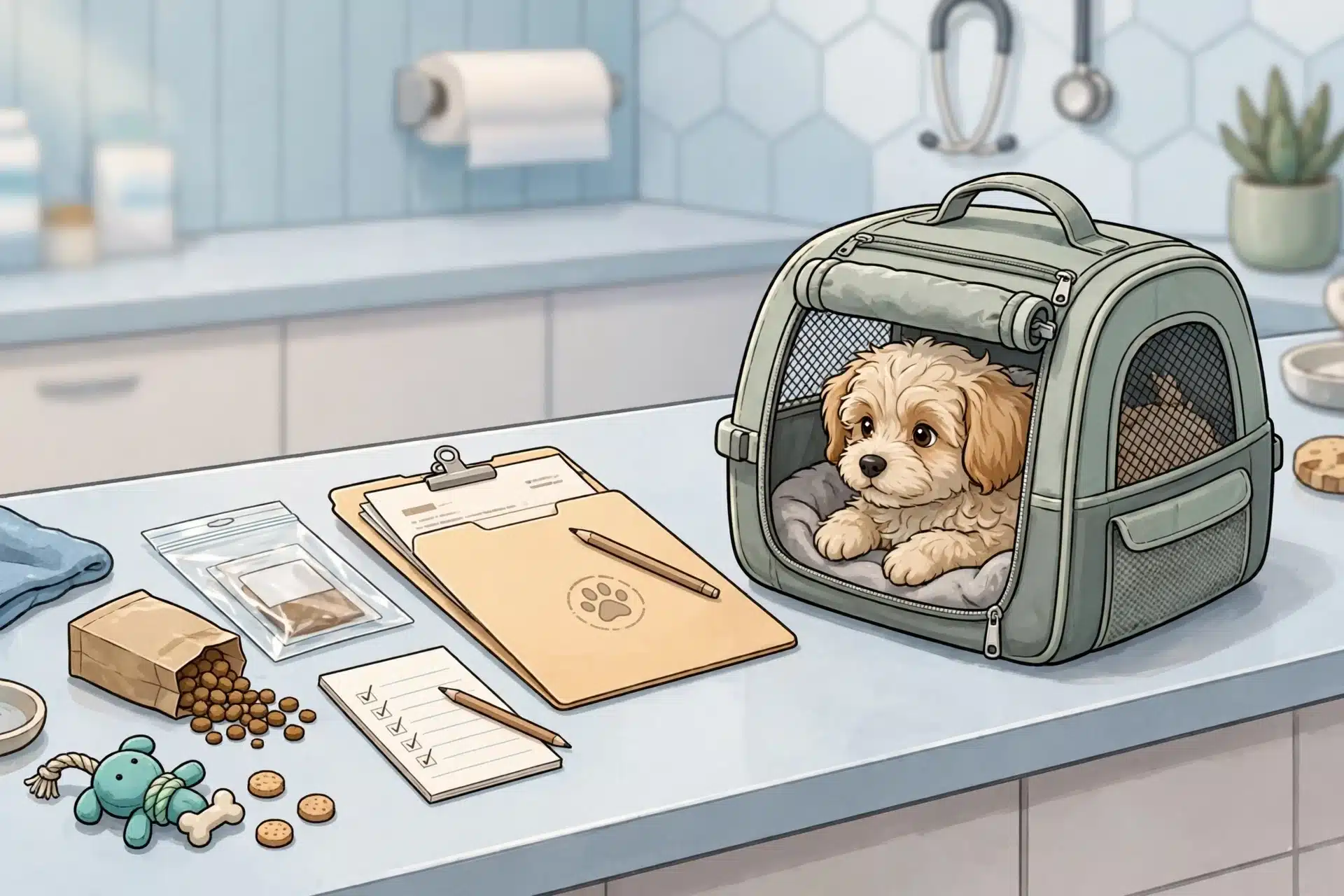
Bring your puppy health records from the breeder, including vaccine dates and any deworming given. Add a fresh stool sample, the food your puppy eats, and a list of anything odd you’ve noticed. A treat or favorite toy helps too.
Inside the Physical Exam
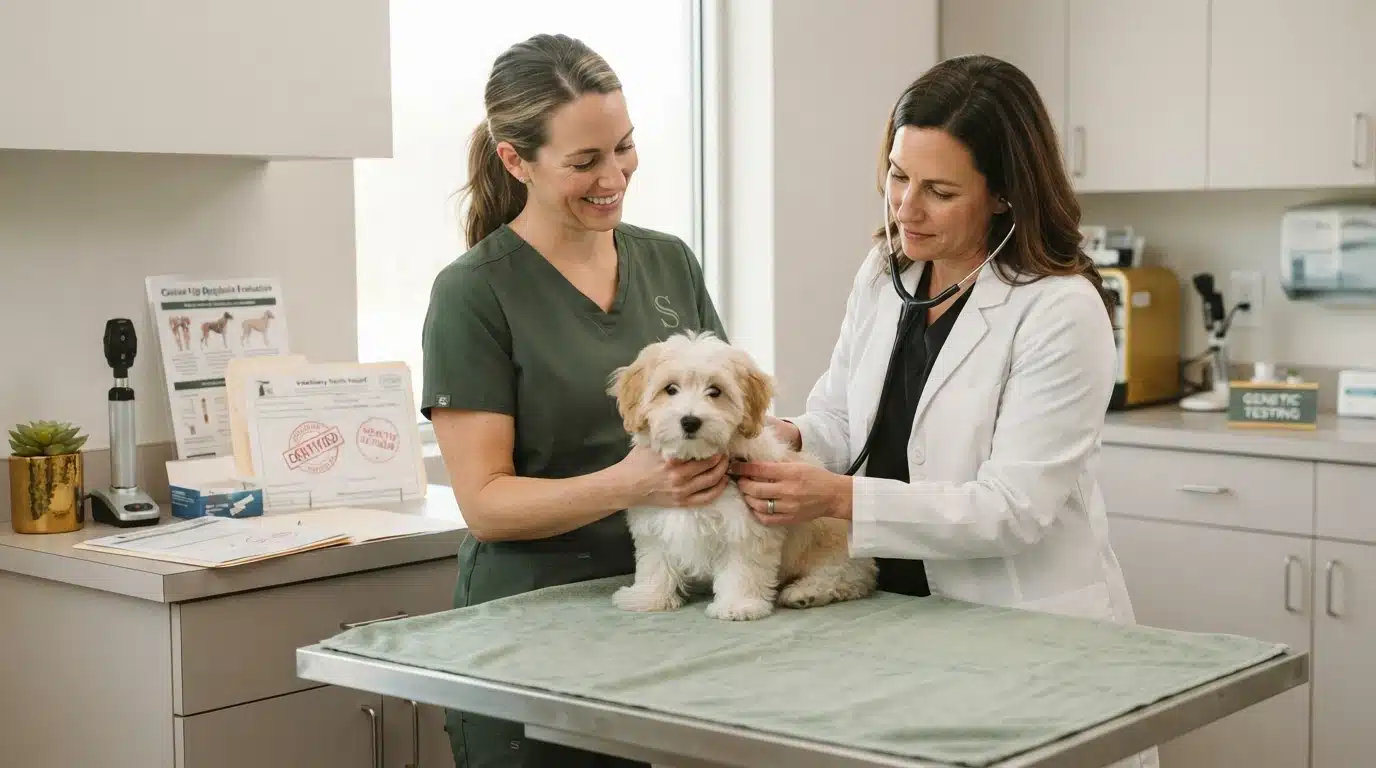
The vet weighs your puppy, listens to the heart and lungs, checks eyes, ears, teeth, and skin, and feels the belly. For small breeds, two checks matter more: the knees, because patellar luxation runs in toy breeds, and bite alignment, since dental crowding shows up early. Your vet will also confirm the puppy vaccination schedule, matching any DHPP shots already given and planning the rest. Most puppies finish the series and count as fully vaccinated at 16 to 18 weeks. Watch the vet walk the puppy and note anything skipped, like gait on the hind legs.
Questions to Ask at the First Visit
Ask these five questions before you leave:
- Which vaccine doses come next, and when?
- What weight-based parasite prevention dosing fits my puppy now?
- How do I handle low blood sugar between meals?
- What should this visit cost me over the first year, roughly?
- When is dental care or spay or neuter timing right for a small breed?
Bring your list. The visit goes fast, and written questions keep you from forgetting the ones that matter.
The Vaccination Schedule for Small Breed Puppies
Most puppies need the DHPP series every 2 to 4 weeks starting near 6 to 8 weeks, a rabies shot on state-mandated timing, and a final dose at 16 weeks or later. Small breeds follow the same core schedule as any dog. Here is the typical window-by-window plan:
| Age | Core Shots |
|---|---|
| 6-8 weeks | First DHPP |
| 10-12 weeks | Second DHPP |
| 14-16 weeks | Third DHPP, rabies where allowed |
| 1 year | Boosters, then rabies per local law |
The Core Series, Visit by Visit
DHPP protects against distemper, hepatitis, parvovirus, and parainfluenza, and it drives the visit count. Maternal antibodies wear off at different times, so the AAHA guidelines call for doses every 2 to 4 weeks until at least 16 weeks. Most puppies count as fully vaccinated at 16 to 18 weeks.

Non-Core Vaccines and Lifestyle Risk
Lepto, Bordetella, Lyme, and canine influenza depend on lifestyle. Leptospirosis, now often treated as core, needs two doses starting at 12 weeks. Discuss day care, dog parks, and travel with your vet.
Catch-Up Schedules for Older Puppies
If a dose slipped, do not restart the series. Puppies over 16 weeks with no history get two DHPP doses 2 to 4 weeks apart, then a rabies shot. Keep records from every visit in one folder so boosters stay on time.
Parasite Prevention, Deworming and Fecal Testing
The Parasites Small Puppies Are Exposed To
Roundworms and hookworms are the big two. Most puppies pick them up before birth or through nursing, which is why nearly every litter gets dewormed at 2, 4, 6, and 8 weeks. Giardia and coccidia show up too, often as soft stool or a pot-bellied look. Ask your breeder what dewormings were already done, then hand those dates to your vet so the next dose lands on time.
Fecal Testing and Product Dosing
Bring a fresh stool sample to your first visit, ideally within a day of pickup. A fecal test finds parasite eggs the eye misses, and treatment follows what the test shows. Product dosing is weight-based, so a 5-pound Havanese puppy gets a fraction of a large breed dose. Weigh your puppy before every dose and never split a large dog’s pill on a guess.
Prevention That Continues Past Puppyhood
Once the deworming series ends, monthly prevention takes over. Your vet will suggest a heartworm and flea product suited to a small breed, and many also cover roundworms and hookworms year round. Heartworm is spread by mosquitoes, so indoor dogs need it too. For cost planning, our small dog breed guide walks through ongoing care. Recheck a fecal once or twice a year.
Small Breed Conditions Your Vet Should Screen For
Small breed puppy vet care goes beyond shots. Your vet should also screen for the conditions that toy and small breeds face most: loose kneecaps, crowded teeth, low blood sugar, and bones that need gentle handling.
Patellar Luxation and the Skipping Gait
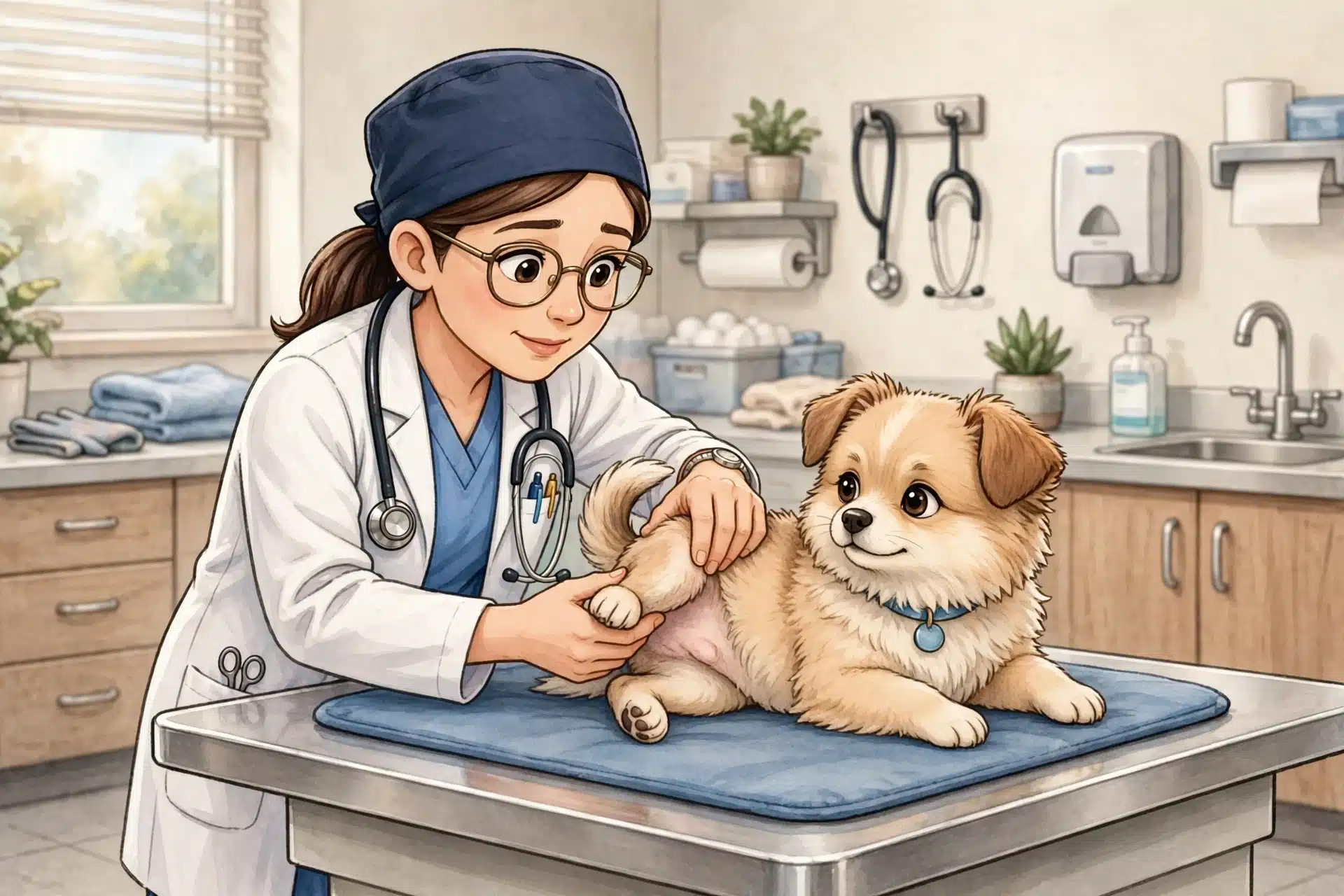
A skipping gait happens when the kneecap, called the patella, slips out of its groove in the knee. The dog lifts the back leg for a stride or two, then puts it down and walks normally again. Patellar luxation is more common in small breeds such as Toy Poodles, Havanese, and other toy dogs, according to Cornell’s canine health center. Your vet checks for it during the hands-on exam by feeling each knee.
Signs to watch for at home:
- A sudden skip or hop on one back leg
- Brief lameness that clears on its own
- Reluctance to jump or climb stairs
- A bowed or crouched hind-leg stance
Mild cases often need only monitoring. More severe ones may need surgery later, so early grading matters.
Crowded Teeth and Early Dental Disease
Small jaws hold the same number of teeth as large ones, so crowding is common. Teeth that overlap trap plaque fast, and tartar can show up by age two or three. Ask your vet to check the bite at every puppy visit, and start tooth brushing early so it becomes routine.
Low Blood Sugar and Household Toxins
Toy breed puppies can drop their blood sugar quickly, especially when they skip meals or play hard. Watch for wobbliness, weakness, or trembling, and offer a small meal if you see them. Keep xylitol, a sweetener in gum and some peanut butters, out of reach, since even a little causes a dangerous sugar crash.
Fragile Bones, Handling and Anesthesia Safety
Puppy bones are still growing, and a fall from a couch or an owner’s arms can break a leg. Support the chest and rear whenever you lift your puppy. Before any spay, neuter, or dental procedure, ask how the clinic doses anesthesia for toy breeds, because small patients need careful, weight-based dosing. Good breeders share what early health screening found, and Sage Puppies documents each puppy’s exam results before go-home day, which gives your vet a starting point. Bring those records along and ask which screenings your own puppy needs first.
Your Puppy’s Wellness Schedule Through Year One
Most puppies need five to six vet visits in the first year. The rhythm looks like this:
- 8-10 weeks: first full exam, vaccine series begins
- 10-12 weeks: second round of puppy shots
- 14-16 weeks: final doses, rabies where state law allows
- 4-6 months: spay or neuter consult, often the biggest single bill
- Around 12 months: boosters and an adult wellness check
Visit Cadence From Two Months to Twelve Months
Count on a visit every 2 to 4 weeks until the vaccine series ends near 16 to 18 weeks. After that, appointments space out. Book the spay or neuter around 4 to 6 months, since small breeds finish surgery prep faster than big dogs. The one-year booster visit closes the year.
What a Quality Exam Includes
Each checkup should cover weight and growth tracking, a heart and lung listen, teeth and gums, ears, skin, and a fecal test. For small breeds, ask your vet to check the knees for patellar luxation, a common toy breed issue. Bring your puppy’s health records from the breeder so doses and dates line up.
Planning the Cost of Year-One Care
Budget roughly $480 to $2,400 for first-year vet care, a range Chewy’s 2025 cost guide backs with real figures. Routine exams alone run about $56 to $129 each, per CareCredit’s cost breakdown. Setting aside money monthly keeps surprise bills from derailing the plan; buying a well-bred puppy is its own first cost, and you can compare what shapes puppy pricing in Utah before the vet bills start.
Ask each clinic for a written new-puppy package price. Many bundle the vaccine series, exams, and a discount on the spay or neuter.
Everyday Care Between Visits
Feeding a Small Breed Puppy
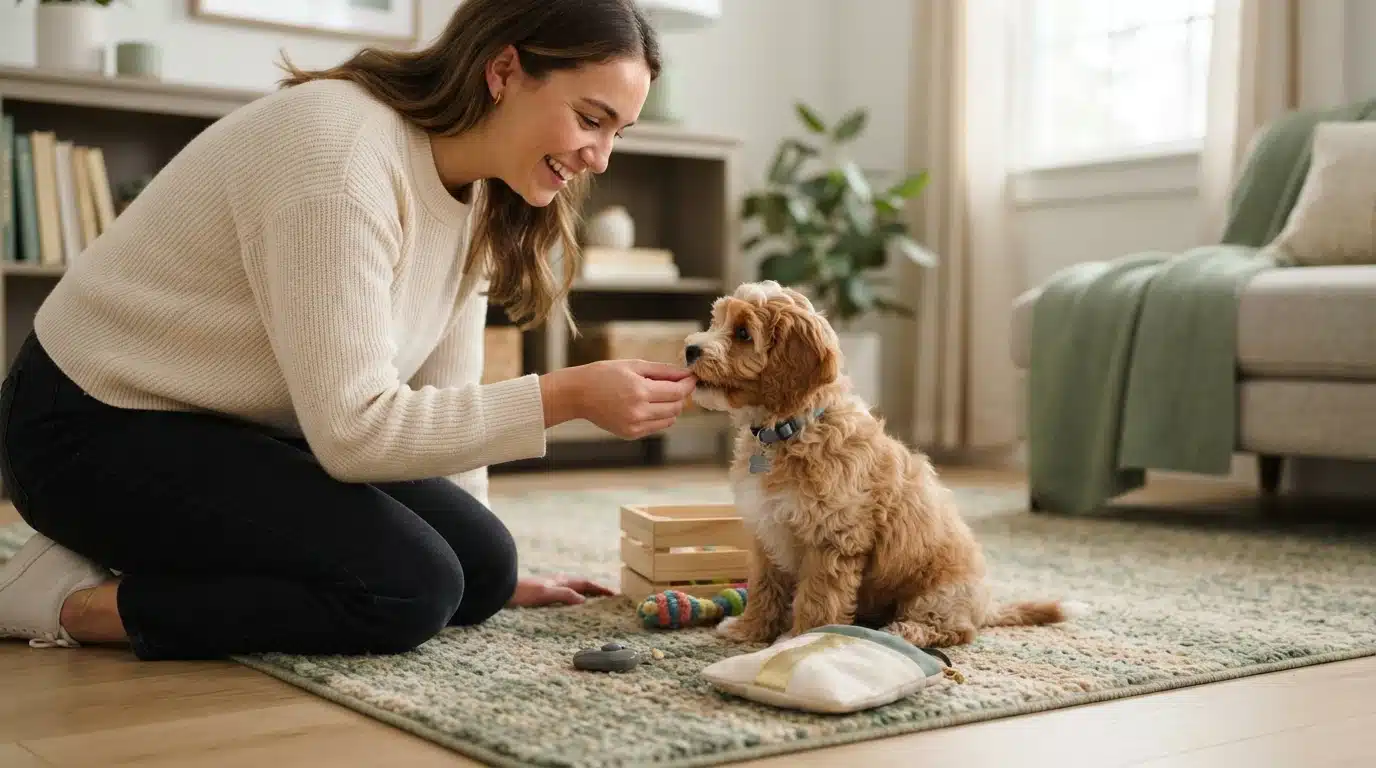
Toy breeds burn through blood sugar fast. Offer three to four small meals a day until about six months, then drop to two or three. Keep puppy food on hand because it packs more calories per cup. Watch for wobbly, sluggish behavior between meals, since that can signal puppy hypoglycemia. Keep xylitol out of reach entirely; the FDA warns this sweetener drops a dog’s blood sugar and can cause seizures or liver failure.
Home Dental Care That Starts Now
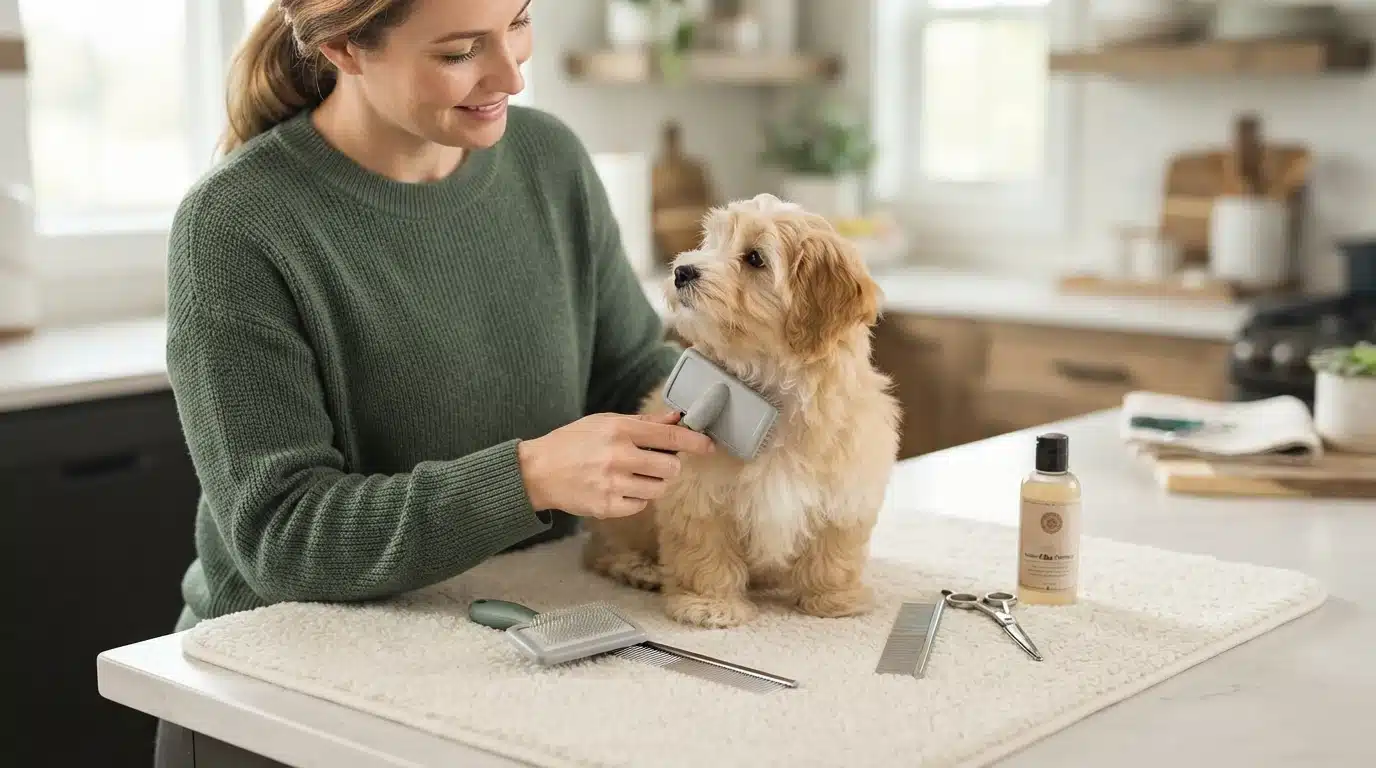
Small breeds crowd teeth in small jaws, so plaque builds early. Handle the mouth gently from week one. Start brushing a few times weekly with dog toothpaste, and ask your vet about products carrying the Veterinary Oral Health Council seal, which signals tested plaque control. Your vet can flag dental crowding long before it hurts.
Activity, Handling and Home Safety
Short play sessions beat long romps for tiny joints and growing bones. Support the chest and rear when lifting, and never carry a puppy by the scruff alone. Block stairs, guard gaps behind furniture, and skip high furniture jumps that can injure small knees. Parasite dosing is weight-based, so weigh your puppy before every preventive refill. You can see how our puppy preparation guidance covers daily care routines like these.
Small bodies change fast. A puppy that could clear one step at eight weeks may misjudge stairs at twelve.
Mistakes to Avoid and Signs to Call the Vet
Preventable Mistakes in Small Breed Puppy Care
The most common errors are dosing mistakes and delayed visits. Parasite products are weight-based, so never split a large breed dose for a 5-pound puppy. Missing a vaccine appointment stalls the whole series, since DHPP doses must stay 2 to 4 weeks apart. Also watch gait: skipping a hind-leg check can hide early patellar luxation, and untreated dental crowding in toy breeds leads to early tooth loss. A steady routine for small breed puppy care makes most of these slips avoidable.
Signs to Call Your Vet Promptly
Small puppies crash fast, so treat these as same-day calls:
- Weakness, trembling, or wobbly walking, which can signal hypoglycemia
- Vomiting or diarrhea lasting more than a few hours, especially with no appetite
- Limping, bunny-hopping, or a skipped stride in a back leg
- Refusing food for more than a day, or sudden bloating
- Coughing, nasal discharge, or labored breathing
When in doubt, call. Vets would much rather reassure you than see a toy breed puppy decline overnight.

Planning a puppy’s first year starts before you bring them home. At Sage Puppies, every Havanese, Havapoo, and Cavapoo goes home with documented health records, so your first vet visit builds on real history instead of guesswork. Check current availability, then book that checkup within a few days of pickup and keep the schedule moving.
Frequently Asked Questions
Q1: What are the vet care basics for small breed puppies?
Book a first exam within 24 to 72 hours of pickup, follow the DHPP series every 2 to 4 weeks until fully vaccinated at 16 to 18 weeks, use weight-based parasite dosing, and ask for knee and bite checks at every visit.
Q2: When can my puppy safely meet other dogs?
Wait until the vaccine series finishes, usually 16 to 18 weeks. Before then, stick to puppy classes requiring vaccination and carry your puppy through public areas.
Q3: How much does first-year vet care cost?
Budget roughly $480 to $2,400. Ask each clinic for a written new-puppy package price that bundles exams, vaccines, and spay or neuter discounts.
Q4: How often should a small breed puppy eat?
Three to four small meals daily until about six months, then two or three. Frequent meals prevent puppy hypoglycemia in tiny bodies.
Q5: Why does my puppy skip on a back leg?
A skipped stride often means patellar luxation, a slipped kneecap common in toy breeds. Have your vet grade it early.
Q6: What records should I bring to the first vet visit?
Bring the puppy health records from your breeder, vaccine and deworming dates, and a fresh stool sample.
Conclusion
Small breed puppy vet care comes down to a size-specific plan: a first exam within a few days of pickup, the DHPP series every 2 to 4 weeks until your puppy is fully vaccinated at 16 to 18 weeks, and weight-based parasite dosing measured in pounds, not guesses. Add knee and bite checks at every visit, because patellar luxation and dental crowding show up early in Havanese, Havapoo, and Cavapoo puppies. Feed small meals often to prevent hypoglycemia, start tooth brushing now, and budget $480 to $2,400 for the year. Bring your breeder’s health records to that first appointment, keep the visit schedule moving, and call your vet the moment something looks off.