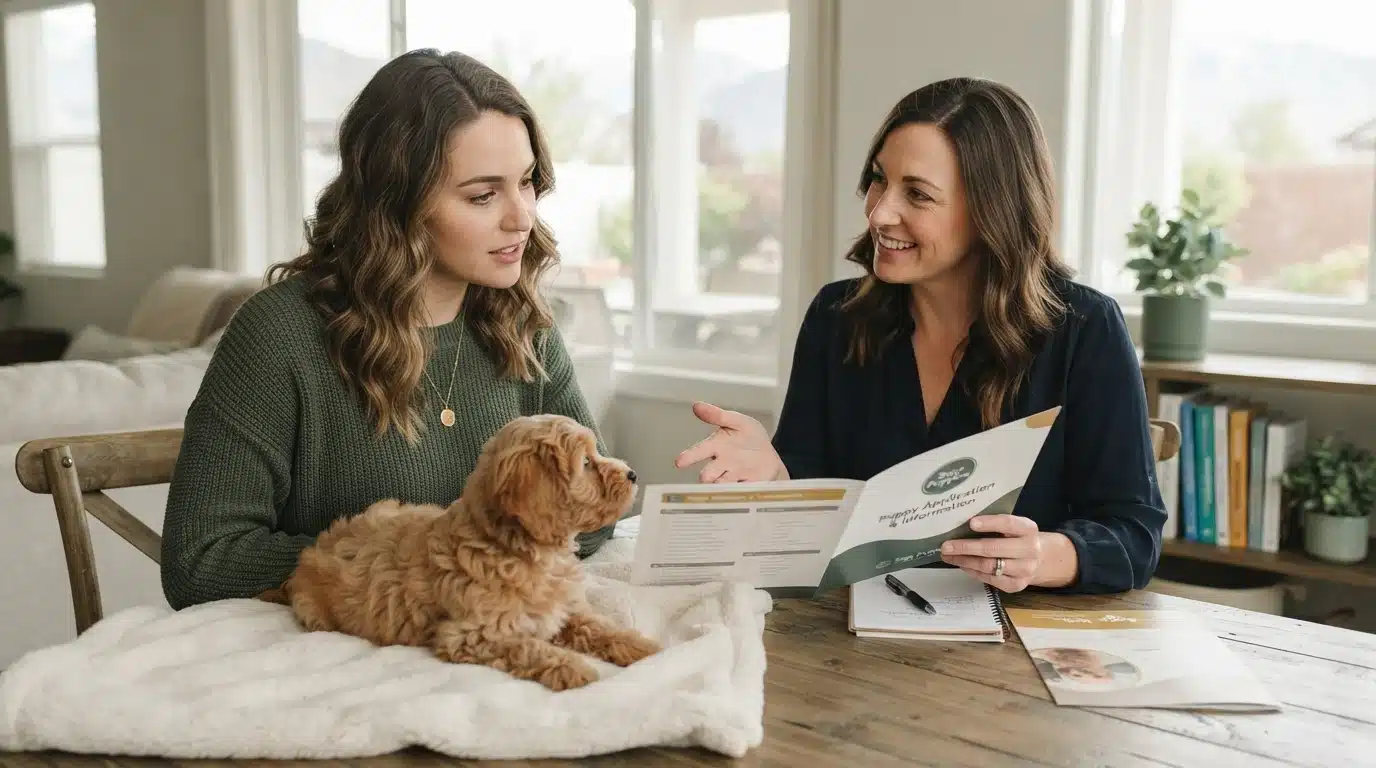
Quick Summary: Utah has no statewide breeder license, so buyers should verify the business registration, local permits, USDA license when applicable, and the puppy’s real living environment through a live video call. Before paying, ask for the puppy’s vet records, parents’ OFA CHIC screenings, DNA results, and a written contract with clear health guarantee terms. Reversed-image searches, traceable payments, and breeders who welcome scrutiny, such as owner-managed programs like Sage Puppies, help separate legitimate sellers from scams and puppy mills.
A Utah listing for a Havapoo priced under $1,000, fast answers and nationwide delivery can look like a bargain. Often it is a warning instead. Utah has no state breeder license and no state inspection program, so nobody has already vetted that seller for you. The real test of puppy breeder legitimacy is documentary: licenses that do exist, health records you can read, and health testing you can verify. This guide walks you through those checks step by step, from county permits and USDA lookup tools to parent health testing and a written puppy purchase contract. It is written for Utah families and out-of-state buyers paying deposits sight-unseen, and it separates what a breeder can prove from what a breeder only claims.
Step 1: Verify the breeder’s legal and business identity in Utah
Why there is no Utah breeder license to ask for
Short answer: Utah has no statewide dog breeder license. A state bill that would have required permits was revised to remove breeder permits and home inspections, so no single state certificate exists to request. That makes checking puppy breeder legitimacy in Utah different from most states.
Instead, verify three things:
- A registered business entity
- A local permit, if the city or county requires one
- A USDA license, if the breeder sells sight unseen
Any breeder who claims a “Utah breeder license” is describing something that does not exist.
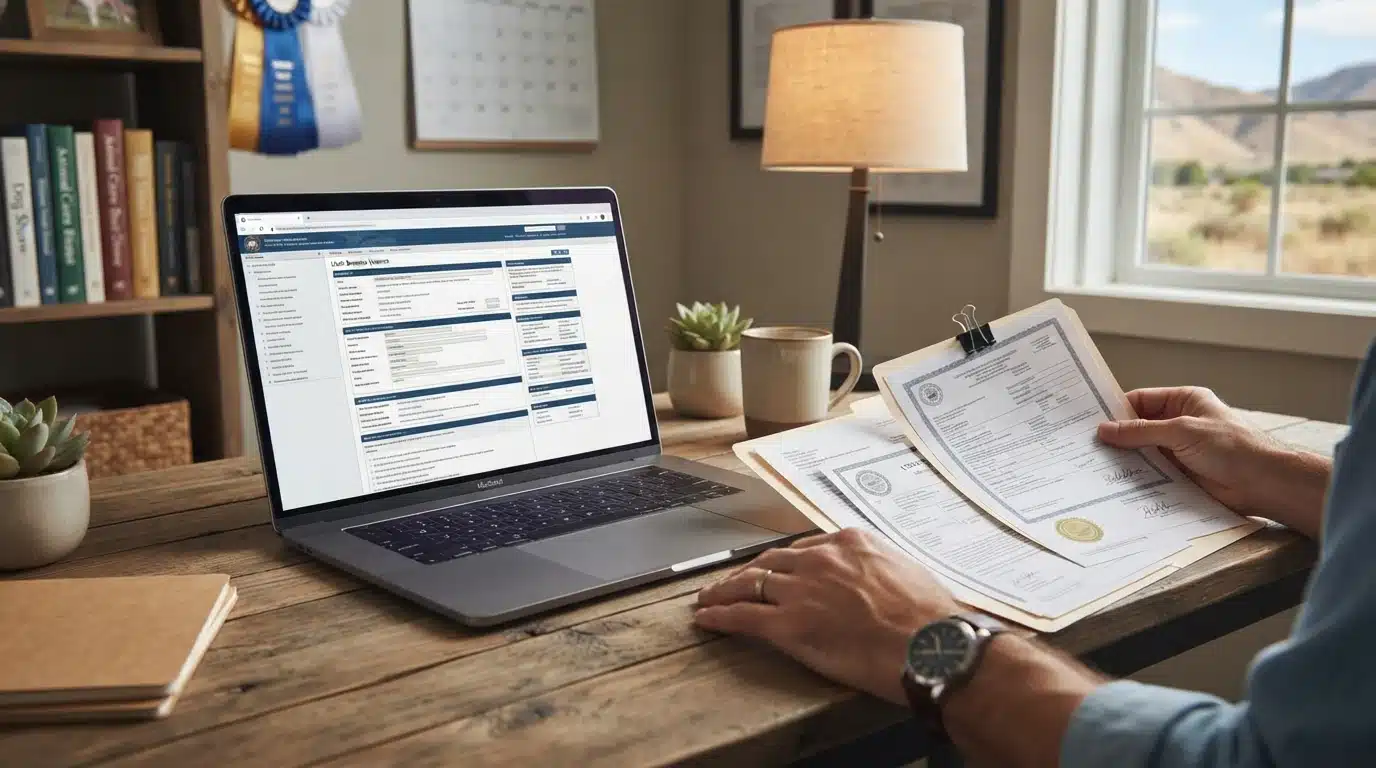
Confirming the business entity and physical location
Ask for the breeder’s exact legal name. Then search the Utah business entity search to confirm the name matches. A program like Sage Puppies, LLC in South Jordan checks out in seconds; a PayPal handle or a Gmail address does not.
Next, confirm a real physical location. Ask which city the puppies are raised in, and whether you can visit or do a live video call from that space. Scammers often list one city, then arrange “delivery” from another state. A Utah address paired with refusal to show the puppies live is a red flag.
Local permits and the federal USDA check
Some cities add their own rules. Salt Lake City, for example, requires dog breeders to hold a local breeder license on top of any kennel permit. Ask which city or county the breeder falls under, then check that office’s site or call it.
Finally, use the USDA Animal Welfare Act licensed breeder lookup. Breeders with more than four breeding females who sell puppies wholesale or sight unseen must be federally licensed. If the breeder ships puppies you have never met in person, an entry there should exist.
Step 2: Check the health documentation and the parent screening behind it
“Health tested” is not one claim. It can mean the puppy had a vet visit, the parents passed physical screenings, or DNA tests ruled out inherited diseases. Ask which one a breeder means, then ask for paper. This is where checking a puppy breeder’s legitimacy gets real, because documents are easy to compare and hard to fake.
Three layers of health evidence to ask for
- The puppy’s own records. A veterinary exam note, vaccination dates, and deworming history in the puppy’s name.
- Parent clinical screenings. OFA results for the mother and father, such as patellas, eyes, and heart, often grouped under a CHIC number.
- DNA variant results. Breed-specific genetic panels showing the parents are clear of known inherited conditions.
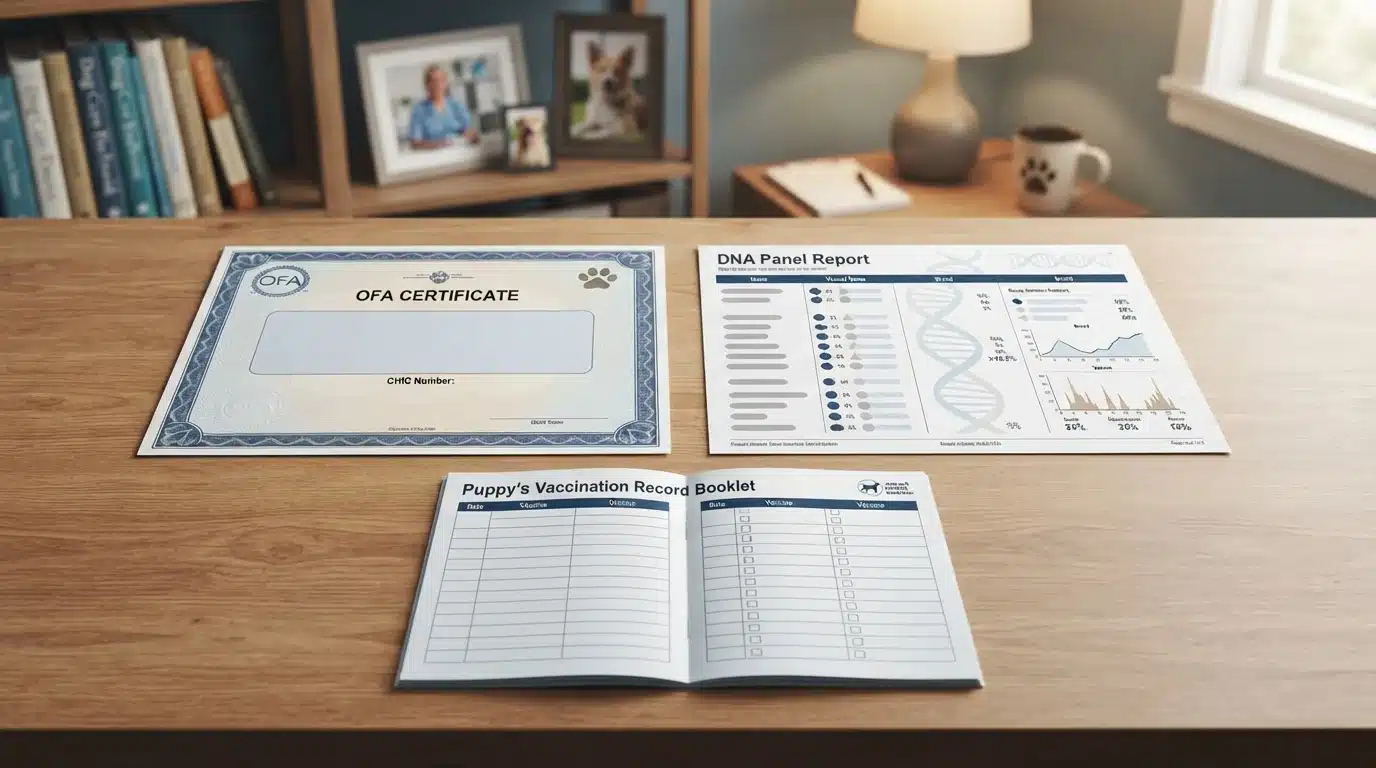
Each layer answers a different question. A puppy exam says the puppy is healthy today. Parent screenings point to how it will develop. DNA results address what it could carry.
Reading breed-specific screening correctly
The Havanese Club of America lists patellar luxation, eye exams, and cardiac testing among the core OFA tests for the breed, so ask for all three from the parents of a Havanese, Havapoo, or Cavapoo. Note that eye exams often expire yearly, so an old certificate is weak evidence. For the Cavalier side of a Cavapoo, ask what heart screening the breeder does, since that breed carries known cardiac risks. If a breeder claims “CHIC,” look the number up yourself in the OFA database rather than taking it on trust.
A missing patellar exam is one of the quiet puppy mill red flags in Utah listings. Fluffy small breeds hide knee problems well.
Records that should arrive before any deposit
Before you pay, you should have: the puppy’s vet exam record with dates, a vaccination schedule you can follow, deworming dates, parent OFA results with registration numbers, and DNA panel reports. Written beats verbal every time. We put our own documentation standards side by side with another program’s in our health and price comparison so you can see what a complete file looks like. If any document arrives late, edited, or vague, slow down and ask why.
Step 3: Inspect the puppies, the home, and the daily care routine
Visits and video calls are where you check puppy breeder legitimacy with your own eyes. A clean website tells you nothing about how the puppies actually live, so make this step deliberate rather than casual.
What to look for in person
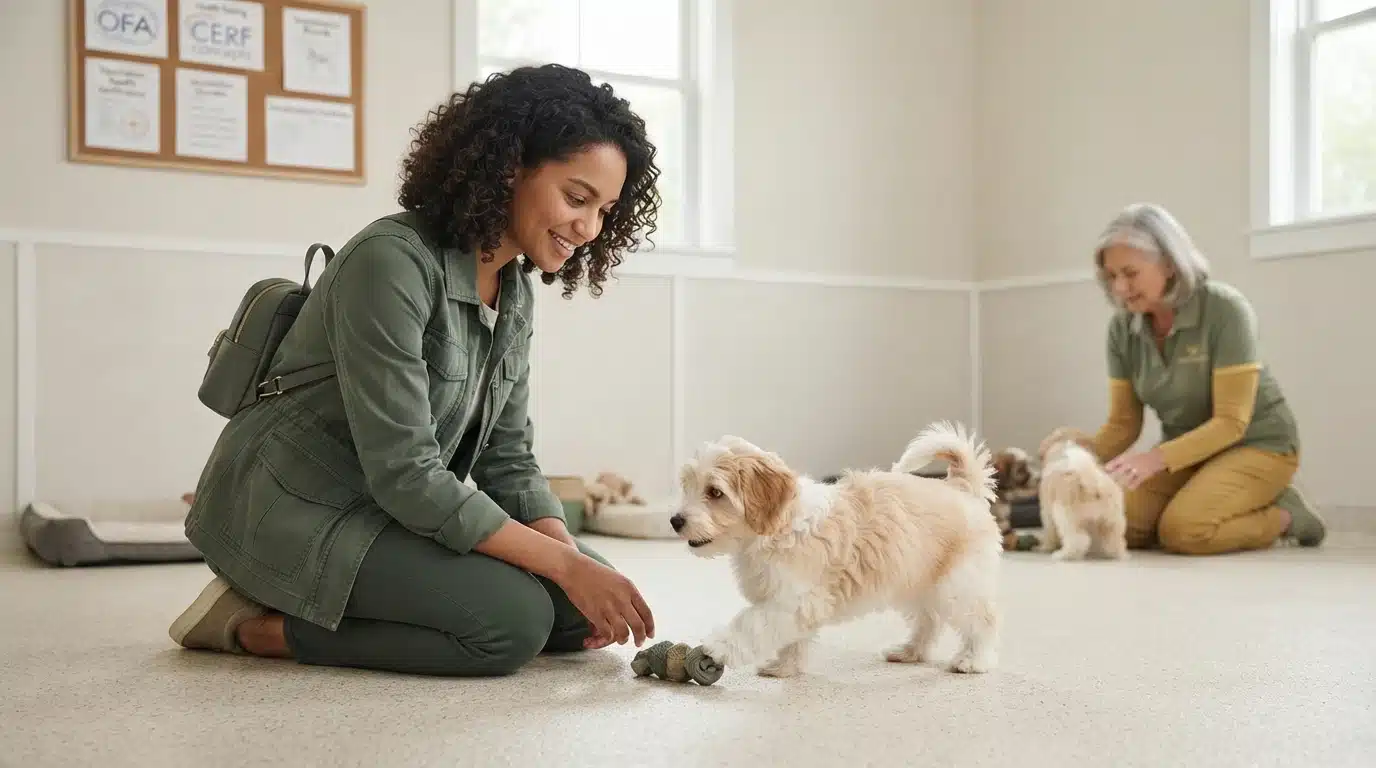
If you can visit, arrive unannounced if the breeder allows it. You want to see where puppies sleep, eat and play, not just the tidy room chosen for guests. Look for clean bedding, fresh water, safe toys and space to move. Puppies should look bright, clean and neither thin nor bloated. Ask where they sleep at night and how often the area is cleaned. A breeder who raises puppies in the home, as small Utah programs often do, can show you the actual whelping and play areas on the spot.
How to run a live video walkthrough
If you cannot visit, verify a breeder with a live video call instead of accepting pre-recorded clips. Ask for this numbered sequence:
- Request a real-time call, never a recording.
- Ask the breeder to walk through every room the puppies use.
- Have them handle each puppy so you see it move.
- Ask for the mother on camera next to the litter.
- Request the puppy’s vet exam and vaccination records during the call.
Sight-unseen buyers across the country rely on this method. A breeder who owns the puppies will not object to any of it.
Reading behavior and socialization honestly
Watch how puppies respond to people. Well-socialized small breeds approach visitors, recover quickly from startles and tolerate being held. Cowering, freezing or constant hiding suggests thin socialization. Honest breeders will describe a shy puppy as shy rather than claim every pup is identical. Ask what the litter hears daily: household noise, children, handling. This is where a boutique in-home program and a volume operation differ most, and it shows in the puppies’ behavior long before you meet them.
Step 4: Read the contract and the health guarantee before you pay
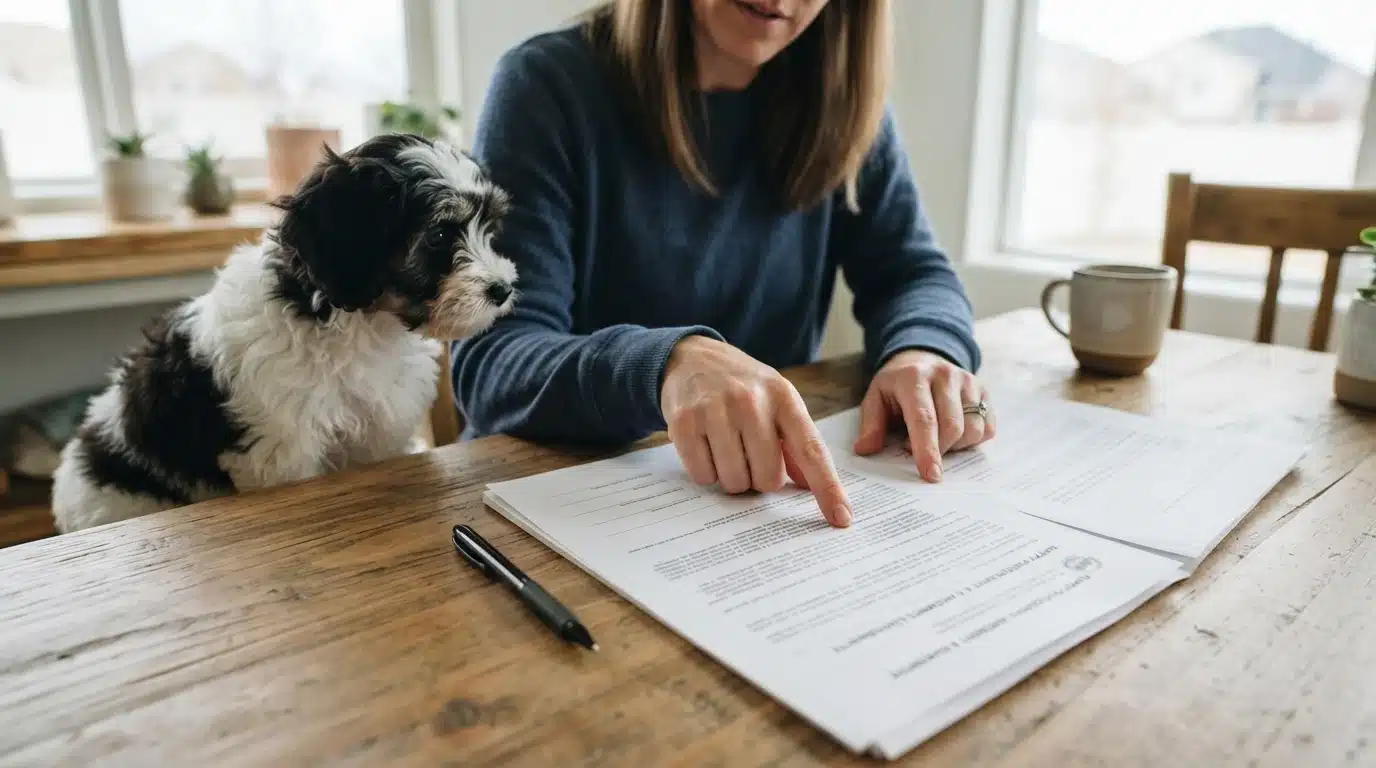
Yes, a legitimate breeder should give you a written contract with a health guarantee. A verbal promise protects no one. Ask for the document before your deposit, read every clause, and treat refusals as a serious warning sign.
What a complete puppy purchase contract contains
A solid contract names both parties, lists the puppy’s breed, date of birth, microchip and price, and states the payment and delivery terms. It should cover your responsibilities as the owner, the breeder’s return or rehoming policy, and what happens if the puppy gets sick in the first days. Many also include a spay or neuter requirement for pets and a clause asking you to contact the breeder first if you ever cannot keep the dog. If you want a deeper breakdown, this guide to health guarantees to ask for covers the key points.
Reading a health guarantee accurately
A health guarantee usually covers genetic conditions for one to two years, not every illness for life. Check three things: how long the coverage lasts, what evidence you must provide, and whether you get a refund, a replacement puppy or only vet bill help. Watch the vet visit deadline too. Many guarantees require an exam within 72 hours, and missing it can void everything.
Contract language that should make you pause
Pause when a contract demands final payment in cash only, blocks you from contacting a veterinarian about the puppy, or forces disputes into binding arbitration far from Utah. Blank pages, missing signatures, or “no refunds under any circumstances” are red flags. A breeder confident in their puppies puts terms in writing and answers your questions plainly.
Step 5: Screen listings and payment requests for scam and mill patterns
Before you trust any ad, run the three checks below. Together they answer the question most buyers ask: how can I tell if a puppy listing is a scam or a puppy mill?
- Payment and communication red flags: pressure to pay fast, untraceable methods, refusal to meet or video call
- Listing red flags: recycled photos, prices far below market, “free puppy, just pay shipping”
- Care red flags: many litters always available, no vet records, no proof the mother exists
If two or more show up, stop. Do not send a deposit, and report the ad to the site and to the FTC.
Payment and communication red flags
The fastest scam warning signs show up in how money moves. The BBB’s puppy scam study found most losses start with an up-front payment by wire transfer, prepaid debit, or gift card, followed by invented shipping fees. Never pay with Zelle, Venmo, Cash App, crypto, or gift cards, since none of them offer recourse. Legitimate programs take deposits after a real conversation, accept a traceable method, and let you meet the puppy over video before money changes hands. A serious breeder also asks you questions; a scammer only asks for payment.
Listing red flags: recycled photos and impossible pricing
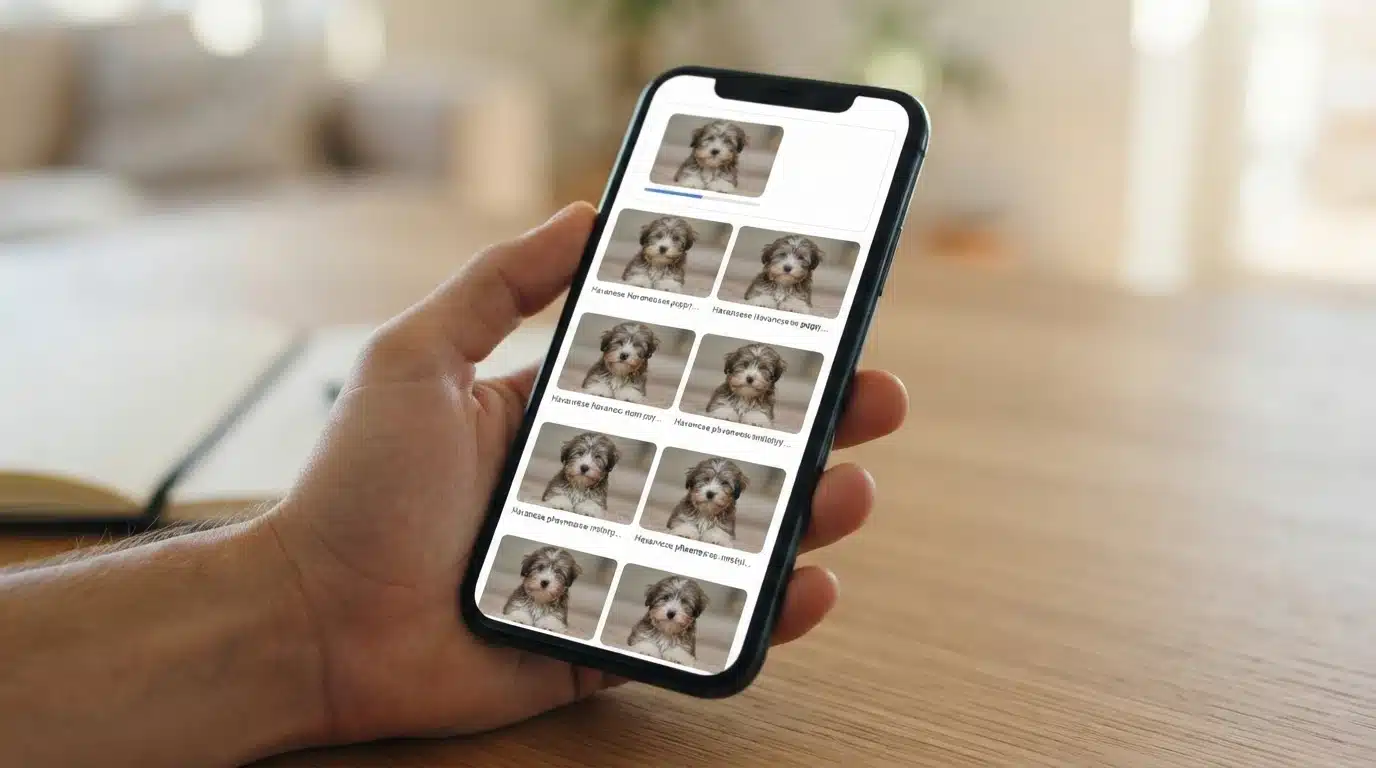
Photos tell on themselves. Right-click an image and run a reverse image search, then repeat with Google Lens. The same photo on three sites means recycled puppies. Watch pricing too: a Havanese listed far under market, or offered free for shipping costs alone, is a classic hook. The Michigan attorney general also flags sellers who dodge questions about where puppies are raised.
Mill-style care signals and how to respond
Puppy mill red flags hide in the answers, not the ad. Ask to see the mother with her puppies, and ask how many litters she has had. Vague replies, “the mom is at a partner facility,” or a breeder with five litters across four breeds point to volume sales. Anyone who refuses a visit or video walkthrough of where puppies live is telling you something. Ask for vet exam and shot records before you commit, and treat reluctance to share them as a stop sign.
Report it: walk away, save the listing URL and payment requests, and report the seller to the FTC and the platform hosting the ad.
Step 6: Run the final verification pass and decide where to buy
The pre-payment checklist
Before you send any deposit, confirm each item on this list. It is your last chance to check puppy breeder legitimacy with low risk.
- Vet exam and vaccine records for the puppy, dated and itemized
- Parent health testing, including OFA CHIC results and DNA variants
- A written contract with health guarantee terms
- A live video call showing the puppy and the mother
- A reverse image search on the puppy photos
- A verified address and pickup or delivery plan
Ask for anything missing. A real breeder sends documents without arguing.
What a transparent breeder process looks like
You should see the same pattern from any Utah puppy breeder: an application, a clear price, named parents, and records you can verify with the vet listed on them. Payment terms come in writing, not over a phone call. Some small programs, like Sage Puppies in South Jordan, run owner-managed matching and walk families through each record. The standard is not perfection. It is a breeder who answers specific questions with specific evidence.
A worked Utah example
Say you find two Havanese litters at similar prices. Breeder A sends clinic-letterhead exam records, OFA results for both parents, and a contract within a day. Breeder B offers only a text photo and a fast delivery promise. Breeder A earns the deposit, because its paperwork checks out from end to end.
Common Mistakes to Avoid
Even careful buyers slip during a check puppy breeder legitimacy routine. Watch for these errors:
- Asking for a Utah breeder license that does not exist. There is no statewide license, so treating “licensed in Utah” as proof of utah puppy breeder legitimacy can hand a scammer an easy win.
- Trusting “health tested” as one claim. Ask for three separate records: the puppy’s vet exam, the parents’ clinical screenings, and DNA variant results.
- Skipping the reverse image search. Reused photos are one of the clearest puppy scam warning signs, and a quick reverse image search catches most of them.
- Missing the 72-hour exam deadline written into many guarantees.
- Wiring deposits sight-unseen before you have verified anything else.

You now know how to verify a Utah breeder before you send money. If you want a program that already welcomes those questions, visit Sage Puppies. Cassie Milar raises Havanese, Havapoo and Cavapoo puppies in South Jordan and matches each one through a clear application, so you can apply with confidence.
Frequently Asked Questions
Q1: How can I tell if a puppy ad online is a scam or a puppy mill?
Run three checks before paying: reverse image search the photos, request a live video call showing the puppy and mother, and ask for vet records plus parent OFA results. Pressure to pay fast, gift cards, or refusal to video call are puppy scam warning signs.
Q2: What red flags show a Utah puppy listing is from a puppy mill?
Watch for many litters always available, no proof the mother exists, vague answers about where puppies live, and refusal of visits or video walkthroughs. Five litters across four breeds points to volume sales, not a small in-home program.
Q3: Should a Utah puppy breeder have a written contract with a health guarantee?
Yes. A legitimate breeder provides a written puppy purchase contract and health guarantee terms before your deposit, covering genetic conditions for one to two years, vet exam deadlines, and refund or replacement terms. Verbal promises protect no one.
Q4: Does Utah require a breeder license?
No. Utah has no statewide dog breeder license, so ask instead for a registered business entity, any city or county kennel permit, and a USDA license if the breeder ships sight unseen.
Q5: What payment method is safest for a puppy deposit?
Use traceable methods like a credit card or documented bank payment after a real conversation. Never wire money, send Zelle, Venmo, Cash App, crypto, or gift cards, because none offer recourse if the seller disappears.
Q6: What health records should arrive before I pay?
Ask for the puppy’s dated vet exam, vaccination and deworming records, parent OFA CHIC results with registration numbers, and DNA variant reports. Written documents beat verbal claims every time.
Conclusion
Checking puppy breeder legitimacy in Utah comes down to documents, not claims. There is no statewide license to request, so verify the business entity, any local permit, and a USDA license when puppies ship sight unseen. Demand three separate layers of health evidence: the puppy’s vet exam and vaccination records, parent OFA CHIC screenings, and DNA variant results. Insist on a written puppy purchase contract with clear health guarantee terms, meet the puppy and mother on a live video call, and run a reverse image search before any deposit. Pressure, vague answers, and missing paperwork are puppy scam warning signs. Breeders who welcome these questions earn your trust; the ones who dodge them earn your walk-away.