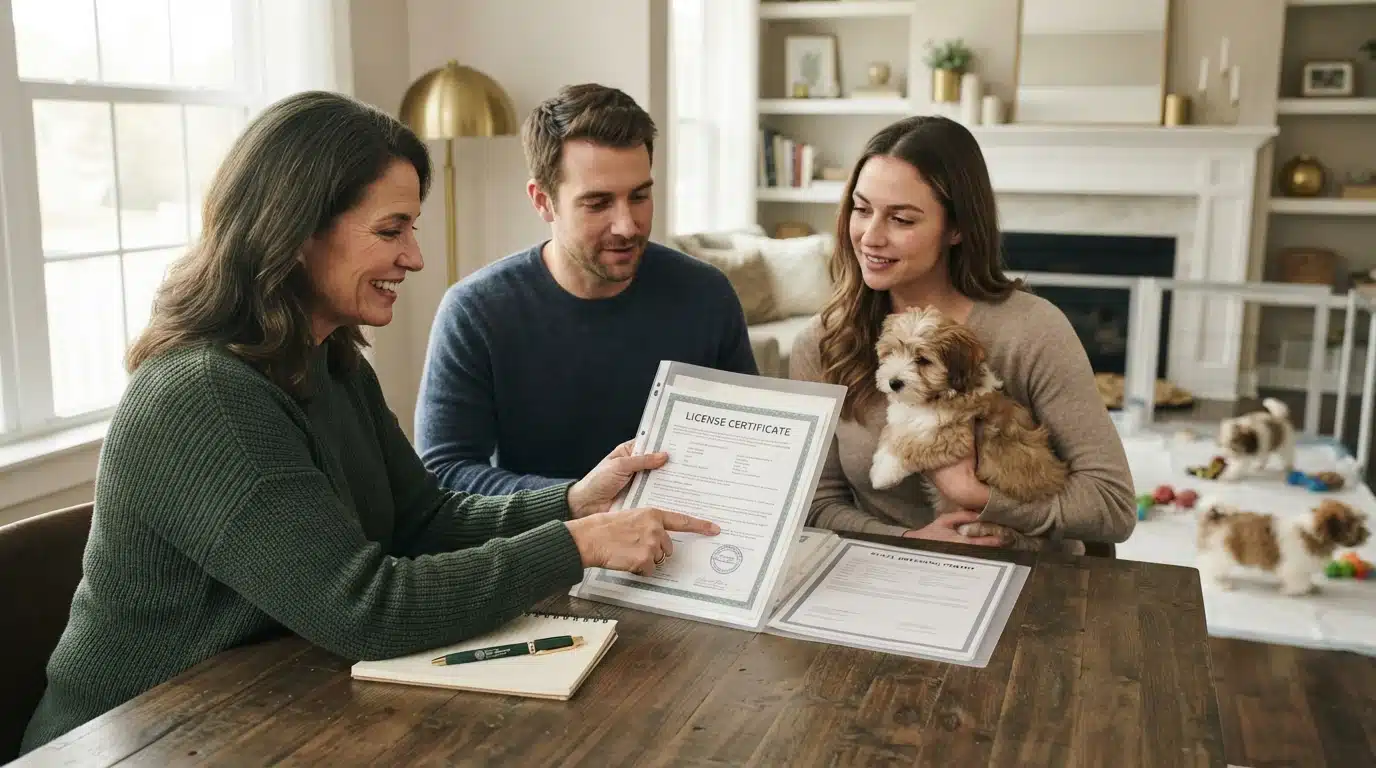
Quick Summary: Choosing a trusted Utah puppy breeder comes down to verifying the seller’s identity, independently checking parents’ OFA health records, speaking with past puppy owners, reviewing a written contract, and meeting the puppy and mother dog before paying. Walk away if a seller pressures you to deposit money, refuses a visit or video call, hides health records, or relies only on photos and testimonials. Compare every seller using the same five checks and consider total costs, since well-bred Havanese, Havapoo, and Cavapoo puppies from boutique programs such as Sage Puppies typically run $3,500 to $4,500.
Two Utah families can both be holding a professional-looking Havapoo listing with health test language in the description, and only one of them will still have that money and their answers intact six months from now. The difference is rarely the photos. It is whether the buyer knew how to confirm who the seller really is before sending a deposit.
This guide walks you through a simple verification sequence for finding a trusted puppy breeder in Utah. You will check identity and location, licensing, parent health records, contract terms, and references from past puppy owners, one step at a time. Each checkpoint includes clear pass and fail signals, so you know when to keep going and when to walk away.
We run a small Havanese, Havapoo, and Cavapoo program in South Jordan, founded in 2025, and we wrote this for Utah families and nationwide buyers alike. Choosing a trusted breeder takes about an hour of checking. That hour protects your money, and it protects the puppy too.
Step 1: Verify the Seller Exists and Has a Real Address
Before you fall in love with a photo, confirm the seller is a real, findable business in Utah. A trusted puppy breeder Utah buyers can vouch for will pass three quick checks in under an hour.
Run the Utah business and nonprofit registration checks
Start with the Utah business search on the state’s Division of Corporations site. Search the exact name the breeder uses online. A registered LLC or business name with a Utah address is a pass. No result at all is a fail. Then look up the seller on the Utah Division of Consumer Protection site for complaints. A registered name plus a clean record tells you the seller answers to a real address and a real state agency.
Understand what a USDA license does and does not tell you
A USDA APHIS license lets a breeder sell puppies sight-unseen across state lines. You can check a license number yourself in the free USDA APHIS search tool. A current license proves the facility passed a federal inspection, but it does not prove the dogs are well bred or well socialized. Hobby breeders who sell in person are often exempt, so no license is not automatically a fail. Judge the license as one checkpoint, not the whole verdict.
Separate a local Utah breeder from a broker or reseller
Ask one direct question: do you raise these puppies at your own home? A local breeder says yes and invites you to meet the mother dog. A broker says the puppies are “available from partners” or ships from another state. Resellers often copy photos from other litters, so reverse-search each puppy image. Small Utah programs, like boutique Havanese and Cavapoo breeders in South Jordan, usually breed only one or two breeds and know every litter firsthand.
Step 2: Ask for Health Testing and Screening You Can Look Up
A trusted puppy breeder Utah buyers can count on will show health results you can verify yourself, not just describe. Here is what to ask for and where to check it:
| What to request | Where you verify it |
|---|---|
| Parents’ OFA results (hips, knees, eyes, heart) | Search the kennel or owner name on OFA’s advanced search |
| Breed-specific CHIC screenings | Browse by breed to see what Havanese or poodle crosses should have |
| DNA panel for the parents | Ask for the lab report, then match the dog’s registered name to the OFA record |
| Puppy’s own vet exam and vaccine record | Match the clinic name and dates to the litter’s birth date |
Know the difference between a screening and a DNA test
Screenings are physical exams. Think patella checks, eye exams by a veterinary ophthalmologist, and cardiac exams by a cardiologist. Results go into a public database. DNA tests are lab panels that look for inherited gene variants, such as those relevant to Havanese and poodle mixes. Both matter. A clean physical exam on a dog carrying a disease gene tells you only half the story, so ask which tests the parents had for each category.
Look up the parents’ records instead of trusting a screenshot
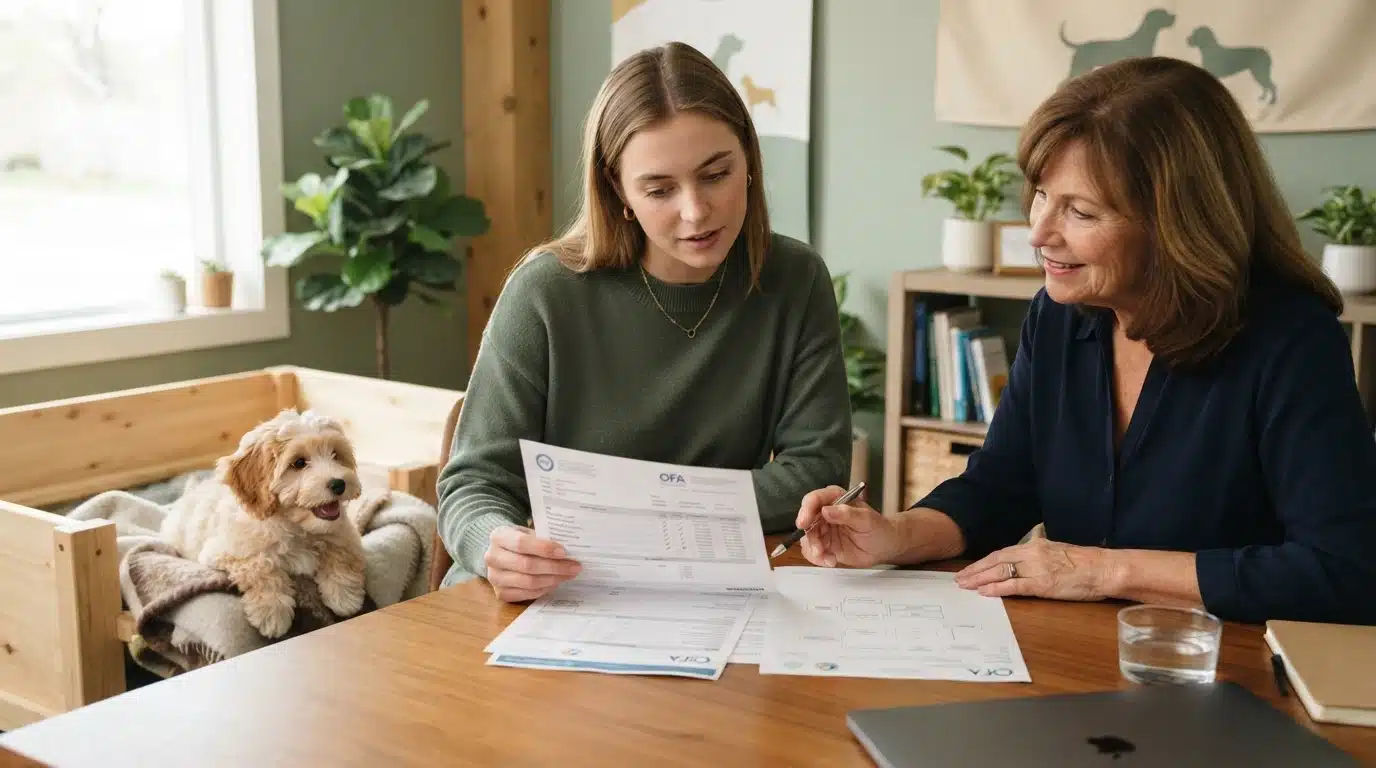
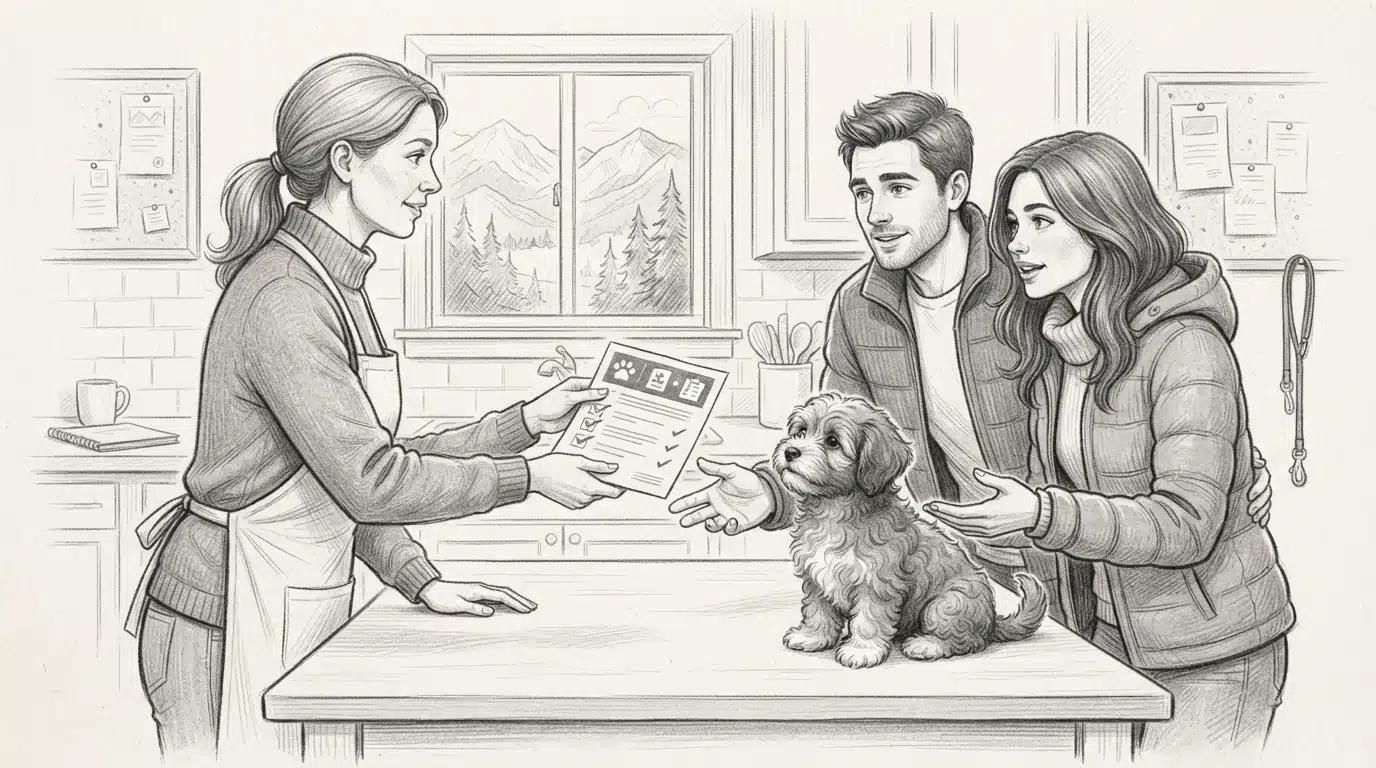
Screenshots are easy to fake and easy to misread. Type the mother’s and father’s registered names into OFA yourself and confirm the results match what the breeder claimed. Check the dates too, because tests done after the breeding happened are less useful. Legit results stay public, so a breeder who says “the database is down” or emails private files instead is giving you a pass/fail signal: walk away. If you want a deeper walkthrough, our guide on how to verify a breeder’s health testing covers the search steps line by line.
Ask for the puppy’s own vet records
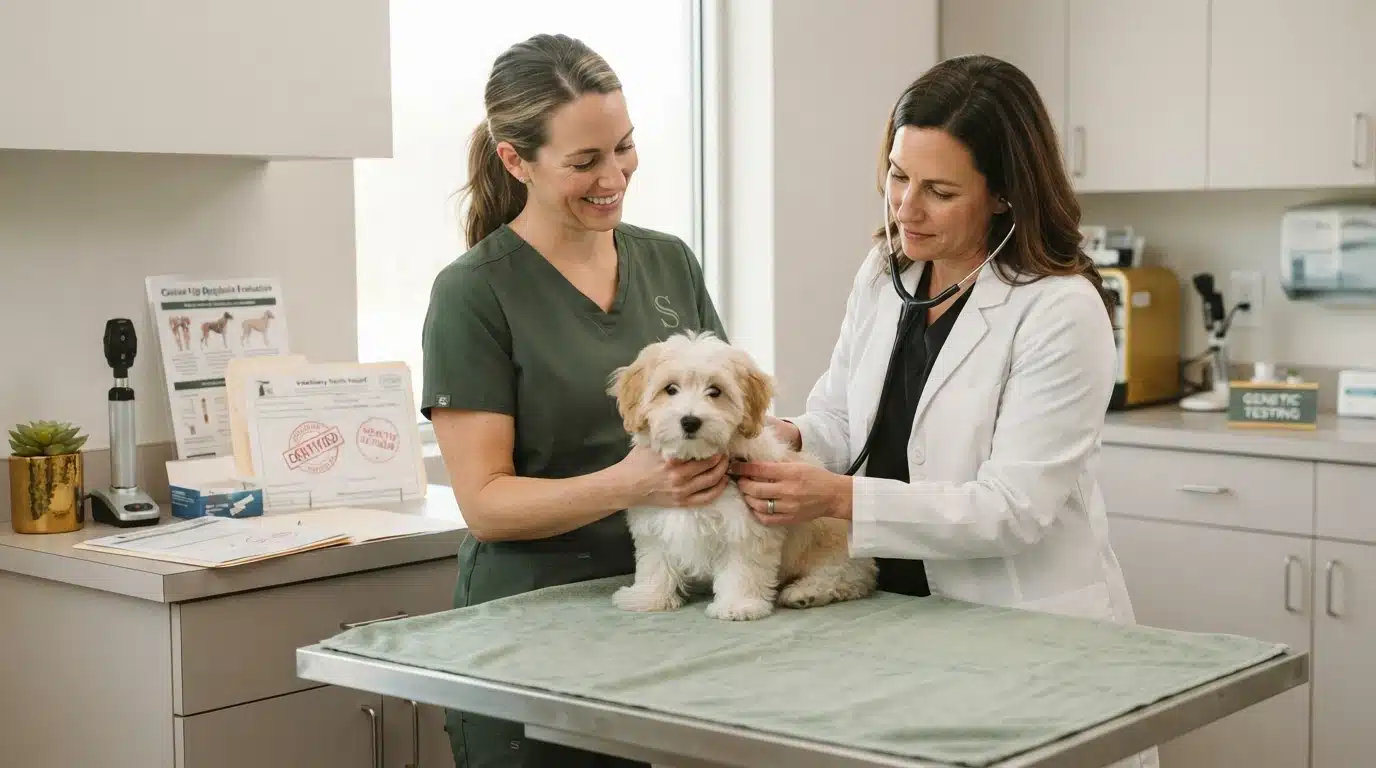
By eight weeks, a puppy should have had a vet exam, at least one round of puppy shots, and deworming. Ask for the actual clinic record with the practice name, the date, and the vet’s details, not a summary written by hand. Then call the clinic to confirm the visit happened. Any trusted breeder Utah families work with expects that call and will offer the record without being pushed.
Step 3: Verify References and Past Puppy Owners
How to know if a Utah puppy breeder is trustworthy
A trustworthy Utah puppy breeder shows you proof, not promises. Watch for these six verifiable behaviors:
- Offers references from past puppy owners without being asked twice
- Lets you contact those owners directly, not through the breeder
- Answers questions about the mother dog and home setup on a live video call
- Shares health testing records for both parents
- Uses a written contract with clear deposit terms
- Welcomes an in-person visit if you are local to Utah
A seller who stalls, edits names out of reviews, or only texts photos may be hiding something.
Contact past puppy owners on your own
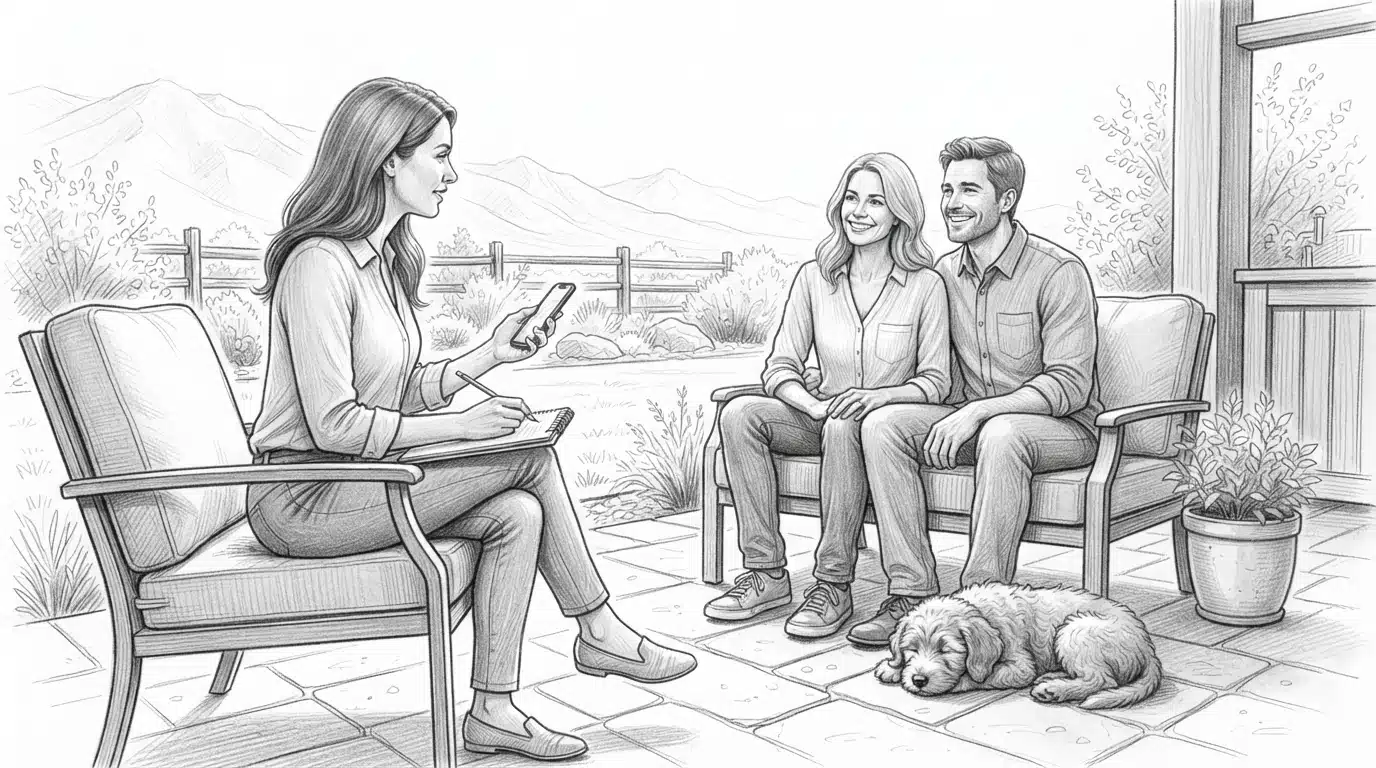
Ask the breeder for three recent references and call them yourself. Find past owners a second way: search the breeder’s name on Facebook or in local Utah dog groups and message people who comment. A breeder who only offers a cousin or a friend who “just happened to buy a puppy” fails this check. Sellers who connect you through a matching process, like the approach behind how Sage Puppies matching works, should still give you owners you can speak with directly.
Ask past owners the questions that expose scripted answers
Vague praise sounds scripted. Ask these four questions and listen closely:
| Question | Strong answer | Weak answer |
|---|---|---|
| What surprised you in the first month? | “He was nervous at night for a week” | “Perfect from day one” |
| Did the puppy’s health check out at your vet? | Names their vet and visit date | “We haven’t gone yet” |
| Would you buy again? | “Yes, already on the waitlist” | A long pause or “probably” |
| How did the breeder handle a problem? | A specific story with a fix | “We never had issues” |
Cross-check reviews and complaints without being fooled
Five-star reviews posted in the same week can be fake. The FTC warns that pet scammers use fake photos and staged reviews to look real, so weigh detail over volume. Check the Utah Division of Consumer Protection for complaints, and search the Better Business Bureau. One old complaint with a documented fix means less than a pattern of unanswered ones. Report anything suspicious to ReportFraud.ftc.gov so the next buyer sees it too.
Step 4: Review the Contract, Deposit and Payment Method
A written contract protects both sides, so read it before you pay anything. A trustworthy seller will not resist this.
The terms a written contract should include
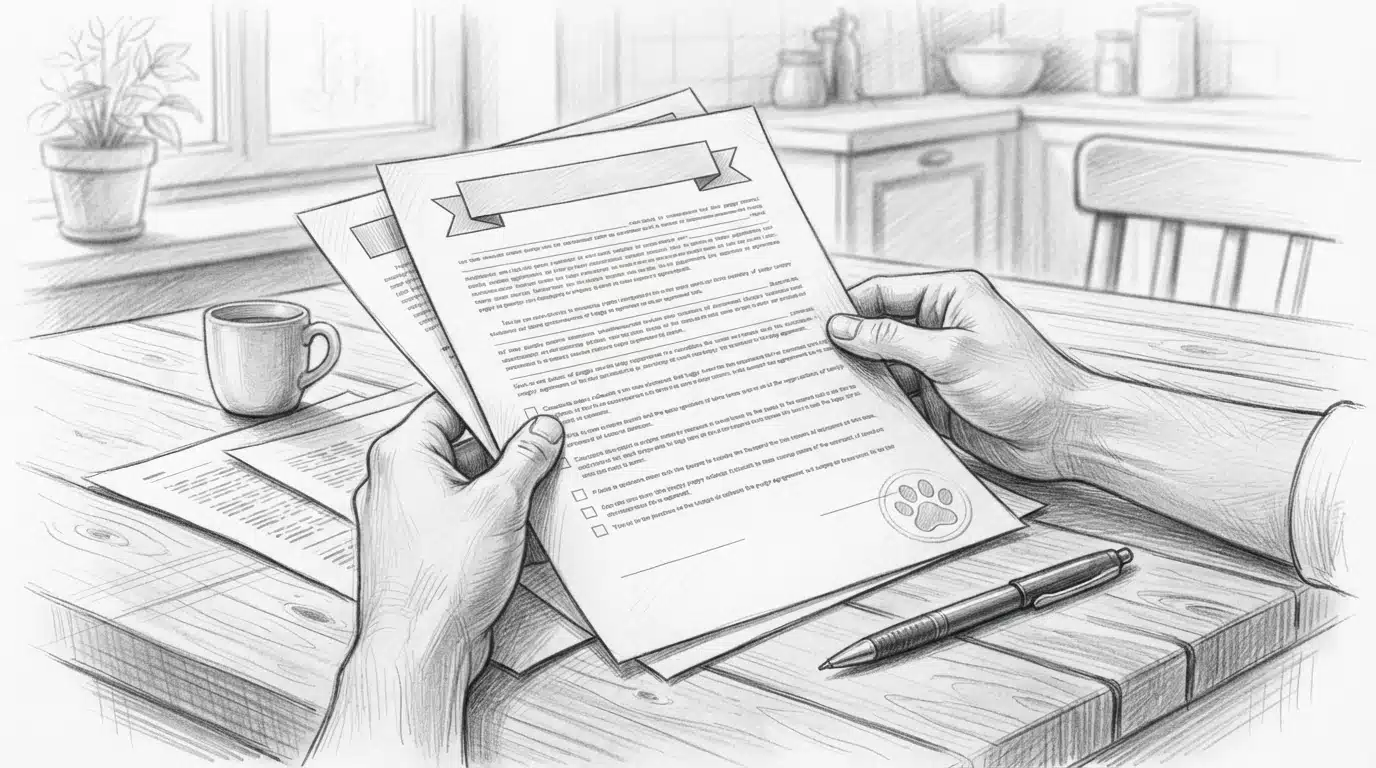
Ask for the contract in writing and check that it lists the buyer and seller by full legal name, the puppy’s date of birth, breed and microchip number, the total price with what the deposit covers, any health guarantee with a deadline, and the return or rehome policy. Verify breeder contracts spell out these terms, not just a receipt. If a clause is missing, ask for it in writing before you sign.
Pay in a way that leaves a trail
The safest deposit methods are credit card, PayPal Goods and Services, or another processor that offers dispute help. Pay with:
- Do: credit card, PayPal with buyer protection, Zelle only after you have verified identity
- Avoid: gift cards, wire transfers, Venmo or Cash App to strangers, crypto, payment apps with no recourse
The FTC warns that paying by gift card or wire leaves you almost no way to recover funds in a puppy scam. Card disputes give you an actual appeal process if the puppy never arrives.
Read refund language before you send anything
Look for what happens if the litter is smaller than expected, the puppy fails a vet check, or you change your mind. A clear refund policy states deadlines and who pays return shipping. Vague answers like “we’ll work it out” are a red flag. Get any verbal promise added to the contract, then keep a copy of everything you sign and every payment receipt.
Step 5: Meet the Puppy, the Parents and the Home
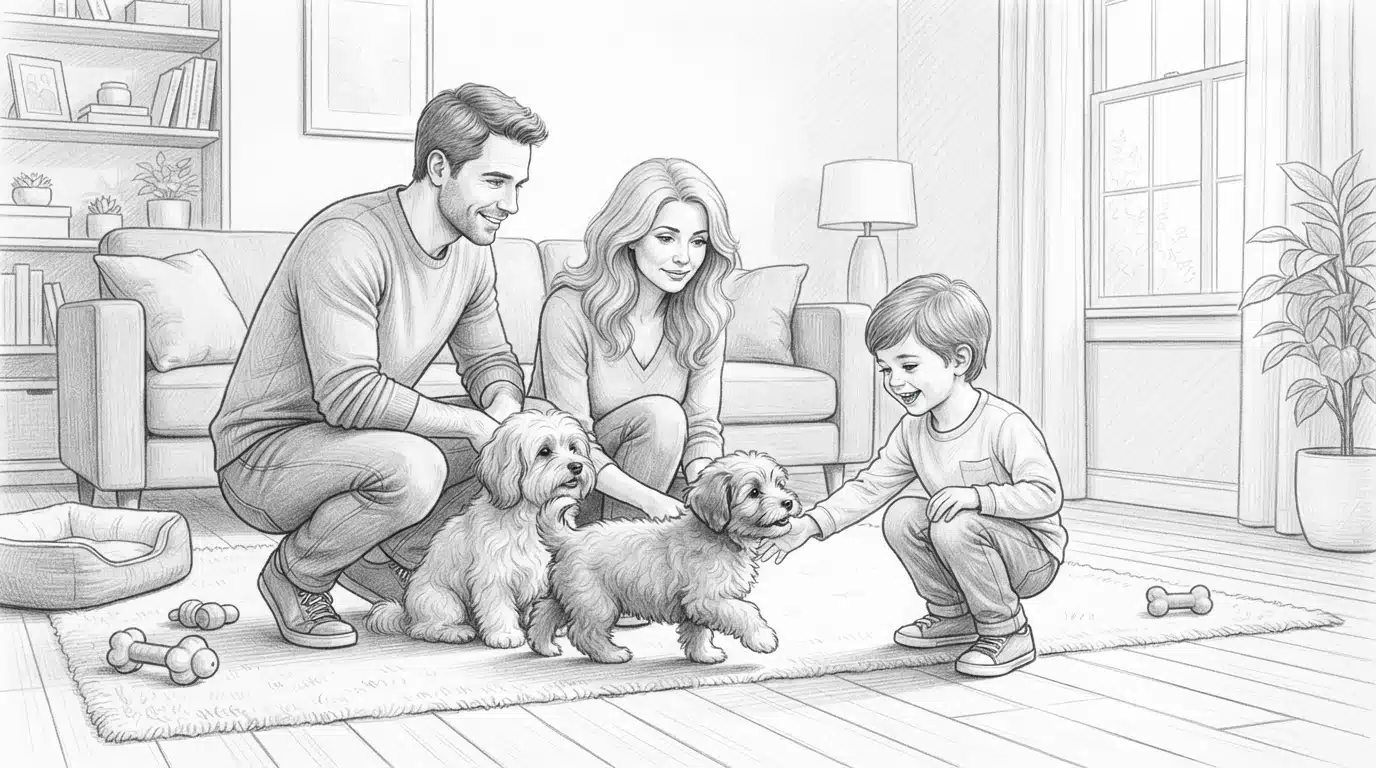
Photos prove very little. A live visit shows you the puppy’s real temperament, the mother’s health, and whether the home is clean and calm. Ask for an in-person meeting at the breeder’s home, or a video call if you are buying from out of state.
What a good live visit looks like
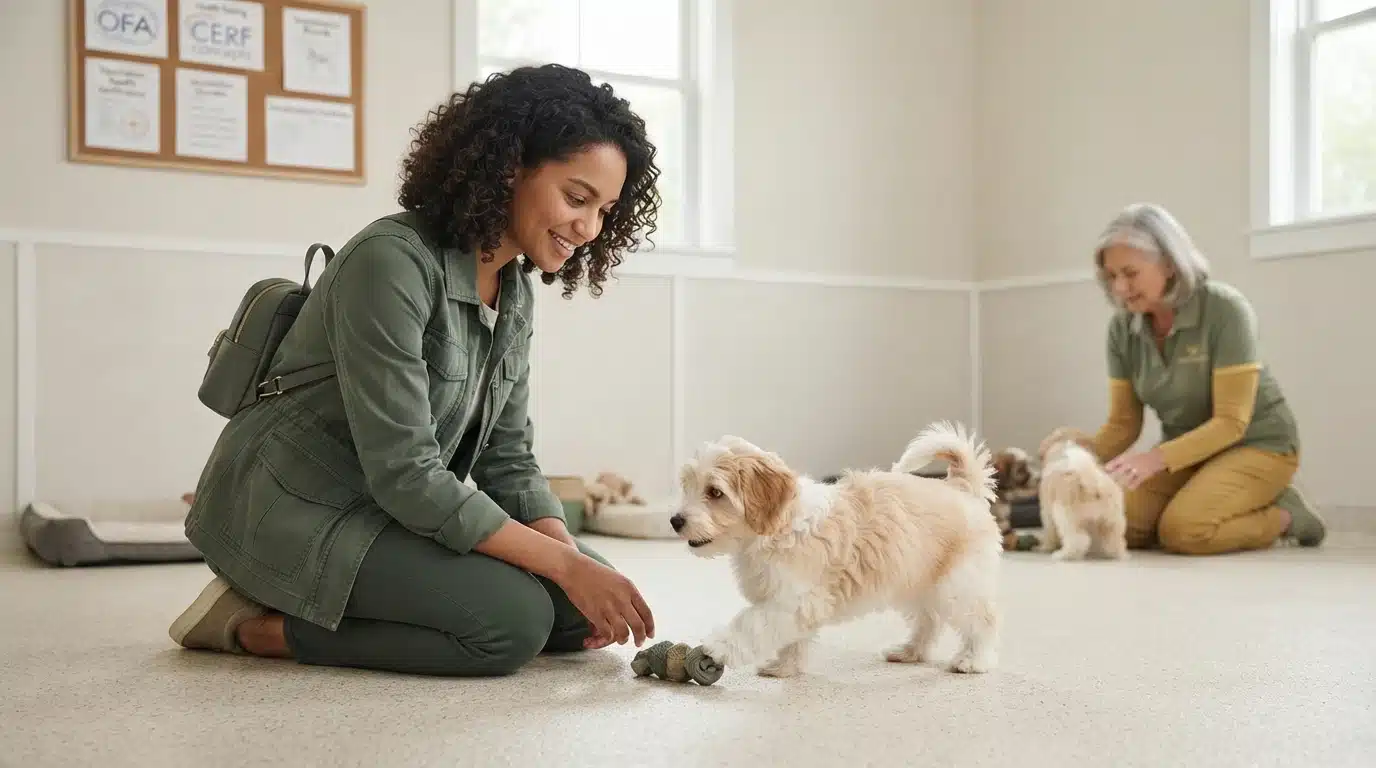
A good visit happens at the breeder’s home, not a parking lot. You should see where the puppies sleep and play, meet the mother dog, and watch the litter move around. Puppies should be bright, curious and clean, with no discharge from eyes or nose. The mother should be friendly and comfortable with you handling her puppies. A breeder who asks you questions during the visit is a good sign, because careful sellers screen buyers too.
Compare the parents against the breed standard
For Havanese, Havapoo or Cavapoo puppies, look at the parents’ size, coat and build next to the breed’s written standard. A Havanese parent should weigh roughly 7 to 13 pounds with a silky double coat. Ask which parent is the Poodle in a cross, since size varies with it. If a parent is missing from the visit, ask why, and request photos, weight records and health test results for that dog.
Handle sellers who decline or rush the visit
| Excuse you hear | What it usually means |
|---|---|
| “Meet me halfway at a rest stop” | The home may not match the story |
| “Visits stress the mother” | Possible cover for poor conditions |
| “Deposit first, then you can visit” | Pressure before you have seen anything |
A trusted breeder Utah buyers rely on welcomes the visit. If a seller refuses every option, including a video call with the breeder and meeting the mother dog, walk away. How a seller handles this step tells you more than any health certificate, and it is a fair way of choosing a trusted breeder before money changes hands.
Step 6: Compare Your Options and Make the Decision
Score each seller on the same five checks
Once you have vetted a few Utah puppy breeders, put them side by side. Score each one on the same five checks: identity and location, licensing or program transparency, OFA health testing on the parents, contactable references from past puppy owners, and a clear puppy contract with fair deposit terms. Give one point per check and write down why. A written scorecard keeps you honest, because a cute photo or a friendly voice can sway you more than it should. When choosing a trusted breeder, the totals rarely lie.
Know when to walk away
Some failures end the conversation no matter how strong the rest looks. Walk away if the seller cannot show the mother dog on a video call, refuses references, pressures you to pay a deposit today, or wants to meet in a parking lot instead of their home. These are puppy mill warning signs or fraud patterns, not quirks. A seller who resents your questions now will resent them even more after you pay. Trust your discomfort.
Compare total cost, not just the sticker price
Price tells you part of the story. Add travel, delivery or pickup costs, the first vet visit, starter supplies and any spay or neuter terms in the contract. A boutique program such as Sage Puppies prices its Havanese, Havapoo and Cavapoo puppies at $3,500 to $4,500, and that range sits in line with well-bred small breeds anywhere. Two sellers $300 apart can cost very different amounts once everything lands.
Common Mistakes to Avoid
Paying before the records are verified
Sending a deposit before you have seen the mother’s health paperwork is the fastest way to lose money. Confirm the breeder’s identity, location and testing records first. A video call and a look at parent health results should come before any payment, as outlined in a good puppy contract and deposit terms guide.
Treating a listing photo as proof of the puppy
Stolen photos are common in scams, so never accept a single image as evidence. Ask for a live video call showing the puppy moving around, ideally with the mother dog nearby. If the seller refuses, or pressures you to pay quickly to “hold” the puppy, walk away.
Accepting health guarantees that cannot be honored
A written guarantee only matters if the seller still exists next year. Get the health terms in the contract, including what happens if a vet finds a problem. Run the seller’s name through the [USDA APHIS license search](https://people Wojcieto) and check Utah’s consumer complaint records before you sign anything.

If those checkpoints matched what you want in a breeder, see how a boutique program answers them. Sage Puppies raises Havanese, Havapoo and Cavapoo puppies in South Jordan with owner-managed matching, and Cassie shares each family’s next step honestly. Start with the application and ask every question on your list.
Frequently Asked Questions
Q1: How do I know if a Utah puppy breeder is trustworthy?
Look for proof, not promises. Check state registration, look up parents’ OFA health results yourself, meet the mother dog, and read a written contract before paying anything.
Q2: How do I avoid puppy mills and scam breeders in Utah?
Refuse deposits before verification, reverse-search listing photos, and demand a home visit or video call with the mother. Pay only by credit card or PayPal for dispute protection.
Q3: How do I verify a Utah breeder’s references and past puppy owners?
Ask for three recent references and call them directly. Then search the breeder’s name in Utah Facebook dog groups and message past owners yourself.
Q4: How much should a Havanese or Cavapoo puppy cost in Utah?
Well-bred small breeds often run $3,500 to $4,500. Add vet visits, supplies and travel when comparing total cost.
Q5: Can I buy a Utah puppy if I live out of state?
Yes. Ask for a live video call, verified records and safe delivery terms in the contract. Never pay sight-unseen without them.
Conclusion
Choosing a trusted breeder comes down to a short sequence: verify the seller’s identity and Utah address, look up licensing and parent health testing yourself, call past puppy owners, read the contract, and meet the puppy and mother dog. Each checkpoint has clear pass and fail signals, so you always know whether to keep going or walk away.
The same five checks work whether you visit a Utah home in person or buy from across the country by video call. Score every seller on the same list and trust the totals, not the photos.
One hour of checking protects your money and the puppy. Buyers who verify records, references and terms first rarely regret the wait.