Quick Summary: Real breeder health testing leaves a public paper trail in databases like OFA and CHIC, and you can verify it yourself by asking for each parent’s full registered name and looking up hips, patellas, eyes, heart, and hearing results against the breed’s standard protocol. A CHIC number only confirms the screening was completed, not that every result was clean, so read each line and watch for vague phrases like “vet checked” with no test names or registry links. Crossbreeds such as Cavapoos have no CHIC checklist of their own, so both parents should be tested against their purebred breed lists and the paperwork shared openly. Sage Puppies documents every parent’s results and shares them with families during the matching process, which mirrors the same standard the guide recommends buyers demand from any breeder.
Yesterday you saw a Cavapoo listing with the words “health-tested parents” next to a smiling puppy photo. Now you’re wondering whether those results exist on paper, or only in a caption. That doubt is healthy. Anyone can type a claim into an ad, but real testing leaves a public trail.
This guide shows you how to follow that trail. You’ll learn to search the Orthopedic Foundation for Animals (OFA) database, read a CHIC record, and spot the difference between a true certificate and a vague promise. We also cover what Cavapoo breeder screening should include for small breeds, where mixed breeds complicate the picture, and which red flags warrant walking away.
No guesswork and no finger-pointing, just plain steps anyone can follow before a deposit. It’s the same standard we hold ourselves to at Sage Puppies, where every parent’s results are documented and shared with families.
Step 1: Tell the Difference Between a Health Screening and a DNA Panel
Any serious Cavapoo breeder screening claim should rest on two separate things: a veterinary exam of the parents and a genetic test. Breeders sometimes blur them together as “health tested,” but they measure different risks. Knowing which is which helps you ask sharper questions before you pay a deposit.
What a clinical screening actually checks
A clinical screening is a hands-on exam done by a veterinarian. It looks at the body itself, not the genes. For small breeds like Havanese, Cavaliers, and Poodles, that usually means X-rays of the hips and knees (patellar luxation is common in these lines), an eye exam by a board-certified ophthalmologist, sometimes a heart check, and often a hearing test.
The results go into public databases. The Orthopedic Foundation for Animals (OFA) tracks orthopedic, eye, cardiac, and hearing results, and its CHIC program lists dogs that complete their breed’s full screening protocol. A clinical screening shows how the dog is today. It cannot promise what puppies will inherit, but it catches problems a DNA test never will.
What a DNA panel can and cannot tell you
A DNA panel reads the parents’ genes. It identifies variants linked to inherited diseases, and it flags carriers. That matters with crossbreeds, because a Havapoo can inherit risk conditions from either parent breed.
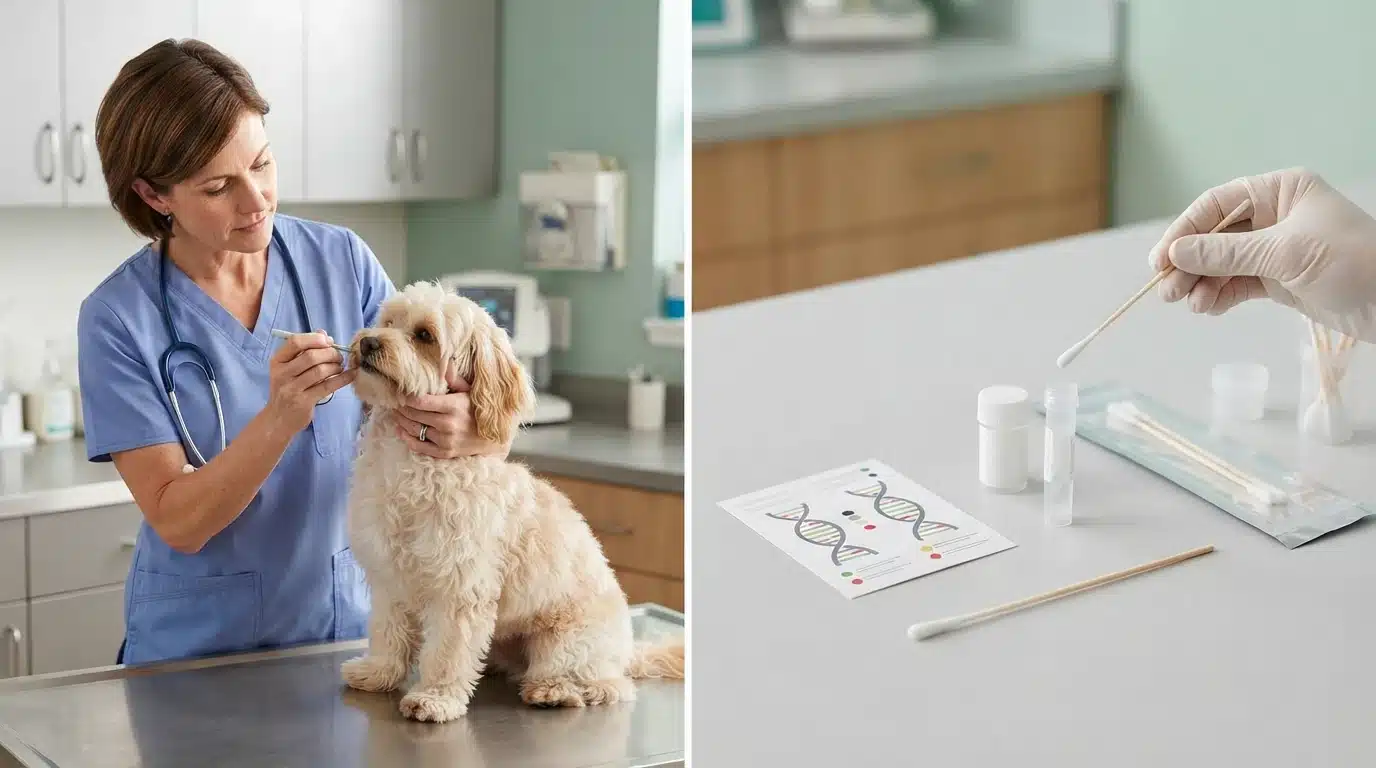
But genetics has limits. A clear panel does not rule out hip problems, heart murmurs, or late-onset eye disease. Some conditions have no known marker yet. This is why experienced breeders’ groups stress that DNA testing alone is not sufficient to call a dog fully health tested. You want both: genes checked and bodies examined. When a breeder shares results, that’s also a fair moment to review the health testing behind each puppy.
Step 2: Read the Recommended Tests for the Parent Breeds
Each parent breed carries a short, standard list of health screens. Havanese, Cavaliers, and Poodles all have CHIC (Canine Health Information Center) protocols, so once you know the lists, a quick database check gets easier. You are not looking for perfect results. You are confirming the tests were actually done and results were made public.

Current Havanese CHIC expectations
A Havanese earns a CHIC number by passing three basic screens: a BAER hearing test, a patellar luxation exam, and an annual eye exam. The breed’s parent club explains each one in its health and testing guide. Heart checks are also common in the breed, even where the protocol treats them as recommended rather than required. If a breeder of a Havapoo shows Havanese parent results in all three core areas, that is a solid baseline.
Cavalier and Poodle tests worth looking up
Cavaliers need the most careful look. Ask specifically for a cardiac exam by a board-certified cardiologist, because mitral valve disease is the breed’s biggest concern. Good records state the examiner’s specialty, not just “vet checked.” Add a patella evaluation and a current eye exam, and you have the core of any serious Cavapoo breeder screening. Poodle-side parents should have a recent eye exam and patella check, often plus DNA tests for progressive retinal atrophy. The OFA’s browse-by-breed page lists the exact protocol for each parent breed, so you can confirm before you ask questions.
Why your crossbreed has no CHIC list of its own
CHIC lists breeds, not mixes. A Havapoo or Cavapoo cannot earn a number of its own, so responsible breeders test each parent against that parent’s purebred protocol and share both sets of results. If a breeder says “the mix doesn’t qualify,” ask for each parent’s records instead.
Step 3: Run an OFA Advanced Search on Both Parents
The Orthopedic Foundation for Animals (OFA) keeps the public record of canine health testing. Once you have the parents’ registered names, you can look them up yourself in minutes on the OFA Advanced Search page.
Searching by registered name versus call name
Call names fail here. A dog’s call name, like “Biscuit,” rarely matches its registered name, which often starts with the breeder’s kennel name. Ask the breeder for each parent’s full AKC registered name or registration number. If you only know the kennel name, enter that plus the breed to narrow the list. Then confirm the match: check the breed, sex, and owner or co-owner details against what the breeder told you. A name alone is not proof of identity.

What a “normal” or “excellent” line on the record really tells you
Each line on an OFA record covers one test. “Excellent,” “good,” or “fair” are hip ratings from X-rays reviewed by several vets. “Normal” usually refers to eyes cleared by an eye specialist or a cardiac exam. A passing line means that dog was screened on that date and passed. It does not guarantee future health in any puppy.
Also note what is missing. If a record shows hips but no eye exam, ask why. For a Havanese or a crossbreed like a Havapoo, you want the full list of tests for that breed, not just one passing grade. When parents are tested but results were never posted, that is a fair question to raise with the breeder.
Step 4: Understand What a CHIC Number Does – and Does Not – Mean
A CHIC number does not certify a dog is healthy. It certifies the dog was screened.
CHIC records required screening, not perfect outcomes
The Canine Health Information Center (CHIC) is run by the Orthopedic Foundation for Animals (OFA), the same registry that stores hip, eye and heart results. Per OFA’s CHIC program page, a dog earns a CHIC number when every breed-specific screening is completed and the owner agrees to publish the results. Passes and fails both stay visible.
That last part matters. The program was built on transparency, so a CHIC number proves the tests happened, not that they came back clean. As OFA’s own materials put it, the number is issued once the required screenings are done and entered. Read the individual results behind the number, then judge them.
What an empty record section can (and cannot) tell you
An empty section in a dog’s OFA profile tells you one thing for sure: that result was never entered. It could mean the test was skipped, or it could mean the dog was too young, or the breeder used a different registry. You cannot tell which from the profile alone. That is why it is worth asking the breeder directly before you assume the worst or excuse the gap.
For crossbreeds like Havapoos and Cavapoos, there is no single parent-club checklist, so a responsible breeder may combine tests from each parent breed. Ask which ones, and ask for the paperwork to match. What an empty record cannot do is prove a dog is unhealthy. It just means the file is incomplete, and incomplete files deserve questions, not automatic disqualification.
Step 5: Cross-Check the Paperwork the Breeder Sends
Parent health tests prove the line. The paperwork that travels with your puppy proves the puppy. Before you pay a deposit, ask for copies and read them closely, because a healthy-looking folder can still hide a mismatch.

Match the microchip or registration number first
Every document should describe the same dog. Take the microchip number from the puppy’s chip paperwork and compare it against the vet record, the vaccine log, and any registration papers. If the numbers differ, ask why before you go further. A typo happens, but a breeder who shrugs it off is a warning sign. Do the same with the registered name and date of birth, then confirm the dam and sire listed on the papers match the parents whose OFA results you already verified. You can also scan the chip at your puppy’s first vet visit to be sure the number in your hand matches the puppy in your arms. This one habit catches most switched-paper problems early. For a fuller list of documents worth requesting, see this guide to puppy health screening records.
Ask for the puppy’s own vet exam and vaccine records
A health check by the breeder’s veterinarian should list this specific puppy, the exam date, and what was found. Good records show vaccines given, deworming dates, and anything still due, which helps your own vet plan the next shots according to PetMD. Ask for a written health record you can hand over at that first appointment.
Step 6: Spot the Red Flags in Health-Testing Claims
Most fake health claims fall apart under two questions: what was tested, and can you see the paperwork? Vague answers to either one tell you to slow down.
Words that sound good but mean very little
“Vet checked” is the biggest one. It means a vet looked at the puppy once. It does not mean the parents were screened for inherited disease before breeding, which is what real health testing is (breederhq.com). Watch for these phrases:
- “Vet checked” offered as proof the parents are healthy
- “Health tested” with no test names, no registry, and no dates
- “Champion bloodlines” in place of screening results
- “All our dogs are healthy” with no records behind it
A breeder who cannot name the specific OFA evaluation, the registry, or the testing dog’s registered name is not describing a verified result. Ask to see the actual certificate or the registry entry before you move forward.
Document tells that suggest recycled photos or missing records
Real records share a pattern. The same kennel name, breed, and registered dog names appear on the health certificates, the pedigree, and the photos. When those details don’t line up, pause. Common tells include:
- Papers in a different dog’s name than the parent you were shown
- Photos reused across litters or listings, same dog, different birthdates
- Results dated before the parent was old enough to be tested
- One parent documented, the other missing records entirely (southernwindk9.com)
- Screenshots instead of registry links, with no verifiable entry on OFA
Ask for the parent’s registered name and look it up yourself. If the listing says “tested parents” but the database shows nothing, treat the claim as unproven.
Step 7: Build a Quick Vetting Conversation That Works
Most breeders welcome direct questions, and how they answer tells you as much as the paperwork. A short, respectful call or email filters out weak programs in minutes.
A short script you can copy and adapt
Ask these five questions and listen for specifics, not reassurance:
- “Which health tests have both parents had, and can you send the OFA or CHIC links?” A confident breeder sends numbers right away.
- “What conditions does this breed commonly face, and how do your lines test for them?” Vague answers here are a red flag.
- “How many litters do you raise each year, and where do the puppies live?”
- “Can I speak with a family from a past litter?”
- “What happens if a health issue appears in the first year?”
Written answers work too. Ask the breeder to reply by email so you keep a record.
When to slow down before sending a deposit
Pause if the breeder pushes urgency, refuses to share test results, or says a breed “has no health problems.” Slow down when records cover one parent but the other has none, or when the puppy will be ready before eight weeks of age. None of these prove a bad breeder, but each one means you should get documents in writing first. A good program answers patiently because it has nothing to hide.

Health papers should be easy to check, so ask any breeder to walk you through theirs before you pay a deposit. If you want that openness up front, Sage Puppies shares each puppy’s testing and parent records during matching. Browse available puppies or start an application today.
Frequently Asked Questions
Q1: How do I verify a breeder’s health testing results?
Ask for each parent’s registered name, then search the OFA database yourself. Match breed, sex, and owner details, and confirm the record covers the tests that breed’s protocol requires.
Q2: What health tests should a responsible breeder have done?
Both clinical exams and DNA panels: hip and patella X-rays, an eye exam by a specialist, cardiac screening, breed-specific DNA tests, and hearing checks for breeds like the Havanese.
Q3: How do I look up OFA health testing for a breeder’s dogs?
Use OFA’s Advanced Search page. Enter the dog’s full registered name or kennel name plus breed, then read each result line and note any missing tests.
Q4: Do mixed breeds like Cavapoos qualify for CHIC numbers?
No. CHIC lists purebred breeds only, so a responsible breeder tests each parent against that parent’s breed protocol and shares both sets of results.
Q5: What does “vet checked” actually mean?
It means a veterinarian examined the puppy once. It says nothing about whether the parents were screened for inherited diseases, which is what real health testing involves.
Conclusion
Verifying a breeder’s health testing comes down to three habits: know which tests each parent breed needs, look those results up yourself in the OFA database, and match every document to the actual dog. A CHIC number proves screening happened, not that every result was perfect, so read the individual lines. For crossbreeds like Havapoos and Cavapoos, expect each parent tested against its own breed protocol. Watch for vague phrases like “vet checked,” and ask specific questions before any deposit. Breeders who test, publish results, and share paperwork willingly have nothing to hide, and the trail they leave is easy for you to follow.