Quick Summary: Havapoo puppies usually need more active engagement than Havanese puppies, with about 30 to 45 minutes of daily exercise plus puzzle and training games, compared with roughly 30 minutes in short sessions for a Havanese. The key difference is rhythm and variety rather than a huge gap in total activity. For both breeds, use short walks, play bursts, and mental work while limiting stairs, running, and repetitive impact until their growth plates close, and choose the breed that matches your household’s real schedule.
Two puppies from the same household can grow up differently. Both under 15 pounds, both companion breeds: the Havapoo will likely ask you to play again ten minutes after the last session, while the Havanese is often content watching you work from a sunny spot on the couch. That gap in daily energy is what to plan for, and it is smaller than most breeder pages suggest.
Most buyers get vague labels like moderate energy, then must imagine a routine lasting a decade. You need specifics: who needs more havapoo daily exercise, what it looks like at 10 weeks versus 10 months, and whether your schedule fits. This guide compares both breeds side by side, using published veterinary and breed-club ranges plus our own puppy-raising experience at Sage Puppies in South Jordan, Utah.
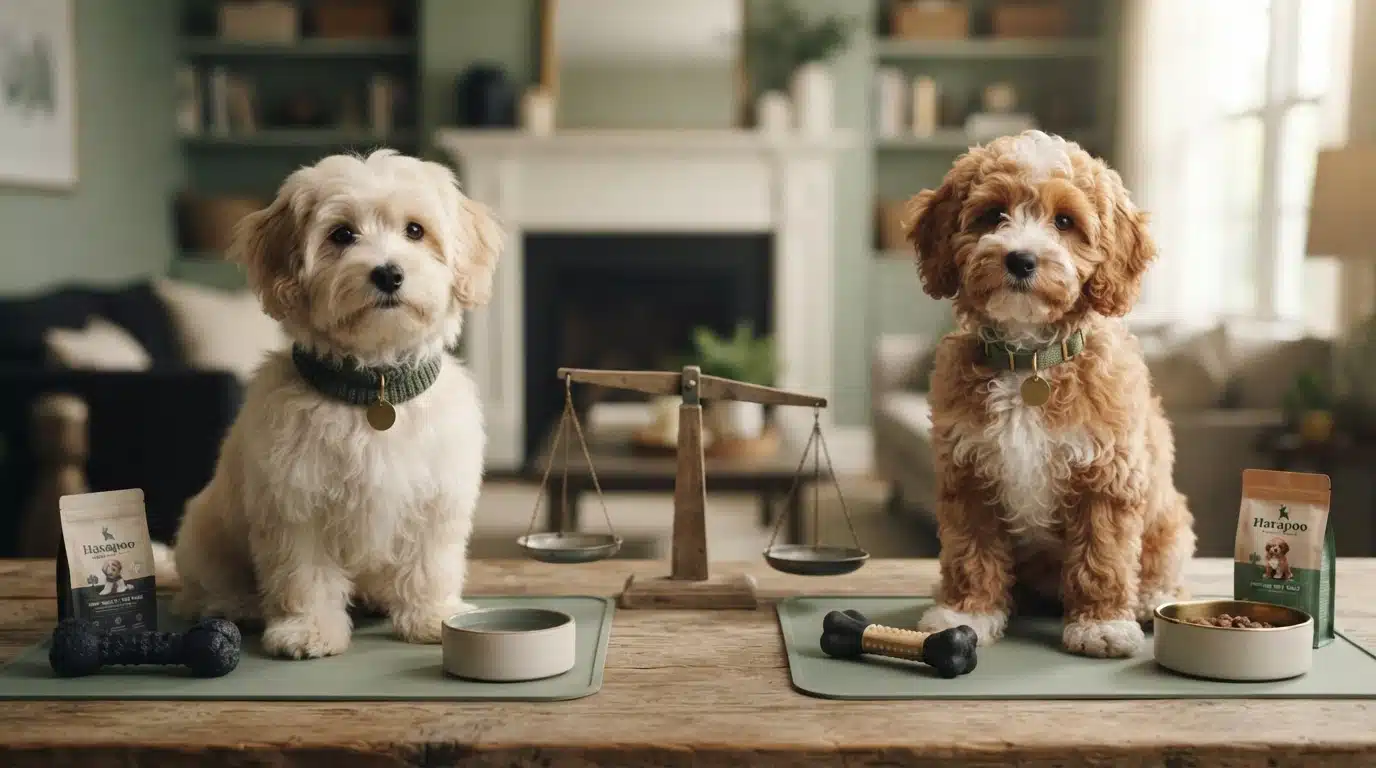
Havapoo vs Havanese Energy and Exercise: At a Glance
| Havapoo puppy | Havanese puppy | |
|---|---|---|
| Overall energy level | Moderate to high for a small breed | Low to moderate, with play-burst energy |
| Typical daily activity range | About 30 to 45 minutes total, adjusted by age | About 30 minutes total, split into short sessions |
| Exercise style preference | Interactive play, training games, sniffing walks | Short walks, indoor play, household interaction |
| Mental stimulation needs | High; bored puppies bark and chew | Moderate; thrives on being involved |
| Best household fit | Active families with daily walk and play time | Home-heavy or compact households with flexible time |
How Havapoo puppy and Havanese puppy Compare
Havapoo puppy
The Havapoo crosses a Havanese with a Poodle, producing a small puppy that is typically energetic, clever, and quick to learn games. It suits active families who enjoy daily walks and play sessions, though its needs stay moderate. Mental stimulation matters as much as movement here; a bored Havapoo puppy often barks or chews.
Key strengths
- Moderate to high energy with an easy 30 to 45 minute activity range
- Loves interactive play, training games, and sniffing walks
Havanese puppy
The Havanese is a small companion breed from Cuba, and its Havanese daily exercise needs are modest: about 30 minutes total, split into short sessions. Play-burst energy is typical, so a short Havanese exercise routine of walks and indoor games works well. This breed fits home-heavy households where the puppy stays involved in family life.
Key strengths
- Content with short walks and household interaction
- Moderate mental stimulation needs, thriving on company
What Actually Differs Between Havapoo and Havanese Energy
Yes, Havapoo puppies are usually more energetic than Havanese puppies. The Havapoo carries some Poodle drive, so it wants more play, more mental work, and more variety in its day. The Havanese was bred to be a lap companion, and that shows in how it spends its downtime.
- Havapoo: moderate to high energy, happiest with structured play and training games
- Havanese: moderate energy, often satisfied with short sessions and company
Where the Energy Difference Comes From
The gap starts with ancestry. The Havapoo mixes the Havanese with the Poodle, a working breed that also adds height and stamina to the cross. That mix produces a puppy that settles quickly but restarts just as fast. The purebred Havanese comes from a long line of Cuban companion dogs, so its baseline energy is steadier and lower. Neither breed is hyperactive, and both are small enough to live comfortably in an apartment. What changes is how often each puppy asks you to engage. If you want a fuller look at how the cross affects other traits, our comparison of Havapoo and Cavapoo coat care covers the same breeding logic from a different angle.
Play Bursts Versus Sustained Activity
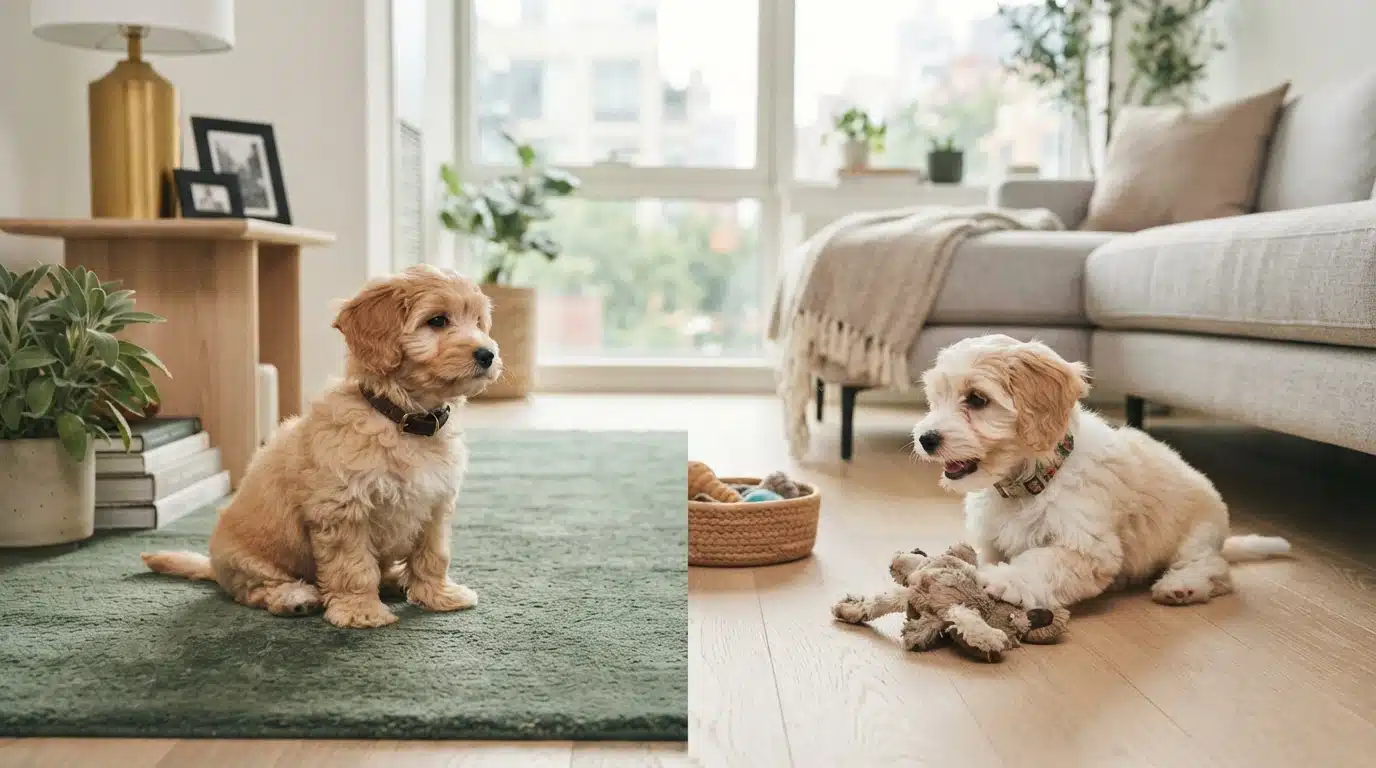
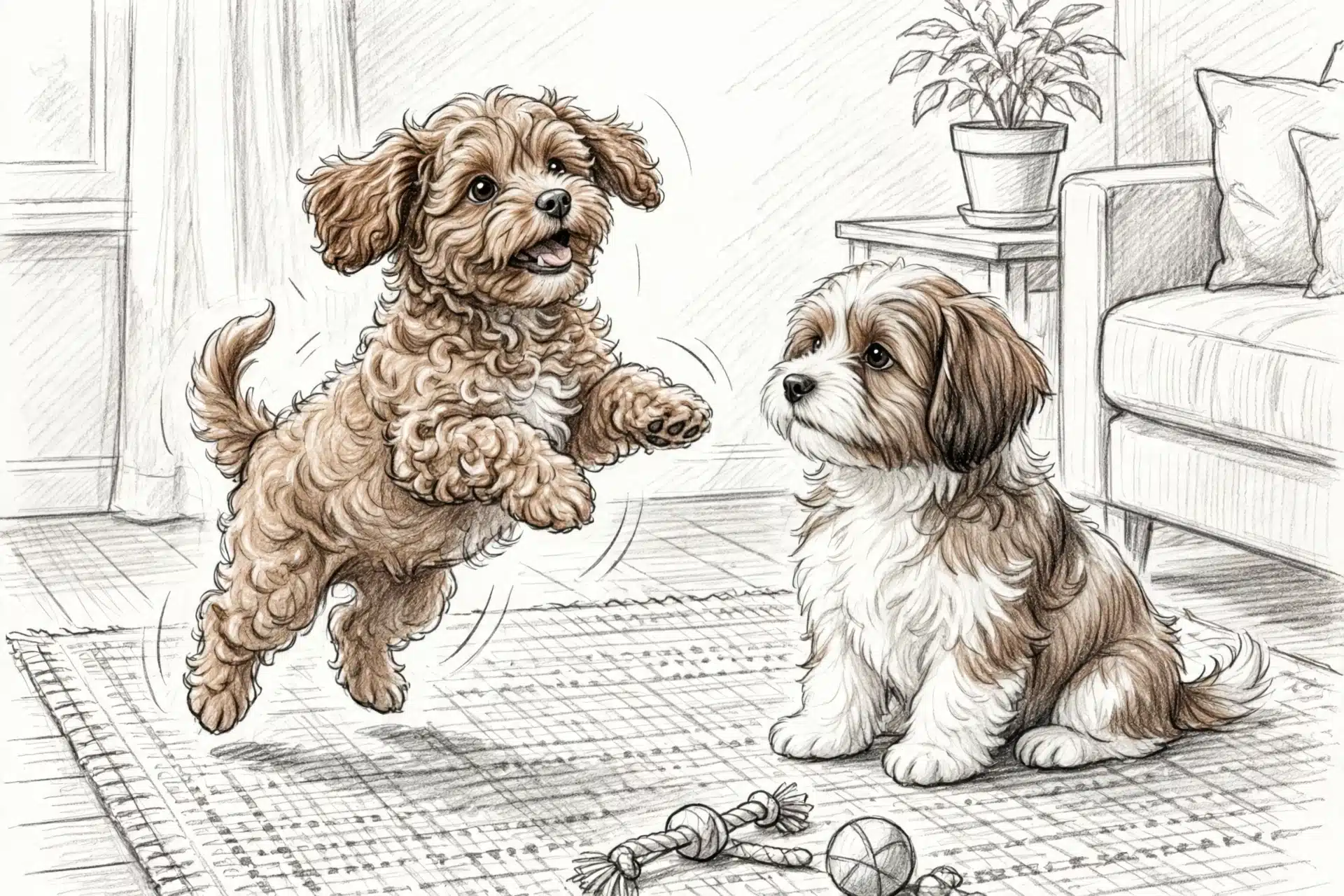
The Havapoo works in bursts. It will fetch hard for ten minutes, nap, then return with a toy in its mouth asking for another round. Spread that pattern across the day and you get roughly 30 to 45 minutes of real activity. The Havanese plays the same games but wraps up sooner, fitting about 30 minutes total into shorter sessions. Both puppies also need mental stimulation for companion breeds, like puzzle feeders or short training reps, because a bored small breed chews shoes no matter its energy level.
How Much Exercise Does a Havapoo Puppy Need Each Day?
A Havapoo puppy needs about 30 to 45 minutes of activity per day, split into several short sessions. That is Havapoo daily exercise at its simplest: two or three leashed walks of five to ten minutes, plus play sessions that burn the rest. Free play in the yard or living room counts, and often does most of the work. Break it down by age:
| Age | Daily activity | Session length |
|---|---|---|
| 8 to 12 weeks | 20 to 30 minutes | 5 to 10 minutes |
| 3 to 6 months | 30 to 40 minutes | 10 to 15 minutes |
| 6 to 12 months | 40 to 45 minutes | 15 to 20 minutes |
A Realistic Daily Range for a Young Havapoo
Young Havapoos have bursts, not stamina. A typical day looks like a short morning walk, a game of fetch before lunch, a sniff-and-explore walk in the evening, and a puzzle toy or training session after dinner. That spread gives you the 30 to 45 minute total without one long outing. Ignore the popular “five minutes per month of age” rule: PDSA notes there is no scientific evidence behind it. Watch the puppy instead. Temperament, not a formula, shapes how active a Havapoo really is, which our Havapoo temperament guide explains.
Scaling the Routine as the Puppy Grows
A Havapoo puppy walk length grows with the dog. At 10 weeks, keep each leashed walk under 10 minutes. By 5 months, one walk can stretch to 15. Small breeds’ growth plates, the soft cartilage near the joints, stay open into the first year, so hard running and stairs stay limited. After 12 months, the adult Havapoo routine of steady walks plus play takes over. Mental stimulation matters as much as mileage at every stage.
Signs a Havapoo Puppy Needs More or Less Activity
Pacing, grabbing your sleeve, and repeated zoomies usually mean more play or a training game. Skipping meals, lagging behind on walks, or lying down mid-session means less. On hot days, cut sessions in half. One vet visit question settles any doubt.
Havanese Daily Exercise: The Same Routine With a Calmer Baseline
A Havanese puppy needs about 30 minutes of activity per day, split into short sessions. The games look nearly identical to a Havapoo’s walks, fetch and training play. The difference is that your Havanese usually ends the session satisfied, instead of asking for a rematch ten minutes later.
What the Published Ranges Say
Breed sources land in a consistent band. The AKC’s Havanese breed profile describes moderate exercise needs met with one brisk daily walk or backyard play. The Havanese Club of America goes further, noting the breed is often content living indoors and does not need long exercise to burn off nervous energy. Group guides such as BorrowMyDoggy’s breed guide put the range at 30 minutes to an hour.
| Source | Published Havanese guidance |
|---|---|
| AKC breed profile | Moderate needs; brisk daily walk or playtime |
| Havanese Club of America | Content indoors; no forced long sessions needed |
| Group breed guides | About 30 to 60 minutes per day |
| Sage’s puppy routine | About 30 minutes total, in short sessions |
That supports the lower half of the range for a puppy: short, frequent bursts that add up to roughly 30 minutes.
Building a Havanese Exercise Routine That Holds Up
Keep the same structure you would use for a Havapoo, just on a shorter clock. Two 10 minute walks plus one 10 minute play or training session covers the day. Shorten each walk while growth plates are still closing, and lean on sniffing games or a puzzle feeder to add mental stimulation without extra miles.
A calm baseline still needs structure. Havanese puppies bond hard, so pair the activity with brief practice being alone to head off clinginess. Our daily routine guide for Havanese puppies walks through the full schedule, from feeding times to rest windows.
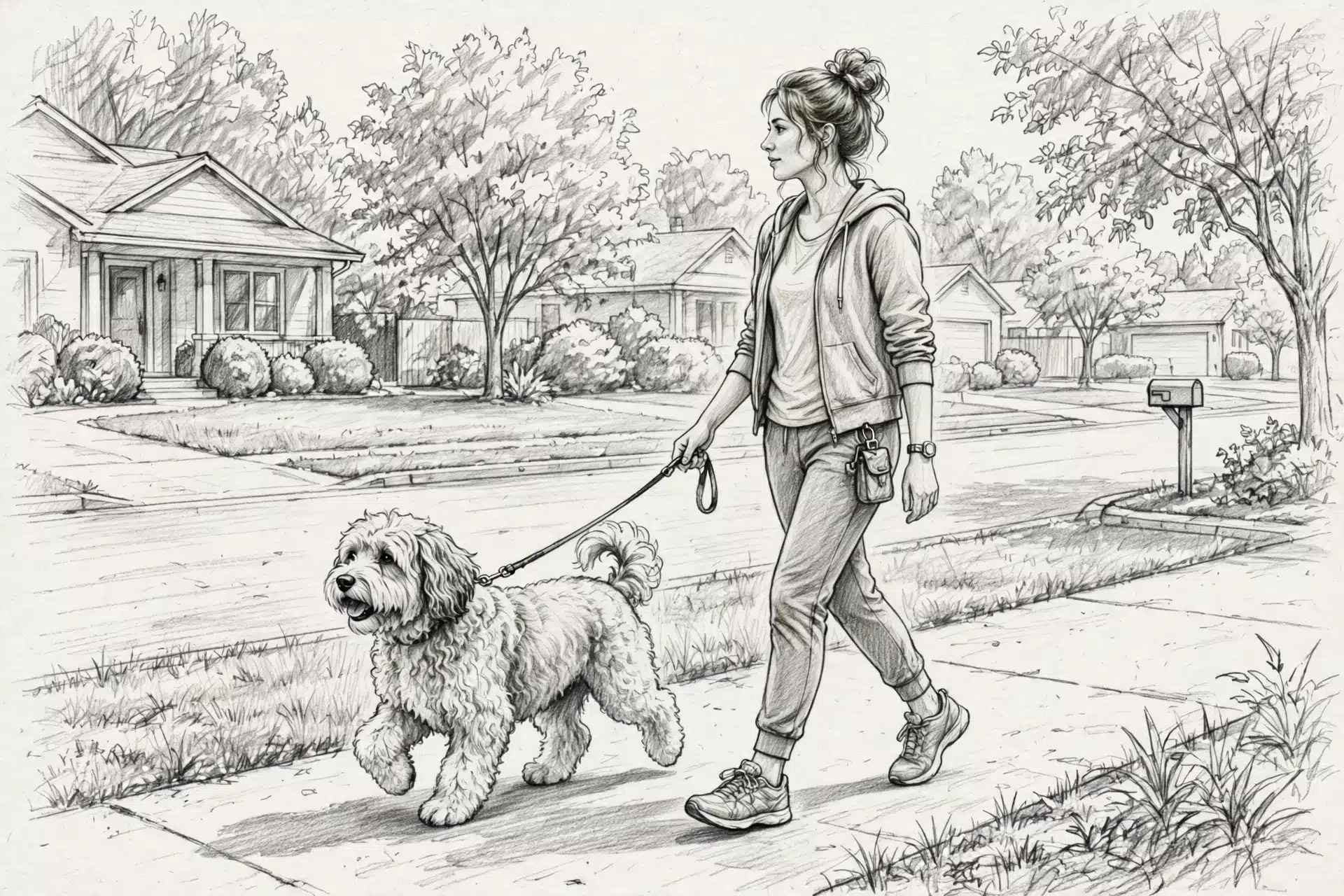
End each day with the same check: did the puppy settle on its own afterward? If yes, the routine fits.
Mental Work Counts as Exercise for Both Breeds
A tired brain often does more work than tired legs. Puzzle feeders, scent games, and short training sessions count toward the day’s total, and they fit inside the 30-minute Havanese routine just as well as the Havapoo’s longer window.
Why Mental Load Matters More in Small Breeds
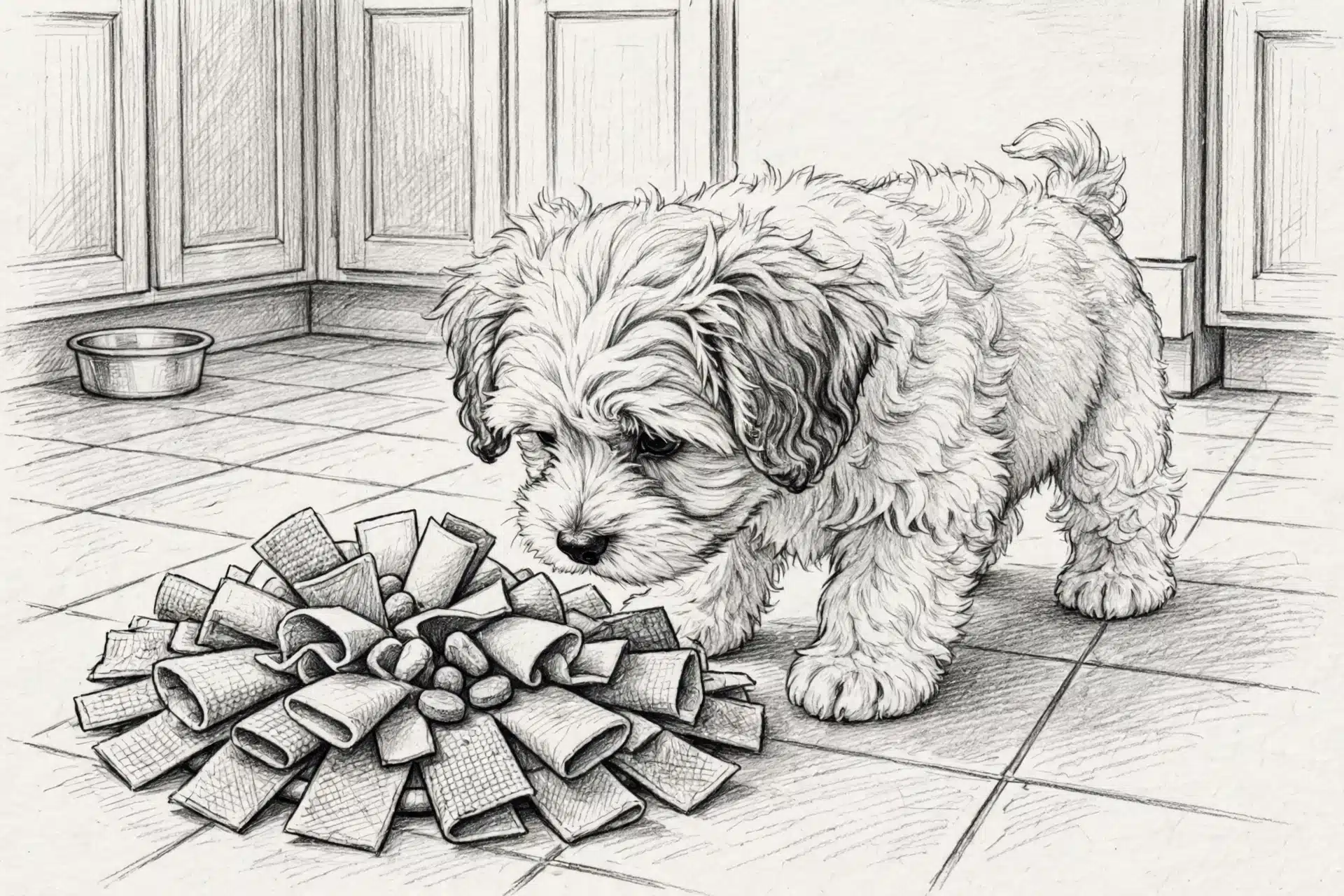
Because both breeds are companion dogs, their bodies need less running than their minds need solving. Bred to keep people company, they notice when nothing is happening. A bored Havanese barks; a bored Havapoo invents games with your shoes. Mental stimulation for companion breeds prevents that: a snuffle mat before dinner, a frozen Kong during your meeting, hide-and-seek with a favorite toy. Fifteen minutes of sniffing and problem-solving can settle a puppy as much as a walk, and it costs you no extra time on a busy day.
Using Training to Build Both Fitness and Reliability
Training blends both needs in one session. Practice a five-minute recall down the hallway, then a settle on a mat while you cook. The puppy burns energy and learns manners at the same time. Positive reinforcement training for Havapoos works especially well because they repeat whatever earns a reward. Keep sessions short, end on a win, and spread them through the day. A few scattered mini-sessions tire a small puppy faster than one long drill, and they build the habits you will rely on for years.
Keeping Small-Breed Exercise Safe
A Havapoo’s play drive and a Havanese’s shorter bursts both sit inside a small frame, so safety rules matter more here than breed rules. Two things drive most puppy exercise injuries: repetitive impact while bones are still growing, and the environment your puppy moves through.
Growth Plates, Joints and Why High-Impact Work Waits
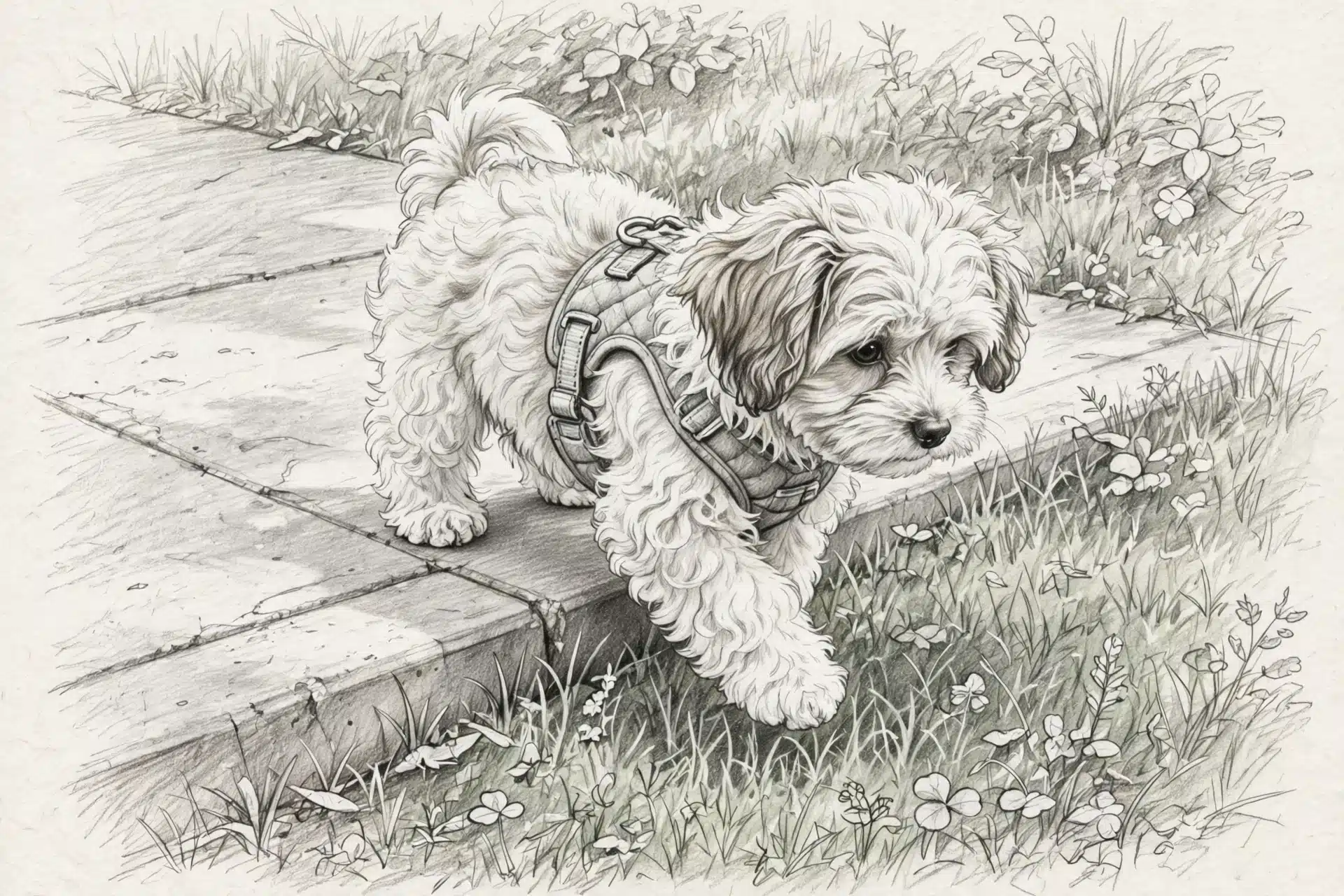
Puppies grow through soft areas near the ends of their bones called growth plates. These stay open until roughly 12 to 18 months of age, and strenuous or repetitive impact can injure them while they are still forming, as VCA Hospitals explains in its puppy exercise guide. For a Havapoo, that means delaying jogging, stairs, and long frisbee sessions until growth plates close. Free play stays fine, because puppies stop when tired. Forced exercise, meaning anything beyond what the puppy would choose, is what vets warn against. If a Havapoo seems tired but keeps chasing because you keep throwing, you are the one driving the workload.
Surfaces, Heat and Gear That Affect a Small Puppy
Environment does the rest. Avoid slippery floors, discourage jumping off couches, and skip skidding games like sharp ball chases, since UK charity PDSA flags these directly for joint safety. Hot pavement burns paws; test it with your hand. Use a flat harness, never a collar that yanks a tiny neck.
Matching Either Breed to Your Actual Schedule
Both breeds fit a working household, but they ask for different things. The Havanese is content with about 30 minutes a day and tolerates a quiet afternoon well. The Havapoo needs the same 30 to 45 minute total but wants it spread out, plus a game or puzzle to keep its mind busy.
Homes With Long Workdays or Little Outdoor Space
You do not need a yard for either breed, and neither needs a midday run. A Havanese does well with a brisk morning walk, a short evening play session, and toys the rest of the day. A Havapoo in an apartment thrives on the same walks if you add brain work: a snuffle mat, a stuffed Kong, or five minutes of trick training. The gap shows up when everyone is gone. Havanese adults usually settle; Havapoos are more people-focused, so plan for a dog walker, a midday break, or a family member who pops in. Puppy classes and puzzle toys both count toward positive reinforcement training for Havapoos and toward that daily total.
Active Homes, Families and Multi-Dog Setups
Busy families are easy for both breeds, because the household itself provides exercise. Kids, errands, and backyard games naturally cover a Havanese routine. A Havapoo simply plays longer and asks for a second round, so a second dog or a regular playdate helps. Neither breed is a jogging partner while young; keep leashed walks short until growth plates close, and use fetch or gentle hikes instead. Match the breed to the pace you already live, not the pace you hope to start.
Which Should You Choose: Havapoo or Havanese?
The core difference is workload, not love. Both breeds stay under 15 pounds and want to be with you, but a Havapoo asks for 30 to 45 minutes of activity spread across the day, while a Havanese is usually happy with about 30 minutes in shorter sessions. Pick the dog that fits your actual schedule, not the cuter photo.
Choose a Havapoo When You Want an Active, Interactive Dog
A Havapoo suits you if play is part of your day, not an interruption to it. These dogs thrive on fetch, short training sessions, and a family that keeps coming back for round two. The mix brings moderate to high energy, so plan a steady routine of walks plus games. If your household is lively, this match feels easy.
Choose a Havanese When Your Dog Can Mostly Be Near You
A Havanese fits a quieter rhythm. It still needs its Havanese daily exercise, roughly 30 minutes split into short play and walk sessions, but it often settles after that and simply shadows you around the house. First-time owners and remote workers tend to find this pace forgiving.
Questions to Ask Before You Decide
Ask yourself three things. How much time can you honestly give each day? Will someone be home most of the time? Do you want a play partner or a calm companion? Write your answers down before you commit.

Both breeds fit a 30-to-45-minute day, but only one matches your day. Sage Puppies matches each Havapoo or Havanese puppy to the family’s real routine, then guides you through pickup or delivery. Start your application at Sage Puppies.
Frequently Asked Questions
Q1: How much exercise does a Havapoo puppy need each day?
About 30 to 45 minutes, split into short sessions. Two or three brief leashed walks plus fetch, training games, or puzzle toys cover the total, adjusted by age.
Q2: Are Havapoo puppies more energetic than Havanese puppies?
Usually yes. The Poodle side adds play drive and stamina, so a Havapoo restarts games often, while a Havanese settles sooner after play.
Q3: Do Havapoo puppies need more exercise than Havanese?
Not dramatically more minutes, but more variety. A Havapoo wants mental work such as scent games or trick training alongside its 30 to 45 minutes of activity.
Q4: Can either breed get too much puppy exercise?
Yes. Forced running, stairs, and repetitive impact can injure growth plates before 12 to 18 months. Let free play set the pace and keep leashed walks short.
Q5: Do these breeds suit apartment living?
Both do. Neither needs a yard or a midday run. Add puzzle feeders and short training sessions, and plan a midday break for a people-focused Havapoo.
Conclusion
Havapoo and Havanese puppies differ more in rhythm than in total time. A Havapoo needs about 30 to 45 minutes spread across the day, plus mental stimulation, while a Havanese settles into roughly 30 minutes in short sessions. Build either Havanese exercise routine or Havapoo schedule around short walks, play bursts, and brain work, and keep impact low until growth plates close. Match the breed to the schedule you actually live.