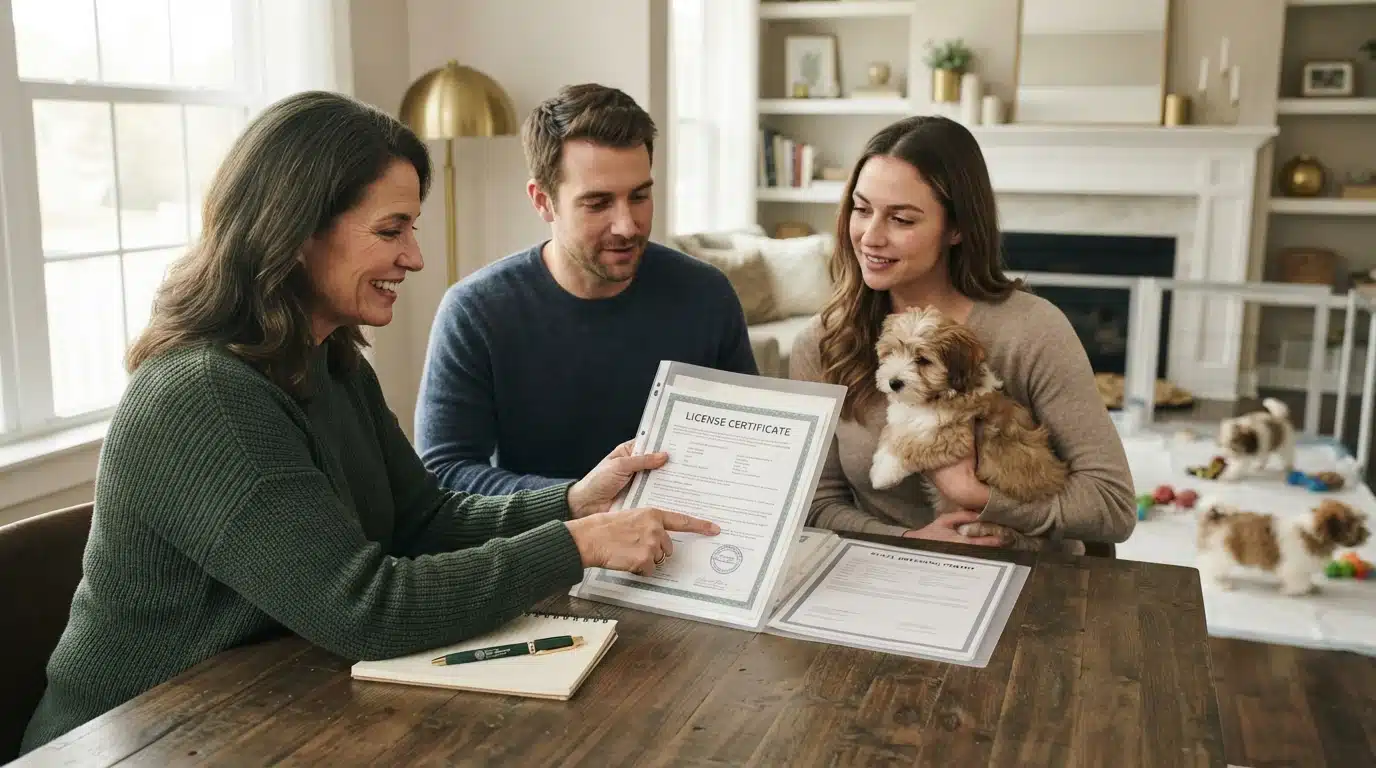
Quick Summary: A trustworthy Utah puppy breeder should provide fresh litter photos, verifiable parent health testing, veterinary records, a verifiable breeder license, and a written contract with clear deposit and refund terms before you pay. Walk away from reused photos, unusually low prices, “teacup” claims, pressure to use Zelle or gift cards, vague answers, refusal to meet the mother, or poor housing conditions, even if the seller offers a USDA license. Sage Puppies emphasizes this evidence-based screening process for its Havanese, Havapoo, and Cavapoo litters in South Jordan.
It’s 11 p.m. in Lehi, and a listing shows a tiny Havapoo for $1,200. The photos look like stock images. There’s no mention of the mother, no picture of the kennel door, and the seller wants a Zelle deposit before answering a single question about the parents. Those are classic bad breeder warning signs, and this guide walks through each one so you can spot them before money changes hands.
Utah puppy buyers face a real challenge: puppy mill warning signs hide behind cute photos and low prices, and spotting a bad breeder takes practice. Below you’ll find a screening checklist covering Utah breeder licensing, health records, contracts, and the questions every seller should answer willingly.
At Sage Puppies in South Jordan, we raise Havanese, Havapoo, and Cavapoo litters, and we built this checklist from the same standards we hold ourselves to. You deserve the same confidence no matter where you buy.
Red Flags in Utah Puppy Listings and Ads
Most bad breeder warning signs show up in the ad itself before you ever talk to anyone. Watch for these five red flags when you scroll Utah puppy listings:
- Stolen or reused photos. Reverse image search every puppy picture.
- Prices far below market. A $1,200 Havapoo signals a shortcut somewhere.
- Size gimmicks. “Teacup” and “micro” are marketing, not breed standards.
- Vague availability language. “Puppies ready now” with no litter details.
- No breeder identity. No name, location, or license mentioned anywhere.
Legitimate listings, like a typical Utah available puppies page, show real litters with dates, parents, and a person behind them. The sections below break down the first four warning signs in detail.
Photos and Videos That Look Reused
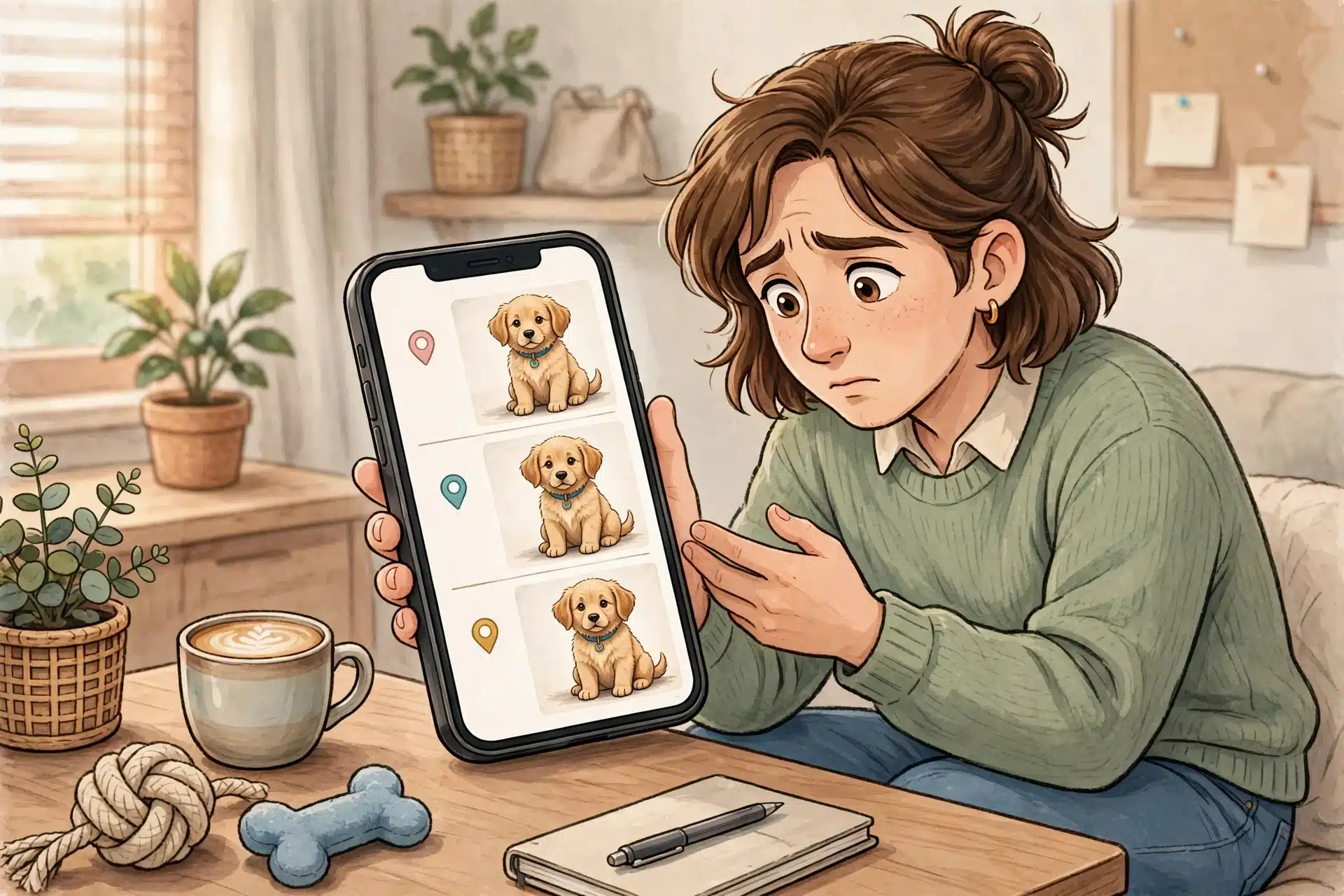
Run each listing photo through a reverse image search. If the same puppy appears on sites in three states, the seller is using stolen pictures. Stock photos, blurry shots, or images with a breeder’s watermark from another kennel are just as bad. Honest breeders share fresh photos of their actual litter, often with weekly updates.
Prices That Do Not Match the Market
Well-bred Havanese, Havapoo, and Cavapoo puppies cost real money because health testing, vet care, and socialization cost real money. A price far below the usual $3,500 to $4,500 range usually means skipped testing or a puppy mill source. Suspiciously high prices with no pedigree or health records to back them up are a red flag too.
Teacup, Micro, and Designer Size Claims
“Teacup” and “micro” are not real breed sizes; they describe the smallest, often weakest puppies in a litter. Breeders who market them may be breeding dogs that are too small, which raises the risk of health problems. A Havanese or Cavapoo bred to its standard is already a small dog, so extra tiny is a warning, not a bonus.
Vague Litter and Availability Language
A trustworthy ad names the parents, gives the litter’s birth date, and explains how puppies are raised. Watch for phrases like “several litters available,” “all colors ready,” or listings that never mention the mother. Constant availability across many breeds usually means a reseller or broker, not the breeder. Ask when the litter was born; a hesitant or shifting answer tells you what you need to know.
Red Flags in Emails, Calls, and Text Messages
Watch how a breeder communicates before you send money. Some of the clearest bad breeder warning signs show up in writing: pressure tactics, vague answers, and requests to leave the platform where you found the listing.
Deposit Pressure Before You Have Seen the Puppy
A legitimate breeder welcomes questions and lets you decide at your own pace. Scammers and sloppy backyard breeders do the opposite: “someone else is about to pay,” “the deposit is non-refundable,” or “only Zelle or gift cards accepted.” Those payment methods are hard to reverse, which is exactly why they ask. A deposit should come after you have seen photos, video, or the puppy in person, and after you understand the terms. Our deposit process at Sage Puppies starts with an application, never a countdown clock.
For a deeper look at safe payment steps, this guide to deposits and payment safety covers what to confirm first.
Questions About the Parents That Go Unanswered
Ask who the mother and father are, their ages, and what health testing they have had. Honest breeders answer in detail and share records. Watch for:
- “The mom isn’t here, but I can send more photos”
- Generic answers like “both parents are healthy”
- Deflection when you ask to meet the mother
- No veterinary contact information offered
Refusal to let you meet the mother or verify puppy health records is one of the oldest puppy mill warning signs. Paperwork exists to be shown, not promised.
Moving the Conversation Off the Listing
Marketplaces and classified sites offer some buyer protection, so scammers push you off them fast. They suggest WhatsApp, Snapchat, or a personal email “for faster updates.” Once you leave the platform, records vanish and refunds become nearly impossible. Stay where the conversation started until you have vetted the breeder, and treat any request to switch apps as a reason to slow down, not speed up.
Health Testing and Veterinary Record Red Flags
A breeder’s paperwork tells you more than their website ever will. Health testing claims, vet records, and written guarantees are all checkable, so treat any of the four problems below as a reason to walk away.
Testing Claims You Cannot Verify
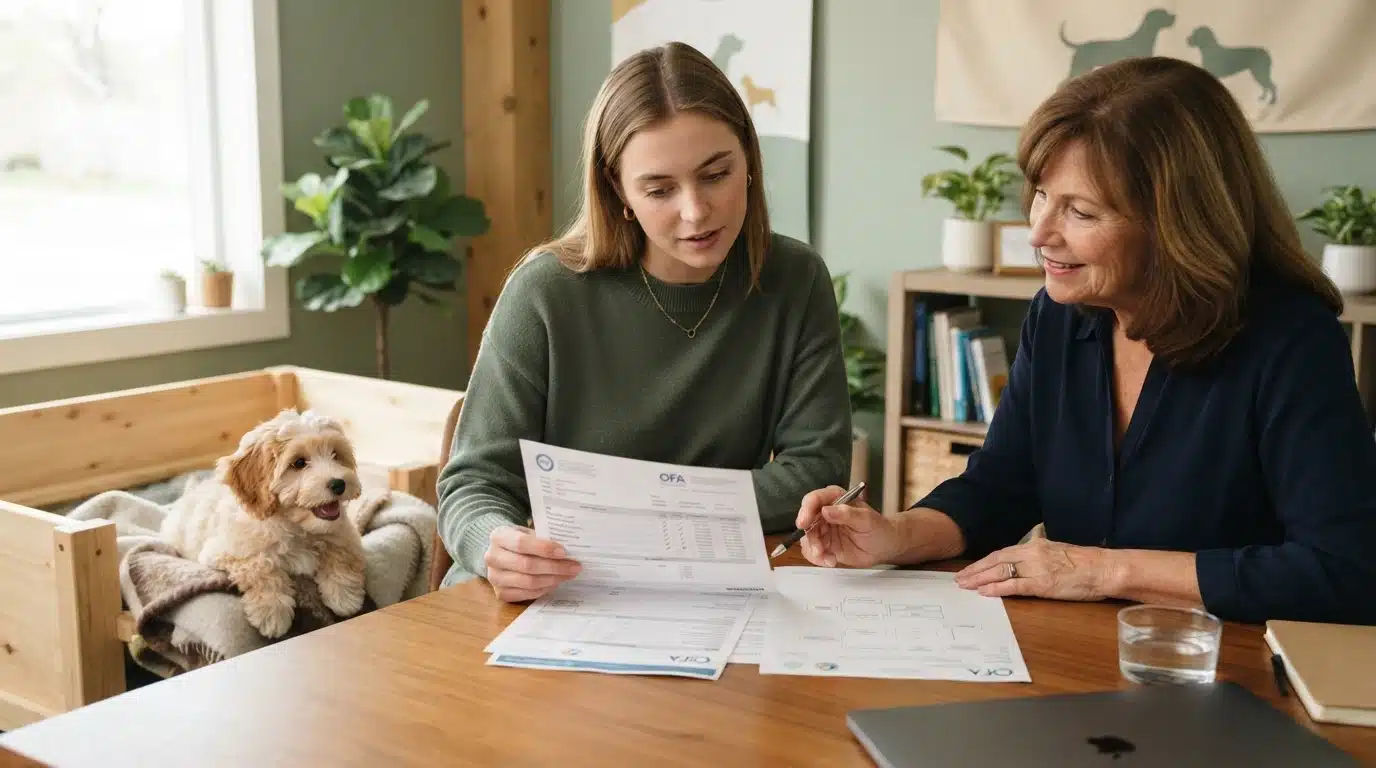
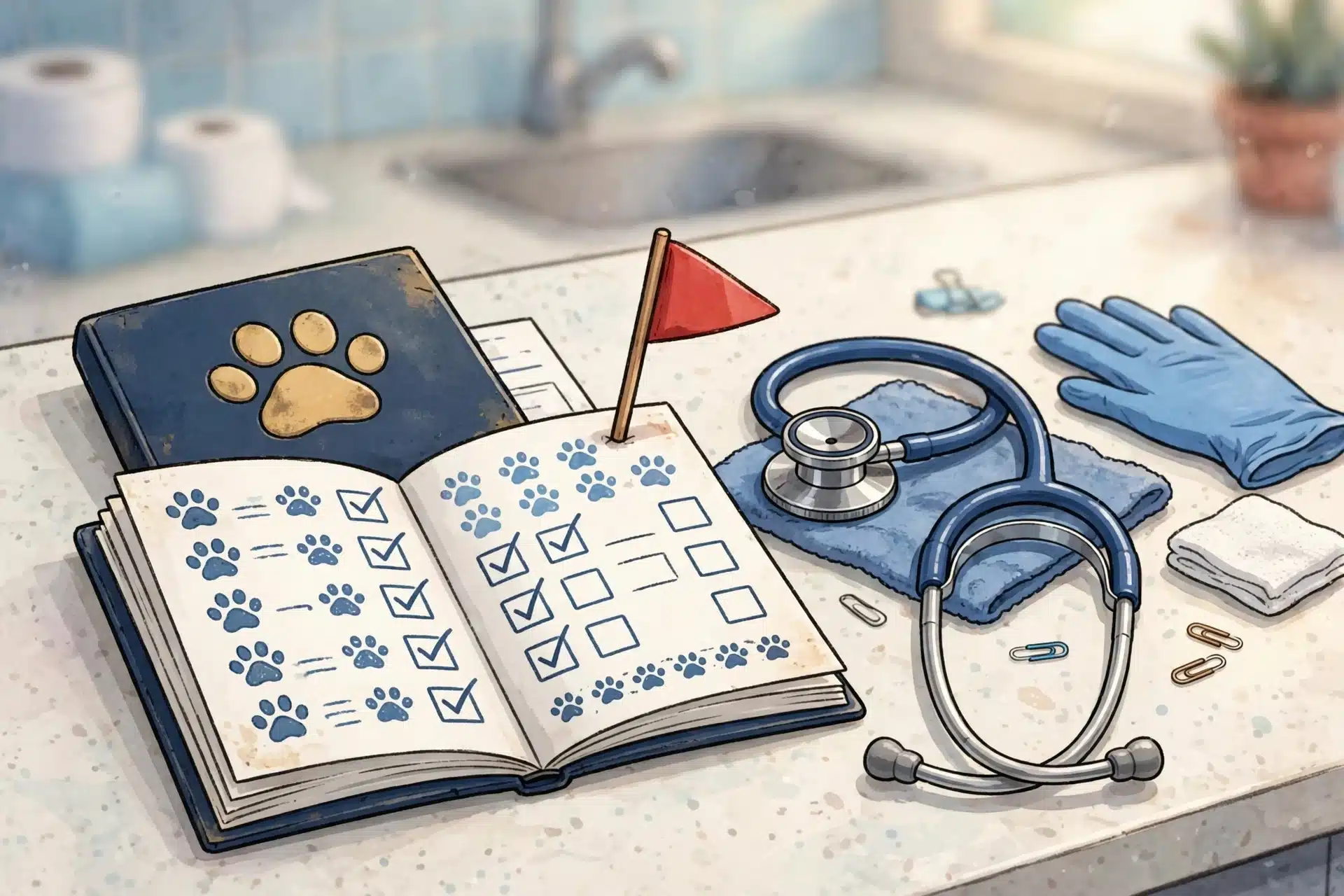
“We test all our parents” means nothing without proof. Ask for the specific test results by name: OFA or CERF eye exams, patella checks, and cardiac clearances for both the mother and sire. Legitimate breeders share the registration numbers so you can look them up yourself. If someone sends excuses instead of documents, that claim is decoration, not evidence. Havanese, Havapoo, and Cavapoo parents all need verifiable eye and patella results before breeding.
The Missing Veterinary Paperwork
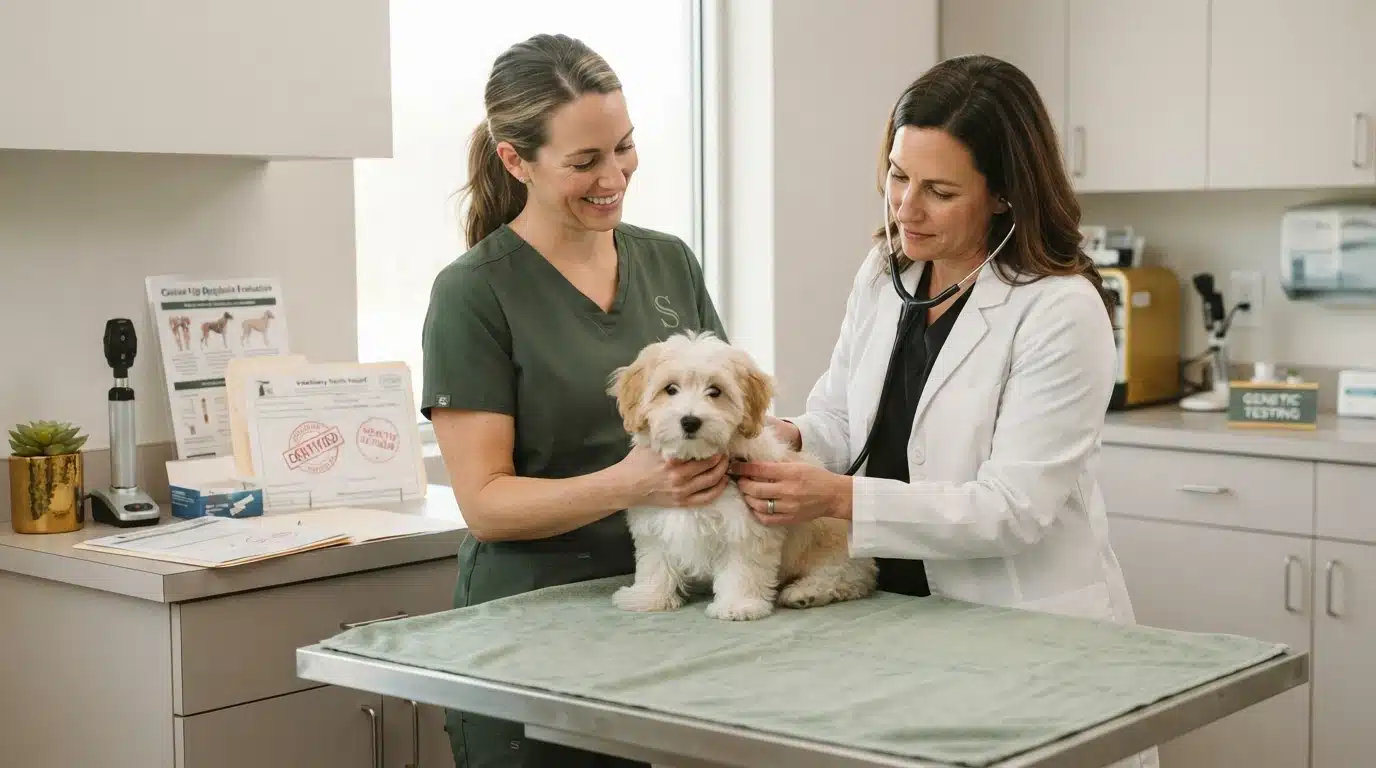
Every puppy should come with a health record from a licensed veterinarian: exam date, vaccinations given, and deworming dates. Ask for it before you pay anything. A seller who promises records “after the deposit” is asking you to fund a puppy nobody has examined. Verify puppy health records early, and check that a vet’s clinic name and phone number actually appear on the page rather than a signature scribbled alone.
Guarantees Written as Vague Promises
“Healthy puppy guaranteed” is not a guarantee. A real health guarantee names the conditions covered, the window to get your own vet exam, and what happens if a genetic problem appears. Vague contracts let the breeder deny every claim later. Read the exact puppy deposit and contract terms before money moves, and get the replacement or refund policy in writing.
No Genetic Records for a Crossed Breed
Crossed breeds need testing on both sides of the family tree. A Havapoo breeder should show Havanese parent clearances plus the poodle line’s results, not just one side. A seller who answers “hybrids are healthier” has skipped testing and hopes you will not ask twice.
Red Flags You Can Only See In Person or on Video
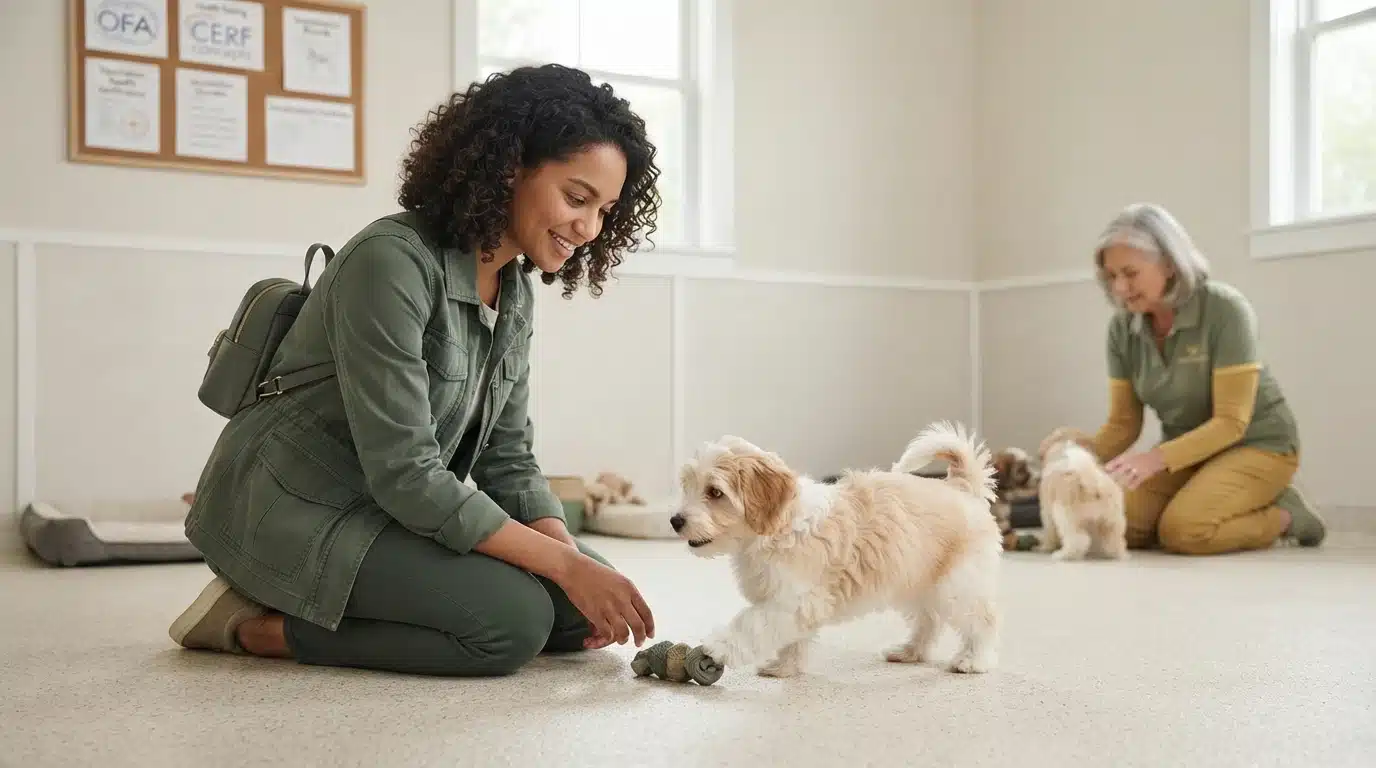
Photos and polished websites hide more than they show. A breeder can stage a listing, but they cannot stage a live walk-through or a real-time video call. When you visit a Utah breeder in person, or ask for an unedited video tour if you live out of state, watch the environment itself. Many puppy mill warning signs live in the space, not the paperwork. Humane World for Animals notes that sellers who refuse to show where puppies were raised or let you meet the mother are a common pattern among problem breeders, so treat any “we only meet halfway” answer as a serious one. Before you book the trip, our guide on how to visit a Utah breeder and inspect puppies safely covers the full walk-through.
Housing and Cleanliness
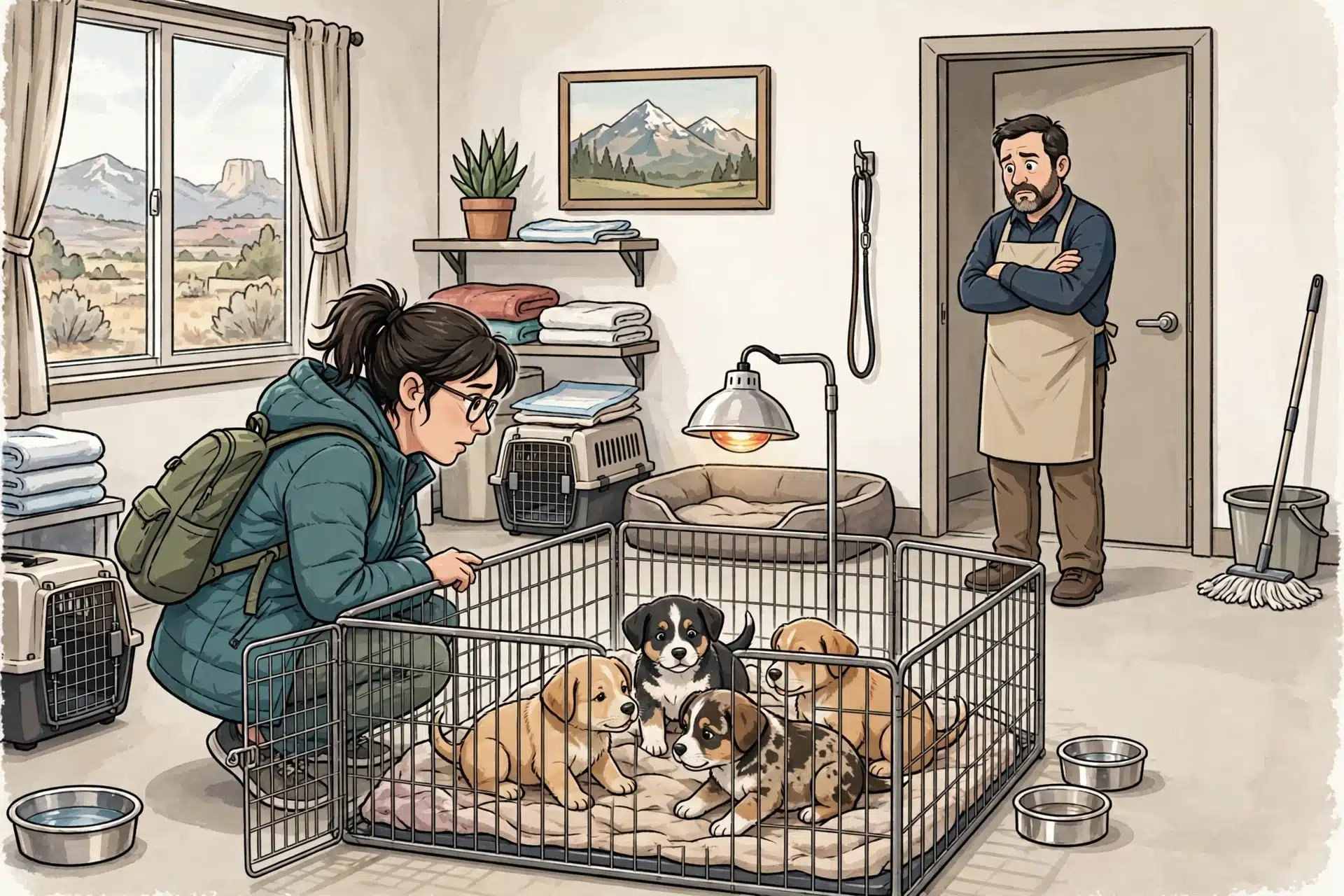
The whelping area tells you almost everything. Puppies should live indoors or in a heated, clean space, not in stacked wire cages, outdoor runs, or a garage. Look for dry bedding, fresh water, no strong urine odor, and adult dogs that seem comfortable around people. Matted coats, eye discharge, or overgrown nails on the adults signal ongoing neglect, not a bad week.
Puppies Always Available and Never Handled
A breeder with every breed and every age always in stock is running a volume operation. So are litters that cower, hide, or flinch when you reach out. Puppies handled daily during the socialization window between about three and twelve weeks stay curious and settle quickly. Timid, unhandled litters often grow into anxious adults, no matter how healthy they look.
The Mother and the Sire
Ask to see the mother with her litter. A nursing dam should look healthy, relaxed, and attentive, not thin, hairless from chewing, or kept apart from visitors. If the sire lives elsewhere, ask for his health testing and photos. A breeder who dodges either request is hiding something you would see in person.
Money, Contract, and Deposit Red Flags
The way a breeder handles money tells you almost everything. Watch the payment method, read the contract, and question any deposit with no conditions attached.
Payment Methods That Leave You No Recourse
A seller who demands wire transfer, gift cards, Zelle, or prepaid debit cards is a top scam signal, because those payments give you no way to get money back. The Better Business Bureau urges buyers to inspect an animal in person before paying and to use a credit card when they don’t. Some scammers even claim your card “failed” and push you toward a cash app. If the breeder resists a traceable method, walk away. Trusted programs, including our deposit and refund terms, put every payment in writing.
A Contract That Skips the Basics
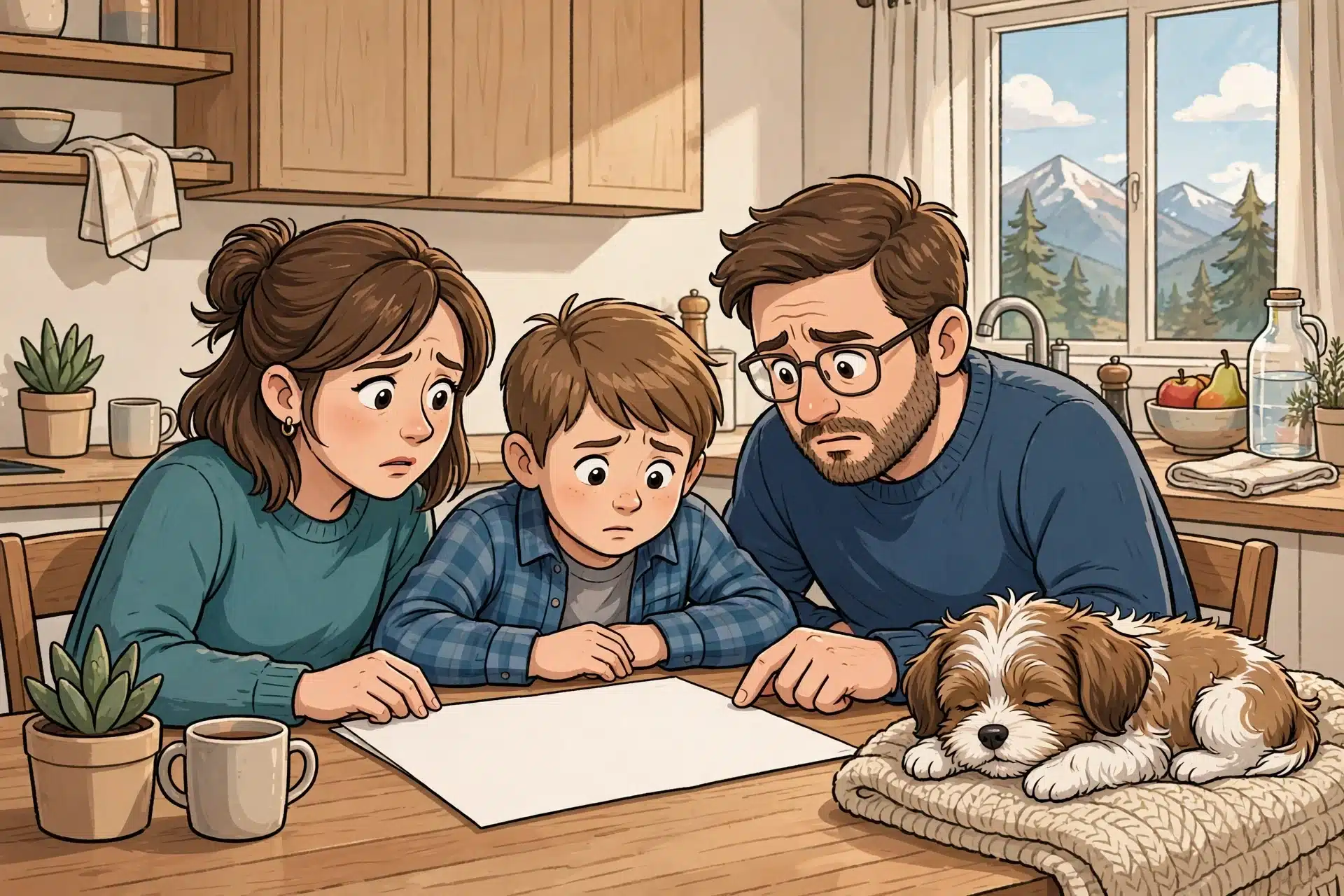
A solid contract is boring and specific. It should name the puppy, list parent health testing, state the price, and explain what happens if the sale falls through. Red flags include verbal-only promises, vague “health guarantee” language with no real terms, missing signatures, and clauses that forbid you from ever contacting the breeder again. The AKC advises getting terms in writing and verifying the seller before you pay anything. No written contract at all means no accountability once your money is gone.
Deposits That Are Non-Refundable with No Conditions
Deposits can be fair, but only with clear rules. Ask what happens if the puppy is unhealthy, the litter runs small, or delivery fails. A breeder who says “all sales final” before you have even seen the puppy or met the mother is protecting themselves, not you. Legitimate programs spell out refund and transfer conditions up front, and reputable Utah breeders will put those terms in writing before any money changes hands. If the answers come slowly or vaguely, that hesitation is your answer.
Backyard Breeder or Puppy Mill: How to Tell in Utah
A backyard breeder and a puppy mill are different problems, so watch for paired traits. A backyard breeder keeps a few dogs at home, skips health testing, and sells casually with no contract. A puppy mill breeds many dogs in volume, keeps them in cages, and sells through brokers or online ads. Neither offers the documented care a good Utah program does.
What Each Term Actually Means
A backyard breeder is usually a hobbyist with good intentions and little knowledge. Litters happen by accident or for extra income, and parent dogs may never see a vet beyond rabies shots. A puppy mill is a commercial operation. Dogs there are production units, bred every cycle in poor conditions, and their puppies often arrive with behavior or health issues that show up months later.
The Utah Licensing and Record Check
Start with paperwork. Salt Lake City and other Utah cities require a commercial breeder license for anyone keeping intact dogs and producing litters, so ask for the license number and verify it with the city or county office. Utah law also regulates commercial breeders through state animal welfare rules, so a legitimate operation can show records without hesitation. Then check health documents: vaccination dates, deworming schedule, and parent testing for hips, eyes, and heart. A breeder who shrugs at these requests is telling you something.
Federal Licensing Is a Floor, Not a Badge
A USDA license is not a mark of quality. It only means the facility met minimum federal standards for commercial breeders, and some large-scale operations hold one. Many excellent small programs, including Sage Puppies, are not USDA licensed because they raise small litters at home. Judge the records and the visit, not the certificate on the wall.
What to Do When You Spot a Red Flag
Pause, Document, and Ask Once More
Stop before you send a deposit. Screenshot the listing, save the emails and texts, and write down dates, prices, and exact answers the breeder gave. Then ask your question one more time, clearly. Honest breeders welcome a second ask; evasive sellers change their story or pressure you to decide fast. If the answer shifts, or you get a deadline instead of proof, treat that as your answer. A walk-away here costs you nothing. A rushed deposit on a $1,200 puppy can cost you vet bills and heartbreak later, so let the evidence, not the excitement, make the call.
Reporting and Protecting Other Buyers
If you suspect neglect or fraud, report it. You can file a complaint with the USDA about a licensed breeder through the agency’s Animal Welfare Act form, and you can report a suspected puppy mill to Humane World for Animals, which also takes complaints from buyers whose puppies got sick. For local cruelty concerns, contact your city or county animal control. Leave honest reviews where the ad appeared, too. Your report may be the warning the next family needed.

Spotting red flags is half the job. The other half is finding a breeder who passes every check. Sage Puppies raises Havanese, Havapoo, and Cavapoo puppies in South Jordan with documented health testing and an owner-managed matching process. Review available puppies, ask Cassie your questions, and move forward only when the evidence feels right.
Frequently Asked Questions
Q1: What are the red flags when buying a puppy from a breeder in Utah?
Watch for prices far below the $3,500 to $4,500 range, stolen or reused photos, missing parent health testing, unverifiable breeder licenses, and pressure to pay by Zelle or gift cards before you have seen the puppy or its records.
Q2: What red flags should I watch for in a puppy listing or breeder ad?
Look for stock photos, “teacup” size claims, vague litter details, no breeder name or location, and constant availability across many breeds. Honest ads name the mother, give a birth date, and show fresh photos of a real litter.
Q3: How do I know if a Utah breeder is a backyard breeder or puppy mill?
Backyard breeders skip health testing and contracts; puppy mills breed in volume and sell through brokers. Ask for the city breeder license number, parent testing records, and a visit to meet the mother with her litter.
Q4: Should a breeder let me visit before I pay a deposit?
Yes. Legitimate breeders welcome visits or live video tours and let you meet the mother. Refusal, or a “we only meet halfway” offer, is a serious warning sign.
Q5: What paperwork should a puppy come with?
A vet exam record with clinic contact details, vaccination and deworming dates, parent health test results with registration numbers, and a written contract with clear deposit and refund terms.
Q6: Is a USDA license a sign of a good breeder?
No. It only means minimum federal standards were met. Judge health records, housing, and the visit instead of the certificate.
Conclusion
Screening a breeder comes down to evidence. Check the listing for reused photos and price gimmicks, ask for verifiable parent health testing, and put the puppy deposit and contract terms in writing before any money moves. Verify the Utah breeder license, meet the mother, and treat every vague answer as a warning sign rather than a delay.
A trustworthy seller welcomes these questions. One who dodges them has already told you what you need to know. Whether you are comparing Havanese, Havapoo, and Cavapoo programs across Utah or beyond, the same checklist applies, and the breeder who passes every check with documented records is the one worth bringing home.