Quick Summary: Prepare your Havanese puppy for calmer vet and grooming visits by practicing the carrier, car, scale, paws, ears, mouth, and coat handling with treats for the week beforehand. Book a full wellness exam rather than a quick vaccine stop, bring vaccination and deworming records with your questions, and ask the vet to check small-breed concerns such as loose kneecaps, eye health, and dental buildup. Schedule a separate 30- to 60-minute puppy introduction groom around 12 to 16 weeks, then maintain daily brushing, weekly ear checks, and regular nail care; Sage Puppies provides breeder records and coat-care guidance for new families in South Jordan, Utah.
A Havanese puppy who has never been weighed or brushed on a table will often spend the first ten minutes of that appointment crying on the scale. Weeks later, the same puppy may refuse to let a groomer touch its ears. Both outcomes are usually decided in the seven days before the visit, not during it. That is the problem this guide solves: most owners book the Havanese puppy vet appointment and the first grooming session but skip the short, simple preparation that makes both go well. Below you will find a seven-step plan covering the documents to bring, carrier and scale practice, coat and ear handling at home, and how to pick a groomer who suits a silky Havanese coat. We raise Havanese, Havapoo and Cavapoo puppies at Sage Puppies in South Jordan, Utah, and the steps here reflect what our puppy families ask about most.
Step 1: Book the Right Appointment and Ask the Right Questions
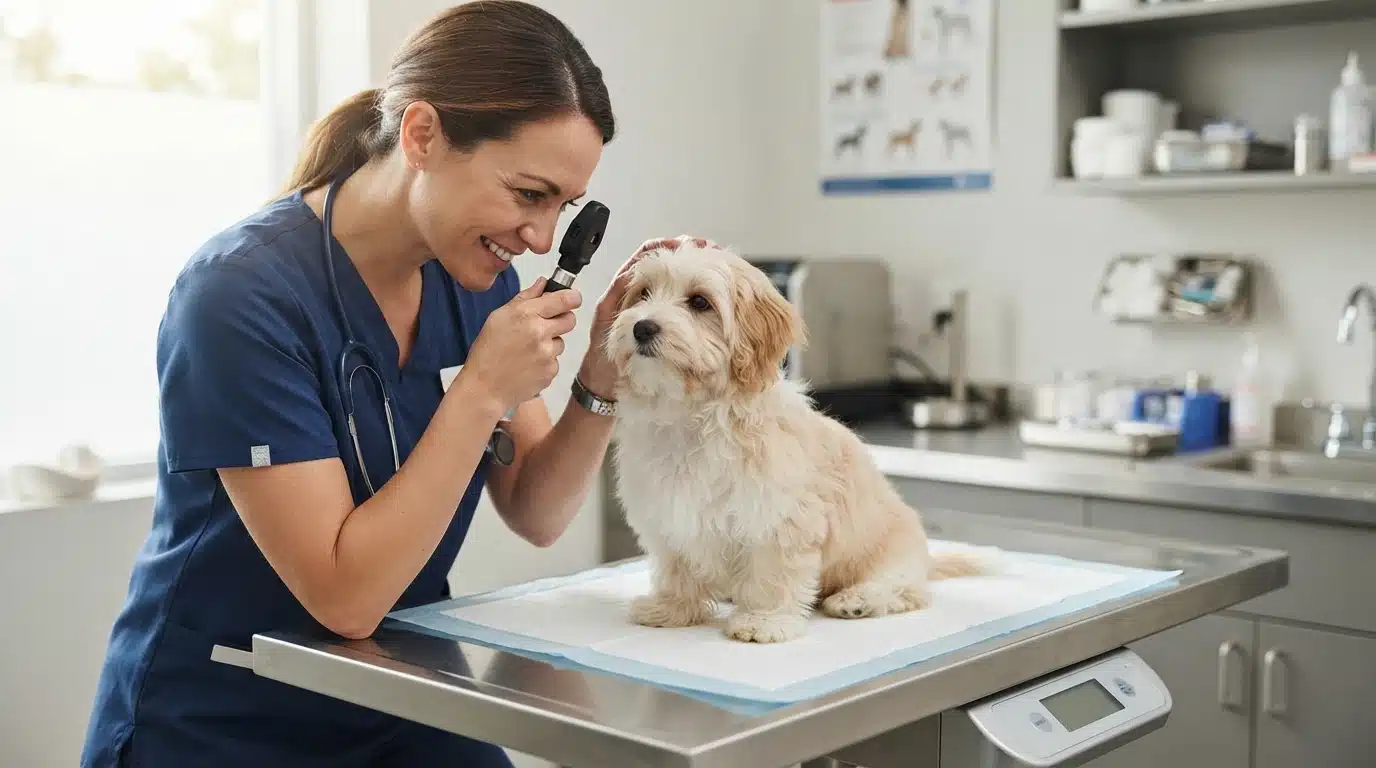
Your Havanese puppy’s first vet visit should be a full wellness exam, not a quick vaccine stop. Book a longer “new puppy” appointment and tell the clinic it’s a first visit. A proper exam covers weight, heart and lungs, eyes, ears, teeth, hips, knees, skin and a stool check for parasites. The AVMA recommends regular wellness exams because early detection matters most in young dogs. For small breeds like the Havanese, ask specifically about knees (patellar luxation is common in toy breeds) and eyes.
Schedule a Full Wellness Exam, Not Just a Vaccine Stop
When you call, say “new puppy wellness exam” rather than “shot visit.” That wording gets you the longer slot and the head-to-tail check your puppy needs. The AKC’s first vet visit checklist includes weight, temperature, heart and lungs, eyes, ears, mouth and a parasite test, and that takes time. If your puppy came from Sage Puppies, ask us what our vet found and we’ll walk you through the paperwork before you go.
Confirm Timing Against Your Puppy’s Vaccination and Deworming Records
Check your puppy’s records before you book. Most puppies start their vet visits at 6 to 8 weeks old, and boosters follow every few weeks until about 16 weeks. Bring the vaccination and deworming sheet from the breeder so your vet can plan the next dose correctly. Gaps or repeat doses cause real problems, so ask the clinic to confirm the schedule against your records over the phone. If your records are unclear, your first steps with a new Havanese puppy should include getting a clean copy from the source.
Call Ahead to Ask About Clinic Setup and Fearful Puppies
One phone call tells you a lot. Ask whether cats and dogs share a waiting area, if they offer separate rooms or cat-free times, and how they handle nervous puppies. Some clinics use fear free handling, slow introductions and treats on the table. For a small, sensitive breed like the Havanese, that gentle first visit sets the tone for every visit after it.
Step 2: Assemble the Records and Questions You Want Answered
A short stack of paperwork and a written list of questions turn a rushed appointment into a productive one. So what should you bring to your Havanese puppy’s first vet appointment?
- Your puppy’s vaccination and deworming records
- The health certificate and pedigree from the breeder
- Any written health screening results, such as parent eye or knee checks
- A stool sample collected that morning
- The food you are feeding, or a photo of the label
- Notes on appetite, sleep, and potty habits
- Your written list of questions
- A treat pouch for calm, happy handling
Build a Single Document Packet
Keep everything in one folder, real or digital. If Sage Puppies is your breeder, your welcome materials already list the shots and dewormings given before pickup, and your vet will want the exact dates and product names rather than “given a shot.” Add dates for anything you have done at home. Ask the clinic whether they accept records by email, then send the packet ahead so the staff can enter it before you arrive.

Turn Worries Into Specific Questions
Vague worries waste appointment time. Specific questions get answers. Instead of “is she healthy?” ask things you can act on:
- Is her weight and body condition right for a small breed puppy at this age?
- When should her next vaccine and deworming fall?
- What did the stool sample show?
- Are her knees moving normally, since small breeds can have loose kneecaps?
- When should we schedule an eye check?
Write your top three questions on paper. Hand the list to the vet at the start of the visit so nothing gets forgotten.
Add Practical Questions About Daily Life at Home
The first visit is also your chance to ask about everyday care. Cover food amounts and a weight target, when to switch from puppy food, safe chews for a teething mouth, bathing and brushing before the coat tangles, and a spay or neuter timeline for this breed. Ask which symptoms mean “call today” versus “come in now.” Jot the answers in the same folder, and your records grow with your puppy.
Step 3: Train the Carrier, the Car and the Scale Before Appointment Day
Your Havanese puppy vet visit will go better if the trip itself feels boring. Puppies that only ride in a carrier once, on the way to a strange clinic, learn that the carrier predicts stress. Trainers call this pairing, and low-stress veterinary programs recommend practicing these moments days ahead so the visit itself stays calm.
Build a Positive Carrier Habit in Three or Four Short Sessions
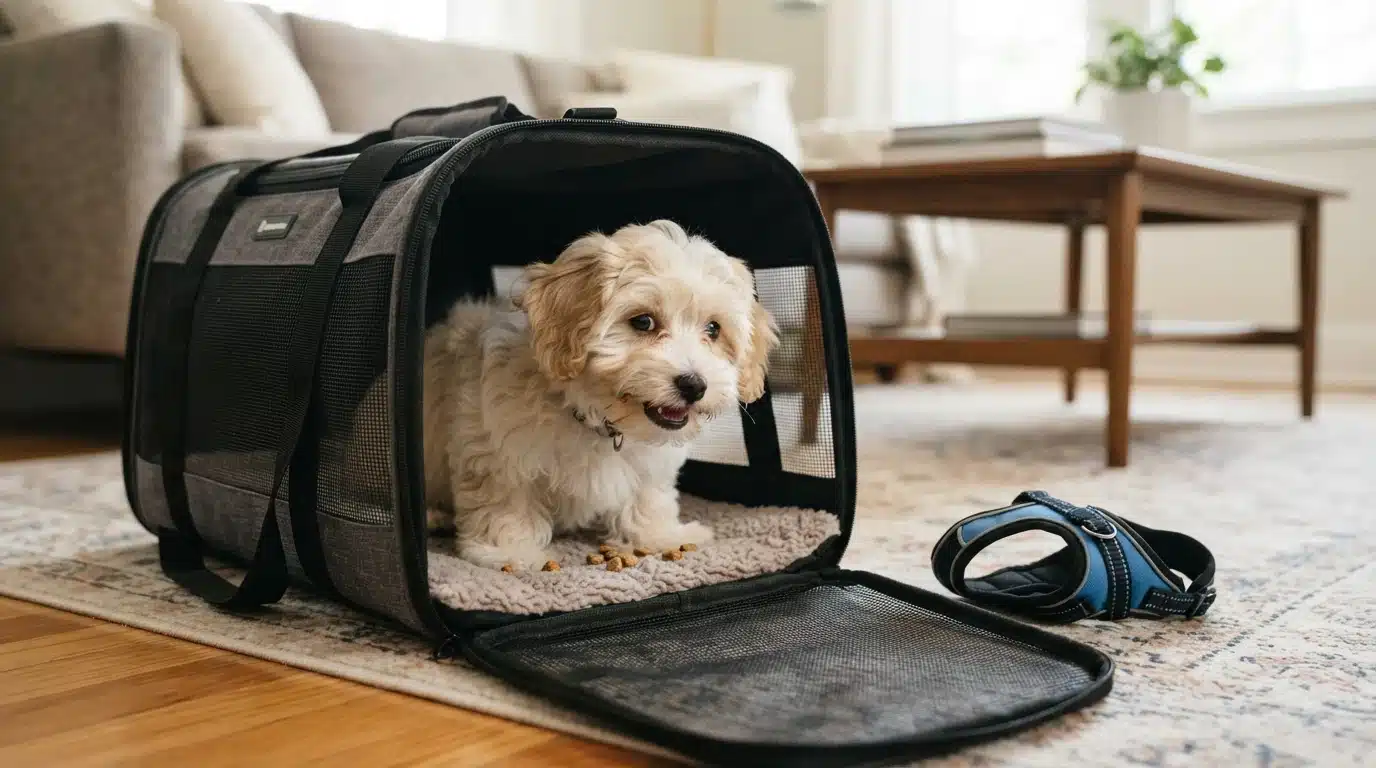
How do I get my puppy comfortable in a carrier before the vet visit? Use short, reward-heavy sessions spread over a week:
- Set the open carrier in your living room with a blanket and a few treats inside. Let your puppy wander in and out on her own.
- Feed one meal or a stuffed chew toy inside, door open, so the carrier becomes a normal place to hang out.
- Close the door for 30 seconds while you sit beside it, then release and reward.
- Finally, carry the closed carrier around the house for two minutes, then open it and let her exit calmly.
Stop each session before she fusses. Positive beats forced, every time.
Pair Car Rides With Pleasant Destinations
Once the carrier feels safe, add the car. Start with a three-minute loop around the block, then a trip to a parking lot where she can sniff and get a treat. Avoid a pattern where the car always ends at the clinic; the AAHA notes that pairing handling with treats works far better than one surprise visit. Keep the ride cool, secure the carrier with a seatbelt or place it on the floor behind a seat, and end on a good note.
Rehearse Weighing, Table Handling and Nail Touching at Home
The clinic floor scale, the metal table and a stranger’s hands are all new sensations. Rehearse them cheaply at home. Ask your puppy to stand still on a bathroom scale for a few seconds, then reward. Set her on a sturdy table with a nonslip mat and gently touch her paws, ears, belly and muzzle, feeding treats as you go. Tapping each nail with your fingers prepares her for the trim. Vets will check her knees, eyes, mouth and heart, so calm handling earns a more careful exam. Two minutes a day beats one long session, and it pays off at the groomer too.
Step 4: Manage the Exam Room Visit Itself
The exam room is where your preparation pays off. A Havanese puppy vet visit goes smoothly when you arrive calm, hold the appointment in your hands, and know what the veterinarian will do next.
Settle In Before the Examination Starts
If your puppy is scared at the vet, you have five low stress options. First, ask to wait in the car or a quiet side area until the room is free. Second, keep the carrier elevated on a bench rather than the floor. Third, feed tiny treats steadily so good things keep happening. Fourth, ask the staff to greet your puppy with a relaxed posture and no reaching hands. Fifth, let your puppy sniff the room for a minute before anyone lifts her. Calm starts before the stethoscope comes out, and you control most of it.
Follow the Examination Step by Step
A first wellness exam usually follows a numbered sequence:
- Weight and body condition check on the scale.
- Temperature taken rectally.
- Eyes, ears and nose inspected.
- Teeth and gums checked for teething progress.
- Heart and lungs listened to with a stethoscope.
- Belly palpated for discomfort or abnormalities.
- Skin and coat examined, including a flea check.
- Joints and kneecaps assessed for early signs of patellar luxation, a loose kneecap that small breeds can inherit.
Watch how your puppy reacts to each step. The exam also doubles as handling practice, so ask the team to go slow and reward between steps.
Handle Vaccines, Deworming and Medication Without a Struggle
Injections go easier when you hold your puppy facing you, scratch her chest, and let a helper give the shot from behind. Feed a treat the moment it is done. Deworming is usually a liquid given by syringe into the cheek, so practice at home first. Leave with the vaccine and deworming records in hand, and ask when the next booster is due. Families working through the Sage Puppies preparation guide often bring their paperwork folder so nothing gets lost between visits.
Step 5: Prepare for the First Grooming Visit Separately From the Vet Visit
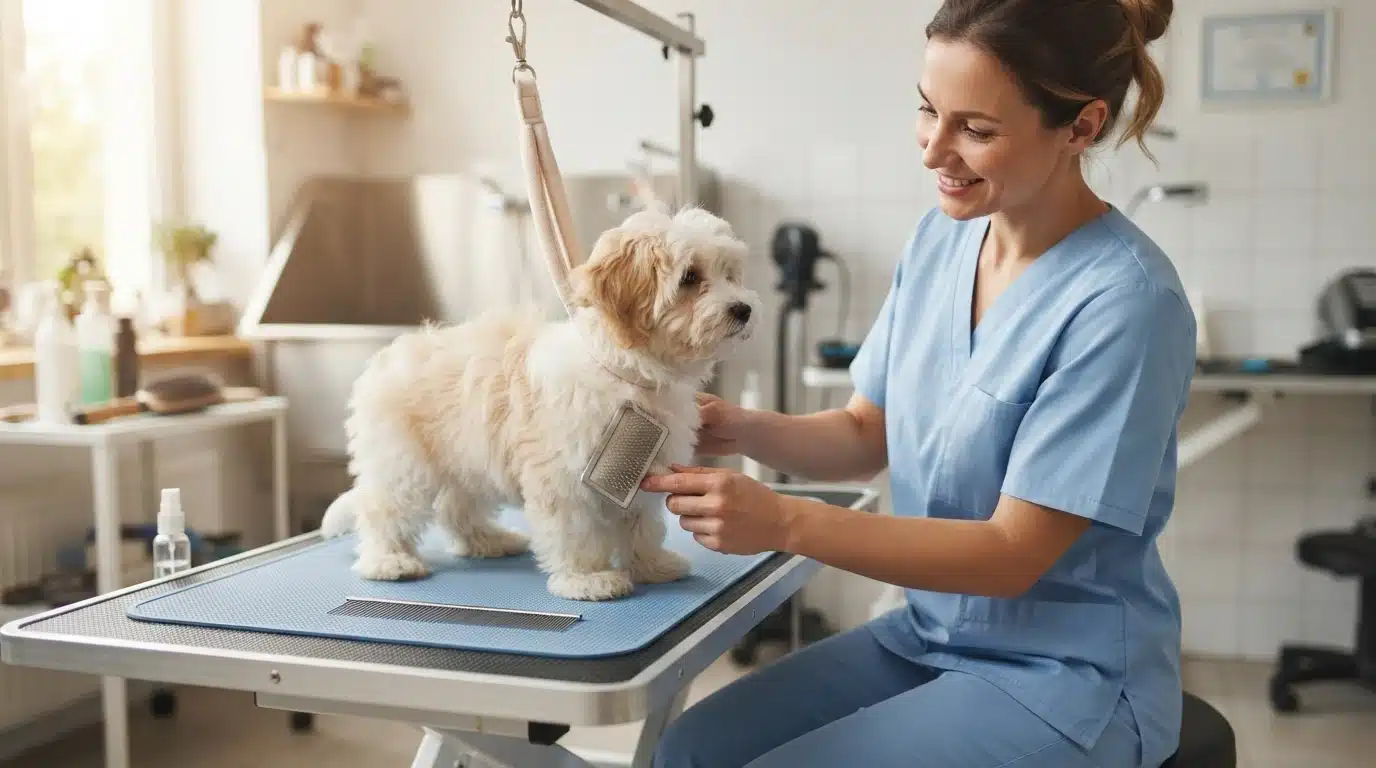
The first grooming visit for a Havanese puppy usually lands between 12 and 16 weeks, once boosters are underway or complete, according to PetMD’s puppy grooming guide. Treat it as its own appointment, not an add-on to the vet trip. A typical first session is short and gentle:
- A bath and blow-dry
- A nail trim and ear check
- A light face, feet and sanitary tidy-up
- Brushing through the puppy coat, not a full clip
Know What a Young Havanese Puppy’s First Groom Actually Includes
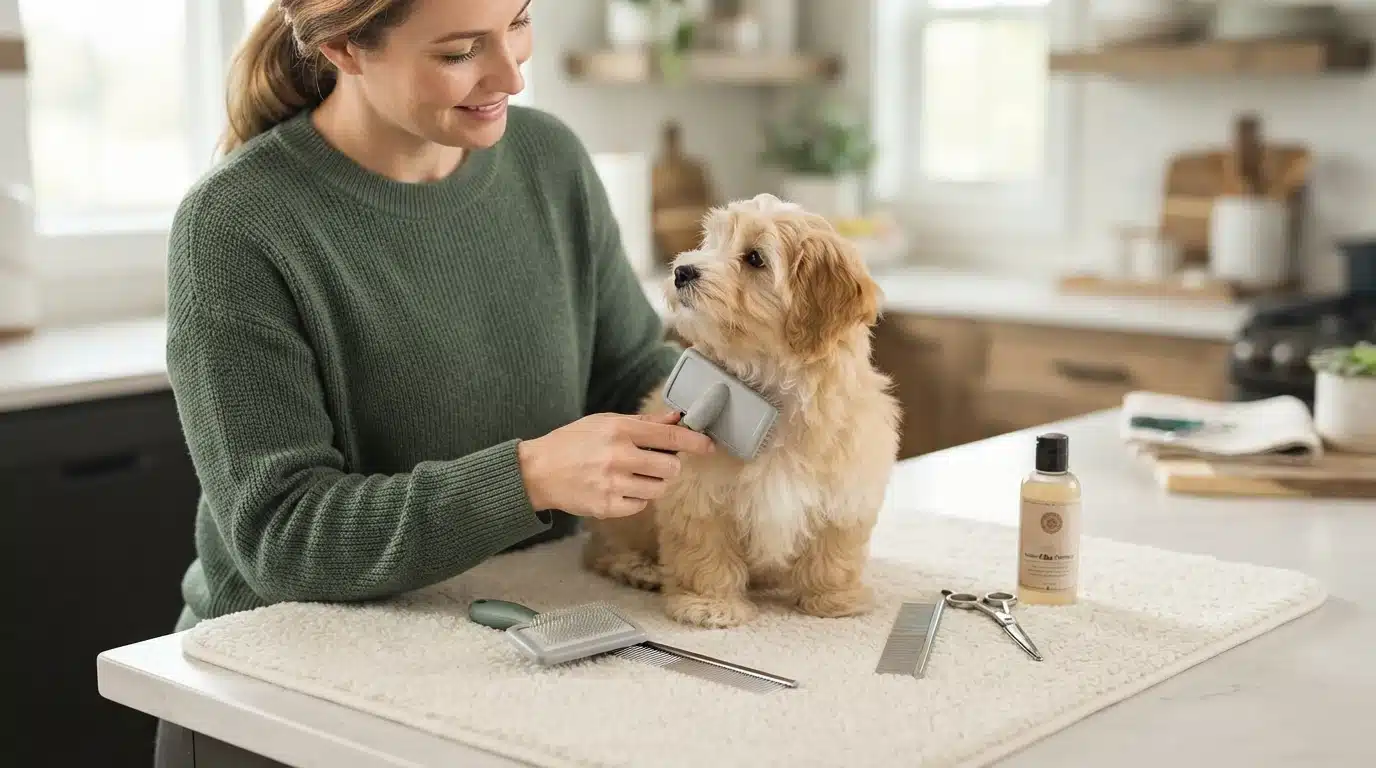
Ask the salon for a “puppy intro” rather than a full groom. Most first visits run 30 to 60 minutes and focus on handling, not styling. The groomer gets your puppy used to the table, the dryer’s noise and being touched on the paws, ears and face. Tell them up front that this is a first session, and book extra time if you can. A rushed appointment teaches a puppy that grooming means stress. If your breeder sent home notes on the coat, share them; our coat care guide covers the brushing routine to keep up at home between grooms.
Choose a Groomer Who Works With Young and Anxious Puppies
Not every salon takes young puppies, so ask three questions before you book. Do you accept puppies before 16 weeks? Do you offer short intro appointments? How do you handle a scared puppy? Groomers trained in fear free, low-stress handling will pause, slow down and end early rather than push through. Ask your vet’s team for a referral, or check reviews from owners of small, coated breeds. One groomer who is patient now can shape how your Havanese feels about grooming for life.
Practise Coat Handling Before Anyone Reaches for Clippers
Spend five minutes a day handling your puppy the way a groomer will. Touch the paws, lift the ears, hold the chin still and run a brush down the back. Reward calm behavior with a small treat each time. Then switch on a hair dryer across the room so the sound stays ordinary. Puppies who learn that hands and brushes mean good things walk into the salon relaxed instead of braced.
Step 6: Turn the First Visits Into a Routine for the Year Ahead
Schedule the Follow-Ups Before You Leave the Clinic
Book the next visit while you are still at the front desk. Ask which booster your puppy needs and when, and put it on your calendar before you drive home. Clinics fill up fast, so waiting until the reminder postcard arrives often costs you a week or two. Ask about a six-month wellness check too, since small breeds benefit from a yearly weight and knee check. Your breeder can confirm what shots were already given, so the timeline stays clean.
Keep One Health Record for the Whole Dog
Choose a single place for every vaccine, deworming and exam record. A folder at home plus photos on your phone covers most situations. Breeders hand off paperwork with each puppy, so tuck those originals into the same folder and add clinic printouts as they come. Ask your vet to confirm the puppy vaccination and deworming records match the dates the clinic has on file. Groomers may ask for rabies proof later, so having it handy saves a phone call.
Set a Grooming and Home Care Rhythm That Matches the Coat
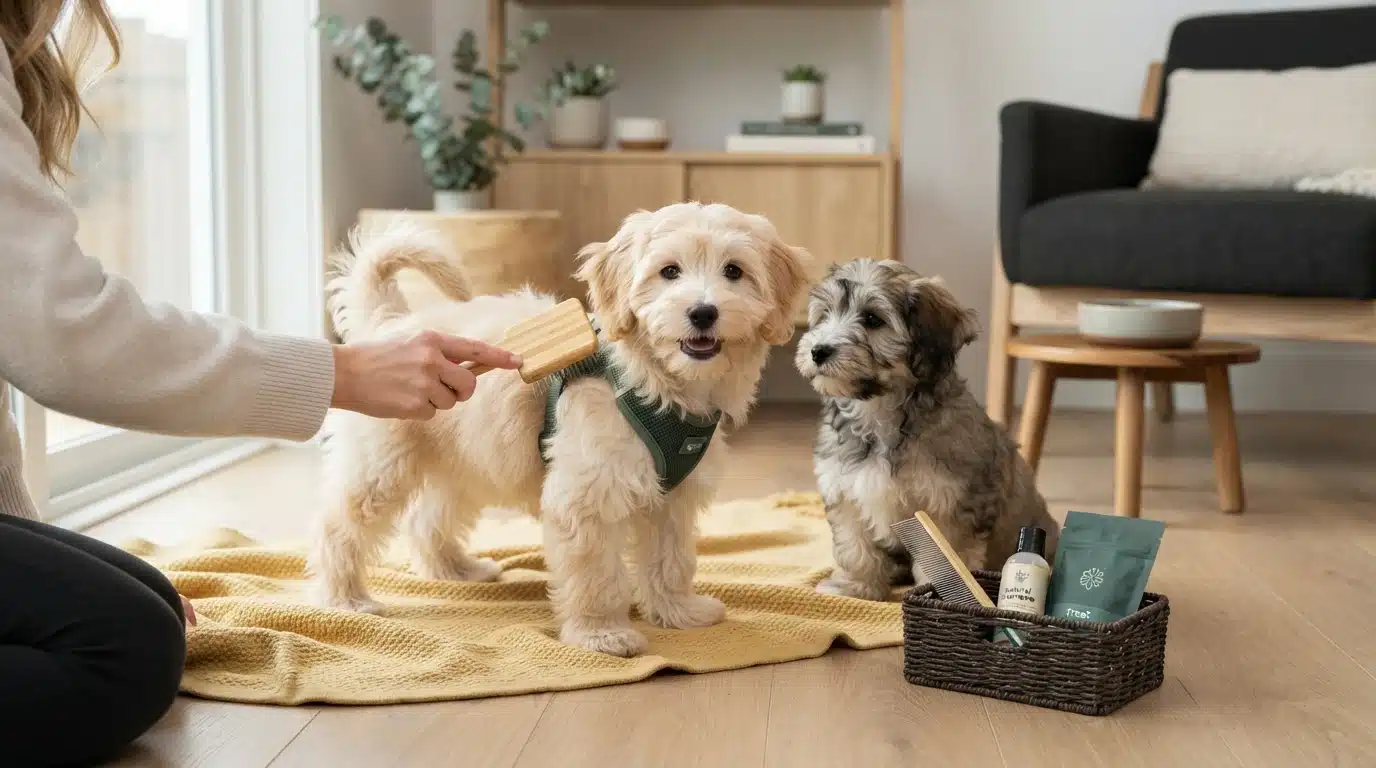
A silky coat grows fast and mats without daily work. Brush a few minutes every evening, check the eyes for dampness, and wipe any tear staining with a soft cloth. Trim nails every few weeks and book the full groom every six to eight weeks once your puppy settles in. Keep the ear routine simple: check weekly, clean only when needed, and ask your vet if there is odor or redness.
Consistency matters more than perfection. Ten short minutes a day beats one long session that leaves both of you frustrated.
An evening brush is also a quiet chance to run your hands over legs and teeth, so small changes stand out early. Havanese dental care fits here too, since the breed tends to build tartar fast. Ask your vet when brushing can start, and keep it gentle.

Your Havanese deserves calm visits, not stressful ones. Start the desensitization steps this week, and your puppy will walk into that first appointment ready. Want more help raising a well-prepared pup? Visit Sage Puppies for guides on training, grooming, and settling your new family member in happily.
Frequently Asked Questions
Q1: How do I prepare a Havanese puppy for its first vet visit?
Start about a week ahead: book a full wellness exam, gather vaccination and deworming records, a stool sample and your food label, then run short practice sessions with the carrier, car and a bathroom scale. Finish with daily paw, ear and mouth handling so the exam feels familiar.
Q2: When should a Havanese puppy have its first grooming appointment?
Most groomers take puppies between 12 and 16 weeks, once boosters are underway or complete. Ask for a short “puppy intro” of 30 to 60 minutes rather than a full clip.
Q3: What should I bring to the first vet appointment?
Bring the vaccination and deworming sheet, health certificate, pedigree, any parent health screening results, a fresh stool sample, your food label or photo, notes on appetite and potty habits, treats and a written question list.
Q4: How do I stop my puppy from being scared at the vet?
Practice carrier and car trips with treats days ahead, wait in the car or a quiet spot at the clinic, keep the carrier elevated, and ask staff for calm, slow greetings. Feed small treats throughout.
Q5: How often does a Havanese coat need grooming?
Brush a few minutes daily to prevent mats, trim nails every few weeks, and book a full groom every six to eight weeks once your puppy is settled.
Q6: Should I mention breed-specific health issues at the first visit?
Yes. Ask the vet to check kneecaps for patellar luxation, look at the eyes, and discuss dental care, since Havanese tend to build tartar quickly.
Conclusion
Getting your Havanese ready for a first vet and grooming visit comes down to a few simple habits. Book a full wellness exam, bring one folder of vaccination and deworming records, and practice the carrier, car and scale in the week before you go. Then ask for a short puppy intro groom between 12 and 16 weeks, and keep up daily brushing, ear checks and dental care at home. Small, calm steps now shape how your dog feels about handling for life. If you are still choosing your puppy, see which Havanese and Havanese mix puppies are available and start with a breeder who sends home clean records.