Quick Summary: A Cavapoo usually fits a busy household better, needing about 30 to 45 minutes of daily activity and offering easier reward-based training than a Cockapoo. Cockapoos suit active families and typically require 45 to 60 minutes, stronger structure, and short game-based training sessions. Both need brushing three to four times weekly, professional grooming every 4 to 6 weeks, midday care for young puppies, and verified health testing, so Sage Puppies’ focus on parent testing and records helps buyers make a responsible choice.
If your week runs from a 7 a.m. alarm to a 7 p.m. return home, the cavapoo vs cockapoo question has a fairly honest answer: a Cavapoo usually fits a busy household better, because the Cavalier half leans toward companion temperament with a quicker off-switch, while the Cocker Spaniel hunting dog heritage often brings longer exercise and mental-work needs. Still, the paperwork matters less than how well your real hours match the puppy’s needs.
First-time owners and dual-income families weigh two Poodle mixes that look nearly identical in photos yet differ in exercise, training, barking, and time alone, all while sorting through breeder listings and health-testing claims. This comparison judges both against what a working household actually manages: daily exercise, training load, structure when nobody is home, grooming, vet upkeep, and health screening, ending with a clear pick for each household type.
Cavapoo vs Cockapoo: Side-by-Side Care and Training Snapshot
| Cavapoo | Cockapoo | |
|---|---|---|
| Energy and exercise needs | Moderate; satisfied by daily walks plus short play and light mental work | Moderate to high; wants longer outings, fetch and scent-style mental work daily |
| Training responsiveness | Often people-focused and eager to please; good candidate for reward-based first-time training | Highly social but easily distracted; reward-based work needs short, frequent sessions |
| Time alone and separation distress | Can become distressed without company; benefits from a predictable daily structure | Sensitive to schedule disruption; distress risk rises with unpredictable alone time |
| Grooming and weekly upkeep | Regular brushing plus professional grooming roughly every 4 to 6 weeks | More frequent brushing and trimming; professional grooming roughly every 4 to 8 weeks |
| Typical adult size range | Roughly 7 to 25 pounds depending on Poodle size and parent contributions | Roughly 10 to 25 pounds, with some larger standard-crossed dogs reaching mid-30s |
How Cavapoos and Cockapoos Compare
Cavapoo
The Cavapoo crosses a Cavalier King Charles Spaniel with a Toy or Miniature Poodle, which gives it a people-first companion temperament. It fits busy families who want moderate exercise needs and an eager-to-please puppy that takes well to reward-based training.
Key strengths
- Moderate energy met with daily walks and short play
- People-focused, so first-time training goes more smoothly
- Smaller adult range, roughly 7 to 25 pounds
Cockapoo
In any cavapoo vs cockapoo decision, the Cockapoo brings the Cocker Spaniel’s hunting dog heritage into play, adding scent interest, vocality and more gundog energy. It suits active households that can offer longer outings and short, frequent training sessions.
Key strengths
- Highly social and quick to learn in short bursts
- Thrives with fetch and scent-style mental work
- Grooming appointments run every 4 to 8 weeks
Which Breed Suits a Busy Household? Comparing Energy and Exercise Needs
A Cavapoo usually suits a busy household slightly better, while a Cockapoo can fit too if you commit to a firmer daily routine. Both breeds are moderate-energy companion dogs, but they differ in stamina and daily demands. The schedule factors that matter most are:
- Daily walk time needed to keep the dog calm indoors
- Energy peaks during the evening when you are home
- Tolerance for short breaks in attention between work meetings
- Play needs beyond plain walks, especially mental games
- Response to a missed day when work runs long
What the Parent Breeds Predict About Daily Activity
The Cavalier King Charles Spaniel was bred to sit with people and follow a gentle pace, so Cavapoo exercise needs often land near 30 to 45 minutes a day. The Cocker Spaniel carries a hunting dog heritage, which gives Cockapoos a higher energy level and more stamina. Many Cockapoos need closer to 45 to 60 minutes, split between walks and active play. Individual puppies vary, so treat these as starting points rather than rules.
Planning a Realistic Daily Routine for Each Breed
Map your week before you choose. A workable Cockapoo day usually looks like a 20-minute morning walk, a short lunchtime game, and a longer evening walk or fetch session of 25 to 30 minutes. A Cavapoo can stay settled on a 15-minute morning walk, brief midday attention, and a 20 to 25 minute evening outing. Puppies of both breeds need extra short play breaks, and you can track early progress month by month with a Cavapoo growth milestones timeline. Build in one flexible longer outing on weekends.
When Under-Exercising Backfires at Work
A bored, under-exercised doodle does not sleep through your meetings. Expect chewing, pacing, barking at every sound, and accidents that undo house training. Cockapoos tend to show it faster because of that spaniel drive. If your schedule already feels stretched, the lower-stamina Cavapoo leaves more room for error.
Training Load and Focus for First-Time Owners
Both breeds learn quickly, but they reward different teaching styles. The Cavapoo’s Cavalier side wants to please and stay close, so gentle, praise-based sessions land well. The Cockapoo carries a working Cocker Spaniel background, so it thrives on short, game-like drills and needs a firmer daily structure. For most first-time owners, the Cavapoo asks slightly less, and the Cockapoo asks for more consistency rather than more skill.

Attention Span and Motivation Differences
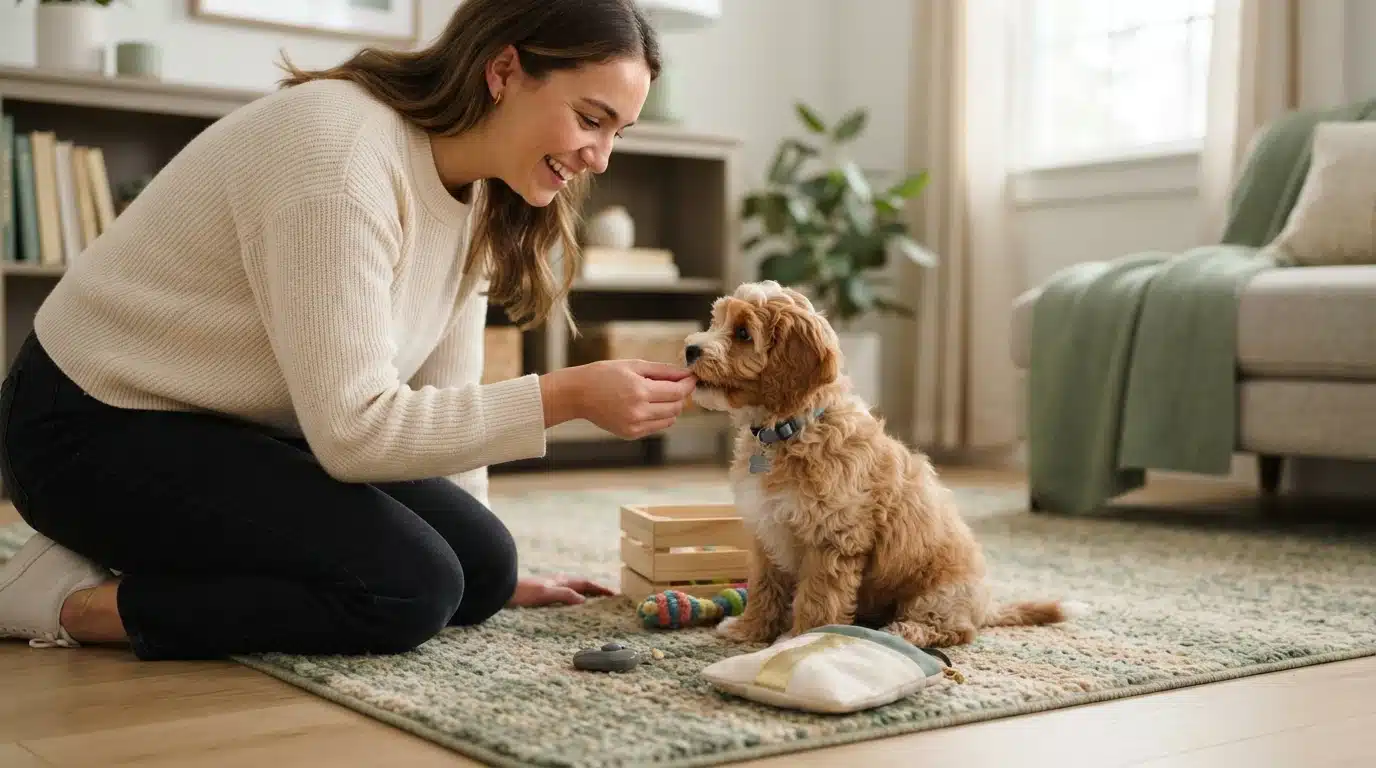
Keep sessions to 5 minutes for an 8-week-old puppy, building to 10 or 15 minutes by 6 months. Cavapoos often work for praise and soft treats, and they can drift off if a session drags. Cockapoos stay locked in when the reward is a toy or a quick game, so boredom shows up as nipping and zoomies rather than quitting. Watch what your puppy wants, then pay with it. Growth stages matter too, and tracking your puppy month by month helps you match expectations to age.
Recall, Loose-Leash Walks and Off-Switch Training
Recall comes easier to a Cavapoo, which checks in with you by nature. A Cockapoo’s nose can pull it off course, so practice recall in a fenced area before trusting open ground. Both need loose-leash work from the first week. The bigger first-time challenge is the off-switch: teaching your puppy to settle on a mat after play. Both breeds can struggle when left alone, so pair settling practice with safe confinement from day one.
A Weekly Training Plan That Fits a Work Calendar
Structure beats duration. Try this pattern:
- Two 5-minute sessions on workdays, morning and evening.
- One longer weekend session for recall and leash skills.
- One settle exercise daily after dinner, on a mat.
Short daily reps beat a single weekend marathon, for either breed.
Time Alone and Separation Distress in a Working Household
Learning a Schedule Versus Showing Distress
Both mixes can learn a workday routine, but they get there differently. Cavapoos lean on the Cavalier King Charles Spaniel companion temperament, so they settle faster once the routine feels predictable. Cockapoos carry Cocker Spaniel hunting dog heritage, which brings more energy and a stronger pull toward activity. Neither breed is proof against dog separation distress, though. Watch for pacing, whining, or house soiling, which signal distress rather than boredom, and separate those from normal puppy complaints.
Setting Up the Homecoming and Departure Routine
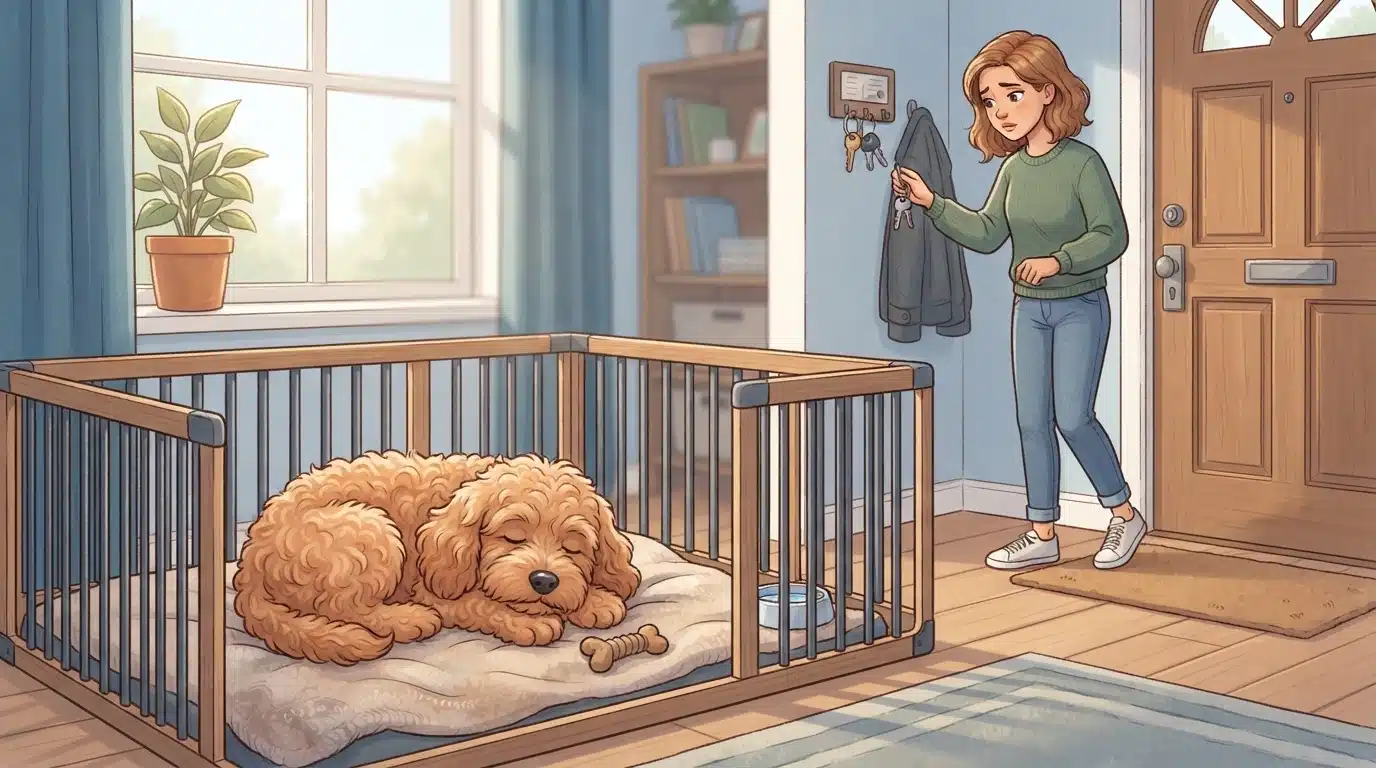
Keep both ends of the day calm. On departure, give a stuffed chew, close the crate or pen, and leave without a long goodbye. On return, ignore the puppy for a minute, then greet quietly. Safe confinement matters here: a pen with water, bedding, and a pee pad prevents destructive habits during short absences. Reward-based methods help you link the crate with good things instead of fear.
Adjusting the Plan for an Irregular Workweek
Shift work or rotating schedules need a written plan, not guesswork. Map out who covers morning and evening care each day, and use a dog walker or trusted neighbor for midday breaks. Most adult Cavapoos and Cockapoos manage 4 to 6 hours alone once trained, but young puppies need a midday visit. If you are comparing options, our pages on Cavapoo puppy milestones by month cover how alone-time tolerance grows.
Grooming, Allergies and the Weekly Time Budget
Coat Type, Brushing and Professional Grooming
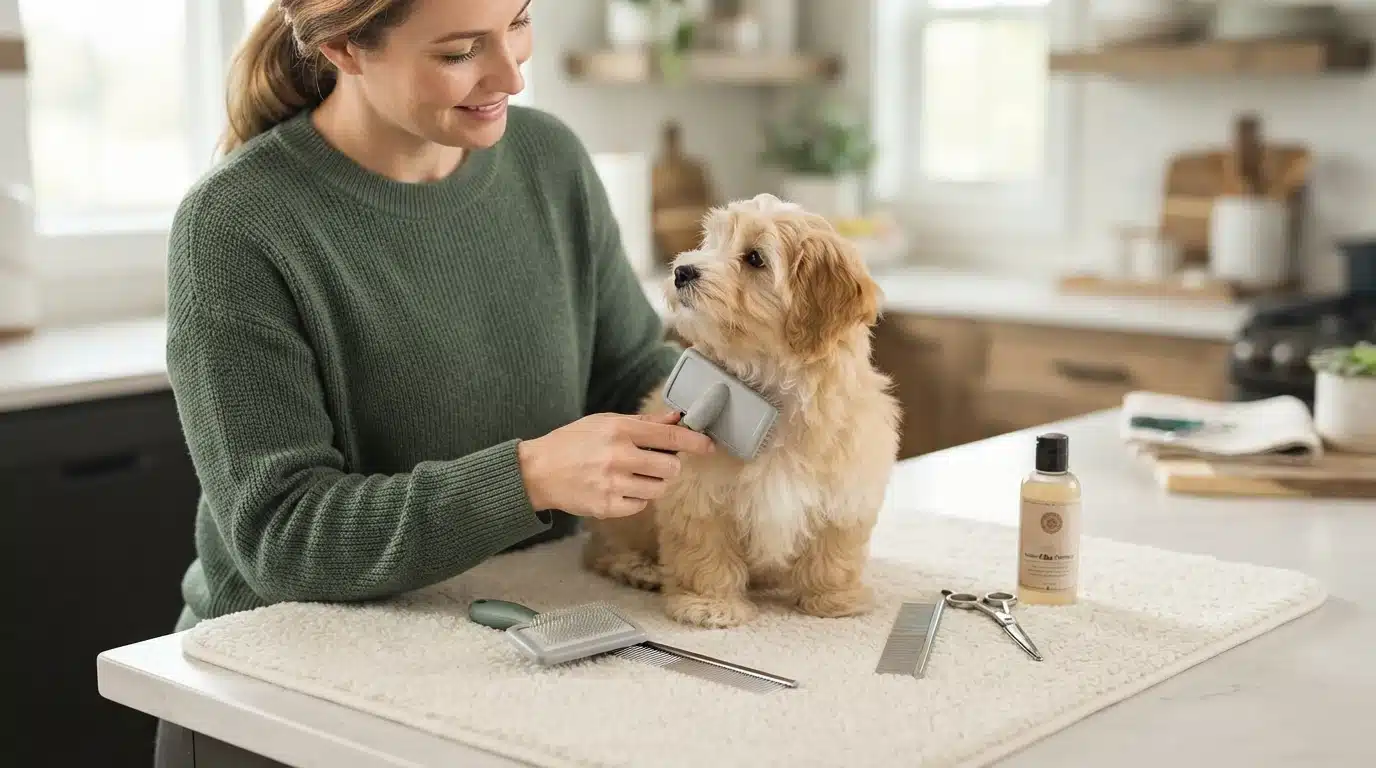
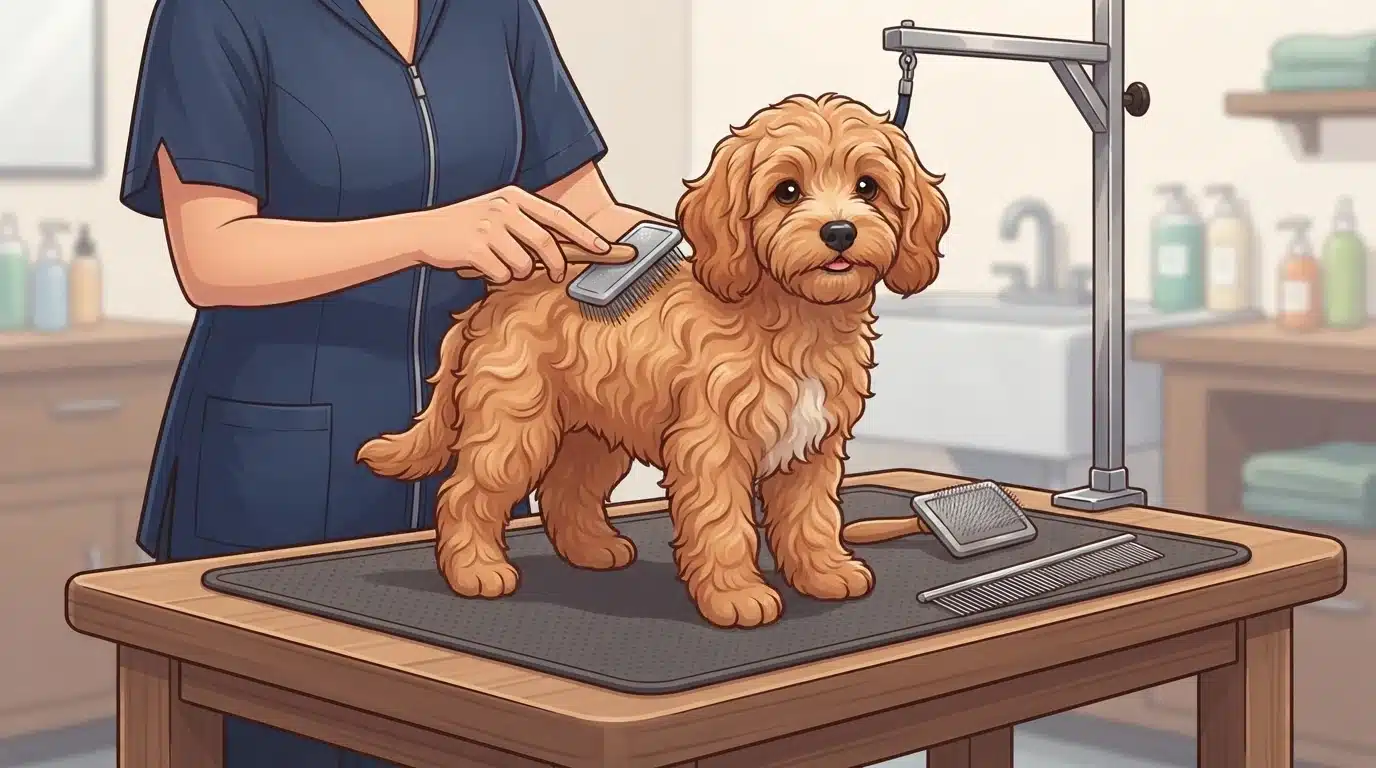
Neither breed is easier to groom by much: both carry a low-shedding, Poodle-influenced coat that mats fast. Plan on brushing three to four times a week for either puppy, about 10 minutes a session, per PetMD’s Cavapoo care guide. Cavapoos often sit near the lower end with a softer, wavier coat, while Cockapoos with tighter Cocker curls need a bit more attention. The Cockapoo grooming frequency matters more than the breed label.
Ear Care, Skin and Allergy Realities
Floppy spaniel ears trap moisture in both breeds, so check and wipe ears weekly to head off infections. Neither mix is truly hypoallergenic; the allergy trigger lives in dander and saliva, not hair, and individual puppies vary. If a family member has sensitivities, spend time with the puppy first, as our allergy comparison explains, and keep bedding washed to cut dander.
Budgeting Grooming as a Recurring Cost
Book professional grooming every 4 to 6 weeks for either breed, and budget roughly $60 to $100 per visit depending on your area and coat condition. That adds a standing appointment to your calendar, not just a cost. Our weekly coat care routine keeps the time between visits manageable.
Health Screening: What Each Parent Line Adds to the Conversation
Ask any breeder about these conditions before you compare litters: heart clearance (mitral valve disease), a brain scan or symptom history for syringomyelia, eye certification for progressive retinal atrophy, patella and hip checks, and DNA tests for inherited diseases on both parent lines. Each side of the cross brings its own risks, so the parent matters as much as the puppy.
Cavalier-Side Risks to Ask About
Cavaliers pass down two well-documented concerns. Mitral valve disease, a gradual leak in the heart valve, is widespread in the breed and often appears early, which is why the Cavalier King Charles Spaniel Club, USA calls for a cardiology exam by a board-certified cardiologist before breeding age. Syringomyelia, a condition where fluid-filled cavities form near the brain, is the second priority. Breed clubs and university programs, including NC State’s Cavalier research initiative, track both diseases closely. For a Cavapoo, ask whether the Cavalier parent has a recent clear heart exam and any syringomyelia screening or symptom history.
Cocker-Side Risks to Ask About
Cocker Spaniels contribute different concerns: eye disease, especially progressive retinal atrophy, plus ear infections tied to long drop ears, patella issues, and occasional skin allergies. Because Poodles also carry PRA genes, a DNA test plus an annual eye exam from a board-certified ophthalmologist matters on this line. Ask about the Cocker parent’s eye certification, patella rating, and any history of chronic ear or skin trouble in the pedigree.
Documents to Request Before You Reserve
Before sending a deposit, request proof in writing:
- Cardiology clearance for the Cavalier parent
- OFA or equivalent eye and patella certificates
- DNA panels for PRA and other inherited diseases
- Vaccination and deworming records for the puppy
- A written health guarantee with clear terms
A breeder who hesitates to share these papers is telling you something. Reputable programs, including boutique operations like Sage Puppies, provide parent testing and puppy records as standard practice, not on request.
Which Should You Choose: Cavapoo or Cockapoo?
Pick your puppy by your calendar, not by looks. Here is the choice in four steps:
- Count your daily free time for walks and play.
- Add your workday gaps and who can cover a midday puppy visit.
- Match that total to 30-45 minutes (Cavapoo) or 45-60 minutes (Cockapoo).
- Browse current Cavapoo availability once the numbers fit.
Choose a Cavapoo If Your Schedule Looks Like This
Your household fits a Cavapoo when the day is full but steady. The Cavalier King Charles Spaniel’s companion temperament means a Cavapoo stays settled after a 15-minute morning walk, brief midday attention, and a 20 to 25 minute evening outing. If someone is home most days, or you can arrange a midday visit for a young puppy, this match works well. First-time owners often find the gentler pace easier to keep up with.
Choose a Cockapoo If Your Schedule Looks Like This
A Cockapoo suits you if you already live an active life. The Cocker Spaniel’s hunting dog heritage shows up as higher energy, so plan on 45 to 60 minutes of daily activity. That usually means a 20-minute morning walk, a short lunchtime game, and a longer evening walk or fetch session of 25 to 30 minutes. Runners, hikers, and families with older kids tend to enjoy this dog’s stamina rather than resent it.
Next Steps: Questions to Ask, Then Where to Look
Ask any breeder these questions before you commit: What health testing covers the parents? Eye screening matters because progressive retinal atrophy appears in both parent breeds, and Cavaliers also carry mitral valve disease risk. How is each puppy socialized before go-home day? What support do you get afterward?
Then walk through the application and reservation process so you know the deposit steps and timing before a litter arrives. Both breeds stay small, need grooming every 4 to 6 weeks, and train well with reward-based methods. The right pick is the one whose daily routine you can honestly keep.

If your schedule matches the Cavapoo column, a well-bred puppy can fit right in. Sage Puppies raises Cavapoos in South Jordan, Utah, with pickup and nationwide delivery. Start the application, and Cassie will help match a puppy to your routine honestly.
Frequently Asked Questions
Q1: Which breed suits a busy household?
A Cavapoo usually suits a busy household better. Its Cavalier King Charles Spaniel companion temperament pairs well with a shorter daily routine, roughly 30 to 45 minutes of walks and play, and it settles faster once your workday pattern becomes predictable.
Q2: Can either breed be left alone during a full workday?
Most trained adults manage 4 to 6 hours alone. Young puppies of both breeds need a midday visit, so plan a dog walker or neighbor from day one.
Q3: How much grooming time should I budget each week?
Plan on brushing 10 minutes, three to four times weekly, plus professional grooming every 4 to 6 weeks at roughly $60 to $100 per visit.
Q4: Which breed is easier to train for a first-time owner?
The Cavapoo. It works for praise and stays focused, while a Cockapoo needs short, game-like sessions and firmer daily structure.
Q5: What health tests should I ask breeders about?
Request cardiology clearance for the Cavalier parent, eye and patella certificates, DNA panels for progressive retinal atrophy, and a written health guarantee in writing.
Conclusion
The cavapoo vs cockapoo choice comes down to minutes, not looks. A Cavapoo’s Cavalier King Charles Spaniel companion temperament fits a full but steady schedule: 30 to 45 minutes of daily activity and predictable alone time. A Cockapoo’s Cocker Spaniel hunting dog heritage asks for 45 to 60 minutes, shorter game-based training sessions, and firmer structure when the day shifts. Both need weekly brushing, grooming every 4 to 6 weeks, and a midday visit as young puppies. Neither breed escapes dog separation distress on its own, so plan confinement and routine from day one. Match health questions to the parent line, verify cardiology and eye testing, then pick the routine you can honestly keep.