Quick Summary: Most Cavapoos reach about half their adult weight by four months, finish teething around six months, and reach adult size between 9 and 18 months, depending on their Cavalier and Poodle parent sizes. Owners should track weekly weight trends rather than rely on fixed charts, while following key social, training, teething, and fear-period milestones with calm, consistent routines and regular vet care. Sage Puppies notes that its South Jordan litters follow the same rapid early growth pattern, with Toy-sized dogs usually maturing sooner than Minis.
By month four, most Cavapoos have already reached roughly half of their adult size, and that fact surprises more first-time owners than anything else on the timeline. Small breeds grow fast and finish early, so the window to shape habits, plan supplies and set expectations is short. Many families also struggle to find honest answers about cavapoo size by month, because crossbreeds inherit different mixes from each parent and no single chart fits every puppy. This guide walks through the cavapoo growth stages month by month, pairing each stage with the milestones you will actually notice, from teething and the first fear period to the shift from three meals a day to two. Size figures come from published estimates for Cavalier King Charles Spaniel and Poodle parent breeds, clearly labeled as ranges rather than promises. At Sage Puppies, we raise Cavapoo, Havapoo and Havanese puppies in South Jordan, Utah, so we have watched these stages unfold litter after litter.
How Cavapoo Growth Actually Works
Every Cavapoo grows on its own timeline, and the fastest gains come early. Most puppies put on weight quickly through the first six months, then slow down and reach their adult size between 8 and 12 months. How big they get depends almost entirely on the parents, which is why estimates come in ranges rather than one fixed number.
Why there is no single official Cavapoo growth chart
Cavapoos are a crossbreed, so no kennel club publishes an official growth chart or fixed breed standard. Even within one litter, puppies inherit a different blend of genes from each pairing. That means every chart you see is a projection based on typical pairings, not a promise. PetMD notes the Cavapoo is a small crossbreed ranging 8 to 25 pounds, which shows how wide the span runs even among well-documented sources. Tracking your own puppy, either on our Cavapoo growth chart or on a simple paper log, beats trusting any single curve.
The parent breeds that set your puppy’s size range
The Cavalier King Charles Spaniel parent usually weighs 13 to 18 pounds as an adult. The Poodle parent varies more: a Toy Poodle often lands around 4 to 6 pounds, while a Miniature Poodle typically sits closer to 10 to 15 pounds. Your puppy’s adult size falls somewhere between the two, weighted by which genes it happens to inherit.
Cavapoo Puppy Milestones: Birth to 8 Weeks
The first eight weeks of cavapoo growth stages happen before your puppy ever comes home, but they shape everything you see afterward. Here is what occurs during each stretch, so you know what a healthy litter looks like when you visit or get delivery updates.
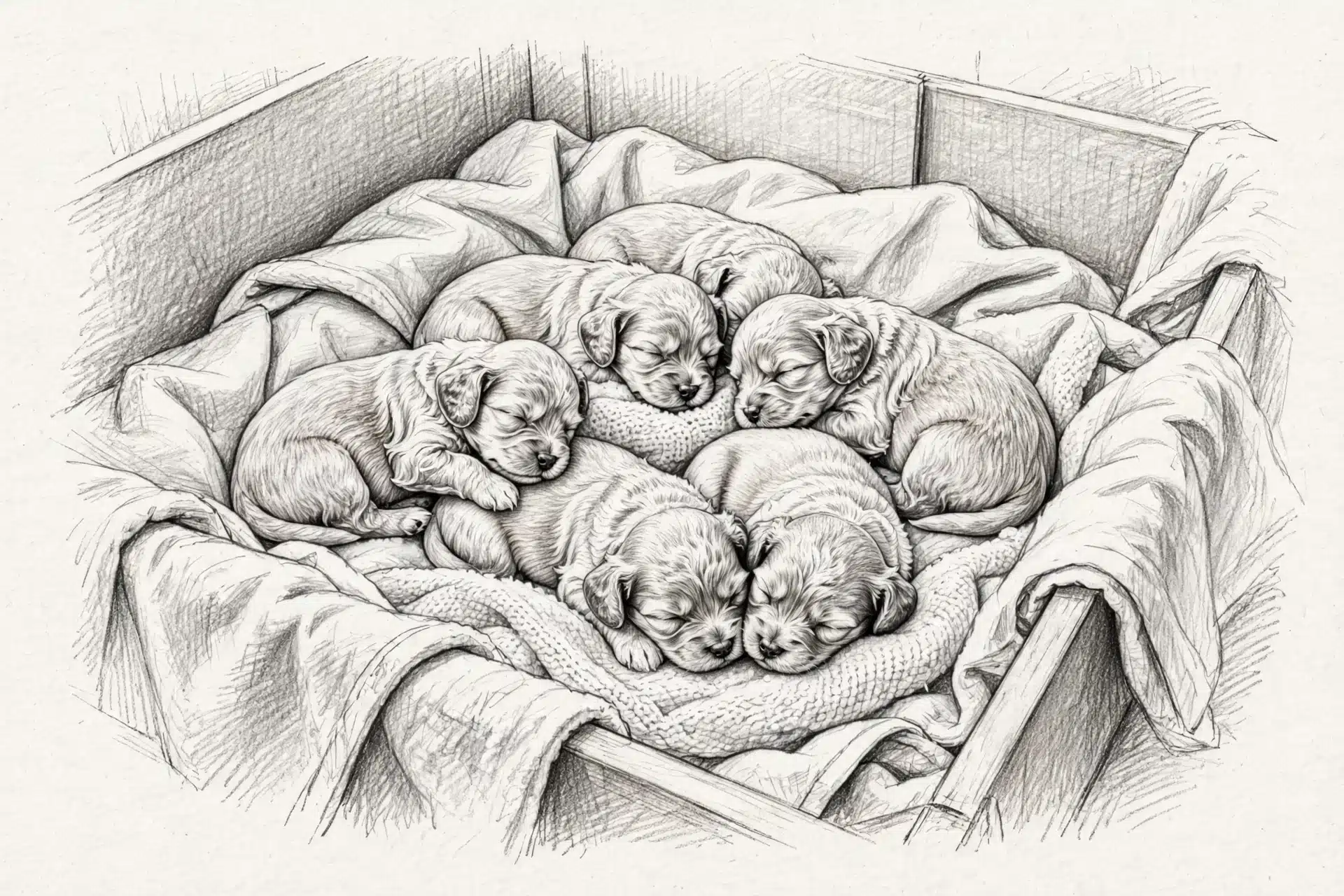
Birth to 4 weeks: neonatal and transitional stages
Newborn Cavapoos are tiny, blind, and deaf. During the neonatal stage, roughly the first two weeks, they sleep most of the day, crawl toward warmth, and nurse every hour or two. Eyes open around day 10 to 14, and ear canals follow shortly after. Then comes the transitional stage: legs begin to wobble upright, baby teeth start pushing through, and the first tiny tail wags and yips appear around week three. Good breeders weigh puppies daily during this window and keep the whelping box warm and quiet. Steady daily weight gain is the single best sign a young litter is thriving.
4 to 8 weeks: walking, barking, and the first fear period
From four weeks on, puppies play hard, bark, chew littermates, and learn bite inhibition through those yelps. Around week five, they start on soft food, and by week seven most litters tolerate short crate time and first car rides. This is also the socialization stage, when puppies learn to accept handling, new surfaces, and gentle noise. The first puppy fear period can begin near 8 to 11 weeks, so calm, positive exposure matters most right now. This window is exactly why ethical breeders keep puppies with the litter until eight weeks rather than sending them home sooner.
According to Purdue’s canine welfare research group, that early socialization period runs from about three to twelve weeks, which is why weeks five through eight carry so much weight.
Cavapoo Milestones: 2 to 6 Months
Between 2 and 6 months, a Cavapoo puppy grows fast, loses all 28 baby teeth, and passes through a second fear period around 5 to 6 months. Weight roughly doubles or triples in this stretch, so expect a noticeable size change almost every time you weigh.
- 2 months: rapid growth begins, nipping peaks, and crate and potty training start
- 3 months: teeth loosen, appetite climbs, and short training sessions stick
- 4 months: adult teeth push through and the puppy starts looking like a small dog
- 5 months: chewing ramps up again and confidence wobbles in new places
- 6 months: teething finishes, energy rises, and growth starts to slow
Here is what each stage looks like in more detail.
2 and 3 months: rapid growth and the teething window
A newly homed puppy at 8 to 12 weeks is in its fastest growth stretch. Most Cavapoos gain steadily each week now, which is why a simple weight log beats guessing. Nipping also peaks, because all 28 baby teeth are in place by about 8 weeks, according to the USDA’s puppy teeth aging guide.
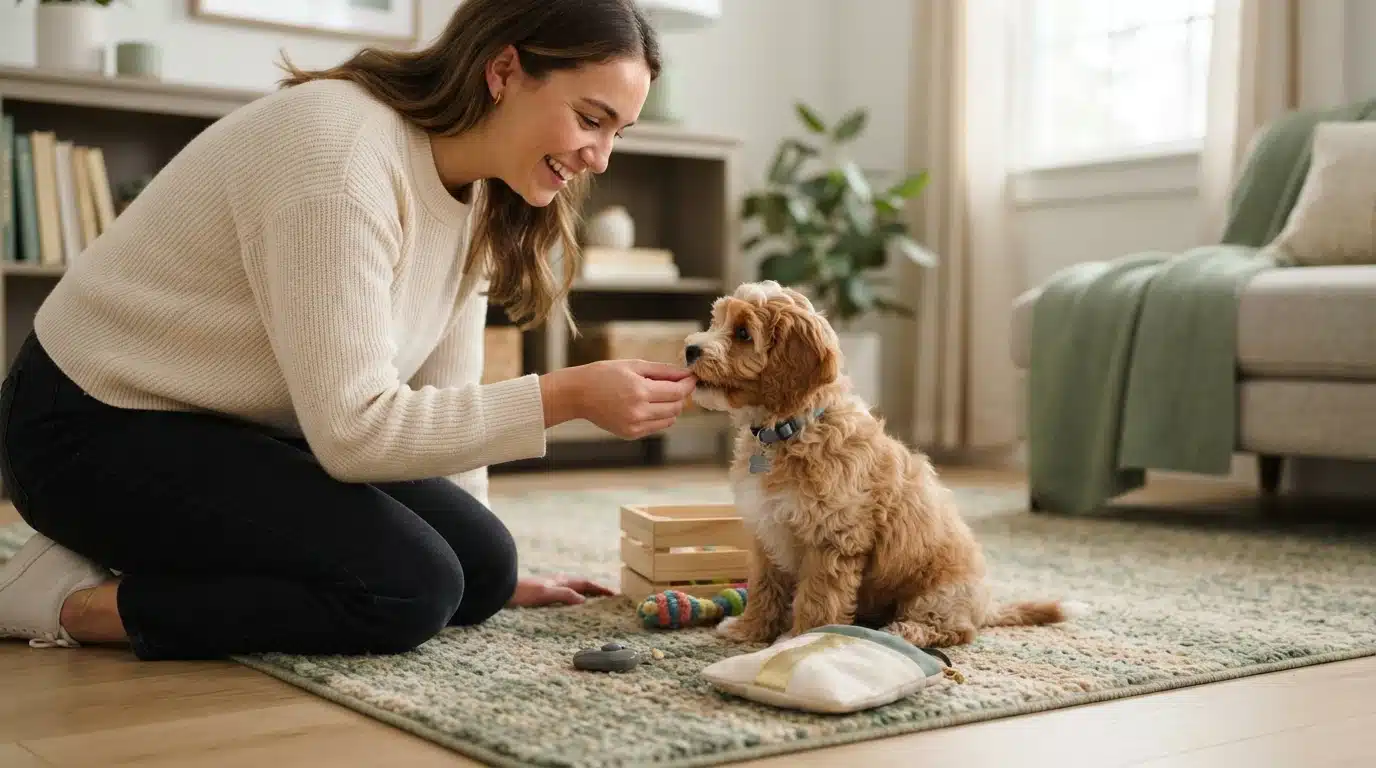
Keep sessions short. Five minutes of name recall or crate practice beats a long drill, and calm exposure to new floors, sounds, and gentle people still matters in these weeks. If you want a structure to follow, puppy training classes built for small breeds show how short sessions fit a young puppy’s attention span.
4 months: the puppy looks like a small dog now
Around 16 to 17 weeks, most puppies start losing baby teeth as adult teeth come in. PetMD notes puppies usually finish teething by about 6 months, so the 4- to 5-month window is the chewing-heavy middle PetMD explains.
What owners notice most is proportion. Legs lengthen, the snout sharpens, and the fluffy baby coat gives way to a leaner frame. A toy-range Cavapoo may already look close to adult size at this point, while a larger mini still has real filling out ahead. Keep chew toys rotated and valuables out of reach, because sore gums make this the mouthiest month of the cavapoo growth stages.
5 and 6 months: a second fear period and a bigger appetite
Somewhere near 5 to 6 months, many puppies hit a second fear period. A dog that strolled past the trash can last week may suddenly spook at it. Stay patient, avoid forcing contact, and let the puppy approach on its own terms. Keep up gentle exposure rather than pausing it.
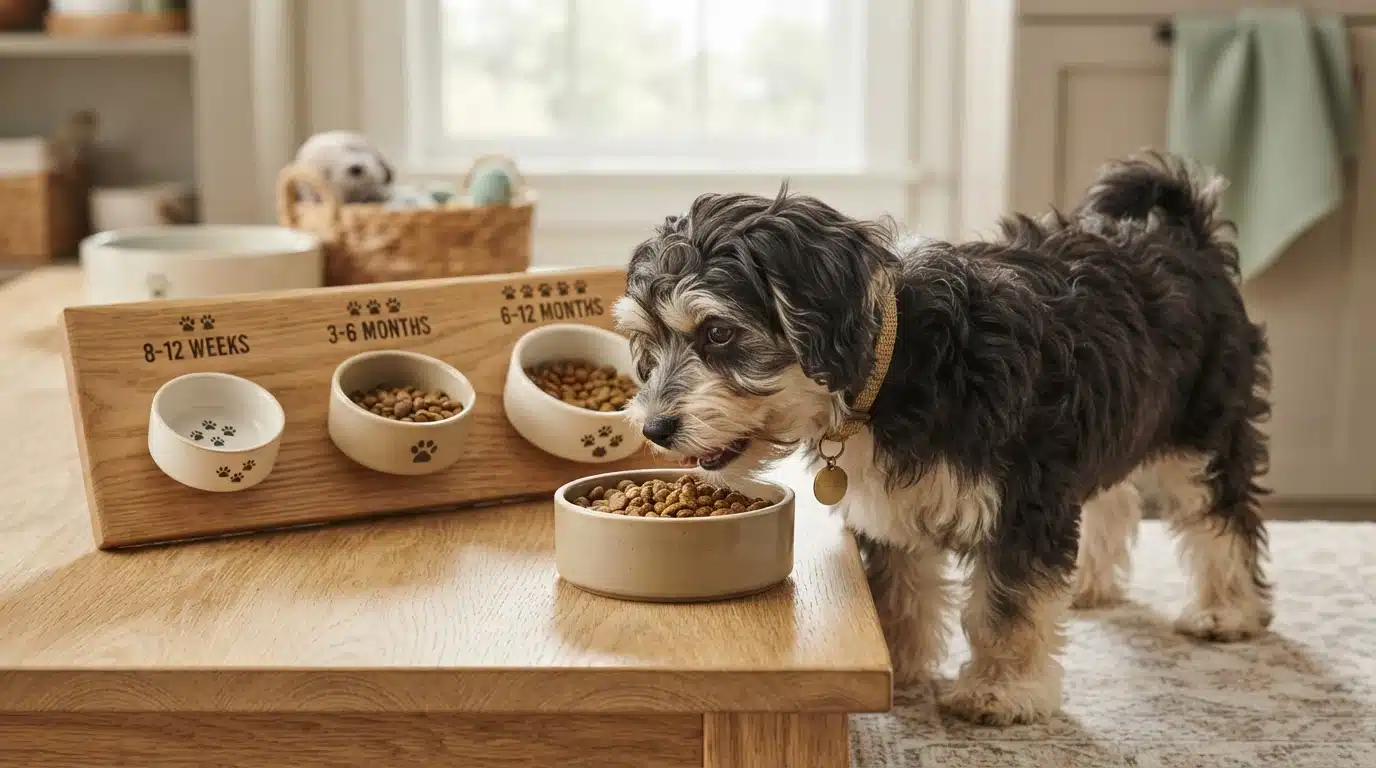
Appetite climbs too, since the body is still building toward adult size between 8 and 12 months. Feed the amount your breeder or vet recommends for the puppy’s current weight, and reweigh monthly. By 6 months, teething is done and adult teeth should all be in, per the AKC’s teething timeline.
Cavapoo Milestones: 6 to 12 Months and Beyond
Most Cavapoos stop growing somewhere between 10 and 18 months, and the second half of that window looks very different from puppyhood. Here is what each stage tends to bring.
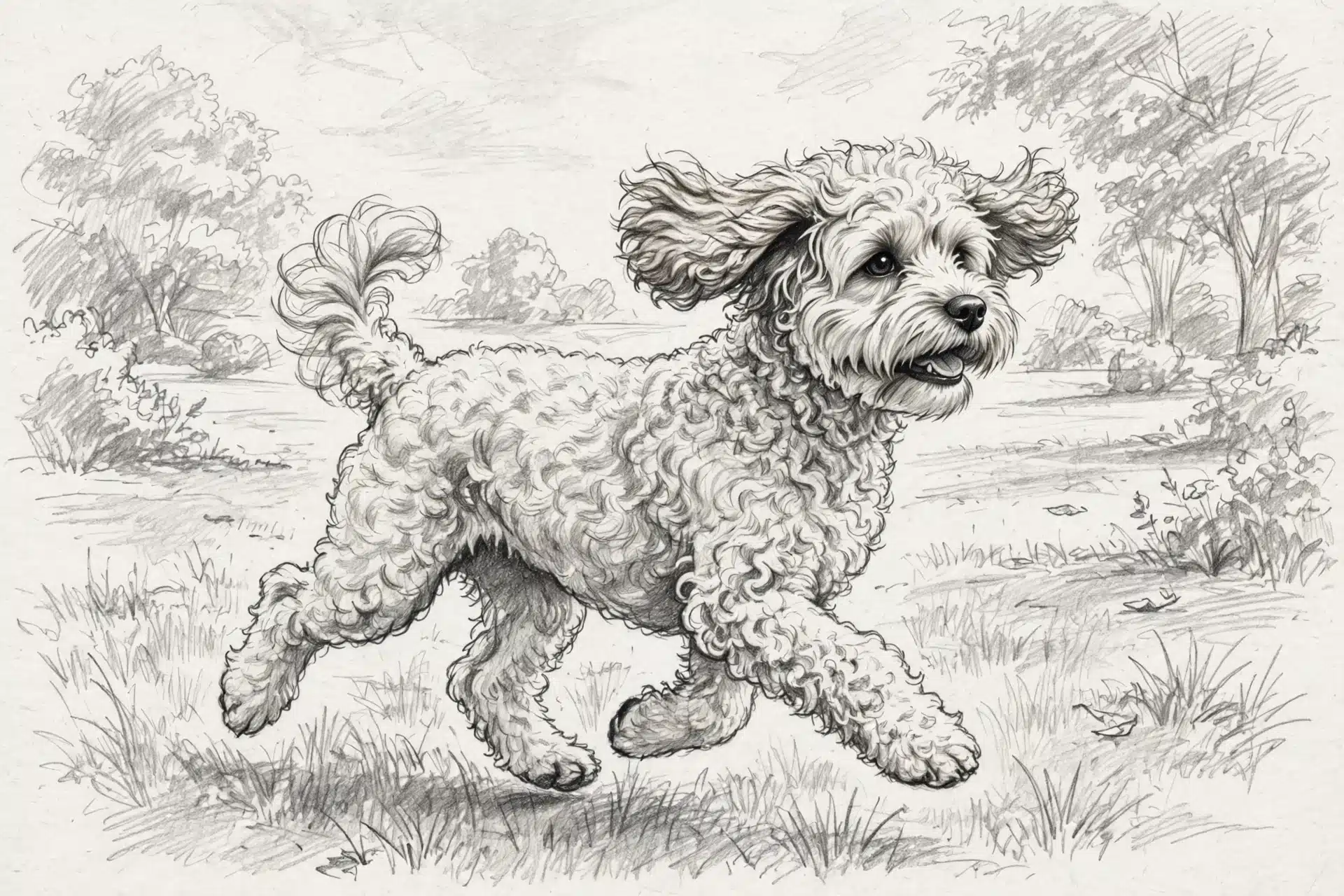
6 to 9 months: rambunctious adolescent
Your puppy looks almost grown now, but the brain is still catching up. Expect bursts of wild energy, selective listening, and testing of rules you thought were settled. Keep training short and consistent, because hormones and distraction make lessons easy to forget. Exercise helps, yet too much hard running can stress growing joints in a small breed. Steady routines, chew toys, and continued socialization carry you through this phase better than scolding does.
9 to 12 months: close to adult size
Growth slows sharply in this stretch, and most Toy-sized Cavapoos reach their adult height and weight near 9 to 12 months. Mini Cavapoos often fill out a bit longer, adding muscle rather than inches. Weigh your puppy monthly and compare it against the notes you have kept since bringing it home; a steady curve matters more than any single number. If weight jumps or stalls suddenly, your veterinarian can rule out a problem.
12 to 18 months and adult life
By the first birthday, most Cavapoos are physically grown, though larger Mini lines may keep filling out until 18 months. Behavior settles too, usually by 18 to 24 months. Shift to adult food around 12 months, keep annual vet visits, and enjoy the calm companion your work created. A balanced adult weight, tracked on your own growth chart, is the real finish line.
How Big Is My Cavapoo at 2, 4, and 6 Months?
There is no single answer, because Cavapoos come from Toy or Miniature Poodle parents, so the same age can mean very different weights. The published estimates below are typical ranges for small Cavapoos, not promises. Use them as a rough check, then compare your puppy’s own trend week by week.
| Age | Published weight estimate | What it assumes |
|---|---|---|
| 2 months | About 2 to 7 pounds | Smaller end for Toy-parent pups, larger for Mini-parent pups |
| 4 months | Roughly 4 to 15 pounds | Puppies reach about half their adult weight near 16 weeks |
| 6 months | About 8 to 22 pounds | Growth starts slowing after this point |
These ranges come from breeder and pet care sources that disagree with each other, which is exactly why you should weigh your own puppy instead of trusting a chart. One guide to Cavapoo adult size and growth explains that doubling the 4-month weight gives a decent adult guess, and a compiled growth chart shows how wide the published ranges run.
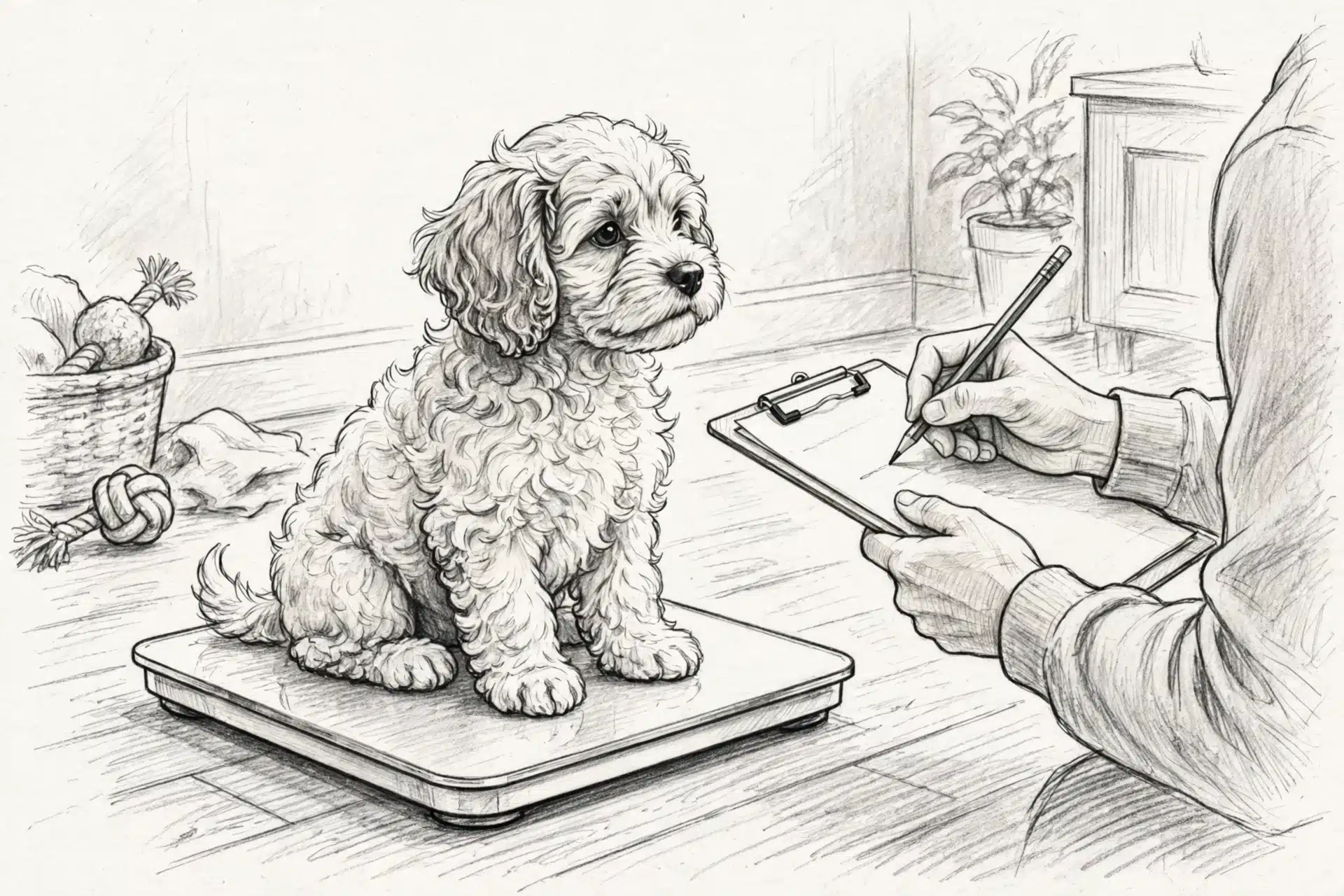
How to weigh and track your own puppy
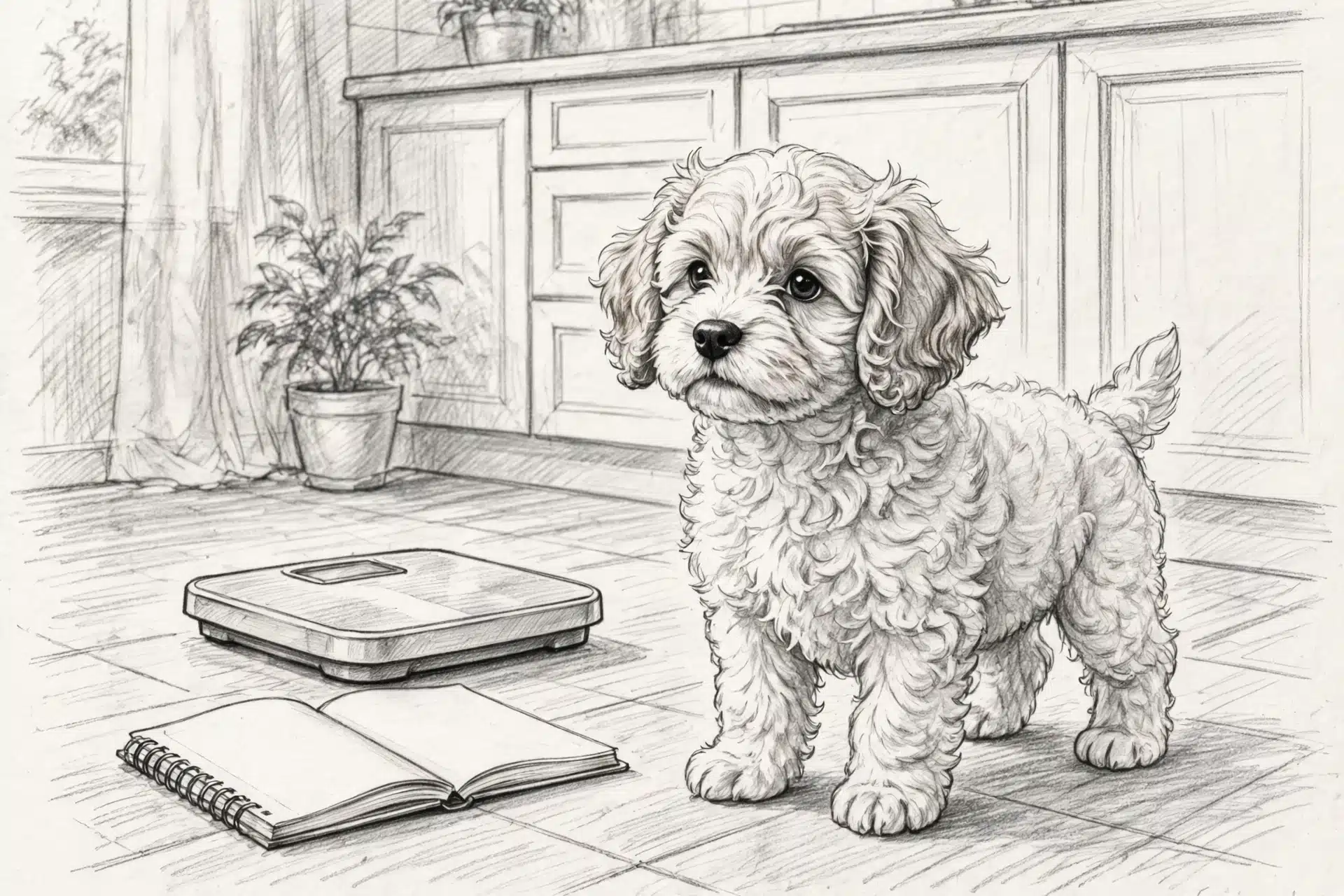
Weigh your puppy at the same time each week, ideally before breakfast. Four simple steps:
- Step on the scale alone, note your weight, then pick up your puppy and step on again.
- Subtract to get the puppy’s weight, or use a kitchen scale for pups under 10 pounds.
- Log the number and date in a notebook or a simple Cavapoo weight log spreadsheet.
- Compare the trend, not the single number. Steady gain matters more than hitting a chart.
If weight stalls for two weeks or your puppy suddenly plumps up, call your veterinarian.
Chart your puppy’s numbers on a simple line graph. A smooth upward curve is the healthiest sign you can watch at home.
Development Milestones You Will Notice Beyond Size
The scale tells only part of the story. Between 2 and 12 months, your Cavapoo’s coat, teeth, and behavior change just as fast as its weight, and these shifts often give you a better sense of where your puppy is headed.
Coat, muzzle, and the transition to an adult look
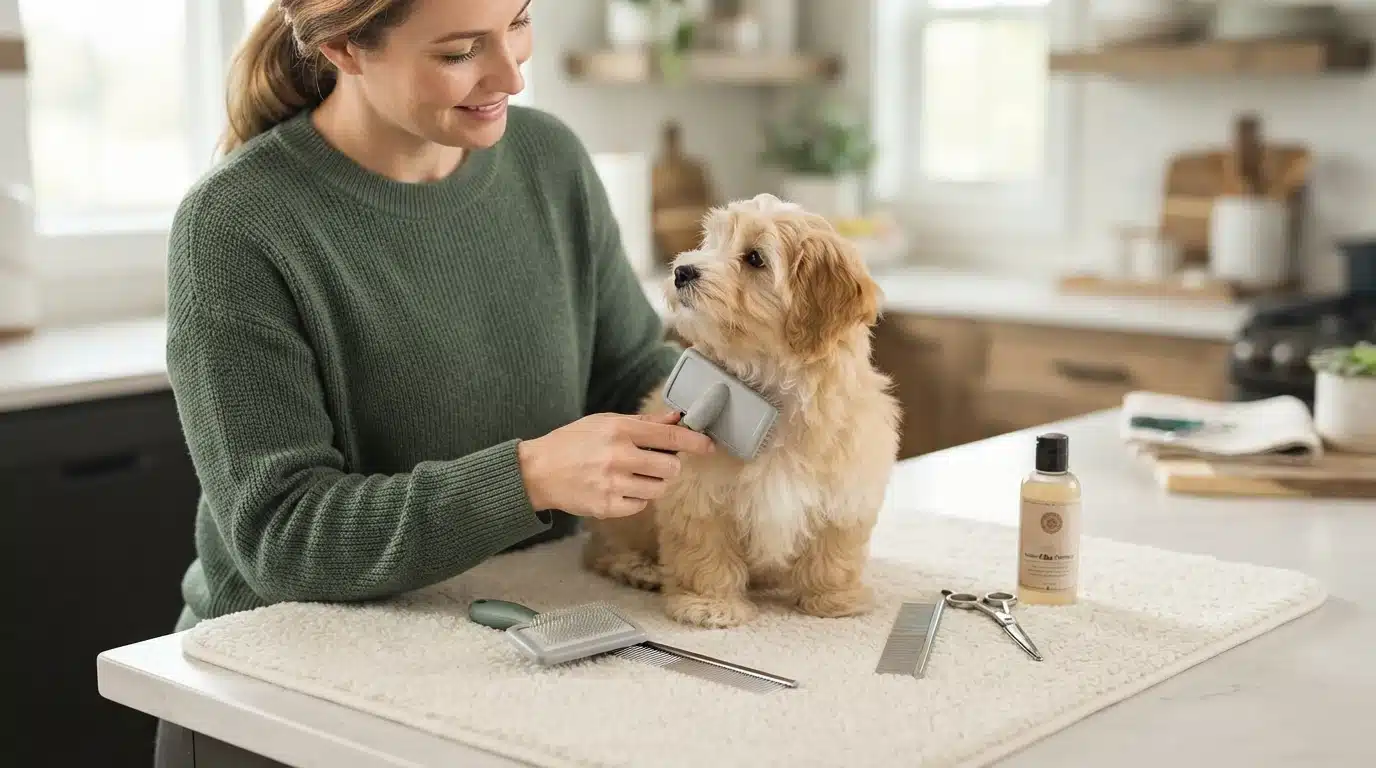
That soft, fluffy puppy coat starts giving way around 6 months of age, and the full adult coat can take another six to twelve months to come in, according to Chewy’s pet care guide. The muzzle also lengthens slightly, so your puppy slowly looks less teddy-bear and more small dog. Because the coat change mixes textures, matting becomes a real risk, so brushing matters more now, not less. Our Cavapoo grooming guide covers the coat differences and the routine that keeps the adult coat healthy.
Teeth, chewing, and mouth development
You will see teething in three clear waves. The 28 baby teeth are all in place by about 8 weeks, they start loosening near 16 to 17 weeks, and the adult set should be complete by 6 months, per the AKC’s teething timeline. Chewing peaks in the middle, so rotate safe chew toys and keep shoes out of reach. A slight overbite or underbite often softens as the adult teeth settle.
Social and training milestones month by month
Behavior shifts follow a rhythm too. Around 8 to 11 weeks, the first fear period makes calm, positive exposure your top job. Short training sessions start sticking near 3 months, confidence dips again in the second fear period around 5 to 6 months, and by 7 to 8 months most Cavapoos are ready for longer walks, group classes, and steadier recall.
Health and Veterinary Milestones to Track Alongside Growth
Vet visits, vaccines, and what happens at each appointment
Your puppy needs several vet visits in the first few months, so book them early. Core vaccines start at 6 to 8 weeks and repeat every 2 to 4 weeks until at least 16 weeks of age, per the AAHA canine vaccination guidelines. Each appointment usually includes a weight check, a physical exam, a stool test, and time to ask questions about food, chewing, and training. Many vets also suggest spaying or neutering somewhere between 6 and 12 months, though the right timing varies, so ask your vet what they recommend for a small breed.
When growth is a health question, not a chart question
Charts are estimates, not diagnoses. Call your vet if your puppy suddenly stops eating, loses weight instead of gaining, has a round belly with low energy, or seems far smaller or larger than its littermates. Slow but steady growth is usually fine for a small breed. A skipped step or a sharp change is worth checking. Trust your gut: you see your puppy every day, and your vet sees patterns across many dogs.
Coat, teeth, and body condition checks you can do at home
Once a week, feel for ribs you can sense but not see, and check that adult teeth replaced baby teeth by about 6 months. Brush regularly, since a matting coat can hide weight loss.

Wondering what your puppy’s next month looks like? Keep this timeline handy, and if you’re still choosing your Cavapoo, Sage Puppies can match you with a well-bred companion through a clear application process. Visit today to see available puppies or start your application.
Frequently Asked Questions
Q1: What should I expect from my Cavapoo puppy at each month of growth?
Expect rapid early gains, nipping and crate training at 2 to 3 months, teething around 4 to 5 months, a second fear period near 5 to 6 months, wilder adolescent energy by 6 to 9 months, and near-adult size around 9 to 12 months.
Q2: How big does a Cavapoo puppy get each month?
It varies widely because Toy or Miniature Poodle parents set different ranges. Most puppies reach about half their adult weight near 16 weeks and finish growing between 9 and 18 months, with Minis filling out longer.
Q3: How much should a Cavapoo puppy weigh at 2, 4, and 6 months?
Typical published ranges are about 2 to 7 pounds at 2 months, roughly 4 to 15 pounds at 4 months, and about 8 to 22 pounds at 6 months. Track your own puppy’s trend instead of chasing a chart number.
Q4: When should I switch my Cavapoo to adult food?
Around 12 months is the usual point. Larger Mini lines that are still filling out until 18 months may stay on puppy food a bit longer, so ask your vet at the annual visit.
Q5: When should I start puppy classes with my Cavapoo?
Short training sessions start sticking near 3 months, and most Cavapoos are ready for group classes and steadier recall by 7 to 8 months, after early vaccines are underway.
Q6: How do I weigh a puppy at home accurately?
Weigh weekly, before breakfast. Step on the scale alone, then again holding your puppy, and subtract. Use a kitchen scale for pups under 10 pounds, and log each number with the date.
Q7: When is teething finished for a Cavapoo?
By about 6 months, all adult teeth should be in. Chewing peaks near 4 to 5 months, so rotate safe chew toys and keep valuables out of reach until the cavapoo teething timeline wraps up.
Conclusion
Cavapoo puppy milestones follow a fast, predictable rhythm. Growth is quickest in the first six months, teething wraps up by 6 months, fear periods appear near 8 to 11 weeks and again at 5 to 6 months, and most puppies reach adult size between 9 and 18 months. Because every Cavapoo inherits a different blend from its Cavalier King Charles Spaniel and Poodle parents, published weight ranges are only starting points. A weekly weight log, steady routines, short training sessions, and regular vet visits tell you more about your puppy’s health than any chart, so track the trend and enjoy each stage as it comes.