Quick Summary: Cavapoo adult size depends mainly on the Poodle parent: Toys typically reach 7-12 pounds, Minis 13-25 pounds, and Standards up to 30 pounds. The best early estimate is to double a puppy’s 16-week weight, while an eight-week estimate is triple the weight; monthly tracking and the breeder’s records of both parents give a more reliable picture. Height growth finishes around 10-12 months, with adult body filling out by about 14 months, so use growth trends and veterinary body-condition checks rather than relying on one weigh-in or trying to push a puppy onto a chart.
Two Cavapoo littermates can share a birthday and a sire and still land at 11 pounds and 18 pounds as adults. That gap is why a single number on a breeder’s listing is the least useful thing you can read about size. Most families want a real answer before they reserve, not a guess.
This cavapoo puppy growth chart guide gives you one. You will get a milestone table for cavapoo weight by month, two methods for predicting your puppy’s cavapoo adult size, and the factors that push a litter wide apart. We also include the vet checkpoints that confirm growth is on track, so you can cross-check any chart value you find elsewhere with confidence.
What Size Will a Cavapoo Puppy Grow to as an Adult?
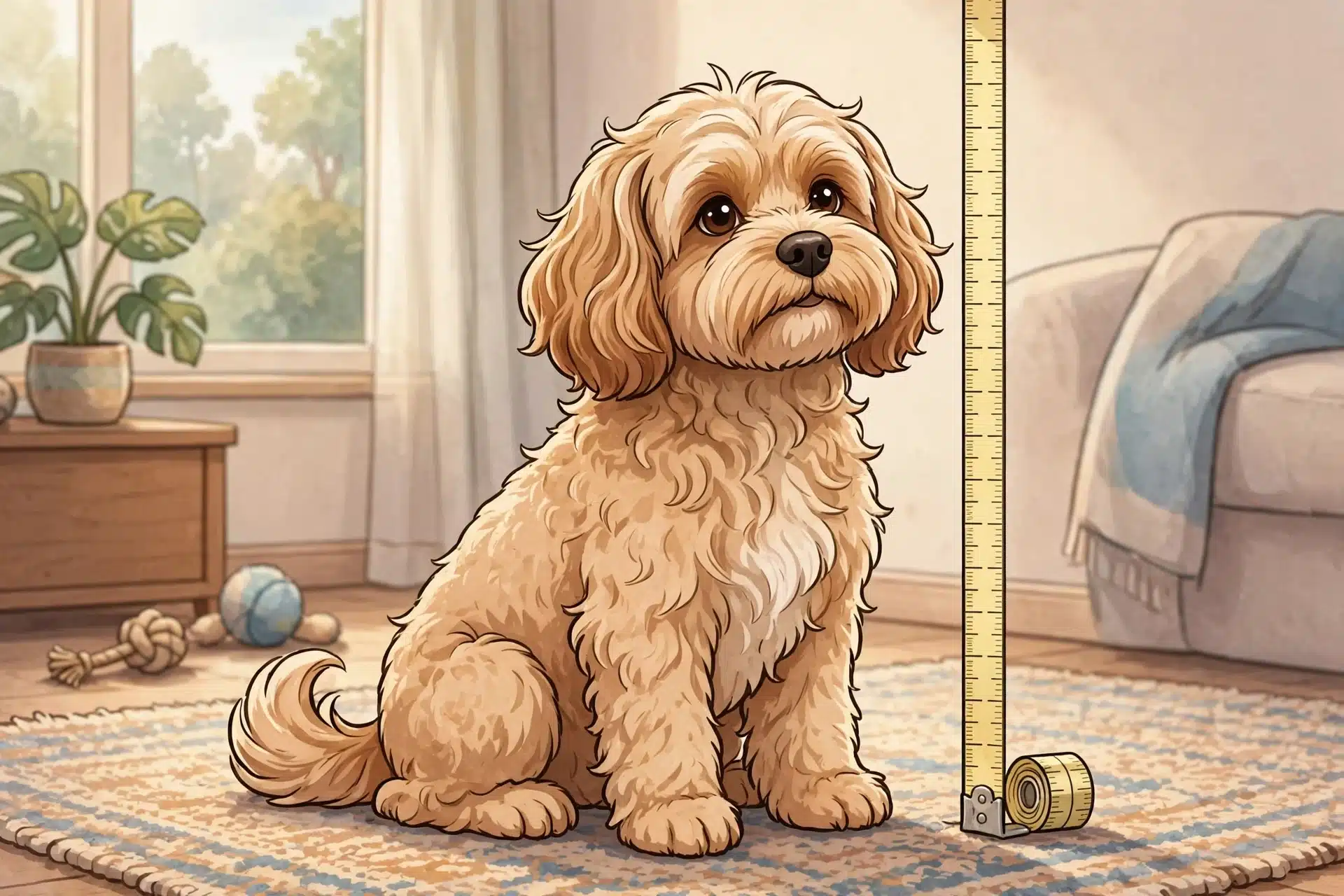
Most full-grown Cavapoos weigh between 7 and 30 pounds and stand 9 to 18 inches tall, with the exact size set by which Poodle parent is behind the litter. A cavapoo puppy growth chart helps you track progress, but the adult answer depends mostly on the parents’ sizes, not the puppy’s current fluffiness.
The Adult Weight Range Most Owners See
The most common Cavapoo, bred from a Miniature Poodle parent, lands between 13 and 25 pounds. Toy lines from a Toy Poodle parent usually stay under 13 pounds, often 7 to 12. Full-size spread is real: littermates with the same sire can mature at 11 pounds and 18 pounds. That is why breeders estimate from the parents rather than promising a single number.
Adult Height at the Shoulder, and Why It Differs From Weight
Height runs from about 9 inches for the smallest Toys to 18 inches for the largest Standards, measured at the shoulder. Weight and height do not always move together. A stocky 14-inch dog can outweigh a taller, lankier one. Bone structure, not just pounds, decides how big a dog looks, so ask to see both parents if size matters to you.
Toy, Mini, and Standard Cavapoo Lines
| Line | Adult Weight | Height at Shoulder |
|---|---|---|
| Toy Cavapoo | 7 to 12 pounds | 9 to 12 inches |
| Mini Cavapoo | 13 to 25 pounds | 11 to 16 inches |
| Standard Cavapoo | up to 30 pounds | up to 18 inches |
Toy and Mini labels come from the Poodle parent, since the Cavalier side contributes a consistent small frame of roughly 13 to 18 pounds.
How Fast Cavapoos Grow, Month by Month
Most Cavapoos stop growing in height between 10 and 12 months old, then keep filling out until about 14 months. Toys finish first; Standards can take the full year. The pace matters more than any single number, because a puppy tracking a healthy small breed growth curve tells you more than one weighed at random.
Birth to Eight Weeks: Fast Relative Growth
Cavapoo puppies are born tiny, often just a few ounces, and roughly double their birth weight in the first week. By eight weeks, when puppies typically go home, a Toy line pup may weigh 2 to 4 pounds while a Mini line pup often sits near 4 to 6 pounds. Relative growth is fastest here, so ask any breeder for the 8-week weight. If you’re weighing a litter, this is the phase where milk intake drives almost everything.
Two to Six Months: The Rapid Growth Phase
Between four and six months, most puppies reach roughly half their adult weight. A Mini Cavapoo headed for 20 pounds might weigh 8 to 10 pounds at four months and 11 to 13 pounds at five. Track the 16-week weight closely, since weight milestones by age here help you project adult size. Keep portions steady during this stretch. Too much food pushes weight faster than the frame can support, so feed for body condition rather than appetite.
Six to Twelve Months: Slowing and Filling Out
Growth slows noticeably after six months. Height at the shoulder creeps toward its finish line by 10 to 12 months, while the chest and muscle develop through 14 months. Expect an adolescent lanky stage around 7 to 9 months, when a puppy looks leggy before the body catches up. Growth plates in the legs are still open, so hold off on long runs or jumping until your vet clears them.
The Cavapoo Growth Chart by Age
A Cavapoo puppy’s weight follows a fairly steady curve once you know which line the litter sits on: Toy, Mini, or Standard. The table below shows typical weight milestones by age, plus shoulder height where it applies. Treat every figure as a range, not a promise, because the Poodle parent sets how quickly and how large each puppy grows. Here is the cavapoo weight by month pattern most litters follow.

A Consolidated Weight and Height Table
| Age | Toy Cavapoo | Mini Cavapoo | Height at Shoulder |
|---|---|---|---|
| 8 weeks | 2 to 4 pounds | 4 to 6 pounds | 4 to 6 inches |
| 3 months | 4 to 6 pounds | 6 to 9 pounds | 5 to 8 inches |
| 4 months | 5 to 8 pounds | 8 to 12 pounds | 6 to 10 inches |
| 6 months | 6 to 10 pounds | 10 to 17 pounds | 7 to 13 inches |
| 9 months | 7 to 11 pounds | 12 to 22 pounds | 8 to 15 inches |
| 12 months | 7 to 12 pounds, adult | 13 to 25 pounds, near adult | 9 to 16 inches |
| Adult | 7 to 12 pounds | 13 to 25 pounds | 9 to 16 inches |
How to Read Your Puppy’s Line on the Chart
Pick the column that matches your puppy’s Poodle parent, then compare the current weight to that age row. A pup tracking one row ahead is usually fine; small breeds grow fast early, then slow. The 16-week weight is your best single predictor, so weigh your puppy monthly and log it. Vets often assess body condition score alongside the scale, since a rib check tells you more than one number.
When a Puppy Sits Outside the Chart
Some pups run lighter or heavier than every row, and that alone rarely means trouble. A single off-chart weigh-in often reflects a big meal, worms, or an inconsistent scale, so recheck in a week before worrying. Watch instead for trends: steady weight loss, a swollen belly, or ribs you can see without touching. If any of those show up, or growth stalls for a month, call your veterinarian and bring your logged weights. This small-breed growth curve guidance applies across the board, from a Toy line pup to a standard-size litter, and any breeder worth working with will happily share each puppy’s 8-week weight before you reserve.
Estimating Adult Size From Your Puppy’s Current Weight
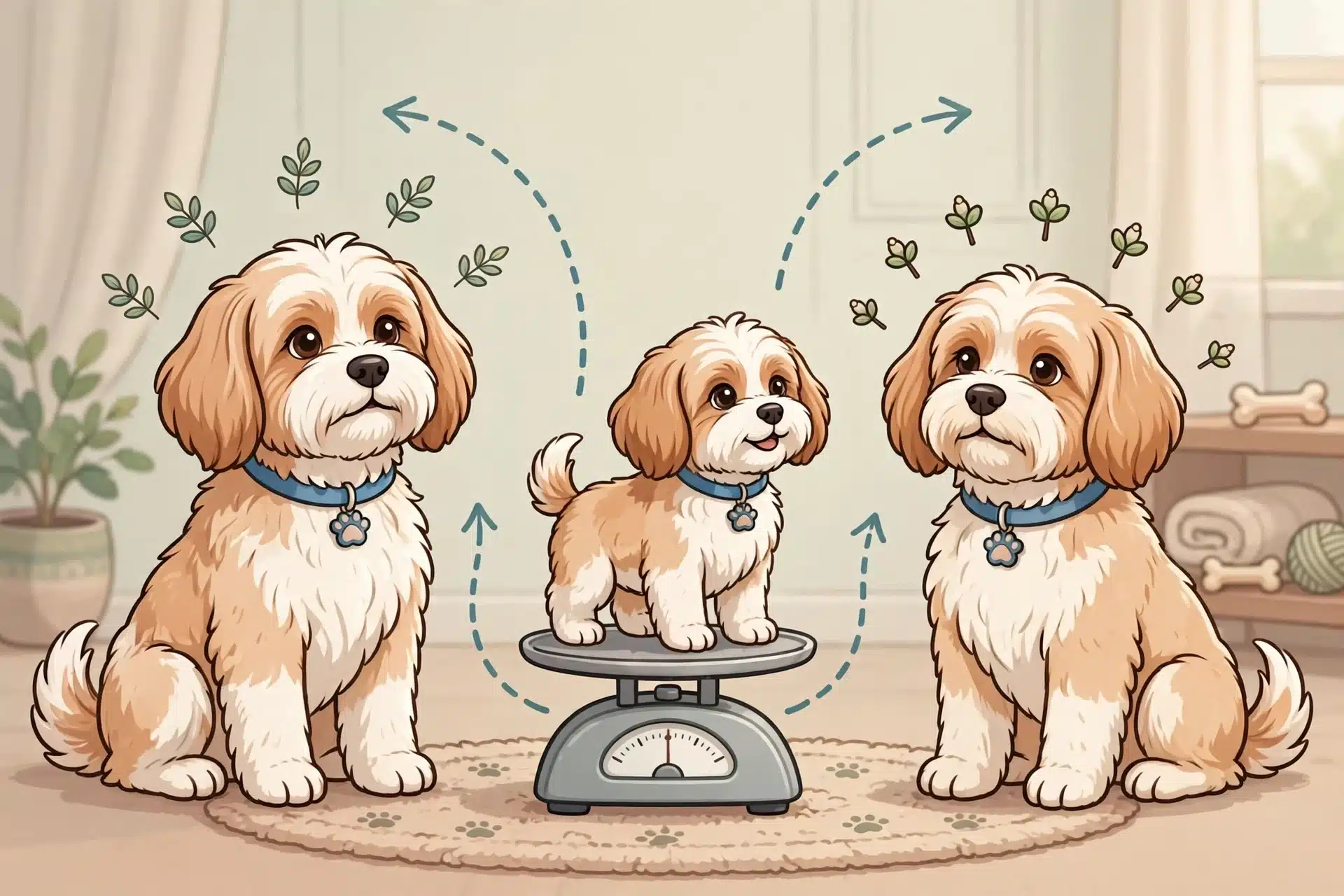
You can estimate a Cavapoo’s adult weight from two checkpoints you already have. Try both, then compare the answers.
- Double the four-month weight. A Mini Cavapoo that weighs 10 pounds at four months often lands near 20 pounds.
- Triple the eight-week weight. A pup weighing 5 pounds at eight weeks projects to roughly 15 pounds.
If the two numbers differ, split the difference and watch the trend.
Method One: Doubling the Four-Month Weight
This works because most small breeds reach roughly half their adult weight around 16 weeks. Weigh your pup at exactly four months, then multiply by two. The rule breaks down if the date drifts, so weigh on day 112 or as close to it as you can. A puppy weighed at five months has already passed the halfway mark, and doubling that number underestimates the adult size.
Method Two: Tripling the Eight-Week Weight
Puppies usually go home around eight weeks, which makes this the earliest estimate available. Take that weight and multiply by three. A Toy line pup at 3 pounds projects to about 9 pounds, right inside the Toy range of 7 to 12. It is a rougher guess than the four-month method because the growth curve varies most in these early weeks.
Asking the Breeder for the Better Estimate
The breeder holds data no formula can match: the parents’ actual weights and weights from previous litters. Ask what the dam and sire weigh and how earlier puppies from the same pairing matured. A breeder who weighs pups weekly can also tell you whether your puppy sits large or small for its litter, which tells you which end of the adult weight range to expect.
What Actually Determines a Cavapoo’s Final Adult Size
Genetics set the range. Nutrition and timing decide where your puppy lands inside it. Here is what actually moves the number on the scale.
The Genetic Inputs: Both Parents, Not Just One
Adult size starts with both parents, not just the Poodle side. The Toy or Miniature Poodle parent sets the biggest swing, but the Cavalier parent’s frame and each puppy’s mix of genes matter too. This is why two littermates can share a sire and still mature years apart in weight. Ask any breeder for the dam’s weight as well as the sire’s, plus the eight-week weight. That gives you a far better estimate than a chart alone.
Nutrition, Growth Plates, and Body Condition
Food does not make a Cavapoo bigger than its genes allow, but underfeeding a puppy can leave it smaller and lighter than it should be. Puppies grow in their growth plates, soft zones at the ends of long bones that close near the end of the first year. Steady, breed-appropriate portions protect that process. Aim for a body condition score where you feel ribs easily but do not see them. Extra weight on a young frame strains developing joints.
Sex and Neutering Timing
Females usually run a pound or two lighter than males in the same litter. Neutering timing plays a smaller but real role: early spay or neuter delays growth plate closure, which can leave bones slightly longer and leggier. A large study of 35 breeds found small breeds carry little added joint risk either way, so timing is best discussed with your vet.
Using Your Size Projection to Plan for Your Cavapoo
Once you know whether your puppy is heading for 9 pounds or 24, you can shop once instead of twice. Here is how to turn that adult weight range into practical buying decisions.
Crate and Crate Training Fit
Buy for the adult size, not the 8-week weight. A toy-line Cavapoo does well in a crate around 24 inches long; a Mini or Standard headed for 20 pounds or more usually needs 30 inches. Add a divider panel so the crate shrinks as your puppy grows, which keeps the den feeling snug during house training. If you are starting from scratch, a step-by-step crate training guide covers the setup in detail.
Harness, Carrier, and Car Restraint Sizing
Harnesses come in sizes, so match the chart to your puppy’s projected chest girth, then adjust the straps as he fills out. A 12-pound toy coat and a 25-pound mini body need different carrier dimensions, so check airline and manufacturer limits before you buy. For car travel, use a crash-tested harness or a secured carrier rated for your dog’s adult weight, and replace any gear your puppy outgrows rather than stretching it.
Feeding Portions and Supply Planning
Adult weight drives calorie targets, so project it before setting portions. Small breeds need nutrient-dense food sized to their kibble and stomach. Track weight against the feeding schedule and portion guide milestones already linked earlier, since steady gain matters more than any single number. Budget for adult-size beds, leashes, and gates from the start.
Common Growth Chart Mistakes to Avoid
Treating a Breed Average as a Promise
Charts show ranges, not guarantees. A Mini Cavapoo can land anywhere from 13 to 25 pounds, and both ends of that spread are normal. Genetics, diet and activity all nudge the final number. Use the chart as a rough guide, then adjust as your puppy’s own 8-week weight and 16-week weight come in.
Overfeeding to Move Up the Chart
A puppy that sits below the chart line is not behind schedule. Adding extra food to “catch up” risks rapid growth that strains developing joints, especially in small breeds. Feed the portion your vet recommends and track the trend, not a single weigh-in. Steady gains along the puppy growth curve matter far more than matching any printed number for a given month.
Reading a Chart That Conflicts With Your Own Puppy
Not every chart assumes the same Poodle parent, so two published tables can disagree by ten pounds or more. Before you worry, check which size line the chart covers. A Toy chart will make a healthy Mini pup look overweight, and the reverse will make a Toy pup seem underweight. Compare your puppy against the line that matches his breeding, and ask your vet to confirm body condition score at each checkup. If your breeder has tracked weights since birth, that record beats any generic table.

Now that you know how big your Cavapoo might get, meet the puppies behind the chart. Sage Puppies matches families with Toy and Mini Cavapoo puppies bred wisely and loved well, in Utah or delivered nationwide. Start your application today.
Frequently Asked Questions
Q1: What size will a Cavapoo puppy grow to as an adult?
Most Cavapoos mature between 7 and 30 pounds and 9 to 18 inches tall. Toy lines stay under 13 pounds, Minis run 13 to 25, and Standards reach up to 30 pounds. Which Poodle parent is behind the litter decides the range.
Q2: When do Cavapoos stop growing?
Height finishes between 10 and 12 months, then filling out continues to about 14 months. Toys finish first, Standards take longest.
Q3: How can I predict my Cavapoo’s adult weight now?
Double the four-month weight or triple the eight-week weight. The four-month number is the better predictor; ask the breeder for both parents’ weights too.
Q4: Should I worry if my puppy weighs less than the chart?
Not usually. Recheck in a week first. Watch for steady loss, visible ribs, or stalled growth over a month, and call your vet if those appear.
Q5: Does overfeeding make a Cavapoo bigger?
No. Genes set the size, but extra food strains growing joints. Feed for body condition, keeping ribs easy to feel.
Q6: Do male and female Cavapoos differ in size?
Yes, females usually run a pound or two lighter than male littermates.
Conclusion
A Cavapoo’s adult size comes down to the Poodle parent behind the litter: Toy lines mature at 7 to 12 pounds, Minis at 13 to 25, and Standards up to 30. Track cavapoo weight by month against the chart, double the 16-week weight for your best estimate, and weigh monthly so you see the trend. Confirm growth at each vet visit with a body condition check, and lean on the breeder’s records of both parents and earlier litters over any generic table. Done well, one projection tells you exactly what crate, harness, and food budget to plan for.