Quick Summary: Choose a Utah breeder for in-person verification, easier pickup, and continued support, or a national seller for a wider breed selection and delivery options. Neither model is automatically better: before paying a deposit, request a dated puppy vet exam, parent health screening, DNA results, and a written contract, while checking USDA licensing for shipped puppies. Sage Puppies offers an application-first, owner-managed local option for Havanese, Havapoo, and Cavapoo puppies.
When you search puppies for sale in Utah, you usually end up choosing between a local breeder you can drive to and a national seller you can buy from anywhere. The gap between them is bigger than shipping distance. A Utah breeder gives you a home or facility you can walk through before you commit. A national seller offers a wider catalog and a team that handles flight nanny transport.
The listings look alike, but they describe different things: where the puppy spends its first weeks, who signs the health warranty, and how many people touch the transaction. In Utah breeders vs national sellers, the real question is which records you can actually verify before a deposit goes out.
This comparison covers six dimensions: location and facility, breeds, price, deposit and purchase process, health records, and delivery. You will get the Utah licensing facts that apply, the documents to request from either seller, and which model fits which buyer.
Utah Local Breeders vs National Puppy Sellers: Side-by-Side Comparison
| Sage Puppies | Home Raised Puppies | Happytail Puppies | |
|---|---|---|---|
| Location and Facility | South Jordan, Utah; owner-managed program | Eagle Mountain, Utah; raised in a family home | National operation, not a Utah facility |
| Breeds Offered | Havanese, Havapoo, Cavapoo only | Havapoo and Goldendoodle, plus seasonal additional breeds | Broad catalog including Cavapoo, Maltipoo, Bernedoodle, Chihuahua |
| Puppy Price Range | $3,500 to $4,500 per puppy | $3,250 to $3,500 on current listings | Set per puppy listing, varies by breed |
| Deposit and Purchase Process | Application first, then reservation and deposit | $500 deposit holds the puppy for pickup | Online reservation with posted promotions and financing |
| Health Testing and Records | Parent screening plus puppy exam and care records | Embark DNA panel on parents, reproductive-vet care | Health support described on site, per-listing detail |
| Delivery and Pickup Options | Utah pickup, with delivery arranged per order | Utah pickup or in-cabin flight nanny to your city | Published delivery options and training programs |
How Utah Local Breeders and National Puppy Sellers Compare
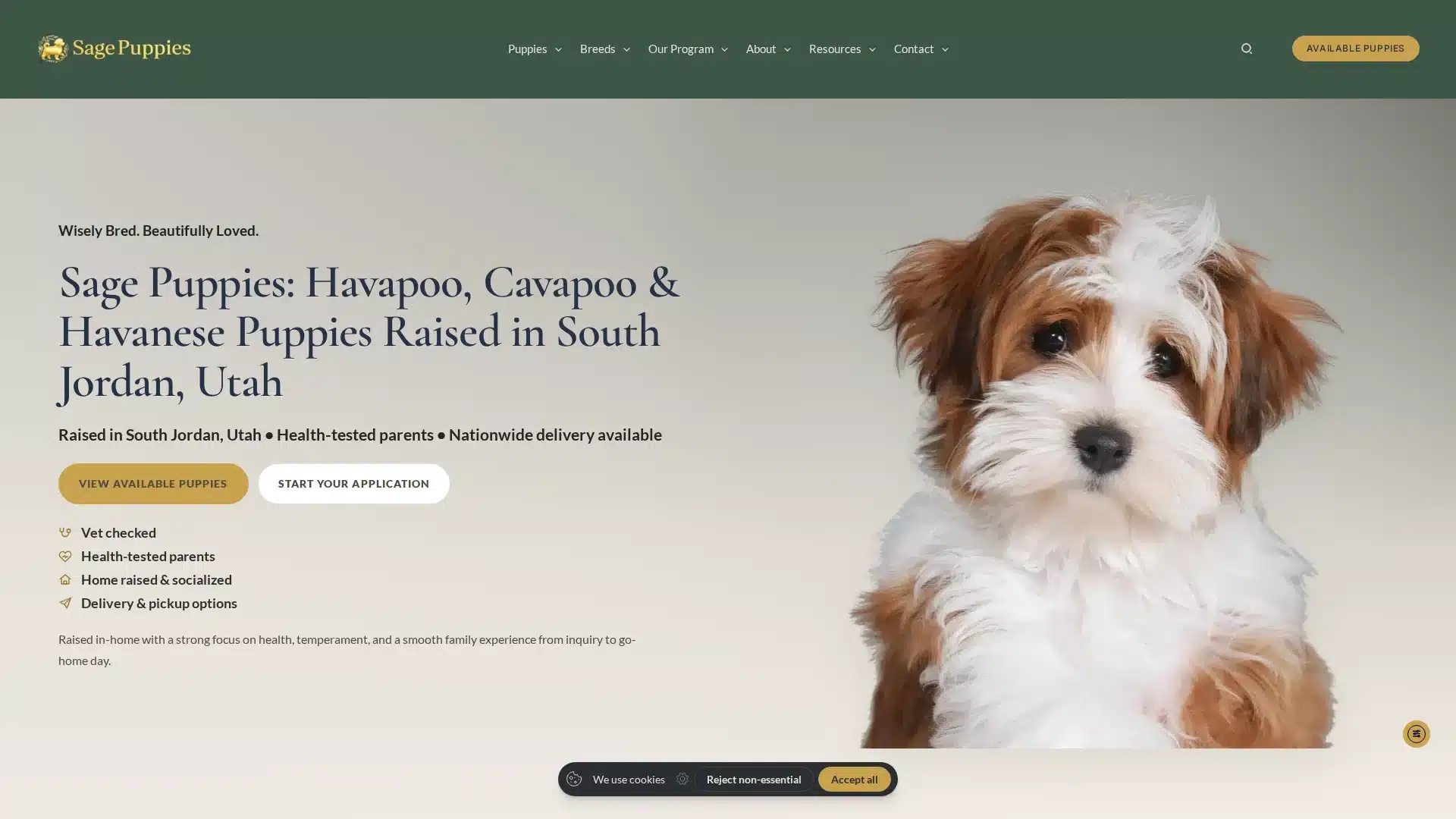
Sage Puppies
A boutique, owner-managed program in South Jordan, Utah, breeding Havanese, Havapoo, and Cavapoo only. Every sale starts with an application, then a reservation and deposit, so families are matched rather than picked off a list. Utah pickup is standard, with delivery arranged per order.
Key strengths
- Three breeds only, raised under one owner’s care
- Application-first puppy matching process
- Parent screening plus puppy exam and care records
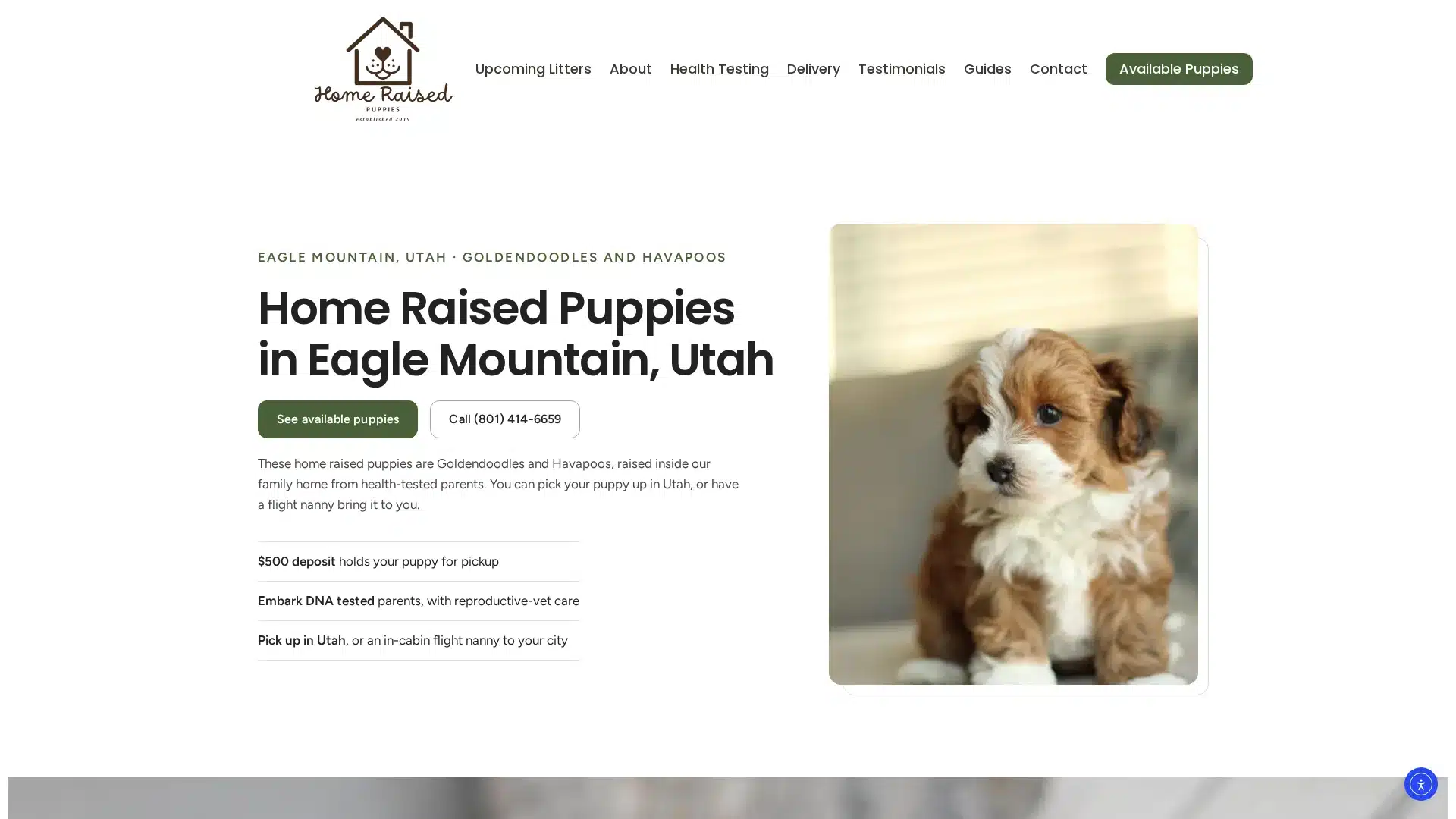
Home Raised Puppies
A family-home breeder in Eagle Mountain, Utah, raising Havapoo and Goldendoodle puppies among household life. It suits buyers who want a home setting with Utah pickup, or a flight nanny puppy delivery to their city. Parents carry Embark DNA screening.
Key strengths
- Embark DNA panel on parents, with reproductive-vet care
- $500 deposit holds a puppy for pickup
- In-cabin flight nanny option
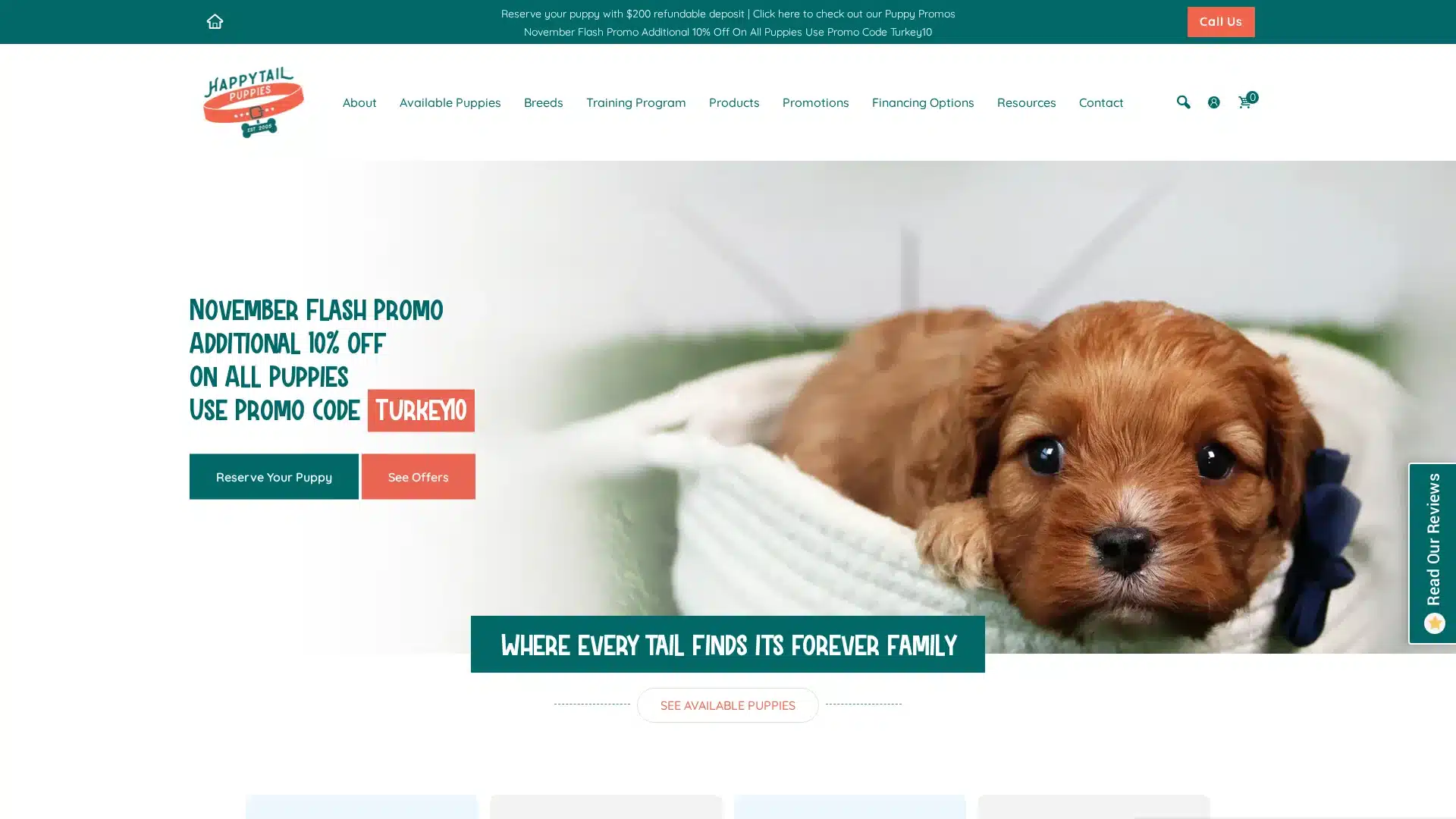
Happytail Puppies
A national-scale online catalog of small and doodle breeds, from Cavapoo to Bernedoodle and Chihuahua. It targets buyers anywhere in the country who prefer browsing listings, financing, and posted delivery options over visiting a Utah breeder in person. Health support is described on site, per listing.
Key strengths
- Broad breed catalog with per-listing pricing
- Online reservation with promotions and financing
- Published delivery options and training programs
Utah Local Breeders vs National Puppy Sellers: What Actually Differs

The short answer before the details
Neither model is automatically better. What matters is what you can verify before money changes hands. When comparing Utah breeders vs national sellers, the real difference is access: a local breeder lets you meet the puppy and its mother, while a national seller relies on paperwork, photos, and delivery. Buy from whichever one shows you exam records, parent health screening, and a written contract.
What stays the same in both models
The health basics do not change. Every buyer should expect a puppy vet exam record, results for parent eye, hip, and patella screening, DNA tests for known breed variants, and clear deposit and contract terms. Whether the puppy comes from South Jordan or across the country, a breeder who can answer questions about the litter, the sire, and the dam is doing the same job.
Where the two models genuinely diverge
Local pickup lets you see the raising environment, meet the mother, and skip transport stress. National sellers offer more choice but add flight nanny or ground transport costs, longer separation from the litter, and less ability to judge temperament in person. The verification checklist grows with distance, and so does the risk if you skip it.
Where the Puppies Are Raised and Whether You Can See It
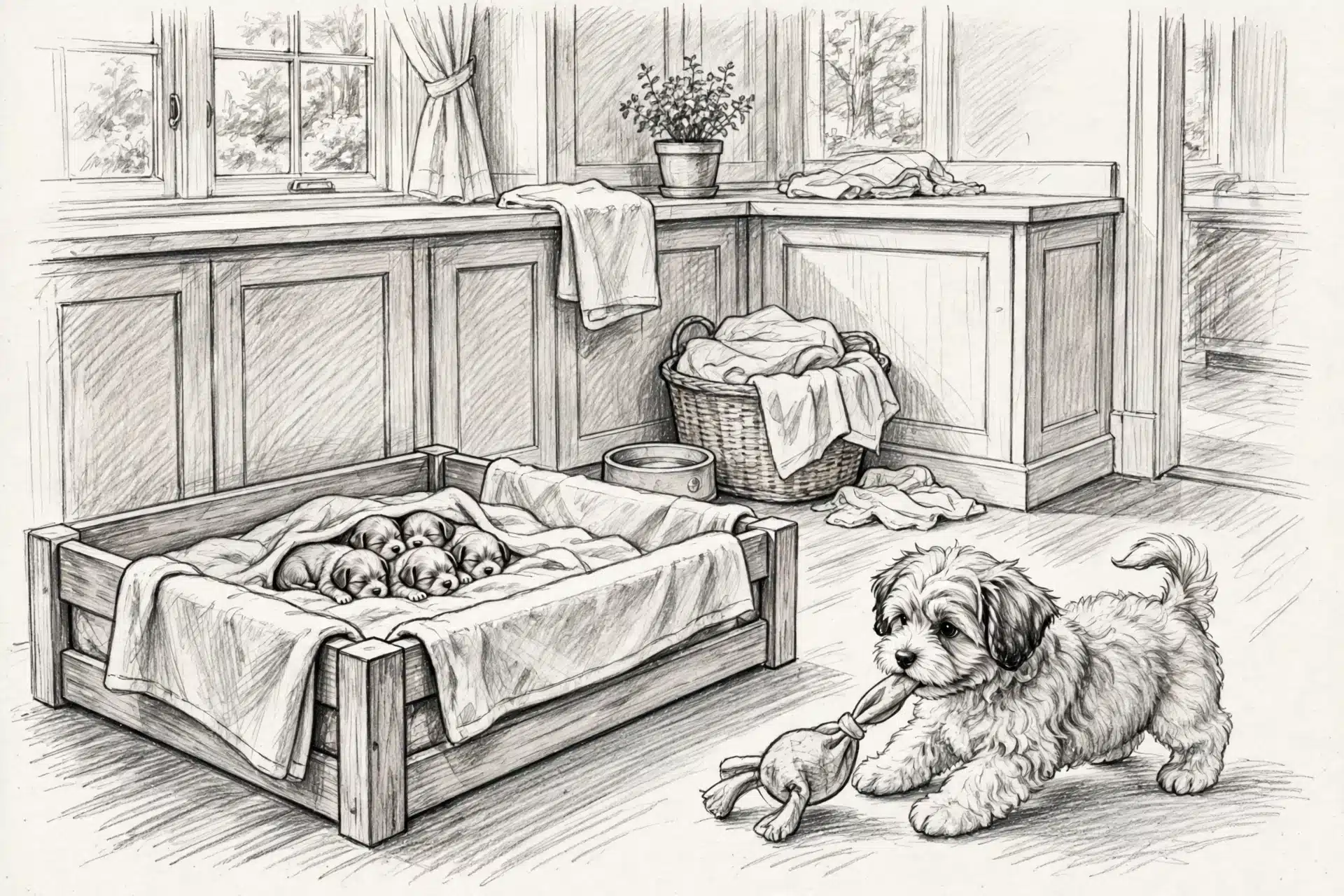
With local Utah breeders, you can often stand in the same room where a litter sleeps. With national sellers, the puppies may live in a kennel you will never enter, so you verify through records instead of your own eyes. That is the core difference in how you check things: utah breeders vs national sellers comes down to seeing versus proving.
What an in-person visit can and cannot prove
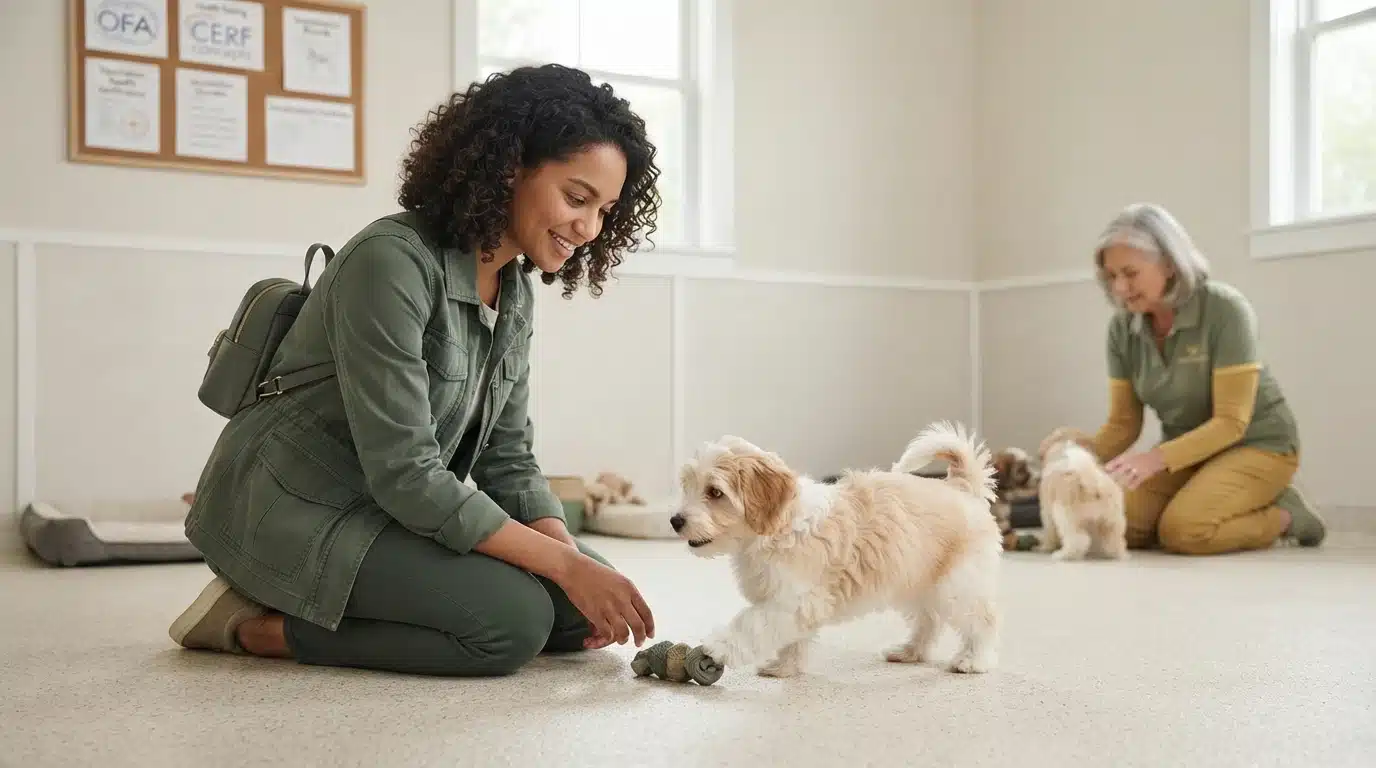
A visit lets you see the mother’s temperament, the space, and how the puppies handle people. Watch for clean bedding, no strong odor, and curious pups. But one visit cannot prove genetic health. You still need DNA results and parent screening records.
Verifying a seller you cannot visit
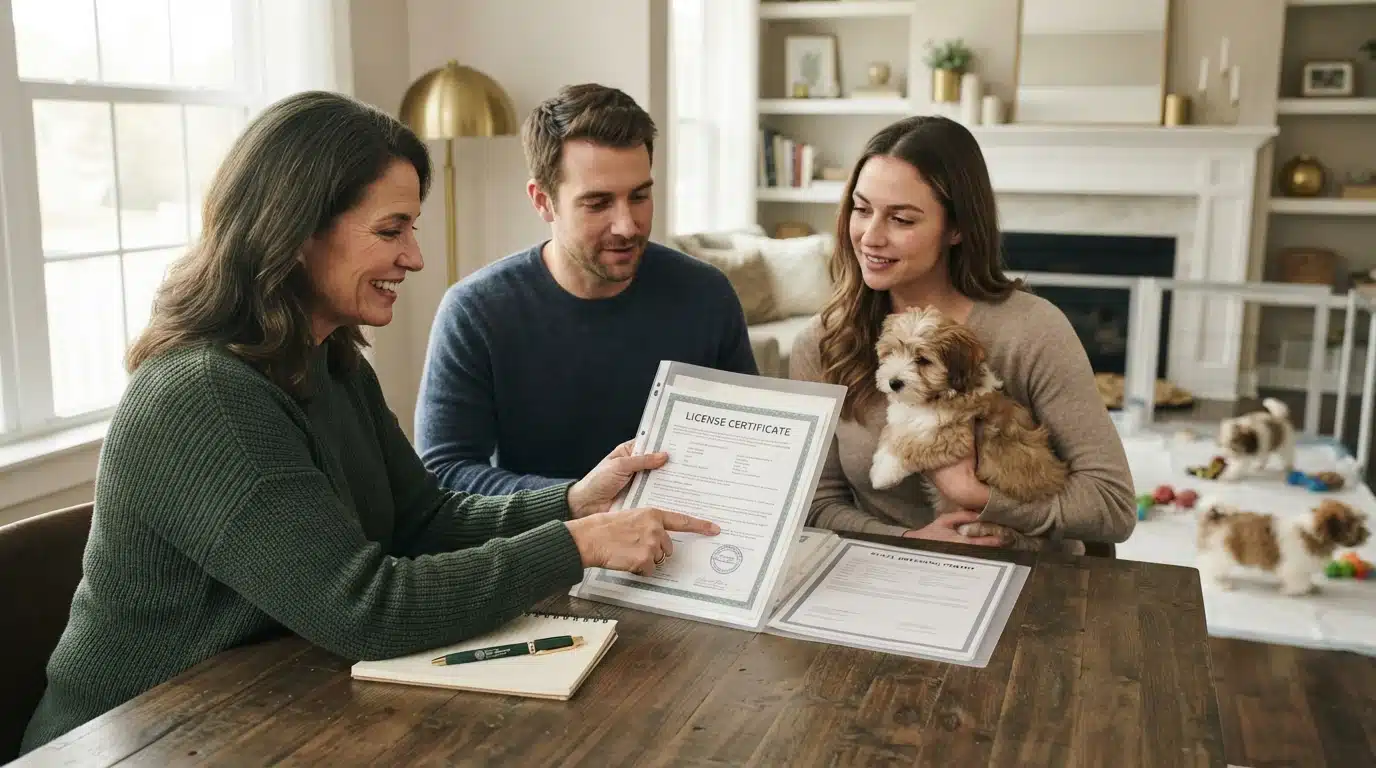
Ask for a video call at the actual kennel, not a pre-cut clip. Check the seller’s USDA status through APHIS public records when licensing applies. Read the contract carefully, and request vet exam dates in writing before paying any deposit.
How early socialization should be described
Good programs describe daily life: household sounds, handling by children, car rides, crate time starting early. Vague words like “well socialized” mean little without specifics. A review of Utah breeder warning signs shows how to spot the gap. Small breeds like the Havanese especially benefit from this early home exposure, so the puppy grows calm in busy family settings.
Price, Deposits, and the Real Cost of Getting a Puppy Home
Sticker price is not the total cost
A $3,500 puppy can cost thousands more once you add what matters. Local buyers pay gas and a crate, maybe nothing else. National delivery adds a flight nanny, ground transport, or air cargo fees, often $500 to $1,000 or more. Add a vet visit, vaccines, food, and gear, and the “cheaper” puppy may not stay cheaper.
How deposit structures differ
Deposits work three ways. Local breeders often hold a born puppy with a partial deposit, then collect the balance at pickup. Some programs let a deposit reserve a spot on a future litter, which means waiting months. National sellers may ask for full payment up front, especially when they ship. Ask what happens if a pregnancy fails or you change your mind before eight weeks.
Pricing transparency signals
Compare what you can actually see. The strongest signals:
- Published prices, not “inquire”
- Written deposit terms, including refund rules
- A clear total for delivery before you pay
Get every number in writing before the deposit clears. If a seller will not put the delivery fee or refund policy in text, treat that as your first answer about how the rest of the sale will go.
Health Testing: Reading Records Instead of Reading Claims
A puppy can look healthy and still carry problems you cannot see. So judge breeders by paperwork, not promises. Ask for three layers of evidence:
- Puppy exam records from a licensed vet, dated and named
- Parent clinical screening, such as eye, hip, and patella checks
- DNA variant results from a lab panel for known breed risks
The three layers of health evidence
Each layer proves something different. Exam records show the puppy is well today, but they say nothing about inherited risk. Parent screenings show adults passed hands-on checks. DNA results show which gene variants each parent carries. Ask for all three, and match dates and names before you pay.
What the Havanese Club of America actually requires now
For Havanese, the Havanese Club of America recommends breeders complete eye, hearing, hip, elbow, patella, and cardiac screening, recorded through the Canine Health Information Center (CHIC) database. A CHIC number does not mean results passed. It only means tests were done, so read the actual scores and dates.
Cross-breed screening differences
Havapoos and Cavapoos mix two parent lines, so screening follows the Poodle side too. Ask for patella and eye checks plus DNA panels covering Poodle and Cavalier risks, and confirm each result lists the dog’s registered name. Any breeder worth your deposit hands these over without pushing back.
Purchase Process: Applications, Contracts, and Who Holds the Relationship
Before paying a deposit, get four documents in writing: a puppy health exam record from a licensed vet, the parent’s clinical screening results, DNA test results for known breed variants, and a signed contract spelling out the seller’s return and health terms. If a seller cannot produce all four, slow down.

Application-first versus reservation-first
Local Utah breeders usually start with an application, then match you to a puppy. National sellers often do the reverse: you reserve first and pick from photos later. Application-first gives the breeder a chance to screen you and match temperament to your home, which matters more with small companion breeds.
Contract terms worth reading twice
Read the health guarantee window, spay and neuter requirements, return terms, and what happens if a genetic issue appears later. A national contract may ship a puppy back across the country if things go wrong. A local contract can mean one drive to South Jordan instead.
Communication quality as a leading indicator
How a seller answers questions before payment predicts everything after. Slow replies, vague health answers, or pressure to send a deposit today are warning signs. Boutique programs such as Sage Puppies handle matching directly with the owner, so the person who raised the puppy stays your contact after pickup too.
Getting the Puppy Home: Pickup, Drive, Flight Nanny, and the First Week
Yes, buying a puppy from an out-of-state breeder and having it shipped to Utah is legal. The catch is licensing: any seller shipping sight unseen must hold a USDA license, and you can verify it in the USDA Animal Care public search tool. Utah itself sets few entry rules, mostly a current health certificate.
The transport options each model makes easy
Local pickup is simple: you drive to the breeder’s home, meet the parents, and carry the puppy back yourself. That trip is often under an hour for Utah families. National sellers arrange a flight nanny, ground transport, or air cargo instead, adding $500 to $1,000 or more and a handoff with a stranger instead of the breeder.
Travel safety and paperwork
Either way, ask for a vet exam record dated within a few days of travel. Skilled shippers schedule direct flights, limit crate time, and carry food and water. For a drive, bring a harness, not an improvised restraint, and plan potty stops. Keep vaccination and health records with you, not in checked luggage.
Why the first week matters more than the transport
Puppies settle within days; habits take longer. Set a quiet space, keep feeding consistent with what the breeder used, and hold a simple potty and crate routine from day one. For Havanese, Havapoo, and Cavapoo homes, our first week home guide walks through it step by step.
After the Sale: Training, Financing, and Lifetime Support
What national sellers do well after pickup
Big sellers often handle financing cleanly, with posted payment plans and third-party lenders, and their sites carry training guides you can read before the puppy arrives. Delivery also brings a handoff checklist. The weak spot is follow-up: once the transport ends, you rarely talk to the person who raised your puppy again.
What direct access is worth
A local breeder can watch your puppy grow, so questions about eating, house training, or a limp get answered by someone who knows the litter. That access matters most in the first month. Programs like Sage Puppies stay in touch after pickup, and many Utah families can visit again rather than describe a problem over email.
Grooming reality for Havanese, Havapoo, and Cavapoo
All three coats need regular brushing, and mats form fast behind the ears and under the legs. Most owners book professional trims every six to eight weeks. Cavapoos often need tear stain care, and Havapoos inherit the Havanese double coat, which mats faster than a poodle mix coat if you skip weekly sessions.
Which Should You Choose: A Utah Breeder or a National Seller?
Both routes can work. The right choice depends on how much you can verify in person and how your puppy will travel.
Choose a Utah breeder when
You live close enough to visit, want to meet the mother and see the raising environment, or prefer pickup over shipping. A local breeder lets you check paperwork in person, ask questions face to face, and skip the $500-to-$1,000 transport cost. You can also return for support during those tricky first weeks.
Choose a national seller when
The breed or litter you want is not available locally, or no nearby program meets your health standards. National sellers ship by flight nanny or ground transport, so verify the breeder’s USDA status, screening results, and contract terms before you pay a deposit. Ask for video calls and recent vet records.
The middle case and your next step
Many Utah programs also deliver out of state, so the lines blur. Before you commit either way, confirm three things: a licensed vet exam for the puppy, parent health testing, and a written contract. Our puppy reservation FAQ walks through pricing, deposits, and delivery step by step.

If you’d rather meet the breeder than a delivery driver, start with Sage Puppies. Browse the application, ask your questions first, and see whether one of our Havanese, Havapoo, or Cavapoo puppies is the right match for your family.
Frequently Asked Questions
Q1: Utah local breeders vs national sellers?
Neither wins outright. Local breeders let you visit, meet the mother, and skip transport costs. National sellers offer wider catalogs but require USDA licensing checks, video calls, and flight nanny fees of $500 or more.
Q2: Do I need a Utah breeder license to sell puppies?
Utah has no statewide breeder license, though Salt Lake City requires kennel and breeder licensing.
Q3: What health records should I request before a deposit?
Ask for a dated puppy vet exam, parent eye, hip, and patella screening, and DNA variant results.
Q4: How much does flight nanny puppy delivery cost?
Usually $500 to $1,000 or more, on top of the puppy price.
Q5: Is shipping a puppy sight unseen legal?
Yes, if the seller holds a current USDA license, verifiable in APHIS public records.
Q6: Can I visit a Utah breeder before paying?
Most local programs welcome visits; ask early and confirm what you will see.
Conclusion
The difference between Utah local breeders and national puppy sellers comes down to what you can verify. A local breeder lets you meet the mother, see the raising space, and drive home with your puppy instead of paying $500 or more for a flight nanny. A national seller gives you a wider catalog, but every check happens through paperwork: exam records, parent screening, DNA results, and USDA licensing you confirm in APHIS records. Neither model wins. Pick the seller who hands over all four documents, puts deposit and refund terms in writing, and answers your questions before your money does the moving.