Quick Summary: Most Cavapoo puppy barking is normal communication caused by alertness, attention seeking, fear, boredom, or unmet needs, so identify the trigger before training. Rule out health problems, build a calm routine, stop rewarding barking, and reward pauses so your puppy learns that calm behavior earns treats and attention. Handle doorbells, visitors, and separation slowly, keep sessions brief and consistent, and contact a vet or force-free trainer if barking changes suddenly or comes with signs of distress.
Your Cavapoo has been home three weeks and has already announced every delivery, every visitor and every car in the driveway, including the ones that never stop. The barking feels constant, and you worry the neighbors are keeping score.
Here is the good news: most Cavapoo barking is normal puppy communication, not a behavior problem. Cavapoos are alert, people-focused dogs, so they tend to comment on everything. The challenge is figuring out why your puppy barks, because the fix depends entirely on the cause.
This guide walks you through a simple diagnostic order: rule out needs like hunger, potty and fear first, then break the attention-reward loop that keeps barking alive, then teach a calm alternative. We also cover when barking points to a medical issue instead of training. The steps are age-appropriate and drawn from documented experience raising Cavapoo litters in South Jordan, Utah. No guaranteed timelines, just a clear path to a quieter house.
Before You Start: What You Need to Know and Gather
A Cavapoo puppy barks for reasons, not to annoy you. Most of the noise comes from attention seeking, being left alone, or normal puppy alertness. Your job is to figure out which one you are hearing before you correct anything.
Gather a few things first: a consistent training treat, a comfy crate or playpen, and a simple log of when the barking happens. Note the trigger, the time, and how long it lasted. Three days of notes usually reveal a pattern.
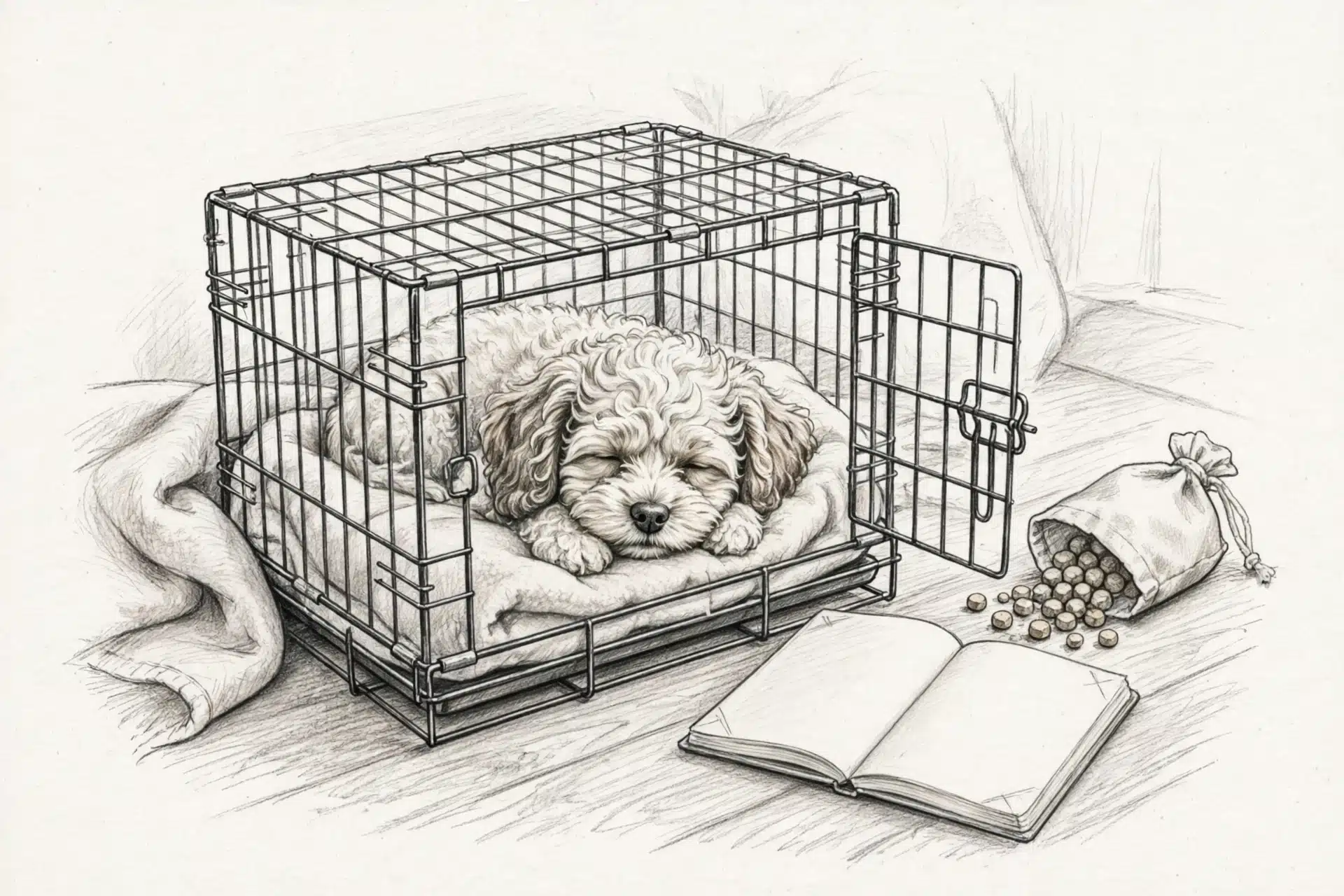
Know what is normal for the age you have. Puppies under six months bark more than adults do, and it fades with steady routines. Sage Puppies shares month-by-month expectations on its Cavapoo puppy milestones page, so you can match your puppy’s noise to its stage.
One rule to keep: never reward barking with what the puppy wants.
Step 1: Identify Why Your Cavapoo Is Barking
Most Cavapoo puppies bark for one of four reasons: alert, demand, fear, or boredom. Each type sounds and looks different, and each needs a different fix. Before you train anything, watch when the barking happens, what it sounds like, and what your puppy gets out of it. That pattern tells you which problem you actually have.
What Alert Barking Sounds and Looks Like
Alert barking is sharp, quick, and aimed at something. Your puppy hears a door slam, spots a dog through the window, or notices a package arrive, then fires off two or three barks. The body stays alert but not panicked: ears forward, tail up, eyes fixed on the trigger. Most puppies stop once the thing goes away, especially if you calmly acknowledge it.
Demand Barking: When Barking Gets Your Dog Attention
Demand barking has a clear payoff. Your puppy barks, you look, talk, or pick him up, and he learns that barking works. These barks are often rhythmic and persistent, and they stop the moment you give in. Watch your own response for a day or two. If barking reliably earns food, play, or eye contact, you are looking at a training problem, not a noise problem.
Fear-Based Barking and Barking From Distress
Fear barking sounds higher, faster, and more desperate. It shows up during storms, separation, or new situations, and it comes with body language cues: tucked tail, flattened ears, pacing, or trembling. A puppy barking alone at night or behind a gate is often stressed, not stubborn. Distress needs patience and gradual confidence building, never scolding, because punishment tends to make fear worse.
Boredom, Frustration and Unmet Needs
A puppy with leftover energy barks at nothing in particular. The sound is loose and repetitive, and it appears after long stretches in a crate or quiet house. More structured play, short training sessions, and chew time usually solve it. For a full picture of what your puppy should handle at each age, see how Cavapoo puppy milestones progress month by month.
Once you have matched your puppy’s barking to one of these four types, you can move to the right fix instead of guessing.
Step 2: Rule Out Health and Anxiety Before You Train
Before you start training, check that the barking is behavioral. Pain, illness, and genuine anxiety all mimic ordinary puppy noise, and no training plan will fix a dog that feels unwell. This step takes an hour. It can save you weeks of frustration.
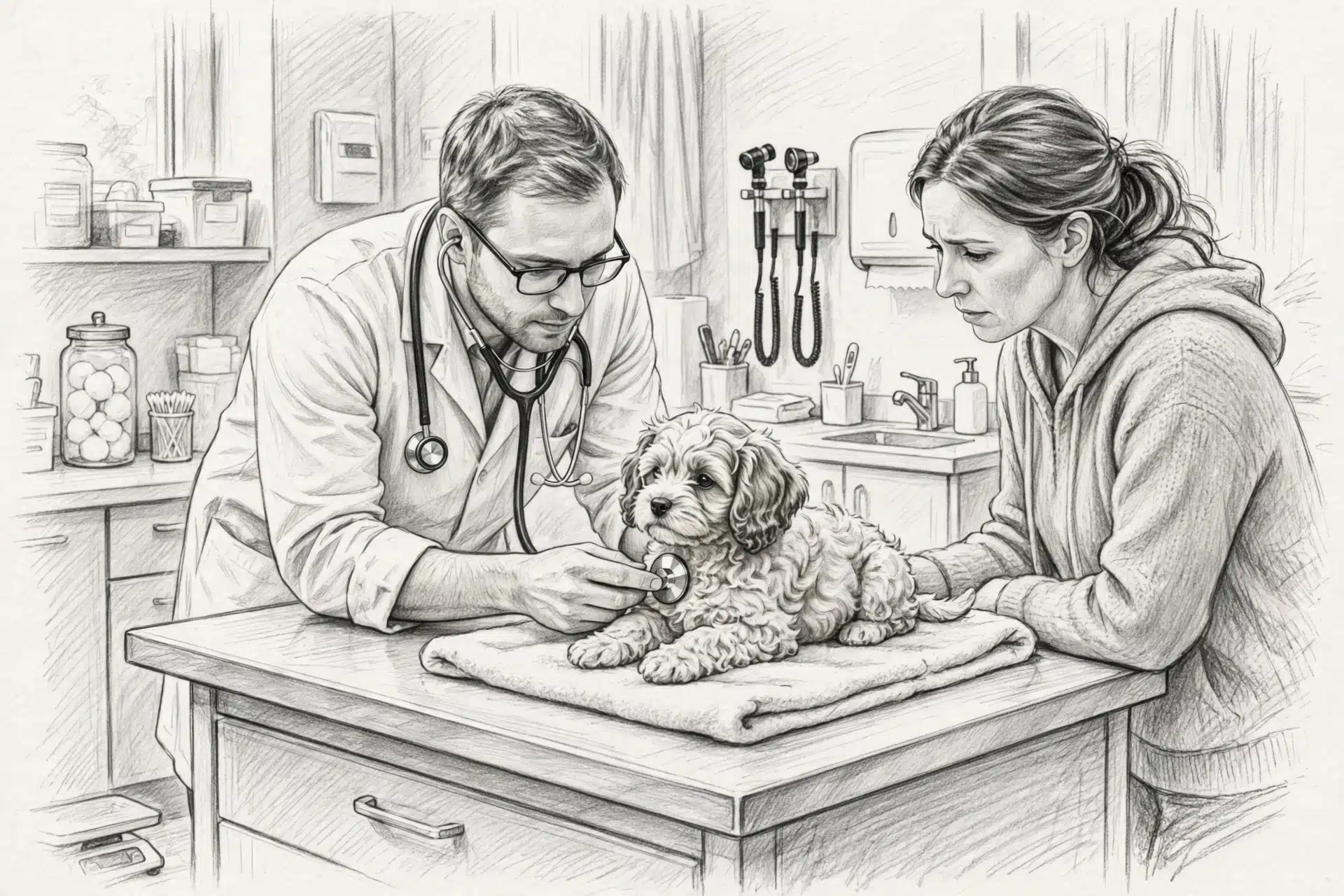
Sudden Changes in Barking Deserve a Vet Visit
A puppy that suddenly barks more, or barks differently, needs a health check first. Watch for pacing, scratching, drooling, accidents, or a changed appetite alongside the noise. The University of Illinois veterinary school advises seeing your veterinarian when barking comes with sudden behavior changes or signs of anxiety. A UTI, ear infection, or sore tooth can all drive new noise.
How Separation Barking Differs From Alert Barking
Alert barking has a trigger: a doorbell, a passerby, a dropped pan. It stops once the trigger goes away. Separation barking starts when you leave and continues, often with pacing, house soiling, or drooling. VCA Hospitals notes that a dog with this pattern may be dealing with separation anxiety rather than a training gap. The distinction matters because the two problems need different solutions. Camera footage of a puppy alone tells you which one you have.
When to Bring In a Professional
Call a certified trainer or veterinary behaviorist if your puppy panics when alone, barks nonstop for over ten minutes, or shows no progress after two weeks of consistent work. Fear-based barking rarely improves on its own.
What Not to Do With a Scared Puppy
Never punish fear barking with yelling, shaking, or a bark collar. Punishment can deepen anxiety and teach your puppy to hide the problem instead. Comfort, distance from triggers, and patient repetition work better.
Step 3: Build a Calm Baseline Before You Ask for Quiet
A tired or unsettled puppy barks for reasons no training can fix. Before you correct barking, set up the conditions that make calm the easy choice.
Sleep, Schedule and a Predictable Day
Puppies need far more sleep than adult dogs, often 18 to 20 hours a day. An overtired Cavapoo gets cranky and vocal, the way a toddler does. Feed, potty, play and nap at roughly the same times daily, and your puppy will settle faster because it can predict what happens next.
Exercise and Mental Enrichment That Actually Helps
Short play sessions beat long ones. A few minutes of fetch, a sniff walk in the yard, or a puzzle feeder at mealtime uses real energy. Mental work tires a puppy out faster than a marathon lap around the living room. Skip intense exercise before growth plates close, and keep sessions brief.
Setting Household Rules Everyone Will Follow
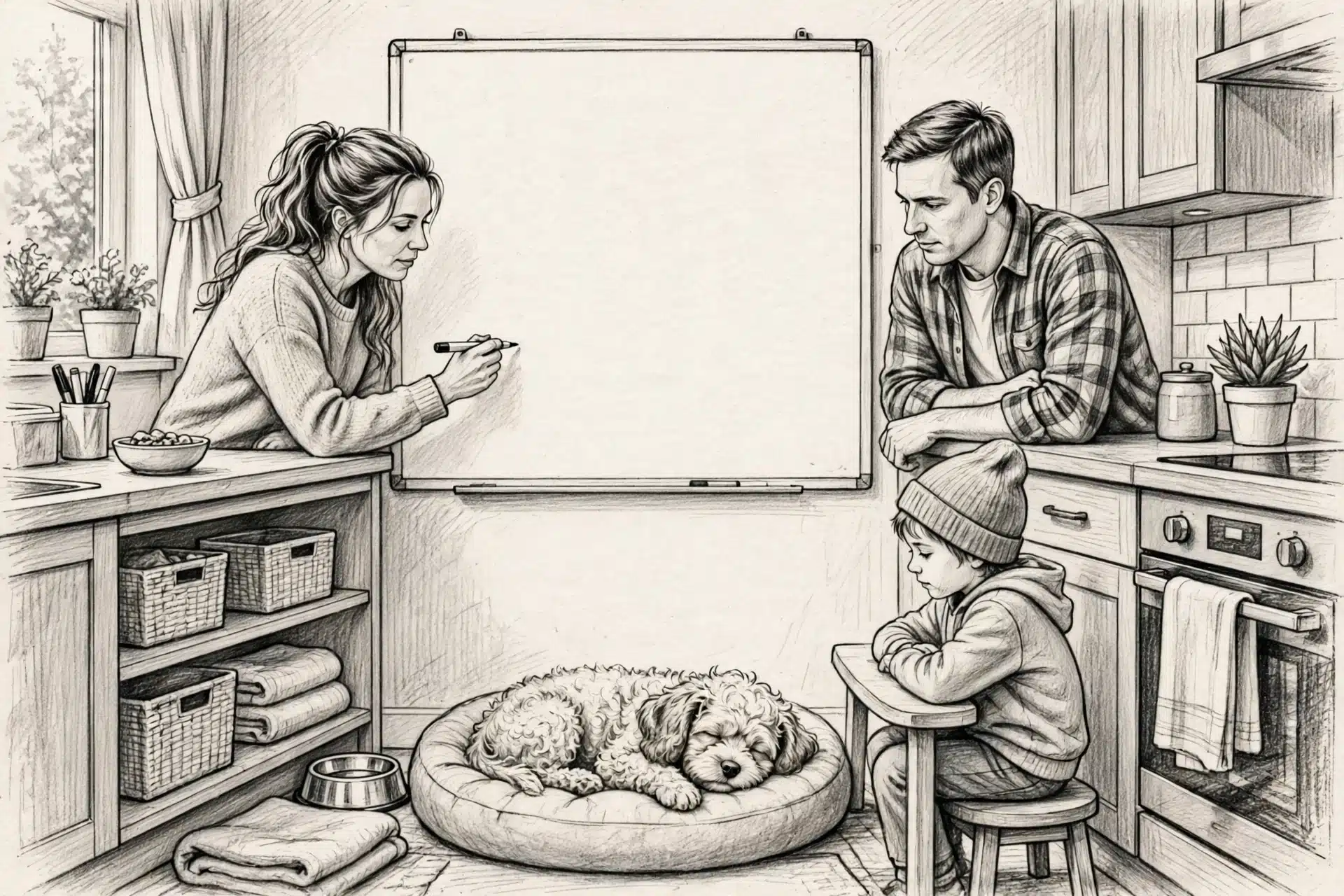
Kids and roommates undo training fast when one person sneaks the puppy onto the couch or rewards whining with attention. Agree on the basics together: no responding to demand barking, same cue words, same feeding rules. Write them down if you have to. Consistency across every person in the house is what makes the plan work.
Setting Up a Calm Spot for the Puppy
Give your puppy one quiet place, like a crate or a gated corner with a bed and a chew. Family members should never bother the puppy there. A calm spot becomes the off switch your puppy can choose on its own.
Step 4: Teach a Quiet Response Your Puppy Can Actually Use
Start With a Behavior Your Puppy Already Offers
Your Cavapoo already pauses sometimes. He stops barking to sniff a treat, glance at you, or flop down. Those pauses are your raw material. Instead of punishing the noise, wait for the quiet moment he gives you for free. Trainers call this capturing: rewarding a behavior the dog offers on his own, then naming it later.
Capture the Pause and Add Your Word
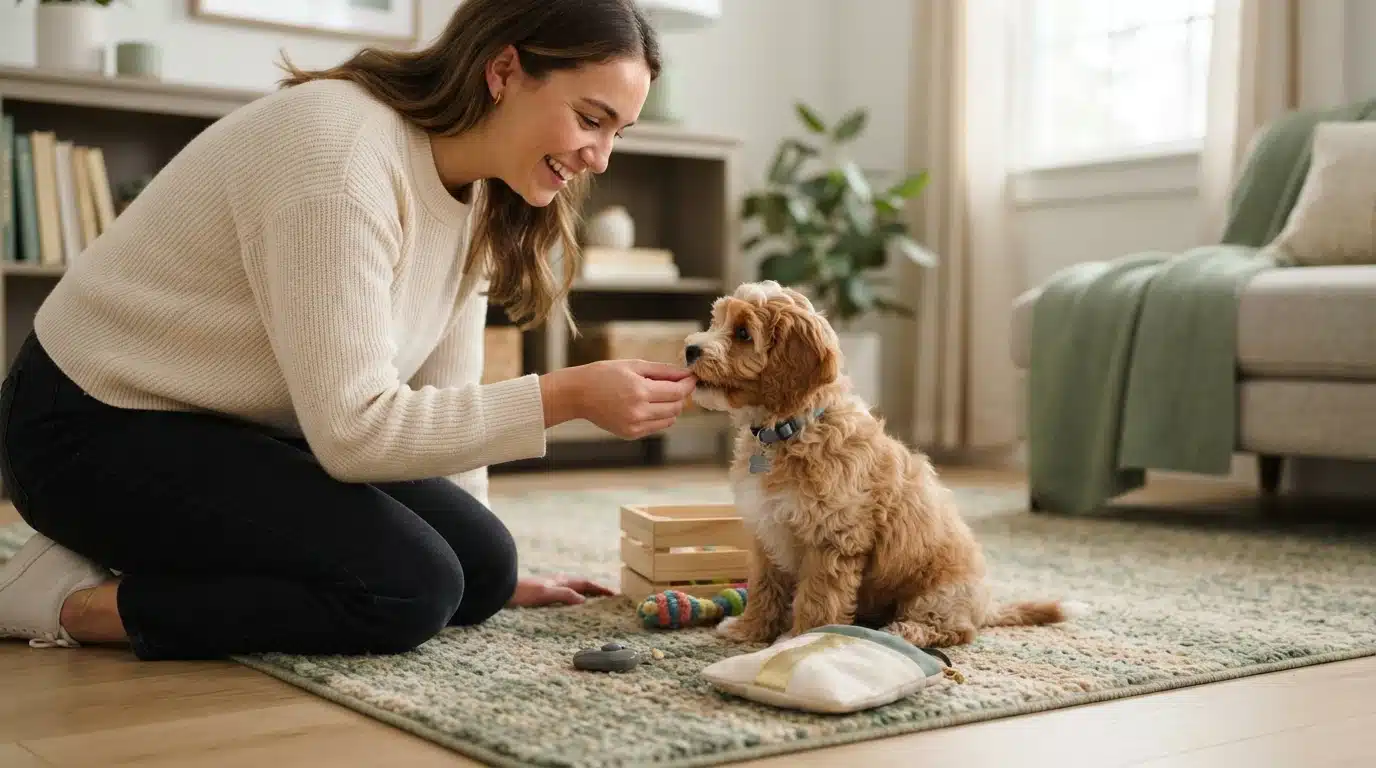
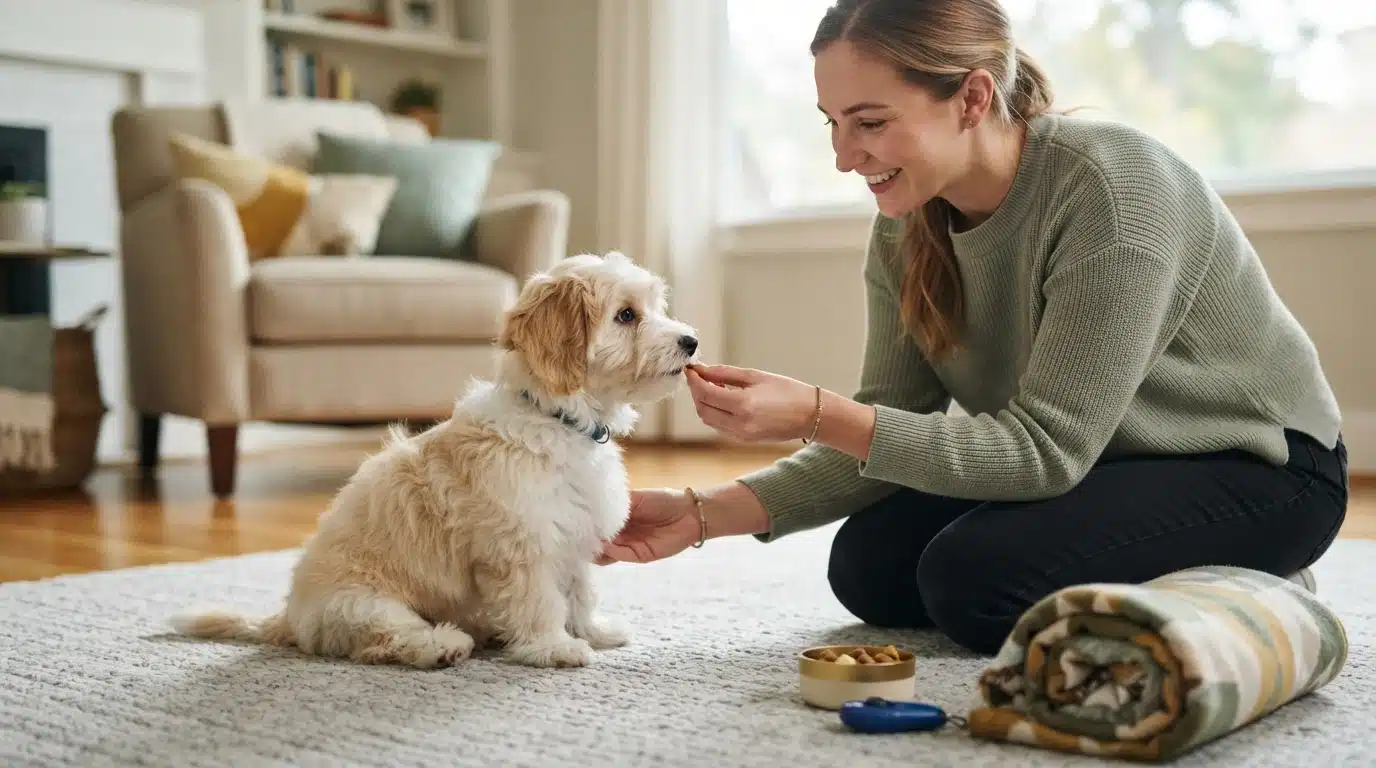
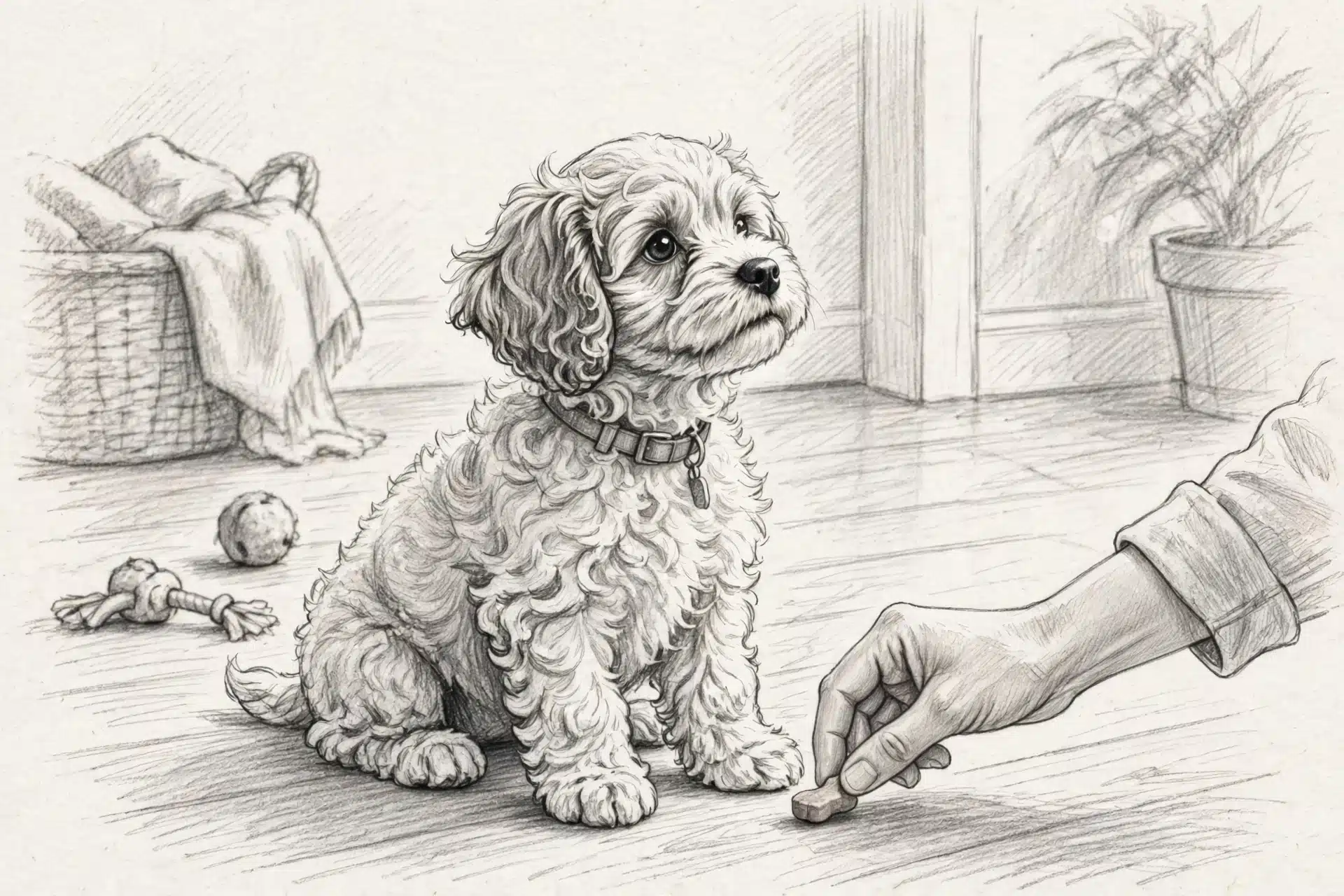
Keep tiny treats in your pocket during calm parts of the day. When your puppy stops barking, even for two seconds, quietly place a treat between his front paws. No fanfare. After a few days of this, add a word like “quiet” right as the pause happens. Pairing the word with the pause is what makes it stick, and it works far better than saying “quiet” while he is still barking.
Reward the Calm, Not the Silence
Timing decides whether this works. Reward relaxed body language, such as a soft face, a loose body, or a puppy lying down. If you reward a bark followed instantly by silence, you teach “bark first, then get paid.” So mark the calm itself, not the gap after noise. Short sessions of two or three minutes beat long drills, and a calm puppy learns faster than a worked-up one.
Add Distance From the Trigger Gradually
Once your puppy pauses reliably at home, practice near mild versions of his triggers. Stand a good distance from a door, or work with the TV on low. Ask for the pause, reward it, then move slightly closer over several days. If he barks, you moved too fast, so step back a level. Small steps build a response that holds up under real excitement.
Build a Release Word and a Calm Settle
Finish the skill with a release word, such as “free,” so your puppy learns quiet has an endpoint. Pair this with settling on a mat, a foundation step covered in more detail in our beginner training tips for small breed puppies.
Step 5: Handle the Triggers That Set Your Puppy Off
Most Cavapoo barking is not random. It fires at predictable triggers, so your job is to spot them, then lower the payoff each one brings.
The Doorbell, the Knock and the Delivery
The doorbell is the classic spark. Ring it yourself at low volume, feed a treat, and stop. Repeat over days, quieter chime first, then normal volume. Ask a family member to knock while you feed. When a real visitor arrives, the puppy gets treats for quiet, never attention for noise. Consistency here matters more than speed.
People Passing the Window or the Fence Line
Movement outside draws barking because it seems to work. The person leaves, so your puppy thinks barking won. Block the view with frosted film on the lower panes, or close curtains during peak hours. If the window stays interesting, teach a “go to mat” cue and reward calm lying down.
Other Dogs and Visitors at the Property
Fence-line barking builds fast, so interrupt early and create distance. For guests, keep greetings calm and let your puppy settle before anyone says hello. Pairing new people with treats builds positive associations; games like these fit well with at-home confidence building for Cavapoo puppies.
Weekly Reviews That Show Progress
Once a week, jot which triggers barked, how long, and what helped. Small wins stack quietly, and the notes prove it.
Step 6: Build Up Alone Time Without the Barking
Create a Predictable Departure Routine
Keep goodbyes short and boring. Twenty minutes before you leave, give your Cavapoo a bathroom break, a small chew, and a calm settle spot. Then pick up your keys, go, and skip the long hug. A steady pattern tells your puppy that leaving is normal, not a warning.
Build Duration in Small Steps
Start with seconds, not hours. Step out the door, come back before barking starts, and repeat. Add time slowly: one minute, then three, then ten. Always return while your puppy is still quiet, because that teaches calm alone time pays off, and growing sessions gradually is the core of easing puppy separation anxiety.
If barking starts, you went too fast. Drop back to the last easy duration and rebuild.
Use Crates and Pens Well
A crate works only if your puppy already likes it. Feed meals inside, toss treats in with the door open, and never use it as punishment. Once your puppy settles happily in a covered crate or playpen, alone time feels safe instead of scary.
Know the Signs of Real Distress
Some whining is normal puppy noise. But pacing, drooling, escape attempts, or accidents in a house-trained puppy point to true separation anxiety, not boredom. If those signs appear within minutes of every departure, call your vet or a force-free trainer.
Common Mistakes to Avoid
Responding to Barking Instead of Redirecting
Yelling “quiet” mid-bark often reads as attention, which feeds the reward loop. Wait for a pause, then reward the silence with praise or a treat. If you answer the bark, your puppy learns that making noise works.
Sessions That Are Too Long or Too Intense
Puppies burn out fast. Keep training blocks to five minutes or less, once or twice a day, and end on a success. A tired or hungry puppy cannot focus, so schedule practice after a nap and a meal.
Expecting a Quick Fix From a Puppy
Barking habits rarely disappear in a weekend. Your Cavapoo is still learning how the world works, so expect weeks of small wins mixed with setbacks. Consistency matters more than speed: same cue, same response, every person in the household. Progress stalls most often when one family member slips and rewards the barking. Track what improves week by week instead of judging any single rough day. Patience pays off faster than frustration.

Barking responds to steady, kind training, and it starts with the right puppy. Sage Puppies matches families with calm, well-socialized Cavapoo puppies and guides you through the first weeks. Browse available puppies or start your application today.
Frequently Asked Questions
Q1: Cavapoo puppy barking?
Most Cavapoo barking is normal puppy communication. Find the cause first: alert, demand, fear, or boredom. Rule out needs and health issues, then break the attention-reward loop and reward calm moments instead of answering the noise.
Q2: How long does it take to stop demand barking?
There’s no fixed timeline, but expect weeks of consistent work. If every person in the house stops rewarding barking, most puppies improve within a few weeks, with occasional setbacks along the way.
Q3: Should I ignore my Cavapoo puppy’s barking at night?
Check needs first, like potty or cold. Whining for attention gets no response; distress signs like pacing mean comfort, not ignoring. A predictable bedtime routine usually settles night noise within a couple of weeks.
Q4: Are bark collars safe for Cavapoo puppies?
No. Punishment tools can deepen anxiety and teach your puppy to hide the problem instead of fixing it. Positive training that rewards calm behavior works better and protects your puppy’s confidence.
Q5: Why does my Cavapoo bark more than other puppies?
Cavapoos are alert and people-focused, so they tend to comment on everything. Puppies under six months also bark more than adults, and steady routines plus enough sleep and play reduce the noise naturally.
Q6: When is barking a medical problem?
See your vet if barking starts suddenly, changes in sound, or comes with appetite loss, drooling, scratching, or accidents. A UTI, ear infection, or sore tooth can all drive new barking that no training will fix.
Wrapping Up: A Quieter, Happier Cavapoo
Most Cavapoo puppy barking traces back to one of four causes: alert, demand, fear, or boredom. Diagnose first, then act. Rule out needs and health problems before training, and never reward barking with attention. Break the payoff loop, reward calm moments, and build alone time in small steps. Expect weeks of steady progress, not overnight fixes, and skip punishment tools entirely. If barking appears suddenly or comes with other symptoms, call your vet before changing anything in your training plan. Consistency from every person in the house is what makes the quiet stick.