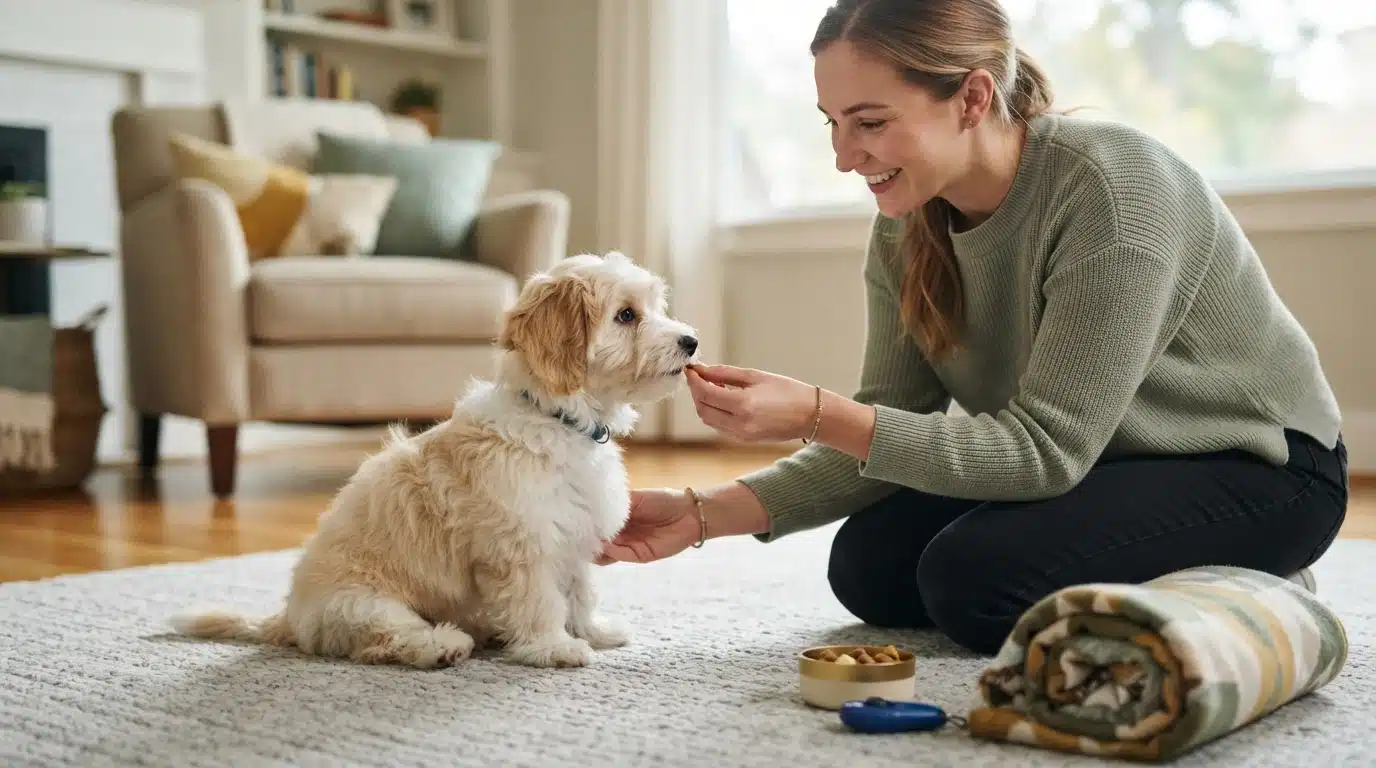
Quick Summary: Start training your small breed puppy on day one with two to five-minute, reward-based sessions that fit their short attention spans and sensitive handling needs. Take them out every one to two hours while awake, after naps, meals, and play, use one consistent potty spot, and never punish accidents. Socialization should begin early with safe, positive exposure, while basic skills, leash work, crate training, and recall progress gradually through the first few months.
Most first-time owners lose their patience in week one, and it is rarely the puppy’s fault. It is an accident on the rug that nobody saw coming. If you are searching for puppy training for beginners, the real problem is usually timing and size, not effort. Small breeds like a Havanese, Havapoo, or Cavapoo have tiny bladders, short attention spans, and a socialization window that closes faster than new owners expect. This guide gives you a week-by-week plan built for small breed physiology: a puppy potty schedule that actually fits their bodies, training sessions kept to a few minutes, and reward-based steps you can start the day your puppy comes home, whether you pick up in Utah or welcome a delivery. It draws on reward-based guidance from AVSAB and puppy timelines from AKC and PetMD, so beginner puppy training feels manageable from day one.
When Should You Start Training Your Small Breed Puppy?
Start training your small breed puppy on day one. Puppies as young as 8 weeks can learn names, sit, and a potty routine, and AVSAB’s position statement says puppies can begin socialization classes at 7 to 8 weeks. Waiting until 6 months wastes the easiest learning window your puppy will ever have.
Here’s the short timeline:
- Day 1: Name recognition, one potty spot, a quiet crate or bed.
- Week 1-2: Potty schedule, crate naps, gentle handling, calm greetings.
- Week 3-4: Short reward-based sessions, sit, come, leash introductions.
- Week 5+: Puppy class and structured socialization.
The Day You Bring Your Puppy Home
Training begins the moment your puppy crosses your doorstep, not after a settling-in period. Keep that first day calm: show your Havanese, Havapoo, or Cavapoo the potty spot, the water bowl, and the crate, then let rest do the rest. Delivery and pickup families should expect a decompression stretch of a few quiet days before bigger lessons start. If you’re still preparing, our guide to small breed puppies covers what the first weeks look like.
What Counts as Training in Weeks One and Two
New puppy training at this stage is small and constant. It’s a potty trip after every nap and meal, treating when your puppy pees outside, and saying the name before meals. It’s also crate naps, brief handling of paws and ears, and quiet greetings with family. For puppy training for beginners, think repetition in one-to-two minute bursts, not formal sessions.
When to Sign Up for a Class
Book a puppy class as soon as your vet confirms your puppy has had at least one round of vaccines, usually around 8 to 10 weeks. AVSAB recommends starting socialization classes as early as 7 to 8 weeks, before full vaccination, because the socialization window closes early. Choose a class that uses reward-based methods and keeps puppies under 20 pounds together, so your little one isn’t trampled by big, rowdy adolescents.
How Small Breed Puppies Learn Differently
Small breed puppies learn the same basic skills as big dogs, but the physics of being tiny change how you teach. The main differences come down to bladder size, energy, and how much handling their small bodies tolerate.
| Factor | Small Breed Difference | Your Adjustment |
|---|---|---|
| Bladder capacity | Much smaller, fills faster | More potty breaks on a tighter schedule |
| Session length | Burns out quicker | Keep sessions to 2-5 minutes |
| Handling sensitivity | Fragile joints, quick to startle | Use soft, low-to-the-ground handling |
Small Bladders and Faster Metabolisms
A tiny body burns calories fast, which means food and water move through quickly. Most puppies can hold it about one hour per month of age, and small breeds sit at the low end of that range. Expect a steady puppy potty schedule with breaks after every nap, meal, and play session, since full bladder control usually arrives closer to 4 to 6 months.
Attention Spans, Arousal, and Handling Sensitivity
Havanese, Havapoo, and Cavapoo puppies are eager learners who tire fast. Two to five minutes of positive reinforcement puppy training beats a long session, so end while your puppy still wants more. These dogs also feel handling deeply: rough play or loud rooms can tip them into over-arousal fast. Watch for yawning, lip licking, or wandering off, and give a crate nap before those signals escalate.
What This Means for Your Training Plan
Adjust the plan, not the goals. Your puppy can still learn everything a large breed can; the path just runs through shorter sessions, more frequent breaks, and gentler hands. The basics stay the same, whether you are preparing for a new arrival or reviewing what every small breed puppy owner should know.
The Core Skills to Teach First
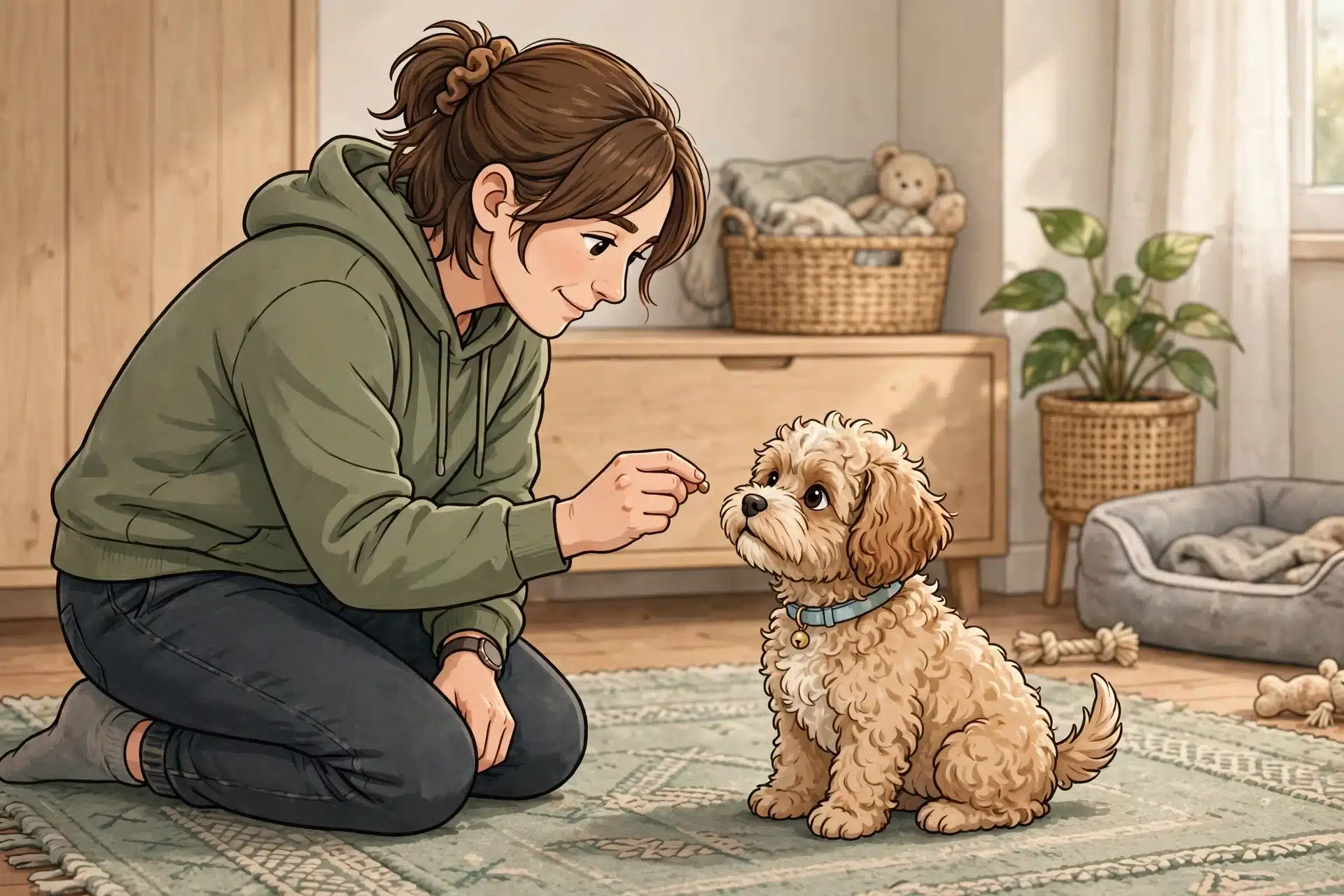
Puppy training for beginners comes down to four skills taught in order: attention, a few basic cues, recall, and mouth manners. Train each one with positive reinforcement puppy training, meaning you reward the behavior you want instead of punishing the one you don’t. AVSAB’s position statement on humane dog training recommends reward-based methods for everything, and small breeds take to them especially well. Keep sessions to 2-5 minutes.
Marker Word, Name Response, and Attention
- Pick a marker word such as “yes,” then say it and deliver a treat within one second, ten times in a row. That word becomes a promise of payment.
- Say your puppy’s name once, in a happy voice. The moment she looks at you, mark and reward.
- Repeat in harder spots, first in the kitchen, then the yard, then on walks. Name response is the root of every later skill because it gets her attention before you ask for anything else.
Sit, Down, and Settle on a Mat
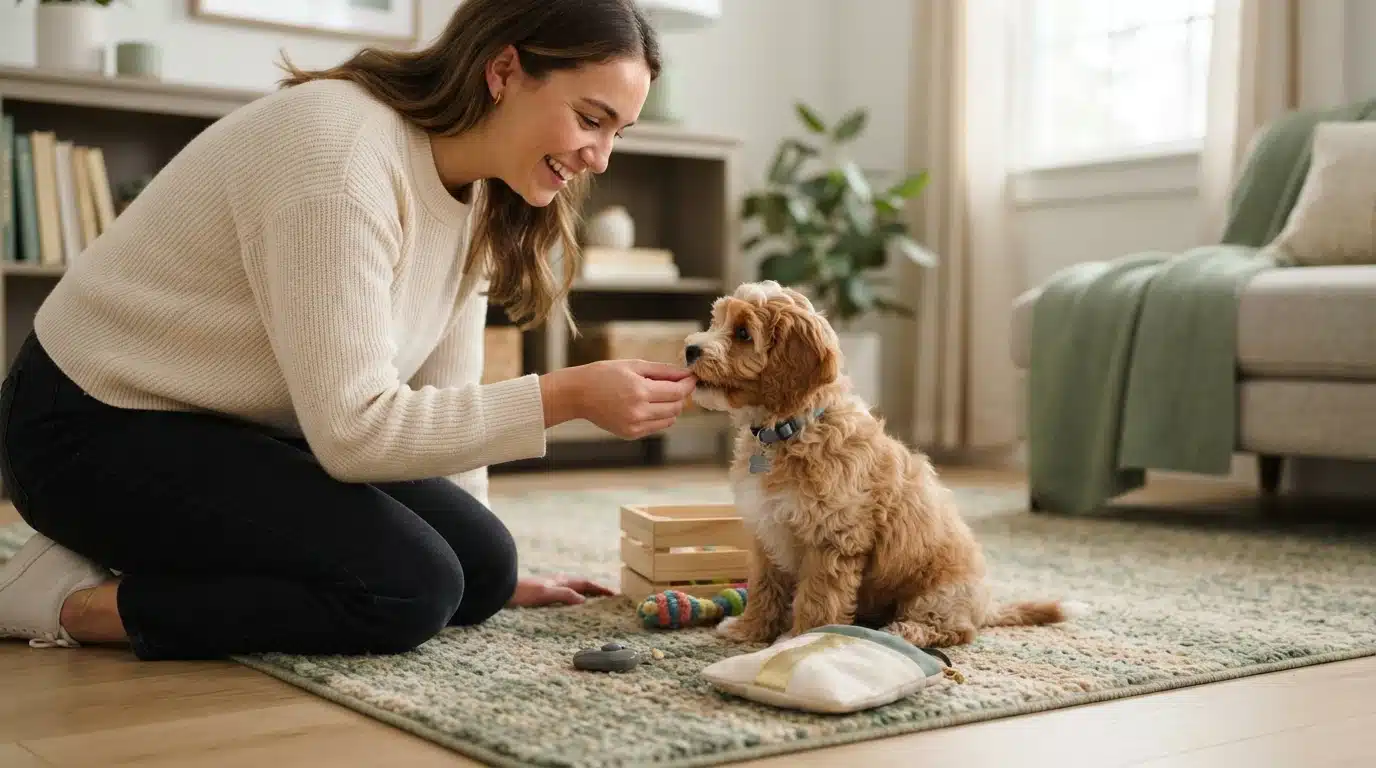
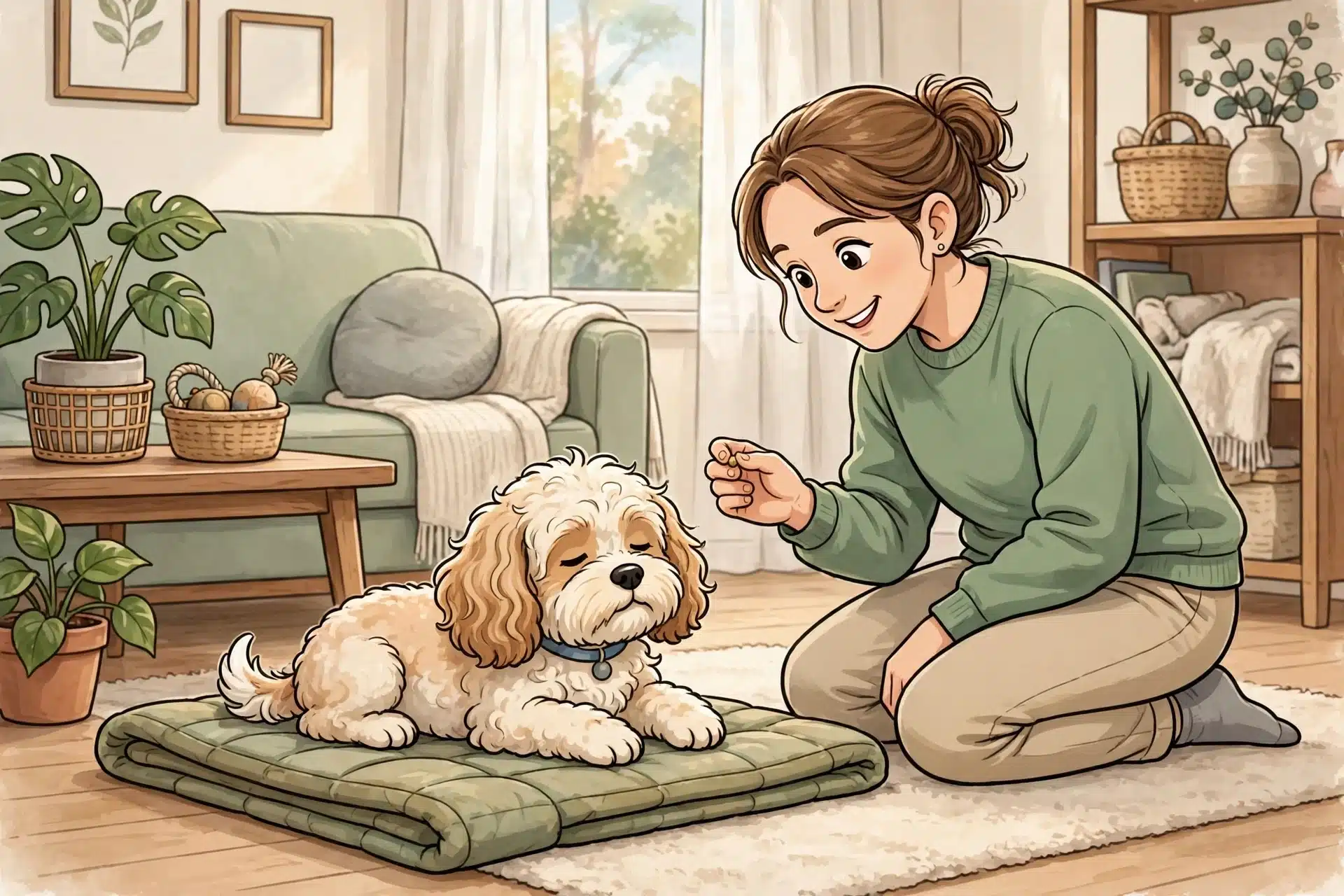
Lure each cue with a treat instead of pushing her body. Hold a treat at her nose and lift it slowly back over her head for a sit. For a down, lower it to the floor and slightly toward her chest. For a settle, toss a treat on a mat and reward any calm lying there. Havanese, Havapoo, and Cavapoo puppies live for this kind of game, and a mat cue gives you a portable “place” when visitors arrive. If you’re still choosing between the three breeds, our guide to small breed puppies for new owners covers what each one is like to raise.
Come and Recall That Actually Works
Never call your puppy to end fun or to do something she hates. Call “come” when she is already heading your way, then mark and pay well, with a tiny piece of chicken rather than kibble. Practice indoors, then in a fenced yard, and keep a light line dragging on her collar outside until recall is solid. One bad experience, like being called only for a bath, can teach her that your call means run the other way.
Mouthing, Leave It, and Gentle Handling
Small breed puppies mouth hard, partly because those tiny teeth are needle-sharp. When teeth touch skin, end the game calmly and hand her a chew instead. Teach leave it by covering a treat in your closed hand; when she backs off, reward with a different treat. Also handle ears, paws, and mouth daily so vet visits and grooming stay easy later.
House Training and a Potty Schedule That Works
A good puppy potty schedule takes your Havanese, Havapoo, or Cavapoo out after every nap, meal, and play session, plus a middle-of-the-night trip for the first few weeks. That usually means 8 to 10 trips a day at first. It sounds like a lot, but it works faster than any other approach, and full bladder control usually arrives closer to 4 to 6 months.
Building the First Week Schedule
Write the schedule down before pickup day. Anchor each break to something your puppy already does: waking up, finishing a meal, ending a play session, or coming out of the crate. Offer food and water at set times rather than leaving the bowl down all day, so the output becomes predictable. Most 8-week-old small breed puppies need a potty trip every one to two hours while awake, plus once overnight. Adjust as you learn your puppy’s signals, like sniffing, circling, or heading for the door.
| Time | Trigger | Trip needed |
|---|---|---|
| Morning wake-up | Opening the crate | Yes, immediately |
| 15 minutes after each meal | Digestion | Yes, always |
| After every nap | Waking up | Yes, immediately |
| Mid-play or mid-training | Excitement | Yes, watch for sniffing |
| Before bed and once overnight | Settling down | Yes, until about 12 weeks |
The One-Spot Method
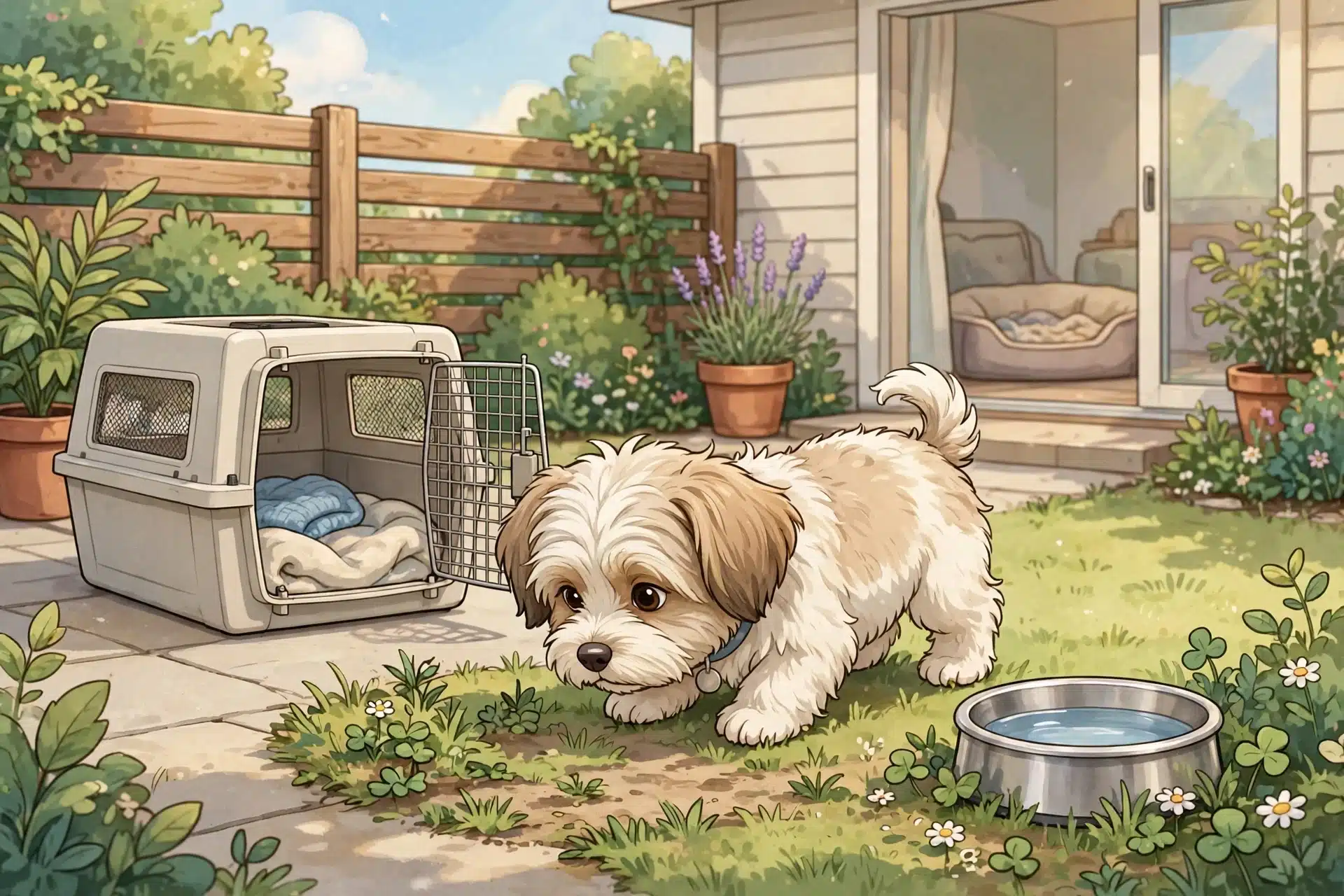
Pick one potty spot outside and go back to it every single time. Carry your puppy there at first, especially for tiny 3-pound Havanese legs that tire quickly. Use a short cue like “go potty” while the puppy is actively going, then praise and give a small treat within two seconds of finishing. The smell of past success builds a strong association, so the spot eventually triggers the behavior on its own. Keep this consistent even when it rains or you are running late, because consistency is what teaches the rule.
What to Do and What Not to Do
Reward generously. Every outdoor success earns praise or a treat right away, which is the core of reward-based dog training. Stay outside a few extra minutes after your puppy goes, because puppies often hold a second set of urine and drop it back inside.
Never punish accidents. Rubbing a nose in it or scolding teaches your puppy to hide from you while going, which makes training harder. If you catch them mid-accident, calmly scoop them to the potty spot. Clean indoor accidents with an enzymatic cleaner, not regular household spray, so the lingering scent does not mark that rug as a bathroom. Accidents on carpet happen more often during week one; if your puppy misses more than half the trips for several days, tighten the schedule back to every 45 to 60 minutes.
Leash, Crate, and Everyday Handling Skills
Start these three skills in week 3 or 4, once your puppy settles into your routine. A Havanese or Cavapoo only needs a flat collar or harness, a lightweight leash, and patience. Keep every session short, end on a win, and let your puppy set the pace.
Leash Walking Step by Step
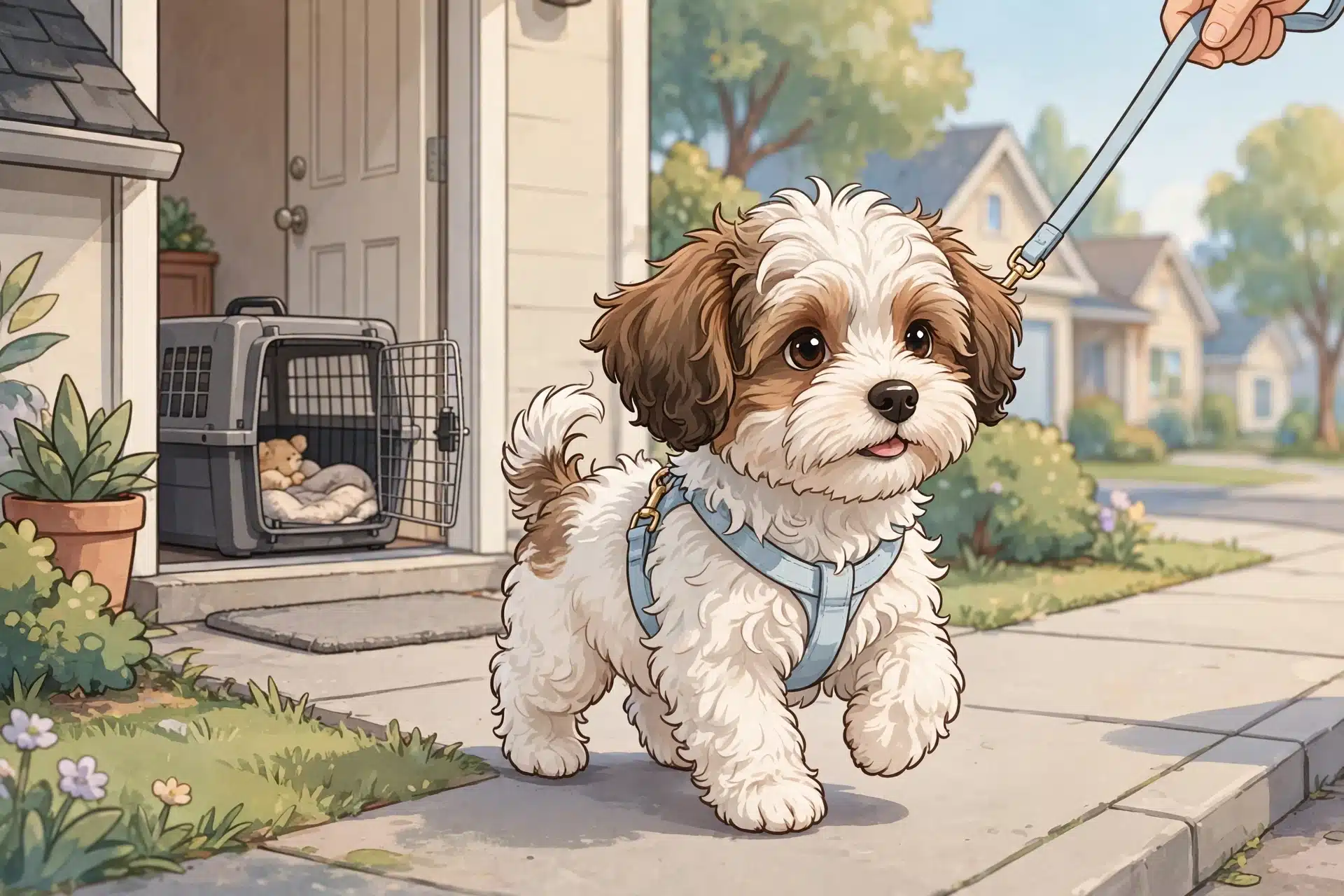
Fit a soft harness at home first, and let your puppy wear it for a few minutes while you play. Clip on the leash indoors, then follow your puppy around. Reward any glance toward you or step at your side. Move to the backyard, then quiet sidewalks. Expect sniffing and zigzags; they are normal at this age. Five minutes is plenty for a start.
Choosing and Introducing a Crate
Picking the right size is simple: your puppy should stand up, turn around, and lie down stretched out, with a little room to spare. Too big invites potty accidents in the corner. Add a soft bed, and feed meals inside with the door open. Build up to short naps, then longer stretches. A crate becomes a safe den, not a punishment.
Car Rides and Safe Restraint
Loose dogs in a car are dangerous, so secure your puppy from the very first ride. A crash-tested harness clipped to a seat belt, or a secured carrier, both work. Start with short trips that end somewhere pleasant, like a park. Skip feeding a big meal right before driving if your puppy gets queasy.
A crate-trained puppy usually travels calmer, so the work you do at home carries over to every ride.
Socialization and Building Confidence Safely
What Socialization Actually Means
Socialization means your puppy learns that new things are safe. It is not just meeting other dogs. It covers people, sounds, surfaces, handling, and places. A puppy who has heard a vacuum, walked on tile, and been touched by gentle strangers grows into a calmer adult. The first three months of life matter most, which is why the AVSAB position statement calls this window so critical. Keep each exposure short and paired with treats, so new things predict good things. Fear fades when confidence builds. Track every new experience with a simple puppy socialization checklist so nothing important slips by.
Socializing Before Vaccinations Are Complete
You do not need to wait for every vaccine. Behavioral problems kill far more dogs than parvo does, and AVSAB supports socializing puppies before their vaccine series ends. The safe route is simple. Carry your puppy in your arms or a sling through parking lots and store entrances. Let friendly, vaccinated adult dogs meet her at home. Skip grass at busy dog parks, but a quiet backyard visit from a calm neighbor’s dog is fine. Ask your vet to confirm your puppy has had at least one round of vaccines, usually around 8 to 10 weeks, then book that puppy class.
Small Breed Socialization Targets
Tiny puppies need scaled-down goals. Aim for a checklist like this:
| Target | Example |
|---|---|
| Handling | Touch paws, ears, and mouth daily |
| Sounds | Vacuum, doorbell, traffic |
| Surfaces | Tile, carpet, grass |
| People | Men, kids, hats, glasses |
Watch body language. If your puppy hides or freezes, pause and lower the intensity.

Your small breed puppy won’t stay tiny or trainable forever, so start this week with the plan above. If you’re still choosing your pup, Sage Puppies matches families with well-bred Havanese, Havapoo, and Cavapoo puppies and shares prep guidance before pickup or delivery. Visit the site, browse available puppies, and begin training the day your puppy comes home.
Frequently Asked Questions
Q1: When should I start training my small breed puppy?
Start on day one. Puppies as young as 8 weeks can learn their name, sit, and a potty routine, and socialization can begin at 7 to 8 weeks.
Q2: How do I train a small breed puppy with basic cues and positive reinforcement?
Use a marker word, lure sit, down, and settle with treats, and reward recall with high-value food. Keep every session to 2 to 5 minutes.
Q3: How do small breed puppies differ in training from larger breeds?
Tiny bladders need more frequent potty breaks, attention fades faster, and their bodies need gentler handling. The goals stay the same.
Q4: How long can an 8-week-old puppy hold its bladder?
About one to two hours while awake, plus one overnight trip. Control improves around 4 to 6 months.
Q5: Can I socialize my puppy before vaccinations are finished?
Yes. Carry her in public spaces, host vaccinated dogs at home, and skip busy dog park grass until your vet clears her.
Q6: How long does house training a small breed take?
Usually several weeks of consistent trips, with reliable control closer to 4 to 6 months. Never punish accidents; use an enzymatic cleaner instead.
Conclusion
Training a small breed puppy comes down to timing, patience, and respect for their size. Start on day one, keep sessions to two to five minutes, and reward everything you want repeated. House training succeeds on a tight puppy potty schedule, not on punishment, and the socialization window closes early, so safe exposure matters more than a finished vaccine series. Progress shows up in small wins: a name response in the kitchen, a calm potty trip in the rain, a settled crate nap. Stay consistent through the messy first weeks, because a well-socialized, well-bred Havanese, Havapoo, or Cavapoo repays every short session. For more on each breed, our complete puppy care guide for new owners walks through daily routines.