Quick Summary: Small breed puppies need the same basic care as larger puppies but at a smaller and more delicate scale: frequent meals to prevent hypoglycemia, early vet care and socialization, regular brushing, and protection from stairs and falls. Adult size varies even within a litter, so parents’ weights, health records, and written contracts matter more than breed labels or photos. Sage Puppies’ Havanese, Havapoo, and Cavapoo programs in South Jordan, Utah are used as examples of breeders that provide parent health testing, vaccination records, and application-based placement.
Two puppies from related lines can grow up very differently. A Havanese puppy often finishes smaller and lighter than a Havapoo from the same program, and a crossbred pup’s adult size cannot be read off a breed label alone. Size is the first question buyers ask, and it is also the first detail paperwork gets wrong.
That mismatch causes real problems: crates bought too big, food portions set for the wrong weight class, and health risks that show up mostly in toy-sized dogs. This guide covers the small breed puppy basics, from growth patterns and feeding schedules to grooming a Havanese coat and early training.
The guidance draws on canine growth standards and veterinary nutrition sources, with examples from Sage Puppies’ Havanese, Havapoo, and Cavapoo program in South Jordan, Utah. Where evidence ends and individual puppy variation begins, we say so plainly.
What Actually Counts as a Small Breed Puppy
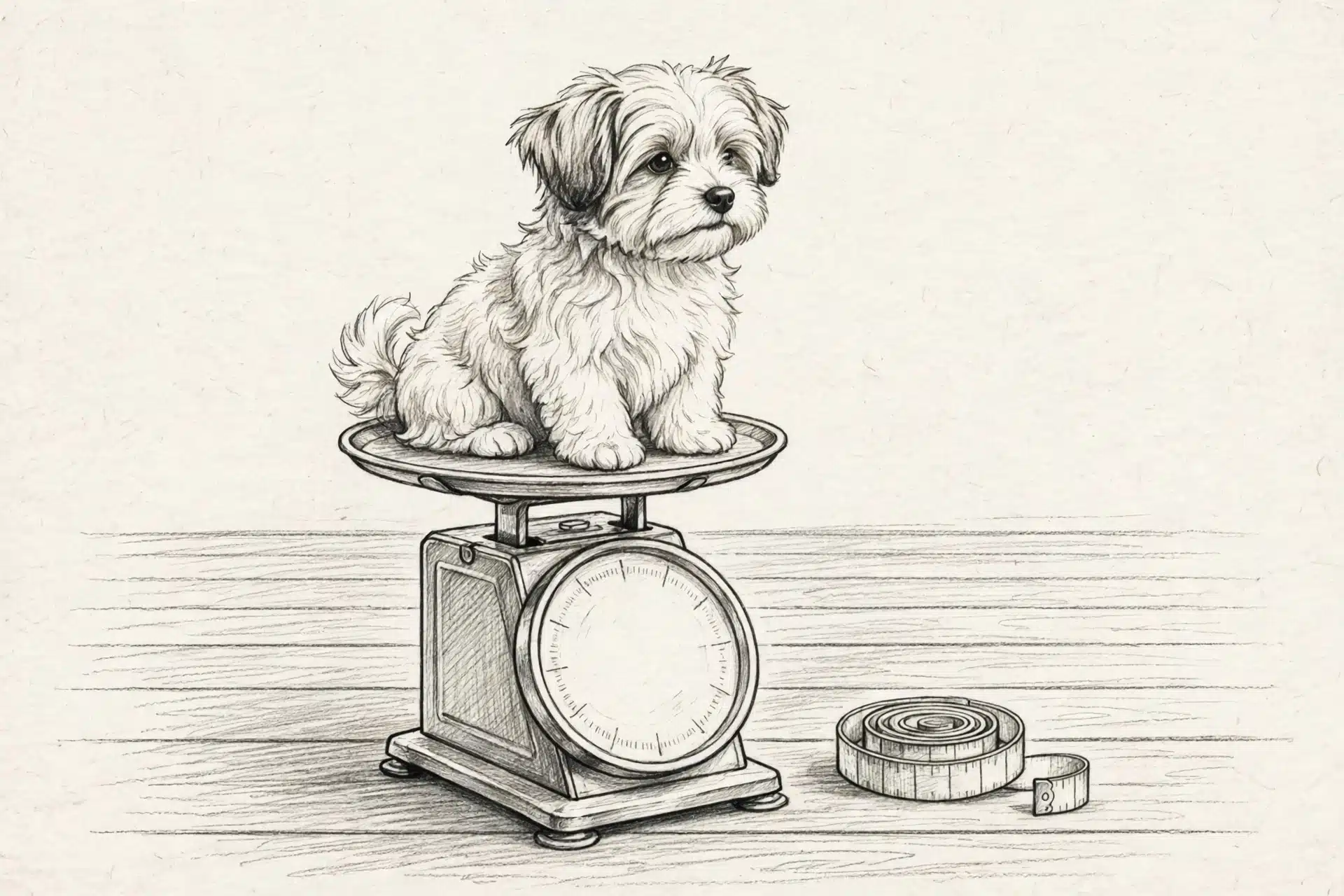
A small breed puppy is a puppy whose adult weight lands under roughly 22 pounds and whose height stays under about 16 inches. Toy breeds sit at the tiniest end, usually 12 pounds or less, so a grown Havanese at 7 to 13 pounds is a toy breed even though many families just say “small dog.”
Toy, Small and Medium: Where the Lines Fall
The labels are informal, but the AKC Toy Group caps dogs at about 12 pounds. Small breeds generally run 12 to 22 pounds, and mediums reach roughly 50. Breeders often use weight charts by size class to predict where a puppy will land.
Why Adult Weight Varies Within a Litter
Littermates rarely match as adults. Genes come from both parents, and crossbred puppies like Havapoos and Cavapoos pull size traits from either side. Nutrition and sex shift the outcome too, so a same-litter pair can finish several pounds apart. Ask what each parent weighs; that is the best single predictor.
Growth Milestones Worth Tracking
Puppies gain fast early, then slow near adult height. Watch these rough markers:
| Age | What to Expect |
|---|---|
| 8 weeks | Leaves litter, starts crate and house training |
| 4-6 months | Most adult height reached, adult teeth arrive |
| 9-12 months | Small breeds near adult weight |
Steady, gradual gain beats a growth spurt at any age.
What New Owners Should Know About Small Breed Puppies
A small breed puppy asks for the same care any puppy needs, just in smaller, sharper doses. Feeding windows, house training, socialization and vet visits all matter more, and sooner, because a 3-pound puppy has less body weight to fall back on. If you want the short version of small breed puppy basics before the deep dives, start here.
The Ten Facts That Matter Most
- Adult weight lands under roughly 22 pounds, often under 12.
- Small puppies burn energy fast and can develop low blood sugar.
- Missing two meals is an emergency, not a schedule slip.
- Knees and teeth are the two weak points to watch.
- Growth happens fast: most height is set by 6 months.
- Feed a diet labeled complete for growth, in small portions.
- Socialization must start before shots are finished, done safely.
- House training takes consistency, not dominance or punishment.
- Stairs and high furniture cause most puppy injuries.
- Pick a vet before pickup day, not after.
Small Does Not Mean Simple
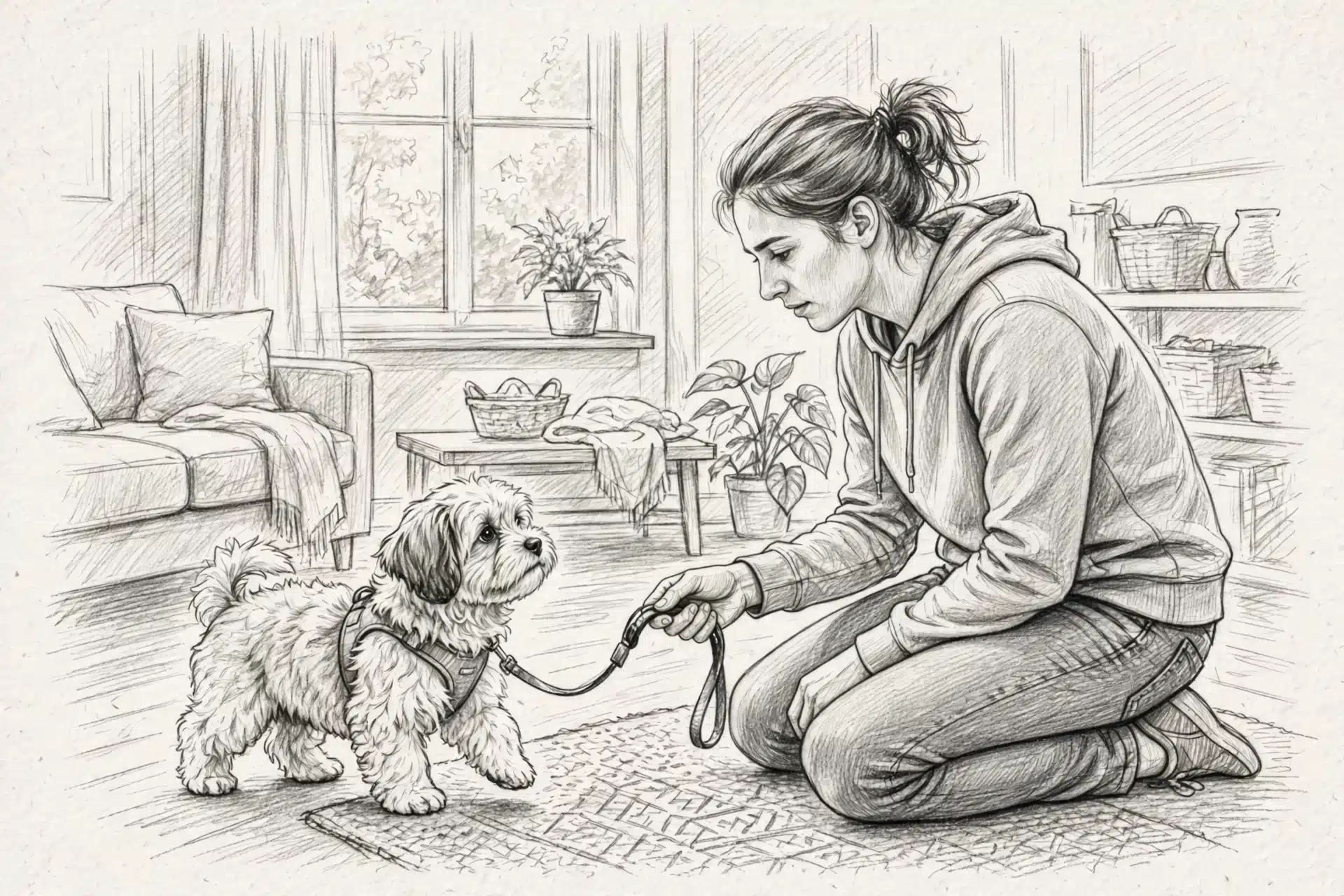
Small bodies make some problems arrive faster and hit harder, so the basics matter more. A skipped meal, a fall off the couch or a rough play session can send a toy puppy to the vet quickly. That is not a reason to worry. It is a reason to prepare. Families comparing Havanese, Havapoo and Cavapoo puppies at Sage Puppies often find that size is the easy part; daily routine is what decides fit.
Which Decisions Are Time Sensitive
Three choices cannot wait. First, book a vet visit within a few days of bringing your puppy home, since vaccine timing overlaps the early socialization window. Second, set a feeding schedule on day one, because young puppies eat three to four times daily. Third, start crate training and gentle socialization that same week. Everything else, from grooming habits to advanced training, can build gradually over the following months.
ButtonsxOzzy
Health Considerations That Are Specific to Small Breeds
Small breed dogs face a short list of health risks more often than larger dogs. The big three are loose kneecaps, dental disease and low blood sugar in tiny puppies. Each one is manageable when you know what to watch for.
Orthopedic Issues and Patellar Luxation
The most common small breed puppy health risk is patellar luxation, a kneecap that slips out of its groove. Small breeds carry up to 12 times the risk of larger dogs. You might see a skipped step, a brief three-legged hop, or a dog that shakes a leg mid-walk.
Watch for:
- Bunny-hopping or skipping in one back leg
- Reluctance to jump onto furniture
- Sudden yelping during play
Keep puppies from hard landings off couches and stairs. Mild cases often need only monitoring, while severe ones may need surgery later in life.
Dental, Respiratory and Blood Sugar Concerns
Small jaws crowd 42 teeth into less space, so plaque builds faster. Start tooth brushing early with a dog-safe paste. Flatter-faced crosses can also snore or pant heavily in heat, so keep summer walks short and shaded.
The sharpest risk in a toy-sized puppy is hypoglycemia, or low blood sugar. A puppy under about 4 pounds can crash after missing a meal or playing too hard. Feed small, frequent meals and keep honey or Karo syrup on hand to rub on the gums if your puppy seems wobbly or limp, then call your vet.
Health Records to Ask for Before You Pay
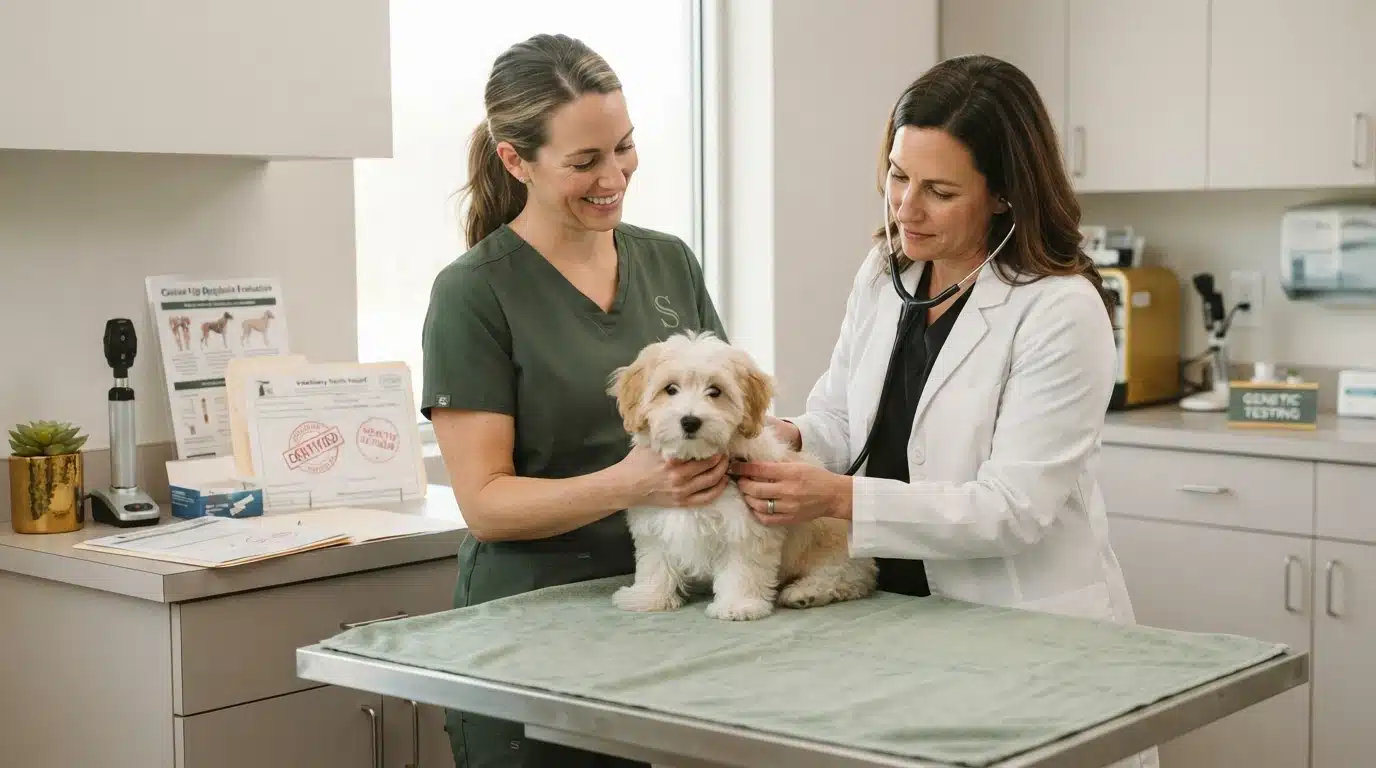
Before any deposit, ask for the parent health tests, the puppy’s vet exam record and vaccination dates in writing. Responsible breeders, including our own program at Sage Puppies, share these without being asked twice. If the paperwork is thin, walk away. Our guide to reading puppy health records shows what each line should say, so you can compare litters on facts rather than photos.
Feeding, Nutrition and Growth Support
Why Small Puppies Eat More Often
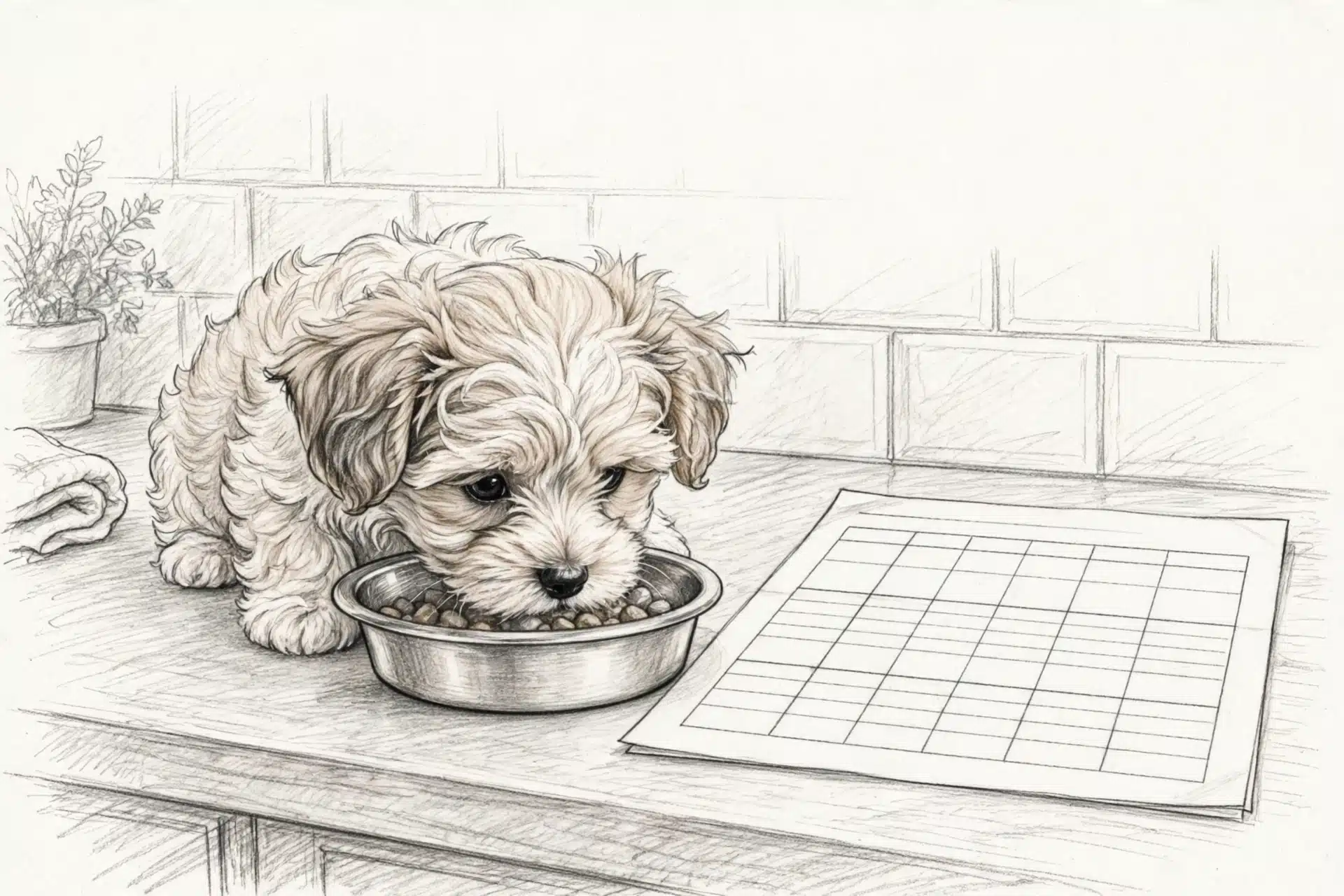
How often should a small breed puppy eat? Feed four small meals a day until about 12 weeks old, three meals until 6 months, then two. Tiny stomachs hold little food, and a puppy under 4 pounds can crash from low blood sugar after a missed meal. A steady small breed puppy feeding schedule protects blood sugar better than free feeding. Purina’s puppy guide suggests the same split into smaller meals.
Choosing a Complete and Balanced Growth Food
Pick a food labeled “complete and balanced” for growth or all life stages. That phrase means the recipe meets AAFCO nutrient profiles, the industry standard for puppy nutrition. Small breeds do well on small kibble they can actually chew. Ask your breeder or vet what your puppy already eats, then change foods slowly over a week to avoid stomach upset.
Budgeting the Recurring Food Cost
Small dogs eat less, so food stays affordable. A toy breed adult often finishes a small bag in a month or more; budget roughly $20 to $40 monthly for quality kibble, more for fresh or freeze-dried diets. Plan for bowls, treats and storage too. These are labeled planning examples, not fixed prices, so check current labels when you shop.
Training, Socialization and House Training
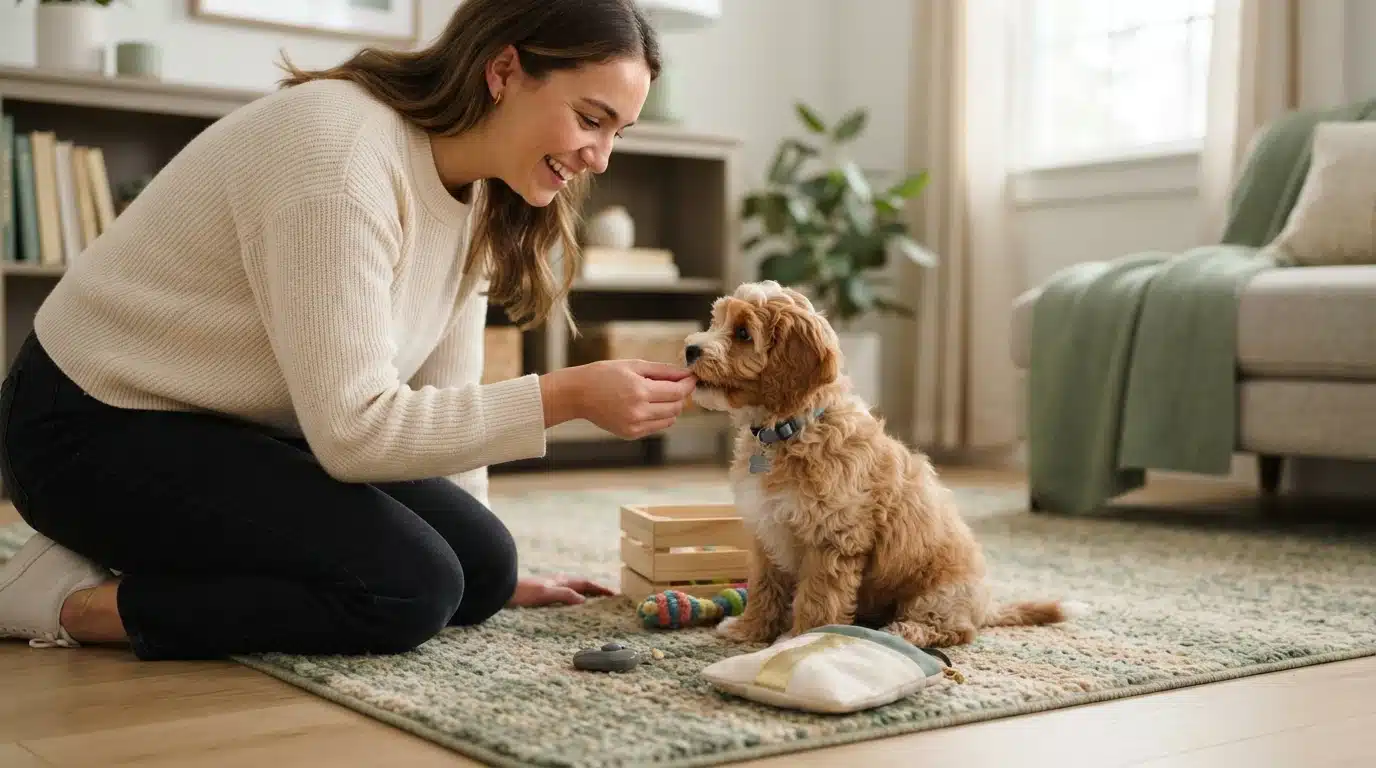
House training a small breed puppy works best on a tight schedule, not on guesswork. A toy-size bladder holds very little, so take your puppy out first thing in the morning, after every meal, after naps, after play, and right before bed. Pick one potty spot and reward quietly the moment she finishes. Most small breeds catch on within weeks, but accidents happen for months anyway. Never punish a miss; just clean it with an enzymatic cleaner so the scent does not call her back.
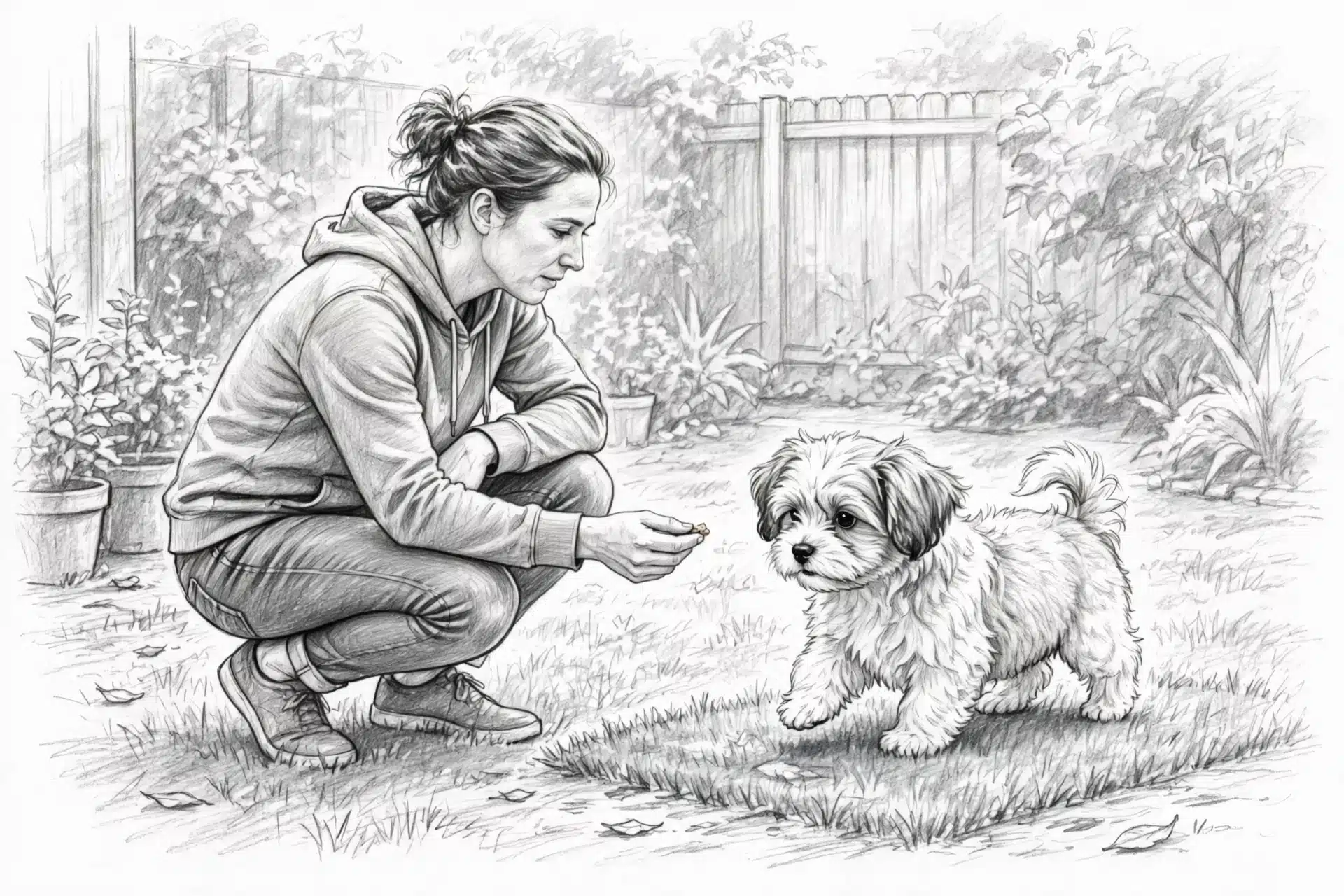
Small breed puppy training and socialization need to happen early, because the main socialization window closes around 12 to 16 weeks. The American Veterinary Society of Animal Behaviorists recommends exposing puppies to new people, surfaces and sounds before vaccinations are finished. Carry your puppy through parking lots and crowds instead of setting her down where unvaccinated dogs go. Puppy classes that require proof of shots are a safe middle ground.
Small breeds respond well to short, positive sessions: two to five minutes, treats, and lots of praise. Expect a few breed quirks. Toy breeds are notoriously slow to house train, and some bark more than larger dogs, so teach a “quiet” cue early. Small breed puppy basics like sit, come, and gentle mouth habits are the same as for big dogs, just delivered in smaller bites. Consistency matters more than intensity, so keep sessions short and end each one on a win.
Coat Care, Grooming and Everyday Health Upkeep
Coat Types and What They Require
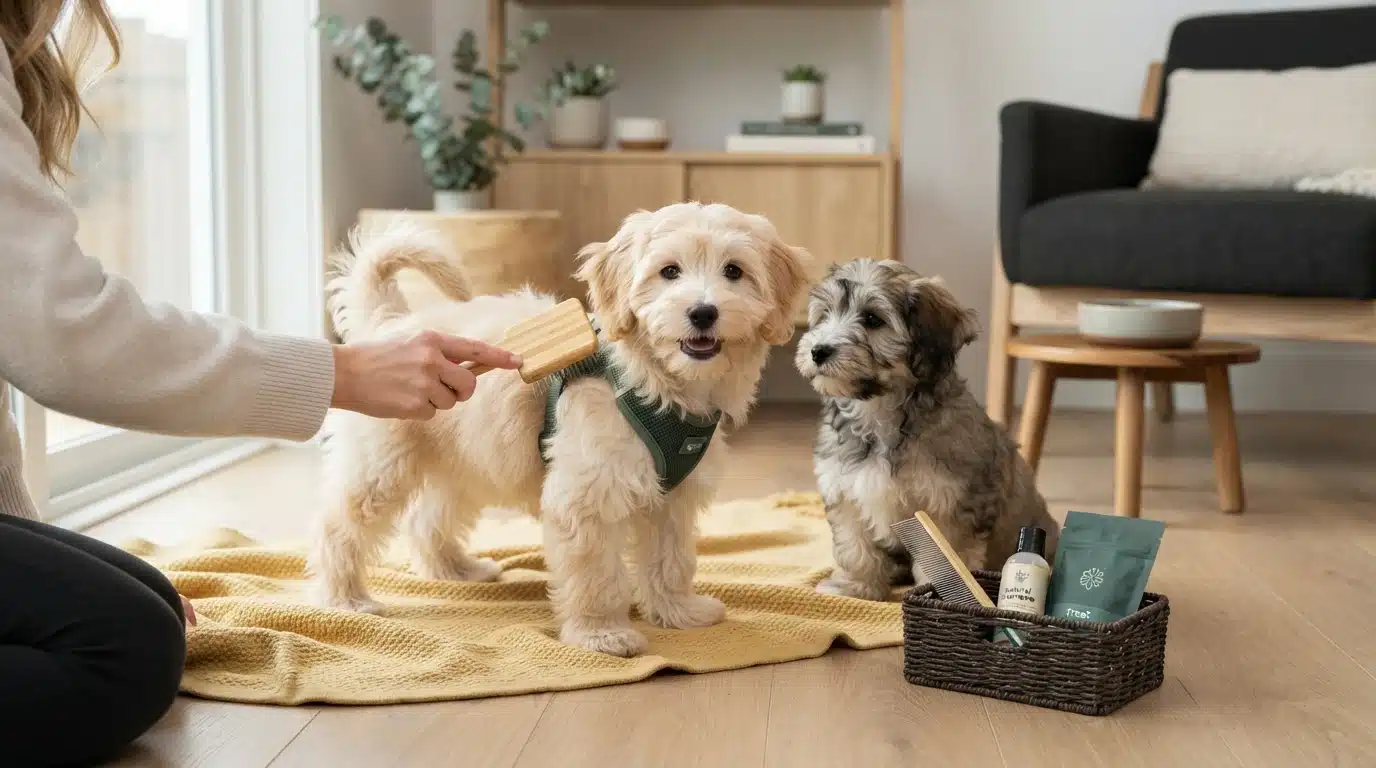
Do Havanese puppies have a double coat? Yes. The breed standard calls for a soft, silky undercoat beneath a longer outer coat, which is why brushing matters so much for Havanese double coat grooming. Havapoos and Cavapoos can inherit wavy or curly Poodle-type coats that also mat without care, so plan on brushing several times a week for any of these breeds.
A First-Month Grooming Routine
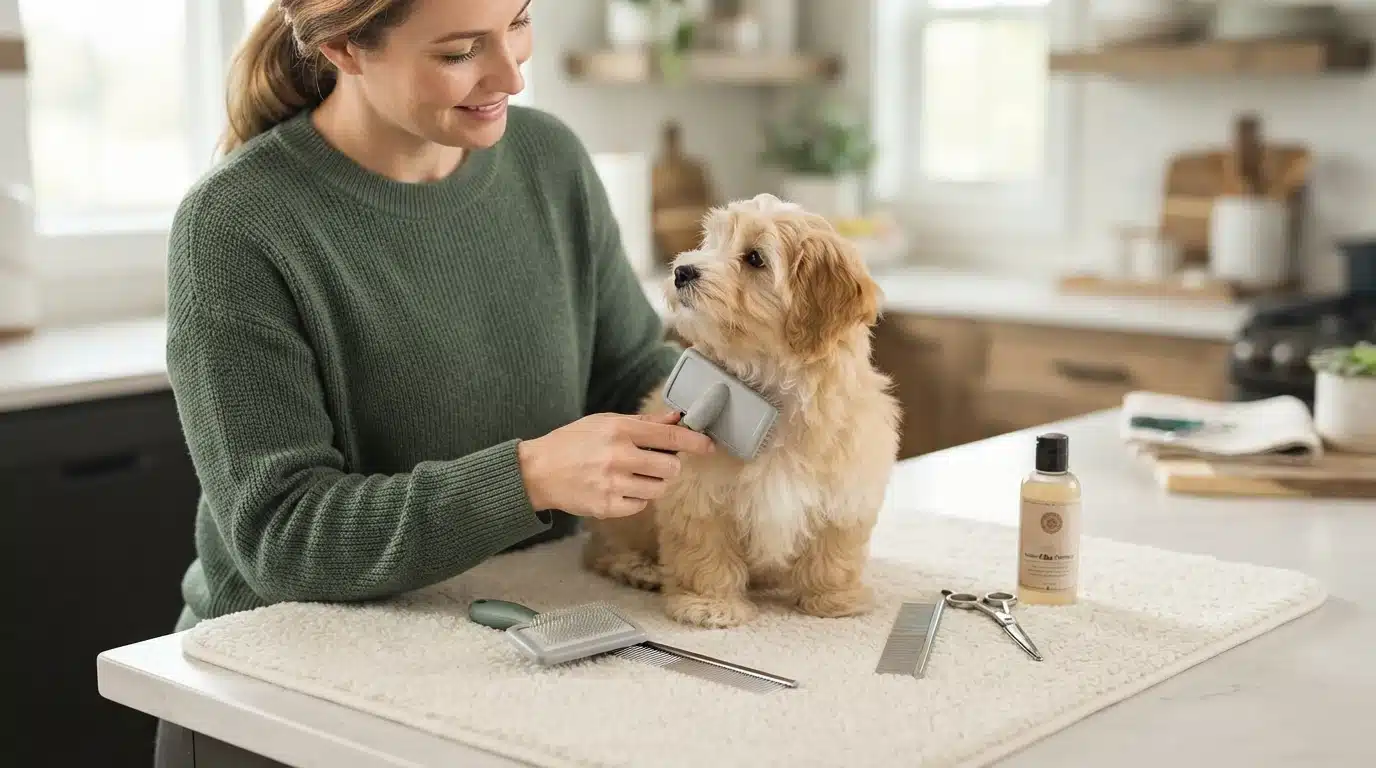
Start your small breed puppy grooming routine in week one. Use a pin brush or comb for a few calm minutes daily, touch the paws and ears, and end each session with a treat. Trim nails every couple of weeks and keep baths short. The ASPCA notes Havanese coats need brushing multiple times a week, so consistency beats marathon sessions. Our guide to Havanese grooming tips breaks down tools and technique.
Tip: Short, happy sessions teach your puppy that grooming is normal, not scary.
Coat Condition as a Health Signal
A dull, flaky or thinning coat can point to poor diet, stress, parasites or skin problems. Matted fur traps moisture and hides hot spots, so part the coat during brushing and check the skin underneath. Persistent changes deserve a vet visit, since coat condition often shows health issues before other signs appear.
Safety at Home, Outdoors and in the Car
Falls, Stairs and Busy Households
A puppy this small treats your whole home like an obstacle course. Block staircases with gates, since a tumble down even a few steps can injure a 3-pound pup. Watch for gaps under furniture and behind appliances, and teach children to sit on the floor before picking the puppy up.
Heat, Identification and Outdoors
Small bodies heat up fast, so keep outdoor play short in warm weather and offer shade and water. Until vaccines are complete, avoid areas where unknown dogs gather. Fit a snug collar with an ID tag and consider a microchip. A loose puppy in a parking lot is far harder to catch than a tired one.
Car Travel and Water Safety
Never let a puppy ride loose or on your lap. The AVMA recommends a back-seat setup with a crash-tested harness or a secure carrier, since sudden stops can throw a small dog forward. Around pools and lakes, stay within arm’s reach. Many small breeds swim well, but short legs tire quickly, so end every water session before your puppy does.
Choosing Where to Buy and What to Verify
Breeder, Rescue, Shelter or Marketplace
Each source carries trade-offs. Responsible breeders give health testing and early socialization; rescues offer dogs needing homes; marketplaces carry higher risk if you can’t meet the source. A small program like Sage Puppies fits the breeder model: Havanese, Havapoo, and Cavapoo only, matched through an application.
The Verification Checklist and Contract Terms
Verify before paying anything:
- Health testing of the parents
- Clear puppy contract terms on deposits, returns, and guarantees
- References or reviews from past buyers
- A visit or video call to see where puppies live
Read every clause. Ask questions until the answers feel complete.
What a Small Breed Puppy Costs to Own
The purchase price is only the start. A realistic first-year cost breakdown:
- Purchase or adoption fee: $500 to $4,500
- Vet visits and vaccines: $300 to $600
- Supplies and gear: $200 to $400
- Food: $20 to $40 monthly
- Training classes: $100 to $300
Budget total first-year costs at $1,200 to $6,000 depending on choices. Ongoing annual costs usually run $700 to $1,500.

If a Havanese, Havapoo, or Cavapoo puppy fits what you’ve learned here, Sage Puppies can help. Cassie’s boutique program in South Jordan, Utah matches each family thoughtfully, with local pickup or nationwide delivery. Start with the application and take your first step with confidence.
Frequently Asked Questions
Q1: What should new owners know about small breed puppies?
That they need the same care as any puppy, just in smaller doses. Feed frequent meals, book a vet early, socialize before shots finish, and protect tiny bodies from falls.
Q2: How do I predict my Havapoo’s adult weight?
Ask each parent’s weight. Crossbred puppies pull size from either side, so littermates can finish several pounds apart.
Q3: What if my puppy misses a meal?
For a toy-sized puppy, missing two meals is an emergency. Watch for wobbliness, rub honey on the gums, and call your vet.
Q4: How much does the first year cost?
Budget $1,200 to $6,000 total, covering the purchase fee, vet visits, supplies, food and training. These are planning examples, not fixed prices.
Q5: Can small breed puppies use stairs?
Block stairs with gates until your puppy is steady. Falls cause most small-breed puppy injuries, and hard landings strain young knees.
Conclusion
Small breed puppy basics come down to a handful of habits. Know the size class before you buy, feed small frequent meals, book a vet within days of pickup, and start socialization early. Watch knees, teeth and blood sugar, and keep growth steady rather than fast.
The rest is preparation. Gate the stairs, secure the car ride, and brush that coat from week one. None of it is hard; all of it matters more because your puppy is small. Ask for health records, read the contract, and trust evidence over a cute photo. Do that, and a Havanese, Havapoo or Cavapoo gives your family years of easy companionship.