Quick Summary: Kittens are easier for beginners because they are usually litter trained, need only 30 to 60 minutes of daily care, and cost less upfront. A small breed puppy needs 2 to 3 hours daily for house training, exercise, and training, plus a first-year budget of roughly $4,300 to $5,900, but offers a more active and trainable bond. Choose based on your schedule and patience, and verify vaccination, health, and spay or neuter records in writing before buying or adopting.
Picture your first Tuesday. A Havapoo puppy investigates the base of the sofa, then barks at the vacuum. A kitten has already used the litter box perfectly and is asleep in a cardboard box. Two scenes, two very different jobs for a brand-new owner. So, small breed puppy vs kitten: a puppy is the harder start and the more rewarding companion if you can commit several hours a day. A kitten is the easier pet for beginners who want quiet, self-directed company.
The problem is that most first-time owners choose without honest details. Few compare how much structure a puppy demands against a kitten’s independence, or the price gap between a shelter kitten and a bred small breed puppy.
This comparison covers the parts that actually predict success: training, daily hours, cost, grooming and allergies, and responsible sourcing. You will finish with a clear pick for a puppy or kitten for beginners, based on your schedule and home, plus what to verify in writing before you commit.
Small Breed Puppy vs Kitten: At a Glance
| Small breed puppy | Kitten | |
|---|---|---|
| Learning and training | Highly trainable and eager to work with people, but needs daily sessions and consistency | Learns quickly with play-based rewards but responds on its own terms |
| House training | Takes months of scheduled breaks; puppies have limited bladder and bowel control | Usually litter trained within days with little active effort |
| Daily time commitment | Several hours of structured attention, exercise and training every day | One to two hours of interaction and play, plus daily litter care |
| Cost of care | Purchase price plus food, crates, training, grooming and vet visits | Adoption fees are often low; routine food, litter and vaccines add up over time |
| Grooming and shedding | Regular brushing and professional grooming; long or curly coats shed less but mat | Short coats need light brushing, though some breeds shed heavily |
| Best for | First-time owners who want a dog to walk, train and bond with | Owners who want quiet companionship and can work around an independent animal |
How a Small Breed Puppy and a Kitten Compare
Small breed puppy
A young companion dog from a small breed, such as the Havanese, Havapoo or Cavapoo puppies raised by Sage Puppies in South Jordan, Utah, typically priced between $3,500 and $4,500. Puppies want to work with you: they learn fast, but they need daily training, scheduled potty breaks and several hours of structured attention. Choose one if you have the time to invest and want a dog to walk, train and bond with.

Key strengths
- Highly trainable and eager to please
- Low-shedding coats with regular grooming
- Deep, active bond with its owner
Kitten
A young domestic cat, usually adopted from a shelter or breeder, that matures quickly and stays far more independent than a puppy. Most kittens use a litter box within days and need only an hour or two of play and interaction daily. They suit owners who want quieter companionship and can accept an animal that responds on its own terms.
Key strengths
- Litter trained in days with little effort
- Lower daily time commitment
- Modest upfront adoption costs
Is a Small Breed Puppy or a Kitten Easier for Beginners?
For most first-time owners, a kitten is easier at the start and a small breed puppy is easier in the long run. A kitten usually comes home litter trained, while house training a puppy takes weeks of steady work. Which one fits you better comes down to three factors:
- Time: puppies need potty breaks, training sessions and socialization every day
- Patience: expect accidents and chewing with a puppy, climbing and scratching with a kitten
- Lifestyle: kittens tolerate longer absences; puppies want company
The Honest Answer Depends on Your Schedule and Patience
If you work long hours away from home, a kitten asks less of you. Many kittens learn to use a litter box reliably by 8 to 12 weeks, and many shelters place them already trained, according to Hill’s Pet Nutrition. A puppy, even a small one, needs someone nearby the first few weeks. If you are home often and want a dog, a small breed puppy is very manageable. Breeds like the Havanese, Havapoo and Cavapoo were developed as companions, so they learn quickly and stay small enough for apartment life, as covered in small dog breeds for apartments.

Where the Difficulty Actually Lives
Kittens are easier on the front end, harder on your furniture. You will cat-proof cords, curtains and counters. Puppies demand more on the front end, then settle into a routine. The hardest puppy stretch is house training plus the first-night crate adjustment, usually two to four weeks of interrupted sleep. Kittens also climb and need daily play, so “easy” never means “nothing to do.” Ask yourself honestly how you react to messes at 6 a.m.
Which One Learns Faster and More Willingly
Kittens usually win the “easy to train” contest for basics, because litter training needs almost no effort from you. But puppies learn far more, and more willingly, once you start teaching. A small breed puppy can pick up potty routines, crate habits, sit, come and leash manners in the first few months. A kitten mostly teaches itself.
Here is how the two compare on learning:
| Factor | Small Breed Puppy | Kitten |
|---|---|---|
| Reward type | Food, praise and play | Food, but often only briefly |
| Motivation | Works with you, eager to please | Works for itself, on its own terms |
| Best window to start | Weeks 3 to 14 | Weeks 2 to 7 |
| What you can teach | Cues, crate, potty, handling | Litter box, scratcher, carrier |
Rewards, Motivation and Attention Spans
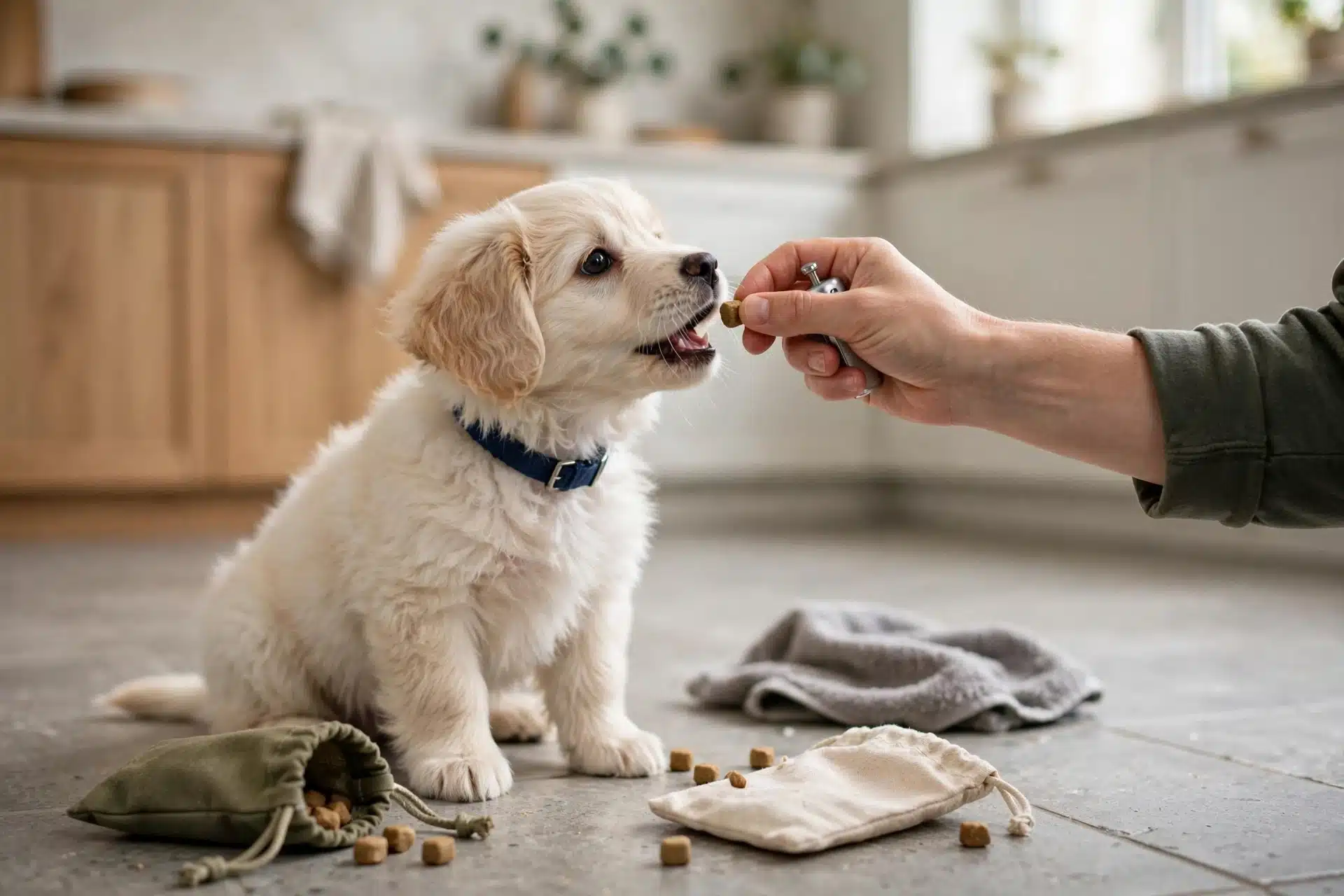
Puppies are food-driven team players. Short, upbeat sessions of five minutes work well because small breeds like Havanese, Havapoos and Cavapoos want your attention and repeat what earns a treat. Kittens train fast too, but their focus fades quickly, and they will simply walk away when they lose interest. That is the real difference. A puppy tries again; a cat decides. With a kitten you mostly shape the environment, adding scratchers and closing off counters, rather than teaching cues.
Socialization Windows and What You Missed If You Waited
This is where puppies demand more but reward more. Dogs have a critical socialization period of roughly 3 to 14 weeks, so new sounds, surfaces, people and gentle handling must start early. Miss it, and fear problems get much harder to fix. Kittens have an even shorter window, about 2 to 7 weeks, which is why well-raised kittens come home already comfortable with people, per the AVMA’s review of puppy and kitten socialization. Good breeders do this work before you ever meet the puppy.
Daily Time: How Many Hours Each One Actually Needs
A small breed puppy needs roughly 2 to 3 hours of your time each day, split into short bursts, while a kitten usually needs 30 to 60 minutes of play plus quick meals and litter box checks. Both demand more in the first month. The difference is how the hours arrive: puppy time comes in scheduled chunks, kitten time drifts through the day.
A Sample Day for Each Animal
Small breed puppy (about 2.5 hours):
| Time | Task |
|---|---|
| 6:30 a.m. | Potty trip, breakfast, short play |
| Midday | Potty break, 10 minutes of training |
| 5:30 p.m. | Walk, play, feeding |
| Evening | Supervise, one more potty trip before bed |
A routine like this works well for Havanese puppies; our Havanese feeding schedule guide breaks down a full day.
Kitten (about 45 minutes): two or three small meals, one 15-minute play session, a quick litter box scoop, and evening play before bed.
Apartments, Work Schedules and Alone Time
Kittens win on schedule flexibility. They self-entertain between sessions, so a full workday rarely disrupts them once they settle in. Puppies under six months cannot hold their bladder all day, so someone needs to come home at midday, or you pay a dog walker. The five-minute exercise rule of five minutes per month of age, twice daily, keeps young dogs active without overdoing it. Small breed puppies still fit apartments, but only with midday coverage.
What the First Year and Each Year After Actually Require
A puppy costs far more up front, but the gap narrows over time. A labeled first-year budget for a small breed puppy looks like this: $3,500 to $4,500 purchase price, roughly $300 for the vaccine series, $200 to $500 for spay or neuter, and $300 to $600 for food, gear and training classes. That lands most first-year totals between $4,300 and $5,900 before surprises. Kittens usually carry a small adoption fee, a vaccine series and a spay or neuter, so the first year often runs a fraction of that.
| Budget Item | Small Breed Puppy | Kitten |
|---|---|---|
| Purchase or adoption | $3,500-$4,500 breeder price | Low adoption fee |
| Vaccines, year one | About $300 | Lower, fewer visits |
| Spay or neuter | $200-$500 | Often included in fee |
| Gear, food, training | $300-$600 | Minimal gear |
Upfront Cost and the First Year Budget
Plan the puppy budget before you apply, not after. Vet visits drive much of it: expect three or four puppy visits for the first-year vaccine schedule, plus parasite prevention. Initial buying costs vary widely by source, from shelter adoption to a breeder, according to Chewy’s 2025 cost guide. Ask any breeder exactly what the price includes.
Monthly Costs Once the Puppy Is Grown
After year one, both pets settle into routine spending. A small dog typically needs food, preventives, annual vet checkups and regular grooming every four to six weeks. A cat needs food, litter, preventives and yearly exams, with little to no grooming for shorthairs. Expect the grown dog to cost more each month, mostly through grooming and higher food portions, though quality litter adds up for cats too.
Grooming, Shedding and the Allergy Question
Coat Maintenance and Professional Grooming
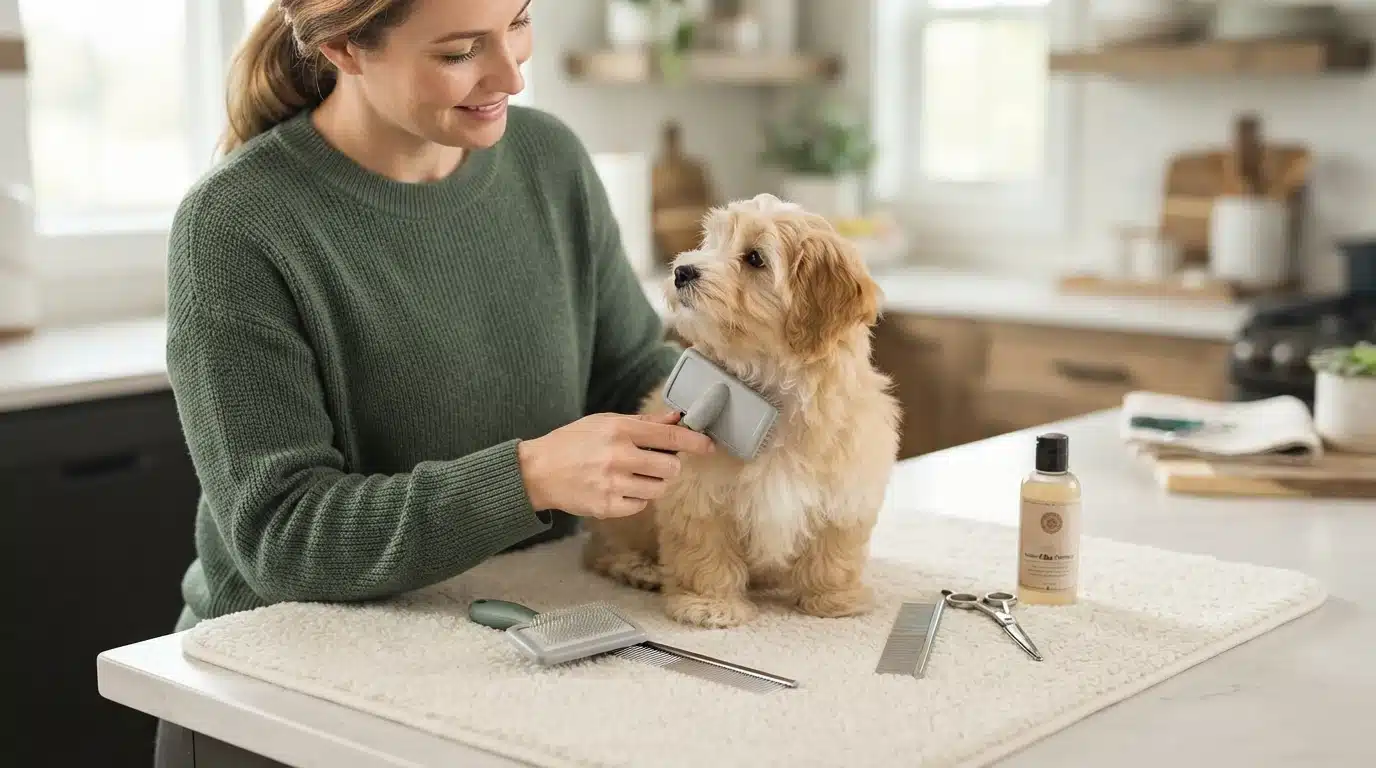
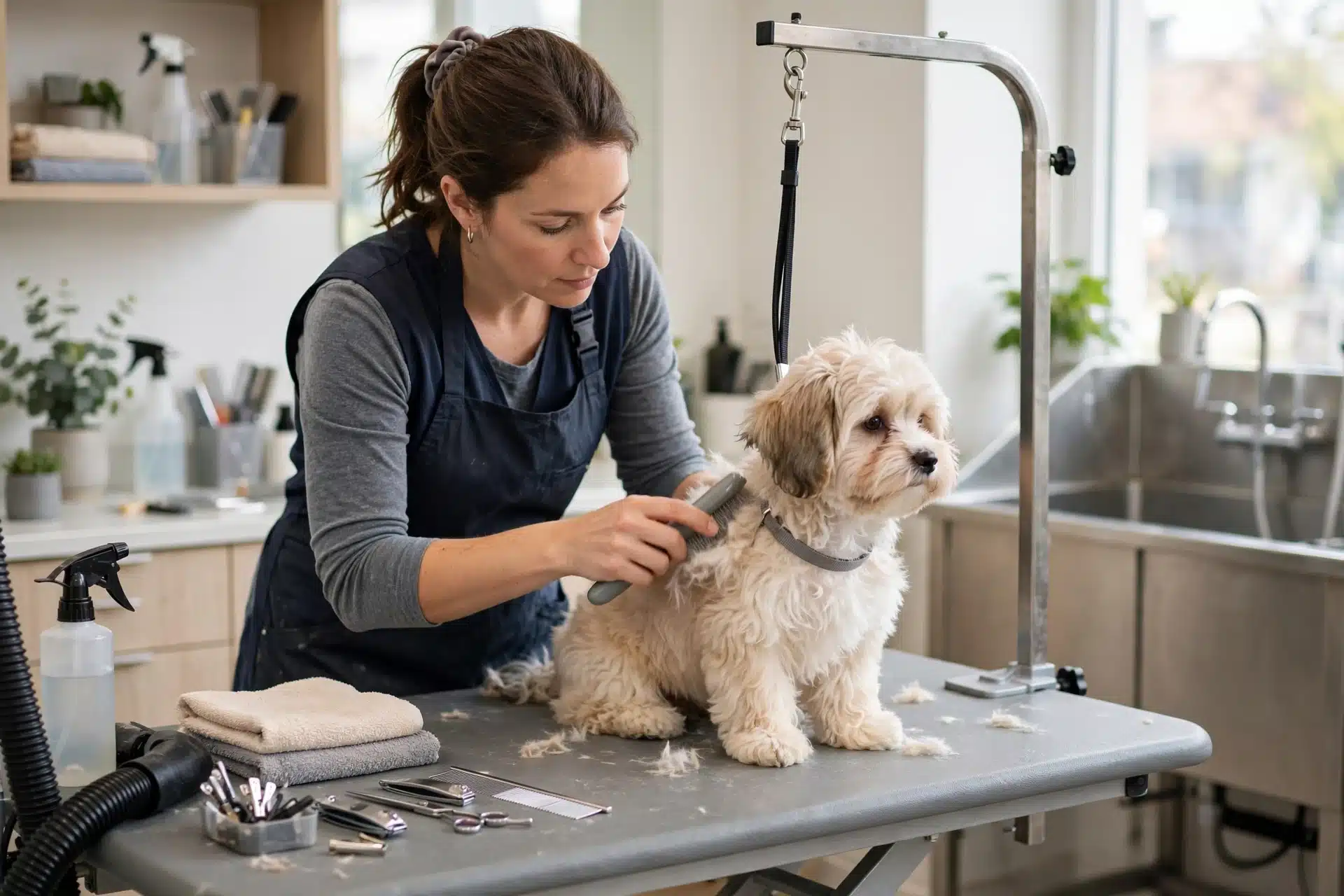
A small breed puppy usually needs more coat care than a kitten. Havanese, Havapoo and Cavapoo coats grow long and tangle fast, so plan on brushing at home several times a week and a full professional groom every 4 to 6 weeks. That haircut runs roughly $50 to $90 for a small dog, so budget $400 to $900 a year for grooming alone, according to Petplace’s cost guide. Kittens handle most grooming themselves. Short-haired cats need an occasional brushing and nail trim; long-haired breeds need more, but still far less than a curly-coated puppy. The puppy asks more of your calendar, though the payoff is a coat you can style and snuggle.
Allergies, Shedding and Managing a Sensitive Household
Low-shedding breeds like the Havanese drop less hair around the house, which helps many mild allergy sufferers. But no dog or cat is truly allergy-proof, because reactions are triggered by dander and saliva, not just fur. Kittens spread allergens too. If someone in your home reacts, spend time with the breed before you commit, wash bedding weekly, and keep the bedroom pet-free. A breeder who knows her lines honestly, as Cassie does at Sage Puppies, will tell you which homes her puppies suit. Spend an hour with the animal first, then decide.
Where to Find Each: Breeders, Shelters and What to Verify in Writing
Kittens are easy to source. Shelters and rescues place them in litters every spring, and adoption fees usually cover vaccines and spay or neuter. A specific small breed puppy takes more legwork: reputable breeders of Havanese, Havapoos and Cavapoos often keep waiting lists, and ethical programs rarely have puppies sitting available on demand. Wherever you shop, the paper trail matters more than the website.
Questions to Ask Any Puppy Source
Ask to meet the puppy’s mother, and ask which health tests the parents passed. A good breeder answers without flinching. Request the vaccination and deworming dates in writing, plus a written health guarantee and a return clause if the match fails. Ask how the puppy was socialized and who handled it. Clear, written answers separate careful programs from careless ones, and that standard applies across Utah and nationwide.
Questions to Ask Any Kitten Source
Ask whether the kitten has been tested for FeLV and FIV. Confirm in writing which vaccines were given and when. For shelter kittens, ask about spay or neuter, microchipping and any known health notes. Ask how the kitten was raised: bottle-fed, foster home or colony. That history predicts how friendly it will be at home.
Which Should You Choose: Small Breed Puppy or Kitten?
Here’s the honest answer: a kitten is easier if you want a pet that fits a busy, independent life. A small breed puppy is the better pick if you want a hands-on companion and can give it real time every day. Neither is “better.” Match the animal to your schedule, budget and personality instead.
Choose a Kitten If This Describes You
Kittens ask for less of your day. Most arrive litter trained, need no house training and are happy home alone while you work. You’ll scoop a box, serve two or three meals and play for 15 to 30 minutes. That covers the basics.
This path suits you if you travel sometimes, live in a smaller space or keep a tight budget. A kitten’s grooming needs are also minimal because most cats handle it themselves. Kittens do climb curtains, knock things off shelves and need daily play, so they are not zero-effort. If you can laugh at a broken mug and don’t need a pet to follow you around, a kitten fits well. Veterinary clinics comparing the two note kittens also reach social maturity faster, so their personality settles early.
Choose a Small Breed Puppy If This Describes You
Pick a puppy if you want a partner, not just a pet. Small breeds like the Havanese, Havapoo and Cavapoo were bred to live close to people. They want to be where you are, learn their name fast and train well with treats and praise.
This suits you if someone is home most of the day, or you can arrange midday breaks, and you enjoy training as part of the fun. Expect potty trips, short training sessions and daily walks for the first year. Budget more too, since a well-bred puppy costs more upfront than a shelter kitten. In return you get a dog that greets you at the door, walks beside you and lives for your attention. Breeds like these also shed very little, which matters if you want a tidy house. If that trade feels worth it, the puppy wins for you.

If a puppy fits your days better, the next step is choosing the right one. Sage Puppies matches first-time owners with well-socialized Havanese, Havapoo and Cavapoo puppies through a simple application. Browse available puppies or ask Cassie which pup suits your family.
Frequently Asked Questions
Q1: Is a small breed puppy or a kitten easier for a first-time pet owner?
A kitten is easier at the start. It usually arrives litter trained and needs about an hour of daily play. A puppy demands more but rewards more over time.
Q2: Which is easier to train, a small puppy or a kitten?
Kittens train themselves for basics. Puppies learn far more, such as crate habits and leash manners, if you run short daily sessions.
Q3: How much time does a small breed puppy need per day compared to a kitten?
Plan on roughly 2 to 3 hours for a puppy. A kitten needs about 30 to 60 minutes.
Q4: Can a puppy and a kitten live together safely?
Yes, with slow, supervised introductions and separate safe spaces at first. Temperament matters more than species.
Q5: Can a puppy be left alone while I work?
Not young ones. Puppies under six months need a midday potty break, so arrange help or a dog walker.
Conclusion
The small breed puppy vs kitten choice comes down to time and temperament. A kitten is easier for beginners: litter trained in days, about an hour of daily play and a low upfront cost. A small breed puppy asks for 2 to 3 hours a day, house training patience and a bigger budget, but returns years of loyal, trainable companionship. If your schedule is full, choose the kitten. If someone is home and you want a partner, a Havanese, Havapoo or Cavapoo fits beautifully. Match the animal to your real routine, and verify health records in writing before you commit.