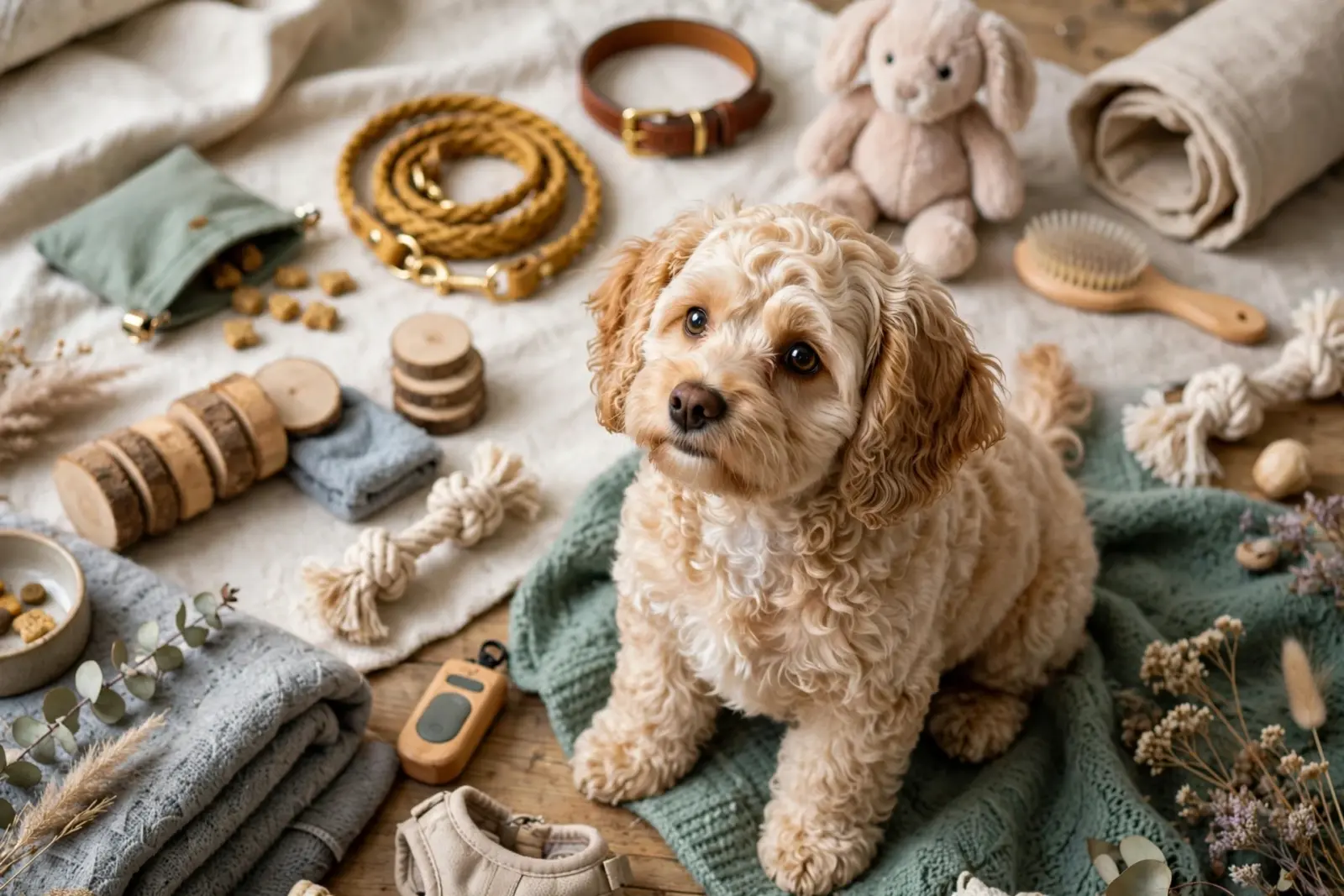
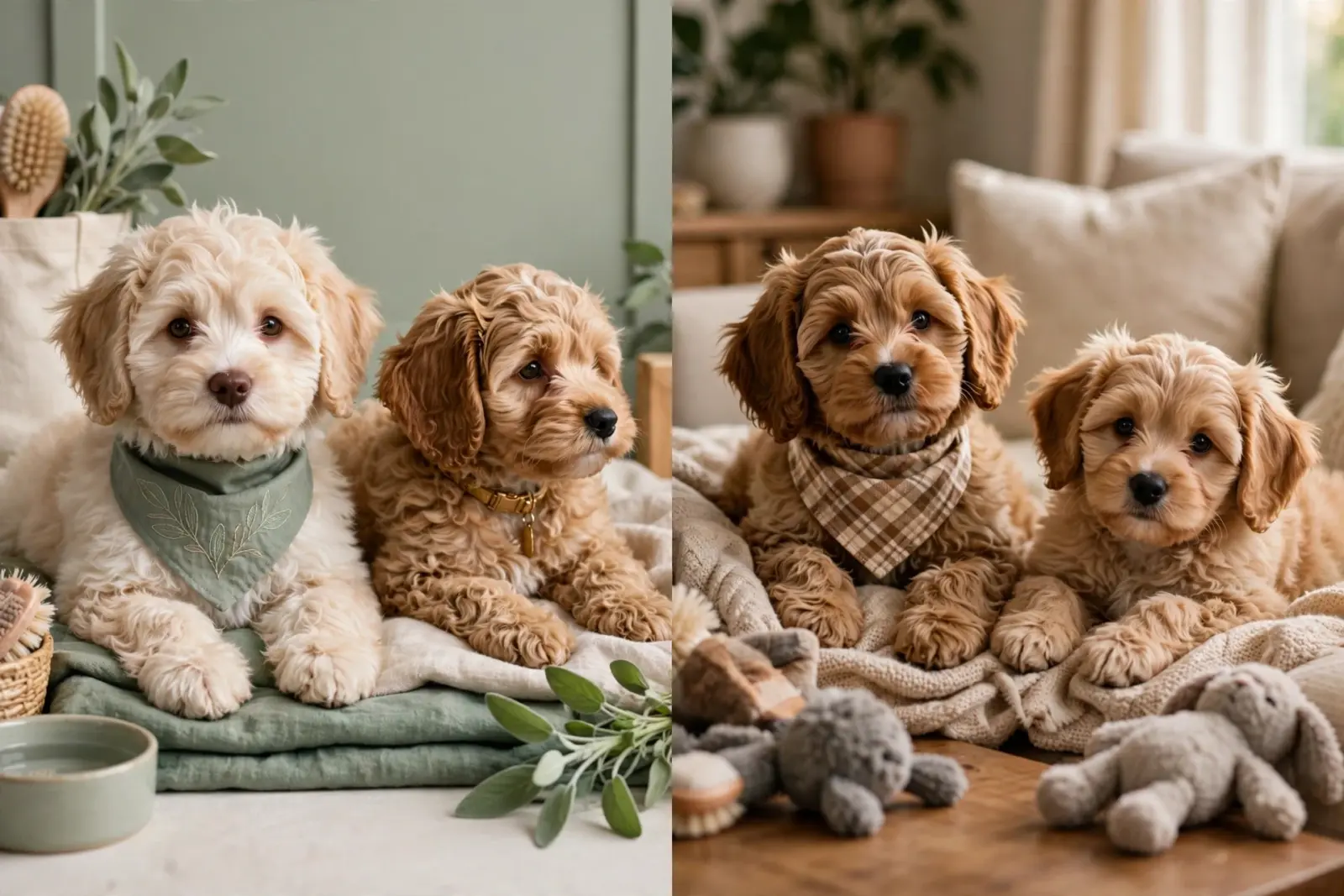
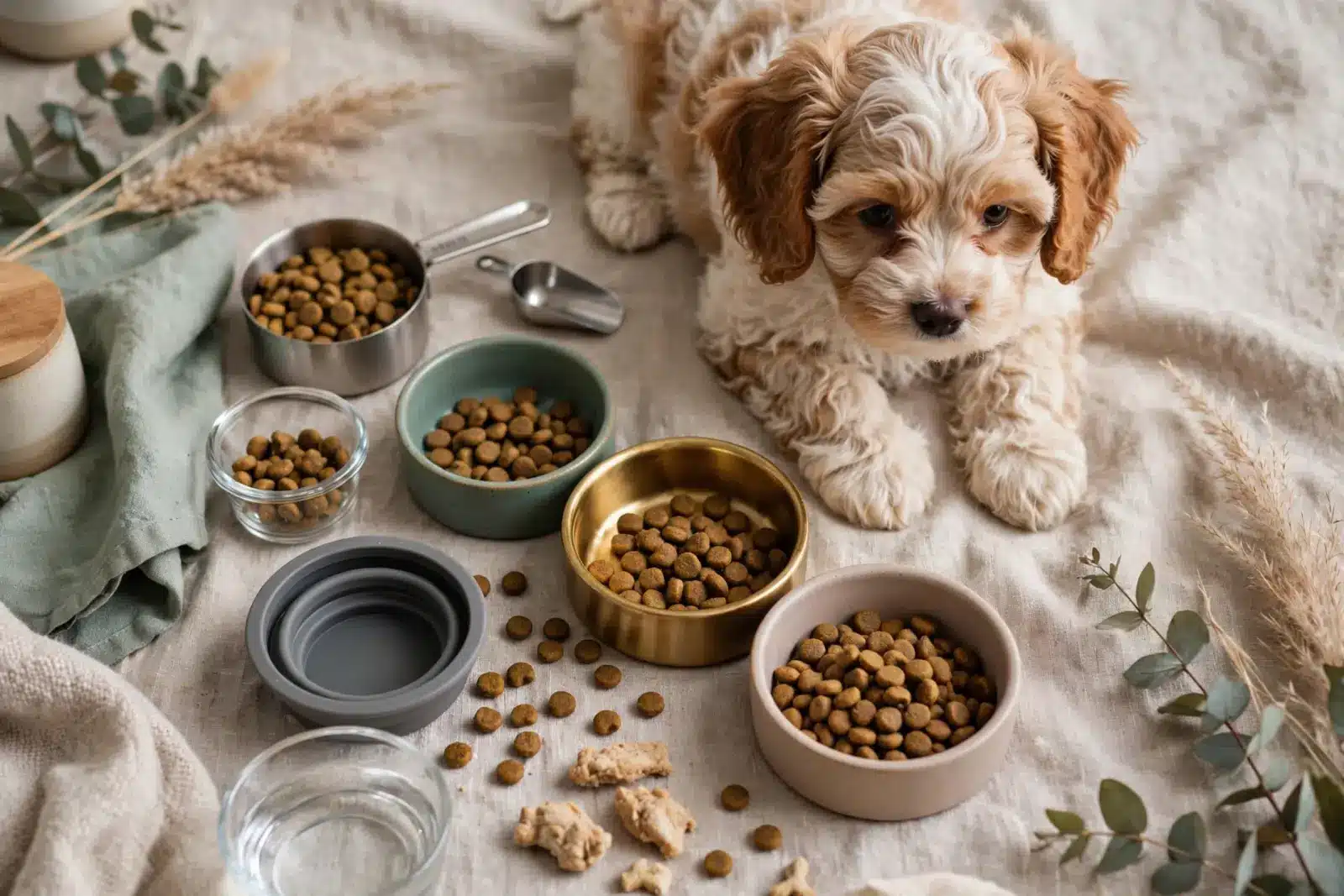
Quick Summary: Cavapoo puppies build confidence through short, reward-based home sessions that pair new sounds, surfaces, people, handling and movement with treats. Start every activity on an easy level, watch green, yellow and red body signals, and adjust distance, intensity or duration when fear appears rather than forcing exposure. Sage Puppies gives puppies gentle early handling before they go home, so these games can continue that confidence-building work from the start.
On a rainy Sunday in South Jordan, a ten-week-old Cavapoo named Biscuit met his first broom. He decided the bristles were alive, so he barked, backed into the sofa, and refused to leave the room. Two weeks later the same puppy chased the broom, then ate the treat hidden behind it. Nothing about Biscuit was wrong. Something just needed repeating in the right order.
That is the challenge most owners face: the window for cavapoo socialization games is short, and guessing wastes it. This guide gives you simple socialization games for puppies, arranged as an easy three-tier ladder, so each cavapoo puppy game builds on the last. Every method follows reward-based puppy training guidance, so progress comes from trust, not pressure.
The Cavapoo Socialization Games You Can Play at Home
What socialization games can you play at home? These five work in a ten-minute session:
- Treat treasure hunt – scatter kibble in a towel for sniffing practice
- Surface walk – let your puppy cross a mat, blanket and cardboard
- Sound pairing – play doorbell and traffic sounds, then treat
- Gentle handling – touch paws, ears and mouth, then reward
- Obstacle mini-course – step over a cushion or through a box
Each game has a setup line, a difficulty ladder and a stop signal, so you can adjust on the spot instead of pushing through worry. The first three months matter most. The AVSAB position statement supports early, reward-based exposure, and indoor games let you start before vaccinations finish.
A typical session looks like this:
| Stage | Time | What happens |
|---|---|---|
| Warm-up | 1 min | Settle on the mat, hand-feed a few treats |
| Games | 6-7 min | Run two or three games at Easy level |
| Cool-down | 2 min | Quiet chew or sniff time on the mat |
A Ten-Minute Home Session That Repeats
Short beats long. A puppy learns more from three calm ten-minute sessions than one half-hour marathon, because a tired or overwhelmed puppy stops taking in new information. Pick two games, run them once each, and end while your puppy still wants more.
Keep the format identical every day: same mat, same treat pouch, same order. Repetition tells your puppy what happens next, and predictability lowers stress. Pair each new thing with food, since pairing a sound or surface with treats is how counterconditioning works. If your puppy hesitates, that is your cue to make the game easier, not to wait it out.
The Easy, Medium, Advanced Difficulty System
Every game runs on three tiers. Easy means the item is still, quiet and close. Medium adds movement, mild sound or distance. Advanced combines two things at once, like a wobbling box plus a doorbell recording.
Start every new game at Easy, even with a bold puppy. Move up only when your puppy approaches the item on their own, eats treats loosely and stays relaxed. Those are your go signals. A frozen body, tucked tail or refused treat means step back down. This ladder keeps confidence games at home productive instead of scary.
Games That Build Confidence With New People
New people are the trickiest part of socialization for many Cavapoo puppies, because guests arrive suddenly, lean down, and reach. These games slow the greeting down so your puppy stays under threshold.
Treat and Retreat Greetings
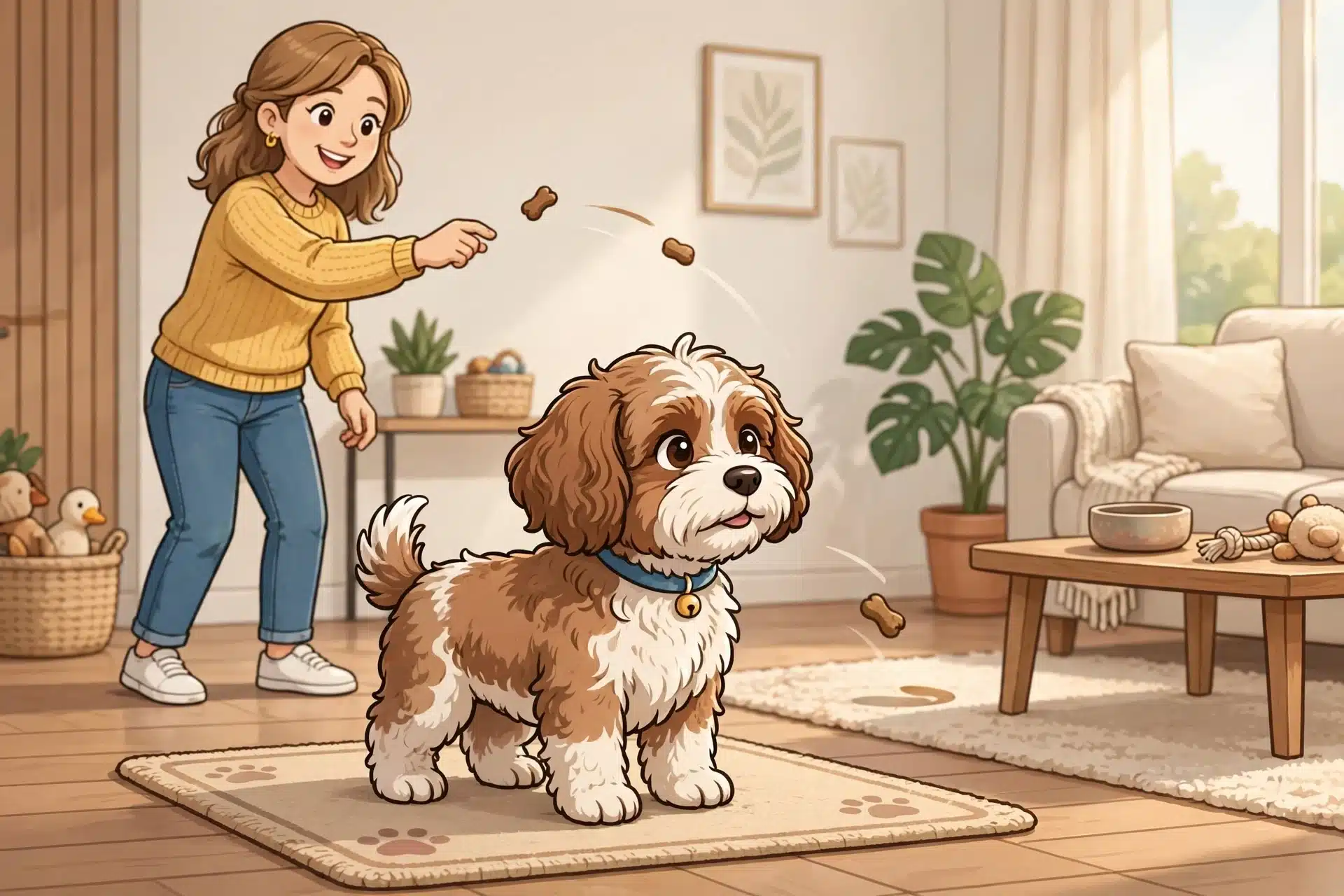
Have a guest toss a treat past your puppy instead of offering it from their hand. Your puppy walks forward, eats, and returns to you for another. Repeat a few times, then let the guest offer a treat with a flat palm if your puppy chooses to approach. Never reach over the puppy’s head or scoop her up early. The pattern teaches that strangers predict good things and that she controls the pace.
Stationing While a Visitor Comes and Goes
Ask your puppy to settle on a mat near the door, then have someone knock, enter, chat, and leave while you feed treats on the mat. The visitor’s arrival becomes background noise rather than the main event. Reward calm moments even when nothing dramatic happens. If your puppy breaks position to investigate, that is fine information: the visitor was too exciting, so lower the intensity or add distance next round.
Passing Treats Between Two People
Sit with a family member a few feet apart and take turns calling your puppy over, feeding a treat, then sending her to the other person. Start indoors with familiar faces. Once she trots happily between you, invite one calm guest into the game. This builds a flexible, friendly routine for meeting people anywhere, and it uses up energy on a rainy day.
Keep each greeting short, watch her body language, and end while she still wants more. If you are still choosing a breeder, Sage Puppies starts confidence work like this before puppies go home.
Games for Handling, Touch and Vet Preparation
Vet exams, nail trims and ear cleaning all ask your puppy to accept being touched in places dogs often guard. These three games build that tolerance while your puppy is still young enough to take it in stride.
The Chin Rest Game
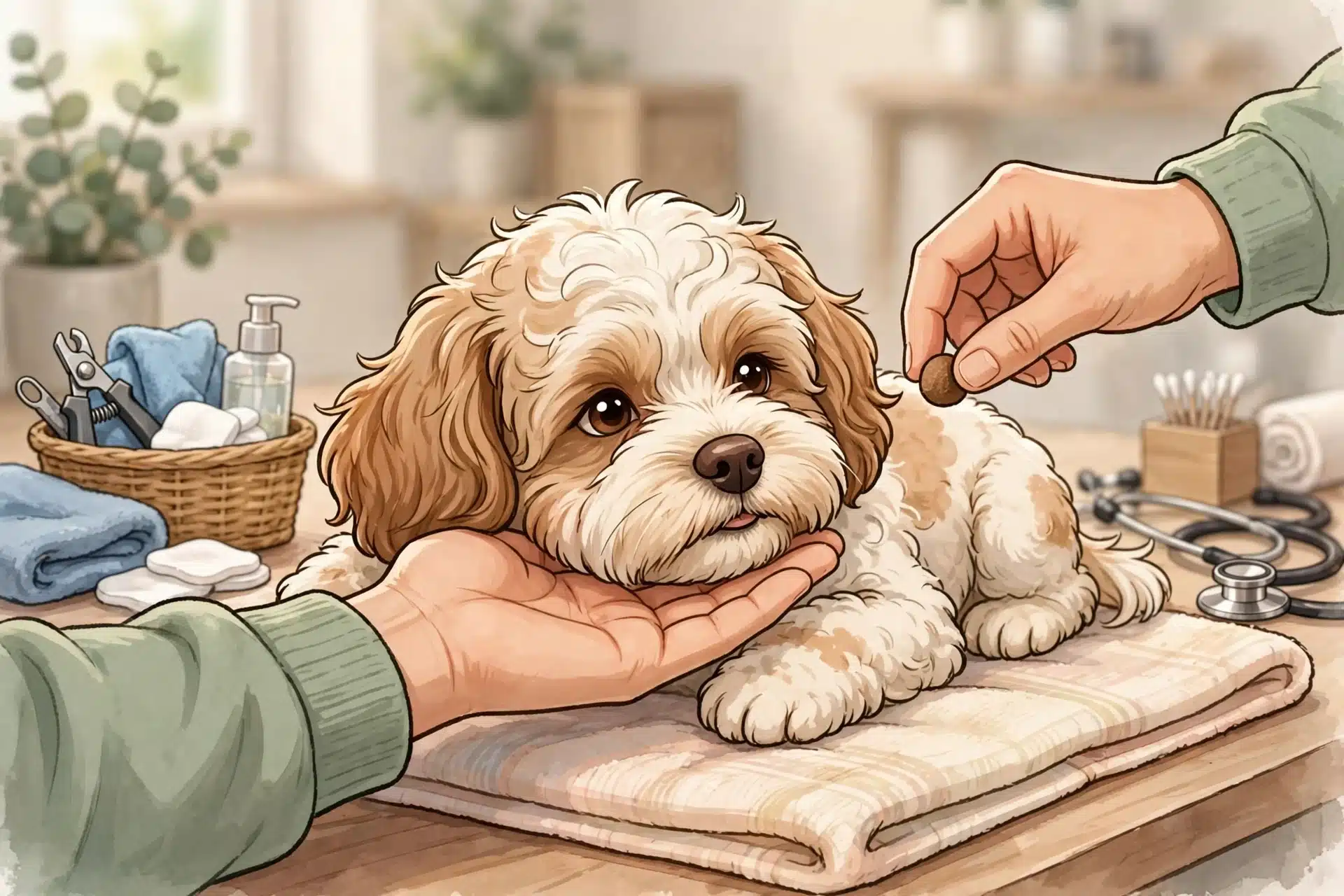
Hold your flat hand low, palm up, near your puppy’s chin. The moment her chin touches it, mark and treat. Repeat until she offers it fast, then add the cue “rest.” Once that is solid, ask for a two-second hold, then five. A chin rest keeps a dog still and gives her something to do instead of struggling, which is why Fear Free trainers use it during exams and procedures such as blood draws.
Ear, Paw and Lip Touching as a Game
Sit on the floor and hand-feed a few treats while you briefly touch one ear. Touch, then treat, then pause. Work down the list: ears, paws, toes, lips, gums, belly. Start with one second of contact and build slowly. This is counterconditioning: your puppy learns that touch predicts good things, so handling stops feeling like a threat.
If she pulls away, mouth is tight, or she turns her head, stop. Touch a friendlier spot, then return with a shorter hold.
Mock Vet Visits at Home
Copy the real thing. Put your puppy on a towel on a table, look in both ears, lift each paw, and open the lips. Let her hear a thermometer click and feel a stethoscope. Then keep a few of these items near her kibble so the gear stops being news. Some breeders, including Sage Puppies, start early handling before puppies go home, so you may find some parts are already easy.
Watch her signals throughout. Soft eyes, loose body, and a willing chin rest mean you can go a little longer. Stiffness or lip licking means stop and adjust.
Games for Sounds, Sights and Household Surfaces
Your home is full of the exact things a puppy will meet for life: noise, clutter and odd flooring. This group of puppy confidence building games turns that ordinary stuff into practice, so the sounds and textures become boring instead of scary.
Sound Pairing With a Volume You Control
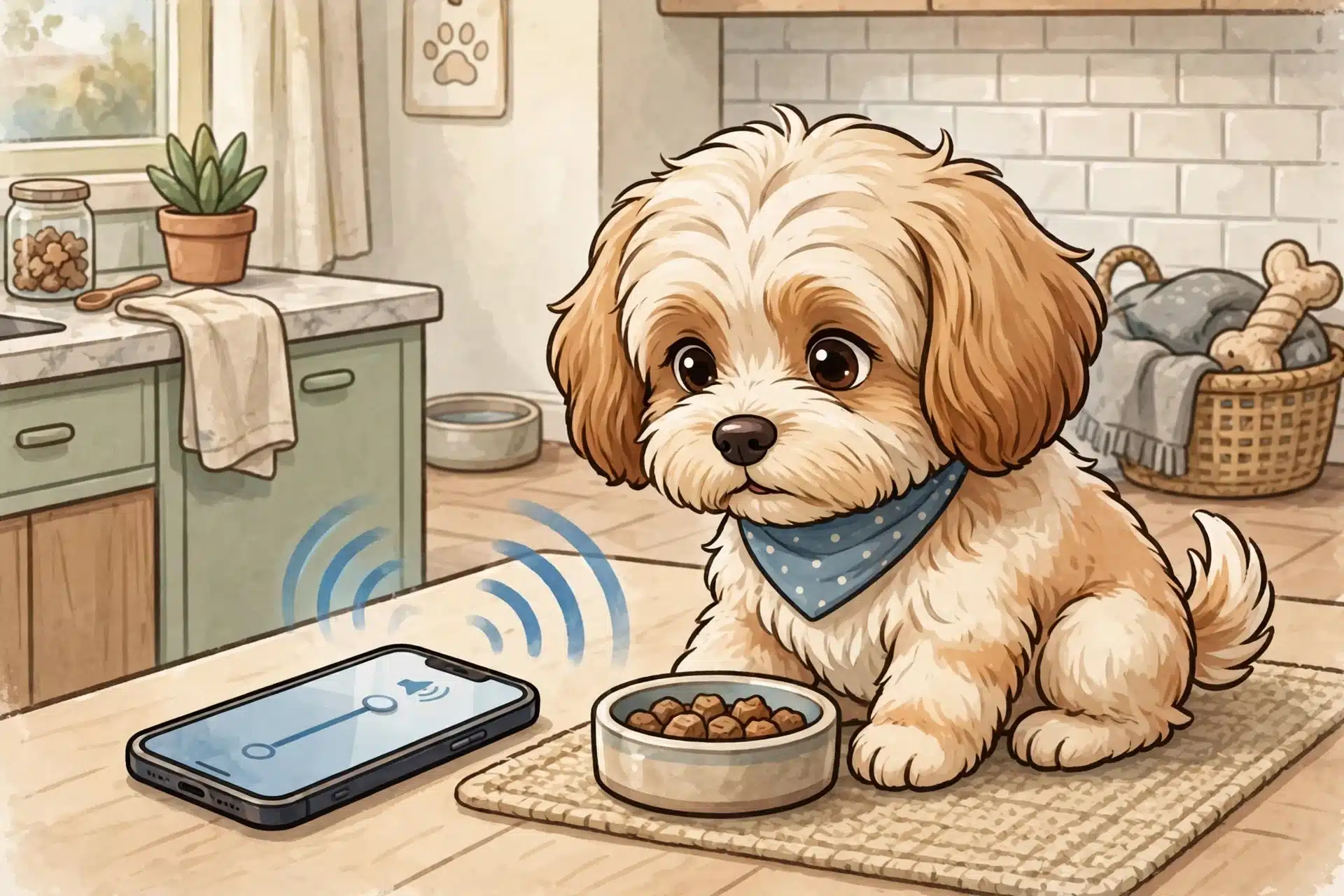
Pick one sound, like a hair dryer, vacuum or doorbell recording. Start at low volume, one your puppy notices but ignores, and feed a treat each time it plays. This is counterconditioning: the sound predicts good food. If your puppy stiffens, backs away or stops eating, the volume is too high. Lower it and try again later. This low-and-slow approach mirrors professional desensitization guidance, which recommends starting triggers at the weakest level your puppy can handle. Keep sessions under two minutes.
The Cardboard Chaos Course
Drop a few empty boxes, paper towel rolls and a laundry basket on the floor. Scatter kibble around and between them, then let your puppy hunt. The crinkling and clatter happen while your puppy is busy sniffing, so novelty pairs with reward instead of alarm. Rearrange one item each round so the course never looks exactly the same.
If your puppy freezes at an item, set it farther away and toss treats past it. Let your puppy choose to approach.
Texture and Surface Trails
Lay a trail of different surfaces: a bath mat, a baking sheet, a towel, a piece of cardboard. Place a treat on each one and let your puppy walk the line at her own pace. Strange footing under paws builds body confidence that stairs, tile and vet tables later depend on. Reward calm steps, never push.
Games That Build Body Confidence and Movement Skills
These three movement games teach your Cavapoo where her body is and how to calm down again. Keep each round short, and reward generously. The AVSAB position statement supports reward-based methods like these, so no pushing, pinning, or scolding is ever needed.
Paw Targets and the Balance Trail
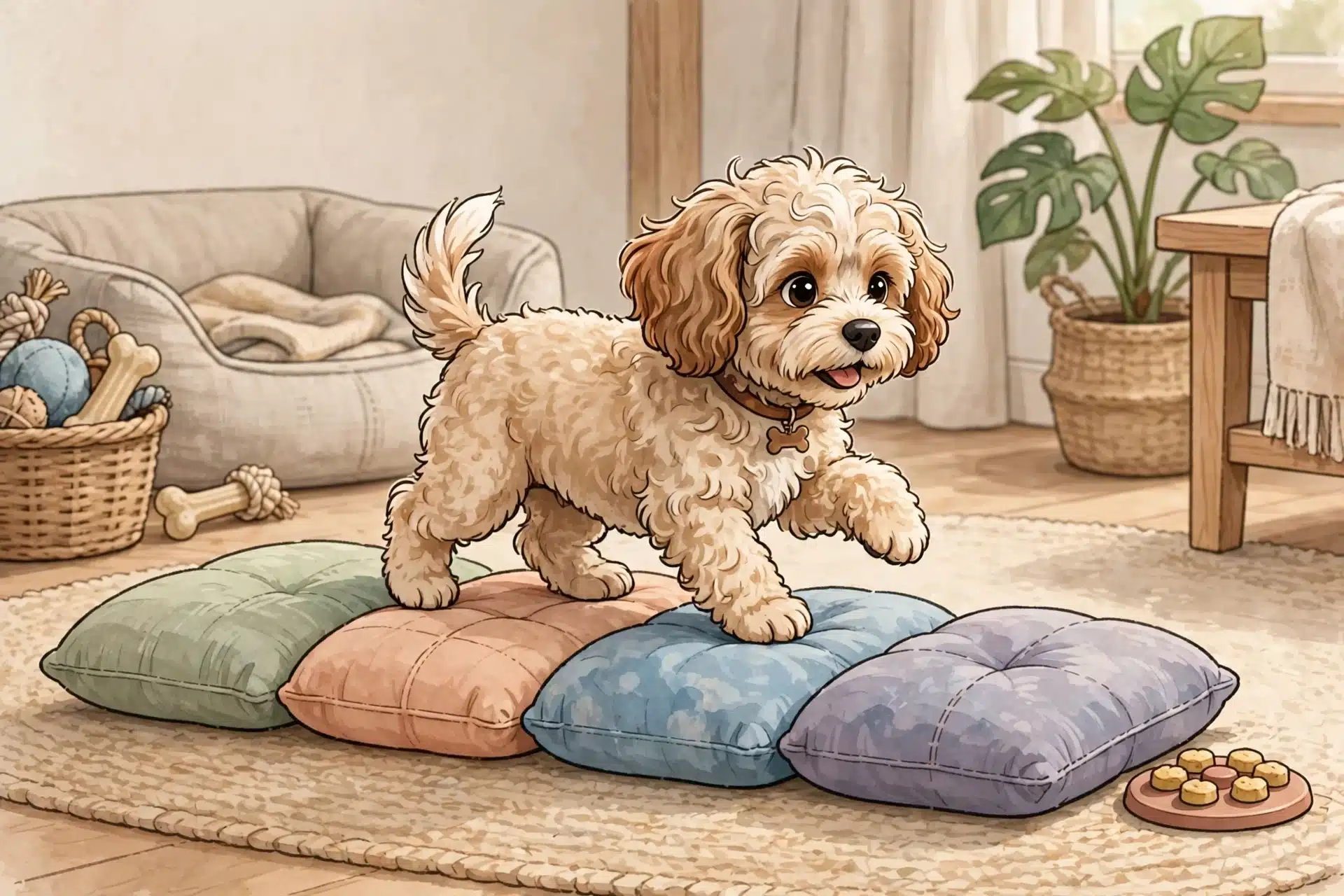
Hold your palm flat at nose height and mark the moment a front paw touches it. That simple touch becomes a target you can move. Once she offers it happily, place the target on a cushion, then on a low step, then on a pillow. Walking a trail of wobbly surfaces builds body awareness and balance. Go at her pace; wobble is the lesson, not a test.
Tug With Rules That Build Trust
Tug is fine for puppies if you keep it gentle. Vets caution that hard pulling can stress a young dog’s growing teeth and jaws, so use a soft toy and light pressure. The real value is the rules. Ask for a “drop,” trade for a treat, then invite the game again. That switch between excited and calm is the skill, and AVSAB guidance backs reward-based teaching like this.
The Settle Game: Teaching an Off-Switch
After any rowdy game, lead her to a mat and scatter a few treats on it. When she lies down, feed calmly between her front paws. Wait longer between treats each round. She learns that excitement has an ending, and quiet earns good things too.
Reading Your Cavapoo’s Signals and Adjusting the Game
How do you know if your puppy is overwhelmed during a socialization game? Watch for a yellow or red signal instead of guessing. A shy puppy rarely goes from happy to terrified in one step. Reading these puppy body language signs lets you step the game down before fear takes hold, which is the whole point of the signal system.
Green, Yellow and Red Signals
Think of your puppy’s behavior as a traffic light.
- Green: loose body, soft eyes, tail in a natural wag, quick recovery after a startle, willing to take treats.
- Yellow: stiff posture, lip licking, yawning, turning the head away, slow or refused treats, hiding behind your legs.
- Red: trembling, pinned ears, tucked tail, growling, snapping, or trying to leave the room.
Yellow means slow down. Red means stop the game entirely.
The Three-Step Adjust-Down Method
How do I use the three-step adjust-down method when my puppy is scared? Work through these steps in order:
- Distance. Move the trigger farther away or step back until your puppy can eat treats again.
- Intensity. Lower the volume, speed or movement, so the vacuum rolls once instead of roaming.
- Duration. Cut the session to a minute or two, then end on a green moment.
This is counterconditioning in practice: pair the scary thing with food at a level your puppy can handle. Return to Easy level next session, not where you left off.
When to Bring in a Professional
If red signals repeat across several days, or your puppy freezes and cannot recover, contact a trainer who uses reward-based puppy training and holds a credential such as CPDT or CAAB. The AVSAB’s position statement urges humane, force-free methods, and a vet visit rules out pain first. Fear this intense needs a plan, not more practice.
Common Mistakes to Avoid
Mistakes That Make a Shy Puppy Worse
The biggest mistake is flooding: exposing your puppy to a loud or busy trigger all at once and hoping she gets used to it. She usually gets more scared instead. Forcing interaction comes second. Holding your puppy so a guest can pet her teaches her that people trap her, not reward her. Soothing in a panicked voice, coddling over the head, or skipping the Easy tier because progress “should” be faster all push a shy puppy backward. Watch her body language and let her choose to approach.
Mistakes With Time, Expectations and Equipment
Keep sessions short and easy. Ten minutes of total play, with the 6-7 minute game block from the routine above, beats one long, tiring session. Skipping rest is a real problem: an overtired puppy looks reactive, not poorly trained. Comparing your puppy to a littermate or a friend’s dog sets a false deadline, and there is no fixed date by which socialization must be finished. Equipment mistakes matter too. slippery floors, treats that are too big, or a harness put on without a reward first all sour the game.
If a session ends with your puppy hiding under the couch, drop the difficulty two levels and rebuild from there.

Those ten-minute sessions work best with a puppy whose breeder already started the confidence building. Every Cavapoo from Sage Puppies is raised with gentle early handling, so your games at home pick up right where the whelping box left off. Meet our available puppies and start strong.
Frequently Asked Questions
Q1: What socialization games can I play with my Cavapoo puppy at home?
Try treat treasure hunts, surface walks, sound pairing, gentle handling and a cushion obstacle course. Run two games per ten-minute session, starting at Easy level.
Q2: How do I build my Cavapoo puppy’s confidence with indoor games?
Pair every new sound, surface or person with treats, keep sessions short, and step down difficulty when treats slow or her body stiffens.
Q3: What are the best socialization games for a shy Cavapoo puppy?
Treat and retreat greetings, texture trails and cardboard chaos courses. Let her approach at her own pace and reward each choice.
Q4: When can my puppy start socialization classes?
Per AVSAB guidance, start classes after the first vaccine set, before the series finishes. Verify the facility requires vaccines, health exams and reward-based methods.
Q5: How long does it take to socialize a Cavapoo puppy?
There is no fixed deadline. Most puppies gain steady confidence over several weeks of daily short sessions; shy puppies need a slower ladder.
Conclusion
Cavapoo socialization games work because they pair new things with food and let your puppy set the pace. Start every game at Easy level, keep sessions to ten minutes, and read the green, yellow and red signals so you can step down before fear takes hold. Progress follows calm repetition, not deadlines or pressure. If a session goes sideways, adjust distance, intensity and duration, then rebuild. Shy puppies simply need a slower ladder, and no fixed date governs the socialization window. Keep the games boring in the best sense: predictable, well-fed and short, so your Cavapoo carries quiet confidence into vet visits, guests and the world outside your door.