Quick Summary: Neither buying locally nor ordering online is safer by default. The deciding factor is whether you can verify the puppy’s origin, health records, parent testing, license status, and contract terms before paying, either in person or remotely. Local pickup lets you meet the mother and see the litter, while reputable online sellers offer live video, dated veterinary records, written guarantees, and independent verification; Sage Puppies follows this documented, owner-managed approach. Walk away if a seller refuses checks, pressures you to pay, or offers only a bill of sale.
Buying a puppy sight unseen is not automatically reckless, and visiting in person is not automatically safe. A local breeder vs online seller really comes down to verifiability. Visit a home and you can see the litter, the mother, and the conditions firsthand. An online seller earns your trust only by handing you that same proof remotely, in writing. The deciding factor is not how the puppy arrives. It is whether you can independently confirm where the puppy came from before money moves. Too many buyers judge by a polished website or a fast reply. This comparison instead runs both models through five checks you can actually perform: veterinary transparency, contract terms, travel safety, total cost, and independent verification, plus a checklist to finish before any deposit.
Local Breeder vs Online Puppy Seller: At a Glance
| Local breeder | Online puppy seller | |
|---|---|---|
| Verification options | In-person visit, meet parents and litter, see the home or kennel, talk to references and the breeder’s vet | Live video walkthrough, dated photos of the litter, references, records review, third-party vet or technician checks |
| Health and veterinary transparency | Typically hands over original veterinary and genetic test paperwork at or before pickup | Depends entirely on the seller, so document quality is the strongest signal you have |
| Contract and paperwork | Written contract with spay/neuter, return, and health terms, usually signed before deposit | Range from a detailed contract with a health guarantee to a basic bill of sale with no remedy |
| Travel and handoff | Buyer usually drives or flies in and collects the puppy, keeping it in the family car from the start | Puppy travels by air with a flight nanny, by commercial pet transport, or by personal pickup arranged by the seller |
| Best for | Buyers who can travel, especially Utah and Mountain West families wanting local pickup | Buyers far from the litter who can verify documentation and accept travel stress |
How Local Breeders and Online Puppy Sellers Actually Differ
Local breeder
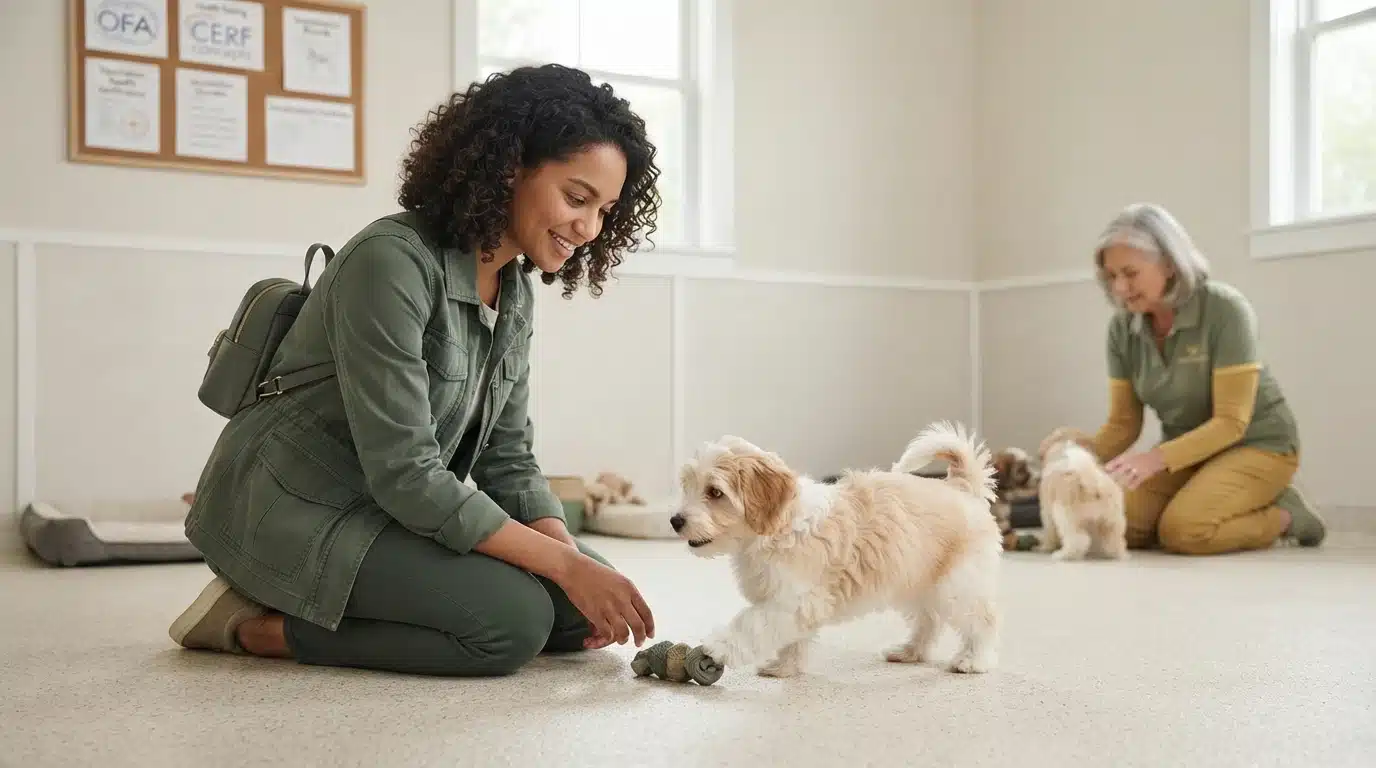
A local breeder raises litters in a home or small facility and sells to buyers who can visit in person. You meet the parents, see where the puppies live, and drive your puppy home yourself. This model suits buyers who can travel, including Utah and Mountain West families wanting local pickup.
Online puppy seller
An online puppy seller is a breeder or broker who sells sight unseen, relying on photos, video calls, and transport to deliver the puppy. It fits buyers far from the litter who can verify paperwork and accept travel stress. This local breeder vs online seller question comes down to which checks each model lets you perform.
Key strengths
- Live video walkthroughs and dated litter photos
- Flight nanny or ground transport options for distant families
How Local Breeders and Online Puppy Sellers Actually Differ
The core difference in the local breeder vs online seller question is not location. It is who raised the puppy and what you can verify before money changes hands.
What a local breeder actually is in practice
A true local breeder raises the litter in or near their own home, so you can visit, meet the mother, and watch the puppies move before you commit. Most small programs keep few breeding dogs, which usually places them outside federal licensing rules. Under the Animal Welfare Act, breeders generally need a USDA license once they keep more than four breeding females and sell pets sight unseen, according to the AKC’s licensing guide. Local pickup lets you check home conditions, review health records in person, and ask questions face to face. Sage Puppies in South Jordan, Utah works this way for local families while also arranging delivery for those farther out.
What an online puppy seller actually is in practice
“Online seller” covers several different models, and they are not equal. Some are breeders who simply market their own litters on a website and ship via a flight nanny or ground transport. Others are brokers or classified sites that never touch the puppies and resell animals from third parties. Since 2013, federal rules require sellers shipping pets sight unseen to be licensed and inspected under the Animal Welfare Act, as DVM360 reported. So the label alone tells you little; the seller’s license status and involvement with the litter tell you far more. Our guide on how to spot puppy scams walks through those checks.
Health and Veterinary Transparency
Health proof is where the two buying models differ most. Local pickup lets you read paper records in the kitchen. Online buying means everything has to arrive digitally before money changes hands.
Records a local breeder can show you in person
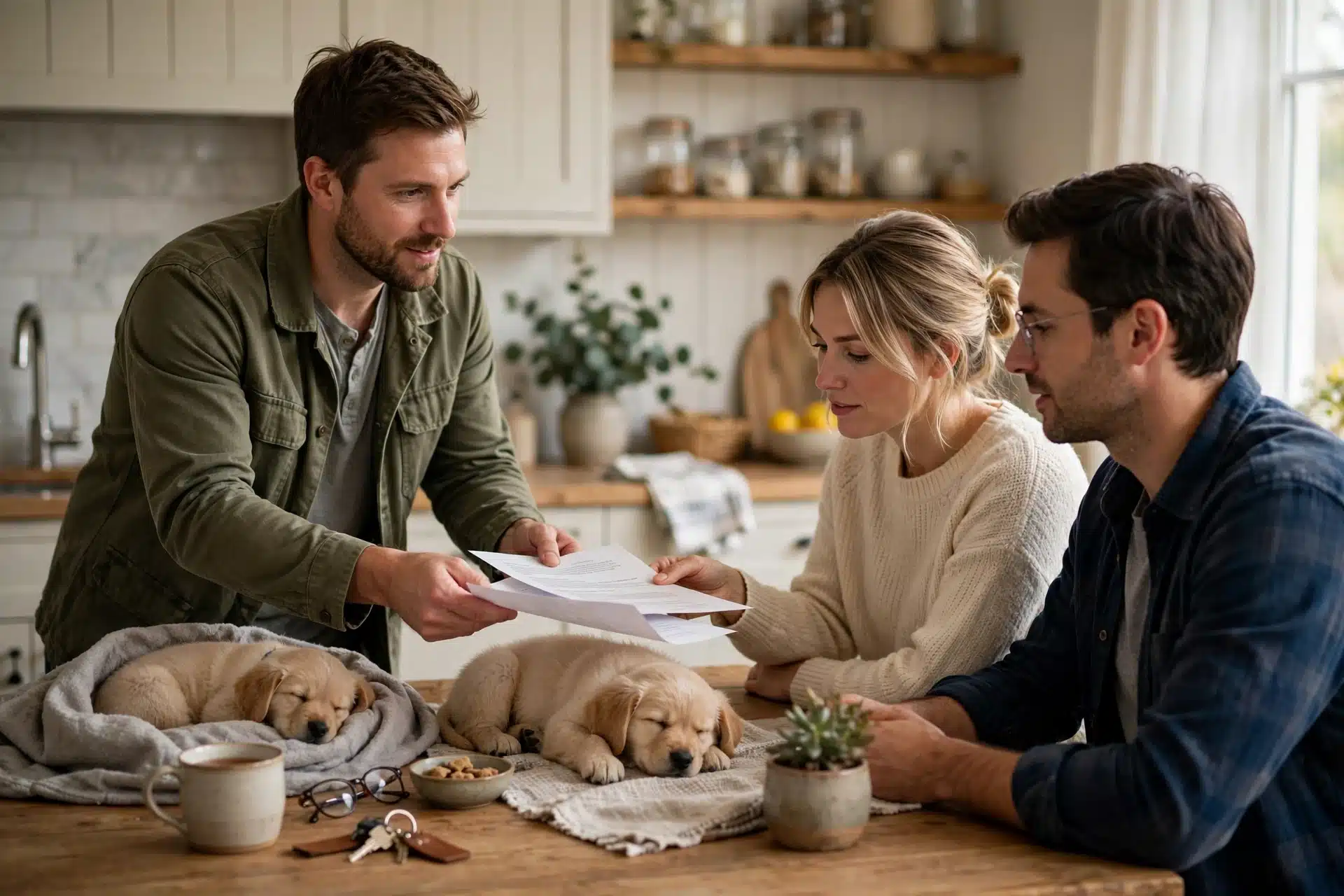
Ask to see the litter’s veterinary exam notes, the vaccination and deworming log with dates, and the parents’ health test results. A hands-on breeder will also let you meet the mother and watch how the puppies move and eat. You can check that names, dates and microchip numbers line up. If any document is missing or “in the car,” treat it as a warning sign and ask again.
Records an online seller must send before you pay
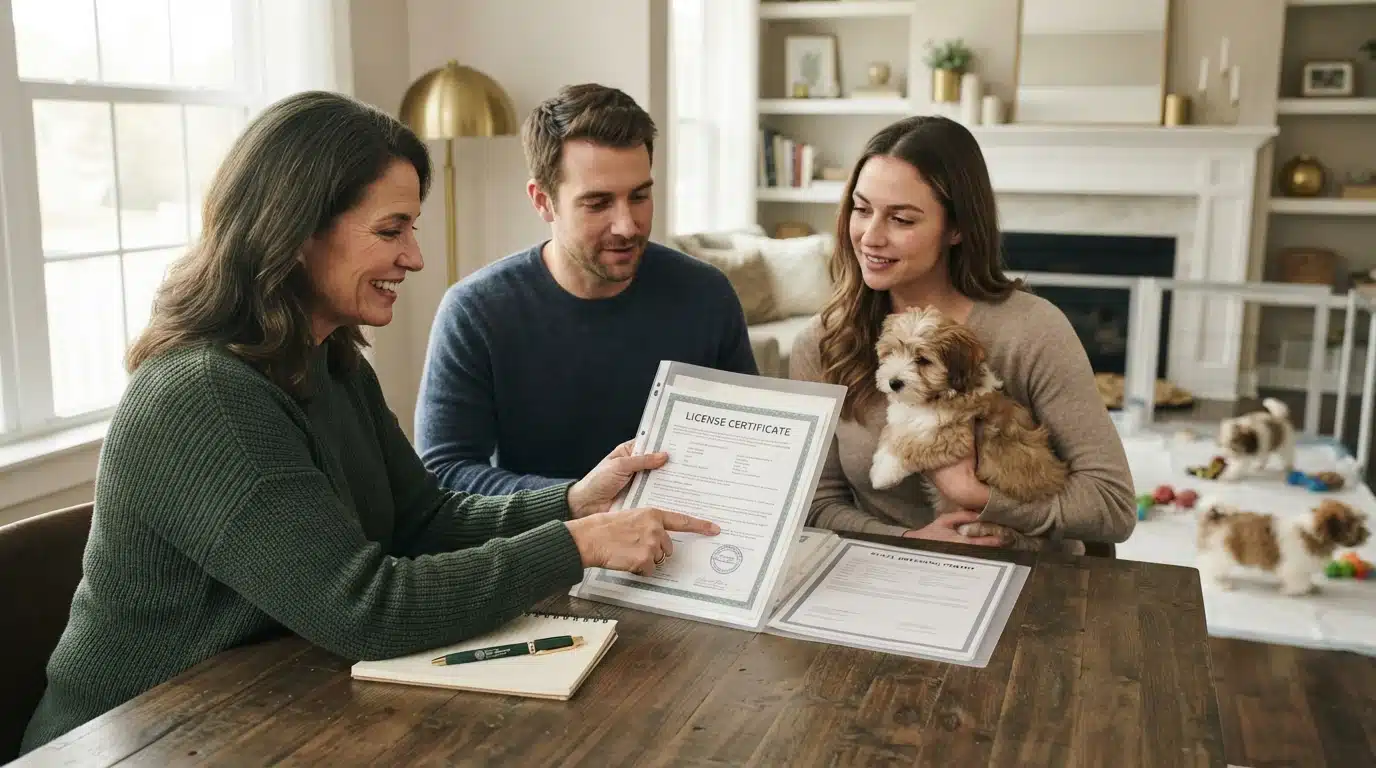
Distance removes the chance to browse, so request clear photos or PDFs of the same items: a dated vet exam from the last several days, vaccine records, and proof of parent testing. Many states add legal backing through pet purchaser protection laws, and the Table of Pet Purchaser Protection Acts shows which offer refunds or coverage tied to a prompt vet visit. Sellers like Sage Puppies put these records and guarantee terms in writing before the deposit, which is the standard you should demand anywhere.
Where both models fall short on health claims
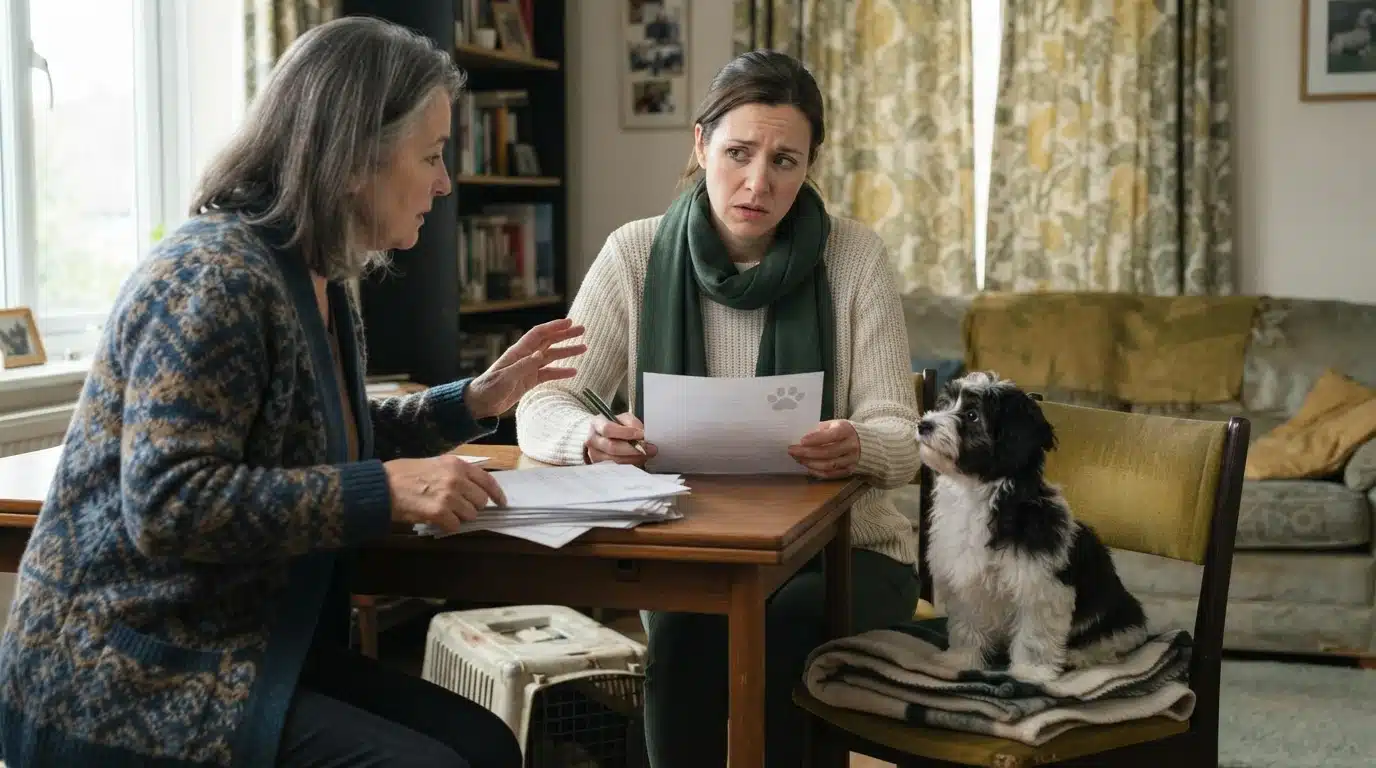
Problems come from vagueness, not the sales channel itself. “Vet checked” means little without a named clinic and a date. Parent “clearances” claimed without certificates prove nothing. And a health guarantee only matters if the contract names real remedies, deadlines and who pays. Demand specifics in both models; polite pressure filters out weak sellers fast.
Contracts, Guarantees and How Money Moves
A puppy contract spells out both sides’ duties: the health guarantee, return terms, and who pays if something goes wrong. A bill of sale is just a receipt. A good breeder offers a real contract; a receipt alone protects nobody. Key contract terms to read for:
- Health guarantee length and what it actually covers
- Return or rehome policy if the match fails
- Spay or neuter expectations, stated clearly
- Who pays for the first vet visit after pickup

The contract terms that matter most
Read the guarantee before you pay, not after. It should list covered genetic conditions, a claim window, and the exact steps you must follow, like a vet exam within a set number of days. Watch for vague phrases such as “healthy at time of sale.” That wording means the seller owes you nothing later, no matter what the vet finds.
Deposit and payment signals
How money moves tells you a lot. A small, receipt-backed deposit held against the total price is normal. Pressure to pay the full balance by gift card, wire transfer, or a payment app with no buyer protection is not. Ask when the balance is due and what happens to your deposit if the litter health checks come back clean but you walk away.
Why a bill of sale is a warning sign in either model
A bill of sale alone proves only that money changed hands. It carries no health promises, no return rights, and no breeder accountability. Local and online sellers who offer nothing but a receipt are asking you to absorb all the risk, so treat that as a reason to keep shopping.
Travel, Handoff and the First 72 Hours
Why the car handoff lowers risk
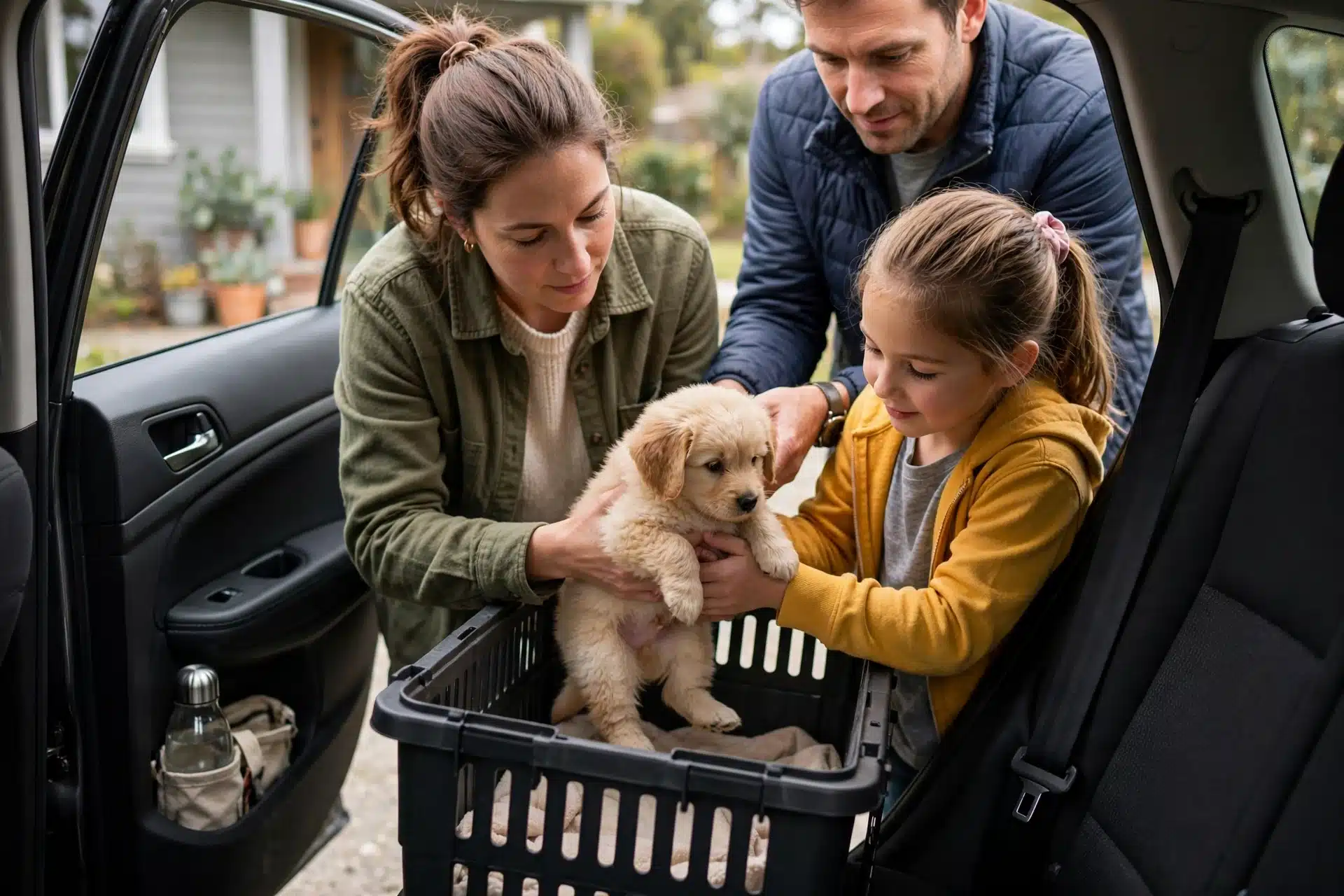
A face-to-face handoff lets you see the puppy before money changes hands. You can watch how the pup moves, ask to meet the mother when the pickup happens at the breeder’s home, and walk away if anything looks off. Local pickup also removes the stress of long transport. A family-raised puppy that goes straight from a familiar home into your car keeps its routine mostly intact, which makes the first days calmer for everyone.
What air travel actually requires and what it does not fix
If you cannot drive, you have three real options. A flight nanny carries the puppy in the cabin and stays with it the whole trip. A drive-by courier brings it by car. Cargo shipping is the last choice, because young puppies face more risk when they fly alone. None of these fixes weak paperwork, though. Ask who flies or drives the puppy, what happens if the flight is delayed, and whether the seller will share live updates. A seller who resists those questions is telling you something.
Preparing for the first 72 hours at home
Book the first veterinary exam after pickup within a few days, since many contracts set a deadline for it. Keep the puppy on the food the seller used, and switch foods slowly if you plan to change. Set up a quiet space with a crate, water, and a potty area, and let the pup sleep as much as it needs. Plan your schedule so someone is home for those first three days, and skip crowded places until your vet finishes the vaccine series.
Cost Transparency and the Total Budget
What the headline price usually includes
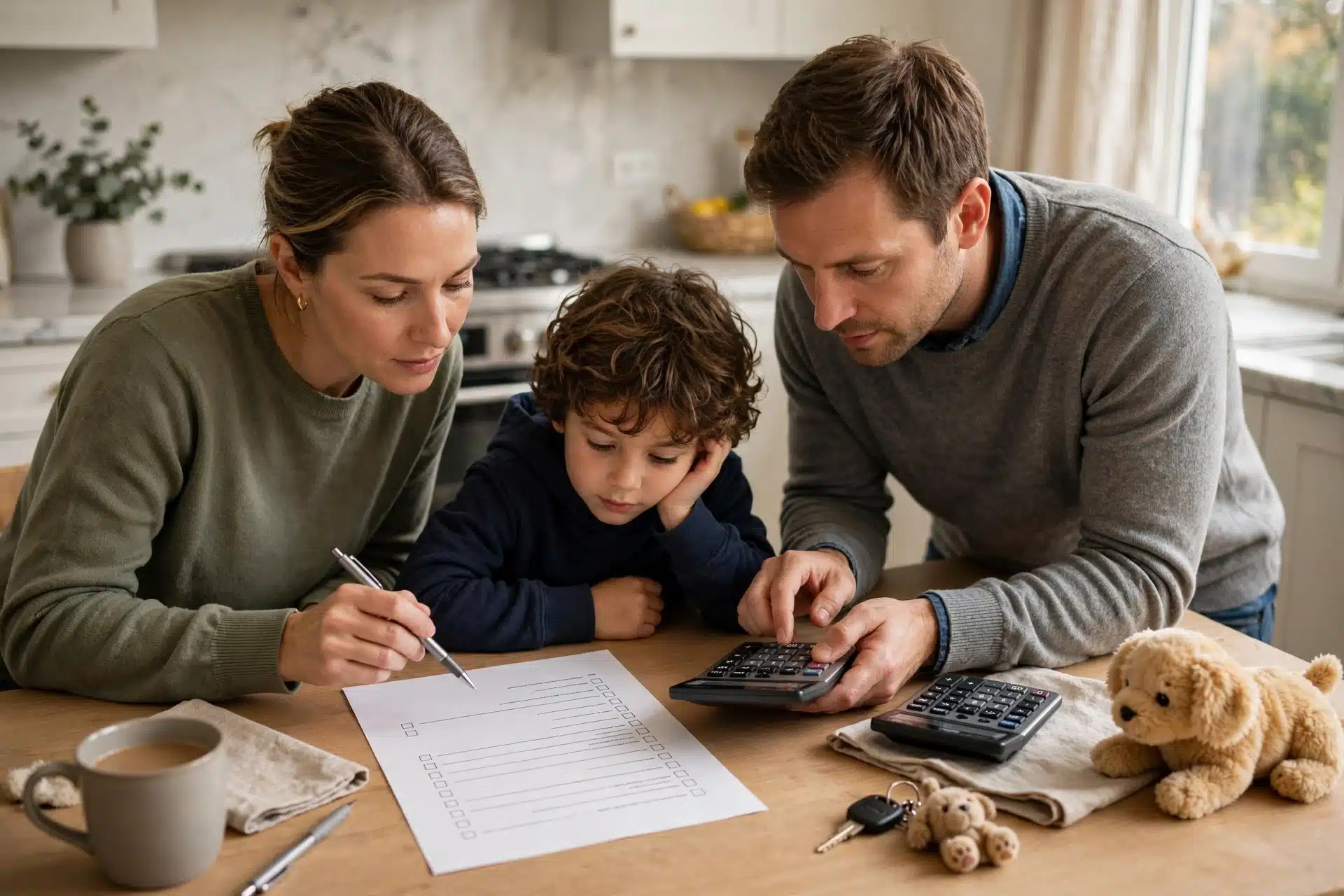
At a reputable breeder, the advertised price typically covers the puppy itself, first vaccinations, deworming, a vet exam, and microchipping. Some programs add starter food and a written contract. At an online seller, the listed price may cover only the puppy, so read the fine print before you compare numbers. Ask each seller for a written itemized quote, and compare our full puppy pricing and reservation breakdown against it line by line.
Fees that appear only after you commit
Delivery is the biggest surprise. Flight nannies, ground transport, and crate fees often run several hundred dollars, and some sellers quote them only after you pay a deposit. Watch for deposit non-refundability, payment-plan surcharges, and registration or paperwork fees. Get every add-on in writing before you send money.
The costs that follow the purchase in both models
Budget beyond the purchase price. Petco estimates $450 to $1,165 in first-year supplies, before food and vet visits, so plan for those early puppy expenses. Add the first veterinary exam after pickup, vaccine boosters, spay or neuter surgery, food, grooming, and training classes. These costs apply whether you pick up locally or have a puppy delivered, so build them into your total from day one.
How to Verify Either Seller Before You Pay a Deposit
What should you verify before paying a puppy deposit? Ask for the breeder’s name and location, the license number if they ship puppies, health test results for both parents, and the puppy’s vet records. Then check each claim yourself before any money changes hands.
The questions that expose most problems
Ask who raised the puppy and where, whether both parents had health testing, and who the vet is. Ask for the puppy purchase contract terms in writing before you send anything. A real breeder answers quickly and welcomes questions. A broker or reseller stalls, claims the puppy is “with a partner family,” or pushes you to pay same-day to hold the puppy. If they ship sight unseen, federal rules apply, so a legitimate seller should name their license without hesitation.
Independent checks beyond the seller’s own words
Match any claimed license against the public USDA Animal Care search tool. Call the vet listed on the health record and confirm the visit happened. Ask your own veterinarian to review any testing results, and check parent health testing on OFA’s public database. One sentence about how this works in practice: a small, family-raised puppy program such as Sage Puppies will simply send you the records, because there is nothing to hide.
What to do when a check fails
Walk away, even if the puppy is cute and the price is right. A failed license check, a vet who never saw the puppy, or missing parent records are not small flaws. Get your deposit terms in writing before paying, and confirm refunds are possible. If the seller resists any check, that resistance is your answer.
Local Breeder vs Online Puppy Seller: Which Is Safer?
The short answer to the safety question
Neither option is safer by default. Safety comes from the seller, not the format. A reputable local breeder who health-tests parents and lets you visit is a great choice. So is a licensed online seller who ships with verified records, since federal rules require sellers who ship pets sight unseen to be licensed under the Animal Welfare Act. What matters is whether you can verify the breeder’s claims before money changes hands.
When a local breeder is the wrong choice
“Local” only means nearby. Visit the home. If the breeder refuses a visit, keeps multiple litters of different breeds, cannot show the mother, or pushes you to pay a deposit today, walk away. A backyard breeder two miles away is riskier than an open, documented program across the country.
When an online seller is the wrong choice
Distance hides problems, so demand proof. Ask for the USDA license number if they ship sight unseen, then confirm it through the USDA’s licensing records. Watch for red flags: stock photos, no video calls with the puppy, prices far below the breed’s usual range, or payment by gift card. Also check whether you are talking to a broker instead of the actual breeder. Never wire money before records check out.

Whichever route you choose, demand the same proof: licensing, health records and a real person behind the puppy. If you want that transparency from the start, Sage Puppies runs an owner-managed application and matching process. Apply today.
Frequently Asked Questions
Q1: Local breeder vs online puppy seller?
Neither is safer by default. Safety comes from verifiability: see the litter, mother and records in person, or demand the same proof remotely before paying.
Q2: Should I ever pay a deposit before a video call?
No. Any seller who resists a live video walkthrough of the puppy is hiding something. Insist on video before money moves.
Q3: How do I check if a seller is USDA licensed?
Ask for the license number, then confirm it yourself on the USDA Animal Care public search tool. Legitimate sight-unseen sellers answer immediately.
Q4: Is a health guarantee the same as a return policy?
No. A guarantee covers specific conditions within a claim window; a return policy covers failed matches. Read both contract terms before depositing.
Q5: What are the red flags of a puppy broker?
Vague answers about who raised the litter, “partner families,” multiple breeds available, and pressure to pay same-day all suggest a reseller, not the breeder.
Conclusion
Neither model is safer by default. Safety comes from verification, not location. A reputable puppy breeder near you wins if you can visit, meet the mother, and read records in person. A licensed online seller wins if it provides video calls, dated vet records, parent health testing, and a written puppy purchase contract before any deposit.
Use the five checks consistently: veterinary transparency, contract terms, travel safety, total cost, and independent verification. Match the claimed license on the USDA tool, call the vet, and walk away when any check fails. Sellers who hide details are telling you everything you need to know.