Quick Summary: Small breed puppies need calorie-dense, complete-and-balanced growth food, precise portions, and frequent meals to support tiny stomachs, fast metabolisms, and low blood sugar risk. Feed four meals daily from 8 to 12 weeks, then three from 3 to 6 months and two afterward, while keeping treats under 10 percent of daily calories. Transition foods gradually over about seven days, weigh the puppy weekly, and have a veterinarian confirm the feeding plan.
A Havapoo puppy can finish a full meal in ninety seconds and then act like nothing happened for an hour. That speed is the problem. A seven pound body with a tiny stomach and a fast metabolism burns through food in ways a large breed feeding chart never accounts for, so generic advice leaves small breed owners guessing about portions, timing and treats. Small breed puppy nutrition works differently, and getting it wrong early can mean low blood sugar, loose stools or a puppy who refuses to eat. This guide walks through reading a food label, calculating daily calories, setting a feeding schedule that fits your Havanese, Havapoo or Cavapoo, and transitioning foods without stomach upset. Every recommendation here is a starting point, not a prescription, and your puppy’s own veterinarian should confirm the plan before homecoming week begins.
Small Breed Puppy Nutrition: What Makes It Different
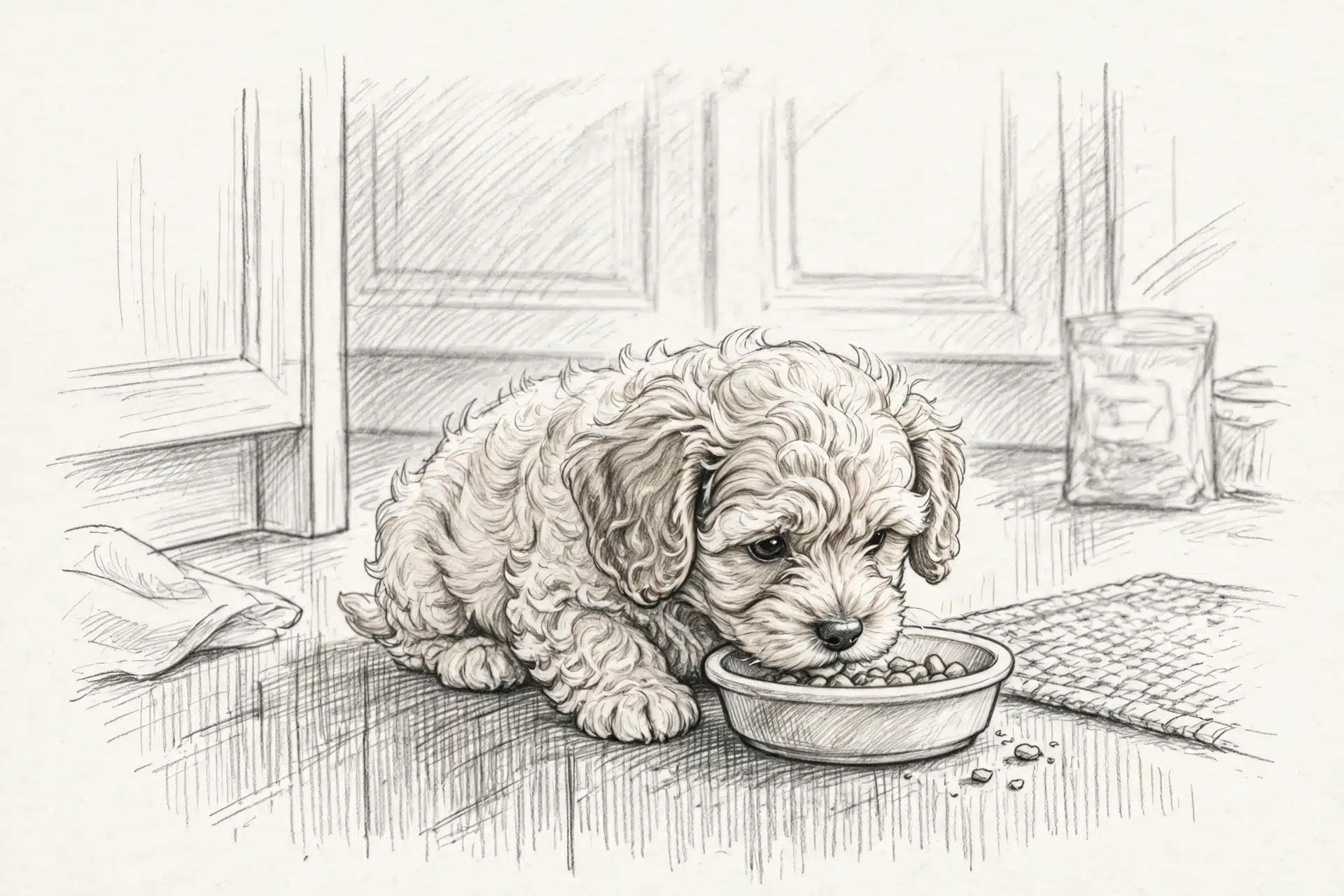
Small breed puppy nutrition is feeding built around a tiny stomach, a fast metabolism and a short growth window. Because Havanese, Havapoo and Cavapoo puppies weigh just a few pounds at homecoming, small errors in portions or timing show up fast. Four factors set them apart:
- Calorie density – they need more calories per pound than large breeds
- Small kibble size – tiny jaws need food they can actually pick up and chew
- Meal frequency – frequent small meals steady their blood sugar
- Short, fast growth – most growth finishes within about a year
Small stomach, faster metabolism, different math
A small puppy cannot eat enough in one sitting to fuel a full day. Small breeds burn calories faster per pound than large breeds, so their food must pack more energy into each cup. That math is why Purina notes small breed formulas carry higher calorie and nutrient density. Portions stay small, but they must be exact.
Why frequent meals matter for very young small puppies
Very young small puppies face a real hypoglycemia risk, meaning low blood sugar, if meals stretch too far apart. Three to four meals a day keeps energy levels steady through the first months. Set a consistent schedule from day one and never leave a young puppy without food for long stretches.
What good growth actually looks like in a small breed puppy
Healthy growth is gradual, not chunky. You should feel ribs easily under a thin fat layer and see a visible waist from above. Weigh your puppy weekly and confirm the trend with your veterinarian, since steady gains matter more than hitting a chart number.
How to Choose a Complete and Balanced Puppy Food
How do I read a puppy food label? Check four things in order: the AAFCO nutritional adequacy statement, the life stage it names, the guaranteed analysis, and the calorie line.
Reading the guaranteed analysis and the calorie line
The guaranteed analysis lists minimum protein and fat and maximum fiber and moisture. For growth, aim for roughly 25 percent protein or more and 10 to 15 percent fat as a starting point. Also flip the bag for calories per cup, since small breeds need calorie-dense food because tiny stomachs hold less.
What AAFCO growth profiles require
The AAFCO statement should read “complete and balanced for growth” and name the life stage. Foods passing feeding trials show that on the label. Skip foods labeled for adult maintenance only.
Kibble size, texture and small breed mouths
Havanese, Havapoo and Cavapoo puppies have small jaws, so choose small kibble sized for toy or small breeds. Softer texture helps during the teething weeks. Ask your veterinarian if a large-breed formula is ever needed, since large-breed growth formulas limit calcium for big skeletons, not small ones.
How Much to Feed: Portions and Calories
Portions start with calories, not cups. Most puppy foods list calories per cup on the bag, so you can turn a daily calorie target into a real scoop. Here is a worked example for a 4-pound Havanese puppy: young puppies need roughly two to three times the calories per pound an adult dog does, according to the AKC’s breed feeding guide. If a small breed food suggests about 45 calories per pound at this age, that is around 180 calories a day. A food with 450 calories per cup then works out to a little under half a cup daily, split across meals.
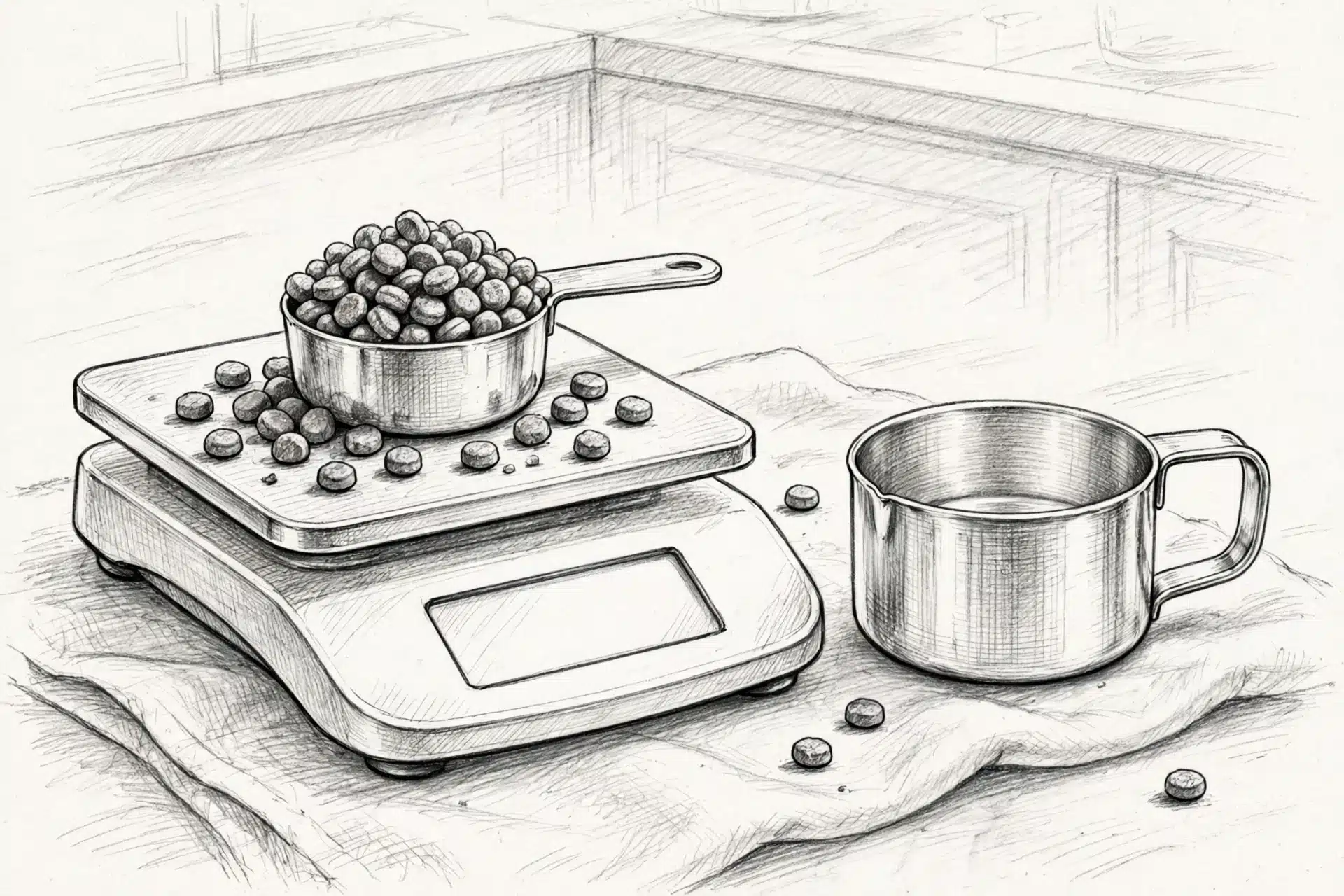
Starting calories per pound of body weight
Small breed puppies burn more calories per pound than big dogs, so their target stays high. Treat feeding charts as a starting point. Chewy’s puppy feeding guide recommends adjusting based on age, weight and body condition, and your veterinarian can confirm the number for your puppy.
Turning calories into cups, cans and grams
Divide daily calories by the calories per cup listed on the bag. For wet food, Purina notes one 13-ounce can may hold about 475 calories. A kitchen scale makes grams easy to repeat.
Adjusting portions as your puppy grows
Weigh your puppy weekly and feel for ribs you can touch but not see. Ribs showing means more food; a rounding waist means less. Breed-specific portion examples appear in our Havanese puppy nutrition and feeding schedule guide.
Meal Frequency and Daily Feeding Schedule
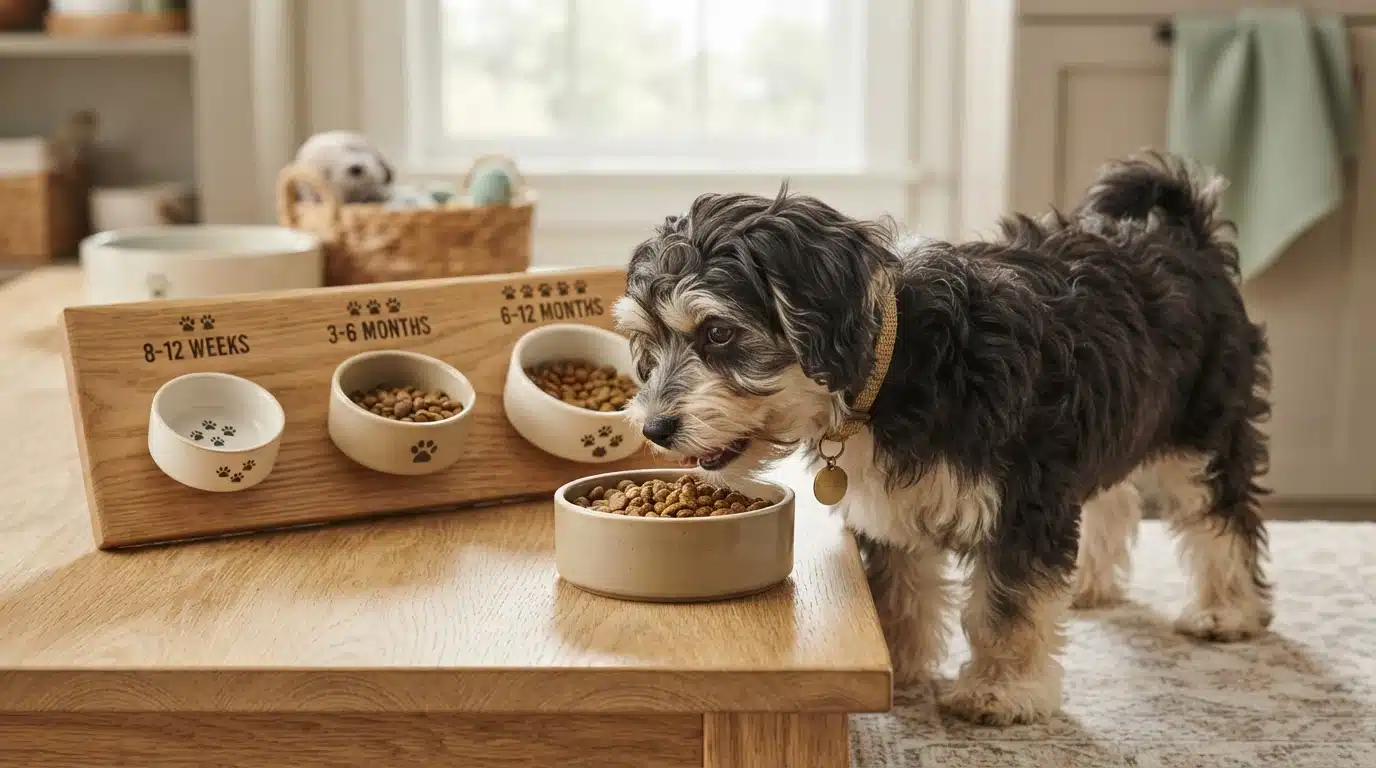
Feed a small breed puppy four times a day from 8 to 12 weeks, three times a day from 3 to 6 months, then twice a day after that. Small stomachs and fast metabolisms make these frequent meals important, and skipping one can drop blood sugar in toy breeds. Keep the times steady from day to day.
| Age | Meals per day |
|---|---|
| 8 to 12 weeks | 4 |
| 3 to 6 months | 3 |
| 6 to 12 months | 2 |
| Adults | 2 |
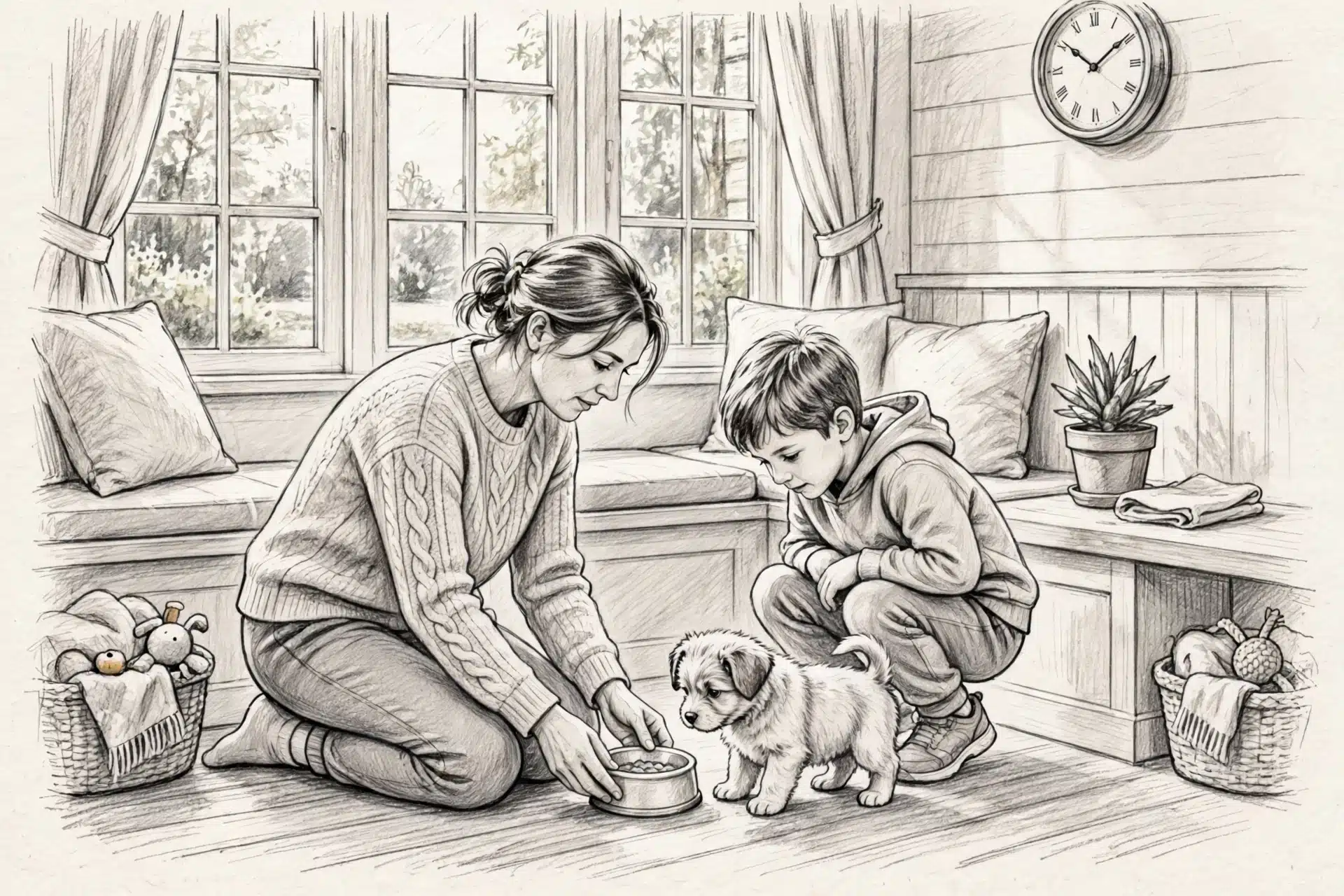
A sample day for a small breed puppy
If your puppy eats about half a cup a day, split it like this: 7 a.m., noon, 5 p.m. and bedtime for a young puppy, with the portions spread evenly. Once meals drop to three or two, shift the same daily total into the new slots. Feed the last meal at least two hours before sleep so potty breaks stay predictable.
Water access, food temperature and mealtime environment
Keep fresh water available at all times, especially for tiny puppies prone to low blood sugar. Serve food at room temperature, and refrigerate opened wet food in a sealed container. Feed in one quiet spot, on a non-slip mat, and give your puppy 15 to 20 minutes before picking the bowl up. For the first days home, our week one feeding schedule walks through each step.
Switching Puppy Food Without Upsetting the Stomach
Switch puppy food over about a week, mixing a little more of the new food into the old each day. A slow change gives your puppy’s gut time to adjust, and it prevents most of the loose stool that scares new owners.
| Day | Old Food | New Food |
|---|---|---|
| 1 to 2 | 75 percent | 25 percent |
| 3 to 4 | 50 percent | 50 percent |
| 5 to 6 | 25 percent | 75 percent |
| 7 onward | none | 100 percent |
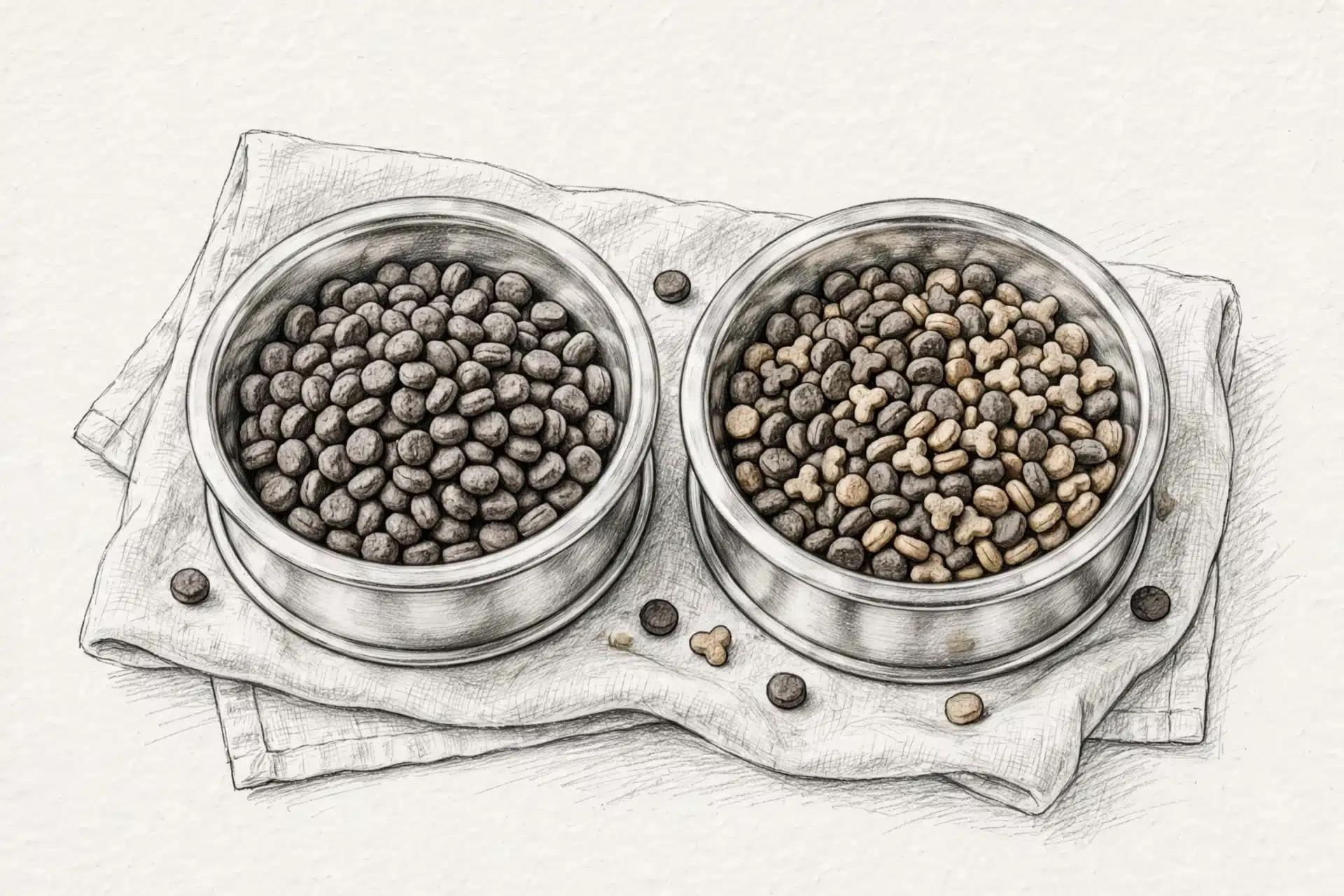
Watch your puppy, not just the calendar. If stool stays soft at any stage, hold that ratio for two more days before increasing the new food. Some puppies need ten to fourteen days instead of seven.
Loose stool, gas and constipation during a change
Mild, soft stool for a day or two is normal during a transition. So is a little extra gas. Skip treats and table scraps until stool firms up, and keep fresh water available. Hard, small pellets or straining can mean constipation. Call your veterinarian if diarrhea lasts more than 48 hours, contains blood, or your puppy seems lethargic or stops eating. Small breed puppies can dehydrate fast, so never wait out bloody stool.
When a puppy simply will not eat the new food
Some puppies pick around the new kibble. Mix it in with warm water to boost the smell, or hand-feed the first few bites. If your puppy skips two meals but acts bright and playful, stay calm and try the next one. A Havanese, Havapoo or Cavapoo who refuses food for a full day, or seems low energy, needs a vet visit rather than a new flavor hunt.
Treats, Chews and the Calorie Budget
Setting a treat budget for a small breed puppy
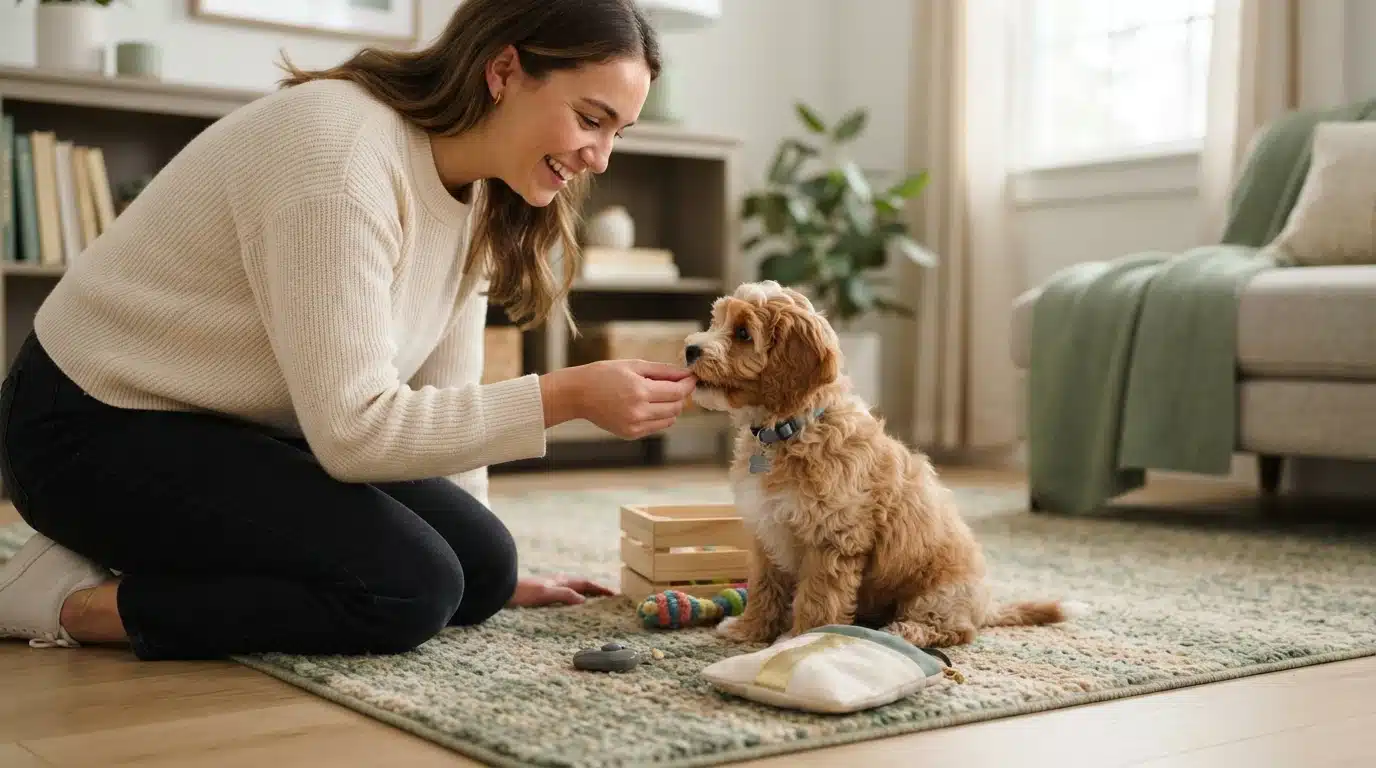
Treats should stay under 10 percent of daily calories, and VCA Hospitals suggests aiming closer to 5 percent. So a puppy eating 180 calories a day gets 9 to 18 treat calories. That is one small training treat or a few kibble pieces set aside from meals. Training rewards count too, as the beginner training tips for small breed puppies work best when you pay with kibble from the daily ration instead of extra treats.
Choosing chews and dental treats for small breeds
Pick chews sized for small mouths and light bodies. Hard antlers and thick bully sticks can crack puppy teeth, so softer options made for puppies are a safer start. Dental chews count toward the same 10 percent budget, and PetMD notes calories matter as much as the brand. Supervise every chew and swap it out once it gets small enough to swallow.
Ingredient lists, recalls and label checks
Read treat labels like food labels. Skip anything with xylitol, which is toxic to dogs, and watch for added sweeteners. Check the FDA recall list before buying, and keep the bag so the lot number stays handy if a recall hits later.
Common Feeding Mistakes and How to Correct Them
Small breed puppies get overfed more than underfed, and the mistakes are usually small ones that add up fast.
Free feeding and the daily limit
Leaving food down all day sounds kind, but it hides how much your puppy actually eats and makes house training harder. Measure the full daily amount each morning, split it across the scheduled meals, and pick the bowl up after 15 to 20 minutes. If meals are skipped, do not refill later. Just serve the next one on time.
Toppers, table scraps and the hidden calories
Treats and extras should stay under 10 percent of daily calories, and VCA Hospitals suggests aiming closer to 5 percent. For a puppy on a 180-calorie plan, that is only 9 to 18 treat calories, so a fistful of kibble “rewards” can blow the whole budget. Count dental chews and training bits too, then reduce meal portions to stay inside the limit.
Milk, human snacks and household hazards in the kitchen
Skip the saucer of milk. Most puppies lose the ability to digest lactose after weaning, so dairy often causes gas and diarrhea. Onions, grapes, chocolate, xylitol and fatty leftovers are all off the menu, and PetMD’s list of toxic foods shows why small dogs react to smaller doses. Keep the trash lidded and tell kids the puppy’s bowl is not a snack dispenser.
If vomiting or diarrhea follows any kitchen raid, call your veterinarian the same day.
Building a Feeding Plan You Can Keep
Your first week feeding plan, day by day
Keep the food your breeder sent home with the puppy. On day one, feed the same brand at the usual times, just smaller amounts, because travel stress plus new food causes diarrhea. Days two through seven, work toward your target portions using the transition ratios already covered. Feed the last meal early, around 5 p.m., so digestion settles before bedtime, a tip Purina’s first-week guide echoes for new puppies.
Monthly check-ins and when to change food
Weigh your puppy weekly at first, then monthly, and feel for ribs you can touch but not see. Steady gain means the plan works. Switch from puppy to adult food around 12 months, since small breeds mature faster than large ones. Change food only for a real reason: steady loose stools, refusal to eat, or a vet’s advice after a recall check. Planned transitions beat panicked fridge-clearing every time, and your own puppy routine gives you the baseline to compare against.
Keeping the plan working at home and on the road
Consistency matters more than perfection. Same bowls, same mat, same times, even on weekends. Traveling with a Havanese or Cavapoo? Pack measured portions in a sealed container and keep mealtimes close to home clock hours, because small puppies can crash from missed meals. Long car trip or vet visit? Ask your veterinarian ahead of time about feeding before travel instead of guessing.

You now have a full feeding plan: label reading, calorie math, meal timing and a transition schedule. Put it in place before homecoming with help from Sage Puppies, where every Havanese, Havapoo and Cavapoo goes home wisely bred and beautifully loved.
Frequently Asked Questions
Q1: What is small breed puppy nutrition?
Small breed puppy nutrition means calorie-dense food, small kibble, and frequent meals that steady blood sugar. Tiny stomachs and fast metabolisms leave little room for error, so portions and timing matter more than brand.
Q2: How many times a day should a small breed puppy eat?
Four meals from 8 to 12 weeks, three from 3 to 6 months, then two. Keep times consistent daily.
Q3: How much should I feed a Havanese, Havapoo or Cavapoo puppy?
Start with calories per pound on your food’s chart, divide by calories per cup, then confirm with your veterinarian and weekly weigh-ins.
Q4: Can I give my puppy treats during training?
Yes, but keep all extras under 10 percent of daily calories. Kibble taken from meal portions works well.
Q5: How long does it take to switch puppy foods?
About seven days, moving from 75 percent old food to full new food. Hold longer if stools stay soft.
Q6: When should my puppy move to adult food?
Around 12 months for small breeds, since they mature faster than large dogs.
Conclusion
Small breed puppy nutrition comes down to four habits: calorie-dense food with an AAFCO growth statement, portions built from calorie math, frequent meals that protect against low blood sugar, and a slow seven-day food transition. Treats stay under 10 percent of daily calories, and weekly weigh-ins confirm the plan is working. Set this up before your Havanese, Havapoo or Cavapoo comes home, then confirm the details with your veterinarian, because your puppy’s own growth curve is the best guide of all.