Quick Summary: Family-raised puppies usually make the easier choice for first-time owners, families with children, and apartment households because they are already accustomed to household sounds, handling, and varied surfaces. A well-run kennel can also produce a healthy, confident dog, but kennel-raised puppies often need more patient socialization during the first weeks at home. Neither label guarantees quality, so check the breeder in person or by video, request parent health screening and puppy records, and review contract terms before paying. Sage Puppies is presented as a home-based option for Havanese, Havapoo, and Cavapoo puppies, with documented handling, household exposure, and clear pricing.
Picture the first week at home. One puppy yelps at the dishwasher. Another sleeps through it, because it ran daily in the room where she was born. That difference is why families comparing family raised vs kennel raised dogs keep asking which choice is actually safer and calmer. The short answer: for first-time owners, families with young kids, or apartment households, a family-raised puppy usually settles in faster, while a well-run kennel can still raise a confident, healthy dog.
The problem is that neither term has a regulated definition, so you are handed two labels and a deposit request with no way to judge either. This guide compares the two models, then gives you a checklist you can run on any home visit or video walkthrough before you commit. It draws on veterinary behavior research and the day-to-day experience of our own family-raised Havanese, Havapoo and Cavapoo program in South Jordan, Utah.
Family-Raised vs Kennel-Raised Puppies: At a Glance
| Family-raised puppies | Kennel-raised puppies | |
|---|---|---|
| Daily environment | Born and reared indoors in the breeder’s home | Reared in a dedicated room, building or outdoor run |
| Style of early socialization | Incidental household exposure plus planned sessions | Structured, scheduled exposure by staff on a set routine |
| Human contact and handling | Daily hands-on handling, often by several family members | Handling by staff or volunteers at feeding, cleaning and play times |
| Health and veterinary oversight | Puppy exam records plus named parent screening, requested in writing | Varies widely, so records and exam history must be requested |
| Cost, records and contract | Price plus deposit and delivery, terms often spelled out upfront | Often lower starting price, contract terms vary by breeder |
| Best fit for | First-time owners, families with children, apartment homes | Buyers who want a documented, observation-based rearing program |
How Family-Raised and Kennel-Raised Puppies Differ in Practice
Family-raised puppies
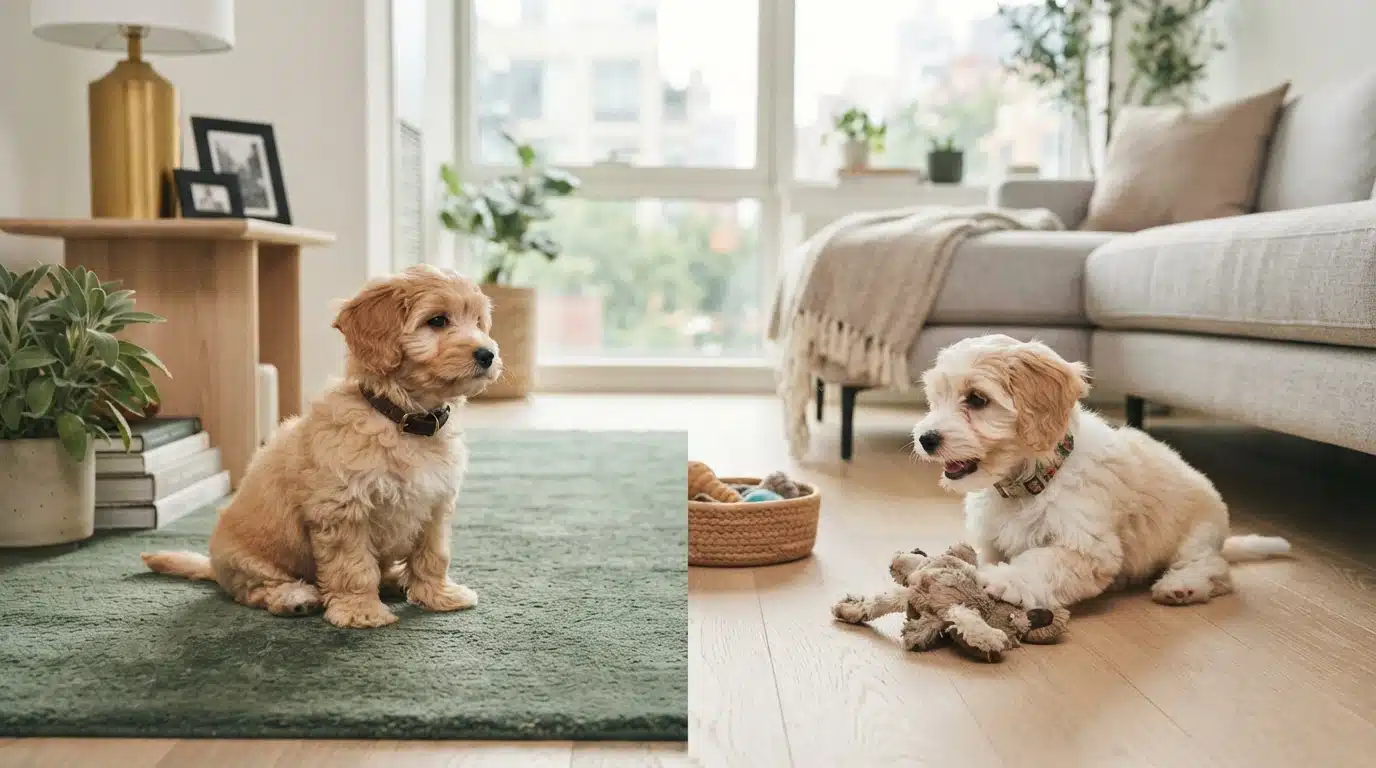
These puppies are born and reared inside a breeder’s home, so daily life becomes their first classroom. Cooking sounds, kids, doorbells and vacuum cleaners all teach them to recover from surprises without a formal lesson plan. This style suits first-time owners and families with children, and it is the model behind small-breed programs like Sage Puppies.
Key strengths
- Daily hands-on handling, often by several family members
- Planned socialization layered on real household exposure
- Price, deposit and contract terms spelled out upfront
Kennel-raised puppies
These puppies are reared in a dedicated whelping room, building or run, with contact handled on a staff schedule. The routine is documented and consistent, which some experienced buyers value. Records and exam history vary by breeder, so you should request them in writing.
Key strengths
- Structured, logged exposure by trained staff
- Often a lower starting price
- A documented, observation-based rearing program
Family Raised vs Kennel Raised Puppies: What the Evidence Actually Shows
The direct answer for most families
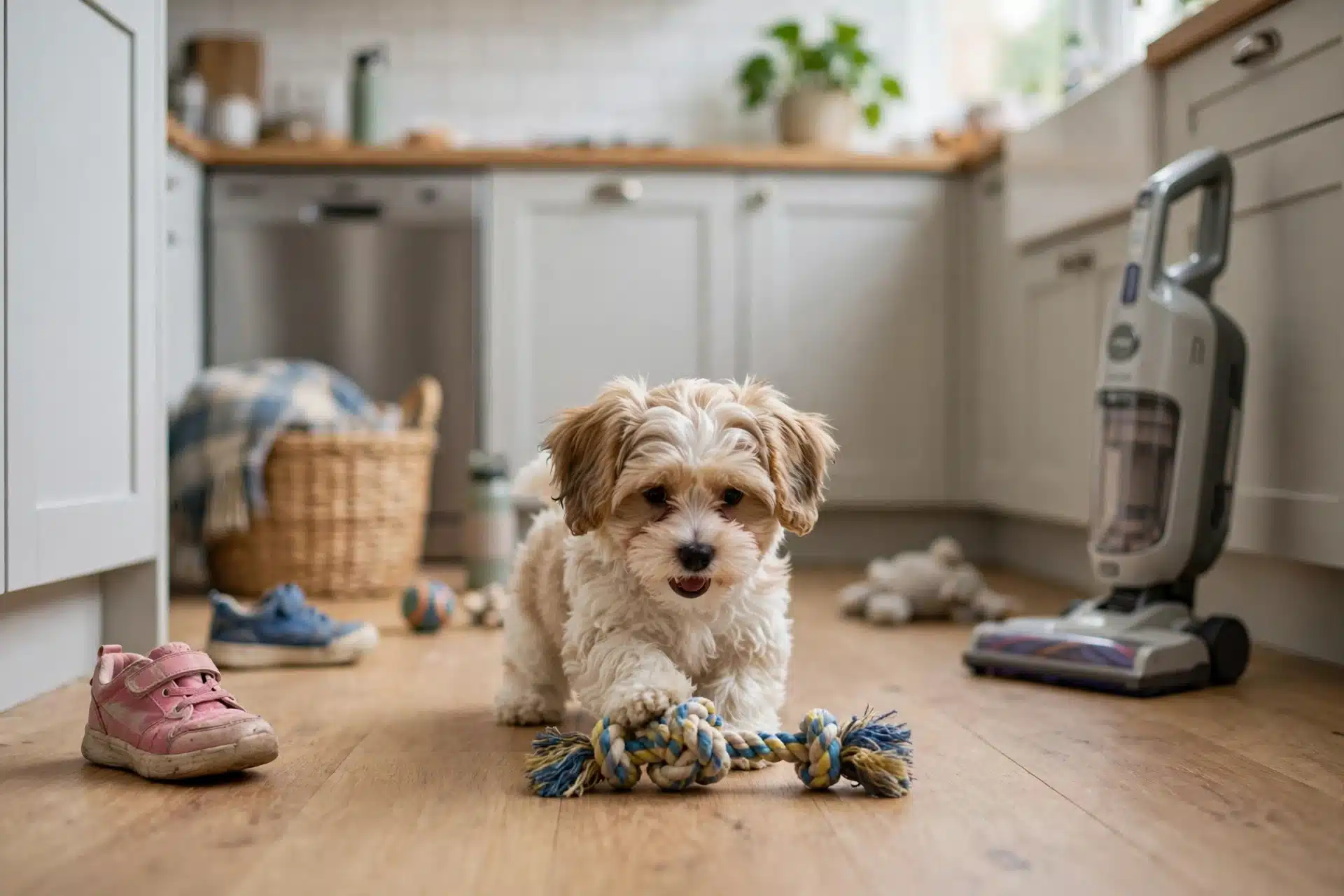
For most families, a puppy raised in a home does better early on. House noise, kids, vacuums and car rides are the same things your puppy will meet in your living room, so a family-raised pup usually settles in faster. A kennel-raised puppy is not worse by nature, but it often needs more patient socialization in its first weeks with you.
Here is the short version:
- Family-raised puppies start household life on day one, so the transition to your home is usually smoother.
- Kennel-raised puppies can still become wonderful companions, but plan extra time for gentle exposure to new sounds, surfaces and people.
What the studies show and what they cannot show
Behavior researchers have studied this for decades. Work summarized by the American Veterinary Society of Animal Behavior shows puppies pass through a sensitive window for socialization that closes by roughly 14 weeks, so what happens during those weeks shapes adult temperament. Studies of kennel-raised dogs link heavy confinement to more fear and slower recovery from stress. But most published research compares commercial breeding kennels with foster homes, not small breeders. So “home raised vs kennel raised puppies” in the science is really “institutional care vs family care.” A clean, hands-on kennel program with daily human contact can outperform a neglectful home. The label matters less than what the breeder actually does each day, which is why breeders like Sage Puppies document daily handling and household exposure instead of relying on the phrase alone.
Why the labels are not certification
Nobody regulates these words. Any breeder can write “family raised” on a website. Verification comes from asking specific questions, visiting the whelping area or joining a live video walkthrough, and reviewing puppy health records and parent health screening before you commit.
Daily Life Inside the Home vs Inside the Kennel
A puppy’s first eight weeks shape how it handles noise, handling, and alone time later. Here is what each setting actually looks like day to day.

What a normal family-raised day looks like
Puppies wake up in a whelping area that sits inside the home, often near the kitchen. They hear dishes, doorbells, televisions, and children moving around. Throughout the day, different people pick them up, flip them gently, and touch their paws and ears. Short play sessions happen on varied floors: tile, carpet, grass. Naps come in a crate, so the crate feels normal before it ever becomes a training tool. By the time a puppy leaves, a vacuum or a car ride is old news, not a crisis. Many programs, including our South Jordan home-based program, offer a live video walkthrough so you can see the real daily setting for yourself.
What a well-run kennel day looks like
Good kennels are not automatically bad. In a strong one, staff follow a written socialization plan: daily handling by rotating people, exposure to surfaces and sounds, and short crate time. The limits are structural. Puppies meet staff and a handful of visitors, not a parade of kids, guests, and errands. Sounds are kennel sounds, not household ones. Ask whether staff keep an actual enrichment log; the answer tells you how serious the plan is.
Questions that reveal the truth in ten minutes
Ask five things and listen for specifics:
- Where do the puppies sleep at night?
- Who handles them daily, and how often?
- Can I visit the whelping area or join a video walkthrough?
- What sounds and surfaces have they already met?
- How do you match a puppy to my household?
Vague answers deserve a follow-up. Breeders who welcome these checks usually explain the process on their sites, so review how to vet a family-raised puppy breeder before you commit.
Socialization and Handling: What Each Model Actually Provides
Can a kennel raised puppy adjust to a family home? Yes, most do, but the first weeks matter more. Follow a short plan:
- Keep arrivals calm and predictable.
- Handle paws, ears and mouth daily.
- Introduce new sounds, surfaces and people slowly.
- Pair each new thing with treats.
- Keep the same routine every day.
Passive exposure versus planned exposure
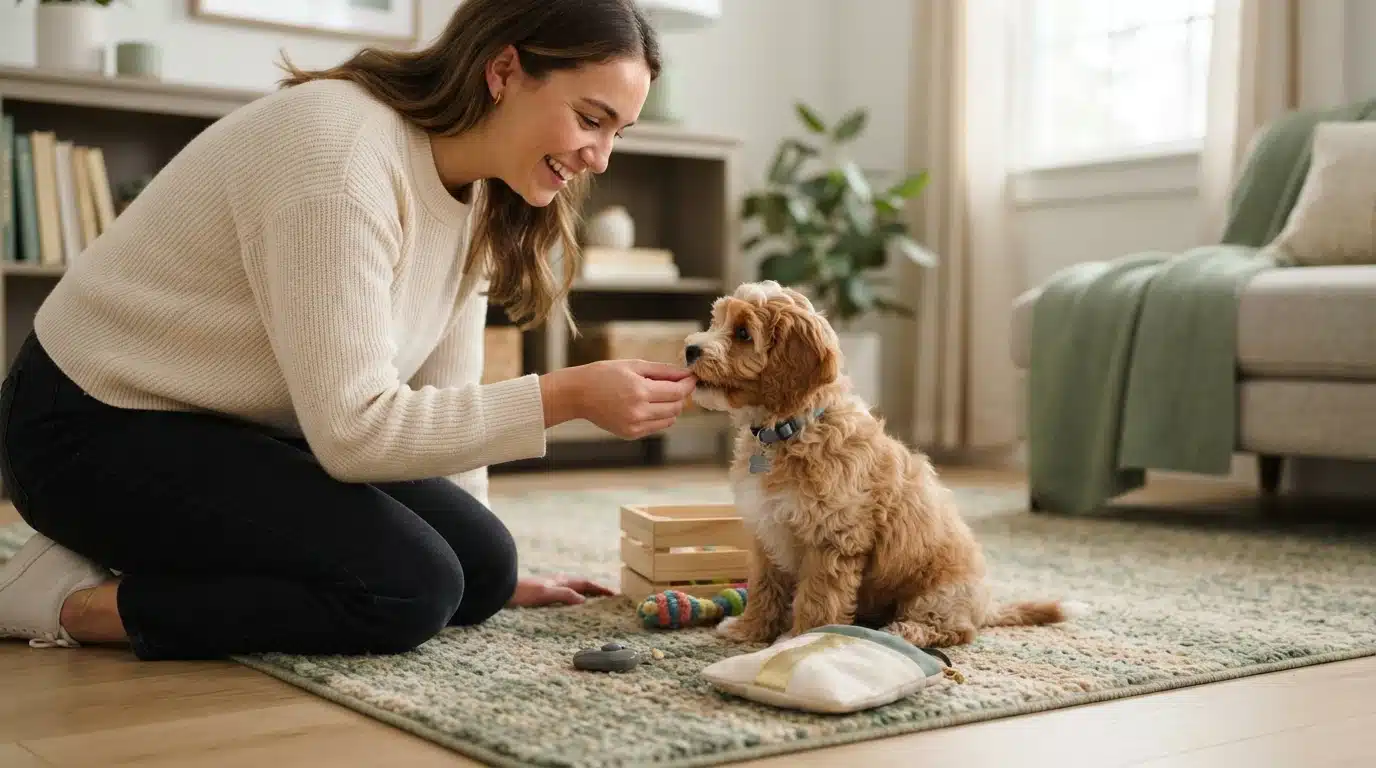
A family-raised puppy gets passive exposure. Vacuums, doorbells, kids, and car rides happen around it every day. That background noise builds familiarity, but it is not the same as a plan. A good family breeder also does planned work: naming each puppy, touching it daily, and introducing new textures and sounds on purpose. A kennel can offer planned exposure too, with staff rotations and play yards. Ask which one actually happens, not just which sounds better.
Handling, habituation and the first nervous weeks
Handling is where the two models differ most. Puppies touched by several people from birth learn that human hands mean safety. Those raised with less contact need a week or two of gentle habituation before they relax. The AVSAB position statement supports socializing puppies before full vaccines, because the first three months are when sociability outweighs fear. A kennel puppy can catch up, but its new family does the catching up.
Socialization that continues after pickup
The window closes around 14 weeks, so pickup at eight weeks still leaves you roughly six weeks of prime time. Plan gradual puppy socialization and first weeks at home: short car rides, new floor surfaces, calm visitors, and supervised sound exposure. Breeders can help here too. At Sage Puppies, each family gets matching guidance and prep notes so the transition keeps momentum, but the daily reps are yours. Consistency beats intensity; twenty small wins a week outweigh one big outing. For a concrete week-by-week plan, this first week home guide lays out safe early steps.
Health Oversight and Records in Either Rearing Model
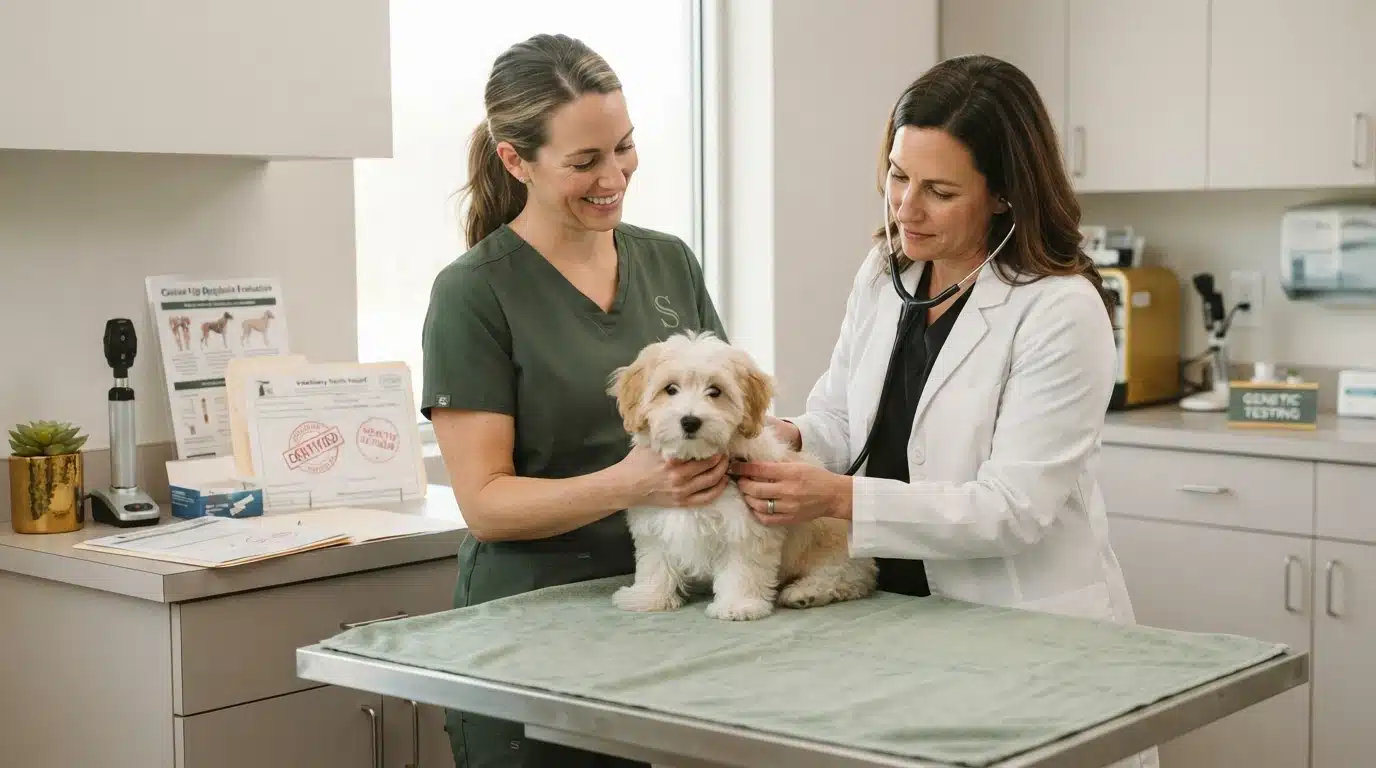
The paper trail matters as much as the rearing setup. Before you pay any deposit, ask a breeder for three document sets:
- Parent health screening results: OFA or equivalent test results for the sire and dam, such as patellas, eyes, hearing and heart.
- Puppy veterinary exam record: the dated checkup, weights and any treatments your puppy received.
- Vaccination and deworming log: what was given, on which dates, and what comes next.
Three different records buyers often confuse
Buyers often blend these together, but each proves something different. Parent screening shows what the breeding pair was tested for before the litter existed. The puppy’s vet exam confirms this individual pup was healthy on a specific date. The vaccine and deworming log shows ongoing care and what your own vet should continue. A breeder who hands over all three, with dates that line up, is showing you a working health system. Vague answers here are a signal to slow down.
Reading screening requirements for Havanese and crosses
For Havanese and Havanese crosses, look for patellar luxation, eye exams, hearing and cardiac results on both parents. The Havanese Club of America’s testing guide lists what breeders should screen for. Results should sit in the public OFA database, where you can verify them yourself rather than trust a screenshot. For Cavapoos and Havapoos, ask which parent breed’s tests apply and see the paperwork either way.
Why records matter more in a kennel setting
A family home limits litters naturally, so oversight tends to stay personal. Larger kennels manage many dams at once, so written records carry the proof that individual attention actually happened. Either way, documented screening beats a warm story. Sage Puppies, for example, pairs its Havanese health testing checklist with verifiable parent results.
Cost, Delivery and Contract Terms Side by Side
The price is only the first number
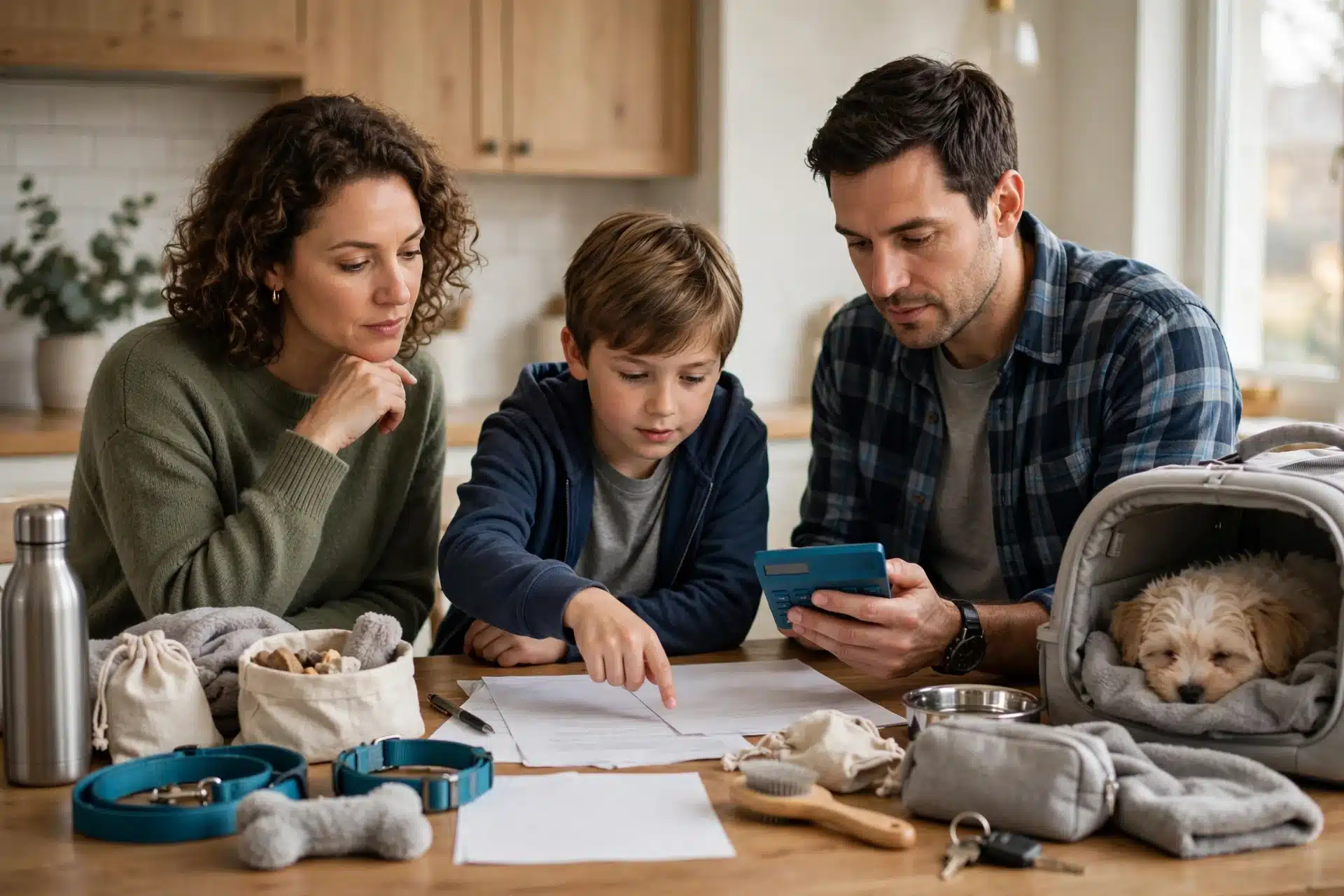
A family-raised puppy from a small program often runs $3,500 to $4,500 for breeds like the Havanese, Havapoo or Cavapoo. Kennel-raised puppies can look cheaper upfront. Add the vet visit, vaccines, spay or neuter, training classes and gear, and the gap shrinks fast. Ask each breeder what the listed price includes: microchip, first shots and a starter kit should be in writing.
Contract terms worth reading twice
Read any puppy purchase contract before you pay a deposit. Look for these points:
- Health guarantee: what it covers, how long it lasts, and what proof you must provide
- Deposit and reservation terms: whether the deposit is refundable and how puppy matching works
- Return policy: a responsible breeder will take the dog back at any age
- Spay or neuter requirements: timing and any exceptions
Small programs tend to spell these out clearly. At Sage Puppies, every puppy family signs a written contract and applies through a simple process, so terms are known before the deposit. A vague contract is a warning sign with any breeder.
Local pickup versus delivery
If you live in Utah, pickup lets you see the home, meet the dam and watch how the puppies were raised. That visit is worth the drive. Nationwide families can use delivery, often $400 to $800 depending on method and distance, but ask who travels with the puppy and how transfers are handled. Either way, plan a calm first week at home.
Which Should You Choose: Family-Raised or Kennel-Raised Puppies?
There is no universal answer. The right pick depends on your household, your schedule and how much early-socialization work you want done before your puppy comes home. Since the sensitive window closes around 14 weeks, the best question is not “which is better?” but “who will give this puppy the right start?”
Choose family-raised when
Pick a family-raised puppy if you have young kids, other pets, or a busy home and want a puppy that already lived in one. This is usually the better fit for first-time owners of small breeds like the Havanese, Havapoo or Cavapoo. A puppy raised in a kitchen, not a kennel run, has heard vacuums, doorbells and toddlers before it ever meets you. That head start matters most during the first three months, which AVSAB calls the prime time for socialization.
Choose kennel-raised when
A professional kennel can make sense if you want a specific bloodline, a show prospect, or a breeder with deep health-testing records across many litters. Larger programs often have wider availability and more structure. Just ask hard questions first: How much daily human contact do the puppies get? Where do they sleep? Can you visit the whelping area or join a live video walkthrough? Solid answers matter more than a polished website.
Walk away when
Some situations are deal breakers, whatever the label says:
- No visit or video walkthrough offered
- No parent health screening or puppy health records
- Puppies sent home before eight weeks
- Pressure to place a deposit same day
- Vague or missing purchase contract terms
A concrete family-raised option for Utah and beyond
If this describes what you want, small family programs like Sage Puppies in South Jordan, Utah raise Havanese, Havapoo and Cavapoo puppies in a home setting, with owner-managed matching and a written contract. Expect roughly $3,500 to $4,500, plus delivery of $400 to $800 if you live out of state. Local pickup around Utah keeps that second cost off your total.

If a family-raised start fits your home, the next step is simple: apply to Sage Puppies. Cassie matches each Havanese, Havapoo or Cavapoo puppy to your household, with honest pricing and clear answers before you commit. Wisely bred, beautifully loved.
Frequently Asked Questions
Q1: Family raised vs kennel raised puppies?
Family-raised puppies live in the breeder’s home, hearing daily household sounds, so they usually settle in faster. Kennel-raised puppies can also become great dogs, but they often need extra patient socialization in their first weeks with you.
Q2: How can I tell if puppies are really family raised?
- Ask where the puppies sleep each night.
- Request a visit or live video walkthrough of the whelping area.
- Ask who handles the puppies daily and how often.
- Ask which sounds and surfaces they have already met.
- Review parent health screening and puppy health records in writing.
Q3: What does a family-raised puppy usually cost?
Expect roughly $3,500 to $4,500 for Havanese, Havapoo or Cavapoo puppies, plus $400 to $800 for nationwide delivery if you live outside Utah.
Q4: Can a kennel-raised puppy adjust to a family home?
Yes, most do. Keep the first weeks calm, handle paws and ears daily, and introduce new sounds and people gradually with treats.
Q5: When should a puppy come home?
Eight weeks is standard. That still leaves about six weeks before the socialization window closes around 14 weeks, so plan gradual exposures from day one.
Conclusion
For most first-time owners and busy families, a family-raised puppy offers the easier start: household sounds, daily handling and a shorter adjustment period. A well-run kennel can still produce a confident dog, but plan extra socialization time yourself. Either way, the label proves nothing. Verify where puppies sleep, request parent health screening and puppy health records, read the puppy purchase contract terms, and compare family raised puppy price against what it includes. When you weigh rearing model, records and temperament matching together, you can choose the puppy program that fits your home with confidence.