Quick Summary: Small breed coat care for Havanese, Havapoo and Cavapoo puppies comes down to three steady habits: brush every other day with a slicker brush and a metal comb down to the skin, trim nails every two to three weeks in small slivers, and wipe the visible outer ear weekly with dog ear solution. Always brush and comb a coat fully before bathing, since water tightens loose hair into felt, and dry it completely with a low blow dryer rather than air drying. Mats start behind the ears, in the armpits and around the legs, so check those spots weekly while tangles are still finger-loose. Keep sessions under five minutes with treats, and hand off anything you cannot fix, including bleeding that will not stop, sour-smelling ears, or a coat too matted to comb.
A Havanese puppy can look tidy on top while a tight mat forms behind the ears or under a front leg. The same puppy who fights the brush in month two will lie calmly for it once you change how you handle the sessions. That gap between how a puppy looks and what its coat is doing is the problem most first-time owners run into with small breed coat care.
This guide walks through the three routines that matter most: brushing a Havanese double coat before tangles tighten, trimming tiny nails safely, and cleaning floppy ears without causing an infection. Every step includes a safety limit and a clear point where your veterinarian should take over. It draws on breed-specific guidance for Havanese, Havapoo and Cavapoo coats, so you can build one realistic weekly routine instead of guessing.
Step 1: Understand Your Puppy’s Coat Before You Pick a Brush
Caring for a small breed coat at home comes down to brushing two to three times a week with a slicker brush, following with a metal comb to the skin, and checking the trouble spots behind the ears, armpits and legs. If your puppy’s coat stays tangle-free through those checks, the routine is working. Everything else in this guide builds on that habit.
What the Breed Name Tells You and What It Does Not
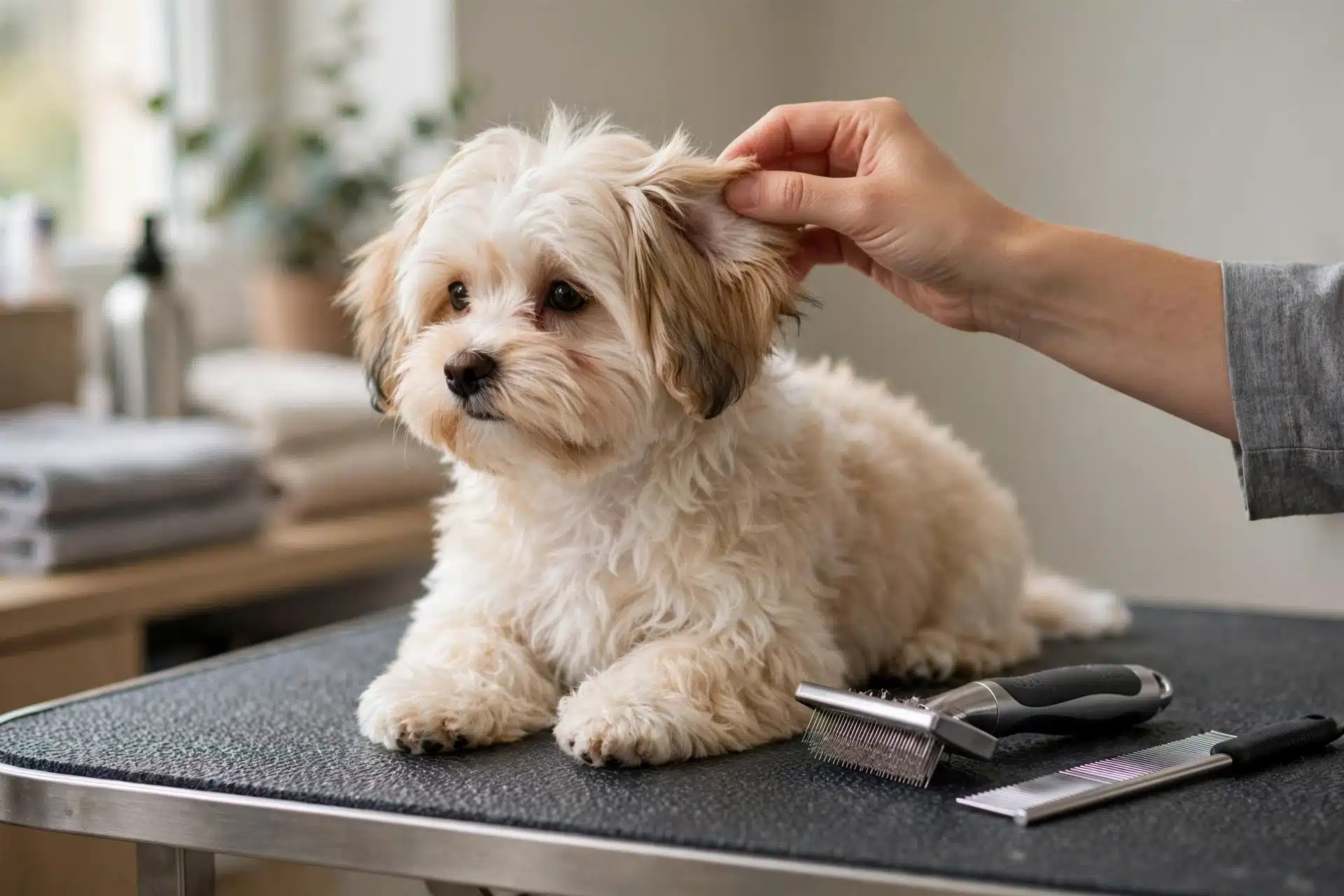
A purebred Havanese carries a double coat, meaning a soft undercoat under longer guard hair, and the Havanese Club of America urges regular brushing to prevent mats. Havapoos and Cavapoos are different: they are mixed breeds, so littermates can inherit anything from a wavy, low-shed coat to a curlier, denser one. The name tells you the likely range, not the texture your puppy actually has. Run your hands through the coat at eight and twelve weeks, then adjust.
The Four Variables That Set the Workload
Four things decide how much brushing your puppy needs:
- Coat type: double, wavy or curly. Curly coats mat fastest.
- Length: longer coats catch debris and knot sooner.
- Shedding: loose undercoat left in place turns into mats.
- Lifestyle: snow, mud and leash friction all add tangles.
A short, straight Havapoo coat may need two quick sessions a week. A thick Havanese coat needs closer to four.
Where Small Breed Coats Tangle First
Mats form where hair rubs together: behind the ears, under the collar, in the armpits, around the legs and at the base of the tail. Small breeds sit close to the ground, so their bellies and pant legs pick up grit too. Lift each ear flap and part the hair weekly to find tangles while they are still finger-loose, not felt-like. Matting behind the ears is the most common miss in first-time owners’ routines, so start there.
Step 2: Brush and Comb the Coat Down to the Skin
Brushing only the top layer is the most common mistake in small breed coat care. Havanese, Havapoo and Cavapoo coats tangle close to the skin, so a brush that glides over fluff while mats form underneath does more harm than good. Your goal is simple: reach the skin with every pass, then confirm the line with a comb.
Set the Puppy Up to Succeed
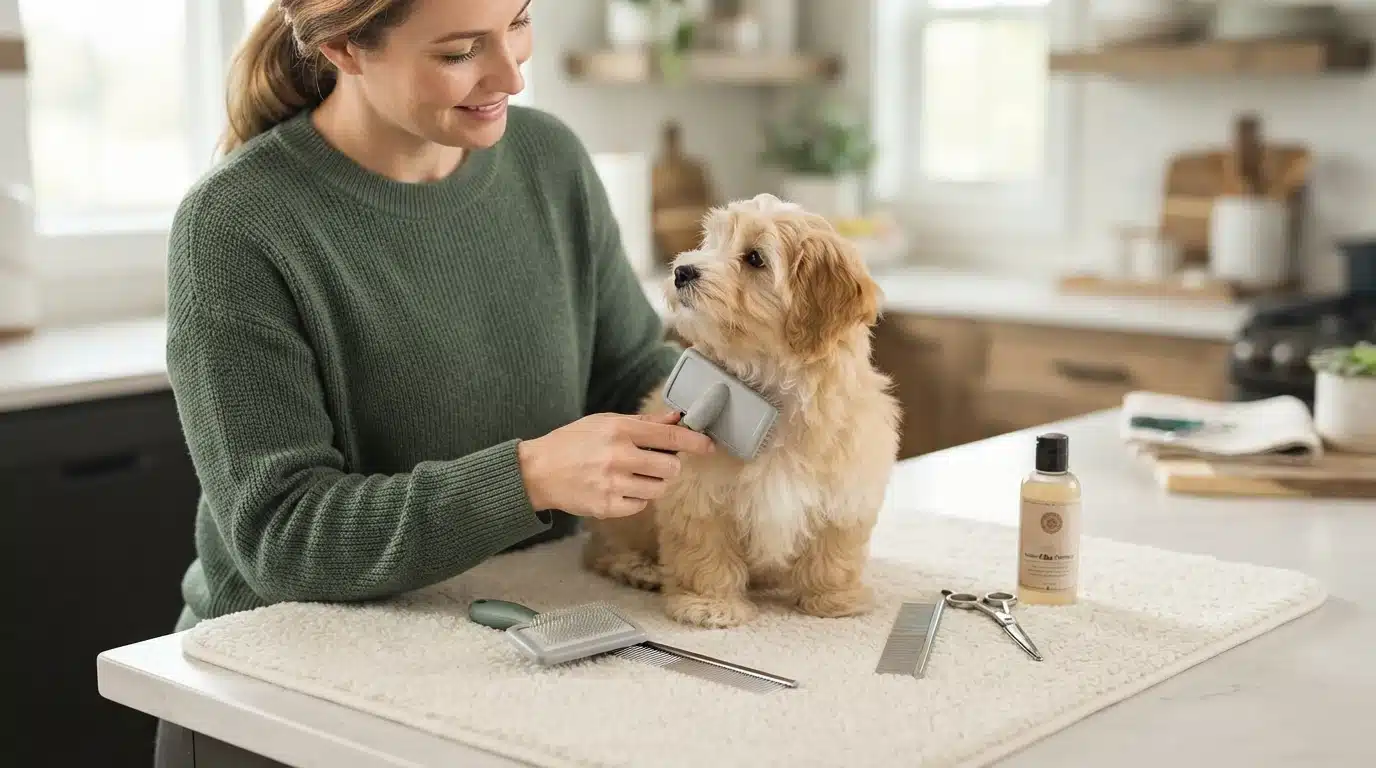
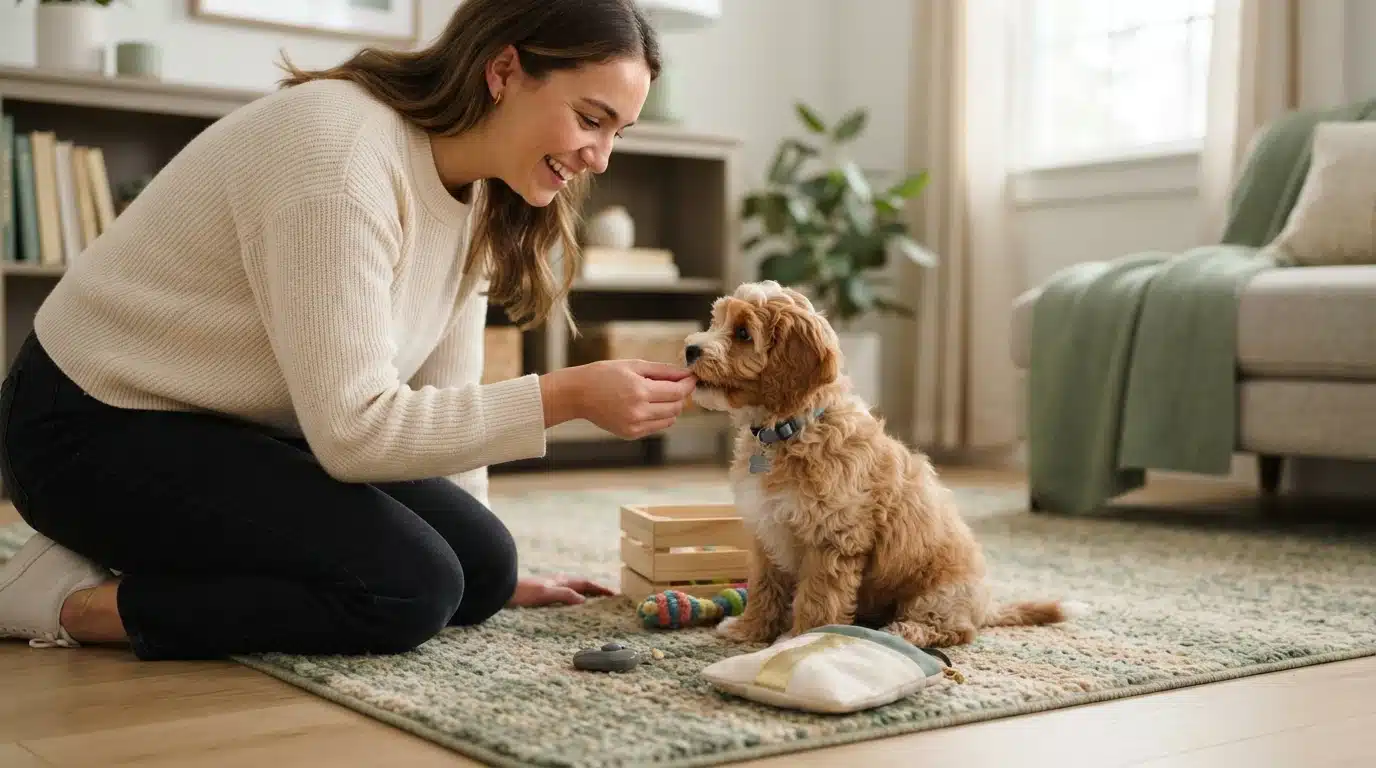
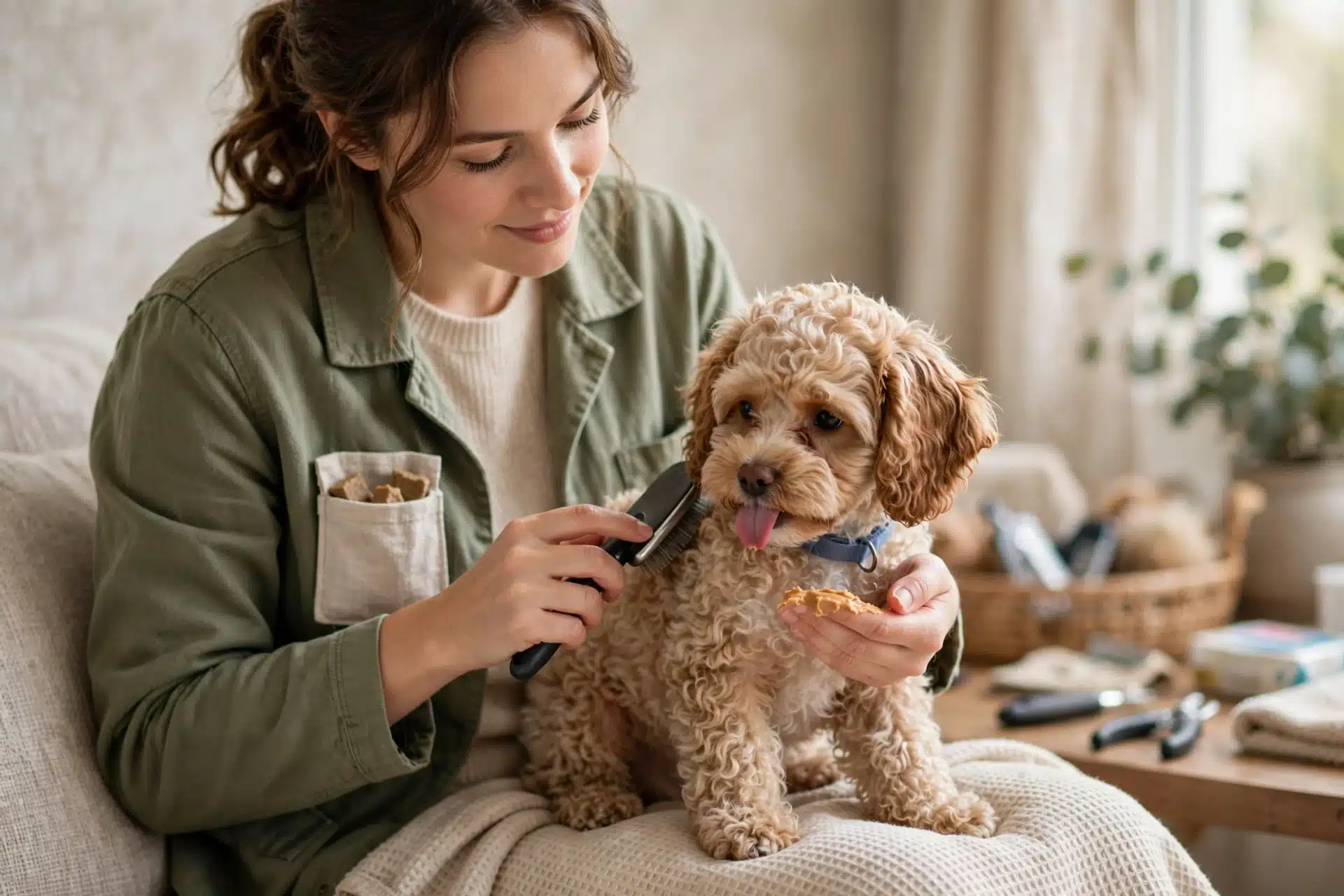
Pick a quiet time, like after a meal or play session, when your puppy is already calm. Start on the floor or a low table with a rubber mat, and keep sessions under five minutes at first. Pair brushing with treats and soft praise so the puppy learns it predicts good things. A few treats tucked into your pocket beat wrestling a squirmy puppy halfway through. Short, happy sessions early build a dog who stands still for life, which is exactly why hands-on grooming practice is part of preparing for a new puppy.
The Section-by-Section Technique
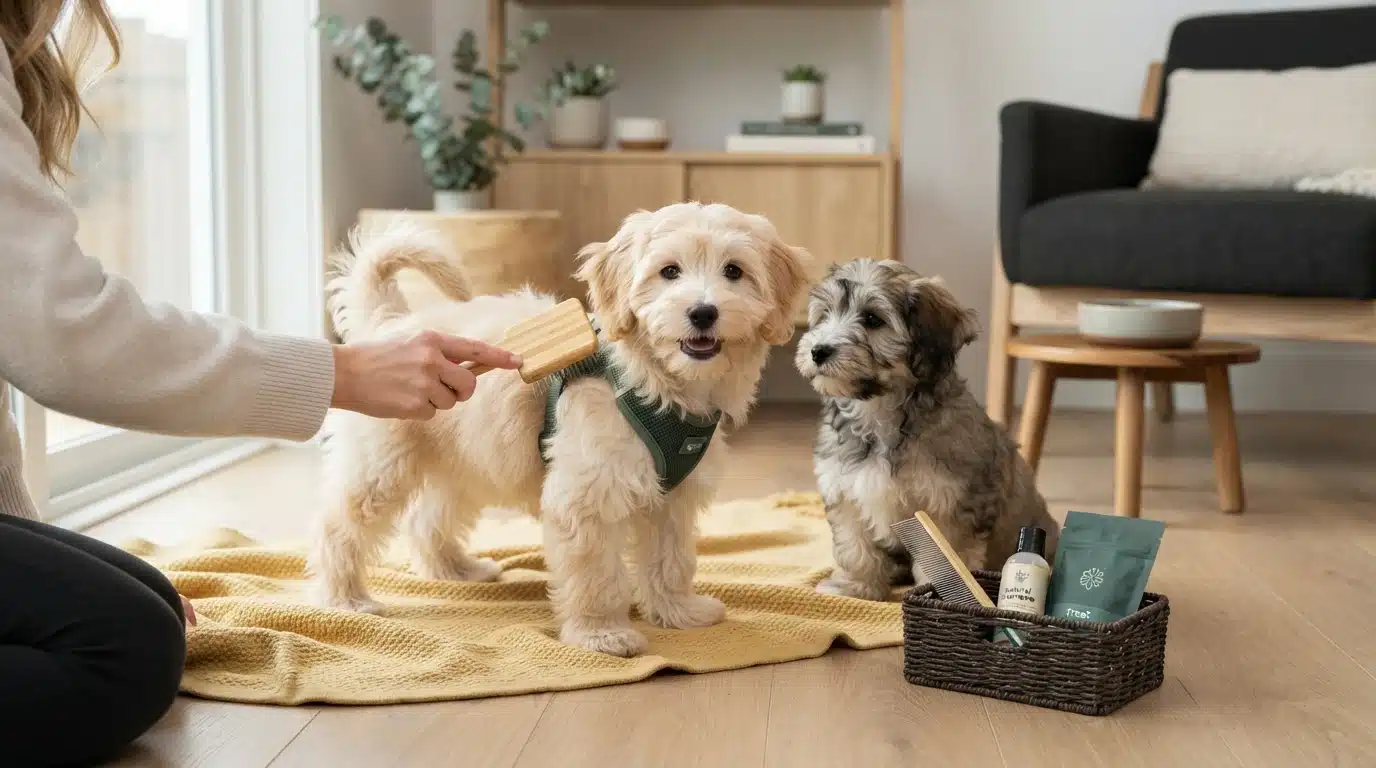
Brush in small sections, not one big sweep. Lift the coat with one hand, hold it between your fingers, and brush from the skin outward in short strokes. Work legs, belly, chest, then the head, and slow down behind the ears and in the armpits, where mats hide first. A Havanese double coat traps loose hair near the skin, so follow each brushed section with a metal comb. If the comb glides through, move on. If it snags, hold the mat at the base and work it apart gently so you never pull the skin.
How Often to Brush and What It Costs You
Plan on brushing every other day, about 10 to 15 minutes each time. Coat length changes the math: a puppy in a shorter trim may only need twice a week, while a full coat growing toward its first haircut needs near-daily attention. Skipping four or five days is enough for mats to form behind the ears on many Havapoos and Cavapoos, and a badly matted coat usually means a groomer has to shave rather than trim. Small blocks of time, kept steady, cost you far less than the hour-long rescue session later.
Step 3: Bathe and Dry Without Setting Up Mats
The Order That Prevents Most Matting
Bathe a puppy whose coat is already brushed out, not one with hidden tangles. Water tightens loose hair into felt, so a wet, unbrushed coat is how most mats start. Brush first, then comb through with a metal comb to catch anything the slicker brush missed, paying extra attention to matting behind the ears and under the legs. Use lukewarm water and a puppy-formulated shampoo, and rinse twice as long as you think you need to. Leftover soap itches, and a scratching puppy rubs its coat into knots. Small breed coat care works best in that order: brush, comb, wet, wash, rinse.
[Dry a small breed puppy’s coat properly](
)
Drying Is Where Most Owners Cut Corners
Never let a silky or wavy coat air dry. As the hair dries loose, it curls against itself and sets into tangles that a brush can barely touch. Towel blot first, then finish with a blow dryer on low heat, running your fingers or a slicker brush through small sections as you go. The goal is a coat that is dry all the way to the skin, not just on the surface. A damp undercoat is where the Havanese double coat hides its problems, and it can smell sour within a day.
How Often to Bathe a Small Breed Puppy
Every three to four weeks suits most Havanese, Havapoos and Cavapoos, and general bathing guidance for dogs suggests double-coated breeds often land in a similar monthly-to-every-other-month range. Bathe more often only when the puppy is genuinely dirty, since extra washing strips skin oils. Between baths, keep up the brushing schedule, and keep coat care routines consistent between professional grooms so appointments every four to six weeks stay quick and calm.
Step 4: Trim Nails and Check the Feet
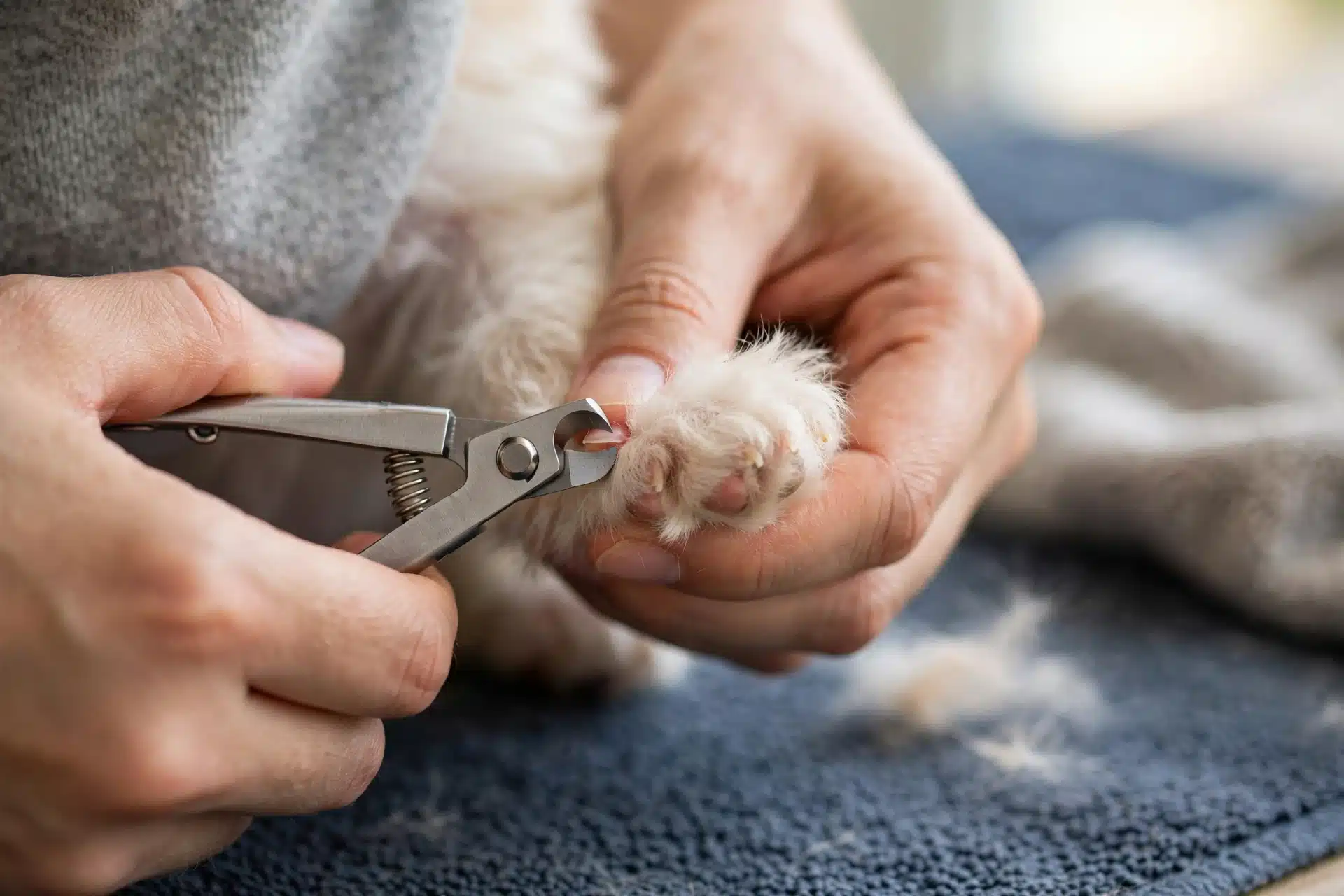
Small breed puppy nail trimming works best as a quick, frequent habit rather than a big production. Trim your puppy’s nails every two to three weeks. Frequent, short trims keep the quick, the pink blood vessel inside each nail, from creeping forward, so each session stays easy and pain-free. Puppies that hear clippers from an early age also handle trims calmly as adults, which makes this one of the most valuable puppy handling exercises you can do.
- Listen for clicking. If you hear nails tap on hard floors, they are too long.
- Look at the nail. On light nails, the quick shows as a pink line. On dark nails, trim thin slivers.
- Trim small amounts. Cut just past the curve, well away from the quick, on every nail including the dewclaws.
The Trim Itself, Step by Step
- Gather your tools: small guillotine or scissor clippers and styptic powder nearby in case of a nick.
- Hold the paw firmly but gently, so a squirm does not turn into a struggle.
- Cut one thin sliver at a time, checking the cut surface as you go.
- If you see a pink or gray center, stop on that nail and move to the next.
- If you nick the quick, press styptic powder into the spot for a few seconds.
- Praise and reward after each paw.
Nervous about cutting? Have a groomer or vet tech show you the first time. And if bleeding does not stop within a few minutes, call your veterinarian.
Feet, Dewclaws and Hair Between the Toes
Check feet at every trim. Look for cracked pads, redness between the toes, or anything stuck in the hair. On Havanese, Havapoo and Cavapoo puppies, hair between the pads grows fast and turns into tiny mats that trap dirt and moisture. Snip that hair level with the pads using small blunt-tip scissors, combing the hair up first so you can see clearly. Never shave a dewclaw or dig between the toes if the skin looks sore; let your vet handle that.
Step 5: Clean the Ears and Watch for Tear Stains
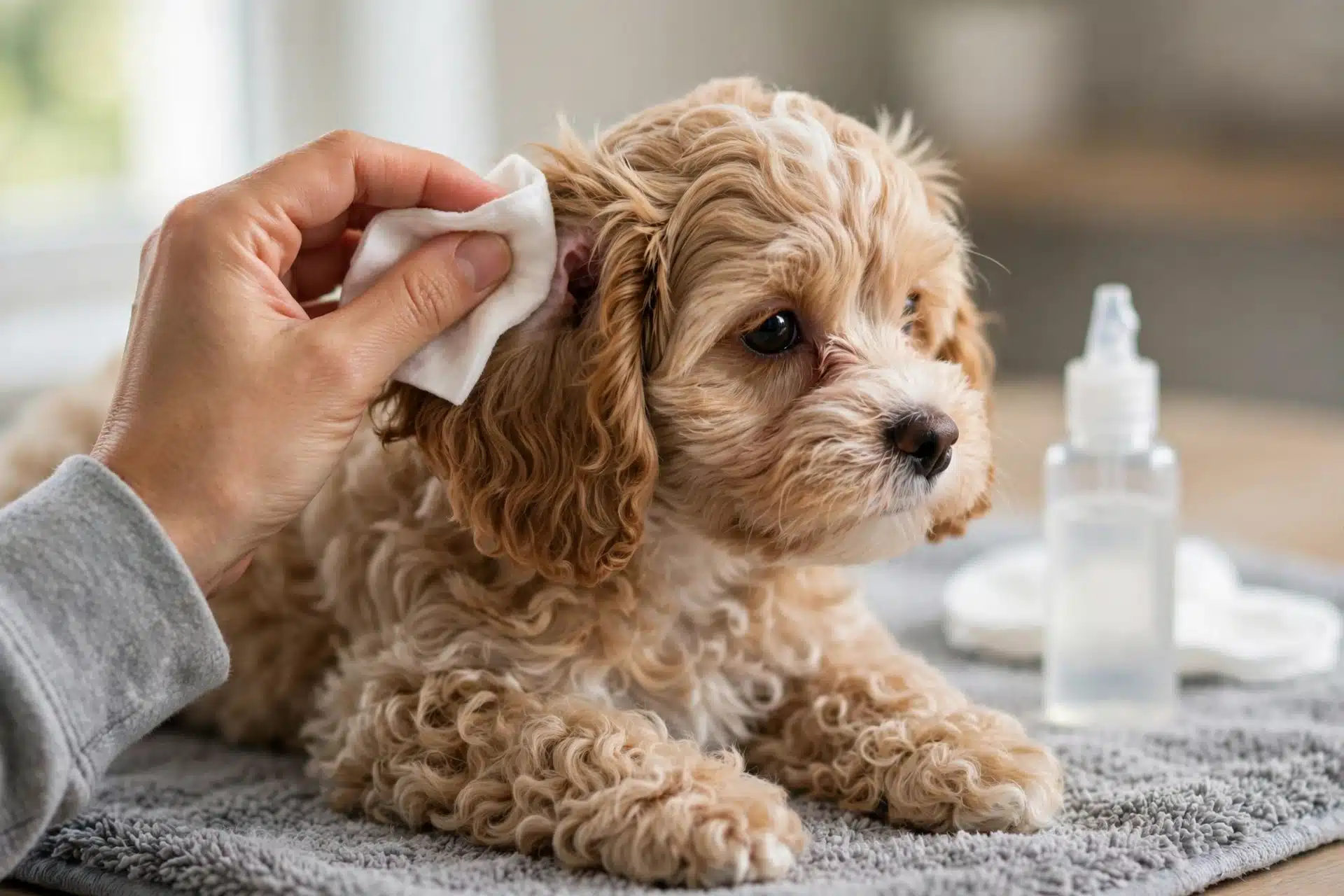
Yes, you can clean your puppy’s ears at home, but only the parts you can see. Lift the ear flap, wipe the visible outer ear and the opening of the canal with a cotton pad dampened in a dog ear cleaning solution, then stop. Do not use cotton swabs, pour liquid deep into the canal, or poke past what you can see. Havanese, Havapoo and Cavapoo puppies all have floppy ears that trap moisture, so a quick weekly check matters more than deep cleaning.
What You Can Safely Clean at Home
Stick to the outer ear flap and the visible opening. Wipe away wax and debris with a pad, not a swab, and dry the ear afterward if your puppy just had a bath or swim. Clean only when the ear looks normal. Once a week is plenty for most small breeds.
The Signs That Mean Call Your Veterinarian
Stop home care and call your vet if you notice a yeasty or sour smell, red or swollen ear flaps, dark brown or yellow discharge, head shaking, scratching at the ears, or your puppy flinching when you touch the ear. Floppy-eared breeds develop infections fast, and drops prescribed by a veterinarian treat them. Home cleaning will not fix an infection that has already started, so early calls save your puppy days of discomfort.
Tear Staining Around the Eyes
Light-coated Havanese and Cavapoo puppies often show reddish streaks under the eyes. Tears that sit on the fur feed bacteria, so wipe the area daily with a damp cloth and keep the hair trimmed. Deep brown stains, squinting, or discharge from the eye itself belong with your veterinarian. Diet can play a role too, which is why what you feed a small breed puppy sometimes shows up right on its face.
Step 6: Build a Weekly Routine You Can Actually Keep
Grooming fails when it lives only in your memory. A simple written routine, stuck to the fridge or saved on your phone, keeps brushing, nails and ears on schedule even during busy weeks.
A Sample Week for a Small Breed Puppy
Spread the work out and no session takes long:
| Day | Task | Time |
|---|---|---|
| Monday | Brush, 10-15 minutes, ears checked | 15 min |
| Wednesday | Brush and metal comb behind the ears | 15 min |
| Friday | Brush, quick nail check | 15 min |
| Sunday | Full look-over, trim nails if needed | 20 min |
Keep the same brushing rhythm you already started, roughly every other day. Small daily touches beat one long, stressful session.
Working With a Groomer or Vet Tech
Most Havanese, Havapoos and Cavapoos need a professional groom every six to eight weeks. Book the first appointment early, around 14 to 16 weeks old, after two vaccine rounds, and ask for a puppy trim: a light face, feet and sanitary clip. Short visits now teach your puppy that the table, dryer and clippers are normal. If nails resist you at home, a vet tech can trim them during a quick visit and show you where the quick sits.
A Quick Check Before You Leave the House
Run your fingers through the coat behind the ears and under the collar, where mats start. Peek inside the ears for redness or odor, glance at the nails, and you are done. Ten seconds now prevents an hour of detangling later. If a home routine ever feels beyond you, that is exactly what a groomer is for, and a new puppy family can ask questions when reserving through Sage Puppies’ application process.
Common Mistakes to Avoid
Skipping the Comb Before the Bath
Water sets mats. A tangle that slides through your fingers loose becomes a tight knot after a wet, soapy rinse. Always run a slicker brush and then a metal comb through the coat first, paying special attention to the matting behind the ears and under the legs. If you do find a mat that will not brush out, work it apart with your fingers and a dab of detangler, and if it stays tight, leave it for the groomer rather than cutting at your puppy’s thin skin.
Treating Every Puppy Like a Grooming Challenge Instead of a Puppy
Havanese, Havapoo and Cavapoo coats differ, so compare your puppy to the right standard, not to a friend’s dog. Keep sessions short, end on a treat, and handle paws and ears gently during play so grooming never becomes a fight. A realistic routine like the one in this small breed puppy care guide works better than marathon baths. Puppies have short attention spans; five calm minutes beats thirty stressed ones.
Using Human Products and Deep Ear Objects
Human shampoo has a different pH than dog skin, and it can leave the coat dry, flaky and itchy, according to PetMD. Stick to a gentle dog shampoo. In the ears, use a dog ear cleaning solution on a cotton ball, never a swab pushed down the canal.

Your puppy’s coat, nails and ears stay easiest to manage when care starts early, in short, calm sessions. Want a puppy already handled this way? Visit Sage Puppies, meet our Havanese, Havapoo and Cavapoo litters, and start your application today.
Frequently Asked Questions
Q1: What does small breed puppy coat care involve?
Brush two to three times weekly with a slicker brush, follow with a metal comb to the skin, and check mats behind the ears, armpits and legs. Bathe every three to four weeks and dry fully to prevent tangles.
Q2: How often should I trim my puppy’s nails?
Every two to three weeks. Trim thin slivers past the curve, away from the quick, and use styptic powder if you nick one.
Q3: Can I clean my puppy’s ears at home?
Yes, but only the visible outer ear and canal opening. Use dog ear cleaning solution on a cotton pad, never swabs.
Q4: When should my puppy see a professional groomer?
Around 14 to 16 weeks, after two vaccine rounds, then every six to eight weeks for a puppy trim.
Q5: What ear signs mean a vet visit?
Sour smell, swelling, dark discharge, head shaking or flinching all call your veterinarian rather than more home cleaning.
Conclusion
Small breed puppy care comes down to three steady habits: brush a Havanese double coat every other day and confirm with a metal comb, trim nails every two to three weeks, and wipe floppy ears weekly with dog ear cleaning solution. Bathe only a brushed-out coat, dry it fully, and watch the mats behind the ears before they tighten. Every step has a limit. Bleeding that will not stop, ear odor or discharge, deep tear staining, or a coat too matted to comb all belong with your veterinarian or groomer. Short, calm sessions started early are what make grooming easy for life, and the same gentle handling shows up in every part of raising a small breed puppy well.