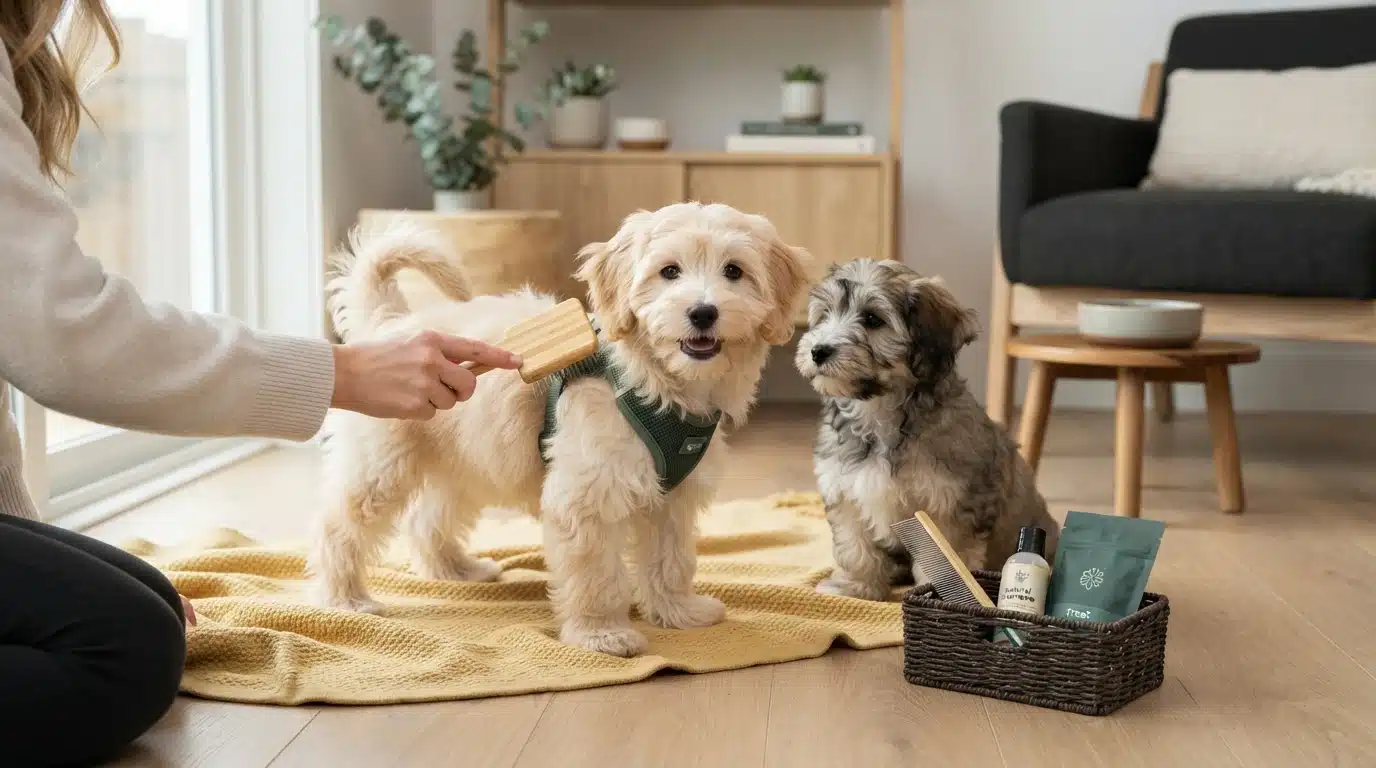
Quick Summary: Schedule your Havapoo puppy’s first vet visit within three to seven days of pickup, and bring the breeder’s vaccine and deworming records, parents’ health screenings, DNA results, a fresh stool sample, and notes on eating and potty habits. Pack a secured ventilated carrier, soft harness, leash, treats, and cleanup supplies, since toy-breed puppies tire and chill quickly. Leave with an updated vaccine record, weight and feeding plan, parasite prevention schedule, next appointment, and a written list of warning signs. Sage Puppies families can use their go-home records as a strong starting point for this folder.
You open the go-home packet on pickup day and find a vaccine card, a microchip registration sheet, a deworming log, and a parent health-test printout. You photograph everything, promise yourself you’ll sort it later, and the papers vanish into a drawer. Then Monday comes, and your Havapoo’s first vet visit is real.
The challenge is simple: your vet can only give accurate advice if you bring the right paperwork, a stool sample, and the small-breed gear a toy puppy needs. Not the whole stack, and not the wrong parts. This guide sorts the packet into what the vet must see, what only backs it up, and what to leave home. We also walk through a 48-hour prep plan, so your havapoo puppy first checkup starts calm instead of rushed.
We wrote this from our own go-home packets at Sage Puppies in South Jordan, Utah, so you know exactly which documents to carry and what to bring to the vet visit without guessing.
Book the First Visit Before the Puppy Arrives
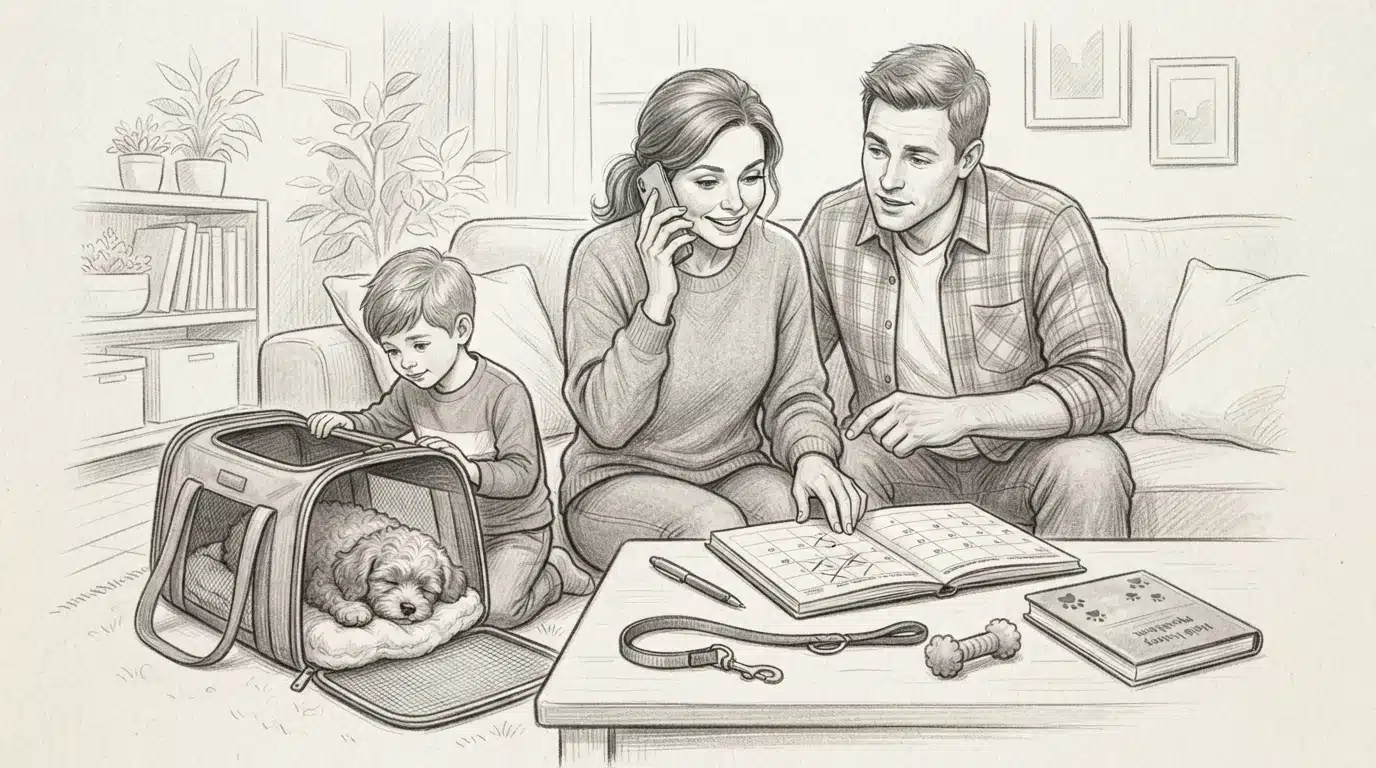
Schedule your Havapoo’s first vet visit within three to seven days of pickup, ideally while the puppy is six to eight weeks old. If your puppy arrives by delivery, count from the day it reaches your home. Booking before the puppy arrives means you already have an appointment instead of scrambling through a full clinic schedule.
Why the First Few Days Matter
The first few days set the pattern for everything after. A young Havapoo is a toy-breed puppy with a small reserve, so low blood sugar, dehydration and parasites turn serious fast. An early exam also establishes a baseline weight and confirms the vaccine schedule from the health records the breeder sends home. The AAHA recommends contacting your vet right when you bring a puppy home, and vets commonly ask to see a new puppy within a few days even if it looks healthy.
Questions to Ask the Receptionist
Call two or three clinics and ask the same questions. The answers tell you whether the practice fits a first-time puppy family.
- Do you see new puppies within a few days of pickup, and how soon is the next opening?
- Does the first exam cost extra, and what does the puppy package include?
- Will the vet review the breeder’s records and set up the core vaccine series from six to sixteen weeks?
- Should I bring a fresh stool sample for a fecal test?
- How do you handle small breeds in the waiting room, for example a separate area or quick rooming?
- What after-hours or emergency options do you offer?
Clinics that walk you through these answers calmly are usually the ones worth keeping.
Build the Records Folder: What to Bring From the Breeder
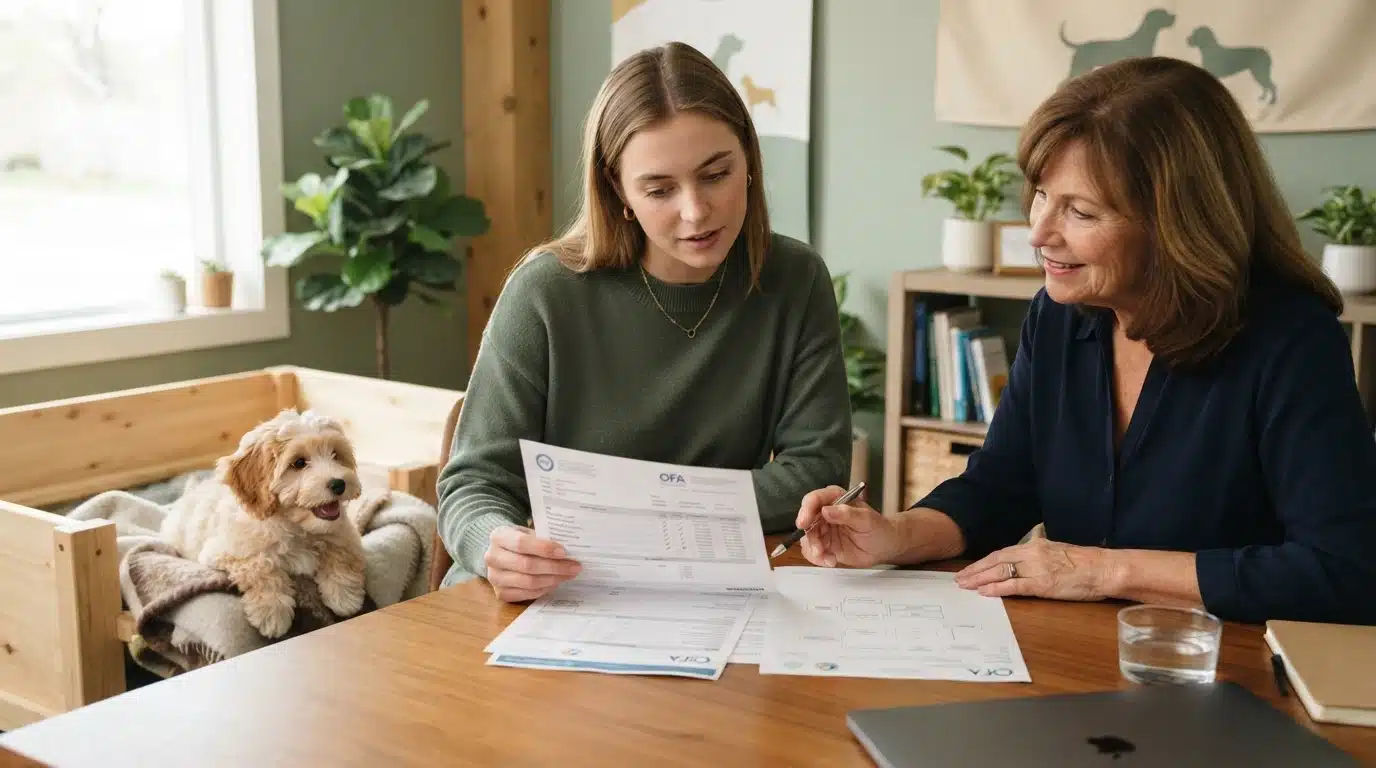
Your havapoo first vet visit goes smoothly when the paperwork is organized before you sit down. Bring three separate record sets from the breeder:
- The puppy’s own exam and vaccine record. Dates of any checkup, shots given, and deworming treatments.
- The parents’ clinical screening. Vet-performed tests like patella and eye exams on mom and dad.
- DNA variant results. Lab reports showing which gene variants each parent carries or cleared.
Keep them in one folder so your vet can review everything in a few minutes.
The Puppy’s Own Exam and Vaccine Record
This is the document your vet will actually write on. It should list each vaccine by date, the vaccine’s label or lot number, and the next dose due. A good puppy vaccination record also shows the deworming schedule, since most breeders treat for roundworms and hookworms at least twice. Note any stool sample results too, because a fecal test done at the breeder tells your vet whether parasites were already found.
According to the 2022 AAHA Canine Vaccination Guidelines, core puppy shots run in a series from 6 to 16 weeks, so an accurate record of what is done prevents gaps or doubled doses. Ask for a paper copy, even if the breeder emails a PDF. Vets annotate, stamp, and file paper faster at the counter.
Parent Screening and DNA Results Are Not the Same Thing
Many generic checklists lump all breeder paperwork into one stack. Don’t. The parents’ clinical screening covers hands-on exams: patella checks, eye clearances, sometimes cardiac auscultation. A vet performed those on real dogs.
DNA variant results come from a cheek swab sent to a lab. They show whether each parent carries specific gene variants, such as those linked to Havanese health concerns. Both matter, but one does not substitute for the other. Bring each under its own tab.
If the Paperwork Is Incomplete or Late
Ask the breeder for a written summary with dates before pickup, then have records forwarded when complete. Your vet can start the exam anyway. The questions to ask a puppy breeder before you bring your puppy home should include exactly when each document will arrive.
Pack the Small-Breed Kit for the Car Ride
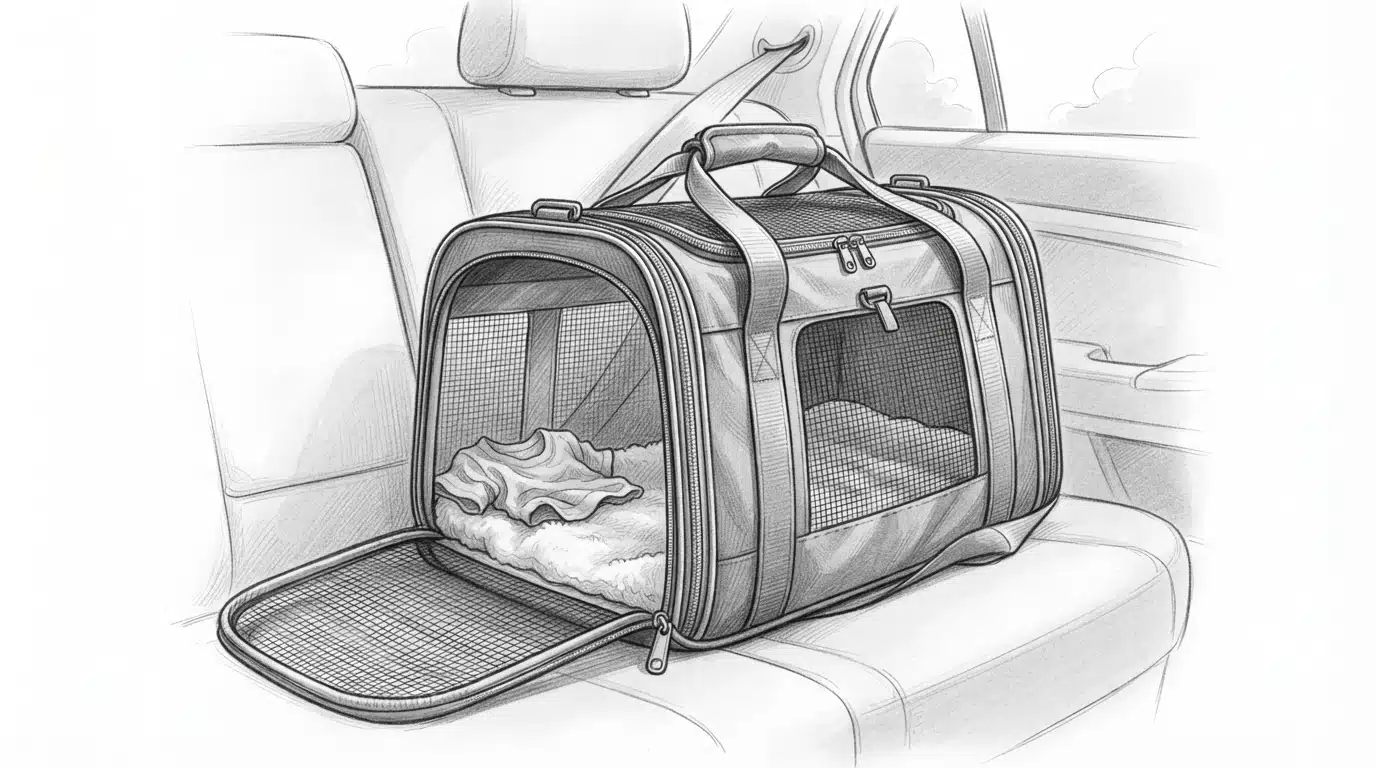
For the ride itself, pack a ventilated carrier lined with bedding, a soft harness and leash, small soft treats, cleanup supplies, and a scent item from home. Toy-breed puppies tire and chill faster than larger pups, so the kit is about comfort as much as control. Here is what goes in each layer of it.
Carrier, Bedding, and a Scent Item
A zippered or hard-sided carrier is the safest way for an 8-week-old Havapoo to travel. Line it with a towel plus a blanket or shirt that smells like the litter. That scent item steadies a nervous puppy and gives the vet team a calm patient to examine. Buckle the carrier into the back seat rather than improvising with a loose crate or a lap hold, since a braking incident can injure a three-to-six-pound puppy.
Never let the puppy ride loose in the car or on someone’s lap. A restrained carrier protects a toy-breed body far better than arms can.
Leash, Harness, Treats, and Cleanup
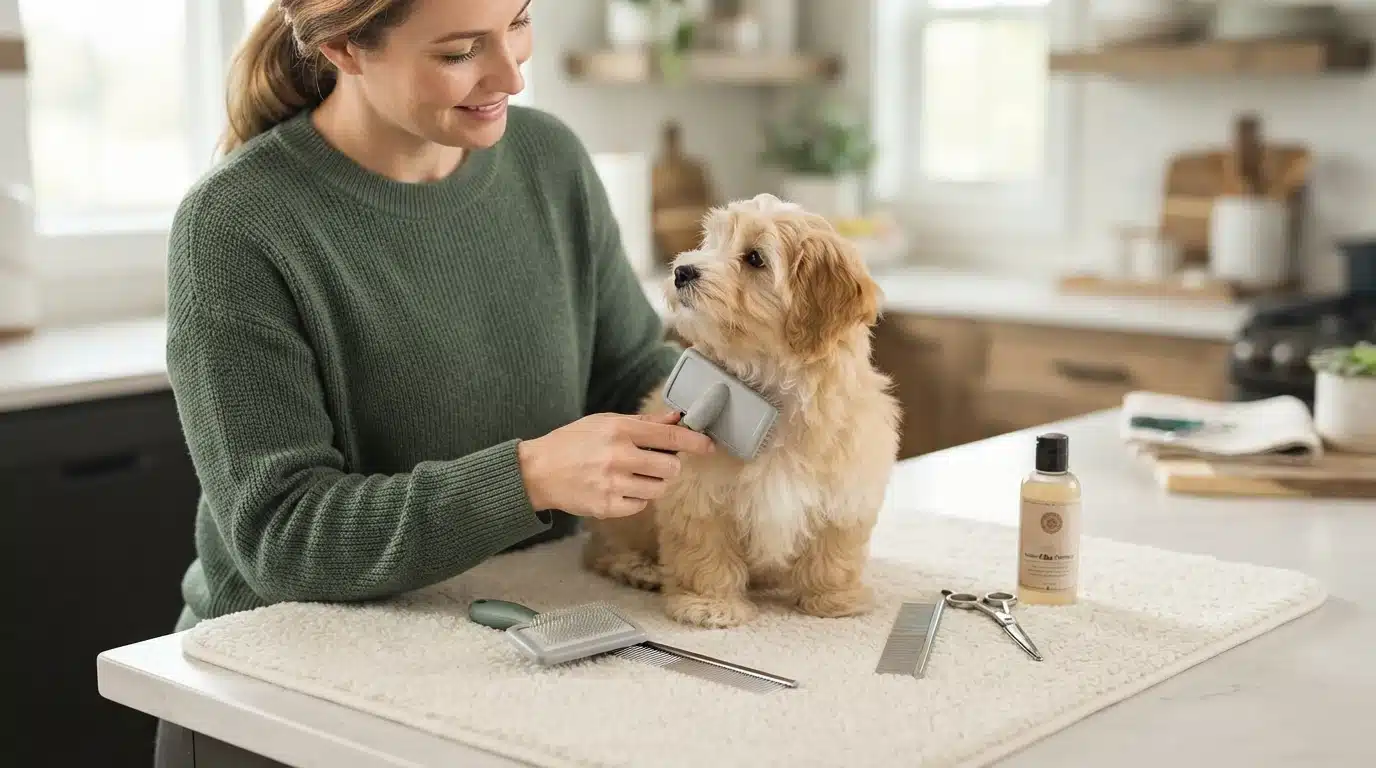
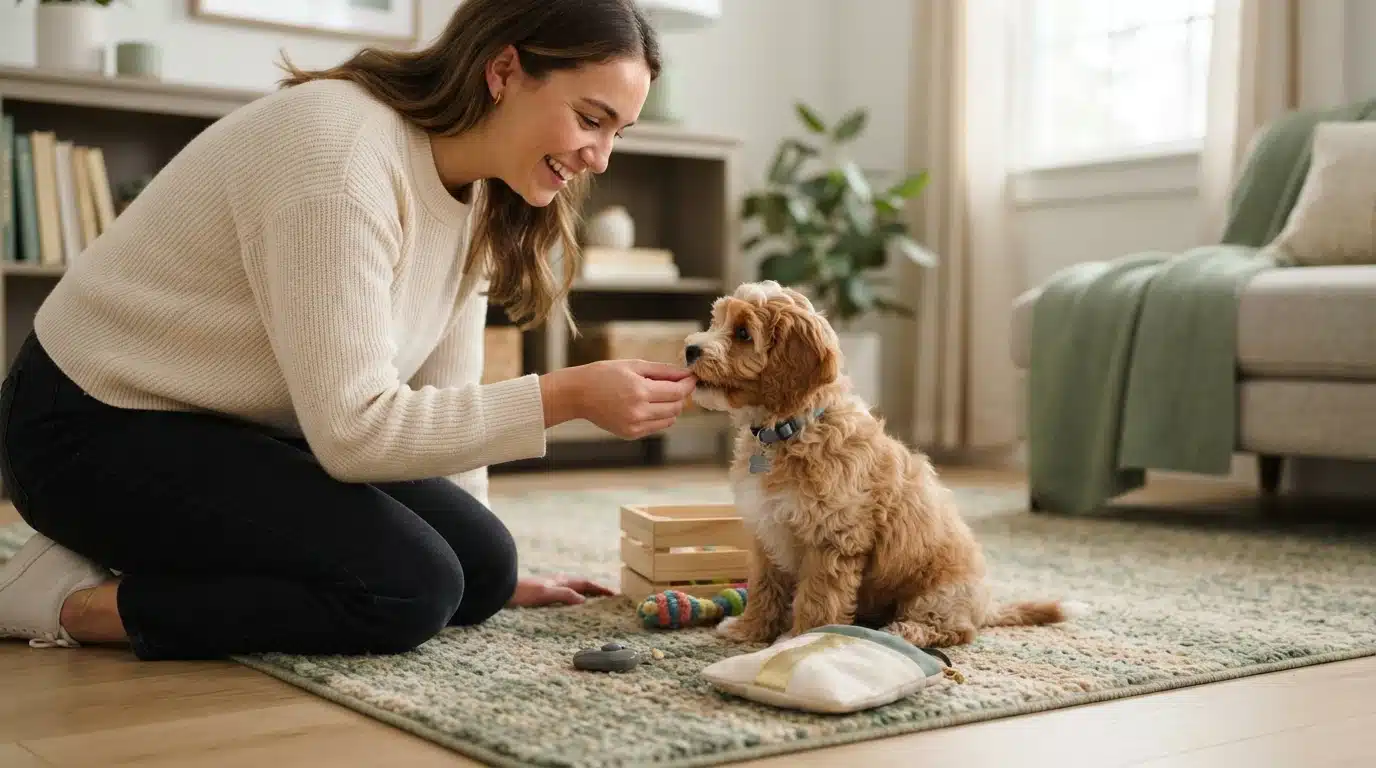
Skip the collar for now. A soft, properly fitted harness with a light leash gives you control at the clinic without pressure on a small throat, and Havapoo-sized gear is easy to find at pet stores or in the program’s own puppy supply picks. Bring pea-sized soft treats so the visit ends on a good note, and ask the staff first, since many clinics happily use treats during the exam.
Pack cleanup basics for the drive: poop bags, paper towels, and a small enzymatic spray for accidents. A puppy this young often cannot hold it for a long trip, so stop early and often. Bring a fresh stool sample in a sealed bag, ideally collected that morning, because the vet will likely run a fecal test to check for parasites and update the deworming schedule. Chill it or keep it cool in the car if the appointment is hours away.
Collect the Samples and Notes Your Vet Will Ask For
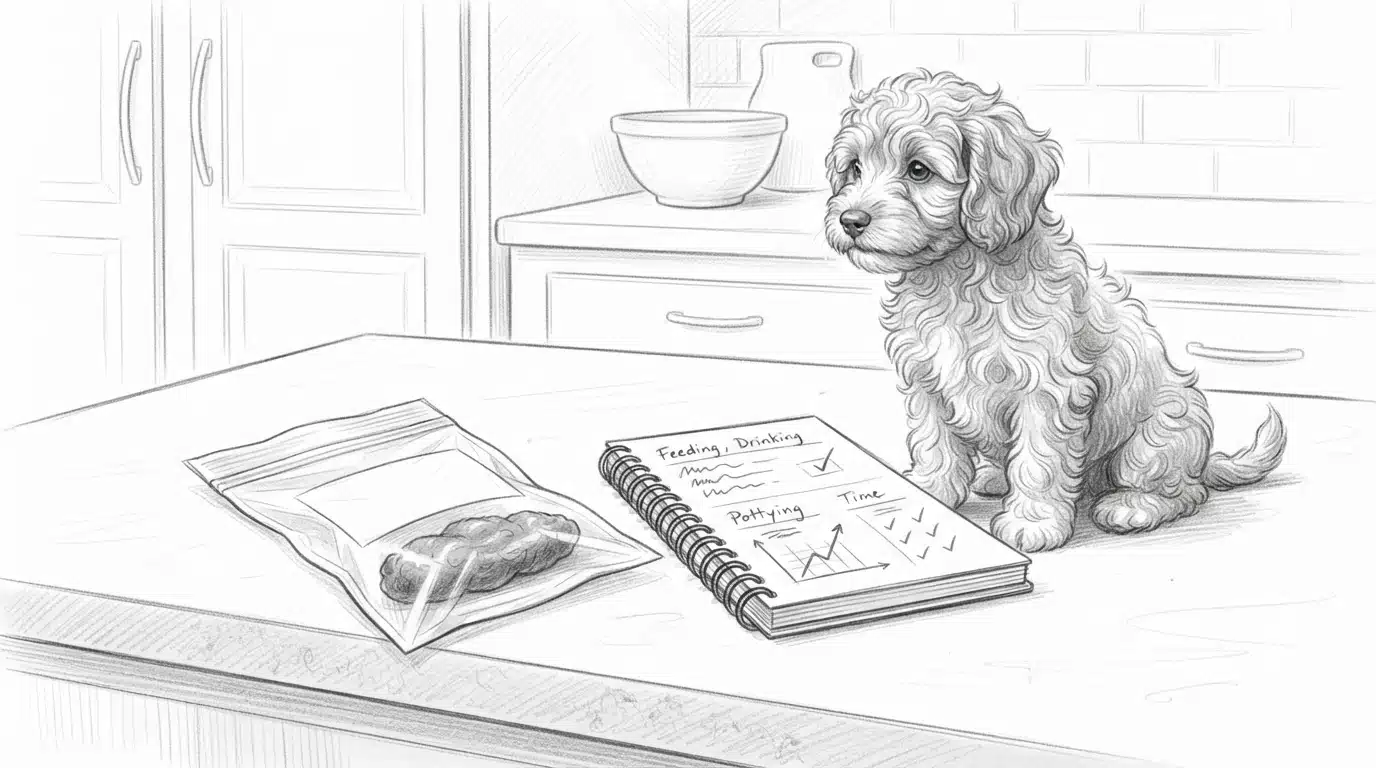
Two small things make a Havapoo puppy first checkup far more useful: a fresh stool sample and a short record of how your puppy has been eating, drinking and pottying at home. Neither takes more than a few minutes, but vets rely on both.
How to Collect a Fresh Stool Sample
- Collect the sample within 12 hours of the visit, ideally the same morning.
- Use a clean baggie or the vet-supplied container, and pick up a marble-sized piece.
- Seal it, keep it cool (a small cooler works), and write your puppy’s name on it.
- Note any recent deworming, since that changes how the vet reads the fecal test.
Bring a second bagged sample if you can. If the first is too old or too dry for a reliable fecal test, the backup saves you a repeat trip.
Two Days of Simple Notes
Before the visit, jot down two days of basics: what and how much your puppy ate, when she drank water, and the timing of each potty trip. Include anything unusual, such as soft stool, a skipped meal, coughing, scratching or a wobbly step. These home notes help the vet judge hydration, digestion and weight gain for a toy breed puppy, where small shifts matter more than in larger dogs. If your puppy came from Sage Puppies, you can also match your notes against the feeding routine the litter already followed, so nothing looks “off” that is actually just normal transition. Skip the notes if your puppy has been home less than a day; the first-day adjustment looks different from a settled pattern.
Write Your Question List Before You Walk In
A written list keeps the visit focused. Nerves, a wiggly puppy, and a chatty vet can crowd out the things you actually need to know, so jot three to five questions the night before and hand the list to the front desk when you arrive.
Prevention, Parasites, and Vaccines
Start with the basics. Ask which core shots your puppy still needs, and where the visit fits in the core vaccine series that runs from 6 to 16 weeks. Confirm the deworming schedule from your records, and ask whether the fecal test on your fresh sample calls for treatment or a recheck. Good questions here: “What heartworm prevention do you recommend, and when do we start?” and “When is the next vaccine due?” Ask for the dates in writing before you leave.
Nutrition, Weight, and Small-Breed Checks
A Havapoo is a toy breed puppy, so weight matters. Ask the vet to show you where your puppy sits on the growth curve and how much food to measure each day. Bring your food bag label or a photo so the vet can check calories and portions. Also ask about patella and eye checks, since Havanese-influenced puppies deserve a baseline exam early. If your puppy came from Sage Puppies, the parents’ screening results in your records folder give the vet a head start.
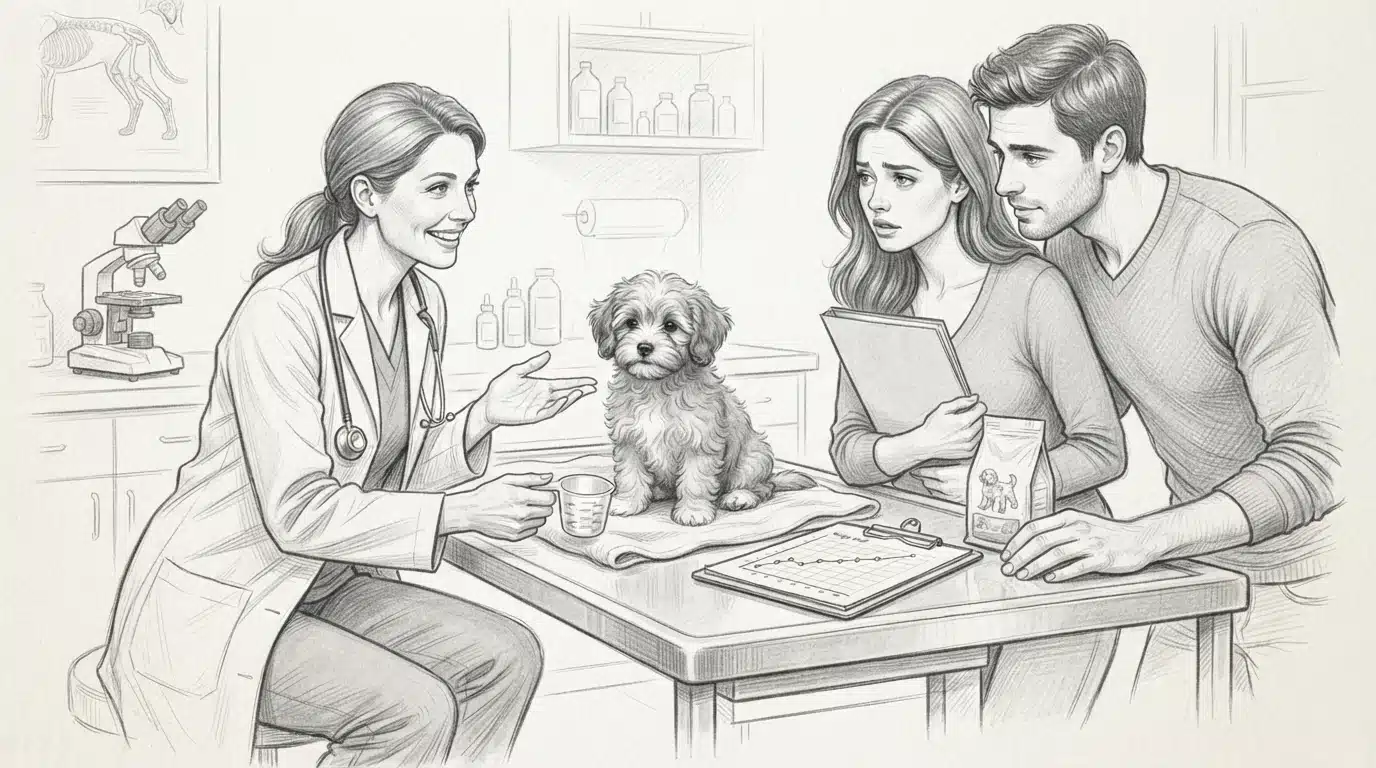
Socialization, Safety, and the Year Ahead
This block covers the long game. The American Veterinary Society of Animal Behaviorists says socialization should happen before a puppy finishes shots, because the first three months matter most for behavior. Ask which activities are safe now and which to wait on. Then cover AVSAB’s puppy socialization position with your vet against your own routine, especially if you already follow a first-week plan like our Utah first week guide. Finish with logistics: microchip registration, spay or neuter timing, tooth brushing, and red flags that mean a call, such as vomiting, diarrhea, or refusing food.
What Happens at the Exam and What to Leave With
The Head-to-Tail Exam
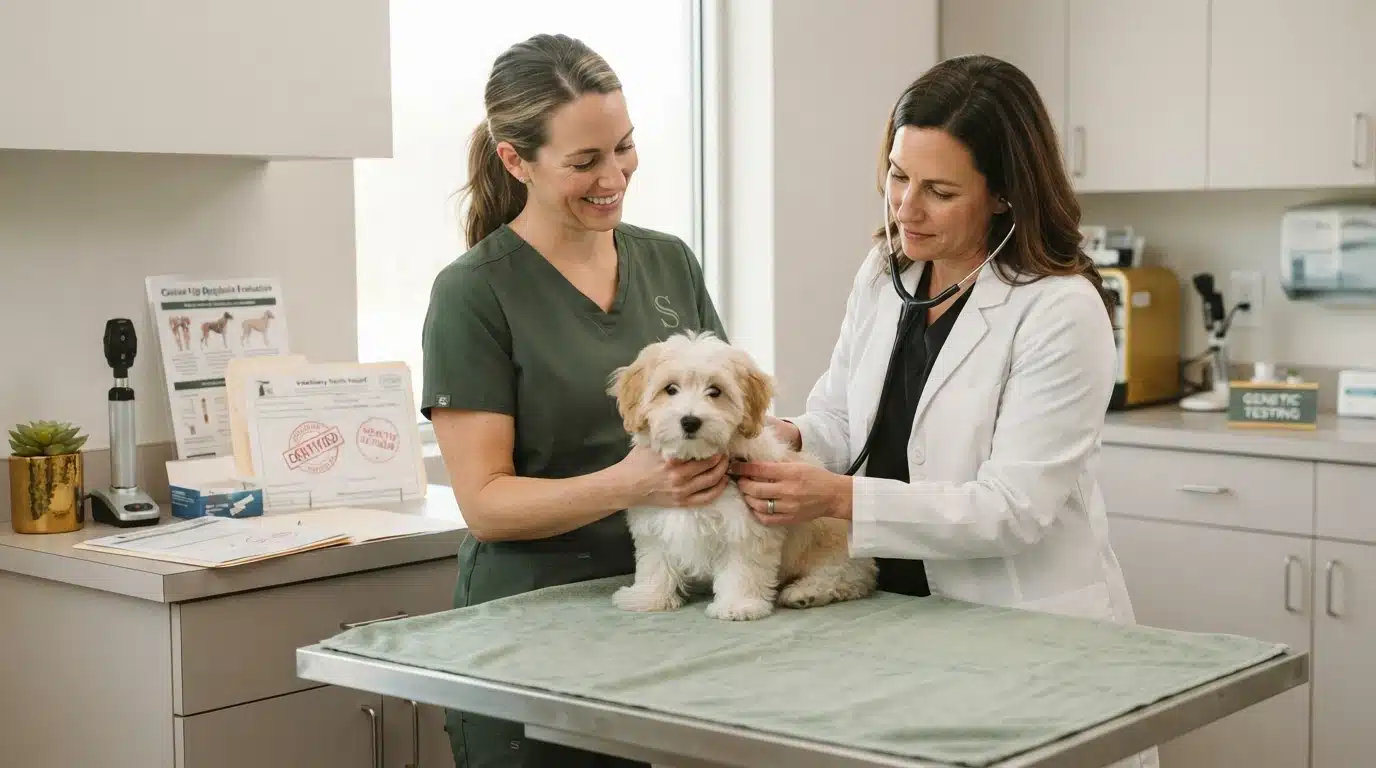
A Havapoo puppy first checkup includes a head-to-tail physical, a fecal test, a weight check, and a review of your puppy vaccination record and deworming schedule. The vet weighs your puppy, then checks the whole body. Expect the following:
- Eyes, ears, nose, teeth, and skin checked for infection or irritation
- Heart and lungs listened to for murmurs or rhythm problems
- Patellas (kneecaps) gently moved, since small breeds can have loose ones
- Abdomen palpated, umbilical area checked for hernias
- Coat and body condition scored, with feeding advice for a toy breed puppy
- Fecal test run on the fresh stool sample you brought, because parasites are common at this age
The vet may also scan for a microchip if one was placed.
Six Things to Walk Out Holding
Ask for each item before you leave. Most clinics provide them on request, but not automatically.
- Visit or discharge summary listing findings and any treatments given
- Updated vaccine record showing what was given and what comes next in the core series, which runs from 6 to 16 weeks
- Next appointment date, usually three to four weeks out for the next round of shots
- Weight and feeding plan matched to your puppy’s size and food
- Parasite prevention plan, including deworming or heartworm start dates
- Red flags list, written down: which symptoms mean call the clinic today
If the exam found a patella, eye, or hernia concern, ask for that finding in writing. It matters for future records.
After the Visit
Once you’re home, keep the day quiet. Your puppy may be tired or slightly sore from injections, so skip training sessions and visitors. Offer food and water as normal, and watch the injection site for swelling. Photograph or scan every document into your phone as backup. Then add the visit notes to your records folder so the next appointment starts informed.
A Quick Note for Families Still Choosing a Breeder
Most of what makes the first vet visit go smoothly happens before your puppy ever comes home. A breeder’s paperwork tells your vet where to start.
What Good Records Look Like Before You Ever Book a Vet Visit
Ask a breeder what records come with the puppy, and listen for specifics. You want three things: the puppy’s own exam and vaccine record with dates and products used, a deworming schedule, and the parents’ health screening, including DNA variant results and eye and patella checks. Vague answers like “the papers are all there” are a red flag.
A responsible program hands these over at pickup or delivery without being asked. When you compare programs, request sample paperwork before you commit. Some breeders, including small Utah programs like Sage Puppies, walk families through their records as part of the matching process, which sets up that first checkup well.

Your Havapoo’s first checkup goes smoother when the right records come along. Pack the three document types above, follow the 48-hour plan, and you’ll walk in calm and ready. Want more breed-specific guidance like this? Visit Sage Puppies, where every Havapoo, Cavapoo and Havanese puppy is wisely bred and beautifully loved.
Frequently Asked Questions
Q1: What should I bring to my Havapoo puppy’s first vet visit?
Bring the breeder’s records folder, a fresh stool sample, a ventilated carrier, a soft harness and leash, pea-sized treats, cleanup supplies, and a short note of two days of eating and potty habits.
Q2: What records should I bring from the breeder to my puppy’s first vet visit?
Three sets: your puppy’s exam and vaccine record with deworming dates, the parents’ clinical screening like patella and eye exams, and DNA variant results. Keep each under its own tab.
Q3: When should a Havapoo puppy see the vet for the first time?
Within three to seven days of pickup, ideally while the puppy is six to eight weeks old. If delivered, count from arrival day.
Q4: Do I really need a stool sample for the first checkup?
Yes. The vet will likely run a fecal test, because parasites are common at this age. Collect a marble-sized sample that morning, seal it, and keep it cool.
Q5: What should I ask for before leaving the clinic?
Get the discharge summary, updated vaccine record, next appointment date, weight and feeding plan, parasite prevention plan, and a written red flags list for symptoms needing a same-day call.
Conclusion
Your Havapoo puppy’s first vet visit comes down to three things: the right paperwork, a fresh stool sample, and toy-breed travel gear. Book the appointment within three to seven days of pickup, keep the puppy’s own vaccine record separate from the parents’ screening and DNA results, and collect a marble-sized sample that morning.
Add two days of eating and potty notes plus three to five written questions. Then bring home a discharge summary, an updated vaccine record, the next appointment date, and a red flags list. That one folder turns a stressful first checkup into a routine you can repeat at every visit, and your vet starts with real facts instead of guesses.