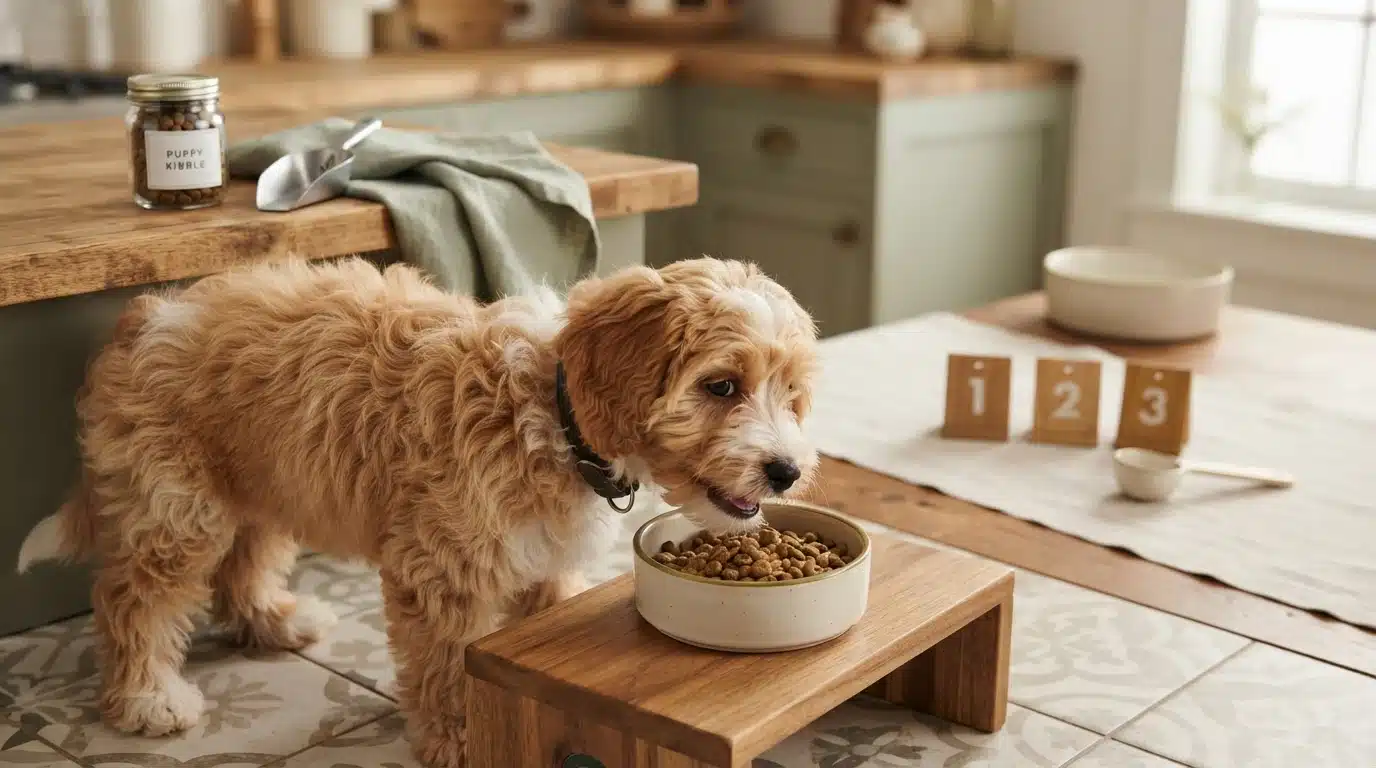
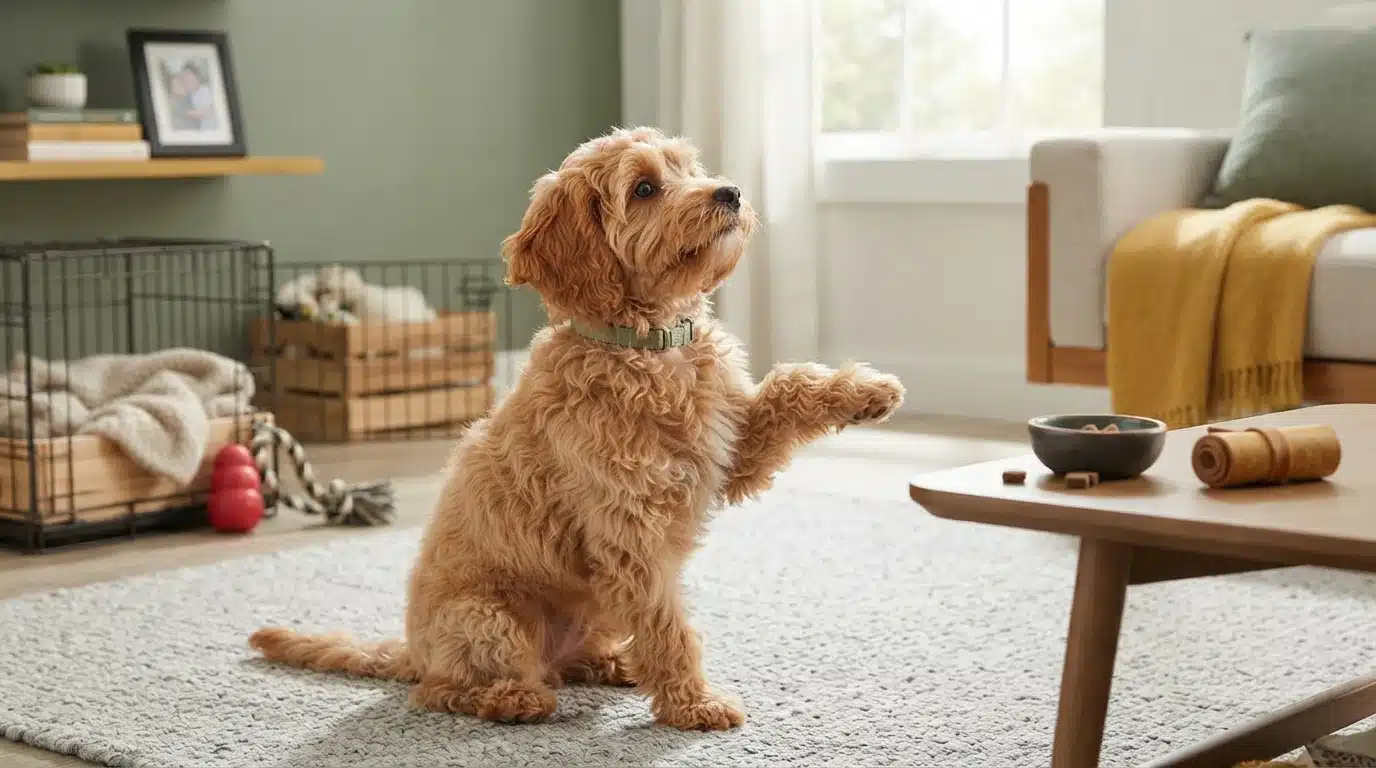
Quick Summary: Train a Havapoo puppy with one main skill each week, using one- to five-minute reward-based sessions and steady progress rather than pushing too fast. Start with routine and name response, then build potty and crate habits, basic commands, recall, brushing, safe socialization, impulse control, and household manners before reviewing weak skills in week eight. Keep outings within your vet’s guidance, repeat any skill that remains shaky, and make brushing part of the daily routine because Havapoo coats need lifelong care.
The first eight weeks with a new Havapoo puppy hold roughly 400 short training decisions, and most families lose sleep over the same two: are we holding this puppy back, or pushing too fast? A clear havapoo training schedule answers that by naming one skill focus per week: crate comfort, potty routines, name response, leash basics, recall, and calm handling, each with simple progression criteria so you know when to move on. This guide draws on current AVSAB position statements, Havanese Club of America guidance, and the daily experience we gain raising Havapoo puppies here in South Jordan, Utah. Whether you pick up locally or welcome a delivered puppy, week one starts the day your puppy comes home, not a fixed calendar date. First-time dog owners get the exact steps; experienced owners get the edge cases.
Week 1: Settle the Routine and Build Name Response
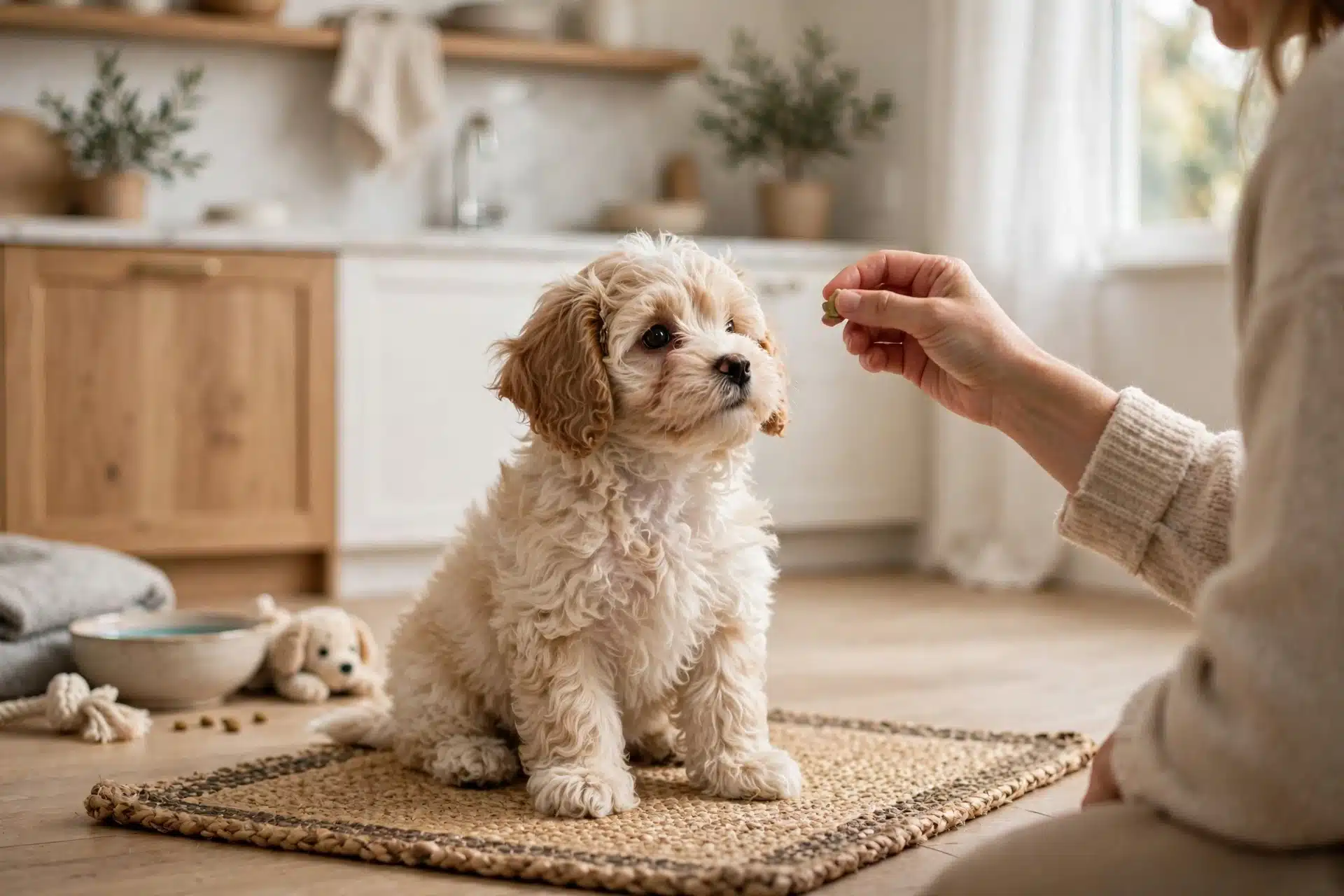
Your Havapoo training schedule starts with routine, not commands. A new puppy is adjusting to a strange home, so week one is about predictability. Feed, potty, play, and nap at roughly the same times each day, and name response will grow out of that calm base.
The Daily Rhythm for Week One
Follow a simple loop: potty on waking, eat, potty again, a short play burst, then a crate nap. Most 8 week old puppies can hold it about one hour per month of age, so expect several overnight trips. Keep each awake block under an hour. Tired puppies bite harder and learn less, so protect the naps. Write the schedule down and let every family member follow it the same way.
Teaching Name Response and a Marker Word
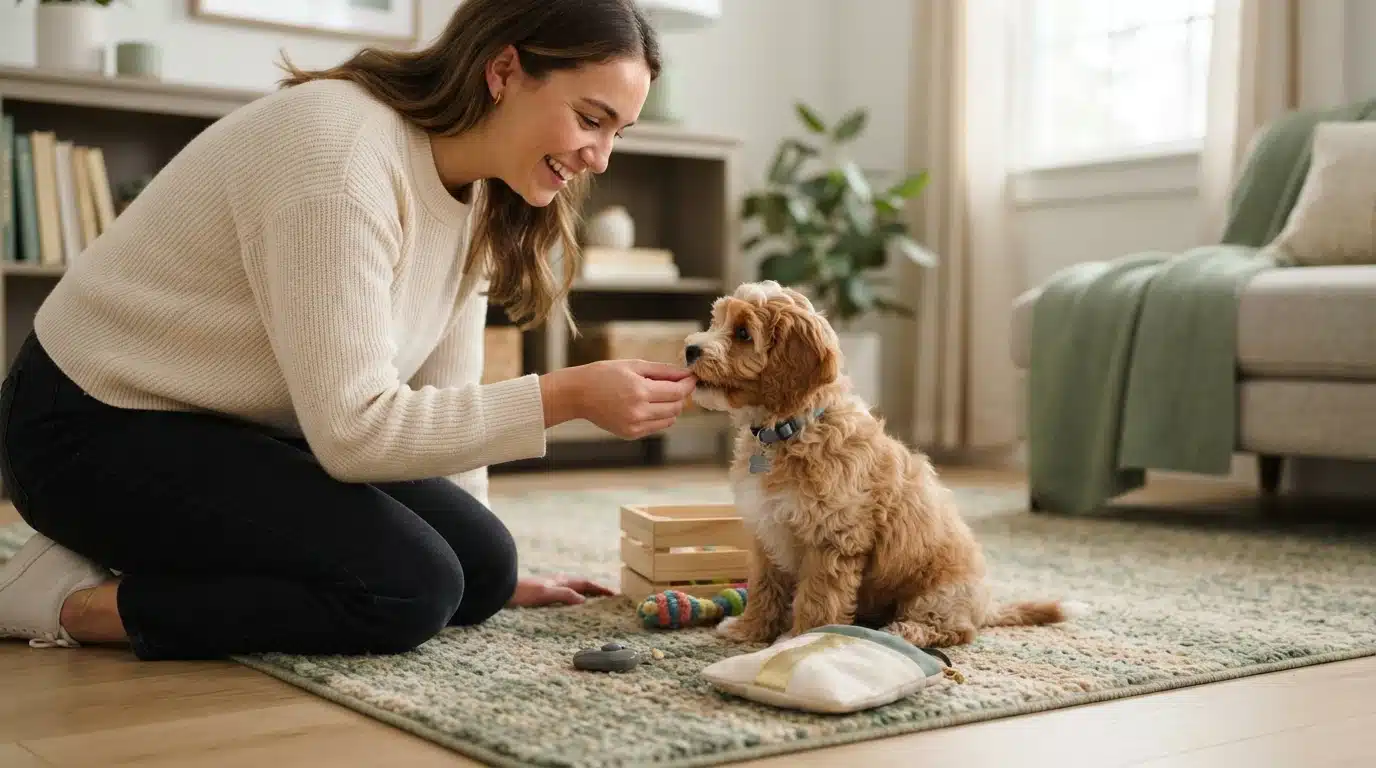
Say your puppy’s name once, in a happy voice, when it is already looking at you. Mark the moment with a word like “Yes,” then deliver a soft treat. Repeat five times, twice a day. Never repeat the name like a chant. This reward-based pairing builds the recall foundation you will use for months.
What to Skip in the First Week
Hold off on formal sits, downs, long walks, and busy outings. The AVSAB position statement supports gentle socialization early, but keep week one quiet: carry your puppy past new sights and sounds at home instead. For the full settling-in picture, our first 30 days with a Havapoo guide covers vet visits, sleep, and feeding in detail.
Week 2: Build Toileting Habits and Crate Confidence
Toileting Routine and Adjusting the Intervals
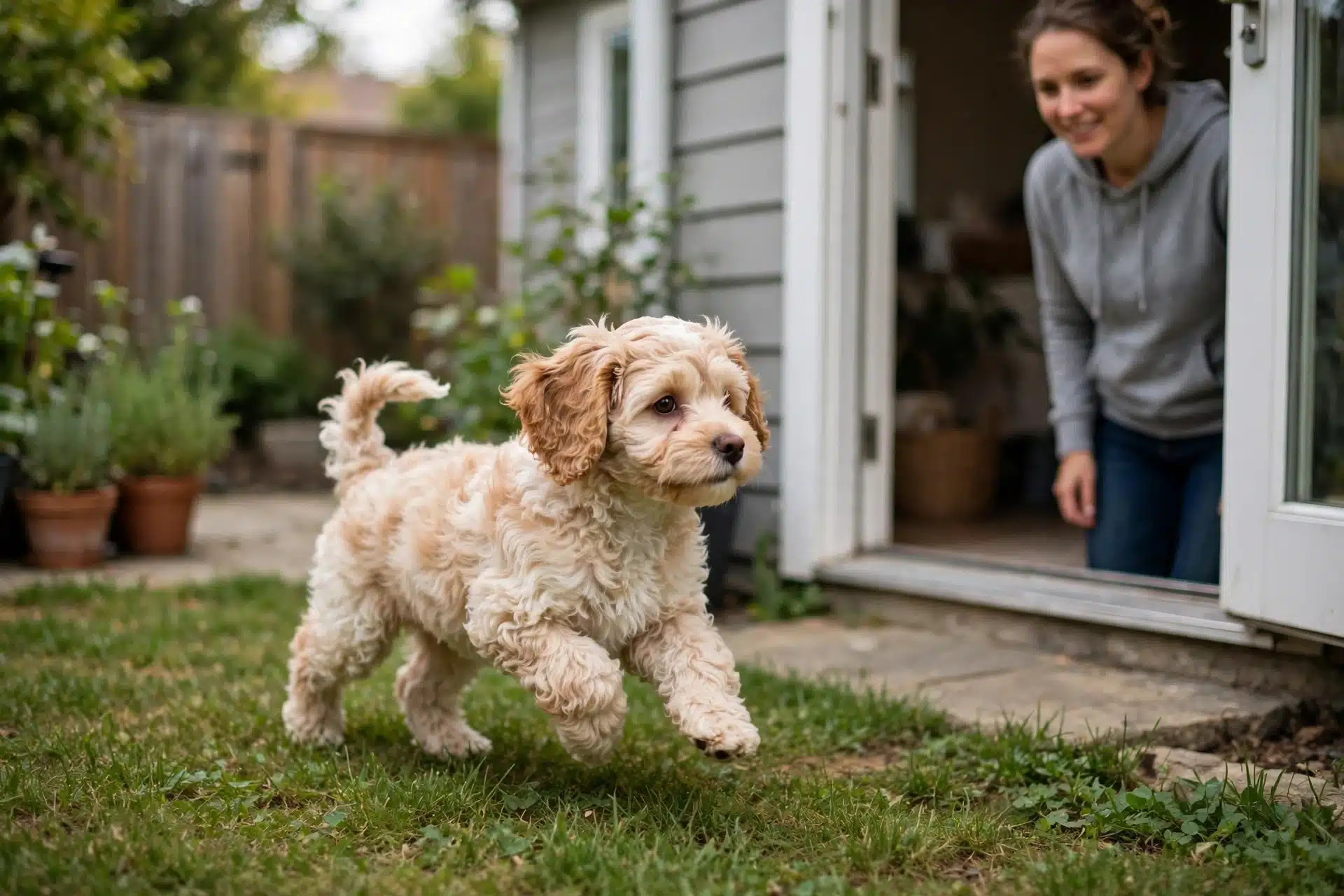
At 8 weeks, take your Havapoo out roughly every 45 to 60 minutes, plus after waking, eating, drinking, and play. Watch the trigger points: sniffing, circling, or wandering off. When accidents drop for a few days, stretch the interval by 15 minutes. This potty training schedule for an 8 week old puppy works because success outside is always rewarded, so the habit builds on wins, not corrections.
Crate Confidence Without Forced Confinement
Introduce the crate in four steps:
- Prop the door open and drop treats inside at a distance your puppy chooses.
- Feed one daily meal just inside, then just fully inside the crate.
- Say your marker word, toss a treat in, and close the door for 30 seconds while you stay nearby.
- Build up to short naps, then brief outings, never as punishment.
Beginning Handling Cooperation
Touch ears, paws, and belly for two seconds, then reward. These micro-sessions prep your puppy for grooming and vet exams. Most Havapoo puppies raised in a home program like this arrive already used to gentle handling from day one.
Week 3: Marker Word, Leash Skills, and First Real Commands
By week three, your Havapoo training schedule gets its engine: a marker word that tells your puppy “that exact behavior earned the treat.” Once it works, sit and early leash training puppies skills build on it fast.
Turning the Marker Into a Reliable Signal
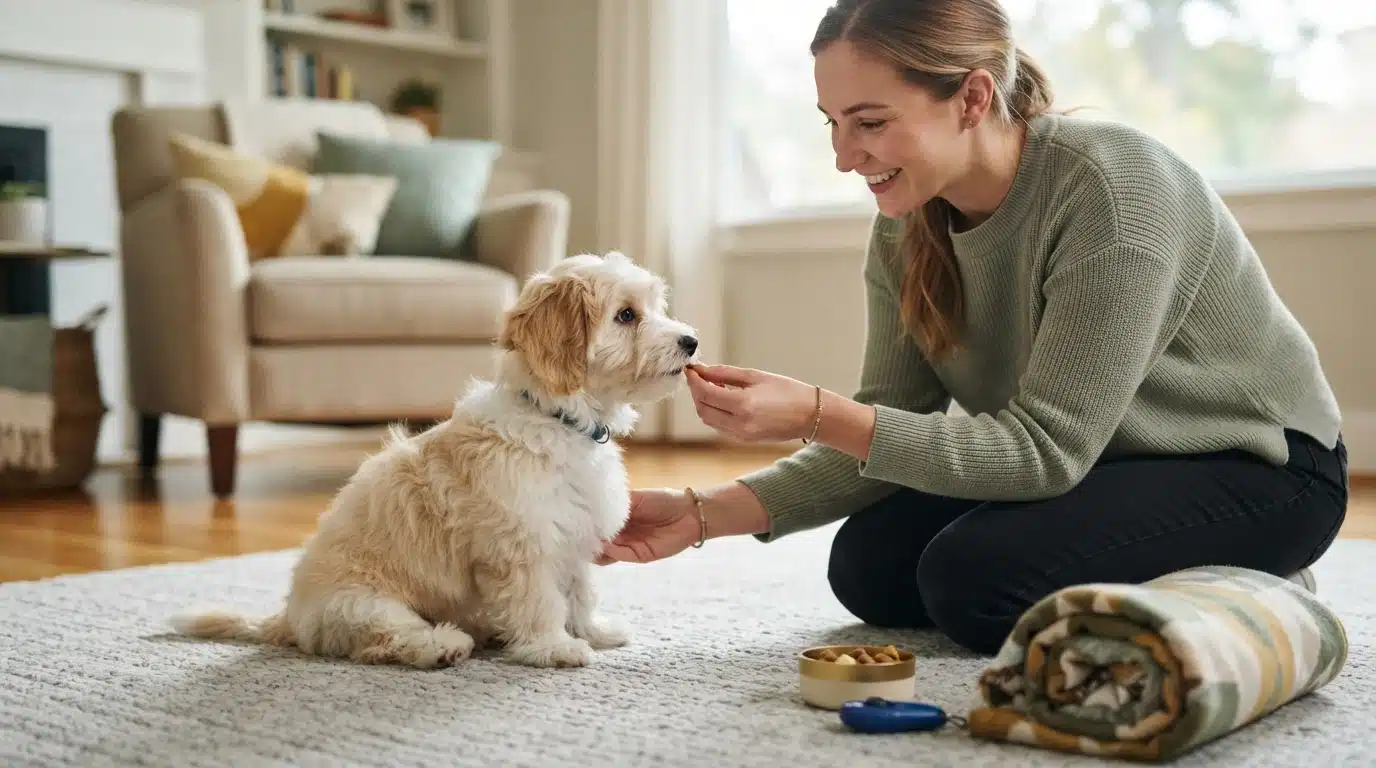
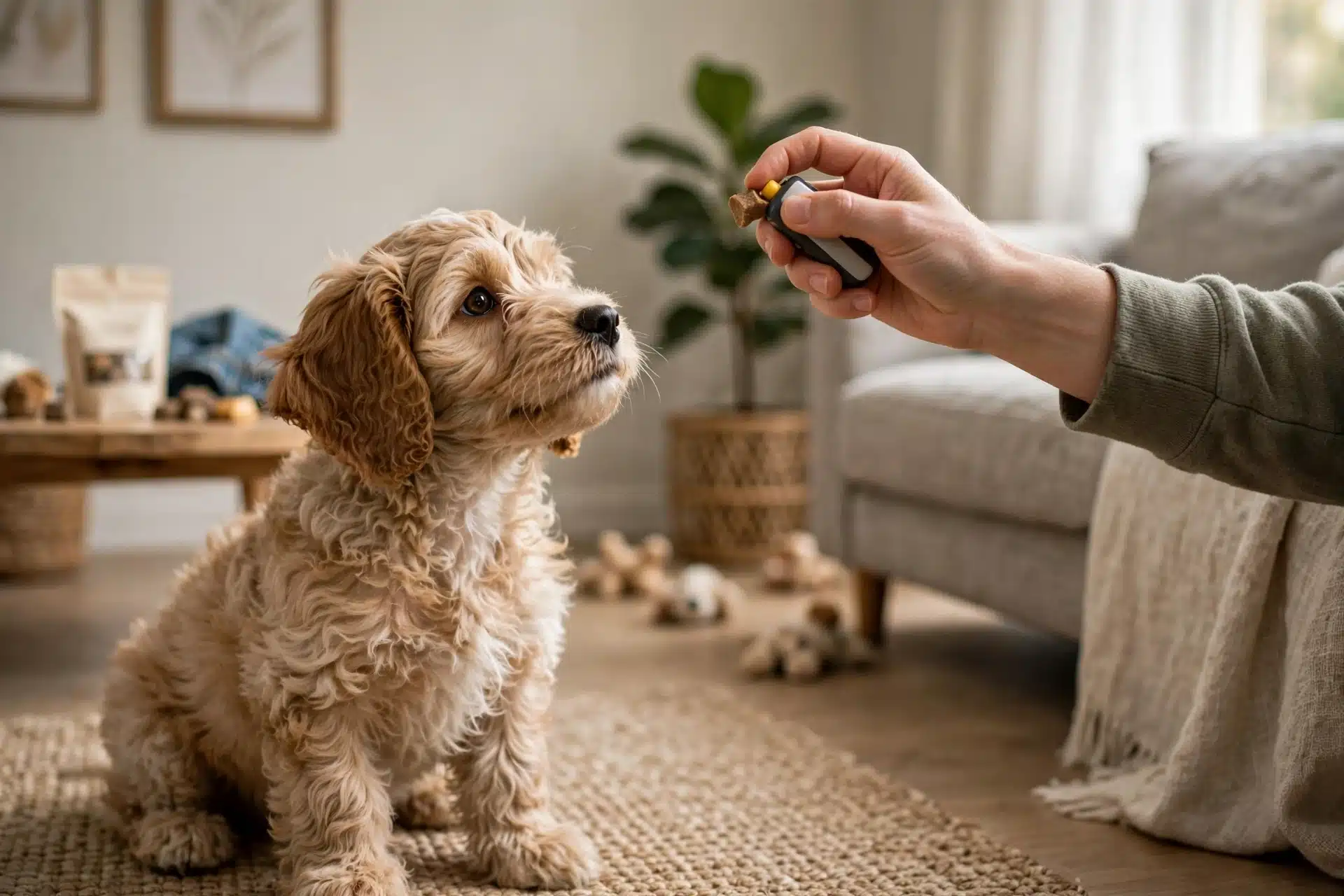
Pick one word, usually “yes,” and follow it with a treat within one second, every time. Load it first: say the word, feed a treat, repeat ten times with no behavior asked. Your puppy learns the sound predicts food, so the word itself becomes the reward, according to VCA Hospitals’ training basics.
Sit and Loose-Leash Orientation
Lure a sit by moving a treat slowly over your puppy’s head, then mark and reward the instant its rear touches the floor. For leash work, clip on a light harness indoors first. Reward your puppy whenever it walks beside you or glances up at you, instead of pulling. Outdoor sessions wait until your vet clears them, since vaccine timing limits where young puppies go.
Structuring Sessions of a Few Minutes
How long should Havapoo training sessions be? Keep each one to one to five minutes, spread over several short blocks a day, matching what trainers recommend for young puppies. End while your puppy still wants more, and success will follow. If three sits go smoothly, that block was long enough.
Week 4: Recall, Name in Distraction, and Grooming Cooperation
Week 4 is when puppy recall training and name response start working outside a quiet room. Your Havapoo now knows your voice has value, so you can add mild distraction. Brushing practice joins the schedule too, because Havanese and Poodle mixes need coats brushed several times a week for life. Milestones:
- Comes when called indoors, about 8 of 10 tries
- Turns toward her name with TV or kids in the room
- Stands calm for a two-minute brushing session
Building a Beginning Recall
Kneel, say her name once, then “come!” in a bright voice. Back up as she moves toward you, and reward with a treat at your knees. Never grab or scold when she arrives late. Practice five short rounds a day in a hallway, then a fenced yard.
Name Response in a Busy Home
Say her name when she is not looking, and mark the moment her eyes find you. Reward, then pause. Add noise gradually: radio on, family walking past, another pet nearby. Ten repetitions daily beats one long session.
Brushing and Handling as Training
Havapoo coats mat quickly, so brushing is daily life, not an occasional chore. Feed small treats while you brush one body section at a time, ending with the ears and paws. If your puppy squirms, shorten the session instead of holding her still. Our Havapoo vs Cavapoo grooming guide explains coat care in detail.
Week 5: Socialization With Health Conditions in Mind
Five weeks home, your Havapoo is about 13 weeks old and squarely inside the window that shapes adult temperament. The AVSAB position statement says the first three months matter most, so this week you widen your puppy’s world without risking her health.
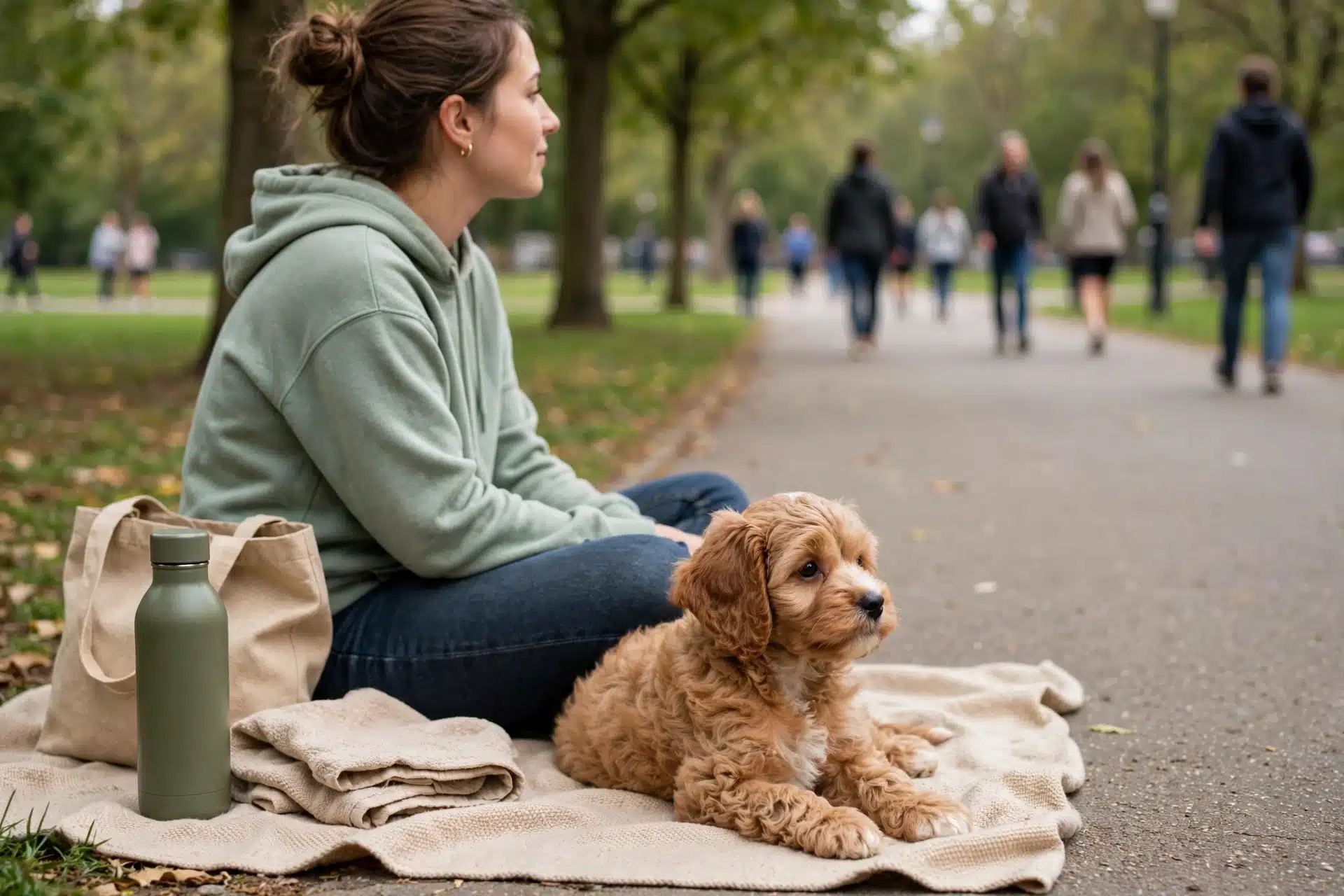
What Safe Socialization Looks Like at Five Weeks Home
Skip dog parks and unknown sidewalks. Instead, carry your puppy to pet-friendly stores, sit on a quiet park bench, and let her watch strollers, skateboards, and strangers. Ride in the car. Meet calm, vaccinated adult dogs you know. Every new sight gets a treat, so novelty predicts good things.
The Conditions Attached to Early Puppy Classes
When can a Havapoo puppy start socialization classes? Puppies can start as early as 7 to 8 weeks old, but only when these AVSAB conditions are met:
- At least one set of vaccines, given at least 7 days before the first class
- A first deworming, plus a clean fecal exam
- Class held indoors, on surfaces cleaned and disinfected before puppies arrive
Ask any trainer for their vaccination and disinfection policy before enrolling.
Reading Stress Signals and Adjusting
Watch for tucked tails, lip licking, yawning, freezing, or hiding. Those mean slow down, not push through. Give distance, let her observe, and reward calm glances. End each outing while she is still loose and happy, and the next one will be easier.
Week 6: Place, Wait, and Impulse Control
Teaching a Settle on a Mat or Bed
A Havapoo about 14 weeks old can now learn to stay put on cue. Toss a treat onto the mat, and when all four paws land, say your marker word and reward again. Add the cue “place” as you feed. Build to 30 seconds, then release with a cheerful “free.” Keep sessions under three minutes.
Goofing off is normal at this age. If your puppy pops off the mat, calmly guide him back without a reward, and try a shorter interval next round.
A Short Wait at Doorways and Gates
Wait teaches patience before freedom. Approach a closed door, and if your puppy sits calmly, reach for the handle. If he jumps up, reset and try again. The door only opens when he holds a sit for two seconds. Gates work the same way, which helps a lot during your crate training routine.
Teaching Disengagement and Leave It
Set a treat in your open palm and cover it when he lunges. When he backs off, reward from your other hand with a better treat. Then try the floor version, saying “leave it” as he sniffs. This skill, like every part of small breed puppy training, works best with reward-based training rather than corrections.
Week 7: Household Manners and Beginner Separation Comfort
Calm Greetings and Being Picked Up
Havapoos are small, so jumping up feels harmless now, but it becomes a habit fast. Ask for a sit before any greeting, then reward calm paws on the floor. Practice picking her up gently, one hand under the chest and one under the rear, and release her when she relaxes. Reward-based training works here: every calm moment earns a soft “yes” and a treat.
Building Alone Time Gradually
Begin true separation practice this week. Leave the room for 30 seconds while your puppy rests in her crate or pen, then return without fuss. Stretch the gaps slowly: one minute, then three, then five. Mix up the pattern, because predictable exits teach puppies to predict your leaving and worry about it. If she whines, you moved too fast, so drop back to the last duration she handled calmly.
Settling Into a Predictable Night Routine
Nights get easier now. Take her out for a final potty break at the same time each evening, dim the lights, and settle her crate in a quiet spot. Keep the last hour calm: no rough play or big meals late. Most small breed puppy training wins at night come from routine, not tricks, and a steady pattern helps her sleep longer stretches.
Week 8: Review the First Two Months and Set the Next Cycle
Running the Eight-Week Review
Sit down with a list and score each skill honestly. Can she come when called indoors about 8 of 10 tries? Does she settle in the crate without fuss? Note what slipped, too. Short sessions work best for small breed puppy training, so keep sessions under three minutes. If a skill is shaky, repeat the earlier week rather than pushing ahead. Steady beats fast with a Havanese and Poodle mix.
Moving Into a Continuing Training Cycle
Now shift from a fixed schedule to a repeating cycle. Pick three focus skills, like a reliable recall on a leash walk, a longer stay, and calm greetings with visitors. Train each one in one- to three-minute sessions spread across the day. Add new places every week, since a 14-week-old puppy learns fast but tires quickly. Reward-based training still runs everything: mark the behavior, pay the puppy, repeat.
Health and Vet Checkpoints to Keep
Book the next vaccine round your vet scheduled, usually around 16 weeks, and ask when rabies and the final booster land. Keep using the crate after meals and naps, because consistency protects your potty training schedule for an 8 week old puppy even as intervals stretch. Ask your vet about adult food timing and a spay or neuter plan. Once intervals hold steady, grooming visits join the routine, and coat care needs change as the adult coat grows in.

The first 8 weeks shape your Havapoo’s habits for life, and a clear week-by-week plan keeps you from guessing what to teach next. If you’re still choosing your puppy, Sage Puppies matches families with well-started Havanese, Havapoo and Cavapoo puppies from South Jordan, Utah. Start the application and bring this schedule home with your puppy.
Frequently Asked Questions
Q1: What is a good Havapoo training schedule for the first 8 weeks?
Focus on one skill per week: name response and routine, potty and crate work, marker word and sit, recall and brushing, socialization, impulse control, household manners, then a full review. Keep every session to one to five minutes, several times daily.
Q2: How long should each training session be?
One to five minutes, spread across several blocks a day. End while your puppy still wants more; if three repetitions go smoothly, that block was long enough.
Q3: When can my Havapoo puppy start puppy classes?
As early as 7 to 8 weeks old, provided she has one set of vaccines given at least 7 days before class, a first deworming, a clean fecal exam, and the class meets AVSAB hygiene standards.
Q4: What if my puppy fails a skill in the schedule?
Repeat that week instead of moving ahead. Steady beats fast with a Havanese and Poodle mix, and repeating an earlier week simply re-pays a skill your puppy found shaky.
Q5: When can I take my Havapoo on walks outside?
Wait until your vet clears public walking based on vaccine timing. Before then, carry your puppy past new sights and practice loose-leash skills indoors or in a fenced yard.
Q6: How do I stop potty training accidents after week two?
Watch the trigger signs: sniffing, circling, wandering. Take her out on the current interval, reward every success outside, and only stretch the gap by 15 minutes once accidents have dropped for a few days.
Conclusion
Eight weeks is short, but it sets the pattern for years. One skill focus per week, sessions of one to five minutes, and rewards every time your puppy gets it right will carry you further than any long drill. Routine beats intensity: steady potty trips, calm crate naps, and short name games build a puppy that wants to work with you. Review at week eight, repeat anything shaky, and move at her pace. Coat care belongs in the schedule too, since Havapoo coats need regular brushing for life, and our Havapoo vs Cavapoo grooming comparison breaks down what to expect. Keep training reward-based, and your Havanese and Poodle mix will grow into a calm, well-mannered companion.