Quick Summary: A Cavapoo can thrive in an apartment, but size matters less than coat care, daily exercise, bark training, and managing time alone. Toy-bred Cavapoos often weigh 7 to 14 pounds and need 30 to 60 minutes of movement spread through the day, plus regular brushing and professional trims. Before reserving a puppy from Sage Puppies or another breeder, confirm your building’s pet policy and request the puppy’s vet records, each parent’s health screening, and DNA results.
A Cavapoo can thrive in an apartment, but the deciding factor is rarely the dog’s size. It is your coat-drying routine, how many hours your home sits empty, and whether a 15-pound dog hearing hallway door slams all day can settle. The short answer on Cavapoo apartment suitability: these dogs rank among the better small breed dogs for apartments, if your building allows pets, your schedule covers daytime alone time, and you are honest about grooming. The Havapoo and Havanese, which we also raise here in South Jordan, share those traits with real differences between them. Every small companion breed in a search result looks the same on paper. This comparison shows where they genuinely differ, which questions to ask a breeder, and which traits no breed label can predict. It closes with a recommendation by household type and the health records to request before you reserve.
Cavapoo vs Havapoo vs Havanese for Apartment Living: At a Glance
| Cavapoo | Havapoo | Havanese | |
|---|---|---|---|
| Adult size | Published cross ranges run roughly 7 to 30 pounds depending on the Poodle parent size, with toy-bred lines commonly landing in the 7 to 14 pound range and 9 to 12 inches at the shoulder | Typically a small dog in the roughly 7 to 15 pound range, depending on the Poodle parent | AKC standard puts height at 8.5 to 11.5 inches at the withers, with an ideal nearer 9 to 10.5 inches, and adults commonly weighing around 7 to 13 pounds |
| Energy and exercise needs | Moderate; generally content with two or three short walks plus indoor play, but the Poodle parent often adds more drive than the Cavalier parent | Moderate to higher, with the Poodle parent contributing play drive and a documented tendency to bark when left without attention | Moderate; lively indoors and comfortable with short outings, and often described as needing somewhat less daily activity than the Havapoo |
| Coat and grooming | Wavy to curly coat needing regular brushing and scheduled professional trims, with shedding varying by line | Soft, wavy to curly double coat that needs frequent brushing to prevent matting, with low shedding in many lines | Long, silky single coat with little undercoat that sheds minimally and needs daily brushing to keep it from matting |
| Noise and barking | Variable; many are alert and vocal, so bark training from an early age matters in shared walls | Often vocal when under-exercised or left alone, though generally trainable once a household routine is set | Alert and sometimes a confident bark for its size, so early training is worth the effort |
| Best apartment scenario | Owners who want a small, cuddly dog and can commit to coat care and bark training | Allergy-conscious owners in apartments who want a cooperative dog and will manage daily exercise and coat care | City households wanting a people-oriented dog with low shedding and no backyard requirement |
How Cavapoo, Havapoo and Havanese Compare for Apartment Life
Cavapoo
A Cavalier King Charles Spaniel and Poodle cross, the Cavapoo suits apartment dwellers who want a small, affectionate companion with moderate exercise needs. Toy-bred lines commonly land at 7 to 14 pounds, so cavapoo apartment suitability hinges more on coat care and bark training than on size.
Key strengths
- Small, cuddly and moderately active
- Content with two or three short walks plus indoor play
Havapoo
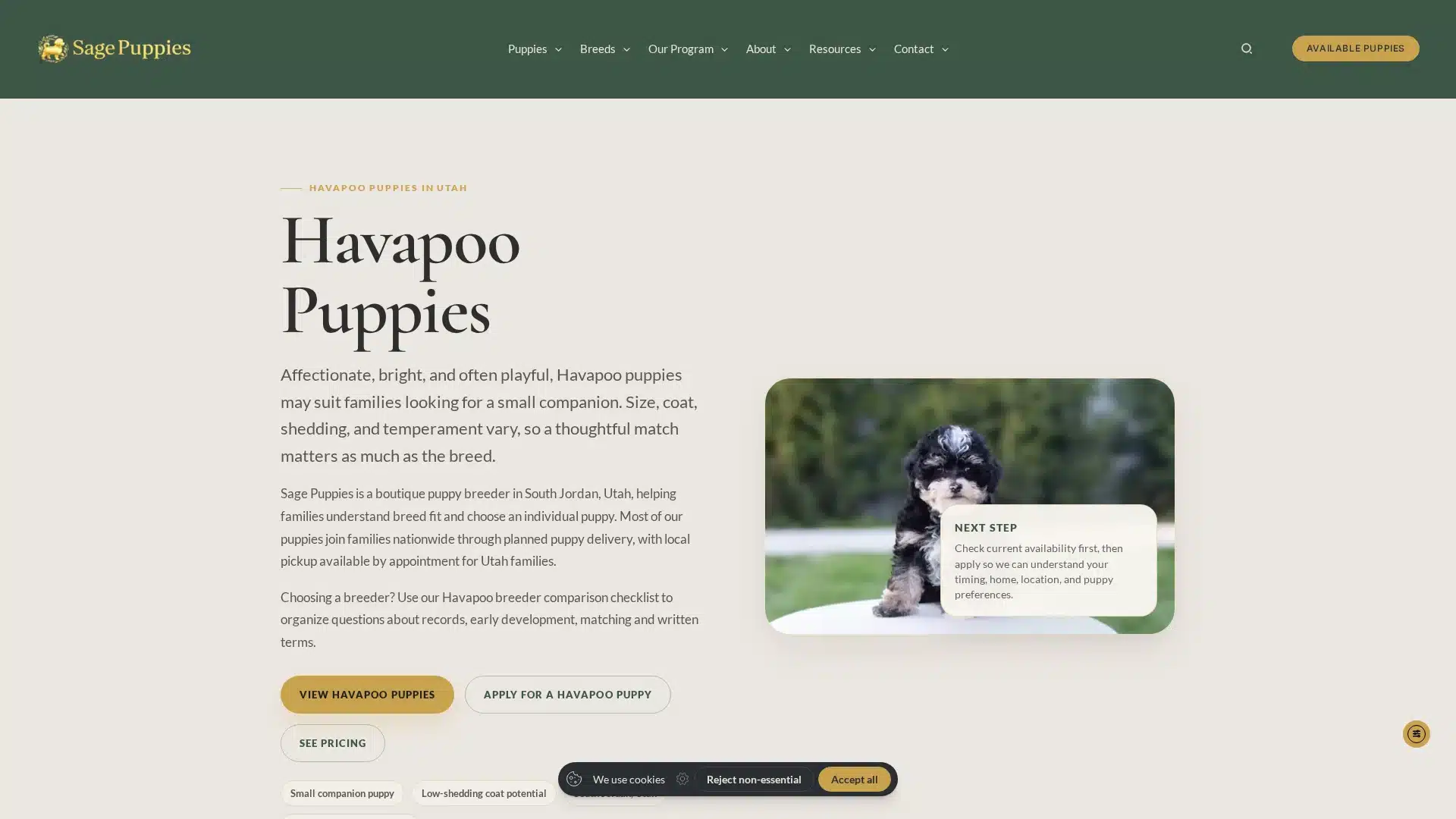
The Havapoo blends Havanese and Poodle lines into a low-shedding, trainable dog of roughly 7 to 15 pounds. It fits allergy-conscious apartment owners who will keep up daily exercise and brushing.
Key strengths
- Cooperative and quick to learn a household routine
- Low shedding in many lines
Havanese
A Cuban-origin toy breed, the Havanese is a vivacious, sociable companion well suited to city living, standing 8.5 to 11.5 inches tall. It works best for households wanting a people-oriented dog with minimal shedding and no backyard requirement.

Key strengths
- Lively indoors but content with short outings
- Long, silky coat that sheds minimally
Size and Weight: Will a Cavapoo Actually Fit in Your Apartment?
Yes, a Cavapoo can fit in almost any apartment, because even the larger adults stay under 20 pounds. The real question is not floor space. It is which size line you are getting, because “Cavapoo” covers several very different dogs.
Why Published Cavapoo Size Ranges Are So Wide
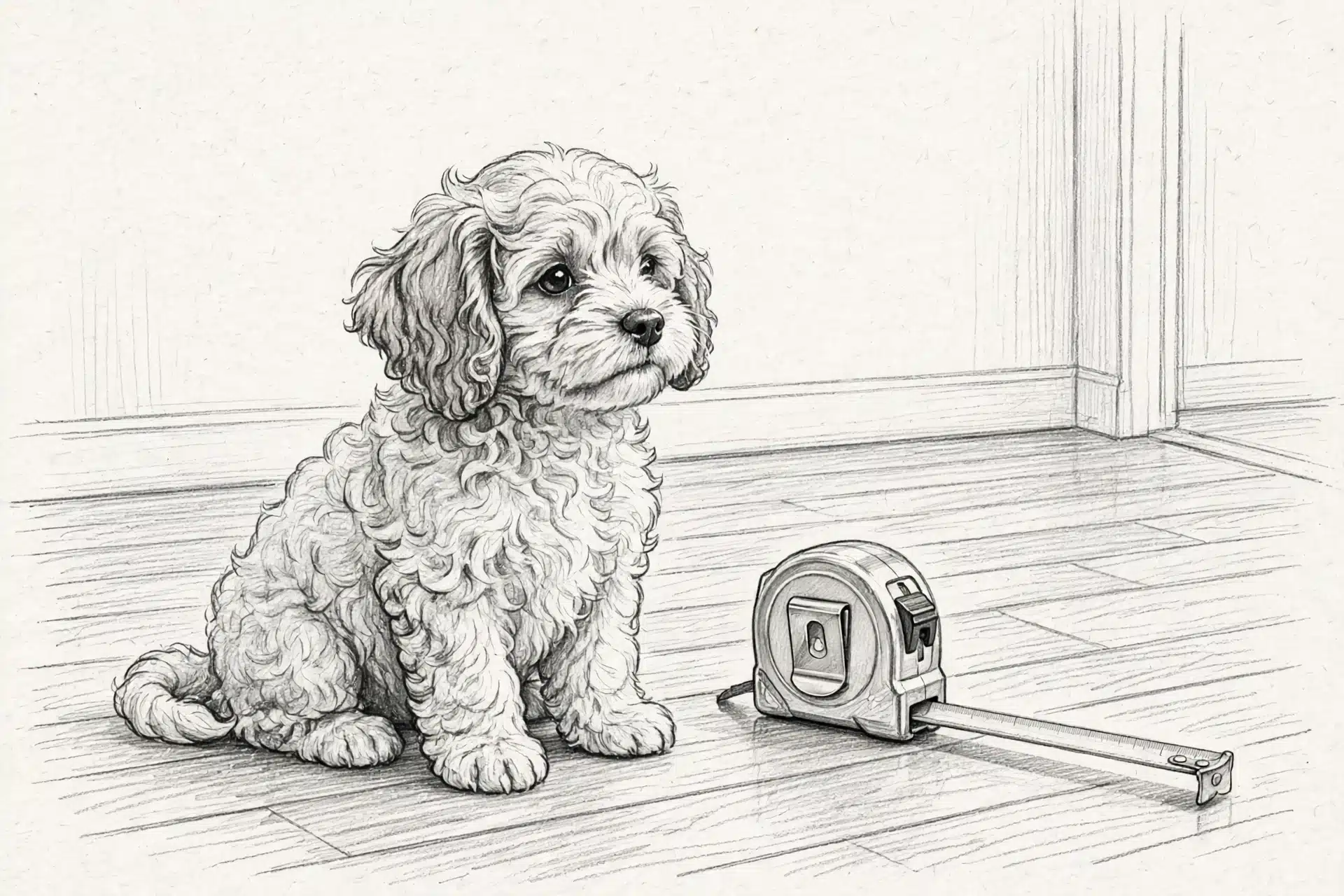
Any honest range is wide because a Cavapoo is a crossbreed, not a standardized breed with a fixed blueprint. Toy-bred lines commonly land at 7 to 14 pounds, while crosses built on a mini Poodle parent can push toward 20 pounds or more. Your puppy’s adult size tracks the Poodle parent’s size, so ask which parent was used. A breeder who knows both parents can give you a real estimate; one who cannot is guessing.
The Measurements That Matter More Than Weight
Weight alone hides what actually matters in a small unit. These three numbers tell you more:
| Measurement | Why It Matters | What to Ask |
|---|---|---|
| Height at shoulder | Sets clearance under tables and for a crate | Expected adult height range |
| Body length | Decides bed and carrier sizing | How long the parents measure |
| Grooming footprint | Towel, dryer, and table space in a bathroom | Coat type and upkeep plan |
A 9-pound Cavapoo with a thick, fast-growing coat needs more of your apartment than a lean 14-pound one with a wavier, lower-maintenance coat. That is why cavapoo apartment suitability depends on care routines as much as size.
How Havapoo and Havanese Compare on Footprint
If you are weighing breeds, the Havanese sits at 8.5 to 11.5 inches tall and the Havapoo runs roughly 7 to 15 pounds, so all three dogs share a genuinely small footprint. None needs a yard. The differences show up in coat upkeep and vocal tendencies rather than square footage. Cassie Milar’s Sage Puppies breeds all three, which helps when families want to compare adult-size expectations side by side before reserving a puppy.
Energy and Exercise Without a Yard
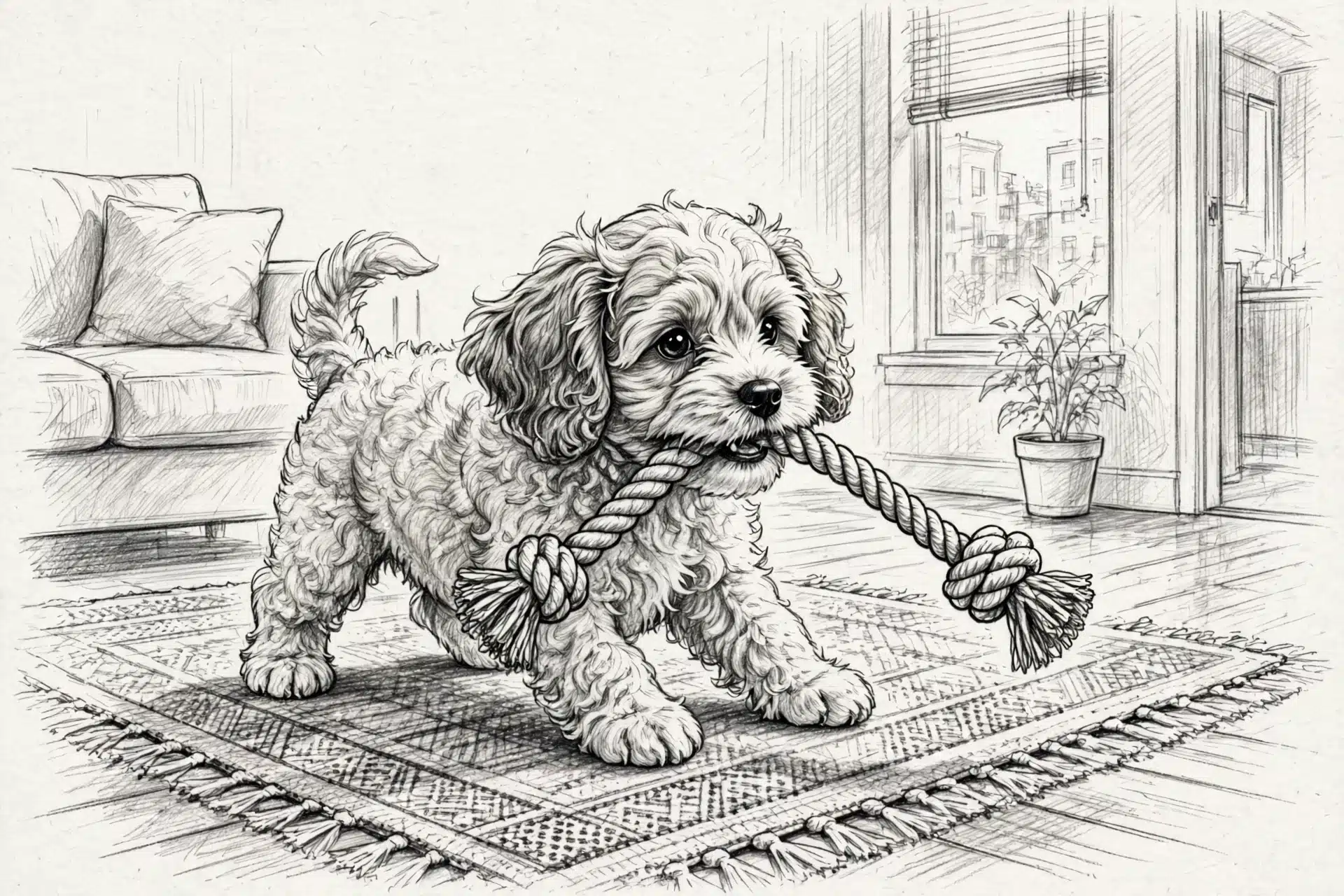
A small dog can stay fit in a one-bedroom apartment, but only if you replace the yard with structured activity. That means scheduled walks, short indoor play sessions, and mental work like puzzle feeders or training reps. Most toy-bred crosses need 30 to 60 minutes of movement spread across the day, not one long outing. Two or three brisk 15-minute walks plus a game of fetch down a hallway will cover it. Puppies under six months need shorter, gentler bursts because their joints are still growing.
What Apartment-Only Exercise Actually Looks Like
Plan the day around three anchors: a morning walk before work, a midday potty and sniff break, and an evening play session. Inside, rotate two or three toys so novelty keeps your puppy engaged. Sniffing tires a dog faster than running, so let walks be slow and exploratory rather than rushed. Stair climbs count as exercise, but keep them brief for young puppies. On bad-weather days, hide treats around the living room or run five minutes of basic obedience drills. Tiredness from thinking works as well as tiredness from sprinting.
How the Three Breeds Differ in Indoor Drive
The Havanese brings the highest energy of the three and wants to be in the middle of everything, so it thrives on interactive games rather than solo play. The Havapoo usually sits in the middle: playful and quick to learn, but content to settle after a solid session. The Cavapoo tends toward the calmer end, often happiest with a couple of walks and a lap to curl up on. None of the three needs a yard to burn energy, and none is a couch ornament either.
Reading Your Puppy’s Real Activity Level
Breed tendencies are a starting point, not a promise. Watch your own puppy. A dog that zooms through the apartment at 8 p.m. needs a longer evening walk. One that naps through dinner guests is probably getting enough. Restlessness, pacing, and nuisance barking usually signal unmet exercise needs rather than a bad temperament. Adjust weekly, and err on the side of more mental work over more physical mileage for young puppies.
Coat Care, Shedding and Grooming in Small Spaces
Why Coat Type Changes Your Apartment Routine
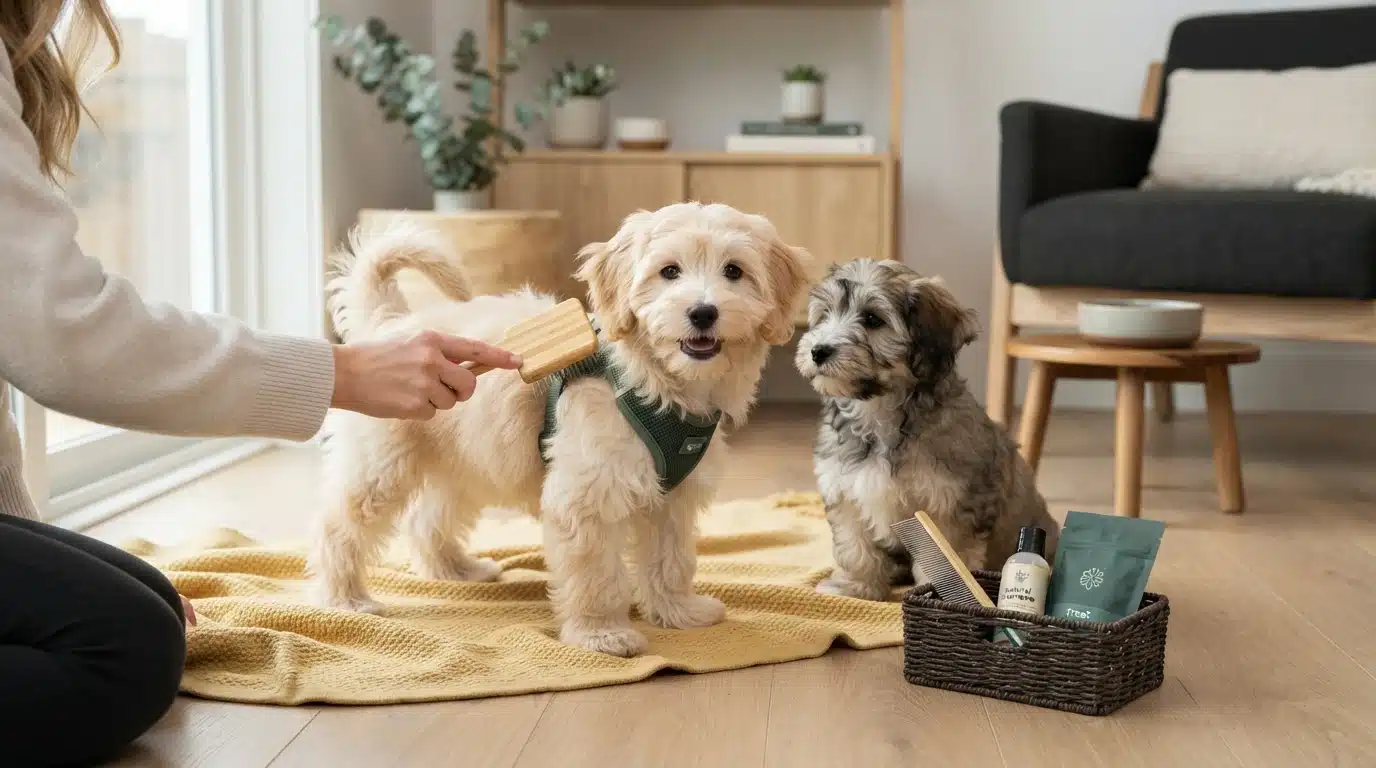
A Cavapoo’s coat comes from two breeds, so littermates can differ. Some inherit the Poodle’s tight curls, while others get the Cavalier’s silkier wave. Curly coats mat fast and need brushing every day plus a professional trim every six to eight weeks. Wavier coats can stretch to every other day. Whatever your puppy has, set the schedule early, because a neglected coat turns into shavedowns, and a shaved dog feels every draft near your balcony door.
Bathroom, Hair and Drying Logistics
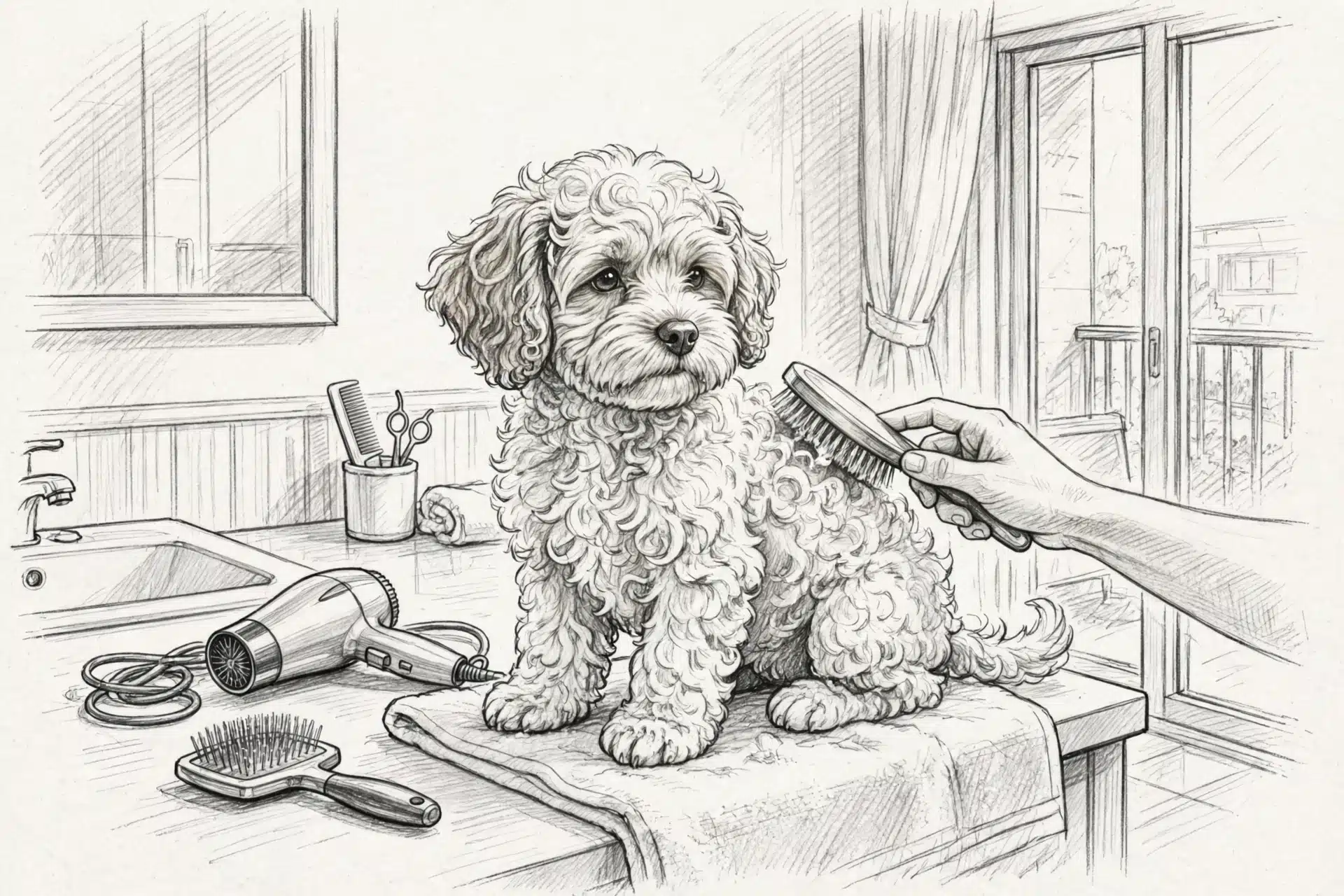
In a small apartment, grooming is mostly a space problem. Bathing a 10-pound puppy works fine in a utility sink or a shower with a handheld sprayer. Drying is the real bottleneck: a damp dog in a crate smells like wet wool within hours. Use absorbent towels first, then a low-heat dryer or a quiet pet dryer to finish. Lay one washable mat under the table so loose hair lifts off in one shake instead of embedding in carpet.
Shedding Expectations and Allergy Questions
Most Cavapoos shed very little, but no Poodle cross is truly non-shedding, and coat type can shift as the adult coat grows in around 8 to 12 months. If allergies matter in your home, spend time with the puppy before you commit and wash your hands after contact. Breeders who know their lines, like Sage Puppies, can tell you which coat textures their past litters have carried, though no one can promise a reaction-free dog.
Noise, Etiquette and Sharing Walls With Neighbors
Why Alert Small Dogs Make Noise
Cavapoos come from two breeds that watch everything. Cavaliers were bred to be companions, so they announce visitors. Poodles are sharp, quick to alarm, and quick to learn habits, good or bad. Put those traits in a puppy that hears every hallway door slam and you get a dog that barks at footsteps, elevators, and neighbors in the stairwell. The barking is not bad behavior. It is a watchdog reflex with no off switch yet, and your job is to give it one.
Training Plans That Work in Small Spaces
Start the week your puppy comes home. Teach a “quiet” cue by letting your puppy bark once or twice, then marking silence with a treat. Reward calm before the bark starts, because prevention beats correction.
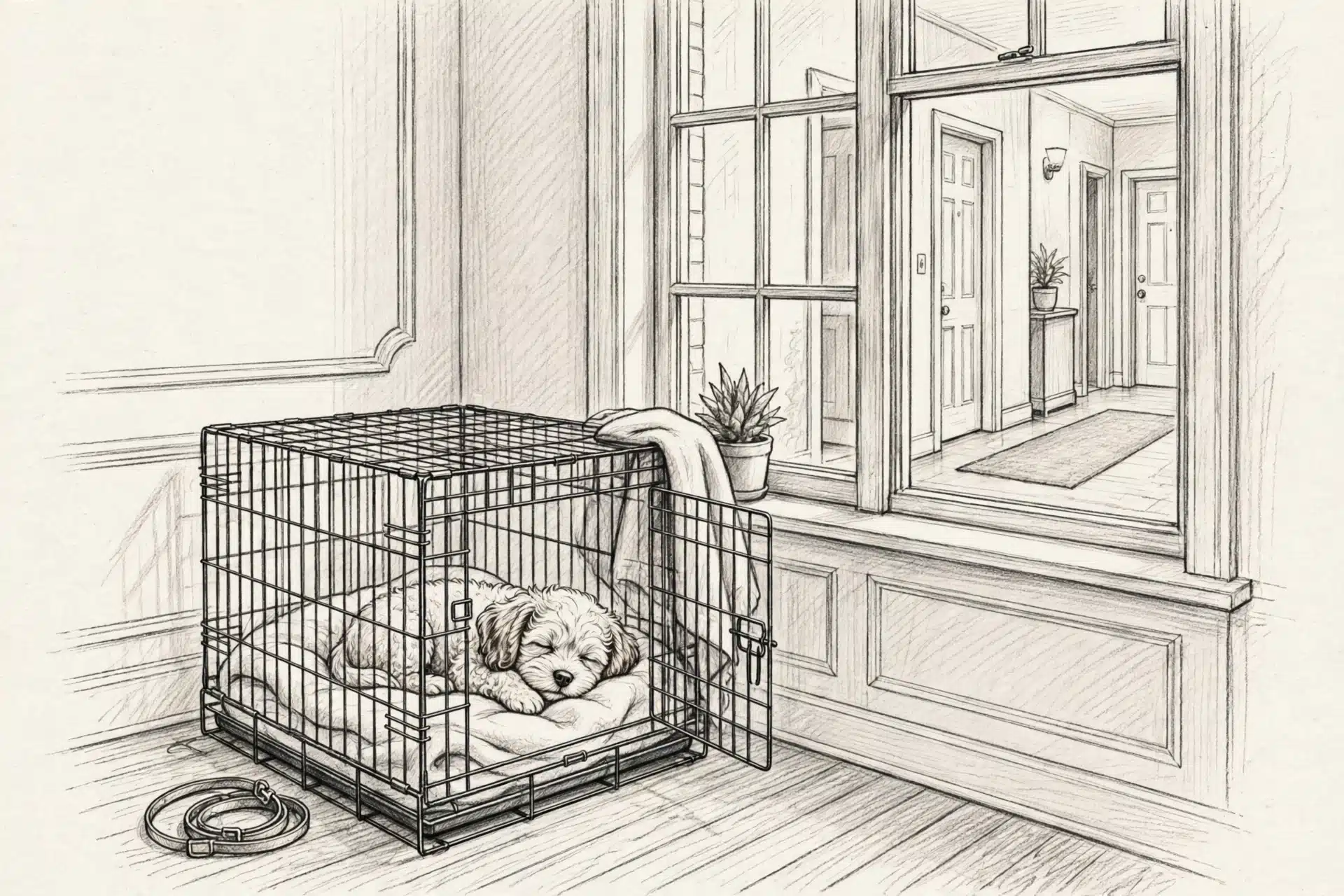
Pair that with crate training for small breed puppies so alone time feels safe, not like abandonment. Block the view of the hallway with a frosted window film or rearrange furniture away from the door. A white-noise machine masks hallway sounds cheaply. Short, planned absences build tolerance, so leave for five minutes, then twenty, then a full workday block.
Never punish barking by yelling. To your puppy, you are just barking louder.
Talking to Your Building Before You Bring a Puppy Home
Read your lease before you fall in love with a puppy photo. Many buildings cap pet weight, require pet rent or a deposit, or limit dogs per unit, so confirm the details in writing. Ask about designated relief areas and any breed restrictions that could apply to a Poodle cross. A short, friendly note to adjacent neighbors, with your contact information, turns complaints into patience while your puppy learns the quiet routine.
Alone Time, Work Schedules and Crate Comfort
Crates and Playpens in a Small Apartment
A crate gives your puppy a den, not a jail cell. Pick one just big enough for standing and turning, then add a playpen around it for longer stretches. In a studio or one-bedroom, fold-flat pens tuck behind a sofa, so the setup never dominates the floor plan. Never use the crate as punishment; feed meals inside it and keep the door open at first. Good crate training for small breed puppies builds calm, not fear.
Midday Breaks, Dog Walking and the Nine-to-Five Question
Adult dogs handle a workday better than puppies. A young Cavapoo’s bladder needs a break every few hours, so plan a midday visit, a dog walker, or a lunch-trip home. Adults can stretch to six or eight hours, but that is the ceiling, not the goal. If your puppy alone time work schedule leaves the dog crated ten hours daily, rethink the timing before you commit. Doggy daycare twice a week often fills the gap.
How Breed Tendencies Shape Separation Comfort
Cavaliers and Poodles both bond hard, so some Cavapoos struggle when left alone. Watch for pacing, whining at the door, or house soiling after short test departures. Build tolerance slowly: step out for five minutes, then twenty, then half a day. A worn shirt in the crate and a frozen treat at exit help. If distress stays high after weeks, ask a trainer about separation anxiety rather than waiting it out.
Which Should You Choose for an Apartment?
The Right Choice by Household Situation
Match the dog to your schedule, not just your square footage. A toy-bred Cavapoo in the 7 to 14 pound range suits solo owners and couples who can break up the day with walks. Families with kids often do better with a sturdier mini-bred cross, since small children handle a 15-pound dog more easily than a 7-pound one. If you work from home and want a velcro companion, either works. If you are gone long hours, plan for a dog walker or midday break regardless of breed, because all three sizes in this guide struggle with a full day alone.
What to Request Before You Reserve
Ask any breeder for three separate record groups before you put money down:
- Puppy’s own records: current vet exam, vaccinations, and deworming history
- Each named parent’s screening: results matched to the correct parent breed, such as annual eyes, hips, and patellas for the Havanese line, plus cardiac screening for the Cavalier line
- DNA variant results: panel reports for both parents, kept distinct from the exam records
A good breeder walks you through these without hesitation. Sage Puppies publishes its parent health screening through a dedicated health-testing page, so you can review lineage records before you ever commit.
Next Steps With Sage Puppies
Once your building clears the pet policy, the pricing and reservation page walks through the application, current litter availability, pickup in South Jordan, and national delivery options.

If those questions made you pause, that is a good sign. At Sage Puppies, Cassie matches each Cavapoo puppy to the home it will actually live in, including apartments. Start the application, ask your hardest questions, and find out whether one of her toy-bred pups fits your space.
Frequently Asked Questions
Q1: Are Cavapoo puppies good dogs for apartments?
Yes. Cavapoos rank among the better small breed dogs for apartments when three conditions hold: your building allows pets, someone breaks up daytime alone time, and you commit to coat care and bark training.
Q2: How big does a Cavapoo get?
Toy-bred lines commonly land at 7 to 14 pounds. Crosses built on a mini Poodle parent can reach 20 pounds or more, so ask which Poodle parent was used.
Q3: How much exercise does a Cavapoo need without a yard?
About 30 to 60 minutes spread across the day. Two or three brisk 15-minute walks plus indoor play or sniffing games cover it.
Q4: Do Cavapoos bark a lot in apartments?
Many are alert and vocal, especially with hallway noise. Teach a quiet cue early, block door views, and use white noise.
Q5: How much grooming does a Cavapoo need?
Daily brushing for curly coats, every other day for wavier ones, plus professional trims every six to eight weeks.
Conclusion
A Cavapoo fits almost any apartment in size, but success depends on your routines. Pick the right size line by asking which Poodle parent was used, plan 30 to 60 minutes of daily movement, and set up coat care and bark training from week one. Verify breeder health testing before you pay anything: the puppy’s vet records, each parent’s screening, and DNA panel results. Match the dog to your schedule, not the photo. Among apartment-friendly dog breeds, a well-bred Cavapoo works beautifully when those pieces are in place.