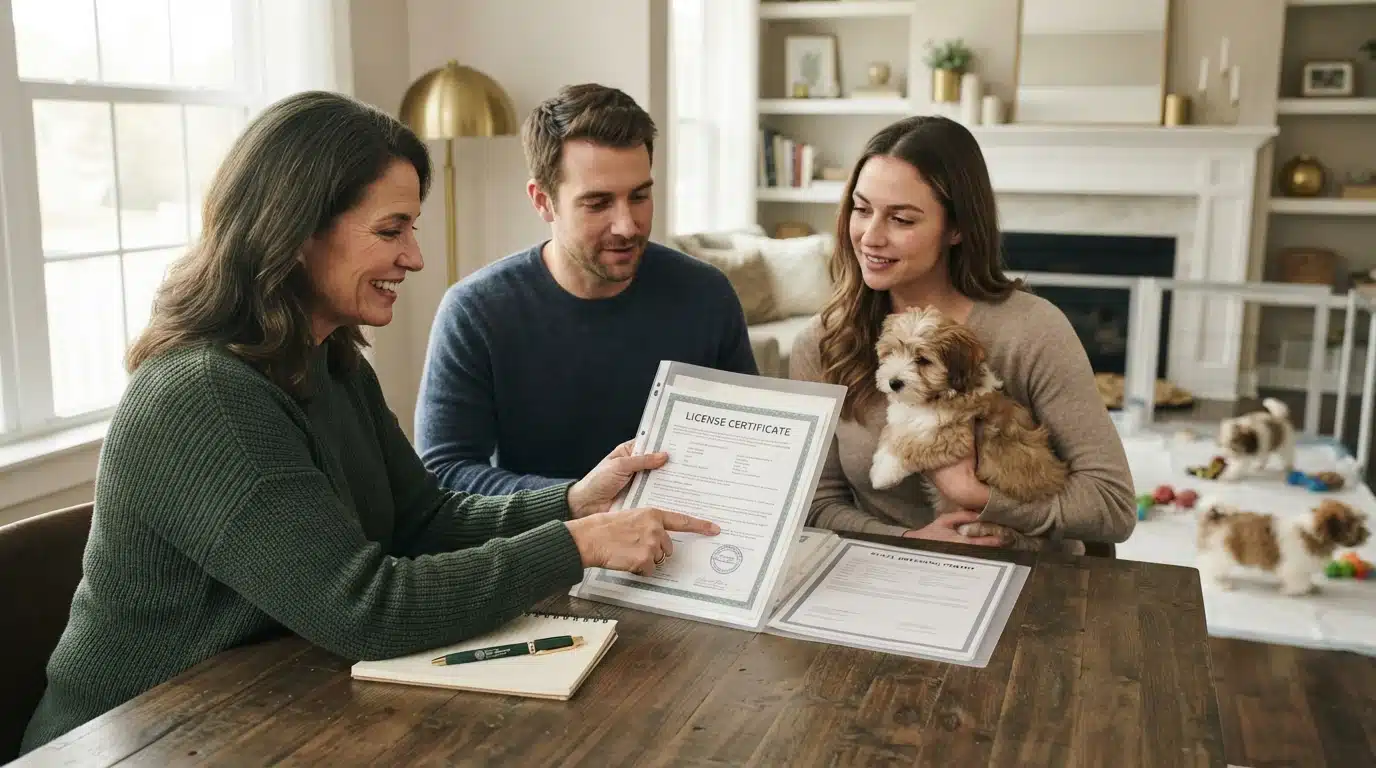
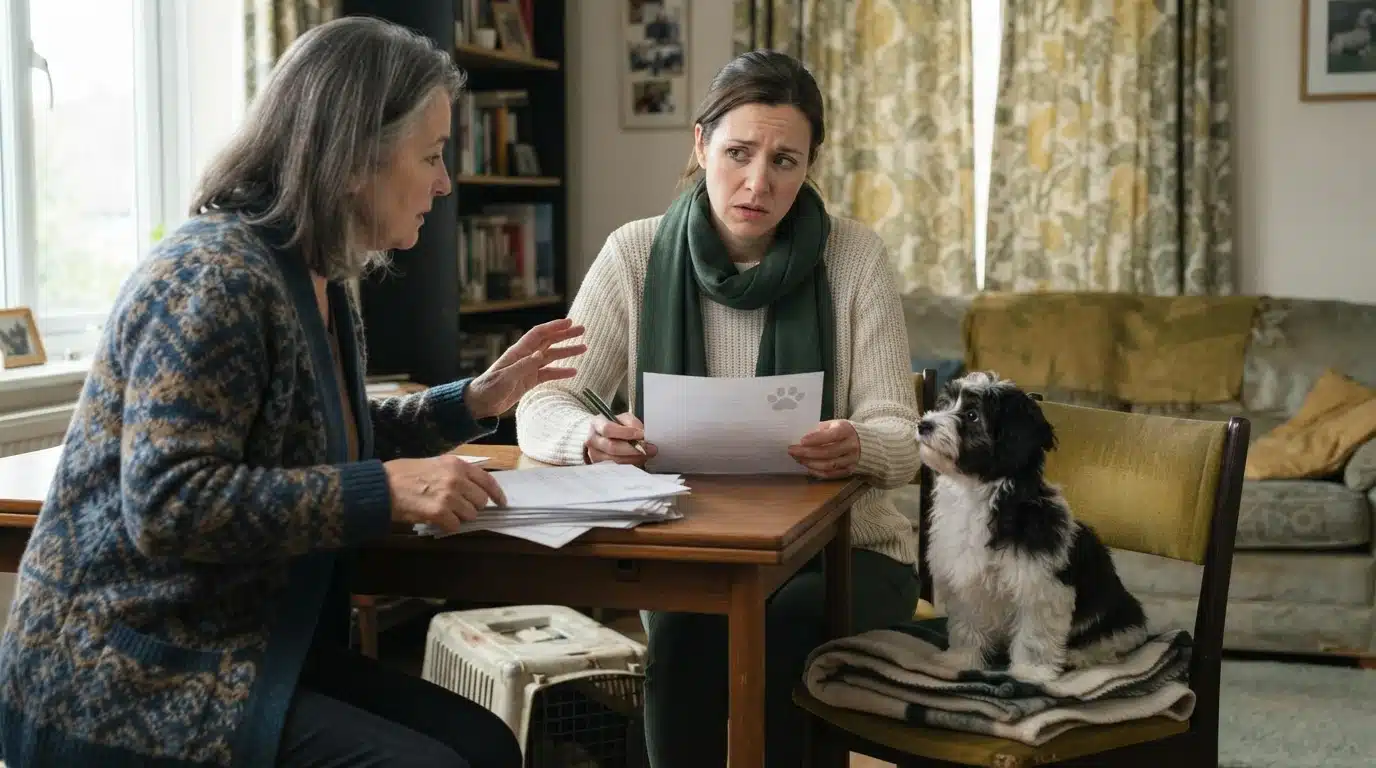
Quick Summary: A breeder’s license confirms regulatory oversight and minimum care standards, but it does not guarantee a healthy or well-socialized puppy. Unregistered sellers are not automatically unsafe, since small home breeders may legally fall below federal thresholds or use local permits, so buyers should verify vet records, parent health testing, contracts, deposits, and the puppy’s living conditions before paying. Sage Puppies, a registered Utah business with published pricing, health information, and an application process, illustrates how a small local breeder can provide records buyers can check directly.
A license number on a breeder’s website looks like a promise. But most small breeders in the United States never need one, and even a USDA license only applies above certain breeding-dog thresholds. For small-breed companion puppies, the paperwork a seller willingly shows you often says more than the license itself. That leaves buyers comparing licensed vs unregistered puppy sellers with no clear rule. Every listing claims the breeder is reputable, yet few first-time or experienced buyers know which credentials carry legal weight and which are pure marketing. This comparison lines up both seller types across verification, paperwork, health transparency, cost, and fit, then walks you through the exact steps to check either one before you send a deposit, including a worked example from a Utah small-breed program.
Licensed Breeder vs Unregistered Seller: At a Glance
| Licensed or locally permitted breeder | Unregistered puppy seller | Sage Puppies | |
|---|---|---|---|
| What you can verify | USDA APHIS inspection reports and license status, plus local kennel or breeder permit records | Mostly self-reported: photos, videos, references, and any records the seller chooses to share | Business entity record for Sage Puppies, LLC, published health testing and pricing pages, and Utah Division of Corporations business check |
| Paperwork to request | License or permit number, most recent inspection findings, business registration, written contract | Health and vaccination records, parentage and pedigree, written contract, and deposit terms | Application, pricing and reservation guide, health testing details, and pickup or delivery information |
| Health record transparency | Typically required to keep veterinary, vaccination, and record-keeping documentation under the license | Varies widely, so ask for veterinary records and have your own vet review them | Published health testing information with veterinary records reviewable before purchase |
| Cost and payment structure | Often a business with written contracts and deposit terms; pricing typically set by the breeder | Pricing may be lower or negotiable; payment terms are often informal | Puppy purchase prices in the $3,500 to $4,500 range set by breed |
| Best for | Buyers who want an independently checkable record before committing | Buyers able to verify records themselves and visit in person | Utah families picking up locally and buyers nationwide who want records and an application process upfront |
How Licensed Breeders and Unregistered Sellers Compare
The licensed vs unregistered puppy sellers question starts with knowing who you’re dealing with. Here are the three seller types compared in this guide.
Licensed or locally permitted breeder
This seller holds a USDA Animal Welfare Act license or a state, city, or county kennel permit. Anyone can check their inspection records independently. It suits buyers who want proof before they commit.
Unregistered puppy seller
This seller operates without a breeder license or kennel permit, which can mean a legal exemption or simply no inspection history. Almost everything you learn is self-reported. It works best for buyers who visit in person and verify records themselves.
Sage Puppies
Sage Puppies is a boutique Utah breeder in South Jordan offering Havanese, Havapoo, and Cavapoo puppies through an application and reservation process. Families can review published health testing, pricing, and Utah business registration records upfront.
How Licensed Breeders and Unregistered Sellers Differ
What the terms actually mean in the US
A “licensed” breeder holds a USDA license or a state permit. Under the Animal Welfare Act, breeders with four or more breeding dogs who sell pets sight unseen need federal oversight. In licensed vs unregistered puppy sellers, the unregistered seller may be a small hobby breeder who simply falls below those thresholds, or someone with no checks at all.
A worked example: a small Utah breeder
Utah has no statewide breeder license, so cities set their own kennel permit rules. A small South Jordan program like Sage Puppies, LLC breeding Havanese, Havapoo, and Cavapoo fits the local-permit model, not the USDA one. Legal status there comes from city permits, a Utah business registration, and reputable breeder practices rather than a federal certificate.
Is a Licensed Breeder Safer Than an Unregistered Seller?
Usually, yes, but not automatically. A license means a breeder passed an inspection and answers to a regulator, which removes some risk. It does not guarantee a healthy, well-socialized puppy. An unregistered seller can still be excellent, and a licensed kennel can still cut corners, so verify the person, not just the paperwork.
A license is worth choosing when:
- The breeder holds a USDA license or state kennel permit you can confirm
- Inspections are current, with no unresolved violations
- The program welcomes visits or video calls before you commit
An unregistered seller may still be fine when:
- They meet their state’s small-scale threshold that exempts them from licensing
- They share health testing records and let you meet the puppy’s parents
- They offer references from past puppy families
What a license actually reduces
Licensing lowers certain risks in concrete ways. A USDA or state license requires inspections, records, and minimum care standards under the Animal Welfare Act. You gain accountability: if something goes wrong, there is an agency to report it to. Licensed breeders must also document where puppies came from, so you get traceable lineage rather than a loose story. That paper trail matters if a health issue shows up later.
What a license does not cover
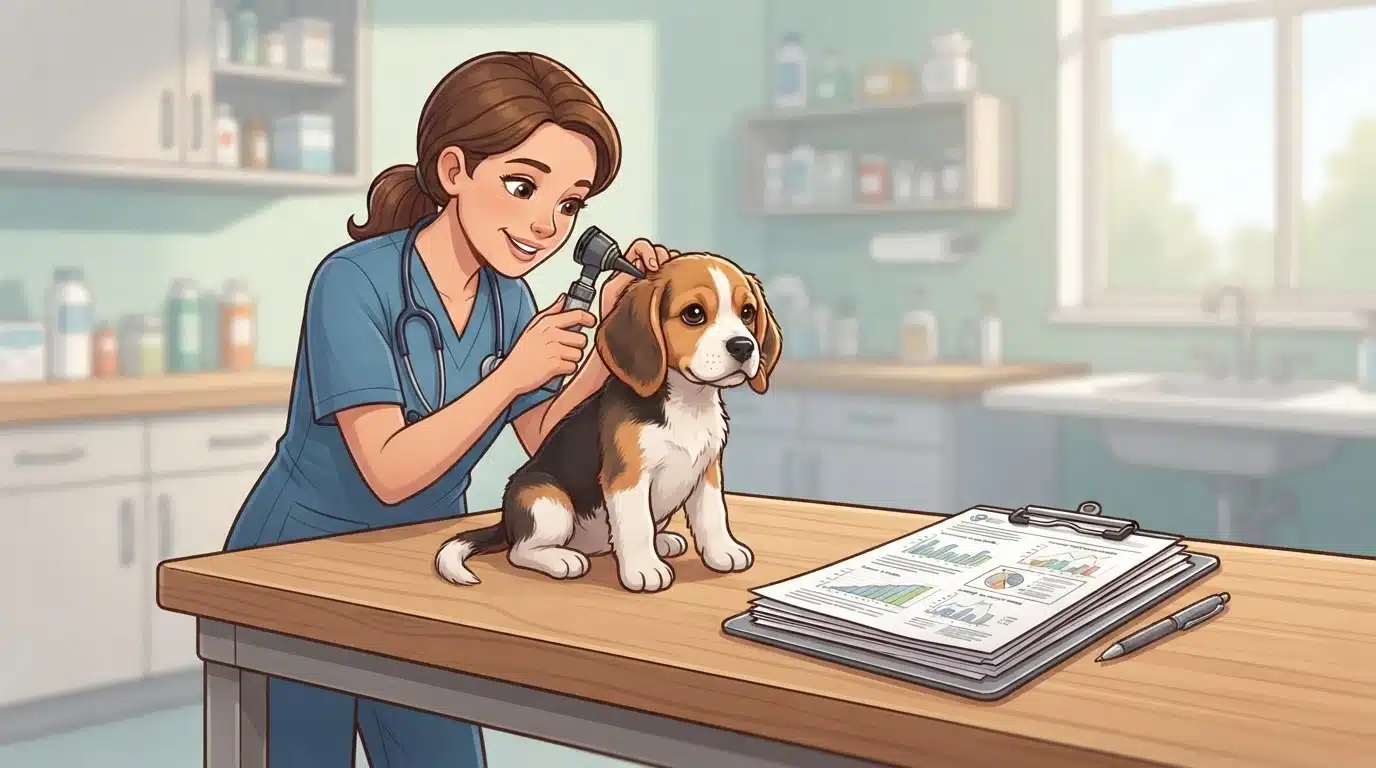
A license is not a health certificate. It does not guarantee genetic testing for Havanese, Havapoo, or Cavapoo lines, and it says nothing about how puppies are socialized in a home. It also does not cover contract fairness, so puppy contract and deposit terms still deserve your own review. Some large commercial kennels hold valid licenses while operating at a scale many families would call a puppy mill, so look at conditions yourself.
Why a license number alone proves little
Anyone can type a number into a listing. Scammers copy real kennel names and license details, so confirm the number yourself through the breeder license lookup rather than trusting a screenshot.
Federal and State Rules You Can Look Up
When USDA licensing kicks in
The federal Animal Welfare Act requires a USDA license for breeders with more than four breeding females who sell pets sight unseen or wholesale. That covers many online sellers who ship puppies without a face-to-face meeting. The rules set standards for housing, vet care, and inspections. You can read the thresholds in the AKC’s USDA licensing explainer, then search the breeder’s name in the USDA’s official Animal Welfare license database. Small programs that sell in person can be exempt, so a missing federal license is not proof of trouble by itself.
Why Utah buyers should look locally
So does Utah require puppy breeders to be licensed? The state itself issues no breeder license. Oversight comes from cities and counties through local kennel permits and animal control ordinances. A South Jordan program, for example, operates under city rules rather than a Utah state certificate. Ask any Utah seller which city or county permit applies to their address, then call that office to confirm it.
What other states do differently
Some states do license breeders at the state level, with dog-count limits, inspection rules, and permit fees. Iowa, Kansas, and Missouri are common examples. The state commercial breeder law table at Michigan State lists which states regulate and what each requires, so you can check the seller’s home state before you pay.
How to Verify Each Seller Type Before You Pay
Before any deposit leaves your account, run the same routine on both seller types. Here is how to check if a puppy breeder is licensed:
- Ask for the license number and business name in writing.
- Search that name in the USDA Public Search Tool.
- Confirm the state, address, and license status match.
- Read the inspection history.
- Ask your city or county clerk about local permits.
That takes about fifteen minutes.
The licensed-seller check
USDA licensing kicks in when a breeder keeps five or more breeding females and sells puppies sight unseen, so USDA guidance explains. Many good small programs fall under that threshold and hold only a state or city permit instead. Match what the seller claims to the record you find.
The unregistered-seller check
Unregistered does not automatically mean unsafe, but it shifts the verification work onto you. Ask for vet records with the clinic’s phone number, a written contract, and proof of health testing on the parents. Call the vet yourself. A seller who resists video calls, wants apps or gift cards, or keeps pushing a same-day decision is showing you red flags, not a deal.
Questions worth asking either seller
Ask who raised the puppy, where it slept, and how many litters the mother has had. Request the parents’ dates of birth and health test results. Our own document checklist lists what each answer should come with on paper.
Health Records, Contracts, and What You Are Really Paying For
Paperwork tells you more about a seller than any photo. A licensed breeder and an unregistered seller can both seem friendly, but only one usually produces documents you can check.
What the records should contain
Before you pay anything, ask for:
- Vaccination record with dates, product names, and the vet’s name
- Deworming dates and the medication used
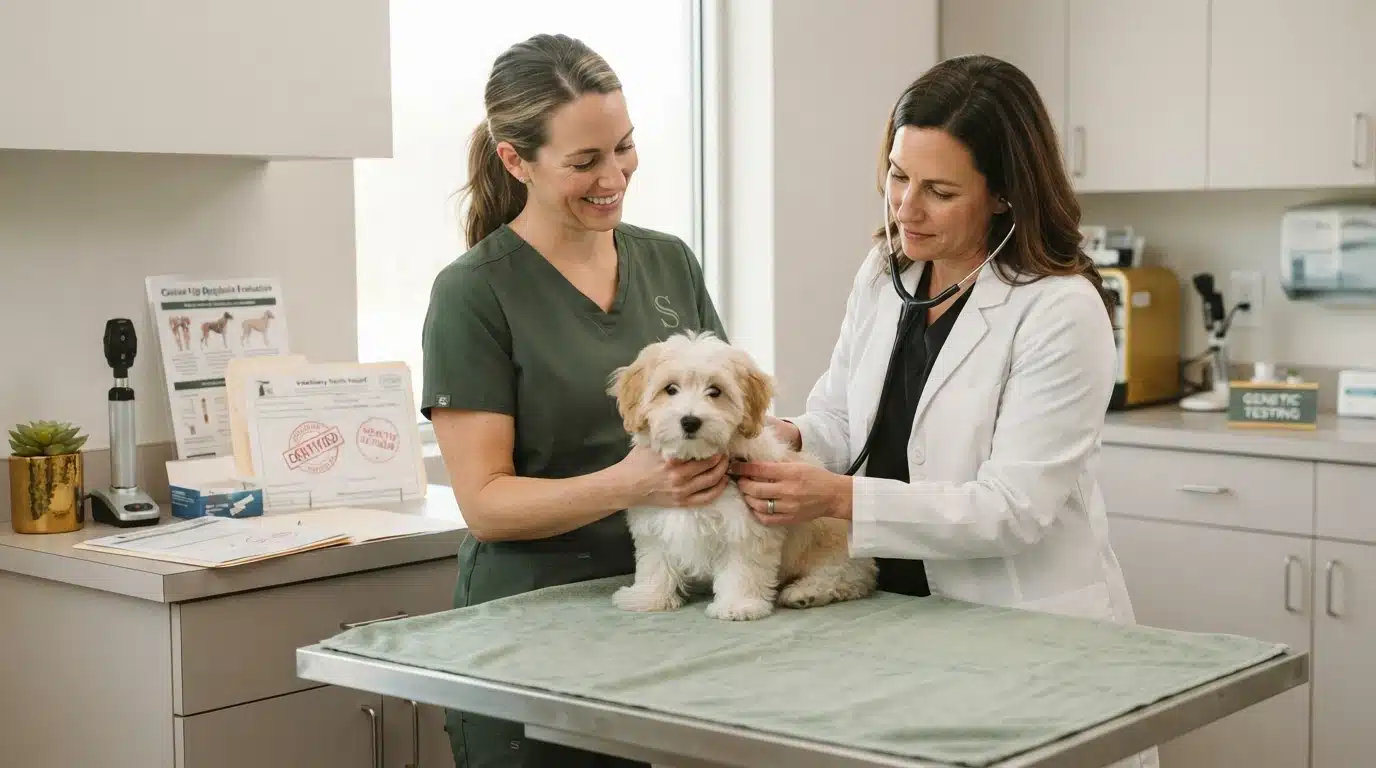
- A vet health exam dated within ten days of pickup or delivery
- Parent health testing results, especially for breeds like Havanese and Cavapoos
- Microchip number, if the puppy has one

If a seller stalls on these, that delay is your answer.
Contract and deposit terms
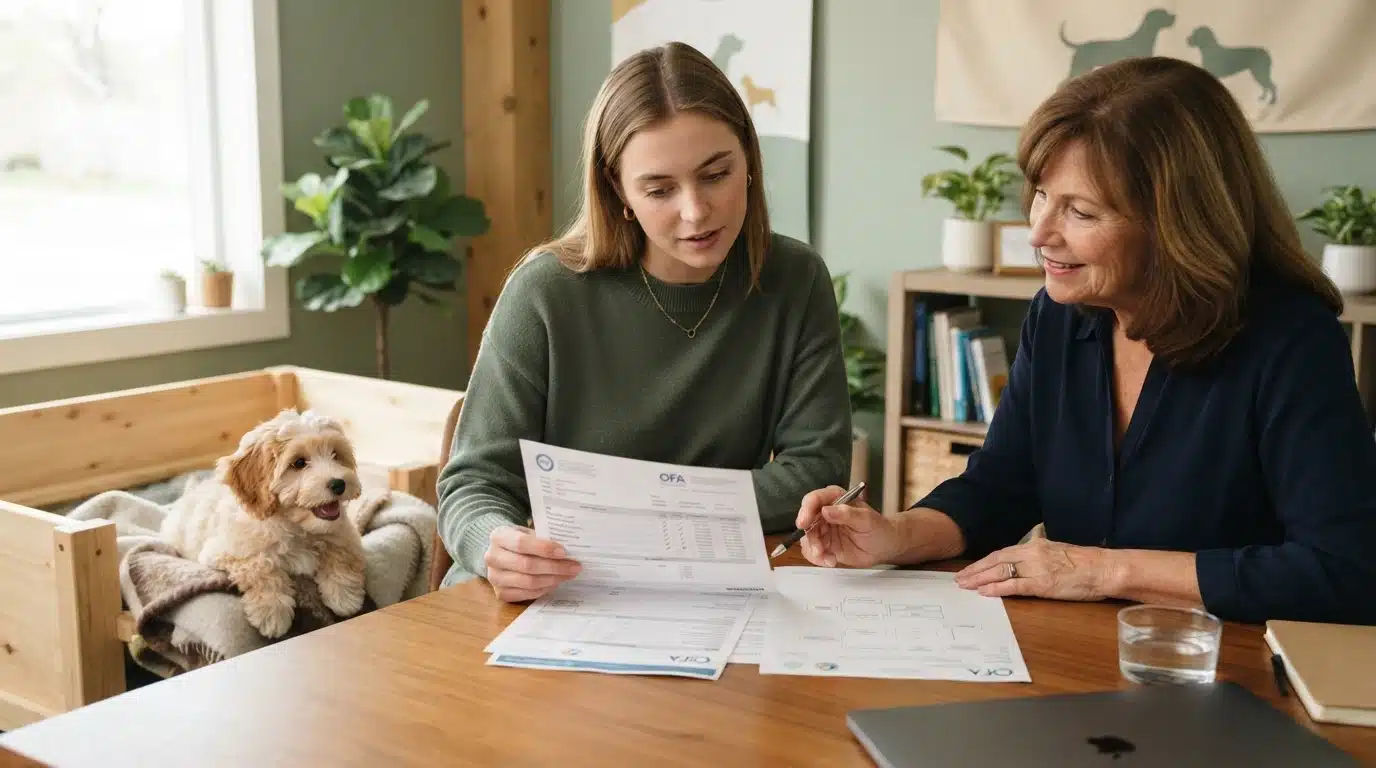
Get the deposit terms in writing: what it covers, whether it is refundable, and what happens if the litter changes. A written contract should state the price, spay or neuter expectations, a return policy, and any health coverage. Ask who signs it. If the seller avoids a written agreement or pushes full payment by app transfer, treat that as a red flag.
Reading price differences honestly
A higher price is not automatically better, and a bargain is not automatically a scam. Compare what the price includes: vet visits, testing, early socialization, and support after pickup. Sage Puppies lists its Havanese, Havapoo, and Cavapoo pricing openly, so families can see what they are paying for before they apply. Ask any seller to do the same.
Warning Signs and Red Flags in Both Categories
Signals shared by every seller
A few warning signs cut across both seller types. Walk away from anyone who won’t let you meet the puppy’s mother, refuses a video call, or pushes to meet in a parking lot instead of at the home where the litter lives. Missing vet records, vague vaccine dates, and pressure to pay by gift card or wire transfer matter too, since Humane World for Animals lists third-party meeting spots as a classic puppy mill warning sign.
Signals unique to unregistered sellers
With an unregistered seller, add these. Ask for the license or kennel permit number and see what happens. Someone selling dozens of mixed litters a year, offering puppies under eight weeks old, or shipping sight unseen with no contract fits patterns groups like Stop Online Puppy Mills flag as high-volume breeding. No health testing documents for the parents is another gap. A licensed seller should produce paperwork quickly; an unregistered one should at least explain exactly what their local rules require of them.
What to do when a seller pushes back
Pushback tells you a lot. A good seller answers questions plainly and keeps the door open for a second visit or call. If you get excuses, “the deal can close today” pressure, or anger at basic requests, pause the purchase and verify everything yourself first. Trust follows documents, not promises. A seller who volunteers vet records, parent photos, and contract terms before you ask usually earned that trust.
Which Should You Choose: Licensed Breeder or Unregistered Seller?
Neither label wins on its own. Licensing tells you a seller meets a legal floor, not that they raise healthy, well-socialized puppies. What matters is whether the seller can prove how the puppy was bred and raised. Match the seller type to your risk tolerance and how much verifying you want to do.
Choose a licensed seller when
- You want a legal paper trail and accountability. Licensed breeders answer to federal or state inspectors.
- You are buying sight unseen or using delivery, since a license adds a layer of protection across state lines.
- The seller keeps more than the breeding threshold of breeding females, which triggers federal licensing under the Animal Welfare Act.
- You want written contracts, deposit terms, and health records you can enforce later.
A license is your starting filter, not the finish line. Still verify health testing and ask to see where puppies live.
Choose an unregistered seller only when
- They fall under licensing thresholds, which is legal for small home programs in many states, including Utah’s local-permit system.
- They voluntarily show health testing results for both parents, veterinary records, and references.
- You can visit in person, meet the mother, and see the puppies’ environment.
- They answer hard questions directly instead of deflecting.
If an unregistered seller hides behind “private sale” to dodge every check, walk away. That phrase should never replace proof.
Where a boutique Utah breeder fits
Small boutique programs often sit between the two categories. A program like Sage Puppies in South Jordan operates as a registered business with an application process and owner-managed matching, while staying under federal breeding thresholds. Size alone does not tell you quality. Ask any small breeder for parent health testing, a written contract, and a visit or video call before you commit. The verification routine in the next section works on either seller type.

If a licensed breeder’s paperwork and an unregistered seller’s promises both leave you unsure, run the verification steps above on either one. When you want a program that already answers those questions, see Sage Puppies and start with the application.
Frequently Asked Questions
Q1: Is a licensed breeder safer than an unregistered seller?
Usually, but not automatically. A license confirms inspections, not puppy quality. Verify health testing, contracts, and how the puppies are raised either way.
Q2: Do Utah breeders need a state license?
No. Utah has no statewide breeder license. Oversight comes from city kennel permits, so ask which city permit applies and confirm it.
Q3: How do I check a breeder’s USDA license?
Ask for the license number in writing, then search the name in the USDA’s public database and match the address and status.
Q4: What documents should I request before paying?
Vaccination and deworming records, a recent vet exam, parent health testing results, a microchip number, and a written contract with deposit terms.
Q5: Are unregistered puppy sellers always a scam?
No. Small home programs often fall below licensing thresholds legally. They become risky only when they refuse records, visits, or video calls.
Conclusion
Neither label decides the question on its own. A license proves a breeder met a legal floor, not that the puppy is healthy or well socialized. An unregistered seller can be a legal small program, especially in Utah, where city kennel permits replace a state license. What matters is proof: health testing for both parents, vet records, written contract and deposit terms, and a visit or video call. Run the fifteen-minute verification routine on either seller type before any deposit. A boutique Utah program like Sage Puppies fits between the categories, registered as a business with published pricing and records, so buyers can check everything upfront and trust follows documents, not promises.