Quick Summary: Trust a puppy breeder’s paperwork and behavior, not its photos or charm. Verify licensing, parent health tests, veterinary records, the mother dog, and a written contract before paying, and treat pressure tactics, bargain prices, missing records, poor facilities, or untraceable payment methods as reasons to walk away. A pattern of excuses is more concerning than one weak answer, so meet the puppies in person or by live video and pay only through a traceable method.
A Havapoo listing with a sweet photo of the mother dog and a cheerful price is easy to find. The same listing can hide a puppy raised in a shipping crate three states away, and buyers who skim the pictures are the ones who lose their deposit. Learning how to spot a puppy breeder you can trust comes down to documents, not charm. This guide walks you through a step-by-step verification path, then lists 12 red flags when buying a puppy, grouped by where each one shows up: ads, records, contracts and payments. It draws on USDA APHIS licensing rules, a Better Business Bureau study of puppy scams, and ASPCA summaries of federal enforcement data, plus the daily experience of running a small Havanese, Havapoo and Cavapoo program in South Jordan, Utah. Use it before you send money to anyone.
How to Find a Reputable Puppy Breeder Near Me: A Verification Process
Finding a reputable puppy breeder near you works as a numbered process: gather referrals, verify licensing, screen the website, request records, meet the mother dog, and review the contract before any deposit. Each step filters out weak candidates, so you spend time only on breeders who can prove their program.

Start With Referral Sources, Not Search Ads
Paid ads put budgets in front of you, not quality. Start with your veterinarian, local breed clubs, and the national club for your breed, since these sources refer breeders who actually show their dogs and answer for them. AKC breed parent clubs keep breeder referral lists, and your vet sees which local litters come in healthy. If you want to see what to spot in a puppy breeder, work your referral list first, then compare those names against anything a search ad promised.
Screen the Website Before You Contact Anyone
A breeder’s site should tell you who raises the puppies, where, and with what proof. Look for real photos of the home and the mother, named parents, and health testing records such as OFA results. Cross-check the program against the USDA APHIS public search tool if the breeder ships puppies, since that applies to licensed facilities. A short site full of stock photos and no names deserves skepticism. When you know the website red flags to catch, half the weak programs drop out before your first email.
Request a Live Video Walkthrough and the Mother Dog
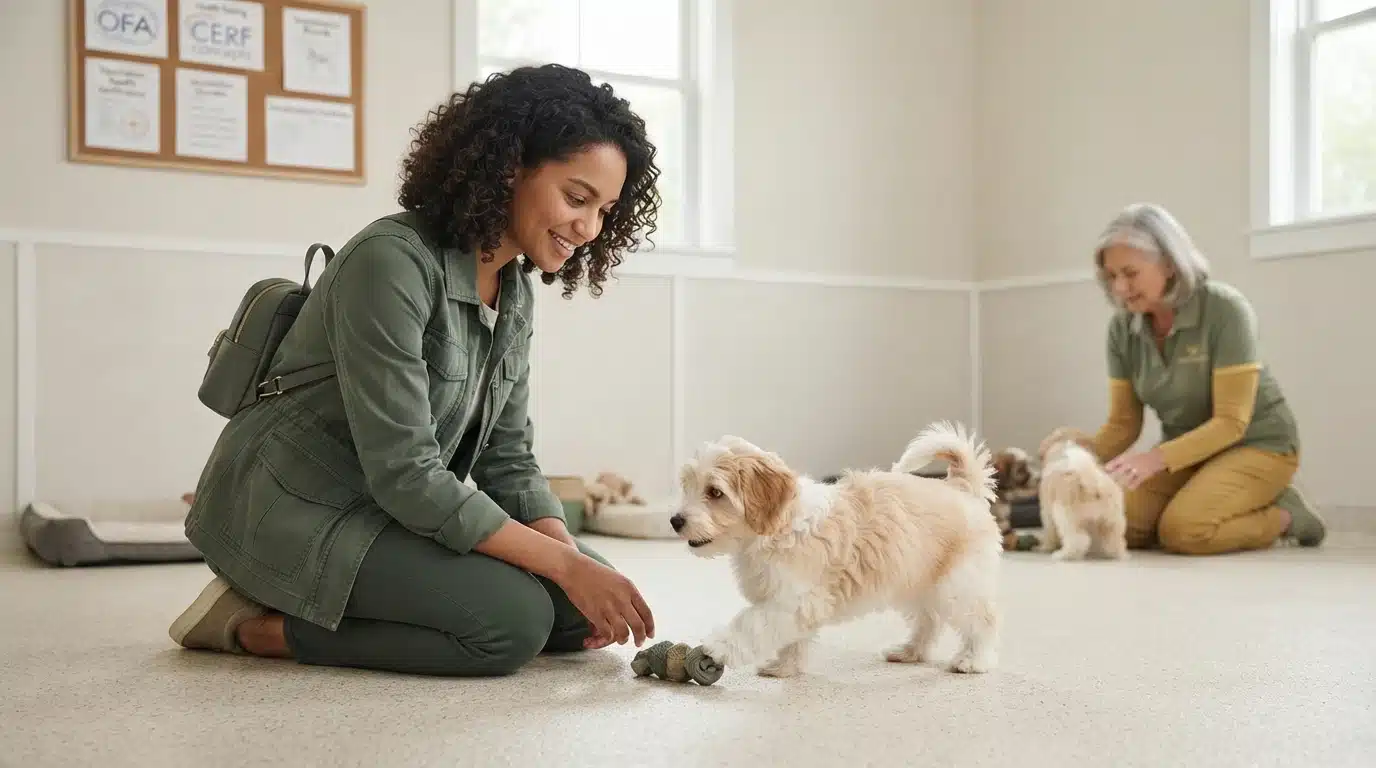
Photos can be borrowed, so ask for a live video tour of the whelping area and a chance to meet the mother dog on camera. See where puppies sleep, eat, and play, and watch how the mother behaves around people. A confident breeder says yes immediately; hesitation, excuses, or a demand for a deposit first is your clearest signal to walk away.
The 12 Red Flags: Behaviors That Should Stop Your Search
What are the 12 red flags when buying a puppy? Watch for these, grouped by where they appear:
- Constantly available puppies – litters always “ready now” for every breed
- Prices far below market – too good to be true, usually a scam
- No parent health testing – no OFA records for hips, eyes or heart
- Pressure tactics – “someone else is about to pay” urgency
- Refusing to meet the mother dog – puppies are not raised where claimed
- No vet records – missing vaccination and deworming paperwork
- Dirty or overcrowded facilities – neglected living conditions
- No license when one is required – no USDA APHIS or state license number
- Wire transfers or gift cards – untraceable payment demands
- No written contract – verbal promises only
- Unfair deposit terms – no refund policy in writing
- Shipping a puppy under eight weeks – unsafe and against federal minimum age rules for commercially moved dogs
Learning how to spot a puppy breeder means reading each flag alongside your verification steps. One odd answer may be ignorance. Several together usually mean walk away.
Advertising and Pricing Red Flags (Flags 1 to 4)
Start with the ad itself. Flag one is a breeder who always seems to have puppies ready, across many breeds. Small, careful programs usually have waiting lists, not shelf stock.
Flag two is a price that undercuts everyone else. Real breeding, vet care and health testing cost money. A $500 “Havapoo” from a breeder charging $3,000 elsewhere deserves suspicion, not celebration.
Flag three is missing parent health testing. Ask for OFA records for both parents. If a breeder cannot produce them, the puppies’ long-term health is a guess.
Flag four is pressure. Countdown timers, “one puppy left” claims that never change, and demands to pay today all signal trouble. Sage Puppies covers more of these warning signs in its guide to red flags when buying a puppy, so use it to cross-check any breeder you are considering.
Records and In-Person Red Flags (Flags 5 to 8)
Flag five is the biggest: refusing to meet the mother dog or show where puppies live. Ethical breeders welcome visits or offer live video tours without hesitation.
Flag six is incomplete puppy health records. You should see vaccination dates, deworming history and a vet exam, all in writing.
Flag seven is what you see at the visit: dirty pens, sick-looking animals, or dogs kept in cages. Leave immediately.
Flag eight is a missing license. Breeders who ship pets sight-unseen or sell more than four litters a year generally need USDA APHIS licensing, and many states add their own rules.
Contract, Payment, and Scam Red Flags (Flags 9 to 12)
Flag nine is the payment method. Wire transfers, gift cards and payment apps leave no trail. The BBB’s puppy scams study found scammers also stack on fake fees for crates, shots or airline taxes, so pay only by traceable means.
Flag ten is no written contract. Get health terms, spay and neuter agreements, and a return clause on paper.
Flag eleven is vague puppy deposit and refund terms. Ask what happens if the puppy gets sick or your plans change. If the answer is “trust me,” do not.
Flag twelve is shipping a puppy under eight weeks old, which federal transport rules do not allow for commercially moved pets.
Every one of these flags has the same cure: documents, visits and patience before money changes hands.
How to Check a Breeder’s Reputation Step by Step
The fastest way to spot a good puppy breeder is to verify three things before you fall in love with a photo: who they are, what health testing they can prove, and what past buyers say. Work through the steps below in order, and keep notes as you go.

Verify Identity, Location, and Legal Record
Start with the basics. Get the breeder’s full legal name, physical address, and phone number, then confirm the address on a map. Search your state breeder license lookup tool where one exists, and ask for the USDA APHIS license number if the breeder ships pets sight unseen. A real program answers these questions without hesitation.
Verify Health Testing and Veterinary Records
Ask the breeder to spell out exactly which health tests the parents passed, then verify it yourself. Search the dam and sire’s registered names in the OFA’s advanced search database, which holds records on millions of individual dogs. The results should match the tests claimed for the breed. If the breeder says “vet checked” but offers no paperwork, treat that as a red flag. For a fuller walkthrough, our guide explains how to check a puppy breeder’s health testing records.
Check References and Reviews the Way Buyers Do
Ask for two families that bought puppies in the last year, and call or email them. Then look beyond the breeder’s own site: search the kennel name with the words “review,” “complaint,” and “scam,” and check the BBB. Patterns across several reviews matter more than one glowing quote or one angry rant.
Cross-Check the Story Across Channels
Consistency exposes trouble. Compare what the website, social media, and emails claim about dates, prices, and the mother dog. If details shift, ask why.
What a Reputable Breeder Does Instead
Good breeders rarely have to sell you on trust. They show their work, and part of how to spot a puppy breeder worth your deposit is noticing what they hand over without being asked.

Transparency That Costs the Breeder Nothing
Honest breeders volunteer what shady ones hide: the mother dog on camera, vet contact info, and health testing records before you ask. They answer awkward questions directly and invite a visit, in person or by video. Hiding anything costs them nothing to reveal, so reluctance is telling. A small program like Sage Puppies puts its process and litter records up front for exactly this reason.
A Written Agreement With Specific Terms
The contract should state, in plain language:
- Both parties’ names and the puppy’s details
- A health exam window and what happens if a vet finds a problem
- Deposit, refund, and return terms
- Spay or neuter expectations, if any
- A take-back clause: the breeder rehomes the dog if you ever can’t
Vague promises typed into an email do not count.
Support After the Sale
Reputable breeders stay reachable. They check in during the first weeks, answer feeding questions, and want updates for the dog’s life, not just until payment clears.
Visiting a Breeder: What to Look At, Ask, and Take Home
Observe the Environment
A good visit answers more questions than any phone call. Watch where the puppies live: clean flooring, fresh water, safe toys, and room to play. Ask to meet the mother dog and see how she responds to people. Calm, friendly adults raised in a home usually raise calm, friendly puppies.

Ask These Questions
Good breeders welcome questions, so come prepared. Ask who their vet is, which vaccines and dewormings the litter has had, and whether the parents have OFA health testing records. Ask how the puppies are socialized and what happens if the match is not right. Answers should be specific, not vague.
Take Copies of the Paperwork
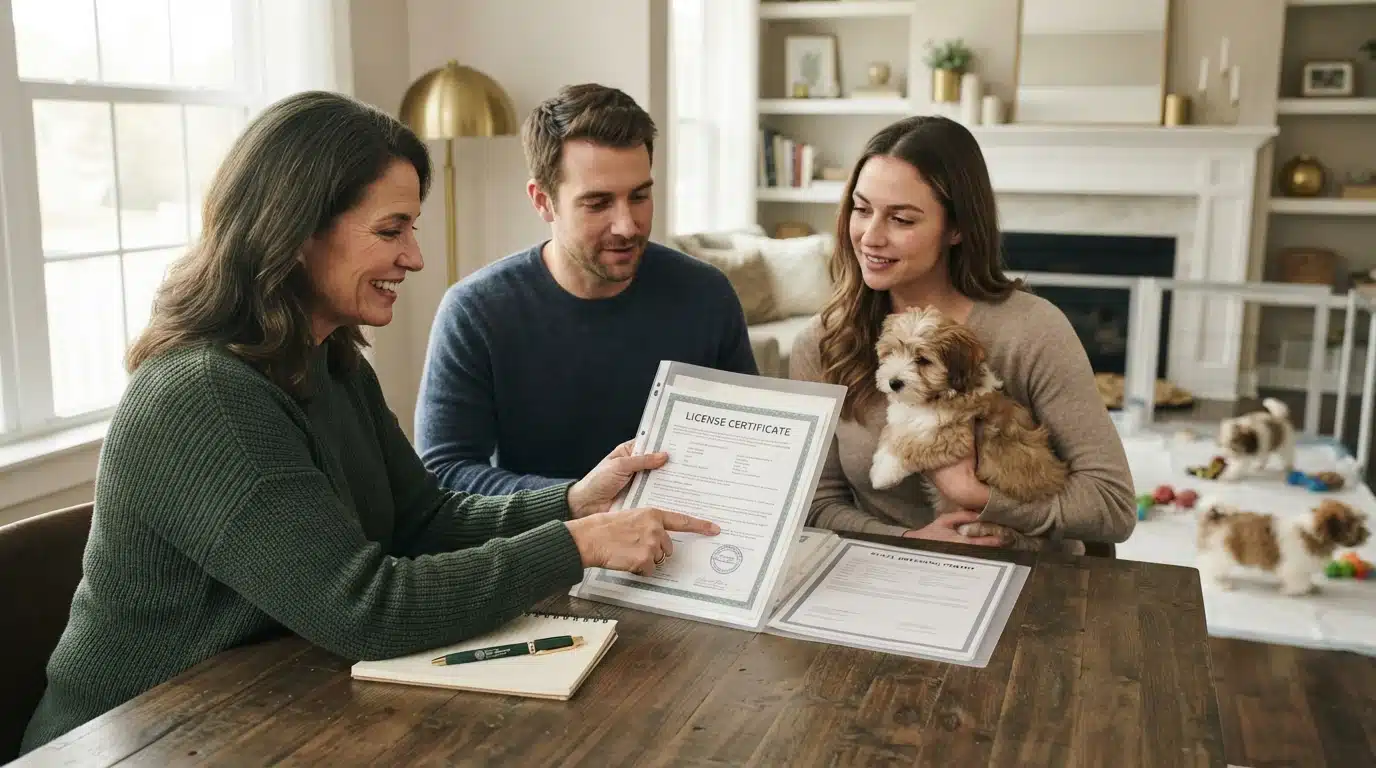
Before you leave, collect the records that matter: vaccination and deworming dates, a written vet health record, and a contract you have actually read. Photos of documents work for now, but originals should follow the puppy home. A breeder who hesitates to share paperwork is telling you something.
Contracts, Deposits, and Payment Safety
Which payment methods are safest when buying a puppy? Use methods that leave a paper trail: credit cards, PayPal Goods and Services, or checks. Avoid wire transfers, gift cards, crypto, and payment apps set to “friends and family,” since none of those offer refunds if the seller vanishes.
Read the Agreement Before the Deposit
Ask for the full contract before you pay anything. It should spell out the deposit amount, refund terms, health guarantee, and return policy in writing. A breeder who pressures you to “reserve now” without paperwork is asking you to trust words that disappear later.
Which Payment Methods Are Ordinary
Most legitimate breeders accept credit cards, Zelle or bank transfer for a deposit, and the balance at pickup. What matters is traceability. Pay by a method you can dispute, and get a written receipt. Never send funds to a name you cannot verify.
If Something Does Not Add Up
Pause when the deposit is unusually large, the contract conflicts with the breeder’s emails, or the seller insists on gift cards or crypto. The BBB’s puppy scam study found most losses trace back to untraceable payment demands, so treat any push for one as a stop sign.
Red Flags by Channel: Listings, Social Media, and Messages
Where a seller talks to you tells you a lot. Each channel has its own habits, so check them differently.
Online Listings and Marketplaces
The BBB puppy scams study found most fake ads target US buyers. Watch for stock photos, prices far below a breed’s normal range, and ads that skip the mother dog entirely. Ask for a recent photo of the puppy with something you named, like today’s newspaper.
Social Media Profiles and Testimonials
Fresh accounts with few followers but dozens of glowing reviews deserve doubt. Look for copied testimonials, comments turned off, and cute puppy photos borrowed from other breeders. Real programs post over months, not days, and answer questions publicly.
Text, Email, and Messaging Apps
Pressure is the biggest message-based flag. Sellers who refuse phone calls, demand gift cards or wire transfers, or rush your deposit are following a known scam script, as the AKC notes. Legit breeders welcome questions and video calls. For a deeper walkthrough of puppy scam warning signs, see how to spot a puppy scam online.
Common Mistakes Buyers Make, and How to Avoid Them
Paying Before Verifying and Trusting Testimonials Alone
The costliest mistake is wiring a deposit before checking anything. Scam reviews are easy to fake, so never let glowing testimonials stand in for proof. Ask for the license number, meet the mother dog, and confirm health records first. Keep payment safety in mind too: credit cards offer dispute rights that wire transfers and gift cards do not. Never send money to someone you have not met on video.
Reading One Detail as a Verdict, and Ignoring a Pattern
One weak answer is not proof of a bad breeder. People misspeak, or a document sits in another inbox. What matters is the pattern. A breeder who hesitates on one question but supplies everything else may simply be busy. A breeder who stalls on records, dodges video calls, and pushes for fast payment is telling you something. Judge the whole picture, not a single data point, and review the deposit and refund terms in writing before you pay anyone.

Ready to put this checklist to work? See how a small program answers every question in this guide at Sage Puppies. Browse available Havanese, Havapoo and Cavapoo puppies, review the process, and start your application when the answers hold up.
Frequently Asked Questions
Q1: How do I find a reputable puppy breeder near me?
Start with referrals from your vet, local breed clubs, and AKC parent clubs. Verify licensing, request health records, meet the mother dog on camera or in person, and read the contract before paying any deposit.
Q2: How do I spot a puppy breeder who is not trustworthy?
Watch for pressure tactics, prices far below market, refusal to show the mother dog, missing OFA health testing records, and demands for wire transfers or gift cards. Patterns matter more than one weak answer.
Q3: What are the 12 red flags to avoid when choosing a puppy breeder?
They include always-available puppies, bargain pricing, no parent health testing, urgency pressure, hiding the mother, missing vet records, dirty facilities, no license, untraceable payments, no contract, vague deposit terms, and shipping under eight weeks.
Q4: What questions should I ask a puppy breeder?
Ask who their vet is, which vaccines and dewormings the litter has had, what OFA tests the parents passed, how puppies are socialized, and what the deposit and refund terms are in writing.
Q5: How much should I expect to pay for a Havanese, Havapoo, or Cavapoo?
Careful small programs typically charge more than the suspicious $500 listings because vet care and health testing cost real money. Treat prices that undercut every comparable breeder as a warning, not a deal.
Q6: Can I trust a breeder who only sells puppies online?
Yes, if they verify the same way: live video tours, the mother dog on camera, USDA APHIS licensing where required, traceable payment, and a written contract with return terms.
Conclusion
Spotting a trustworthy breeder comes down to three habits: verify before you fall in love, ask for documents instead of promises, and pay only by traceable methods. Meet the mother dog, check OFA health testing records, confirm licensing where required, and read every contract line before money moves. One weak answer may mean nothing, but a pattern of excuses means walk away. Honest breeders welcome every question on this list, and their pricing reflects real vet care and testing, not bargain-basement listings. Fair puppy pricing and deposit terms should be spelled out in writing, never explained away. Trust the paperwork, not the charm.