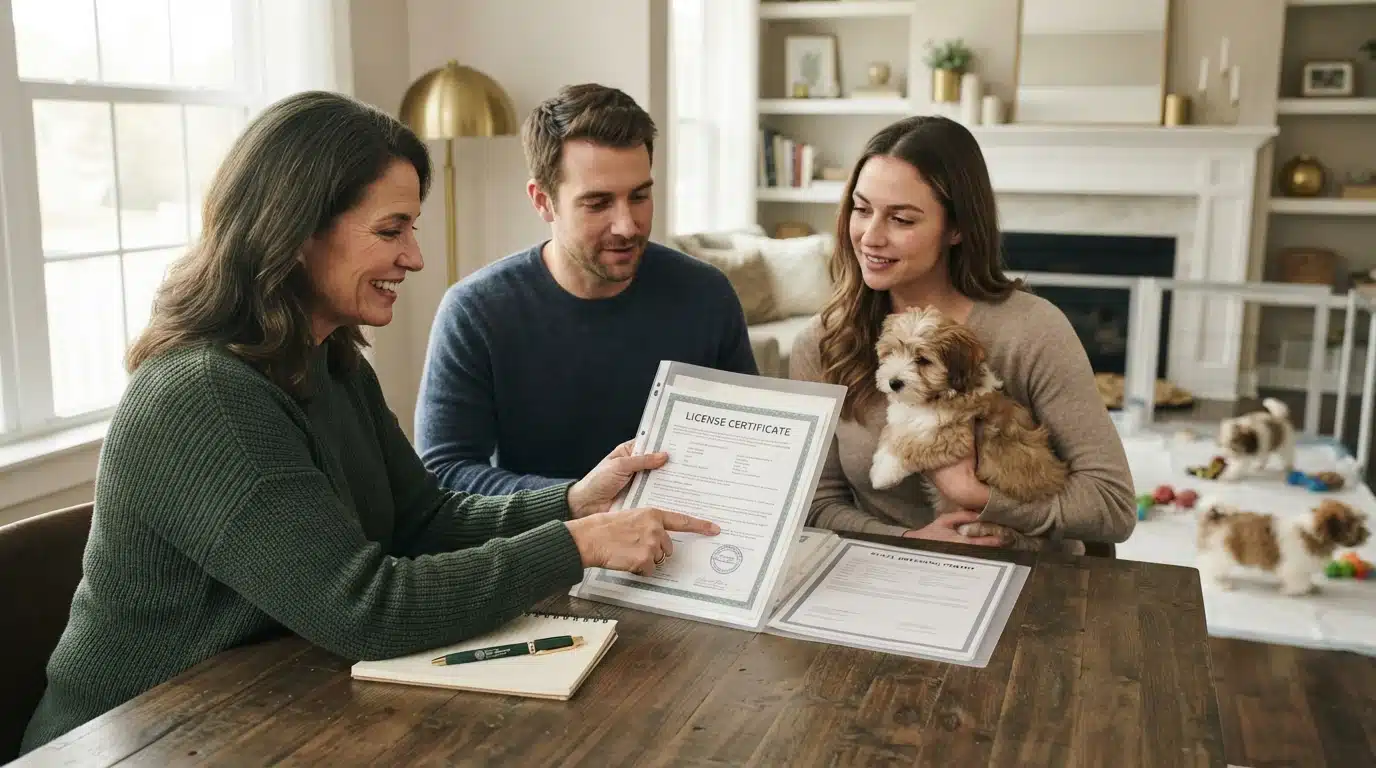
Quick Summary: Verify a puppy breeder before paying by checking license numbers with the issuing agency, reviewing the puppy’s health and vaccination records, and confirming both parents’ OFA or CHIC results yourself. Read the contract, health guarantee, and deposit terms carefully, use a traceable payment method, and have your own vet review the records. Refusals, missing core documents, or pressure to pay quickly are reasons to walk away, while a reputable breeder such as Sage Puppies should provide clear, verifiable records from the start.
You ask a breeder for their license number and get a blurry photo of a business card, a health certificate for a litter born two years ago, and a very confident promise that everything is in order. That is the exact moment most families stop asking questions. They shouldn’t. A real license check takes minutes, and the paperwork a breeder sends tells you more than any website ever will. This guide walks you through each document worth requesting, the public lookup that verifies it, and the breed-specific health testing that matters for Havanese, Havapoo, and Cavapoo parents in 2026. You also get a ready-to-send request script. Whether you found a breeder through a “reputable puppy breeder near me” search or you’re picking up locally in Utah, a few minutes of checking protects your deposit and your family’s next ten years.
Step 1: Sort breeder credentials from puppy paperwork
The two piles of documents and why the order matters
Every breeder hands you two kinds of puppy breeder license documents. The first pile proves who they are: a USDA license number if they need one, a state breeder license, and a local kennel permit. The second pile proves the puppy is healthy: a vet health certificate, vaccination records, and microchip paperwork. Check the first pile first. If the credentials fall apart, the health papers attached to that puppy mean nothing.
One message that gets you the full document set
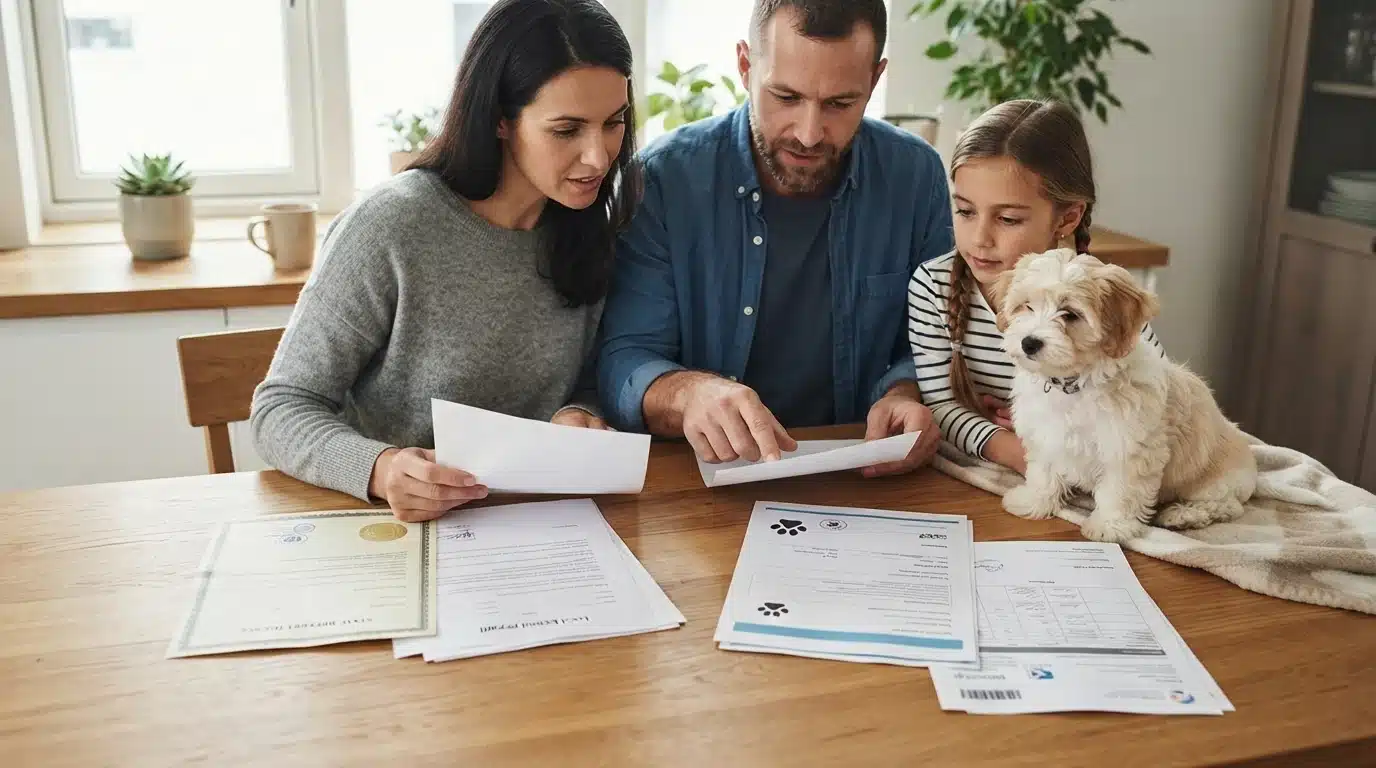
You do not need ten emails to gather this. Send one short request before you pay a deposit. Ask for the license number and issuing agency, parent health testing results such as OFA or CHIC, the puppy’s health certificate, the vaccination record, and the contract’s guarantee and return terms. A confident breeder replies within a day or two. A reputable breeder answers red-flag questions openly, so treat slow or partial answers as data.
Where breeder licenses actually come from
Licensing depends on how a breeder sells. The USDA requires a license under the Animal Welfare Act when breeders have five or more breeding females and sell pets sight unseen; smaller programs that sell face to face are usually exempt. So ask your state agriculture office and your city instead. For Utah pickup, South Jordan and surrounding cities issue their own animal facility permits.
Step 2: What documents should a puppy breeder provide?
A reputable breeder hands over paperwork in two layers: proof that the breeding program itself is licensed and legal, and records that belong to your specific puppy. Ask for both before you pay anything. Here is the complete list.
The breeder-level documents
These prove the person selling you a puppy runs a real, legal operation:
- State breeder license number and the issuing agency, so you can verify it
- Kennel permit or animal facility license, required in many cities and counties
- USDA APHIS breeder license, if the breeder ships pets or keeps more than a small number of breeding dogs
- Business or kennel name matching the name on the contract
Request the actual numbers, not photos of framed certificates. You will use them in the public lookups in the next step.
The puppy-level paperwork
Each puppy needs its own records, not just the litter’s:
- Puppy health certificate issued by a licensed veterinarian, dated within about 10 days of pickup or delivery
- Vaccination records showing dates, products used and the vet or breeder who gave them
- Deworming history with dates and medications
- Microchip number, plus registration and transfer instructions in your name
- Parent health testing, such as OFA or CHIC certification for the dam and sire
Breed matters here. Ask what screenings apply to your breed specifically.
The paperwork that protects your money
Three documents decide what happens if something goes wrong. Get them in writing, before your deposit clears:
| Document | What to check |
|---|---|
| Purchase contract | Health guarantee terms, return policy, spay or neuter clauses |
| Deposit receipt | Amount, date, refund conditions |
| Health guarantee | What is covered, for how long, and what voids it |
This matters most when you cannot visit in person. Families searching for a reputable puppy breeder near me can drop by unannounced, but a family ordering a puppy for national delivery relies entirely on these documents.
Documents that sound official but prove very little
“Champion bloodlines” papers, generic “vet approved” claims and laminated cards mean little without verifiable numbers behind them. A breeder who balks at providing license documents or health records is showing you a red flag, not protecting privacy. Walk away and report the listing.
Step 3: Get the parent’s health testing and the puppy’s DNA results
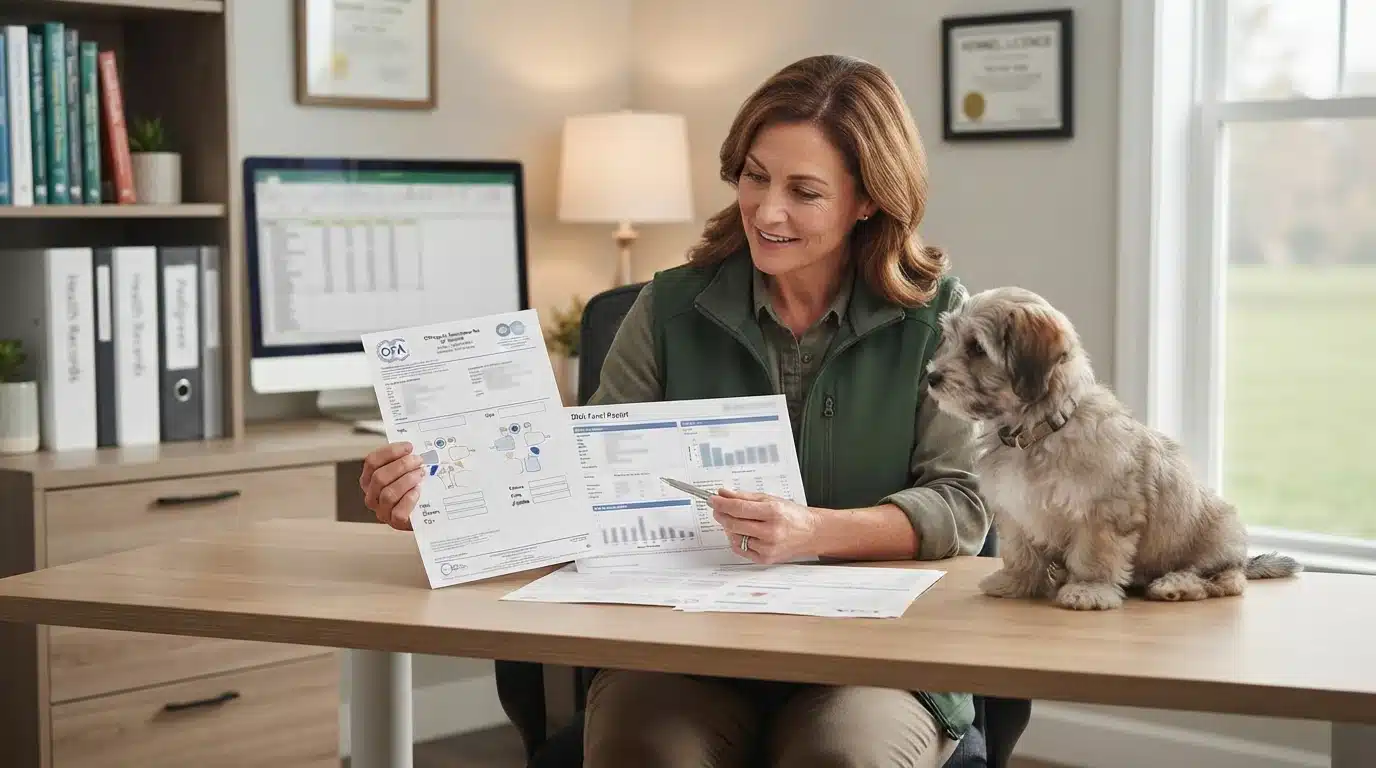
Ask for the parents’ test results, not the breeder’s word that the parents are “healthy.” Reputable programs keep these on file, and you can check most of them yourself before you pay anything.
Three different things people call health testing
These three terms get mixed up constantly, so separate them:
- Vet exam: a wellness check. Useful, but it clears a dog only on that day.
- DNA panel: a cheek-swab test for inherited gene variants. It predicts what a dog can pass on, not what it has.
- Orthopedic screening: X-rays or exams graded by an outside registry like the OFA, which keeps health testing records on millions of dogs.
A vet check alone is not health testing. Ask which of the three you are actually looking at.
What Havanese, Havapoo, and Cavapoo parents should have on file
For Havanese parents, expect a DNA panel plus screenings for patellas (loose kneecaps), heart, eyes, and hips. Havapoo and Cavapoo parents should be tested on both sides of the pairing, since the mix can inherit problems from either breed. Poodle-side tests matter for Havapoo vs Havanese health testing, so ask which panel each parent took. A CHIC listing consolidates a dog’s completed tests and results in one report. Ask for the dam’s and sire’s registered names so the records match your puppy’s actual parents.
How to look up a parent’s results yourself
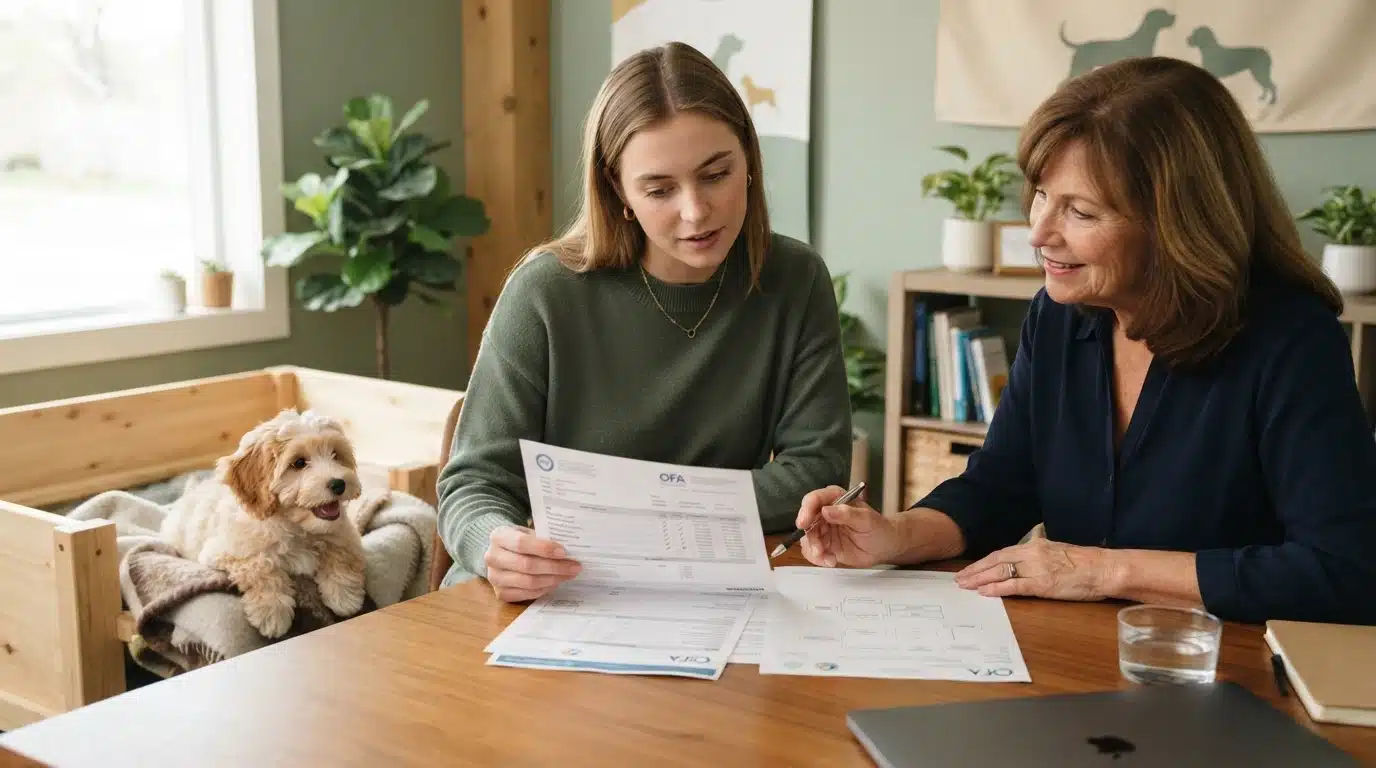
Go to OFA’s advanced search, enter the parent’s registered name, and see what results are posted. Check that the name and breed match the paperwork. If nothing appears, ask the breeder why. Some tests sit outside the database, but a breeder should explain any gap. For out-of-state families relying on national delivery, this lookup is your only real verification, so do it before the deposit.
Reading a DNA panel without over-reading it
A panel shows variants tested, not a clean bill of health. Look for the parent’s status on each disease-relevant gene: clear, carrier, or affected. A “carrier” parent is fine if the other parent is clear, because puppies cannot be affected that way. Ask which pairing risks the breeder ruled out, and keep the panel with your puppy breeder license documents for later reference.
Step 4: Read the contract, guarantee, and deposit terms closely
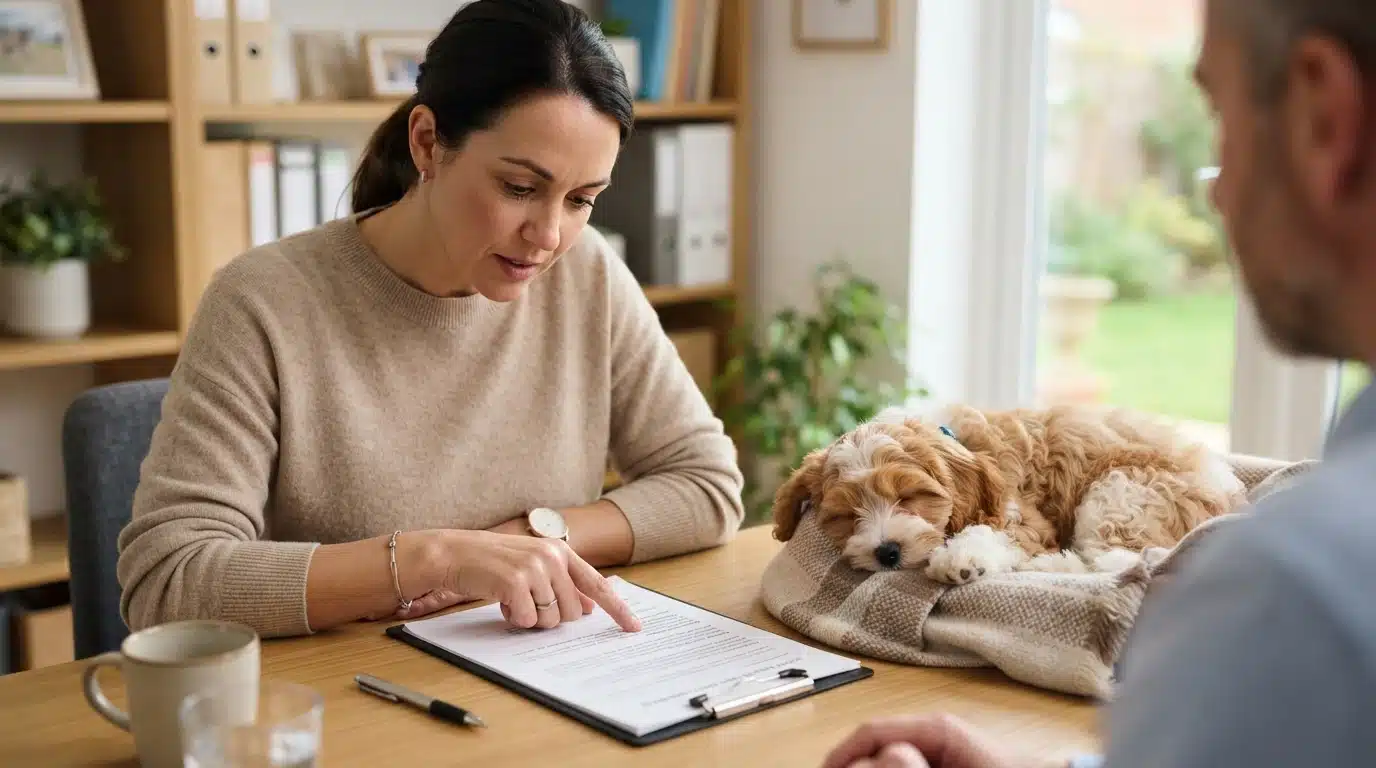
Paperwork proves who the breeder is. The contract proves what happens after you pay. Before any money moves, ask for the full puppy purchase contract, the health guarantee, and the deposit and refund terms in writing. A breeder who sells puppies before showing you the terms is asking you to agree to a document you have never read.
Clauses worth reading line by line
Some clauses decide how much a problem costs you. Read these with more care than the rest:
- Health guarantee window: how many days the guarantee lasts, and what it covers. Genetic conditions and infectious illness are usually treated differently.
- Return policy terms: whether you can return the puppy, who pays transport, and whether refunds are full or partial.
- Spay or neuter requirements: deadlines, proof required, and what happens if you miss one.
- Deposit receipt and refund terms: is the deposit refundable, transferable to a future litter, or kept outright?
- Microchip registration and transfer: the chip is useless until it points to you.
Vague wording that deserves a question
Watch for phrases that sound fine and mean little. “Healthy to the best of our knowledge” covers almost nothing. “Guarantee void if” followed by a long list can cancel coverage over routine vet visits. “Replacement puppy at breeder’s discretion” leaves the decision entirely with the seller. Ask what each phrase means in a real scenario: the puppy tests positive for a genetic heart defect at eight months, for example. A clear answer is fine. A refusal to answer tells you what to do next, and it is usually the same thing: walk away.
Payment method matters as much as payment timing
Scam pressure usually shows up in the payment request, not the contract. Gift cards, wire transfers, crypto, and payment apps with no buyer protection are the usual tools, which is why the FTC warns buyers about them specifically. Pay in a way that leaves a paper trail: a credit card or a written receipt against a signed contract. If a breeder will only take an unprotected transfer, treat that as a red flag, because a reputable breeder near you or across the country can still take a traceable payment.
Ask for the deposit terms in writing even when everything looks fine. It protects both of you, and it is a fair request. Small programs like ours put deposit and reservation terms on a public page for exactly this reason, so families can read the rules before they apply.
Step 5: Verify each document against an outside source
A paper with a logo proves nothing on its own. Here’s the core workflow for checking whether a puppy breeder is licensed, in order:
- Ask the breeder for their state breeder license number, kennel permit, or animal facility license, plus the issuing agency.
- Call or email that agency and confirm the number is active and matches the breeder’s legal name.
- If they sell federally regulated volumes, search their USDA APHIS license in the public search tool and read the inspection history.

Government lookups worth doing by phone and email
State and county rules vary, so start with the agency named on the document. Call the number listed on the agency’s official site, never one a seller types into a chat. Ask two questions: is this license current, and does the address match where the puppy lives? Utah buyers picking up locally can also confirm city-level licensing with their own clerk’s office. Buyers arranging national delivery should press hardest here, because paperwork is all they get.
Registries and databases you can check in minutes
Match each puppy breeder license document against its source. A microchip number should trace in the registry database the card names. Parent health claims should appear in the OFA CHIC results by searching the registered names. Vaccination records should align with the dates and products your own vet expects. Anything that can’t be traced is a red flag, the same one behind most puppy scams.
Let your own vet read the file
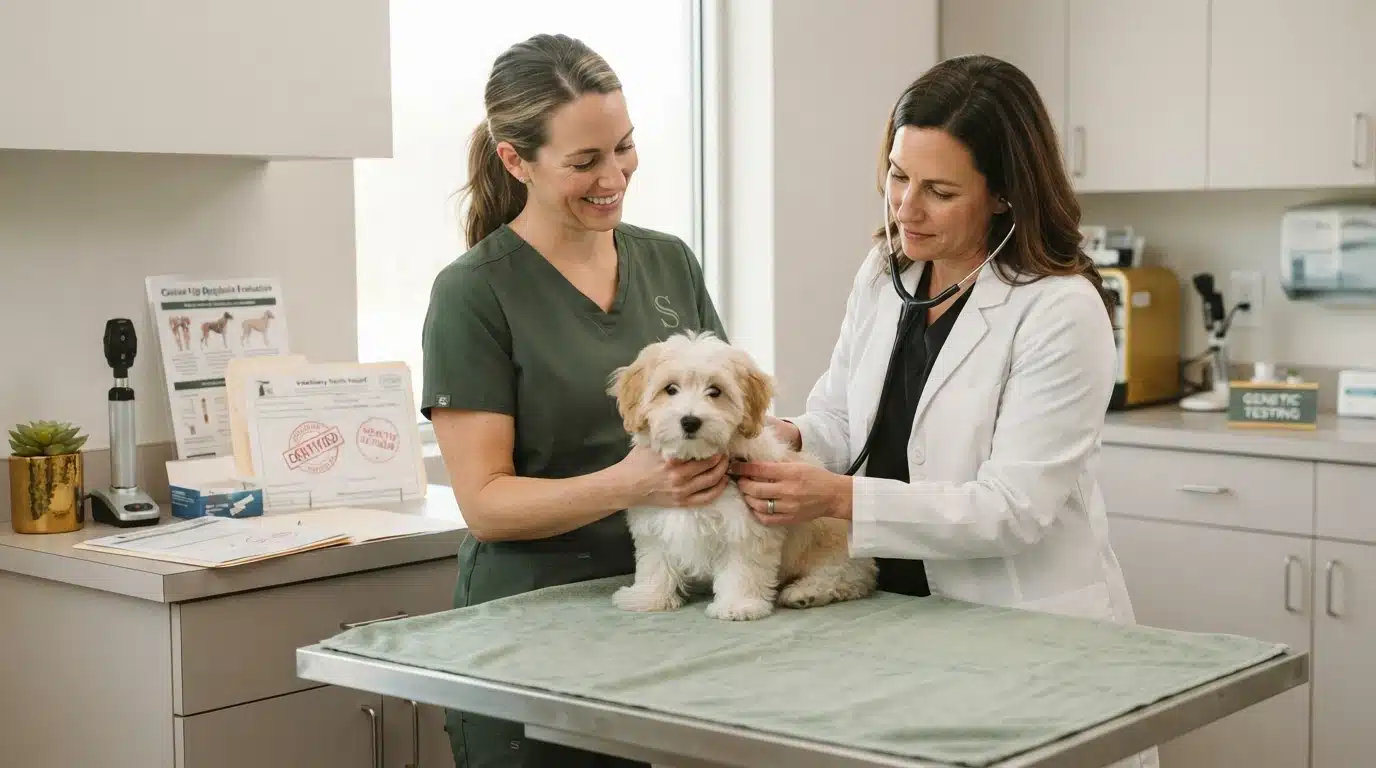
Email the puppy health certificate, vaccination records, and parent test results to a vet you chose. Ask whether the exam date falls within about 10 days of pickup and whether anything looks inconsistent. A good breeder welcomes this; hesitation tells you what you need to know.
Step 6: Decide what to do when documents are missing
Minor gaps versus fundamental gaps
Not every missing paper is a dealbreaker. A slow reply, a blurry scan, or a deposit receipt that needs a corrected date counts as a minor gap. Ask once, give a short deadline, and move on if the fix arrives.
Fundamental gaps are different. No state breeder license number, no issuing agency named, no puppy health certificate dated within about 10 days of pickup, no parent health testing results, or a contract that refuses any return terms all fall in this group. So does a breeder who says testing “isn’t done for this breed,” which is false for Havanese lines that carry OFA or CHIC records.
The rule is simple: a reputable breeder can produce every core document within a day or two. A pattern of excuses is the red flag, not a single delay. If you cannot visit in person because you are ordering a puppy for national delivery, treat a missing document as a failed check and walk away. A refusal tells you what a website never will.
A short, professional exit message
You do not owe a long explanation. Send something like this:
“Thanks for your time. Before reserving a puppy, I verify licensing and health documents. I have not received the ones I asked for, so I will continue my search. I wish you and your dogs well.”
Then stop replying. A legitimate breeder answers with the paperwork. A scammer answers with pressure, a price drop, or a new payment method. Any of those confirm your decision, and blocking the contact protects your deposit and your family.
Common mistakes to avoid when checking breeder paperwork
The biggest mistake is accepting screenshots instead of running each lookup yourself. A photo of a license is easy to fake, so type the state breeder license number into the agency’s own site and check USDA APHIS inspection records where they apply.
Other traps to avoid:
- Skipping the dates. A health certificate older than about 10 days before pickup does not meet most requirements.
- Trusting stock photos. Copycat images are a classic puppy scam signal, per the AKC’s red flag list.
- Paying before verifying. Never send a deposit on paperwork you have not checked.
- Ignoring refusals. A breeder who dodges a simple document request is telling you something.
Treat every “it’s coming later” answer as a red flag, not a delay.

If a breeder dodges your document requests, walk away. The right paperwork should arrive without pressure. At Sage Puppies, every Havanese, Havapoo, and Cavapoo comes with clear, verifiable records from day one. Review our application, ask us anything, and meet your puppy with confidence. Wisely Bred. Beautifully Loved.
Frequently Asked Questions
Q1: What documents should a puppy breeder provide?
Ask for a state breeder license number and issuing agency, a kennel permit, a USDA APHIS license if one applies, plus a puppy health certificate, vaccination and deworming records, microchip details, parent OFA or CHIC results, and written contract and deposit terms.
Q2: How do I verify a breeder’s license number?
Contact the issuing agency using the number listed on its official website. Confirm the license is current and matches the breeder’s legal name and address.
Q3: What if a breeder refuses to send documents?
A reputable breeder produces core paperwork within a day or two. Refusal is a red flag. Send a short, polite exit message and stop replying.
Q4: Are champion bloodlines papers worth anything?
Not on their own. Without verifiable license numbers, OFA results, and a traceable pedigree, they prove very little.
Q5: How recent must a puppy health certificate be?
Roughly 10 days or less before pickup or delivery. Ask your own vet to review it along with the vaccination records.
Q6: Should both parents be health tested for a Cavapoo?
Yes. A mix can inherit problems from either side, so ask which DNA panel and orthopedic screenings each parent completed, then check the results in the OFA database yourself.
Conclusion
A breeder license check comes down to one habit: verify, don’t trust. Ask for the state breeder license number and issuing agency, the kennel permit, and a USDA APHIS license if one applies, then confirm each against the source. Collect your puppy’s health certificate, vaccination records, microchip details, parent OFA or CHIC results, and written contract and deposit terms. Run every lookup yourself, and let your own vet read the file before the deposit moves. A reputable breeder hands over core documents within a day or two. Refusals, excuses, or pressure to pay untraceably are red flags, not delays. That firm rule protects you whether you pick up locally in Utah or arrange national delivery, and it costs you only a few minutes.