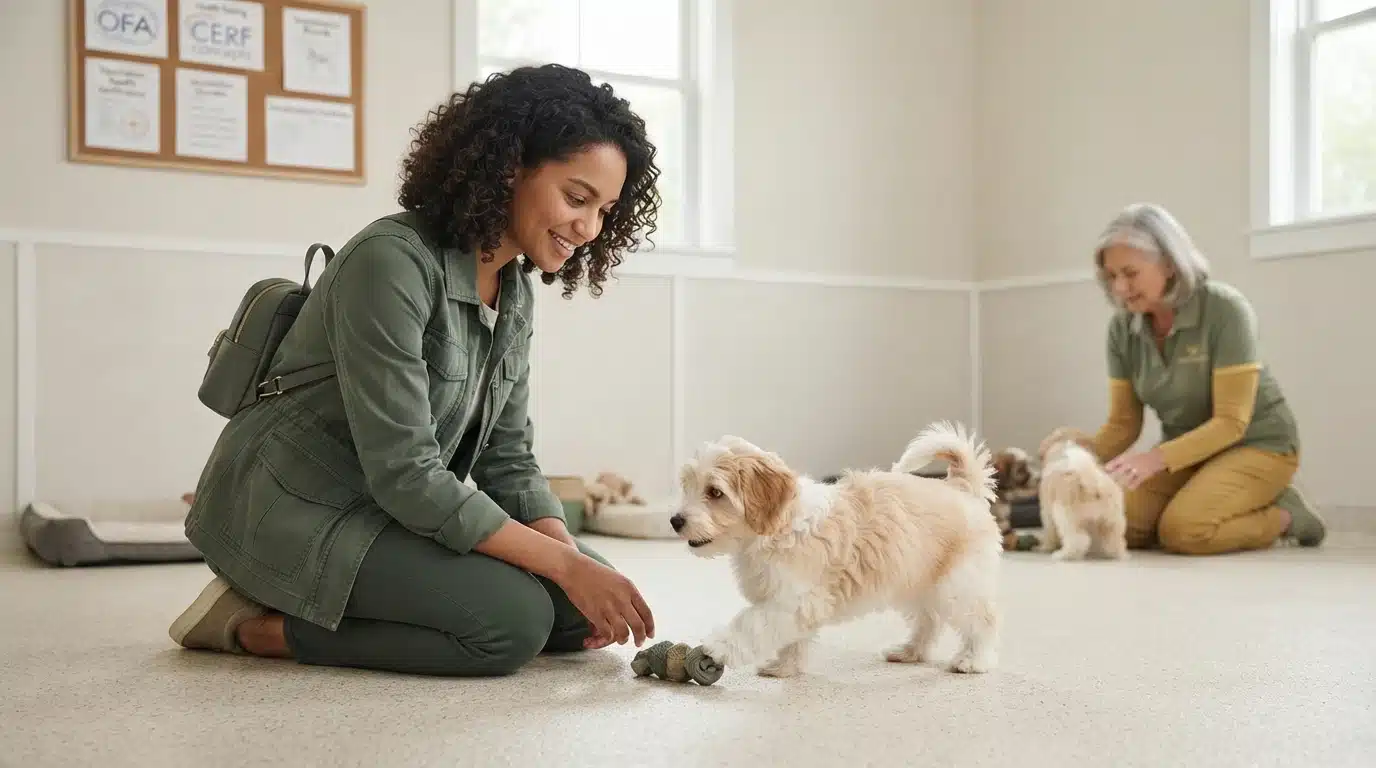
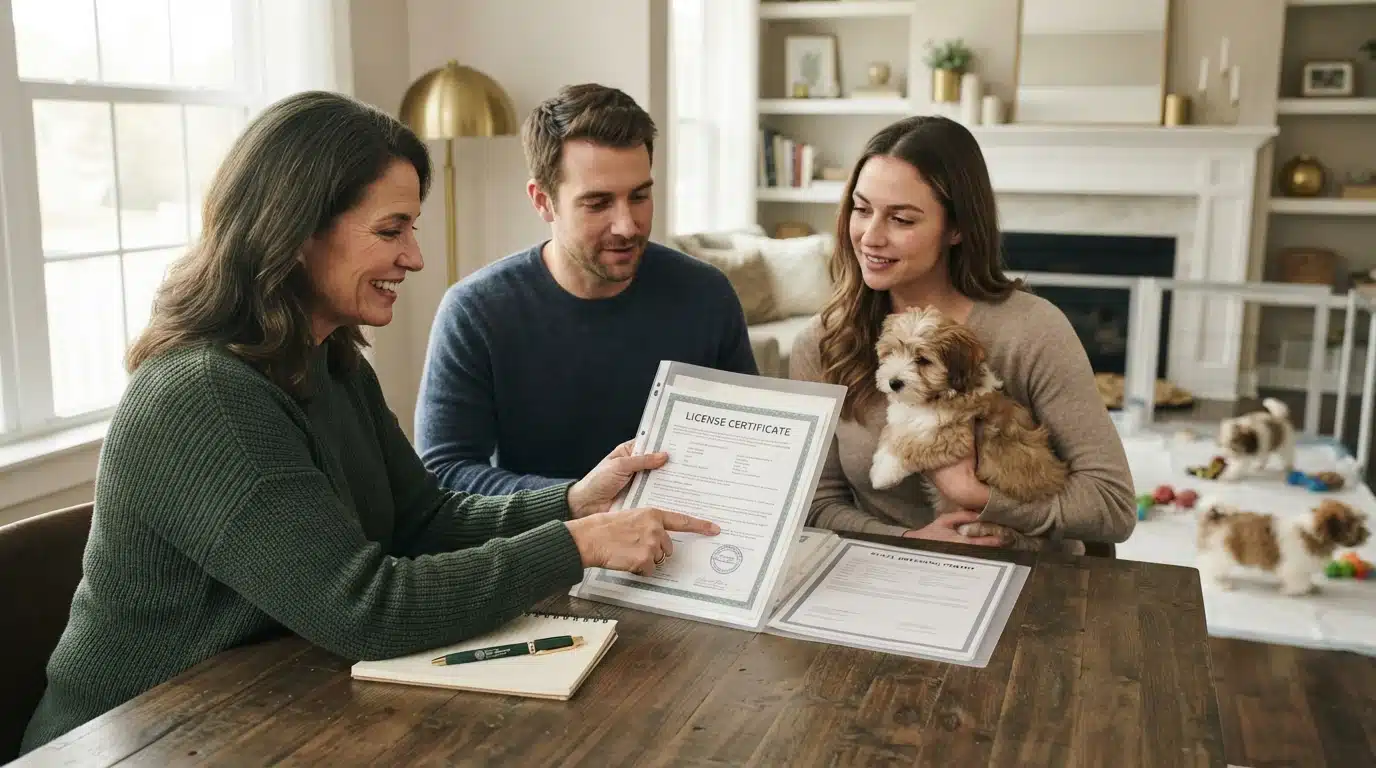
Quick Summary: Havanese have a clear testing standard: OFA hip, patella, and CAER eye results, with BAER hearing testing strongly recommended. Havapoos need the same evidence from the Havanese parent plus Poodle-side hip, patella, cardiac, eye, and progressive retinal atrophy DNA testing. Before paying, ask for each parent’s OFA numbers and reports, verify them independently at ofa.org, and schedule a vet exam within 48 to 72 hours of bringing the puppy home.
Two puppies can look healthy, come from caring breeders, and cost the same, yet one is far easier to verify than the other. The difference is a folder of health test results you can pull up on your phone in five minutes. That gap is the real challenge with Havapoo and Havanese health tests: Havanese lines follow one clear test list, while Havapoo parents need tests from both sides of the cross. This guide walks you through the Havanese Club of America’s CHIC requirements, the Poodle-side tests that matter for a Havapoo, and the exact questions to ask before you pay a deposit. You will also learn how to check results yourself in the OFA database. We raise Havanese, Havapoo and Cavapoo puppies in South Jordan, Utah, so we wrote this as the checklist we hand to our own families.
Why Health Records Matter More for Havapoos Than for Havanese
A Havanese puppy comes with a published test list you can check. A Havapoo does not, so the breeder’s health records do the work a breed standard would otherwise do.
The Havanese has a published testing standard you can point to
The Havanese Club of America spells out the tests its breeders must run, including OFA patella evaluation, plus CAER eye exams and hip films. Those results feed the OFA’s public CHIC database, so anyone can look up a puppy’s parents and see what was actually tested, not just what was claimed.
The Havapoo has no parent club and no required test list
Havapoos are a cross, so there is no breed club setting required tests. Good breeders borrow from both sides: Havanese-line checks and Poodle-line DNA tests for conditions like progressive retinal atrophy. What gets tested is a breeder’s choice, which makes the paperwork, not the breed name, your evidence. Sage Puppies runs that combined panel and shares the results.
What the breeder’s words mean versus what the records mean
“My dogs are healthy” is an opinion. A CHIC number, an OFA patella grade, or a dated DNA lab report is a fact you can verify yourself online. Ask breeders of any litter, Havanese or Havapoo, for registration numbers so you can search the records before you pay a deposit. For a deeper walkthrough of that check, see our guide to what health-tested puppy records actually prove.
The Havanese Health Tests to Ask For
The Havanese Club of America requires three tests for a CHIC number. Ask about all three before you buy.
- OFA-CAER eye exam: once yearly, by a board-certified eye vet
- OFA hip evaluation: X-rays read after 24 months of age
- OFA patellar luxation exam: knee check, done at 12 months or older
BAER hearing testing was once a fourth requirement, but the club now lists it as recommended rather than required, along with cardiac exams and DNA tests for conditions like progressive retinal atrophy. A CHIC number proves the tests were done, not that the results all passed, so read each result yourself in the public OFA database.
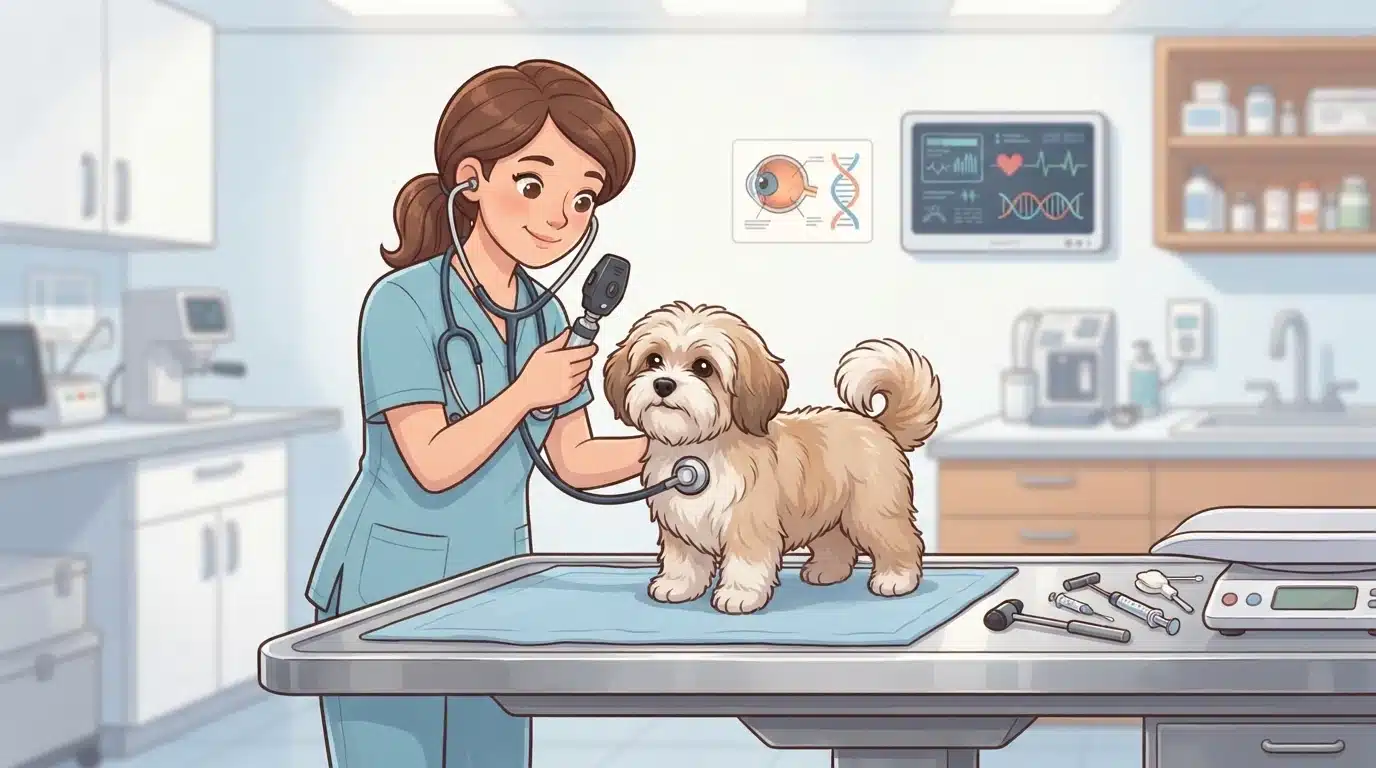
Hip dysplasia evaluation, the long-term joint question
Hip dysplasia means the hip joint forms loosely, which can lead to arthritis later in life. Small breeds get it less often than large ones, but Havanese carry risk. The official OFA hip evaluation happens at 24 months or older, so any breeder screening parents has dogs at least two years old.
Patellar luxation, the small-breed knee check
Patellar luxation is a kneecap that slips out of place, and it is one of the most common problems in small breeds. Vets grade it from 1 (mild) to 4 (severe). Breeders should test both parents and share the grades.
Eye exams, the yearly CAER check most buyers miss
A CAER exam screens inherited eye disease through a board-certified ophthalmologist. Because conditions like progressive retinal atrophy develop over time, the club asks for the exam every year. Ask for the most recent CAER number, not one from three years ago.
BAER hearing test and the optional extras
BAER testing measures hearing in each ear and matters most in dogs with white ear coloring. Responsible Havanese breeders often run it on puppies between five and seven weeks old, even though it is optional. For a deeper breakdown of each test, see our Havanese health testing guide, which walks through reading results line by line. The club’s own health guide also explains why each test made the list.
The Poodle Side of a Havapoo
A Havapoo inherits health risks from both parents, so the Havanese health tests are only half the picture. The Poodle parent needs its own screening, and the tests below matter most on that side of the cross.
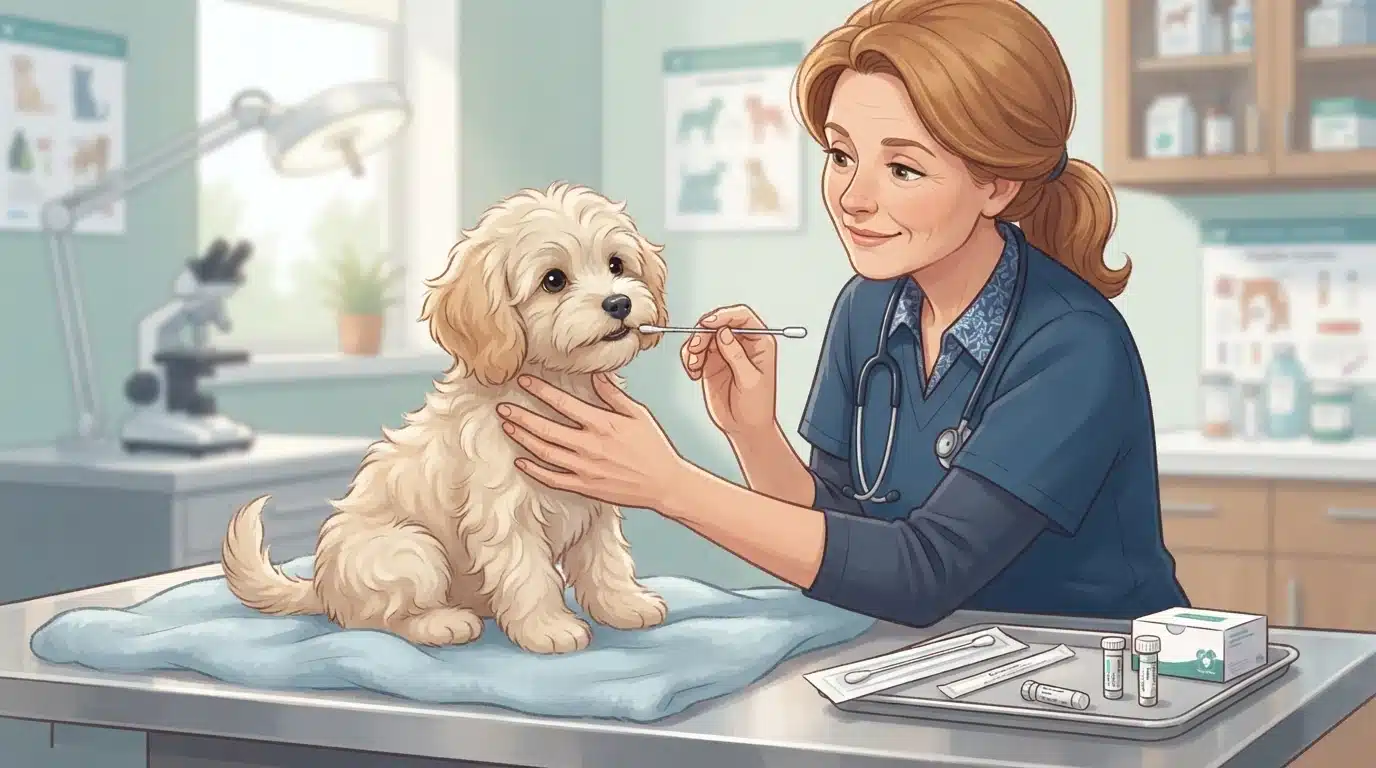
Progressive retinal atrophy and why DNA testing matters here
Progressive retinal atrophy, or PRA, is an inherited eye disease that slowly causes blindness, and Poodles carry known genetic forms of it. A simple DNA test on a cheek swab shows whether the Poodle parent carries the variant. Because a Havapoo puppy only develops the condition if both parents pass on a copy, a clear Poodle parent removes most of the risk.
Legg-Calve-Perthes and the hip question on the Poodle side
Legg-Calve-Perthes disease affects the hip joint in small breeds, cutting blood flow to the femoral head and causing pain and limping. Miniature Poodles appear in affected lines more often than larger dogs. Ask whether the Poodle parent has an OFA hip evaluation, which is read once the dog is at least 24 months old, and ask about any limping history in relatives.
Cardiac and patella evaluations on the Poodle side
Poodles can carry a risk of heart disease, so ask for a cardiac exam by a veterinarian, ideally one certified by a cardiologist, recorded with OFA. Patellar luxation, a kneecap that slips out of place, also shows up in both parent breeds. The OFA patella exam grades it from 1 (mild) to 4 (severe), and dogs are evaluated at 12 months or older. When a breeder can show both sides tested, the Havapoo and Havanese health tests picture is complete.
Which Health Tests Should I Ask For With a Havapoo or Havanese Puppy
Ask for four things on the Havanese side: an OFA hip evaluation, a patellar luxation exam, a CAER eye exam and a BAER hearing test. On the Havapoo side, ask for all of that plus the Poodle parent’s tests. These lines, given plainly, will separate a health-tested breeder from one guessing.
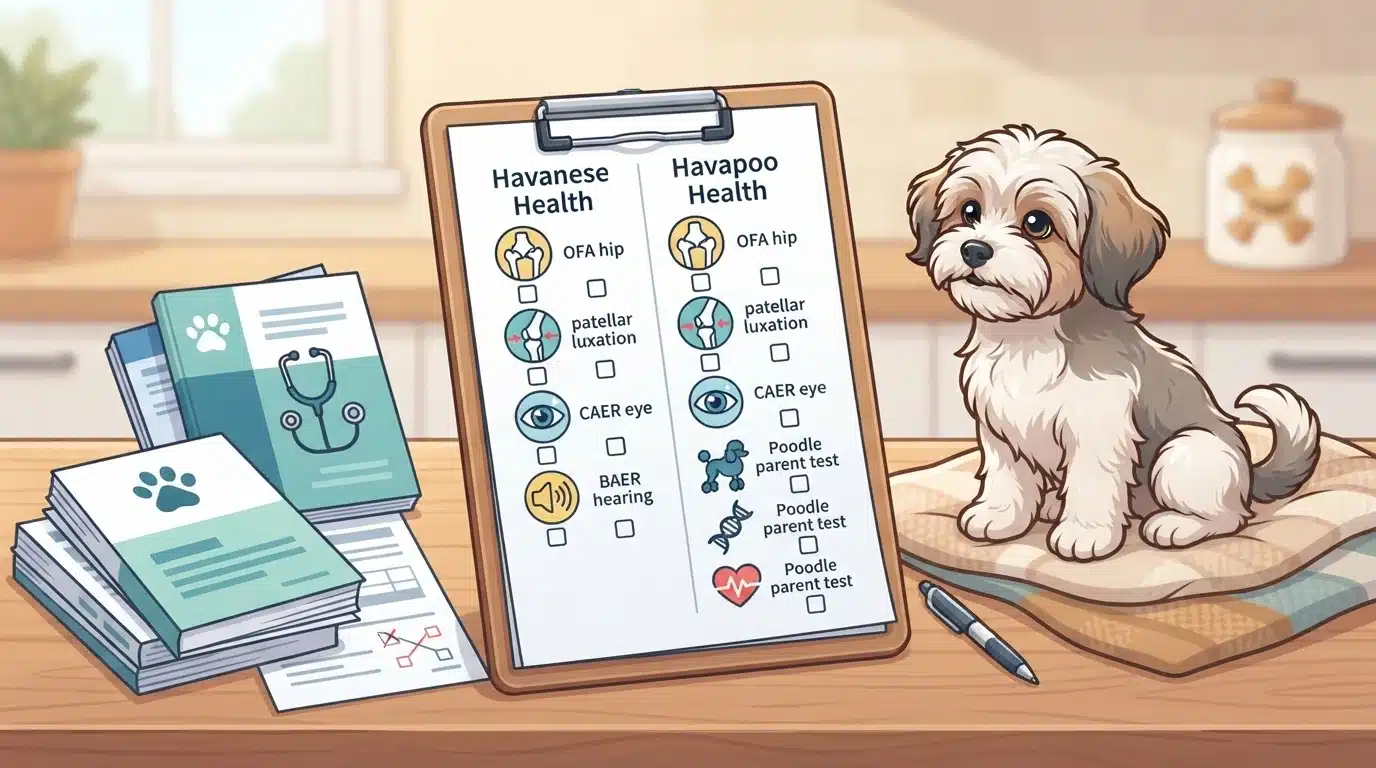
The Havanese checklist in one place
The Havanese Club of America names three CHIC requirements: OFA-CAER for eyes, OFA hips and OFA patellas. Most careful breeders add the BAER hearing test. Ask for each parent’s results by name, then check them in the public OFA database yourself. If a dog is old enough, the record should already exist. Breeders screening hips wait because the OFA reads hip X-rays at 24 months or older, and patellas from 12 months.
The Havapoo checklist, both parent lines combined
A Havapoo puppy inherits from two lines, so you need two lists. From the Havanese parent, ask for the same hip, patella, CAER and BAER results above. From the Poodle parent, ask about hips and patellas, a CAER eye exam, and DNA tests for progressive retinal atrophy. Also ask whether any relatives limp or have eye trouble. Meet both parents if you can, or at least see records for each one.
Wording that gets you real answers
Skip “are your dogs healthy?” Every breeder says yes. Ask instead: “What are the dam’s OFA numbers, and where can I look them up?” A real answer includes registration numbers and a link. Vague replies such as “the vet checked them” are not a substitute for a graded exam. When we list a litter on our available puppies page, we keep each parent’s test records ready to share, so ask the same of any program you interview.
How to Verify the Results Yourself
A breeder’s word is not proof, so check every claim in a public database. Here is how to do it in about five minutes:
- Ask the breeder for each parent’s registered name or OFA number.
- Go to ofa.org and search by that name or number.
- Confirm the results shown match what the breeder told you.
- Look for a CHIC number, which means the dog met the breed club’s required test list.
Searching the OFA database by name or number
Any breeder can claim a parent is “health tested.” The Orthopedic Foundation for Animals keeps a free, searchable database, so a real result is easy to confirm. Type the dog’s name, partial name or OFA number into the search bar on ofa.org. If nothing comes up, the dog was never evaluated or the name was spelled oddly, so ask.

Reading normal, borderline and abnormal results
Hip results are graded as excellent, good, fair, borderline or dysplastic. The first three are passing grades. Borderline is not a pass, and OFA will not certify it without a repeat X-ray. For patellas, grades 1 through 6 exist, and anything beyond grade 1 raises questions. Eye exams list specific conditions, so read the fine print rather than trusting “eyes checked.”
What a DNA panel result can and cannot tell you
A DNA test is a short answer, not a full health report. It can rule out specific inherited conditions such as progressive retinal atrophy if both parents were tested clear. It cannot detect hip dysplasia, luxating patellas, heart problems or hearing loss, because those are not single-gene conditions. Use DNA results as one layer, and expect structural exams to cover the rest. A healthy pedigree starts with parents whose results you have personally verified, and that is the standard every sire and dam here is held to.
Questions to Ask a Breeder About Health Records
What should you ask a breeder about health records? Ask for each parent’s OFA registration numbers, the CHIC certificate, the parent club health statement, CAER eye exam dates, BAER hearing results, DNA test reports for progressive retinal atrophy, and a written contract. Then verify every number yourself in the public database rather than trusting screenshots.
Twelve questions that cover the whole file
- What are the sire and dam’s registered names and OFA numbers?
- Do they hold a CHIC certificate?
- May I see the eye exam results and their dates?
- Were hearing tests done, and on which dogs?
- Which DNA conditions were tested?
- Are any results pending?
- Have relatives had luxating patellas or Legg-Calve-Perthes?
- How old are both parents?
- Will test results appear in the written contract?
- What does your puppy health guarantee cover?
- May I contact families from past litters?
- Which vet does your first veterinary exam for a new puppy before pickup?
Good answers, weak answers, and answers that should stop the search
A good answer names specific numbers and invites you to look them up. A weak answer sends a photo of a folder, which proves nothing about the dog in the photo. Walk away from vague excuses, results “in process” for years, or a breeder who resents verification. Honest breeders expect it.
Checking the person behind the record
Records come from people, so vet the person too. Search the breeder’s name with the words “complaints” and “reviews,” read their contract before paying anything, and notice how fast they answer questions. A careful, patient reply pattern early usually continues after you take the puppy home.
Health Tests for Cavapoos and Other Small Breed Crosses
What changes with a Cavalier parent
A Cavalier parent brings the breed’s heart into the conversation. Cavaliers screen for cardiac disease with an exam by a board-certified cardiologist, a requirement for CHIC certification alongside hips, eyes, and patellas. Mitral valve disease is common in the breed, so ask whether the Cavalier parent has a clear heart exam and how old the dog was when it was done. Hips, eyes, and patellas still matter too, so the Havanese-style checklist applies. The mix just gets one more line to verify.
The three questions that work for any small breed cross
Whether the cross is a Cavapoo, Havapoo, or Havanese, the same three questions cover it. First, which parent club health tests has each parent passed, with certificates? Second, can I look those results up myself in the OFA database, matched to the dog’s registered name or number? Third, what DNA tests were run, and which results do you have in writing? Breeders who screen parents can answer all three without guessing. Vague answers, missing paperwork, or “the vet said she looked fine” are reasons to keep looking.
After You Have the Records
Your own vet’s first exam, within the first week
Book the appointment before pickup day. Most vets want to see a new puppy within 48 to 72 hours of arriving home, and some puppy health guarantees require that first visit in writing, so missing the window can cost you coverage. Bring the breeder’s records with you. Your vet will check weight, heart, lungs, teeth, ears, skin, and the knees, since small breeds carry a higher risk of patellar luxation. They will also set the vaccine schedule that fits your puppy’s age. Ask your vet to confirm the fecal test results and review any deworming the breeder already did.
The early signs worth a phone call to the vet
Call your vet right away if you see any of these in the first weeks:
- Diarrhea that lasts more than a day, or any blood in the stool
- A limp, a skip in the walk, or a knee that seems to pop
- Squinting, discharge, or a cloudy look in either eye
- Not eating, repeated vomiting, or low energy that does not match normal puppy sleep
- Head tilt, stumbling, or a lack of reaction to sounds
Small puppies dehydrate fast, so early calls matter more with a 10-pound Havanese than with a large breed. Trust your gut. A quick phone call costs nothing and catches problems while they are still easy to treat.

Ready to bring home a health-tested Havanese or Havapoo? Ask your breeder for the CHIC test results, verify them yourself in the OFA database, and compare answers to the script above. When you want a program that already does this work, see Sage Puppies.
Frequently Asked Questions
Q1: Which health tests should I ask for with Havapoo or Havanese puppies?
For a Havanese, ask for OFA hip, patella and CAER eye results, plus BAER hearing. For a Havapoo, add the Poodle parent’s hips, patellas, eye exam and a progressive retinal atrophy DNA test.
Q2: How do I verify a breeder’s health records myself?
Get each parent’s OFA number, search it on ofa.org, and confirm the results match what the breeder claimed.
Q3: What does a CHIC number actually prove?
It proves the parent met the breed club’s required test list. It does not mean every result passed, so read each one.
Q4: Does a clear DNA panel mean the puppy is healthy?
No. DNA rules out specific inherited conditions like PRA, but not hips, patellas, heart or hearing issues.
Q5: What should stop me from buying a puppy?
Missing OFA numbers, results “pending” for years, or a breeder who resists verification. Honest breeders expect the check.
Conclusion
Health-tested puppies come from paperwork you can check, not promises you hear. For a Havanese, ask for the three CHIC tests: OFA hips, patellas and CAER eyes, plus BAER hearing. For a Havapoo, add the Poodle parent’s hip, patella and cardiac exams and a progressive retinal atrophy DNA test. Then verify each number yourself in the public OFA database and read the results, since a CHIC number proves tests were done, not that they passed. Use the twelve questions as your script, and walk away from breeders who resist a simple lookup. If you are comparing health-tested puppies for sale near me, the breeder who hands over records willingly is the one worth your deposit.