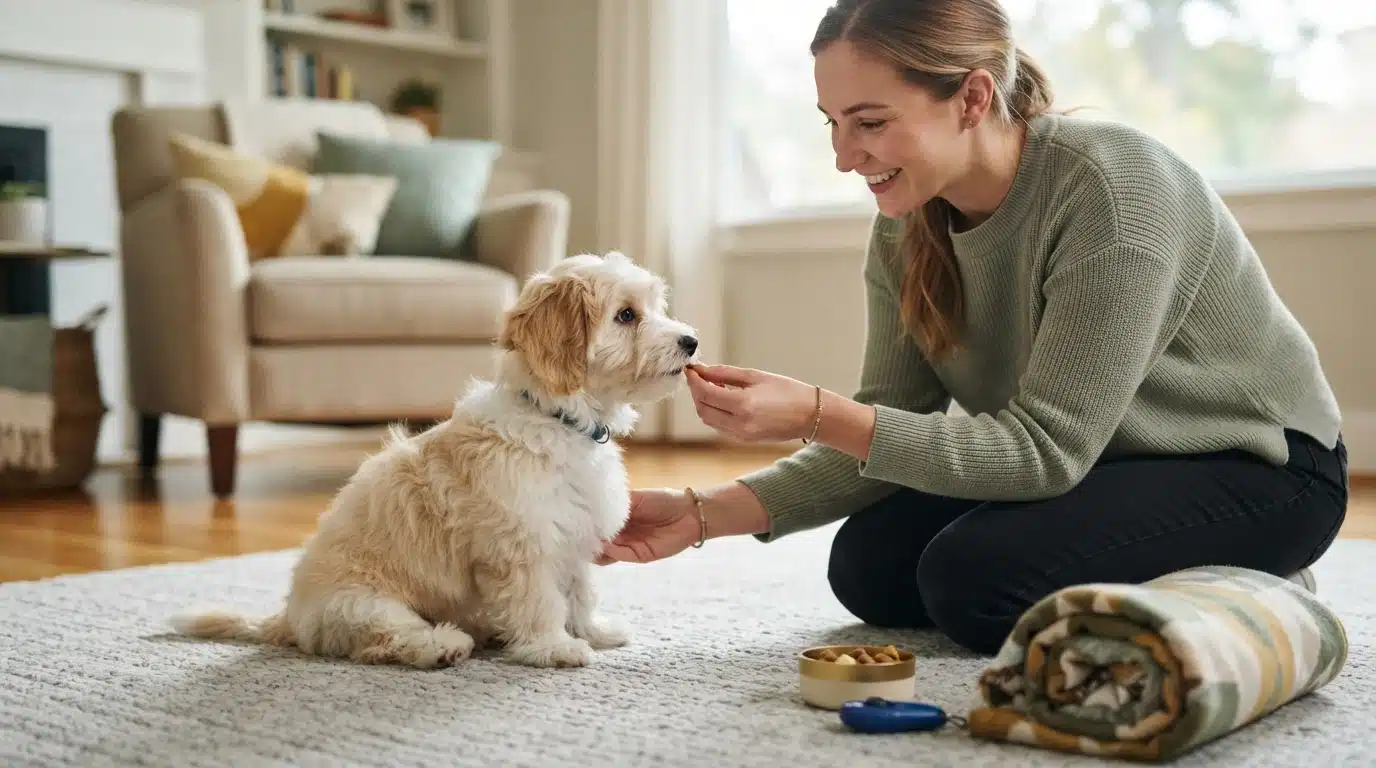
Quick Summary: Treat the first year of small breed puppy training as a flexible map of skills, not a set of deadlines, with trust and routines first, then socialization, recall, manners, and real-world proofing. Keep sessions to two to five minutes, use positive reinforcement, and expect regressions around eight months when puppies enter adolescence. If progress stalls, check sleep, health, distractions, and training difficulty, then step back and rebuild in smaller pieces. Sage Puppies in South Jordan, Utah, applies this approach when raising Havanese, Havapoo, and Cavapoo puppies.
Your Havanese or Cavapoo puppy can learn a sit the very first afternoon she is home, then at four months she may suddenly ignore the cue she nailed in week two. That gap is normal. Her brain is moving through developmental windows faster than a fixed deadline can track, and it is exactly where most puppy training timeline plans fall apart.
This guide maps the first twelve months instead. Each month, you will see which skills to introduce, from potty routines and crate settling to leash work and puppy socialization classes, and which ones to simply hold steady.
It is written for small companion breeds like the Havanese, Havapoo, and Cavapoo, drawing on the raising practices we use at Sage Puppies in South Jordan, Utah. Think of it as a month by month puppy training schedule you can start the day your puppy arrives, delivery or pickup alike.
What a Small Breed Puppy Should Learn Each Month, Month 1 to Month 12
A small breed puppy training timeline works best as a map of skills to introduce, not deadlines to hit. Here is what each month typically brings for a Havanese, Havapoo, or Cavapoo puppy.
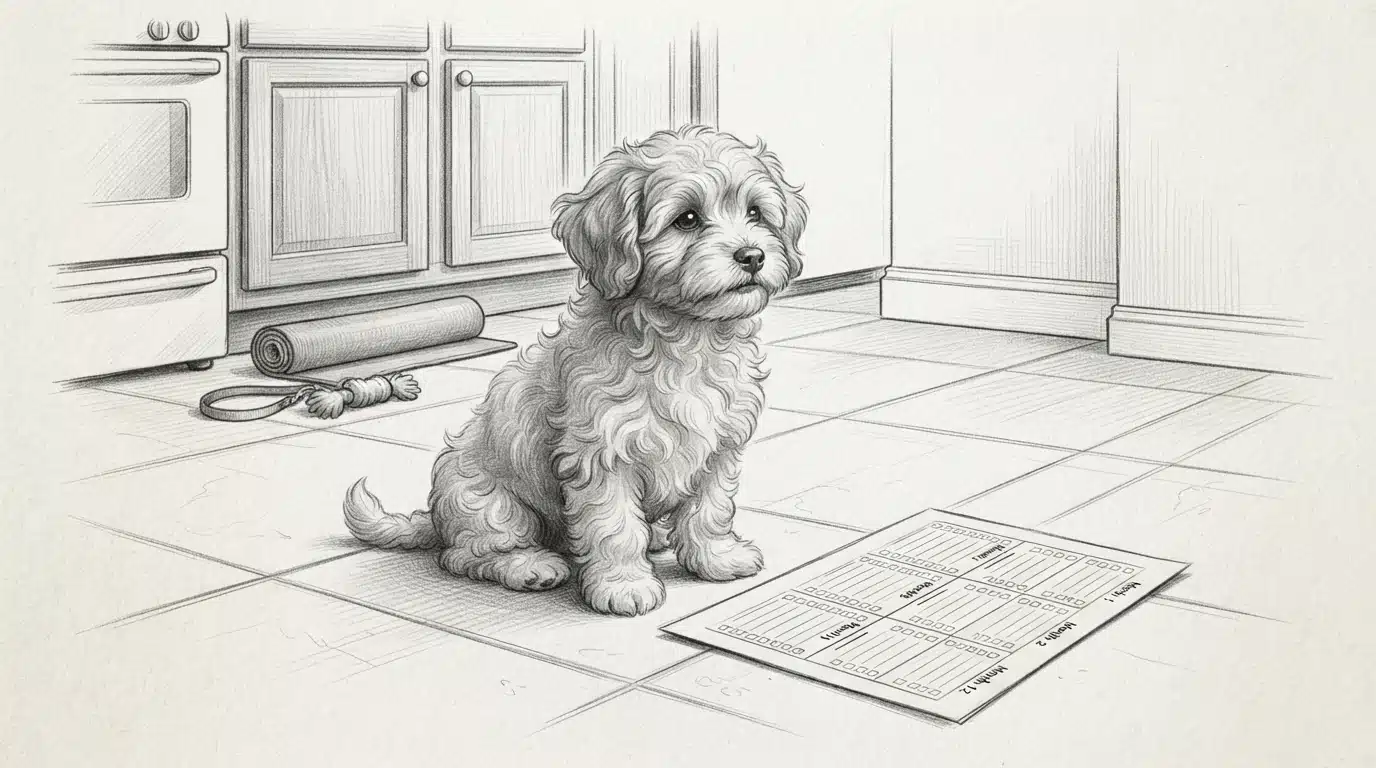
The Full Year at a Glance: Core Skill Introductions by Month
| Month | Core Skills to Introduce |
|---|---|
| 1 | Bonding, name recognition, gentle handling, first potty spots |
| 2 | Crate settling, short alone times, chew toy habits |
| 3 | Socialization window work, leash and harness fit, basic cues |
| 4 | Puppy socialization classes, recall games, house manners |
| 5 | Longer leash walks, impulse control, grooming cooperation |
| 6 | Reliable come command practice, polite greetings |
| 7 | Distraction training, alone-time confidence |
| 8 | Adolescent patience, refresher cues |
| 9 | Loose leash polish, calm handling at the vet |
| 10 | New environments, continued recall proofing |
| 11 | Consistency across rooms and routines |
| 12 | Steady adult habits and review |
How to Adjust the Timeline for Your Individual Puppy
Your puppy sets the pace. Some eight-week-old Cavapoos settle in a crate on night one; others need two weeks. If a skill stalls, go back a step and build it smaller. Missing a window is not a failure, so keep each item gentle and reward-based.
Why Small Breed Puppies Need Their Own Version of This Plan
Tiny bodies need tiny gear. Small breeds do better with light harnesses, low-entry crates, and short training bursts that respect their size and bladders. Breeders like Sage Puppies start handling and crate exposure early, which gives this timeline a head start at home.
Month 1: Name Recognition, Daily Routine, and Trust
Month 1 is about connection, not commands. Your puppy is adjusting to a new home, so the goal is a predictable routine, a strong name response, and gentle handling that builds trust.
Building the Name Response and Marker Word
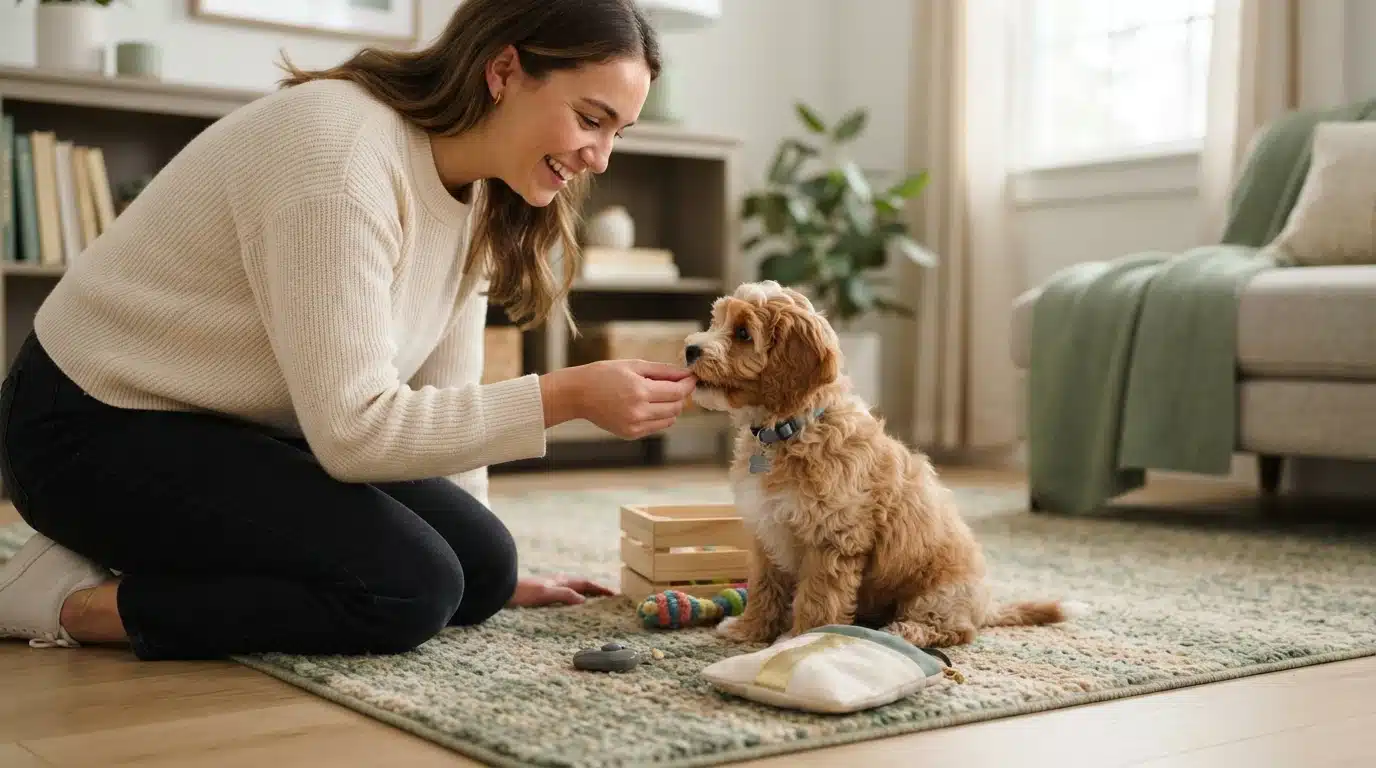
Say your puppy’s name once, in a happy tone, then reward the moment she looks at you. Repeat five to ten times a day in short sessions. Pair it with a marker word like “yes” so she learns that sound means a treat is coming. Keep it playful, and never use her name for scolding.
The Housetraining Routine Without a Deadline
Take your puppy out first thing in the morning, after every meal, after naps, and before bed. Puppies sleep up to 18 hours a day, so build the schedule around naps and meals rather than expecting long awake stretches, as the AKC puppy schedule suggests. Reward success outdoors right away. Small breeds have tiny bladders, so progress will be gradual and that is normal.
Treat “accidents” as information, not misbehavior. If you miss the signs, tighten the schedule instead of scolding.
Sleep, Handling, and Puppy-Proofing the First Two Weeks
Puppy-proof one or two rooms: tuck cords, lift shoes, and gate off stairs. Touch her paws, ears, and mouth briefly each day so grooming and vet visits feel ordinary later. For the first night and crate setup, our puppy prep guide walks through the details. Keep visitors calm and few during week one.
Months 2 and 3: Socialization, Handling Tolerance, and Leash Skills
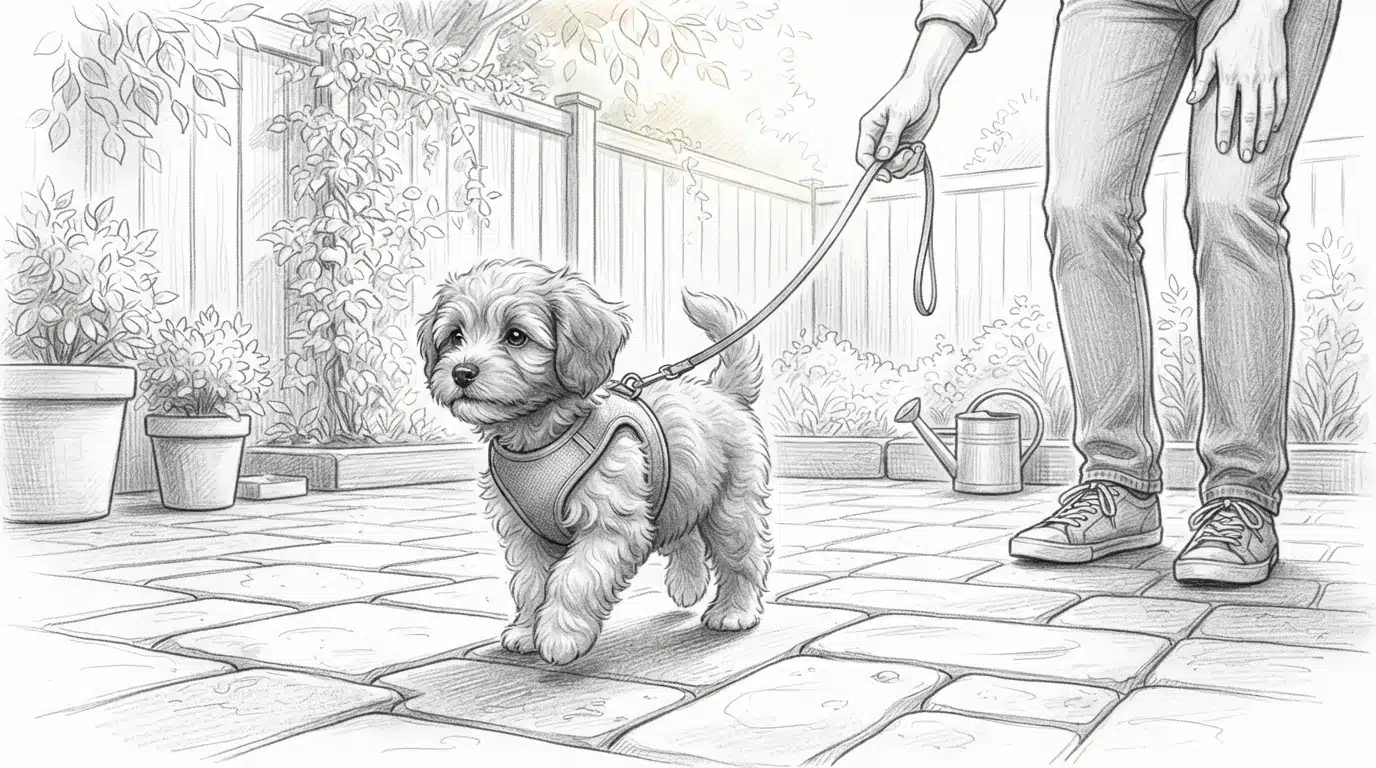
Small breed puppies can start leash walking and basic commands as soon as they come home, usually at 8 to 10 weeks. Fit a soft harness, let them drag a light leash indoors, and begin sit, down, and name games in short sessions. Keep each session under five minutes.
Socialization Conditions, Not Just a Calendar Date
The socialization window peaks before about 14 weeks, so these two months matter most. But the AVSAB position statement sets conditions, not just a deadline: puppies need controlled exposure to new people, surfaces, sounds, and handling, done gently and paired with treats. Watch body language, keep visits short, and end on success. That is how a puppy training schedule builds confidence instead of fear.
When Small Breed Puppies Can Start Leash Walking
Start leash training the week your puppy settles in, because habits form fast at this age. Clip on a flat harness, not a collar, since small breeds have delicate throats. Let the puppy follow you indoors first, then try short loops in the yard. Expect weaving, biting the leash, and sitting down mid-walk. That is normal. Reward any step toward you rather than pulling the puppy along.
Sit, Down, Name, and Handling Cooperation
Teach name recognition first, then sit and down with tiny treats. Handling work matters just as much for Havanese, Havapoo, and Cavapoo puppies: touch paws, ears, and mouth daily so grooming cooperation comes later. When your puppy has had two vaccinations, ask your vet whether puppy socialization classes make sense, and join only clean, well-run, size-matched groups.
Months 4, 5, and 6: Recall, Manners, and Real-World Reliability
The middle stretch of the first year turns early lessons into habits your puppy can use anywhere. Distractions grow, teeth sharpen, and independence kicks in, so this is the window for building a reliable set of basic cues before adolescence arrives.
The Command Set to Have in Place by Six Months
By six months, a Havanese or Havapoo puppy should respond to these cues in everyday settings, with treats as the reward:
- Sit and down, cued on the first ask
- Come, practiced on a long line before off-leash work
- Stay, starting with a few seconds
- Leave it and drop it for safety
- Loose leash walking on a fitted harness
Reliability matters more than the number of commands. Five cues that work outdoors beat ten that only work in the kitchen.
Why Recall Is the Longest Project
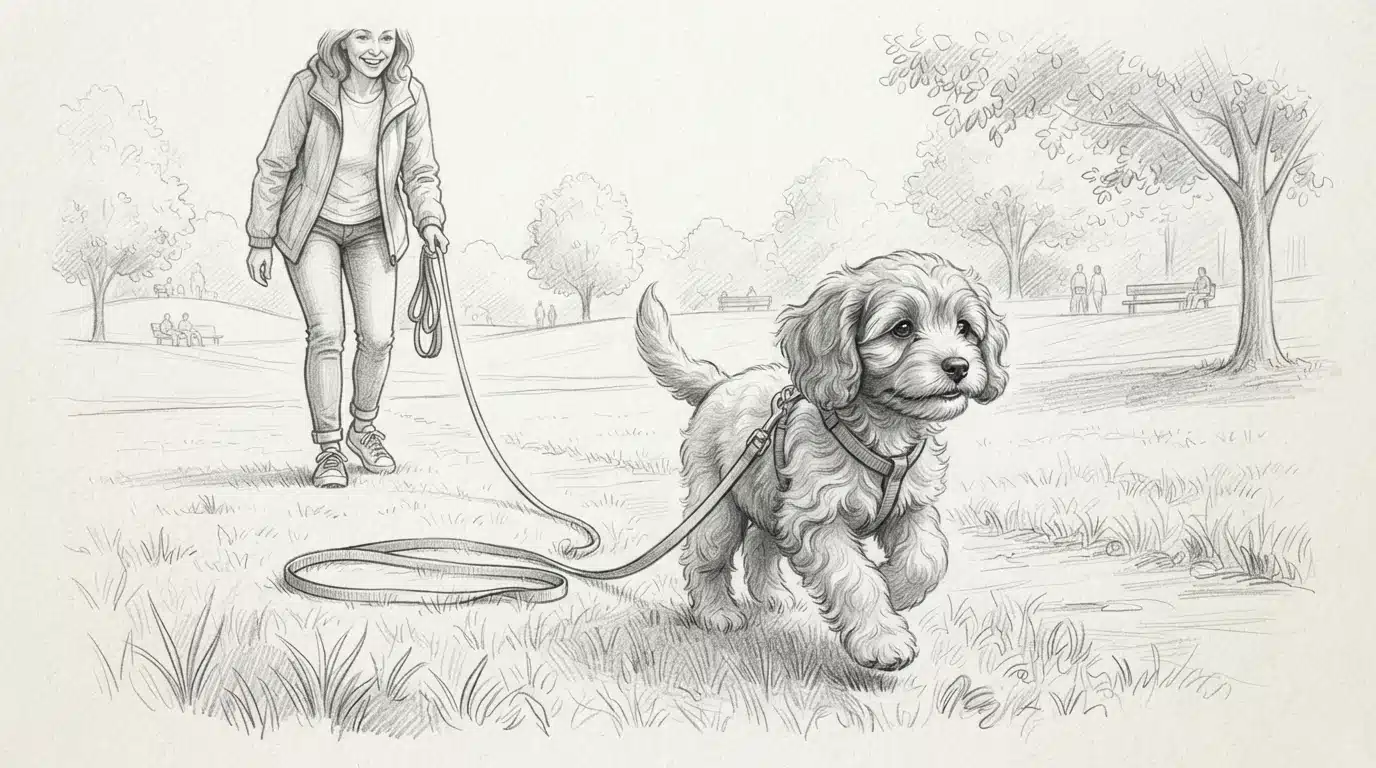
Come is the hardest cue to keep sharp, because it competes with squirrels, kids, and other dogs. Build it through paid repetition: call once, reward generously, and never call when you cannot enforce it. Practice on a long line in new places, and let recall games from month 4 mature through months 5 and 6 rather than expecting instant mastery.
Practical Manners for Apartment and Family Homes
Small breeds excel at quiet apartment manners: settle on a mat, greet guests politely, and hold still during brushing. Short daily sessions work best, and house rules stay consistent across every family member.
Consistency, not intensity, is what carries these skills into adulthood.
Months 7, 8, and 9: The Adolescent Stretch and How to Handle It
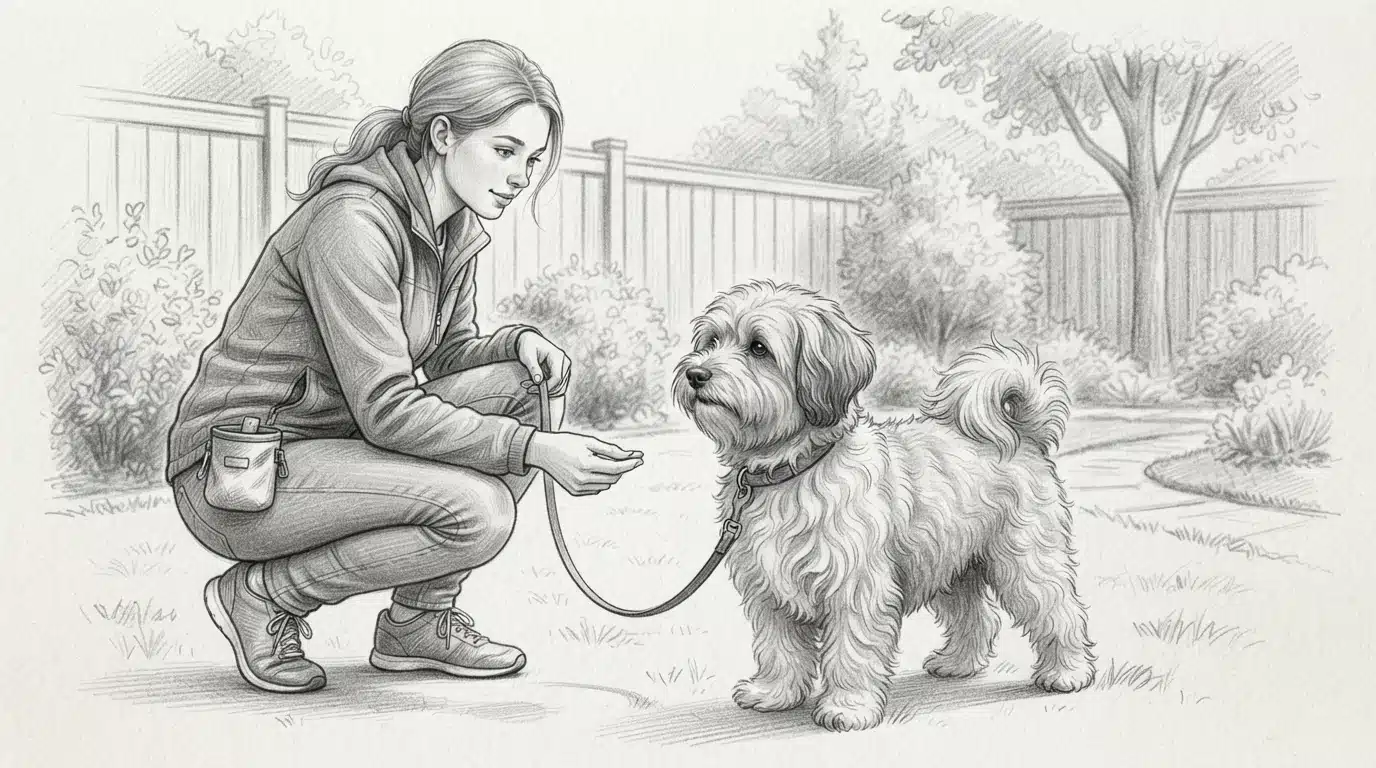
Somewhere around eight months, your puppy may suddenly stop responding to cues she aced last month. This is normal adolescent regression, not lost training. The fix is to go back to basics: lower distractions, pay better, and keep sessions short and upbeat, exactly as the AKC advises for regressed training. Keep rewards generous, rebuild one cue at a time, and celebrate small wins.
What Changes at Eight Months
Hormones rise, independence grows, and everything you taught gets tested. Cornell’s canine health center notes growing brains and fresh energy make rules slip, so re-tighten routines and puppy-proofing. Recall and impulse control work from earlier months now needs real-world distraction practice.
Holding Your Ground Without Punishment
Consistency beats force here. Ignore jumping, reward sitting, and ask for a cue your puppy knows well before harder ones. Studies found early positive training lowers later problems like barking and destructiveness, so stay the course. Because adolescence is when bad habits stick, use gates and crates for management instead of corrections.
Separation and Independence Skills
Keep alone-time practice gradual: step out for a few minutes, return calmly, and stretch the time over weeks. If your Havanese or Cavapoo whines, you returned too soon. Our guide to crate settling without stress fits this month well.
Months 10, 11, and 12: Proofing Skills for Real Life
By now your puppy knows the basics. The final quarter of the first year is less about new cues and more about making old ones work anywhere: busy parks, vet lobbies, grandma’s house, and a full workday at home.
One Cue, Many Contexts
Proofing means practicing a known cue until it holds up anywhere. Take “come” to the backyard, then a quiet trail, then a busier park, always on a long line until recall is rock solid. Change one thing at a time: a new room, a new person, a new distraction. If your puppy fails twice in a row, make it easier and rebuild.
The First Birthday Checkpoint
Around month 12, run an honest review. Can your Havanese, Havapoo, or Cavapoo settle in the crate, hold a loose leash, come when called in the yard, and stay calm alone for a normal stretch? List what works and what wobbles, then set two or three small goals for year two. Adolescence can still bring setbacks, so keep sessions short and rewards generous.
Grooming Cooperation as an Ongoing Training Goal
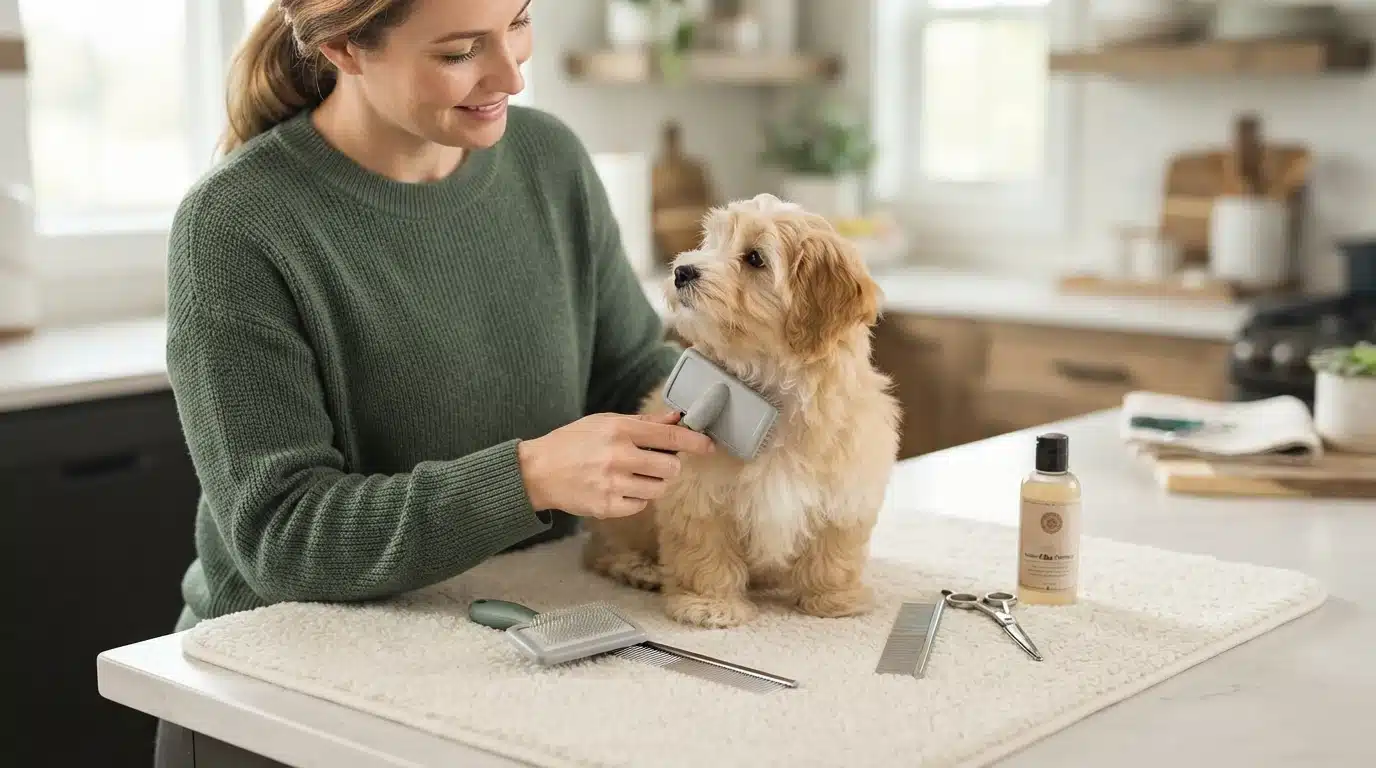
Small companion breeds need lifelong coat care, so keep rewarding calm brushing, nail trims, and ear handling weekly. Our Havanese grooming guide walks through a schedule and tools you can keep using into adulthood. A dog who tolerates the table as a puppy is far easier to groom for life.
When the Timeline Slips
Puppies develop in windows, not on deadlines. If your Havanese or Cavapoo misses a month’s skill, do not push harder. Slower progress usually points to a fixable cause.
Diagnose Before You Add More Commands
First, rule out the basics. A puppy that will not settle may be getting too little sleep, since pups need up to 18 hours a day. A puppy that ignores cues may be over-tired, hungry, or facing distractions too big for its stage. Check health too, because a sore mouth or upset stomach can stall training. Fix the cause before adding anything new.
Fixing Specific Situations
Match the fix to the slip. House training regressions usually mean the potty routine loosened, so tighten trips and supervision. A pup that bolts on leash may need a better harness fit, not more correction. If grooming turns into a battle, pause and rebuild with short, rewarded handling sessions. Drop back one month in the timeline and rebuild confidence before moving forward again.
When to Bring in Professional Help
Call a trainer if fear, guarding, or nipping keeps getting worse, or if a pup shows true panic when alone. Choose someone who uses positive reinforcement methods. A vet visit comes first when the change is sudden, since pain often looks like a behavior problem. Slipping a few weeks is normal; a puppy that feels safe catches up.
Common Mistakes to Avoid Along the Timeline
Over-Training and Under-Socializing
The most common error is drilling cues while the socialization window closes. Positive reinforcement training methods work best in short sessions of a few minutes, then you move on. New people, surfaces, and sounds matter more than a perfect sit. For a Havanese, Havapoo, or Cavapoo, add gentle grooming touches during socialization so handling feels normal, not scary.
Chasing Deadlines Instead of Readiness
The second mistake is treating the timeline as a set of hard deadlines. Months are windows, not due dates, and this puppy training schedule flexes with your individual pup. If recall stalls at month 6, keep playing the game rather than assuming failure. Same with a potty training routine: progress counts, even without a finish line. A puppy that misses a month is not behind, only learning at its own pace.

Your puppy’s first year moves fast, and each month builds on the last. Start this timeline the day your pup comes home, and adjust it as you learn what your puppy needs. If you’re still choosing your companion, the team at Sage Puppies raises Havanese, Havapoo and Cavapoo puppies in Utah and offers delivery nationwide.
Frequently Asked Questions
Q1: What should a small breed puppy learn each month from 1 to 12 months?
Treat the year as skill introductions, not deadlines. Month 1 covers bonding and potty spots; months 2 and 3 add crate settling, socialization, and leash basics; months 4 through 6 build recall and manners; adolescence means refreshers; months 10 to 12 focus on proofing.
Q2: When can small breed puppies start leash walking and basic commands?
Start the week your puppy settles in, usually at 8 to 10 weeks. Fit a flat harness, let her drag a light leash indoors, and teach sit, down, and name games in sessions under five minutes.
Q3: What commands should a Havanese or Havapoo puppy know by 6 months?
Sit, down, come, stay, leave it, drop it, and loose leash walking. Outdoor reliability matters more than the count, so five solid cues beat ten kitchen-only ones.
Q4: What if my puppy misses a month’s skill?
Go back one step and build it smaller. Check sleep, health, and distractions first, because most stalls have a fixable cause rather than a training failure.
Q5: How long should training sessions last?
Keep them to two or five minutes, several times a day. Short, upbeat sessions fit tiny attention spans and keep training fun.
Q6: Is 12 weeks too late for socialization?
No. The window peaks around 14 weeks, so start now with gentle, treat-paired exposure and consider size-matched puppy classes once your vet clears her after vaccinations.
Conclusion
The first year of a small breed puppy works best as a month by month map, not a list of deadlines. Months 1 through 3 build trust, crate settling, and socialization; months 4 through 6 turn cues into everyday manners and early recall; the adolescent stretch asks for patience and refreshers; and months 10 through 12 proof it all in real places. Progress comes from short, positive sessions that respect each puppy’s pace. When a skill slips, check sleep, health, and distractions before adding anything new. Follow this puppy training schedule, stay flexible, and your Havanese, Havapoo, or Cavapoo will carry steady habits into a calm adult year and beyond.