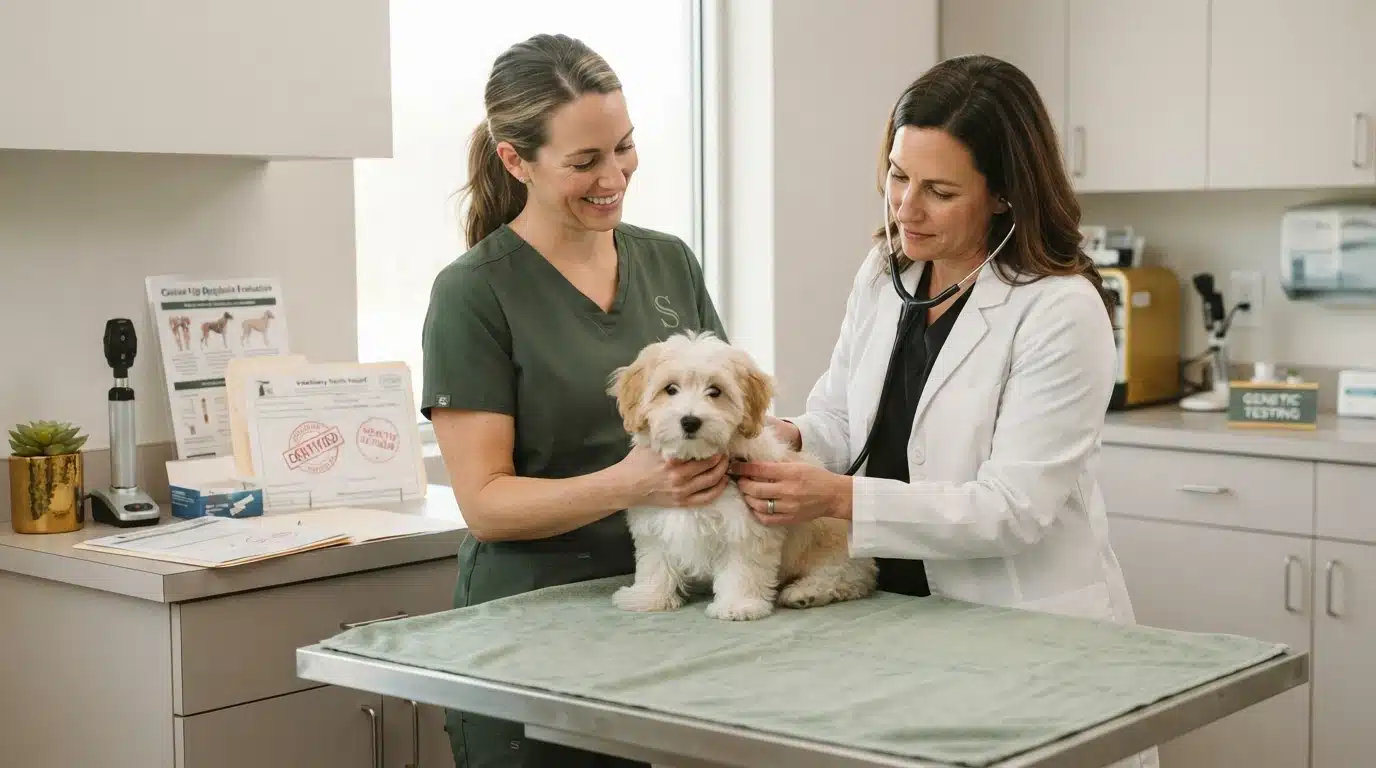
Quick Summary: Rescue adoption costs less and often includes vaccines, microchipping, and spay or neuter, but a puppy’s history, temperament, adult size, and health may remain uncertain. Buying from a transparent small breed breeder costs more but provides screened parents, vaccination and deworming records, written health terms, and more predictable size and temperament. Sage Puppies is presented as one breeder option, but either route requires careful vetting, first-year budgeting, and ongoing training.
Two puppies, roughly the same weight and age, two very different stories. One is a Havapoo whose parents had health screening and whose paperwork you can read before you pay. The other is a foster placement where a stranger’s notes are the only clue to her future rescue puppy temperament. You are not solving the same problem with each route. Rescue puppy adoption buys a known unknown. A breeder purchase buys a documented beginning, a defined go-home date, and a bigger bill. Most confusion comes from comparing the two on the wrong things. This guide weighs cost, health information, predictability, timeline, and support instead. Then it shows you how to vet any breeder or shelter, what the first months look like on each path, and how adopting a rescue puppy or buying a small breed puppy can fit your household, whether you pick up in Utah or across the country.
Rescue Puppy vs Small Breed Breeder: At a Glance
| Rescue puppy adoption | Small breed breeder purchase | |
|---|---|---|
| Upfront Cost | Typically a lower adoption fee than a breeder price; the fee often covers spay or neuter, vaccines, and microchipping, while ongoing care still costs money afterward | A stated purchase price, for example Sage Puppies lists a current range of $3,500 to $4,500 for Havanese, Havapoo, and Cavapoo puppies, with separate terms to confirm |
| Predictability of Temperament | limited: shelter assessments describe how the dog behaves in a foster or kennel setting, and a breed label on a mixed-breed dog is an estimate, not a temperament | Higher, but not guaranteed: breeder tendencies describe a population, and crossbred adult size and temperament still vary by the individual puppy |
| Health Information | Usually includes intake vaccination and parasite records; history is often partial, and pre-existing conditions may be unknown at adoption | Typically parent screening, puppy wellness care, vaccination and deworming records, and written health terms, with health testing reducing known risk rather than preventing it |
| Time to Bring Your Dog Home | Can be days for a shelter dog in foster care, or weeks to months of waiting for a specific puppy | Set around litter and go-home readiness, so families often wait for a specific puppy or litter rather than choosing a date |
| Support After You Go Home | Varies widely; many rescues offer a set return or foster-back window, and post-adoption coaching is not always included | Often includes transition notes, food and routine guidance, and pickup or delivery planning arranged before payment |
How Rescue Adoption and Small Breed Breeder Purchases Compare
Rescue puppy adoption
Rescue puppy adoption means taking home a young or adult dog through a shelter, humane society, or foster-based rescue. The fee usually covers intake care such as vaccines or a spay or neuter, but the dog’s early history is often partly unknown. It suits families open to any outcome and willing to work with whatever temperament shows up in the foster or kennel setting.
Key strengths
- Lower puppy adoption fee up front
- Intake vaccination and parasite records included
- A dog in foster care can come home within days
Small breed breeder purchase
Buying from a small breed breeder means reserving a documented puppy, such as a Havanese, Havapoo, or Cavapoo, through a written application process. Parent screening, vaccination and deworming records, and written health terms give families more predictability, though individual puppies still vary. Boutique programs like Sage Puppies build pickup or delivery planning into the process before payment.
Key strengths
- Stated price range and written health terms
- Higher temperament predictability from screened parents
- Transition notes and go-home planning before payment
What Each Path Actually Costs You
Both routes come with real numbers, so it helps to see what each payment actually buys. A rescue adoption fee and a breeder price cover different things:
- Adoption fee (about $50 to $500): spay or neuter, first vaccines, microchip
- Breeder price ($3,500 to $4,500 for a small breed like a Havanese): parent health testing, early socialization, vaccination and deworming records, breeder support after pickup
- What neither covers: food, training, vet visits, and the rest of your first-year puppy budgeting
Puppy fees at shelters and rescues commonly run from roughly $50 to $600, according to one 2026 cost guide. The check you write is only the start either way.

The Adoption Fee Is Only the Front of the Bill
A rescue puppy often arrives altered and vaccinated, which saves real money up front. But puppies in shelters may carry unknown history, so health issues can surface later at your cost. Some shelters also require unreturned deposits tied to spay or neuter deadlines. Budget for a vet exam within days of bringing the puppy home, plus insurance or a savings buffer. Rescues rarely refund for a mismatch, so honest self-screening matters more than the fee.
What a Breeder Price Includes, and What It Does Not
A transparent small breed program’s price covers documented work: parent health testing, early socialization, and written puppy pricing and reservation terms you can review before you commit. You should also get records showing each vaccine and deworming date.
What it does not include is ongoing care. Training, food, grooming, and routine vet visits still land in your first-year budget, which for any small breed runs well beyond the purchase price. Ask any breeder exactly which items are guaranteed and which are simply provided.
A fair comparison is not fee versus price. It is what each path documents before you pay, and what each leaves for you to handle after.
What Rescue Puppy Temperament Really Tells You
Can you predict a rescue puppy’s temperament before adopting? Only partly. Shelter assessments show how a dog behaved on one stressful day, not how it will settle in your home. What they can reveal:
- Fear or stress responses to handling and new situations
- Reactions to food, toys, or other dogs that day
- Baseline sociability with people at the shelter
Reading a Shelter Assessment Honestly
Most shelters use a short behavior test, often modeled on the ASPCA’s SAFER assessment, to flag handling or resource concerns. Treat it as a snapshot, not a verdict. Shelter stress can make a friendly puppy shut down or a calm one act tense, so scores shift once the dog relaxes at home. Watch the puppy yourself. Ask staff what changed over weeks in foster care, because a home setting shows far more than a kennel run ever will.
Breeder Tendencies Are Useful, Not Promises
A breeder purchase gives you different information. With a Havanese, Havapoo, or Cavapoo, you see the parents’ temperament and get weeks of early socialization already done, which raises the odds of an easy start. Tendencies still need shaping, though, so expect to keep working through a month-by-month puppy training timeline once your puppy is home. Either way, plan on training. Environment and consistency matter more than the paperwork on day one. Shelter stress can skew test results, something behavior experts note often in shelter evaluations.
Should I Adopt a Rescue Mixed-Breed Puppy or Buy a Havanese, Havapoo or Cavapoo Puppy?
Adopt a rescue if you want a lower upfront fee and can accept an unknown history. Buy from a breeder if you need a predictable size, coat, and temperament, plus documented parent health testing. Neither route is wrong. What matters is how well the dog fits your home, schedule, and experience level.

Three Questions That Decide It Faster
Ask yourself these before you visit a shelter or fill out an application:
- How certain must I be? If allergies, apartment rules, or a small home demand a predictable adult size, a Havanese, Havapoo, or Cavapoo gives you documented parents and known growth patterns.
- What does my budget allow? Adoption fees often cover early vet care. Breeder prices run higher but include health records, socialization work, and ongoing breeder support.
- How much uncertainty can I handle? Rescue puppies may carry unknown genes, unseen early experiences, or behavior gaps you will work through together.
Honest answers here settle the debate faster than any checklist.
Where the Two Paths Overlap
Both routes deserve the same scrutiny. A good rescue screens its animals, shares vaccination and deworming records, and asks you real questions about your home. A transparent small breed program does the same on the breeder side: parent health testing, written terms, and a matching process rather than a first-come listing. If a shelter or seller skips those steps, treat it as a warning sign regardless of which path you choose. The paperwork, not the price, tells you who to trust.
Health Information and Vet Records Side by Side
Health paperwork is where the two routes differ most. Rescue records show what a puppy has received so far. Breeder records show what the parents passed before the puppy was born. Both matter, just in different ways.

What a Rescue Can Show You
A reputable rescue hands over vaccination and deworming records, a spay or neuter date, and any vet notes from its foster period. Some mixed breed puppies arrive with limited history, especially if they were surrendered young, so the shelter vet’s exam becomes your baseline. Ask for that exam in writing. It should list anything treated, from ear infections to parasites, so your own vet can follow up.
What a Breeder Should Hand You
A transparent breeder goes further. Expect puppy vaccination and deworming records with dates, a vet health certificate from a recent exam, and parent health testing results for breed-specific conditions such as patellar luxation or cardiac issues. Ask for the written health terms, too: what is covered, for how long, and what voids it. A breeder who can explain those records in plain words is worth the call. When you review any seller, learning how to check a puppy breeder’s health testing records turns vague promises into verifiable proof.
Vetting the Seller: Red Flags and Green Flags
An ethical small breed breeder is easy to spot: they invite questions, show health testing on the parents, and let you see where puppies live. A puppy mill hides behind a website and a price. Ask the questions below and watch how the seller answers, not just what they say.
Questions to Ask Any Small Breed Breeder
- Can I visit, or at least see a live video of the puppies and mother?
- What health testing have the parents had, and can I see results?
- Which vaccinations and deworming has each puppy received?
- What written health terms come with the puppy?
- How do you socialize puppies before they go home?
- Who takes the puppy back if our family cannot keep it?

Warnings That Should End the Conversation
Some answers are deal breakers. Walk away if the seller:
- Refuses a visit or video and only ships the puppy sight unseen
- Has no parent health testing or calls records “not necessary”
- Always has litters of many different breeds available
- Wants cash, a wire transfer, or gift cards before you meet the puppy
- Pushes you to decide today with a “someone else is coming” claim
- Sells puppies younger than eight weeks
A transparent program like Sage Puppies answers these questions before you ask, including the application, matching, and pickup process.
The First Months at Home in Each Path
The First Two Weeks
Expect a rough patch first. A rescue puppy may hide, skip meals, or house-soil while it learns your routine. Puppy blues hit new owners in both paths, so plan for sleep loss and short patience. A breeder-raised pup often arrives already crate-started and used to family noise, though it still needs a settle-in period. In either case, keep days boring: same potty spot, same feeding times, quiet handling. For a room-by-room setup and what to buy before pickup, the first week home guide walks through it. Call your vet within a few days for a health check, whatever the paperwork says.
Training, Socialization, and the Support Around You
Training needs are similar, but the support differs. Good breeders answer questions for months and can tell you what the puppy already knows; some shelters offer classes or behavior hotlines, and many rescue groups ask you to complete a training course. If the breeder or rescue vanishes after handoff, that tells you something. For a week-by-week plan, this small breed puppy training timeline covers months one through twelve.
| Support | Rescue | Breeder |
|---|---|---|
| History known | Often partial or unknown | Parents and early care documented |
| Post-pickup help | Varies by shelter or group | Usually ongoing breeder access |
| Training start | Depends on past care | Often begun by the breeder |
Socialization matters more than the source: positive, gentle exposure before 16 weeks shapes temperament.
Which Should You Choose: Rescue Adoption or a Small Breed Breeder?
Both routes can put a great dog in your home. The right choice depends on what you can predict, what you can handle, and how much paperwork matters to you.
Choose a Rescue Puppy When
Rescue fits families with flexible expectations. You pay a much lower fee, and many shelters include vaccines, a microchip, and spay or neuter in that cost. Adult dogs often arrive already house-trained, which helps busy households. Adoption also gives a dog a second chance, and shelters usually ask good screening questions before approving you. The trade-off is history: mixed breed puppy adoption often means unknown parentage, so temperament, adult size, and health background stay partly a guess. That works well when you love a dog for who it is, not a breed description.
Choose a Small Breed Breeder When
A breeder makes sense when you need predictability. With a Havanese, Havapoo, or Cavapoo, you know the likely adult size, coat type, and temperament before the puppy is born. You can meet or view parent health testing results, review puppy vaccination and deworming records, and start socialization early with a transparent program. Sage Puppies, for example, walks every family through an application and matching process, similar to the way a careful puppy matching process should work. Expect a higher price and a written agreement covering health terms and support after pickup. Ask for documentation at any breeder you consider.

Still weighing both routes? Start with fit, not the listing. If a well-matched Havanese, Havapoo, or Cavapoo fits your home better, Sage Puppies makes it easy: review the application, ask Cassie your questions, and reserve the right puppy for your family.
Frequently Asked Questions
Q1: Should I adopt a rescue mixed-breed puppy or buy a Havanese, Havapoo or Cavapoo puppy?
Adopt if you want a lower puppy adoption fee and can accept unknown history. Buy if you need a predictable adult size, coat, and temperament with documented parent health testing and written health terms.
Q2: What are the pros and cons of adopting a rescue puppy vs buying one?
Rescue costs less up front and often includes vaccines, microchip, and spay or neuter. Buying gives you screened parents, records, and breeder support, but costs far more and still requires training.
Q3: How do I know if a small breed breeder is ethical and not a puppy mill?
Ask for a visit or live video, parent health testing results, vaccination records, and written terms. Walk away if they refuse, keep many breeds always available, or push payment before you meet the puppy.
Q4: How much should I budget for the first year with a small breed puppy?
Beyond the purchase or adoption fee, plan for food, grooming, training, vaccines, and routine vet visits. First-year puppy budgeting usually exceeds the puppy’s price, so build a savings or insurance buffer.
Q5: Can a shelter really tell me a rescue puppy’s temperament?
Only partly. Assessments capture one stressful day, so ask what changed during foster care. A home setting reveals far more than a kennel run ever will.
Q6: Is a rescue or breeder puppy easier for first-time owners?
Breeder puppies often arrive crate-started and socialized, with ongoing breeder guidance. Rescue puppies can thrive too, but expect gaps in training and history you will need to fill yourself.
Conclusion
Rescue adoption and a breeder purchase solve different problems. A rescue puppy brings a lower puppy adoption fee, intake vet care, and real uncertainty about history and temperament. A Havanese, Havapoo, or Cavapoo from a transparent program costs more but offers documented parents, records, and written health terms. Neither path is better. Judge any seller or shelter on the paperwork: health testing, vaccination and deworming records, and honest answers to your questions. Pick the route that fits your home, budget, and need for predictability, then commit to the training that follows.