Quick Summary: Verify a breeder yourself: check both parents in the OFA database, visit the home or request a full live video tour, and read the contract, especially the return-to-breeder clause and health guarantee. Walk away from pressure to pay quickly, fake crate fees, suspicious payment methods, or exaggerated claims like teacup size and hypoallergenic coats. Sage Puppies, a small Utah program raising Havanese, Havapoo, and Cavapoo puppies at home, says buyers should apply these same checks to it and every other breeder.
Most buyers pour hours into the puppy listing and minutes into the breeder. But that listing photo tells you nothing. It cannot show whether the parents were radiographed for hips, examined by an ophthalmologist, or whether the dam still lives in the home you are about to visit. Finding a reputable puppy breeder means checking those things yourself, and this guide shows you how, with public records like the OFA CHIC database you can search for free. We cover what a reputable puppy breeder near me search should actually turn up, what to look for when you walk into a breeder’s home, and which contract clauses protect you. As a small Utah program raising only Havanese, Havapoo, and Cavapoo, Sage Puppies built this checklist around the same primary sources we expect buyers to hold us to.
Where to Start When You Search for a Reputable Puppy Breeder Near Me
Finding a reputable puppy breeder starts with knowing who actually raises the puppies. Skip the classified ads and begin with programs where one person or family owns the mother, cares for the litter, and answers your questions directly. That single decision filters out most of the problems ahead.

Breeder-Led Programs Versus Listing Aggregators
A breeder-led program means the person you talk to also feeds, socializes, and trains the puppies. You can meet the mother, see where the litter sleeps, and ask about health testing. Listing aggregators work differently. They collect ads from many sources, and the person posting may be a broker who never touched the puppy. Before you commit, look for the red flags when buying a puppy, such as no proof of the mother or pressure to pay a deposit fast.
Local Pickup Versus Delivery From a Distance
Local pickup lets you visit more than once, see the parents, and judge the environment yourself. Delivery widens your options, especially for less common breeds, but you depend on video calls and paperwork instead of your own eyes. Both can work if the breeder offers a live video tour, current vet records, and a clear contract. Some programs, like small Havanese and Cavapoo breeders in Utah, offer both pickup and flight nanny delivery, so distance does not have to limit you. Ask early how the puppy will travel and who handles it.
What to Look for at a Reputable Breeder’s Home
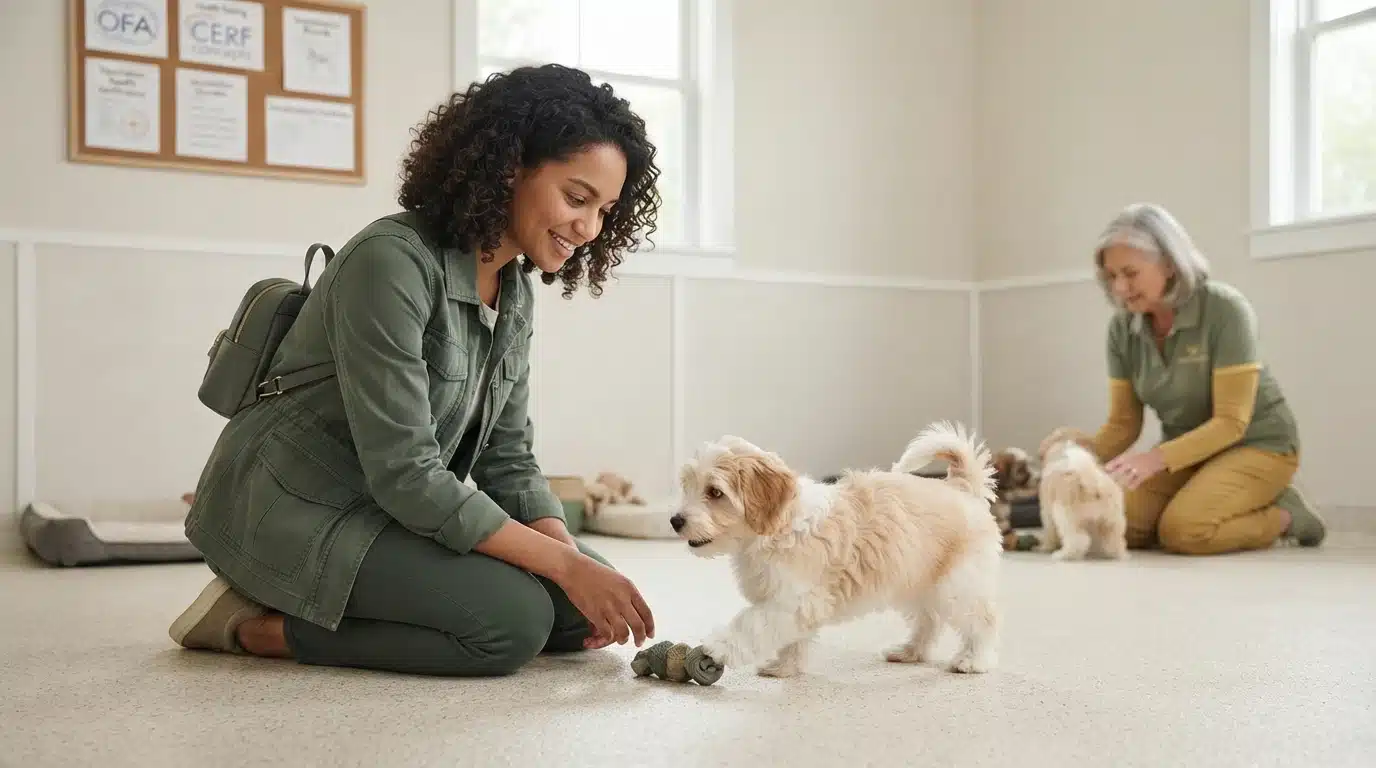
A home visit is a core part of finding a reputable puppy breeder. Go in with a short checklist: a clean, safe living space; the mother dog on site; puppies that act lively and curious; and a breeder who lets you look around and asks questions of her own.
- Cleanliness and daily setup you can see
- The dam present and relaxed with her litter
- Puppies that are social, alert, and comfortable
- A breeder who handles visitors openly, not defensively
Cleanliness, Space, and Daily Setup
Look at floors, bedding, and the whelping area first. You want dry bedding, no strong ammonia smell, fresh water within reach, and toys or enrichment items in the puppy space. Ask where the litter eats, sleeps, and plays each day. Puppies raised in a busy part of the home handle household noise far better than puppies kept in a garage or kennel run. One mess here or there is normal. Constant filth is not.
The Dam Should Be There
The mother should be on the property and easy to meet. Meeting her tells you about temperament, size, coat, and the daily care she receives. Ask to see her move around and interact with you. A well-cared-for dam looks a healthy weight, has clean ears and eyes, and greets people without fear or aggression.
If the dam is “at a friend’s house” or suddenly “at the vet,” treat that as a warning sign and ask to reschedule.
Some breeders use a guardian home, where a breeding dog lives with a local family. That can be a fine arrangement, but you should still be able to meet the dam or see recent, dated photos and vet records.
Puppies Should Look Alive, Social, and Comfortable
Healthy puppies have bright eyes, clean coats, and no discharge from the nose or rear. They should tumble, play, and investigate you within a few minutes. A puppy that cowers in a corner or flinches at every hand needs more socialization, so ask how the breeder exposes the litter to sounds, surfaces, and handling.
Watch How the Breeder Handles You
A good breeder interviews you as much as you interview her. Expect questions about your home, work schedule, kids, and plans for training. She should freely show where the puppies live, share health records, and let you handle a puppy with supervision. If you can’t visit in person, ask for a live video tour of the whole space, not a curated highlight reel. Breeders who refuse basic access are the ones to walk away from, a pattern covered in more detail on our puppy red flags page.
Health Testing You Can Verify Yourself
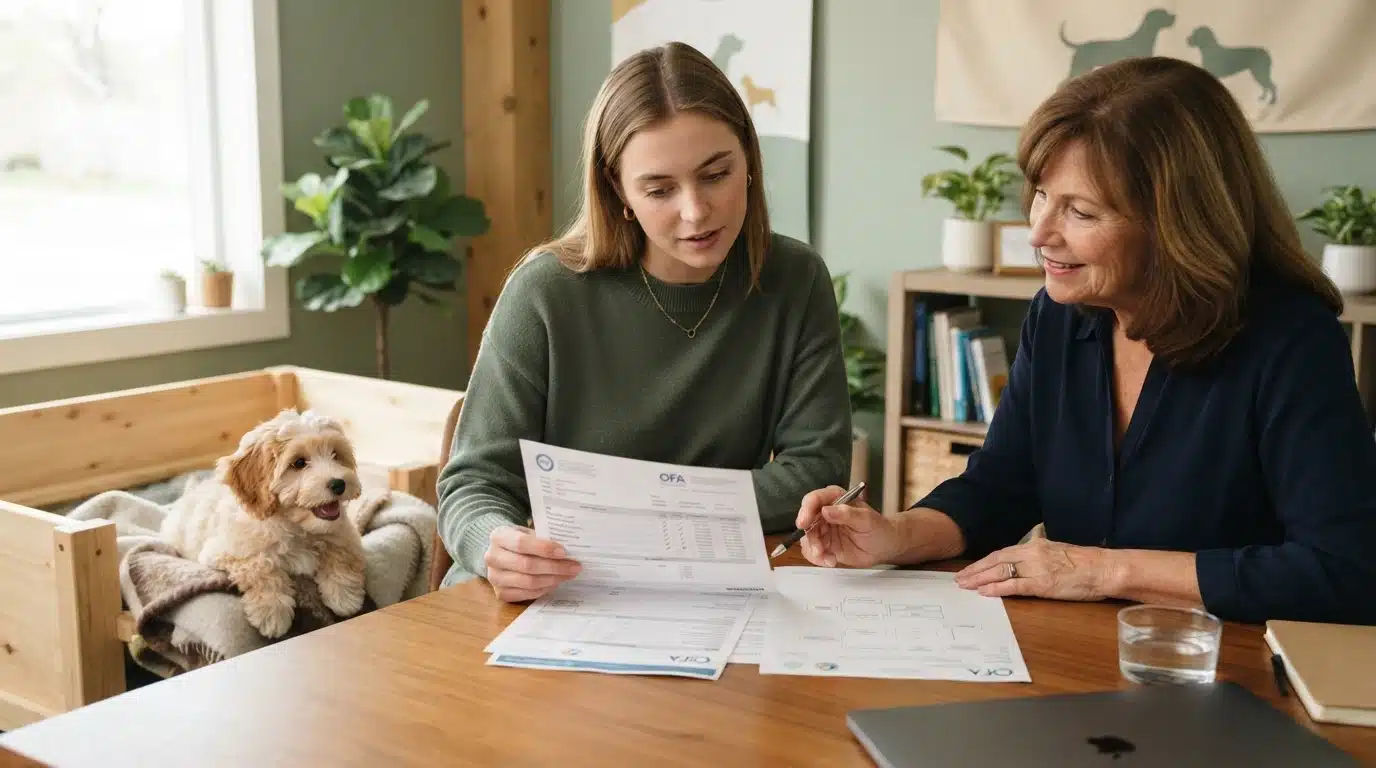
Ask a breeder for proof, not promises. The fastest check: ask for the registered names of both parents, then search those names in the OFA database yourself. Health claims you can trace in minutes beat certificates you never see. Here is how to sort what you find.
Three Different Kinds of Evidence, Kept Separate
Keep three record types apart in your mind. Registry certifications (hips, patellas, eyes) come from a neutral body, so they carry the most weight. DNA results show carrier status, which matters for breeding choices but not always for your puppy’s health. Vet statements reflect one dog on one day. A clean vet check is not a certification, and a DNA carrier is not a sick dog. Ask which type you are looking at before you trust it.
Current Havanese CHIC Requirements
For purebred Havanese, the CHIC number is the easiest summary. Current requirements call for an annual eye exam by an ophthalmologist, hip radiograph evaluation, and patella (kneecap) certification. BAER hearing testing was removed from the core requirements in early 2025, so an older listing may look different from a new one. Check the Havanese Club of America health statement for the version in force this year.

Cross Breeds Do Not Share One Panel
Havapoos and Cavapoos inherit health considerations from both parent breeds, so there is no single CHIC checklist for them. Instead, expect testing on both sides: patellas and eyes from either lineage, plus cardiac checks where the parent breed standard calls for them. Ask for each parent’s records separately. If a breeder of a cross says “testing is not required for mixes,” that is a choice to skip, not a rule.
Run the OFA Search Yourself
Search by the parent’s registered name at ofa.org. A healthy listing shows dates, exam types, and results you can read line by line. No listing at all is a finding too: it means no public certification exists. Match what the breeder told you against what the database shows before you place a deposit.
Questions to Ask and Records to Request
What questions should I ask a puppy breeder before paying a deposit? Ask these twelve, and take notes on the answers:
- How long have you bred this breed?
- What health testing do the parents have, and can I verify it myself?
- May I see where the puppies live, in person or by live video?
- How do you socialize the litter?
- Which vaccinations and dewormings has this puppy had?
- Has a vet examined the puppy, and when?
- What do you feed, and what is the puppy’s current weight?
- Have any puppies in this litter shown health problems?
- What happens if I cannot keep the dog later?
- What does your health guarantee cover, and for how long?
- When can the puppy come home, and why at that age?
- May I speak with families who bought your past puppies?
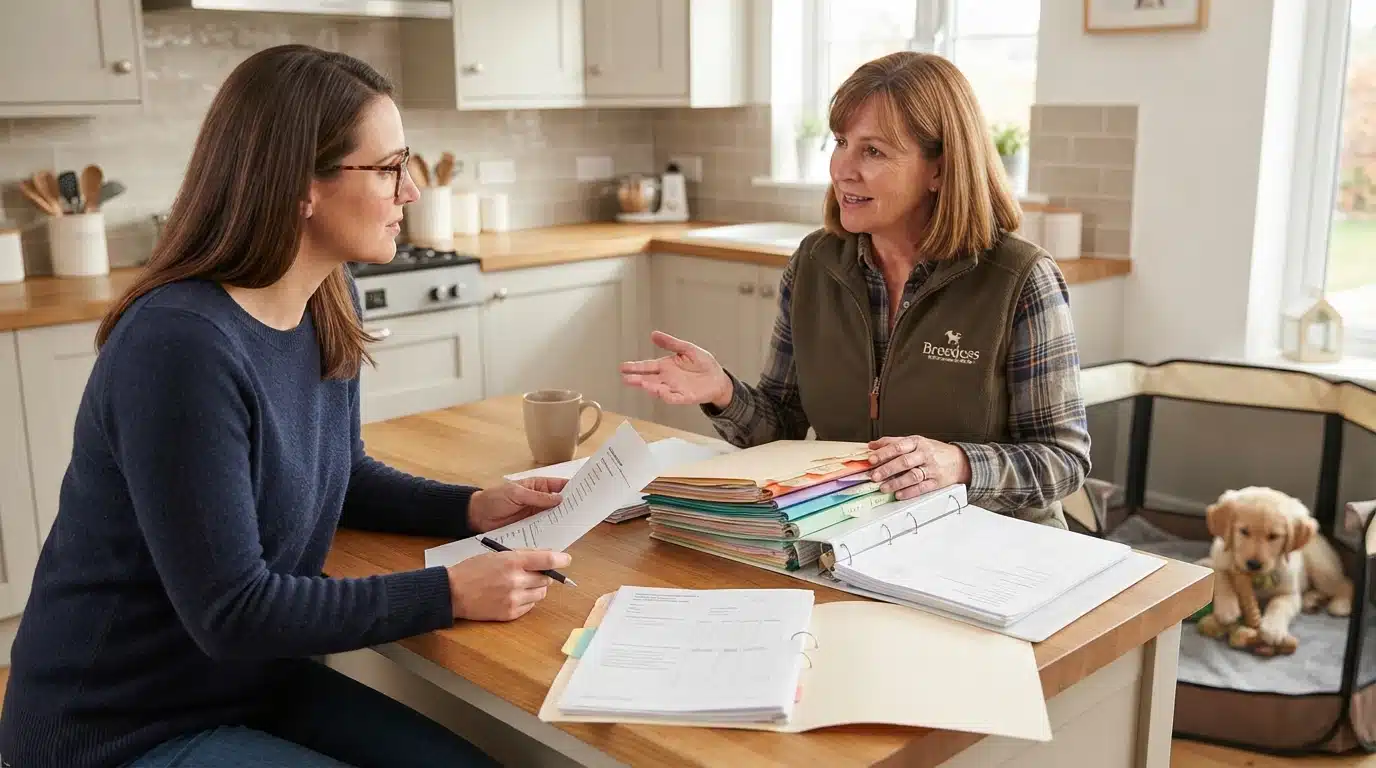
A serious breeder answers these without hedging. Vague replies, or pressure to pay before you finish asking, are reasons to walk away.
Documents to Request in Writing
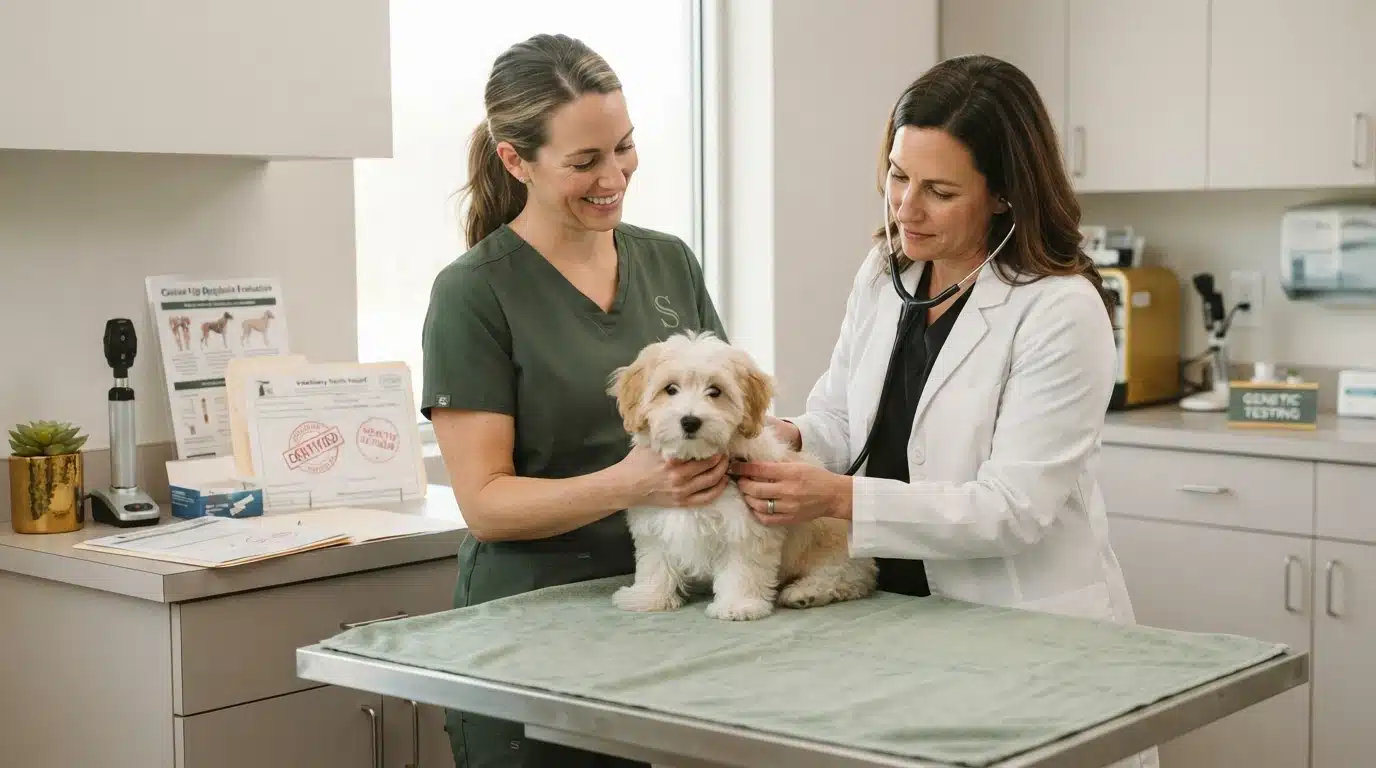
Ask for copies, not summaries. You want the parent’s OFA CHIC numbers, the puppy’s vet exam record, vaccination and deworming dates, a microchip number, and the signed purchase contract. Reputable breeders send these before payment, not after. Email is fine, but keep every file. If a breeder refuses to put testing and guarantee terms in writing, treat that as your answer.
Reading the Contract Line by Line
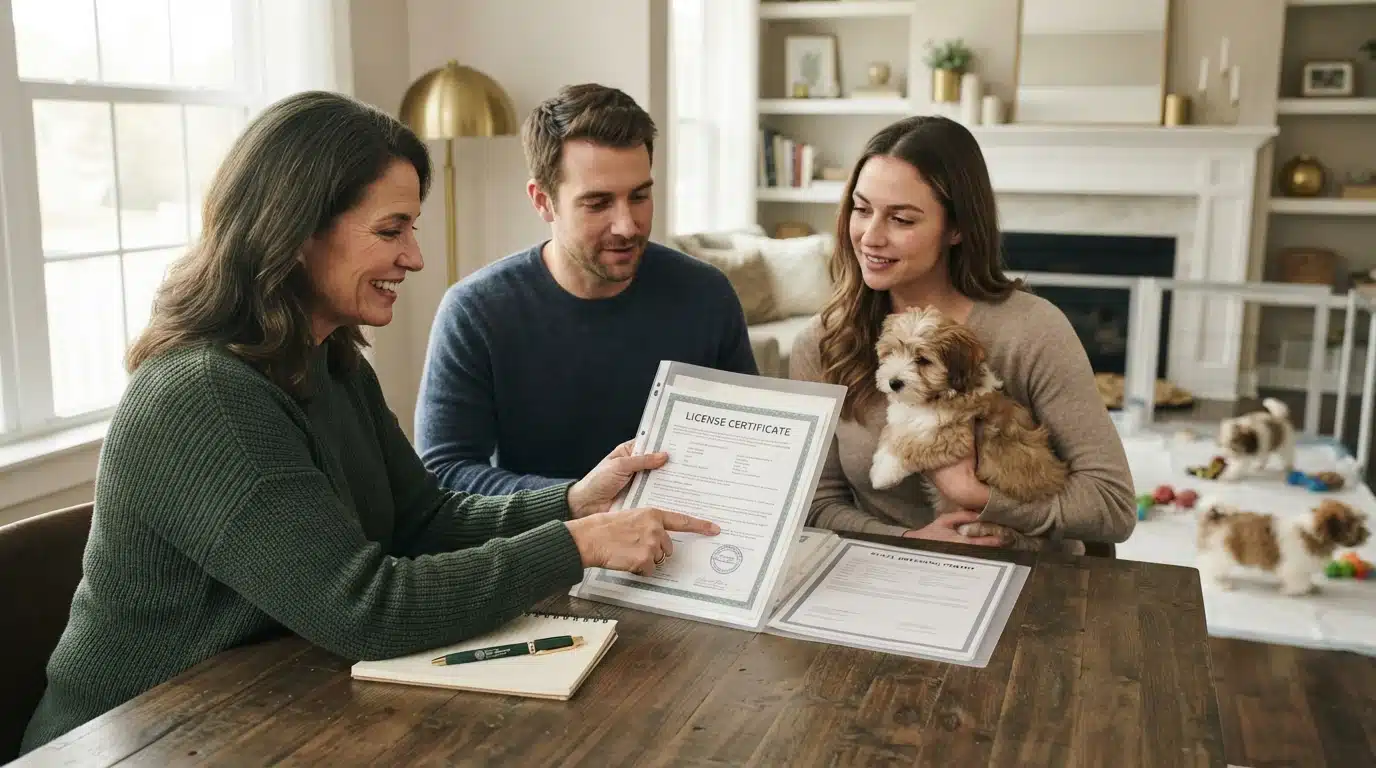
A puppy purchase contract should include the price and deposit terms, a health guarantee with a defined window, spay and neuter terms, the return-to-breeder clause, and a microchip transfer process. Read the return clause first. A strong one protects both the puppy and your family if life changes, as explained in our guide to puppy contract terms to review. Also check who pays return shipping, whether the guarantee requires a vet visit within days of pickup, and what voids coverage. Ask questions before you sign, never after.
Red Flags That Should End the Search
Some warning signs should stop the conversation, not just prompt a question. Watch for these:
- Only-once payment: wire transfers, gift cards, or Zelle to a stranger
- Pressure: “another family is about to pay,” same-day deposit demands
- Crates and fees: extra charges for “climate-controlled shipping crates”
- Too-good prices: rare colors or tiny sizes well below typical rates
The BBB has tracked a steady rise in pet scams, with puppy scam patterns documented across online marketplaces, so any of these alone is reason to walk away.

Payment and Pressure Tactics
A legitimate breeder explains what the deposit covers and never demands instant payment. Be skeptical of sellers who cannot do a live video call, refuse visits, or claim they are “out of town” so a friend will deliver the puppy. If someone pushes you to commit within an hour, treat that urgency as a reason to slow down, not speed up.
Shipping and Crate Requests
Watch for a seller who insists on shipping and then invents new fees afterward: a “temperature-controlled crate,” special insurance, or last-minute taxes. BBB reports show these fake crate fee scams unfold after the deposit clears. Ask instead to meet in person or to pick the puppy up at the breeder’s home, where you can see the mother and the living conditions.
Marketing Claims That Distort the Breed
Be cautious with “teacup” puppies, extreme colors sold as rare, or guarantees of a hypoallergenic, non-shedding coat. These claims push puppies outside their breed standard, and exaggerated marketing often signals a puppy mill or scam operation rather than a careful breeding program.
Small-breed programs such as Sage Puppies raise Havanese, Havapoo, and Cavapoo puppies to the breed standard, so families know exactly what size and coat type to expect.
Applying This Checklist to Sage Puppies
The Program Side of the Checklist
Run any breeder through the same tests in this guide, including us. Sage Puppies is Cassie Milar’s small home program in South Jordan, Utah, founded in 2025, and it breeds only Havanese, Havapoo, and Cavapoo. That narrow focus means every parent dog can be checked in the OFA CHIC database by name, the same lookup we walked through earlier. Puppies are raised in the home, not in a kennel building, so you can ask for a live video tour and see the whelping area, the flooring, and how the litter behaves around ordinary household noise. Ask about patella and hip screening, DNA carrier status, and the socialization routine, and compare the answers against the AVSAB standards covered above.
What the Application and Reservation Process Looks Like
The process starts with a written application, not a first-come cart checkout. Cassie reviews each family’s home setup, schedule, and experience, then matches puppies to households rather than selling to whoever pays fastest. Pricing runs $3,500 to $4,500, and the pricing and reservation page lays out deposits, pickup, and delivery terms before you commit money. Contracts include a return-to-breeder clause, and health records come documented, not promised. If a litter is not the right fit, the application stays on file. Current availability is listed on the available puppies page, and you can compare what is shown there against every checklist item in this guide.
Common Mistakes to Avoid
Buyers slip up in the same ways, so watch for these before you send a deposit.
- Paying by wire transfer, gift card or Venmo to someone you have never met. Scammers push fast, hard-to-trace payment, and the BBB puppy scam study flags fake crate fees and shipping charges as common add-ons.
- Taking a litter home before eight weeks of age. Puppies need that time with their mother and littermates.
- Skipping the parent health checks. Ask for the OFA CHIC numbers, then verify them yourself.
- Trusting teacup size claims. Breeders cannot promise adult size, and extreme smallness often signals health trouble.
- Signing without reading the return to breeder clause. If you cannot keep the dog, that clause decides what happens next.
One visit or a live video tour of the breeder’s home catches most of these problems early.

You now know how to spot a reputable breeder: health testing, transparent homes, honest contracts. If that checklist sounds like the breeder you want, see how Sage Puppies answers it at Sage Puppies. Review the application, ask anything, and start matching with a well-raised Havanese, Havapoo, or Cavapoo.
Frequently Asked Questions
Q1: What should I look for at a reputable breeder’s home?
Check for dry bedding, no ammonia smell, a relaxed dam on site, and lively, curious puppies. A good breeder answers your questions and asks some of her own.
Q2: How do I verify a breeder’s health testing claims?
Ask for both parents’ registered names, then search them yourself in the OFA database. Match what you find against what the breeder told you before paying a deposit.
Q3: What questions should I ask a puppy breeder before paying a deposit?
Ask about health testing, where the puppies live, socialization, vaccinations, vet exams, and the health guarantee. Request everything in writing before you commit money.
Q4: Can I buy a puppy without visiting in person?
Yes, if the breeder offers a live video tour of the whole space, current vet records, and a written contract. Refuse prepayment if they cannot do any of that.
Q5: Are “teacup” puppies a red flag?
Yes. Breeders cannot promise adult size, and unusually tiny puppies often face health problems. Ethical programs sell to the breed standard, not extreme sizes.
Q6: What contract clauses matter most?
Read the return-to-breeder clause first, then check the health guarantee window, spay and neuter terms, and microchip transfer steps. Ask questions before signing, never after.
Conclusion
Finding a reputable puppy breeder comes down to three checks you can run yourself. Verify health testing in the OFA database by parent name instead of trusting a certificate photo. Visit the home, or demand a live video tour, and meet the dam where the litter actually lives. Then read the contract line by line, starting with the return-to-breeder clause and the health guarantee window. Red flags like instant payment demands, fake crate fees, and teacup size claims should end the search on the spot. Hold any program to this standard, including small Utah breeders, before you send a deposit.