Quick Summary: A credible health-tested puppy seller should provide both the puppy’s veterinary exam record and the parents’ breed-specific screening results, which buyers can verify through OFA records and current CHIC requirements. Compare breeders on documented testing before paying a deposit, and request the puppy’s exam, vaccination, deworming records, and contract terms in writing. Sage Puppies, a Utah program for Havanese, Havapoo, and Cavapoo puppies, is presented as an example that documents exams and parent screening while offering local pickup or delivery.
Two puppies can both be advertised as health tested, yet the paperwork behind those words may have nothing in common. One seller might show a signed veterinary certificate for that exact puppy. Another might hand over a DNA panel that says nothing about hips, knees or hearts. Both claims sound reassuring. Only one tells you what you think it does.
That gap is the problem this guide solves. Most listings never explain which records they mean, so buyers pay for confidence they cannot verify. We’ll show you how to tell a puppy’s own exam record apart from a parent’s clinical screening and DNA results, and how to check those claims against the CHIC protocol for each breed.
You’ll also learn where to find puppies nearby, what questions separate a careful breeder from a fast one, and how pickup or delivery works when you buy puppies locally in Utah or from out of state.
This guide draws on Sage Puppies, a small Utah program for Havanese, Havapoo and Cavapoo puppies, where every pup is vet verified before going home. Use it as your checklist for vet verified puppies anywhere.
What Health-Tested Actually Means (and What It Does Not)
A health-tested puppy is not one that passed a single vet visit. The term covers three separate kinds of evidence, and sellers often blur them. Knowing the difference keeps your money and your expectations safe.
Three Kinds of Health Evidence Buyers Confuse
Health-tested means the parents were screened for inherited conditions common in their breed, not just that the puppy looked healthy at eight weeks. These three records get mixed up constantly:
| Evidence | What It Covers | What It Cannot Tell You |
|---|---|---|
| Puppy’s exam record | This litter’s eyes, heart, weight and care | Conditions that appear later in life |
| Parent clinical screening | Orthopedic, eye and heart results on the dam and sire | Variants the tests did not measure |
| DNA variant results | Inherited gene changes each parent carries | Overall health beyond those variants |
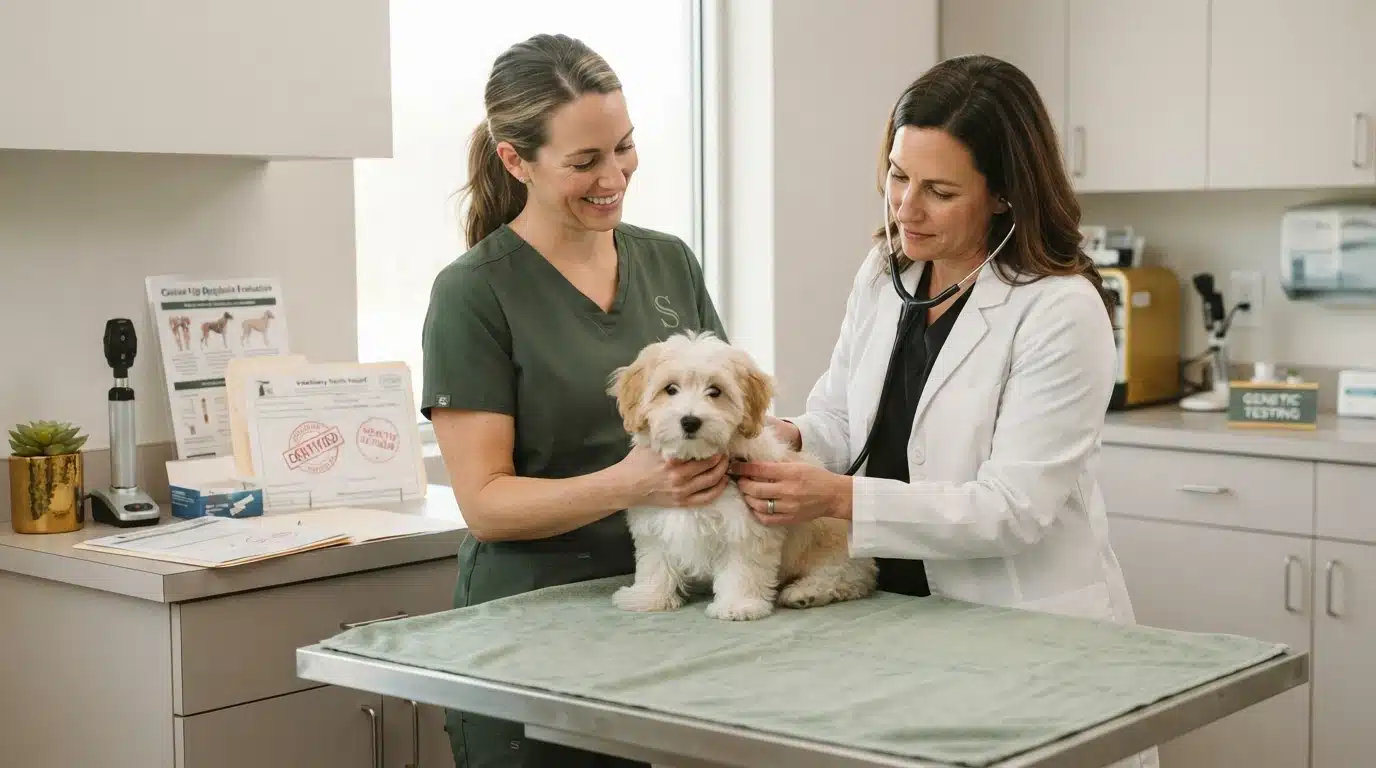
A clean puppy exam plus tested parents is the real baseline. Some breeders, including programs here in Utah, show both sets of paperwork up front, which makes vet verified puppies easier to spot.
Why One Test Panel Does Not Fit Every Breed or Cross
Each breed carries its own risks, so screening follows the breed’s protocol. Havanese testing focuses on eyes, hearing, knees and cardiac checks, while Cavaliers and their crosses emphasize heart and eye screening. A Cavapoo puppy needs its poodle parent screened for poodle-specific issues too. Ask which protocol each parent was tested under, then look it up yourself rather than taking the list at face value.
What Public Records Do and Do Not Prove
The OFA database lets you verify screening results for a registered dog. It proves those tests happened and passed. It does not prove the puppy you are buying is that dog’s offspring, nor that the seller reported results honestly, so confirm the pedigree matches the paperwork before you commit.
How to Find Health-Tested Puppies for Sale Near You
Finding health-tested puppies nearby comes down to four steps: set your search radius, breed and budget first; search breeder channels directly; use registry searches and local referrals; then log every contact in a comparison worksheet. Work the steps in order and you will end up with a short list of verifiable sellers instead of a feed of listings.

- Set your radius, breed and budget. Decide how far you will travel and what you can spend before searching.
- Search direct breeder channels. Go to breeder websites and breed club listings, not classified ads.
- Use registries and referrals. Check the OFA database and ask owners and vets for names.
- Compare in a worksheet. Track testing proof, prices and pickup options side by side.
Step 1: Set Your Radius, Breed and Budget Before You Search
Write down three things: how far you will drive, which breed you want, and your total price range. A fixed radius keeps “near me” honest, because a seller two hours away is a different decision than one across town. Set a budget range, not a single number, so you can judge value fairly.
Step 2: Search Direct Breeder Channels First
Skip classified ads and start with breeder websites, where health testing claims are easier to check. A boutique program such as Sage Puppies lists its breeds, process and health documentation up front, which is what you want to see. If a program invites an application before you reserve, that usually signals a planned, screened litter rather than a casual sale.
Step 3: Use Registry Searches and Local Referrals
Search the dam and sire’s names in the OFA advanced search database to confirm posted results. The CHIC breed listings show which screenings each breed should have, so you know what to ask for. Then ask your veterinarian and local dog owners for referrals to vet verified puppies and breeders they trust.
Step 4: Log Every Contact and Build a Comparison Worksheet
Keep a simple sheet with one row per breeder. Record parent health test results, puppy exam records, price, waitlist length, and pickup or delivery choices. To find puppies nearby with confidence, sort by documented testing first and price second. After a week of calls, the right breeder usually stands out on its own.
Which Local Breeders Near Me Offer Health-Tested Puppies: What to Ask and How to Verify
Any breeder can claim health-tested parents, so ask precise questions and check the answers yourself. Start each conversation with these:
- Which tests did each parent have? Get the breed’s list, not a vague “all done.”
- What are the parents’ registered names or OFA numbers? You need these to look up results.
- May I see the puppy’s vet exam record? This covers the puppy itself, not the parents.
- Are results normal, and for which conditions? Ask for the actual findings, not just “clear.”

Verifying Records Instead of Accepting Screenshots
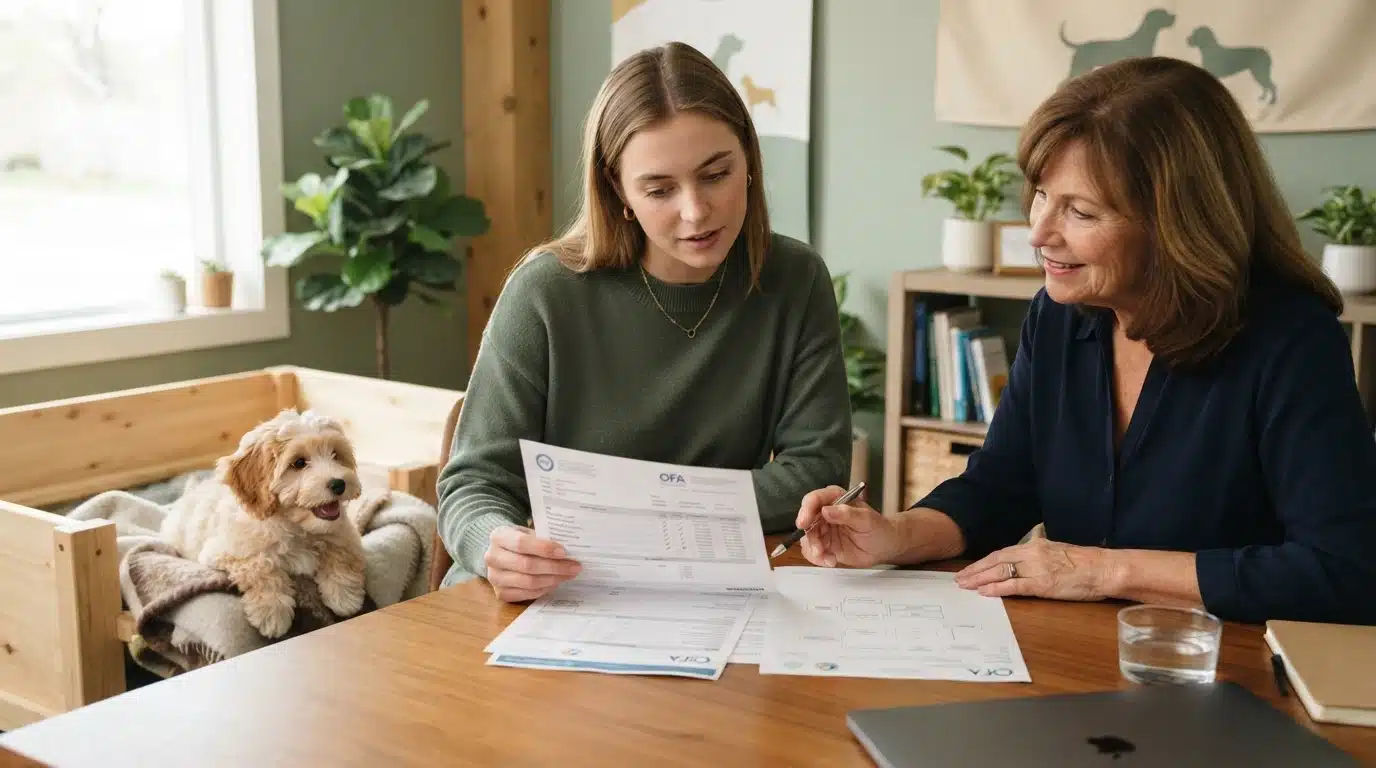
To verify a breeder’s health test results, request each parent’s registered name and OFA number, then search the public records yourself at ofa.org. Results that match appear in the database; missing ones do not. Ask which requirements apply to the breed under the CHIC program, since each breed has its own screening list. A screenshot proves little, because it is easy to crop or borrow. Programs like ours list each puppy’s documented records openly so buyers can confirm claims before reserving, and the same standard applies to any seller you consider.
Visiting, References and Meeting the Parents
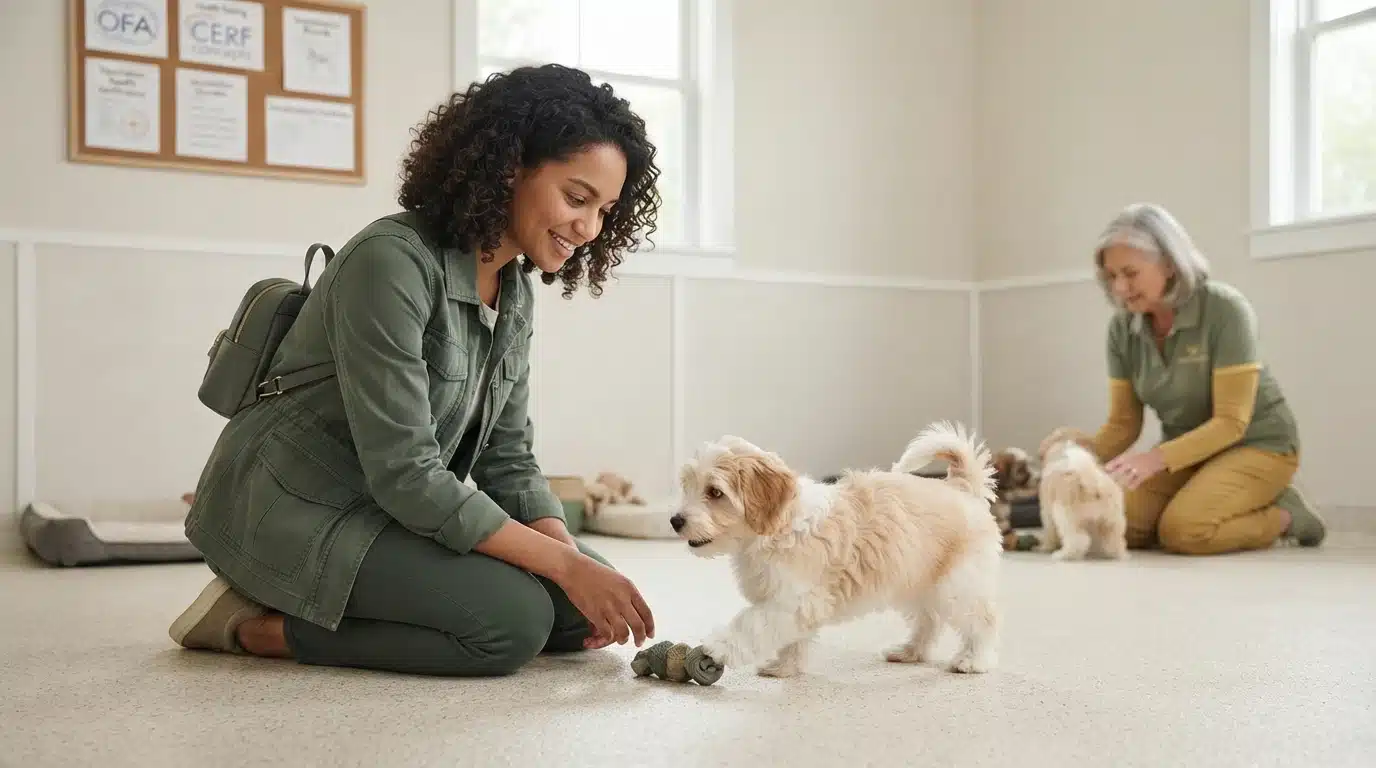
A visit tells you what a website cannot. Watch how the puppies live: clean space, calm handling, and a mother who looks healthy and friendly. Ask to meet her, and the father when he lives on site. Then ask for two or three families who bought past puppies and call them. Good breeders welcome this; hesitation is a signal. If you buy puppies locally in Utah or pick up after delivery elsewhere, plan the visit before your deposit, not after.
Ask for a current vet exam record for the puppy itself, separate from the parents’ testing. One document covers the litter today; the other covers the bloodline for life. You need both. For an example of what documented records look like, see Sage Puppies’ available puppies, then hold any breeder you consider to the same bar.
Reading the Paperwork: Vet Records, Certificates and Contracts
What a Legitimate Health Certificate Contains
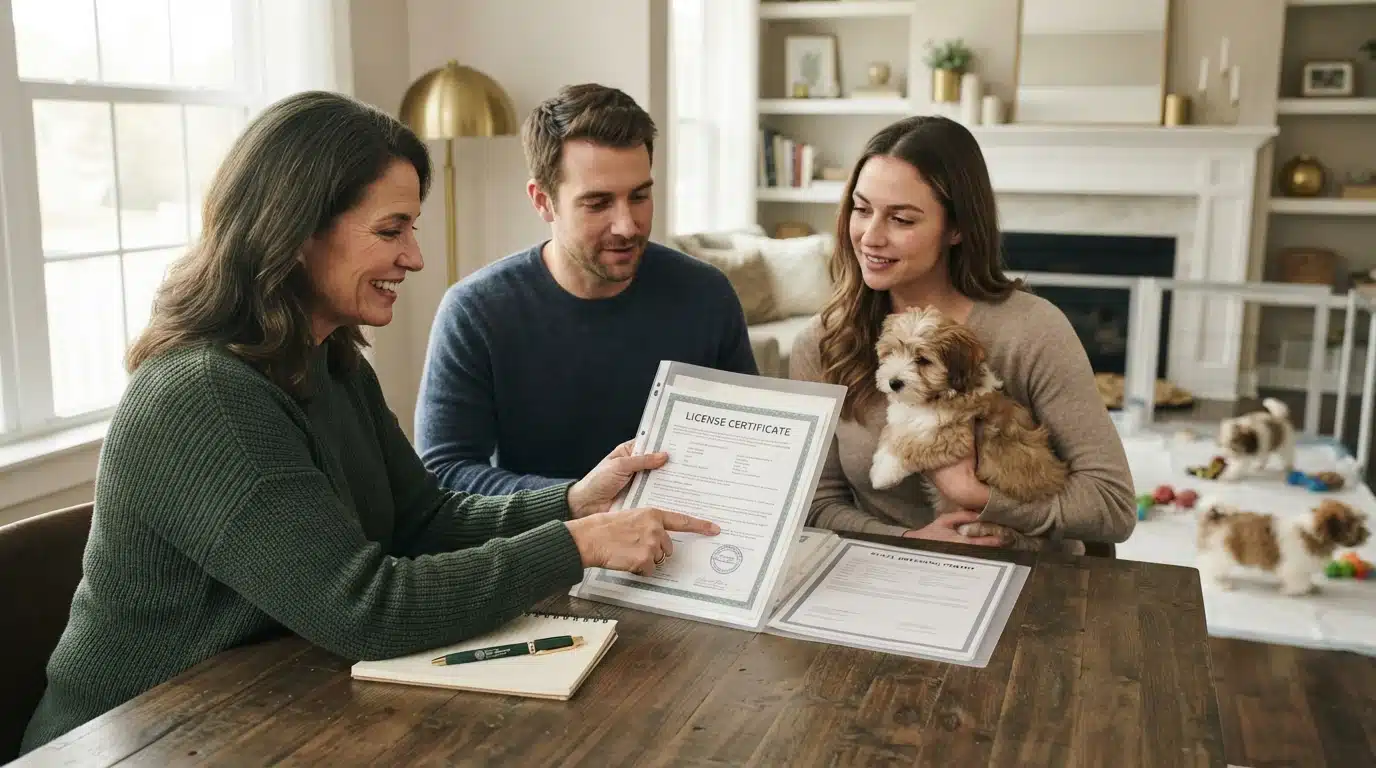
A real health certificate comes from a licensed veterinarian, not the breeder. It should show the puppy’s exam date, age, weight, and a note that the vet found no signs of illness. Look for the clinic’s name, address, and the vet’s license number. Many states require this certificate within a set number of days before travel, so ask when it was issued.
Bringing Records to the First Veterinary Appointment
Ask the seller for everything in writing before pickup day: the vet exam record, deworming dates, and vaccine history with vaccine names and dates. Bring the whole folder to your puppy’s first checkup, usually within a few days of arrival. Your own vet will confirm the exam findings and set up the remaining vaccine schedule. Keep in mind that a puppy’s exam record only covers that puppy’s health on one day; it says nothing about the parents’ hips, hearts, eyes, or DNA results. When you compare sellers, ask for both sets of documents.
Contract Terms, Guarantees and Payment Safety
Read the contract before you pay a deposit, not after. Look for what health guarantee actually covers, how long it lasts, and what proof your vet must provide. A guarantee and a health certificate are different promises: one covers the future, the other records the past. Pay with a method that leaves a paper trail, and avoid wire transfers or gift cards. At Sage Puppies, pricing and reservation terms are listed up front on the pricing page.
Havanese, Havapoo and Cavapoo Puppies Near You: Breed-Specific Health Considerations
The health tests that matter depend on the breed in the puppy’s pedigree. Each breed club sets its own required screening list through the OFA’s CHIC program, so a generic “health tested” claim tells you very little. Ask which specific tests the parents completed, then match each answer against the breed’s current requirements.
Reading the Current Required Set
For Havanese parents, the breed club’s CHIC list calls for OFA hip evaluations, patella screening and an annual eye exam by a board-certified ophthalmologist, according to the Havanese Club of America. Because lists are updated over time, confirm the current version on the OFA site rather than trusting an older breeder brochure. A puppy’s own vet check covers none of this.
Screening Each Parent Line Separately
Mixed litters need testing on both sides. A Havapoo should have the Havanese set completed on one parent and the Poodle requirements on the other. The same logic applies to Cavapoos, where the Cavalier parent needs its own cardiac and eye screening. Every test result should be searchable in the OFA database by the dog’s registered name or number, so you can verify rather than take a screenshot on faith.
Cardiac, Eye and Structural Considerations
Cavaliers carry elevated risk of mitral valve disease and syringomyelia, so a Cavapoo buyer should ask specifically for a cardiologist-issued cardiac exam on that parent line, not just a routine vet listen-in. Eye certifications should be current, since some conditions appear late. For structure, patella checks matter most in these small breeds, while hip radiographs add value on the larger parent line.
Local Pickup or Delivery: Weighing Convenience Against Access to Records
You can pick up your puppy locally or have it delivered, and the records should travel either way. The right choice depends on your distance, your schedule and how well the seller documents health. Here is how the three main options compare:
| Option | Records Access | Timing | Risk Level |
|---|---|---|---|
| Local pickup | You review and collect papers in person | You set the pickup day | Lowest travel stress for the puppy |
| Ground transport | Documents travel with the puppy | Longer, weather-dependent routes | More hours in transit |
| Flight nanny | Hand-carried paperwork, in-cabin | Faster, fixed flight dates | Brief trip, climate-controlled cabin |
Local Pickup in and Around South Jordan and Salt Lake Valley
Meeting the breeder in person lets you see the mother, check the puppy’s exam record and verify parent health test results before money changes hands. Families in Utah can plan a Utah pickup or delivery visit that fits their schedule. Bring a folder so nothing gets lost on the drive home.
Ground Transport and Flight Nanny Delivery
Distance should not block a good match. Ground transporters and flight nannies carry puppies in climate-controlled spaces, and commercial movers of pets across state lines must follow USDA transport rules. Ask who holds the paperwork and confirm the transporter’s registration before you pay.
Safe Travel for a Young Puppy
Young puppies handle travel best with short trips, familiar food and a snug crate lined with absorbent bedding. Avoid flights with long layovers, and keep pickup calm: no crowded greeting, just quiet settling at home. If you want a deeper breakdown of delivery versus pickup options, plan the details before deposit day.
Common Mistakes to Avoid
Mistakes That Cost Buyers Money or Time
Sending a deposit before verifying a seller is the most expensive mistake. Puppy scams spike around holidays, and the FTC warns buyers to check reviews and pay only after paperwork checks out. Waiting lists also catch families off guard: plan for months, not days. Compare sellers on the same worksheet so price, testing, and pickup terms line up fairly.
Evidence Mistakes That Are Easy to Make
The most common mix-up is treating a puppy’s vet exam as proof of inherited health. A clean exam shows today’s condition only. Parent screening, like Cavapoo cardiac and eye checks or patella assessment, tells you about the future. Also read DNA panels carefully: results cover known variants, not every disease. Ask for the OFA or CHIC record numbers and look them up yourself.
Temperament and Socialization Expectations
Health paperwork says nothing about behavior, and that gap surprises many buyers. Puppies raised without everyday household sights and sounds often struggle in busy homes. Good breeders start socialization early and keep puppies with their mother and littermates for about eight weeks. Ask how the litter was raised, then keep your own plan steady once your puppy comes home.

Ready to meet a puppy whose health record actually checks out? Sage Puppies raises Havanese, Havapoo and Cavapoo puppies in South Jordan, Utah, with documented exams, parent screening and owner-managed matching. Start the application, ask your questions, and pick up locally or arrange safe delivery to your door.
Frequently Asked Questions
Q1: How do I find health-tested puppies for sale near me?
Set your radius and budget, search breeder websites and breed club listings, then verify each parent’s OFA results yourself before paying a deposit.
Q2: Which local breeders near me offer health-tested puppies?
Look for programs that publish parent screening records and puppy exam paperwork openly, and confirm every claim in the OFA database.
Q3: Where can I find a Havanese, Havapoo or Cavapoo puppy near me?
Breed-specific programs in Utah, like Sage Puppies, raise these breeds with documented testing and offer local pickup or nationwide delivery.
Q4: What should a puppy health certificate include?
A licensed vet’s exam date, the puppy’s age and weight, clinic details, a license number, and confirmation that no illness signs were found.
Q5: How long should I expect to wait for a puppy?
Plan for weeks or months, since screened litters are planned ahead. Responsible programs use waitlists rather than selling on demand.
Conclusion
Health-tested means verified, and verification takes about an hour. You now know the three kinds of evidence: the puppy’s own exam record, the parents’ clinical screening, and DNA results, each covering something different. You also know how to check them. Search the OFA database by a parent’s registered name, match the tests against the breed’s current CHIC list, and ask for the puppy’s vet paperwork in writing. Compare sellers on one worksheet before any deposit, and plan for a waitlist rather than an instant sale. Hold every program to that same standard, whether you buy puppies locally in Utah or arrange delivery across the country. The paperwork tells you everything; the good breeders hand it over without being asked twice.