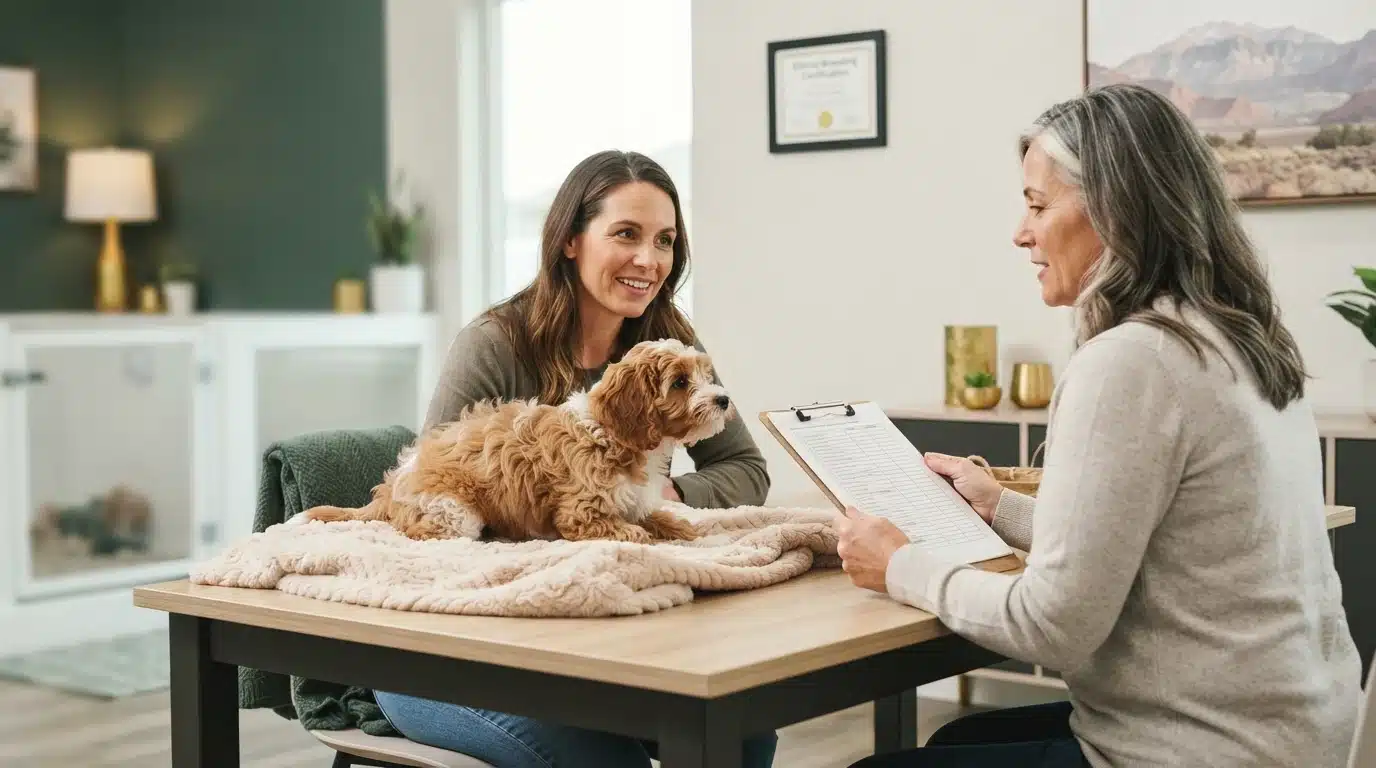
Quick Summary: Train Cavapoo puppies with positive reinforcement by conditioning a marker word, rewarding within one second, and teaching name response and sit before adding down, stay, place, and recall. Keep sessions short, progress based on reliable responses, and fade treats in stages by paying every correct attempt first, then using praise, play, and random rewards. Prioritize recall in distracting settings, socialize calmly through 14 weeks, and consider a reward-based puppy class at 7 to 8 weeks with at least one vaccine set given a week beforehand. Sage Puppies supports this approach by providing new Cavapoo owners with training guidance from the first week home.
Every Cavapoo home knows a version of this moment: your puppy sits on command for the first time, then stares up in pure confusion, and you freeze because you have no idea what you just did. That confusion is normal. Most guides tell you to teach sit, stay, and come, but they skip the part that makes training stick, which is when and how you reward. This Cavapoo puppy training guide covers both. You will get a command-by-command plan, a simple method for marking good behavior within one second, and steps for fading treats without losing progress. You will also find straight answers on when to start and whether a puppy class helps. The approach leans on positive reinforcement training, backed by guidance from veterinary behaviorists and certified trainers rather than guesswork or made-up deadlines.
Step 1: Build the Reward System Before You Teach a Single Command
Cavapoo puppy training works best when your puppy already understands one deal: a sound predicts food. Set that up first, and every command that follows becomes easier to teach.
Conditioning Your Marker Word in Two Sessions
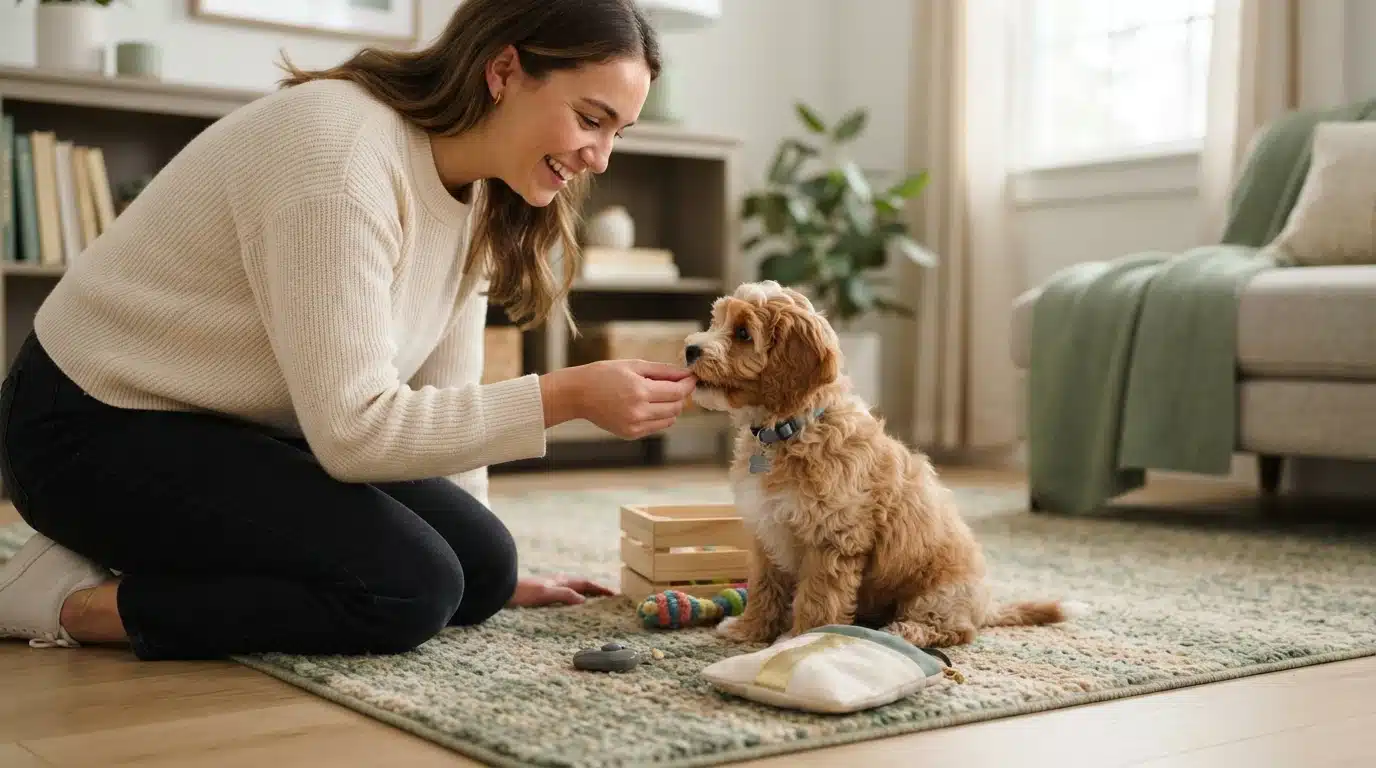
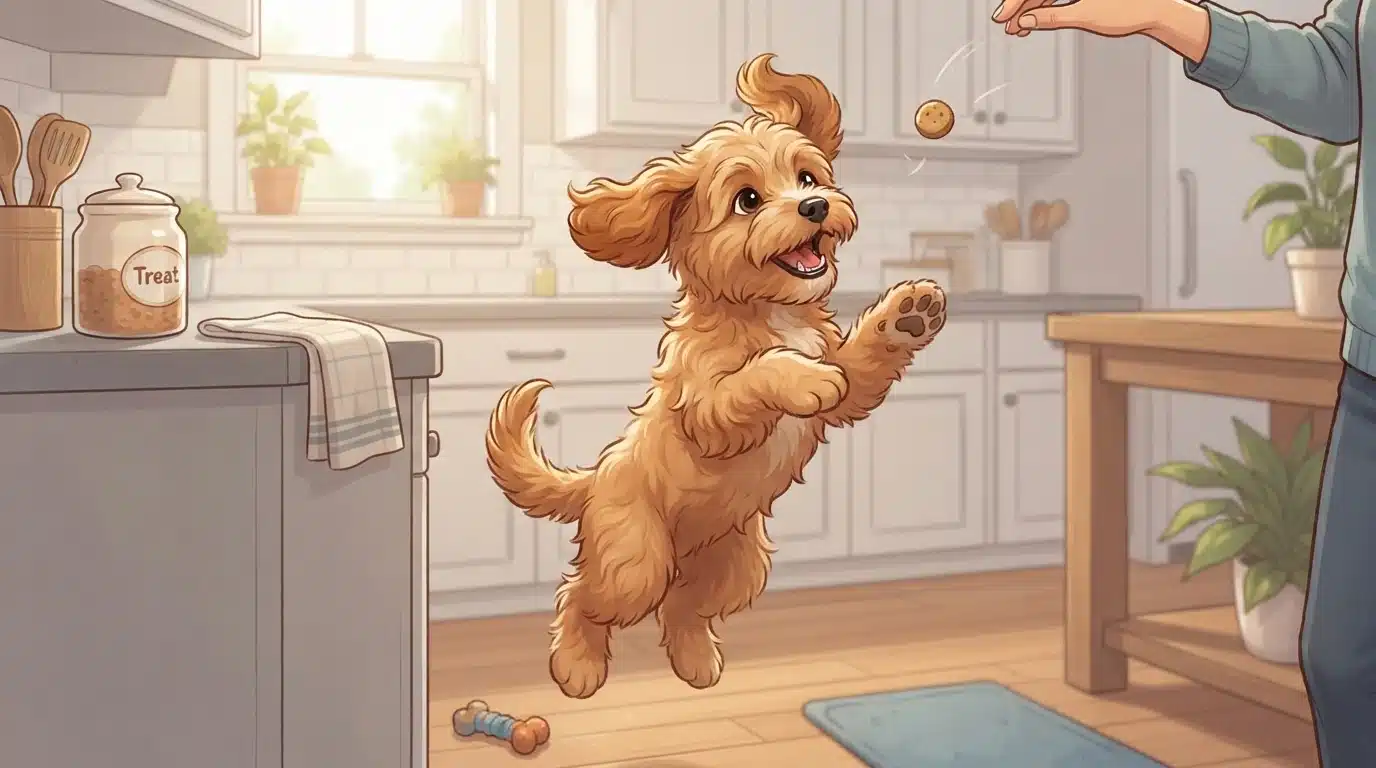
Pick a short marker word like “yes,” or use a clicker. Say the marker, then feed a tiny treat within one second. Repeat 10 to 15 times, twice a day, for two or three days. Once your puppy’s ears perk up at the sound, the marker is loaded. This is the core of positive reinforcement training: the sound tells your puppy exactly which action earned the food.
Why the Reward Has to Arrive Fast
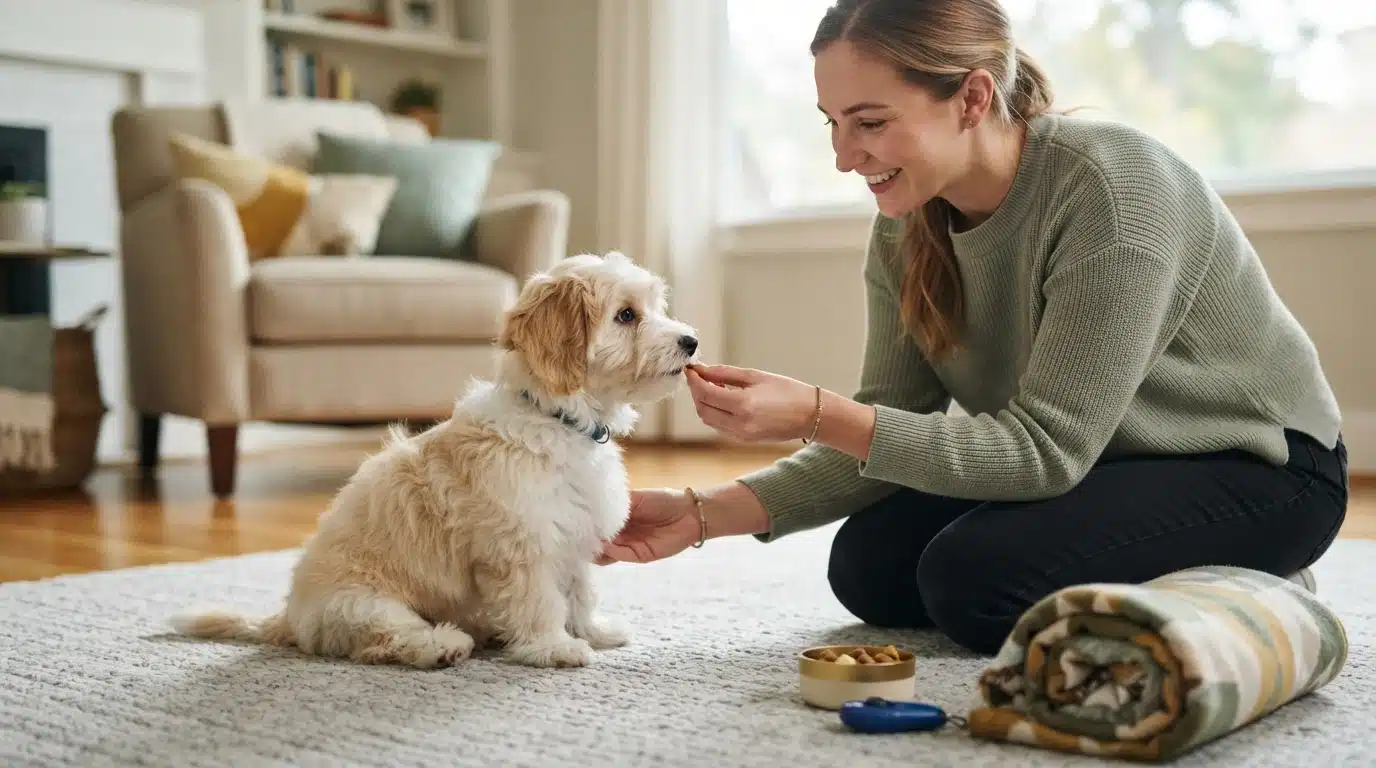
Puppies connect the reward to whatever they just did. If your puppy sits and you dig for the treat bag, she may link the food to standing up or wandering off. Aim for the treat to arrive within one second of the marker. Timing matters more than treat size, so cut soft treats pea-small and keep a pouch on your hip during every puppy training session.
Choosing Rewards Your Puppy Will Actually Work For
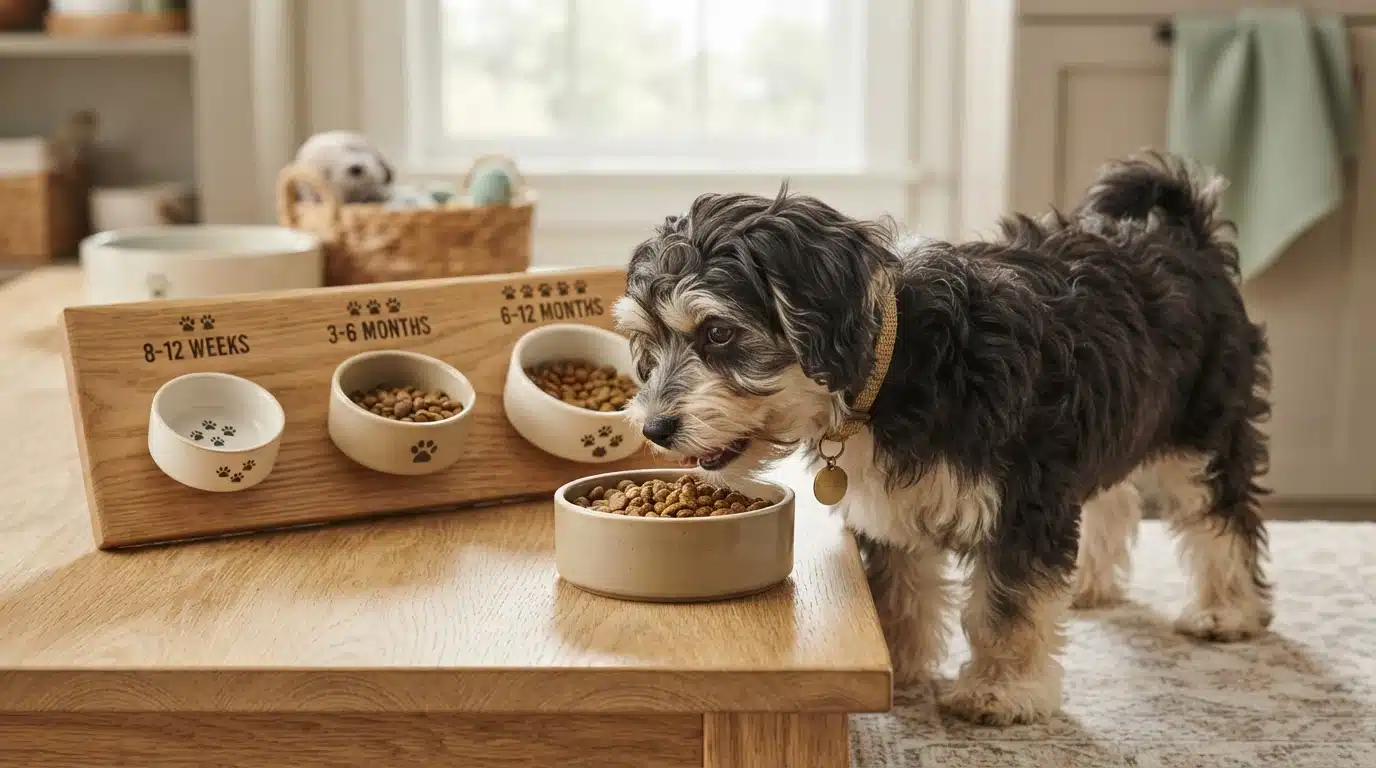
Test three or four options: small pieces of chicken, freeze-dried liver, cheese, or a favorite toy. Rank them. Use the top rewards for new or hard commands, lower ones for known cues. Save the best for recall practice, where the stakes are highest.
Tip: Kibble works for easy reps, but it rarely beats distraction. Keep something higher value on hand for outdoor sessions.
Step 2: Teach Name Response and Sit, Your First Two Cues
Name response and sit are the two cues everything else builds on. Name response teaches your Cavapoo that looking at you pays off, and sit gives you a default behavior for doors, meals, and greetings. Teach them with the same marker word you conditioned in Step 1, and keep each teach a cavapoo to sit style session to a few minutes so your puppy stays eager. The AKC also suggests skipping the name before known cues, so your puppy learns to answer to each word on its own.
Turning Your Puppy’s Name Into a Cue
Say the name once, cheerfully. The instant your puppy’s eyes find you, say your marker word and treat within one second. Then pause a beat and repeat. Ten to fifteen reps, twice a day, is plenty for two or three days. Do this in a quiet room first, then in the yard, then on walks, so the response holds up around distractions.
Teaching Sit With Lure, Mark, Reward
Hold a treat at your puppy’s nose, then lift it slowly up and slightly back over the head. As the nose tilts up, the rear drops into a sit. The moment the rear touches the floor, mark and reward. After five or so reps, use an empty hand and reward from your other hand. Add the word “sit” only when the motion is reliable.
How to Know When to Move On
Your puppy is ready for the next cue when it sits on the verbal cue alone, in at least two rooms, within a couple of seconds, with no lure in sight. For name response, aim for eight correct looks out of ten in a normal room. If you fall short, add easier reps rather than repeating the cue louder. If your puppy sits only when you hold food, fade the lure further before adding stay or down. Progress at that pace, not by the calendar.
Step 3: Add Down, Stay and Place as Your Puppy’s Focus Improves
Once your Cavapoo sits reliably, down, stay and place are the natural next skills. Down teaches calm in a lying position, stay builds patience, and place gives your puppy a spot to settle while life happens around it. All three still run on the same reward timing you practiced in Step 1.
Lower the Lure Slowly and Mark at Floor Level
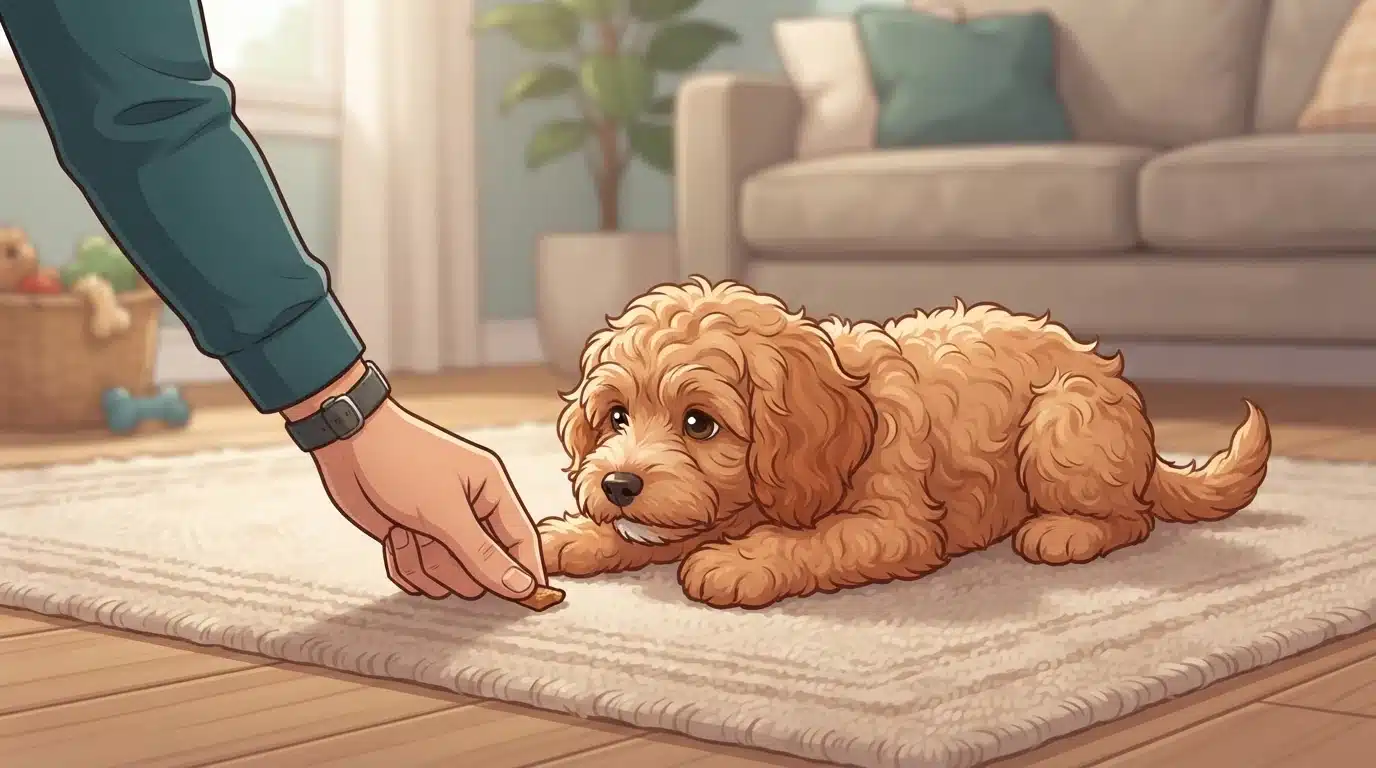
Teach down the same way you taught sit: hold a treat at your puppy’s nose, then move it straight down to the floor. Go slowly, because a fast drop makes most puppies pop back up. The moment elbows touch the ground, say your marker word and deliver the treat there, at floor level. Marking at floor level tells your puppy the reward lives in the down position, not in the stand-up-that-got-the-treat position. After a few days, use an empty hand for the lure and reward from your other hand.
Build Distance in Small Steps You Can Repeat
Stay grows through distance, duration and distraction, and you add one at a time. Start with a one-second stay directly in front of your puppy. Mark, reward, release with a word like “free.” Next, take one small step back, return, then reward. Add a second step only after the first one works nine times out of ten. If your puppy breaks the stay twice in a row, you added too much at once, so drop back a step for a day. Short, successful repeats beat long, shaky sessions every time.
A Mat Is Your Puppy’s Off-Switch
Place training uses a mat or bed as the target. Lure your puppy onto it, mark the moment all four paws land, and reward on the mat. Feed a few treats there calmly, then release. Over a week or two, your puppy learns the mat means settle, which helps during meals, doorbell chaos and crate-and-toilet routine transitions. A Cavapoo that will go to place on cue is far easier to live with, and it’s a skill we encourage every Sage Puppies family to start in the first week home.
Step 4: Train Recall So It Holds Up When It Matters
Recall is the one command that can keep your Cavapoo out of real danger, so it deserves its own plan. The goal is simple: your puppy hears the cue, turns, and runs to you fast, even with a squirrel in play. The AKC’s recall guide stresses the same foundation: every call ends in something great, and you never call to end the fun. Cavapoo recall training works best when you treat each practice that way.
Make the Recall Worth Running To
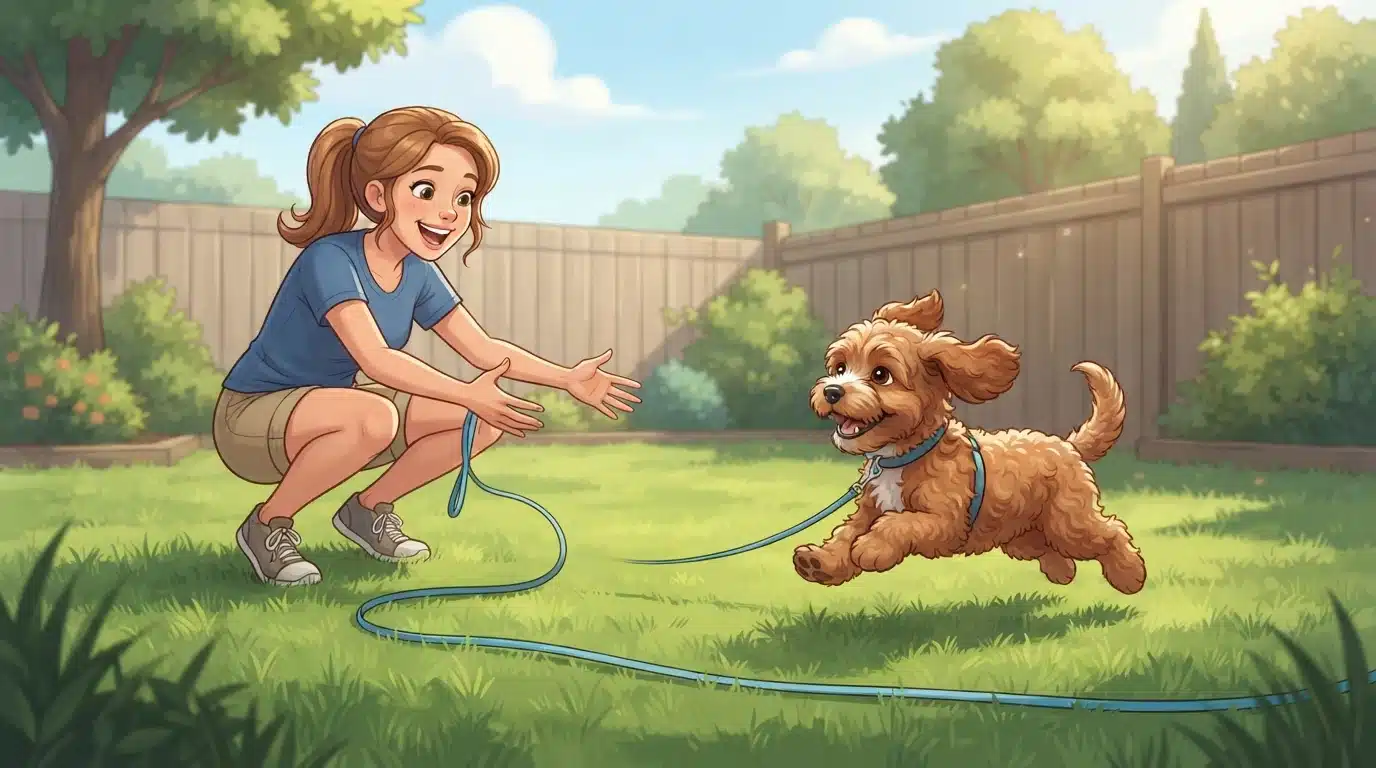
Your puppy’s name and a cue like “come” only mean something if showing up pays well. Use the same marker word you conditioned in Step 1, then deliver a treat within one second of arrival. Pay in jackpots: three or four small treats, or a special food your puppy never gets otherwise. Some trainers release the puppy right back to play after a treat, which teaches that coming to you does not always end the good time. That detail keeps the cue from predicting boredom. Never call your puppy to scold, trim nails, or leave the park. Every “come” should carry a positive reputation, because one bad experience can undo weeks of work.
Raising the Distraction Ladder
Start where winning is easy: a quiet hallway, five feet apart. Once your puppy turns instantly, add a step of challenge at a time. Move to the backyard, then a neighbor’s yard, then a quiet park on a long line. Add mild distractions before big ones, like a dropped toy before a passing dog. If your puppy ignores the cue twice in a row, the step was too hard, so drop back down. Keep a long line attached outdoors for months. Safety sits between you and a puppy still learning, and a failed recall off-leash teaches your puppy that ignoring you works.
Everyday Recall Practice That Fits a Real Schedule
You do not need formal sessions. Call your puppy across the house before meals, hide behind a door and reward the search, or trade a recall for a treat mid-play. Three short rounds a day beat one long drill. Once the response is solid indoors, you can phase out food, praising warmly instead, but keep paying jackpots for the hardest wins. If you are still choosing your puppy, our Cavapoo puppy training milestones guide maps what to expect week by week. Keep it up, and your puppy will choose you over almost anything.
Step 5: Reward Progression, From Constant Treats to Real Durability
Why Constant Rewards Stop Working
To fade treats during puppy training, reward a behavior every time at first, then switch to an unpredictable pattern: pay the best attempts only, mix in praise and play, and keep your marker word so your puppy keeps working between treats. If every sit earns a treat forever, your puppy learns the food is part of the cue. Once the treat bag stays in the kitchen, the behavior often falls apart too. Trainers call this the problem with continuous reinforcement, and behavior experts recommend variable schedules instead. An unpredictable payoff actually makes behaviors stronger, not weaker.
A Staged Fade-Plan You Can Follow
Fade treats in stages, not all at once. A simple plan looks like this:
| Stage | Reward Pattern | Move On When |
|---|---|---|
| 1. Pay every rep | Treat after each correct sit or down | 8 of 10 reps are clean |
| 2. Thin the rate | Treat 4 of 5 reps, mark every rep | Your puppy still responds fast |
| 3. Go variable | Reward the best 3 of 5, at random | Enthusiasm holds without food |
| 4. Jackpot rarely | One big reward for a hard rep | Cues work anywhere |
Stay at each stage several days. If responses slow down, drop back one stage for a day. This staged approach is how trainers phase out food rewards without losing reliability.
Rewarding in Public Without a Treat Bag
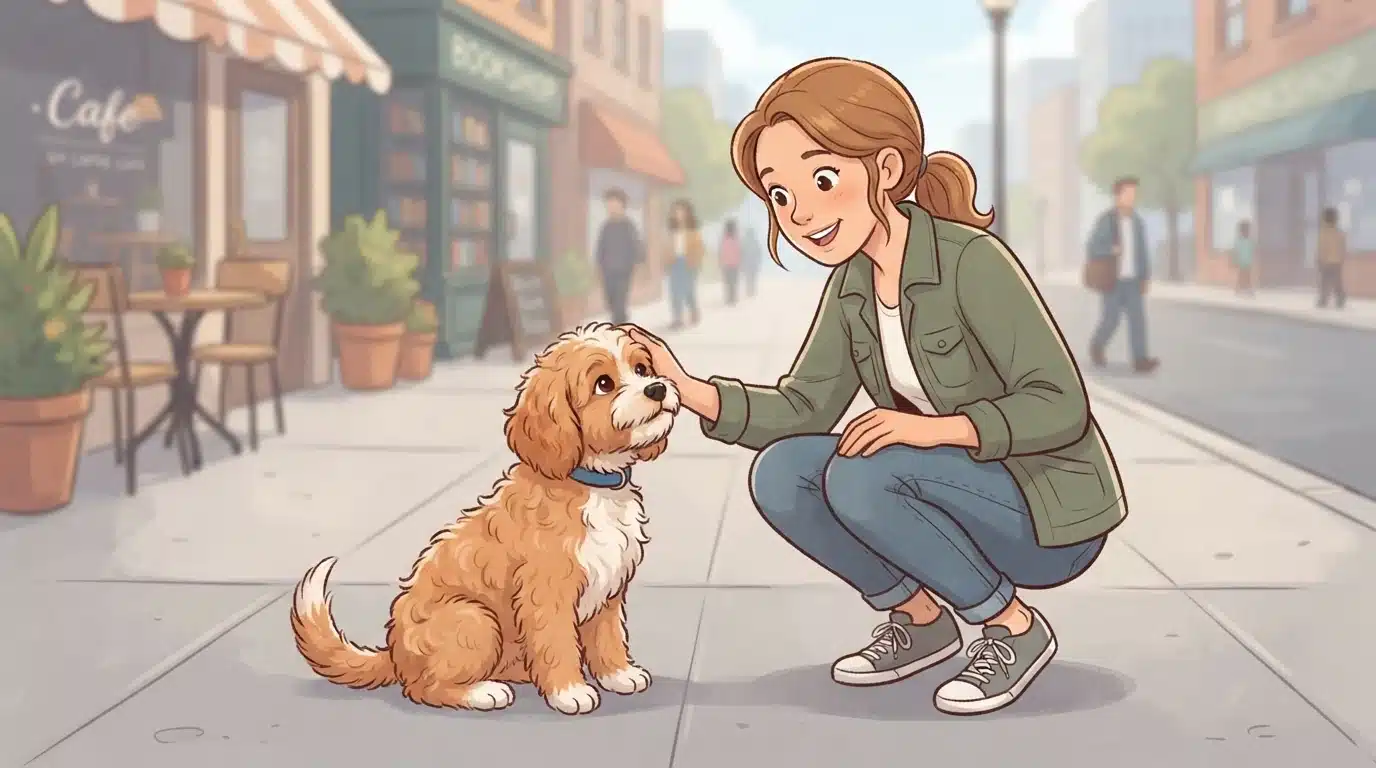
Distractions change the math. On a walk, a squirrel beats a piece of kibble, so raise the reward value in harder settings instead of repeating the same treat. Bring better food on early outings, then swap in real-life rewards: a tossed ball, a scratch behind the ear, or release to sniff. Pay recall generously in public long after indoor cues run on praise. You can find more first-year training guidance in our first-year checklist, including how reward value shifts as your puppy matures.
Common Training Mistakes to Avoid
Rewarding Late or Vaguely
A treat that arrives three seconds after the sit rewards whatever your puppy was doing at second three, often standing up. Deliver within one second of the marker word, every time. If you keep missing the window, go back to paying every rep for a few days so the connection rebuilds.
Repeating the Cue and Changing the Rules
Saying “sit, sit, sit” teaches your Cavapoo that the cue is optional background noise. Say it once, then wait two seconds. If nothing happens, help without rewarding, or end the rep. Also keep your rules consistent: everyone in the house marks and pays the same behaviors, or the puppy stays confused.
Falling Back on Punishment or Prong Collars
Correction collars and scolding suppress behavior without teaching the replacement, and they can sour a soft-tempered Cavapoo on training itself. Positive reinforcement training builds the same reliability faster. Save your energy for rewarding what you want; the unwanted versions fade when they stop paying off.
Where Training Fits Alongside Socialization and Group Class
Socializing Is Training for the Rest of the World
Teaching your Cavapoo puppy cues and socializing them are two halves of the same plan. Socialization means safe, positive exposure to people, surfaces, sounds, and calm dogs while the brain is still open to new things. That window runs from about three weeks to roughly 14 weeks of age, so the weeks right after your puppy comes home matter most. Behavioral guidance says pups can start socialization classes as early as 7 to 8 weeks with one vaccine set given at least a week before.
When Reward-Based Puppy Class Is an Option
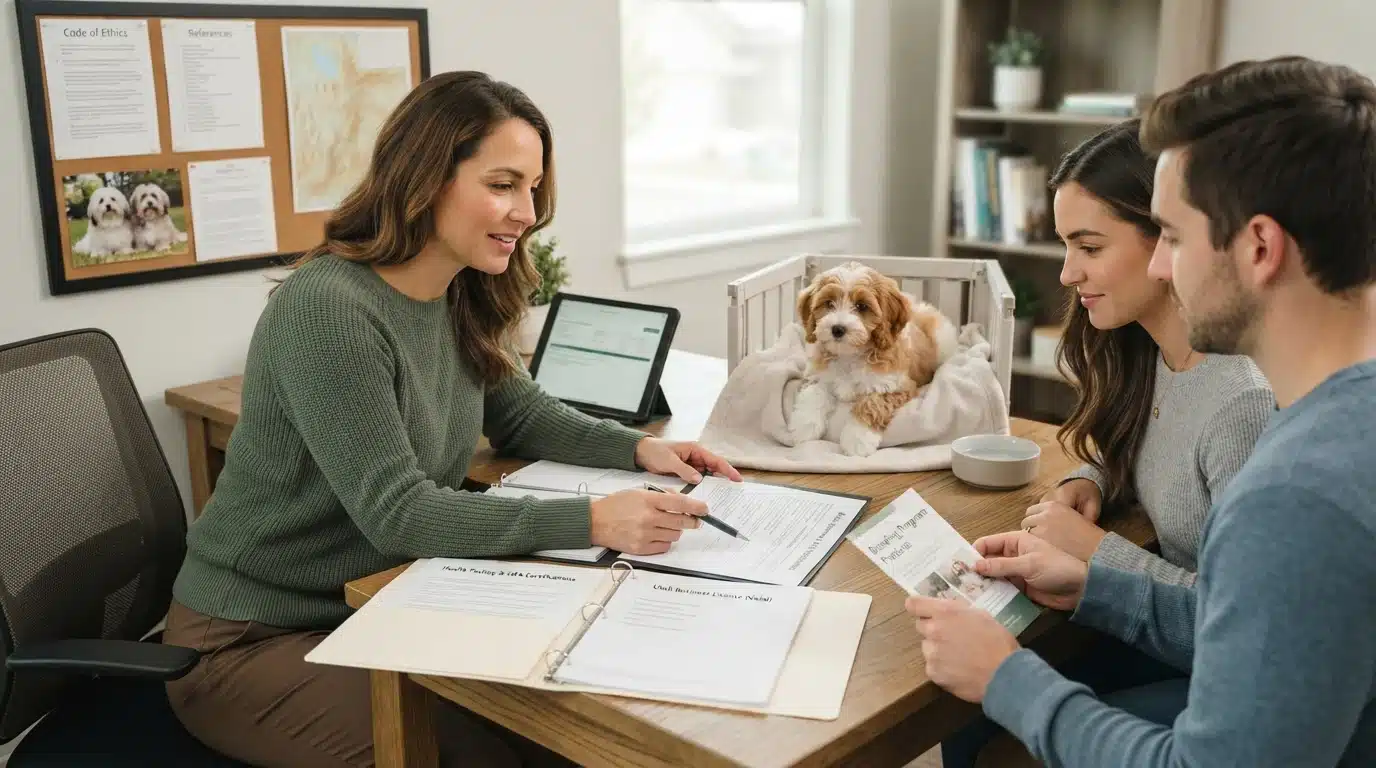
A group class is useful once your puppy can focus a little in distracting places. The featured-snippet answer: a puppy can start group training class at 7 to 8 weeks old, provided it has had at least one set of vaccines a week or more before class starts. Look for classes that use positive reinforcement, keep puppies on the floor together, and cap the number of dogs. Avoid any class that corrects with leash jerks or scolding. Bring tiny soft treats and mark every good moment, just like at home.
A Simple Weekly Plan You Can Keep
- Daily: two short sessions of sits, downs, and recall practice.
- Weekly: one new social experience, kept calm and positive.
- Soon: enroll in a reward-based puppy class within the first month home.

Training your Cavapoo works best when it starts the first week you bring her home, with treats paid fast and faded on schedule. If you are still choosing a breeder, Sage Puppies raises Cavapoos in South Jordan, Utah, and sends every puppy home with guidance you can put to work right away.
Frequently Asked Questions
Q1: How do I train a Cavapoo puppy?
Start the first week home. Condition a marker word, teach name response and sit with treats delivered within one second, then add down, stay, place, and recall.
Q2: When should I start training my Cavapoo?
The first week home. Short sessions of a few minutes, twice a day, work best before habits set in.
Q3: How do I stop rewarding treats for every command?
Fade in stages. Pay every rep first, thin to four of five, then reward randomly while marking every correct attempt.
Q4: When can my puppy start a training class?
At 7 to 8 weeks, with one vaccine set given at least a week before, in a reward-based class.
Q5: What treats work best for Cavapoo training?
Tiny soft rewards like chicken, freeze-dried liver, or cheese. Save the highest value for recall and distracting settings.
Conclusion: A Plan You Can Keep for the First Year
Cavapoo puppy training comes down to three habits. Load a marker word first, deliver every treat within one second, and fade rewards in stages rather than all at once. Teach name response and sit the first week home, then build down, stay, place, and recall one small step at a time. Pay recall generously forever, especially around distractions, and never call your puppy to something unpleasant. Start a reward-based puppy class at 7 to 8 weeks with a vaccine set already given, and keep socialization calm and positive through 14 weeks. Keep sessions short, drop back a step when progress stalls, and the cues you build now will hold for the whole first year.