Quick Summary: “Family-raised” only shows where a puppy lived, not how well it was socialized, so judge behavior and verify the breeder’s routine. A well-socialized puppy approaches people, accepts being picked up, tolerates paw and mouth touches, and recovers from startles within seconds, especially during the important weeks from 8 to 11. Before paying, ask about daily handling, sounds, surfaces, grooming, visitors and car rides, then request handling videos plus veterinary vaccine and deworming records.
Set a puppy on a stranger’s lap during a home visit and watch the next five seconds. Does he lean in, freeze, look back at the person holding him, or go straight for a shoe? That one moment tells you more about early social exposure than any listing phrase, including the one you are probably reading right now: family raised.
The phrase shows up in nearly every ad for family raised puppies for sale near me, yet almost nothing checks it. This guide flips the breeder’s marketing into a buyer’s checklist. You will learn the family raised puppy social signs to look for in person or on video, how to ask questions that separate real handling from rehearsed answers, and why the weeks between eight and eleven matter so much for a Havanese, Havapoo, or Cavapoo.
The standards here come from the AVSAB’s position statement on puppy socialization and AKC guidance, applied to what a home actually looks like. Sage Puppies raises these three breeds in its South Jordan program, so the examples draw on that setting, but the checklist works with any breeder you screen.
What Family-Raised Actually Means, and What It Does Not Prove
“Family-raised” means a puppy grows up inside a breeder’s home, not in a separate kennel building. It tells you where the puppy lived. That is all it tells you. The label itself does not establish:
- How much handling each puppy actually received, or from how many people
- Whether exposure went beyond the household – new sounds, surfaces, car rides, visitors
- The breeder’s skill in reading puppy behavior during the puppy socialization window, the first three months AVSAB calls the most important period
- Health testing, contract terms, or follow-up support after you take the puppy home
A house with eight puppies and one busy adult can call itself family-raised. So can a program where every pup gets daily handling, paw touches, and startle-and-recover practice. The words are the same. The result is not.
Family-Raised, Foster-Raised, Kennel-Raised: What Each Label Implies
The labels sit on a spectrum, and “kennel raised vs home raised” is the sharpest divide. Kennel-raised puppies live in runs or buildings, often with limited human contact. Home-raised puppies live with the breeder’s family. Foster-raised puppies grow up in a volunteer’s or partner home, which can be excellent, but only if the foster follows a real socialization plan. When you visit a family-raised puppy, ask what each label meant at that program specifically.
Three Claims That Sit Separately From the Family-Raised Description
First, genetics. A calm household cannot change inherited temperament, so family-raised does not guarantee a quiet adult Havanese or Cavapoo. Second, health. Family-raised says nothing about parent health testing, vaccination records, or a vet exam. Third, training. Early handling builds cooperation with grooming and touch, but it is a foundation, not obedience. Treat “family-raised” as one data point, then verify the rest with direct questions.
How to Know a Puppy Was Raised Around People: The Core Signs
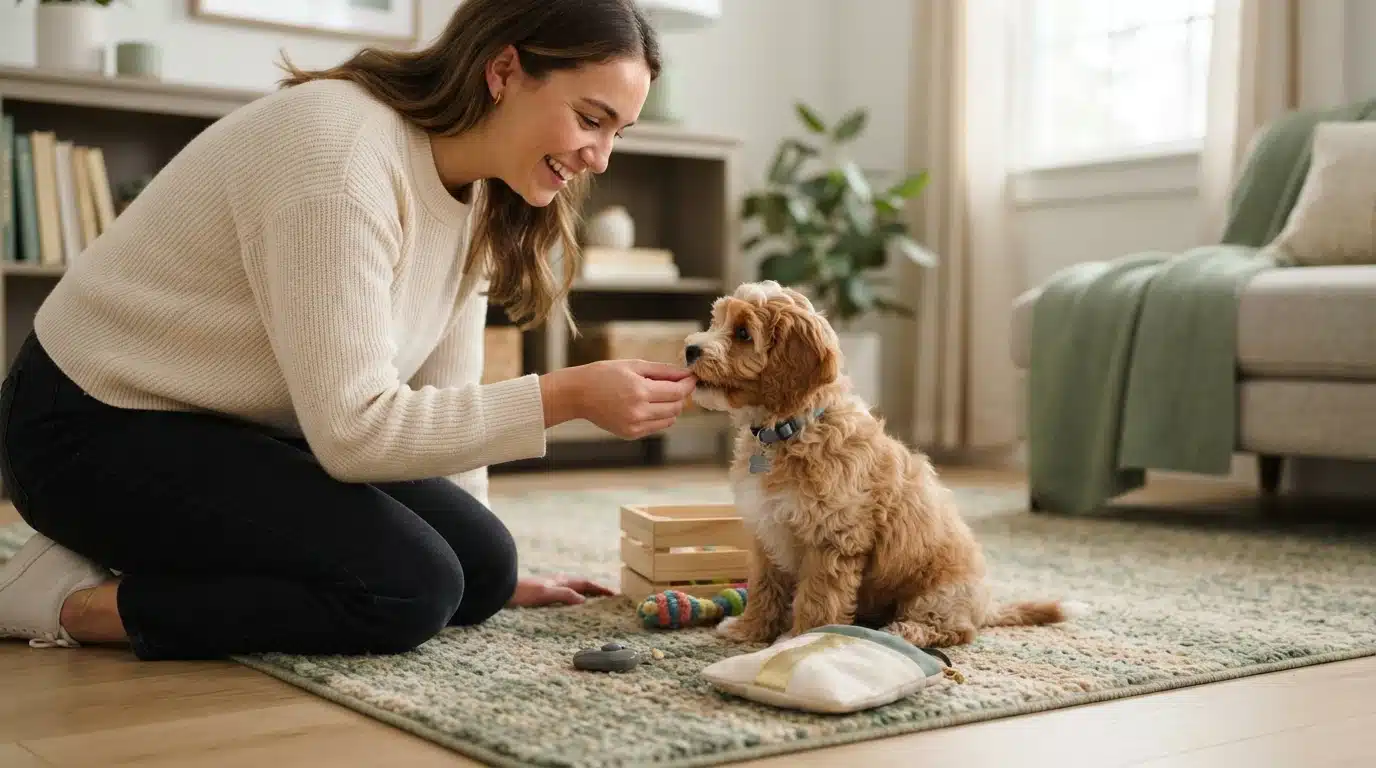
So how do you know a puppy was raised around people? You look for behavior, not for a breeder’s adjectives. A puppy that has been handled daily greets strangers with curiosity, tolerates touch all over its body, bounces back quickly from surprises, and settles in your arms without a fight. These are the family raised puppy social signs that matter most, and each one points to real handling during the puppy socialization window.
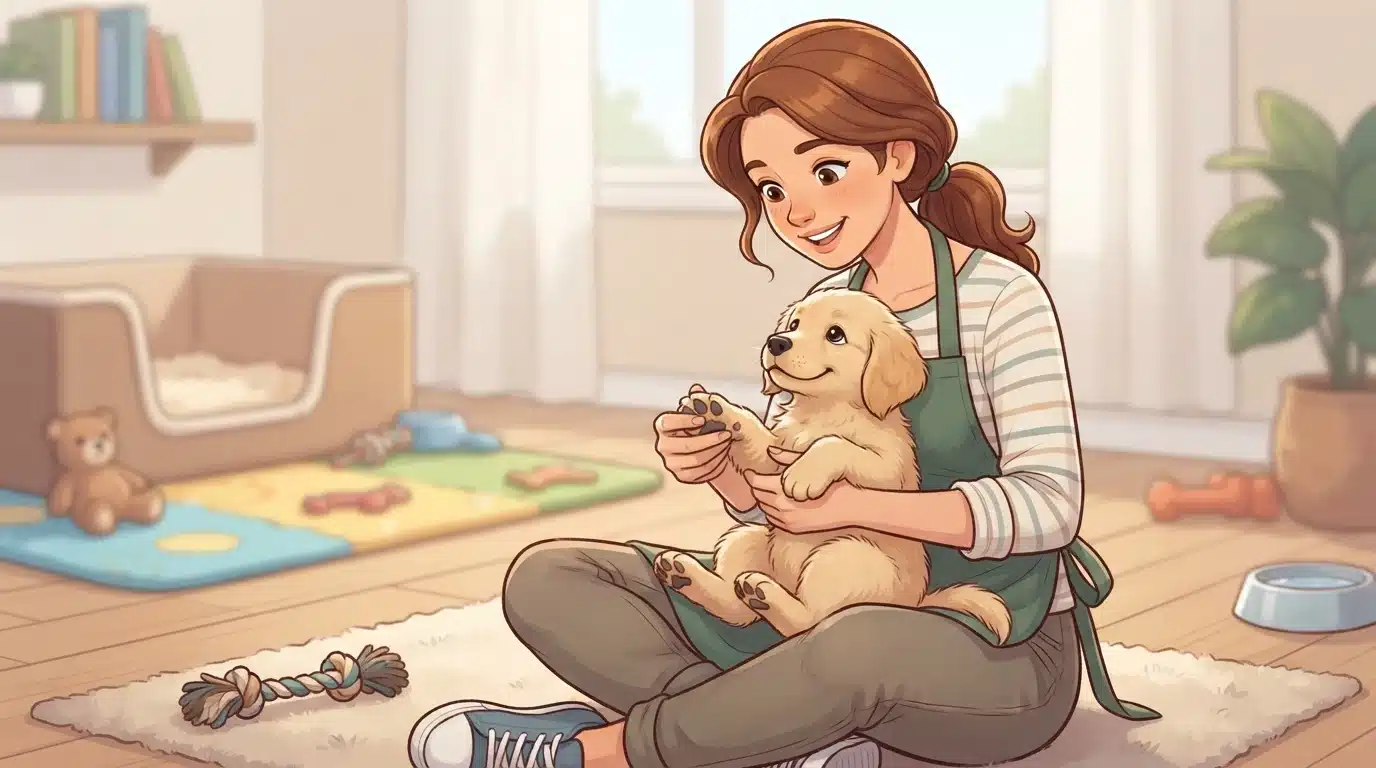
Six Signs a Puppy Has Had Regular Human Contact
- Approaches people on its own. A handled puppy walks toward you, sniffs, and stays. It does not hide behind its mother for the whole visit.
- Accepts being picked up. It may wiggle, but it does not panic or go stiff.
- Recovers from new sights and sounds. The vacuum startles it, then it returns to play within seconds.
- Tolerates brief restraint. It lets you hold it still for a moment without struggling hard.
- Shows loose, wiggly body language. Soft eyes, a relaxed tail, and play bows instead of cowering.
- Interacts with several people, not just one familiar face. This is what the AVSAB’s position statement means by positive, varied exposure, which it calls the standard of care in the first three months.
Each sign suggests regular handling, but none proves it alone. A calm puppy can simply have an easy temperament, so treat these signs together rather than one at a time.
Feet, Mouth, Coat and the Grooming Table
Handling exercises show up in body-specific tolerance. Ask to touch the puppy’s paws, open its mouth gently, and run your hands through its coat. A puppy used to daily handling accepts all three. This matters for small companion breeds like the Havanese, Havapoo and Cavapoo, which need brushing several times a week for life. A puppy that already sits for a quick brush or a pretend grooming-table check has been prepared for it. A squirming, mouthing whirlwind is still normal puppy behavior, but total refusal can mean paws and coats were rarely touched. Sage Puppies builds these handling habits in from the first weeks, which is why cooperation shows up before you arrive.
How Fast a Puppy Recovers From a Startle
Startle recovery may be the single most honest test you can run. Drop a set of keys, clap once, or crinkle a bag from a few feet away. A well socialized puppy startles, then investigates or returns to play within a few seconds. That bounce-back, not the absence of a startle, is the goal of good puppy handling, and it predicts how your puppy will cope with household noise later. A puppy that freezes, bolts, or stays alarmed for a minute or more may have missed that early exposure, or may simply be in a cautious phase. Ask the breeder what the puppy has already experienced, and repeat the test after a few minutes of warming up to you.
Key takeaway: Judge behavior in person, then confirm the story behind it. Signs point to handling history; only the breeder’s daily routine explains it.
What a Healthy Social Start Looks Like Week by Week
Weeks 4 to 6: Household Sound, Surfaces and Handling
Between weeks four and six, good breeders turn daily life into a curriculum. Puppies should hear washing machines, vacuums, doorbells and TV noise, then startle and recover quickly. They should walk on tile, carpet, grass and gravel, not just one soft pen floor. Handling matters most here: ears, paws, mouths and bellies touched briefly and often builds the puppy handling and paw tolerance that makes grooming and vet visits calm later. Ask how many new surfaces and sounds the litter met this week.
Weeks 6 to 8: People, Cars, Floors and Cooperative Handling
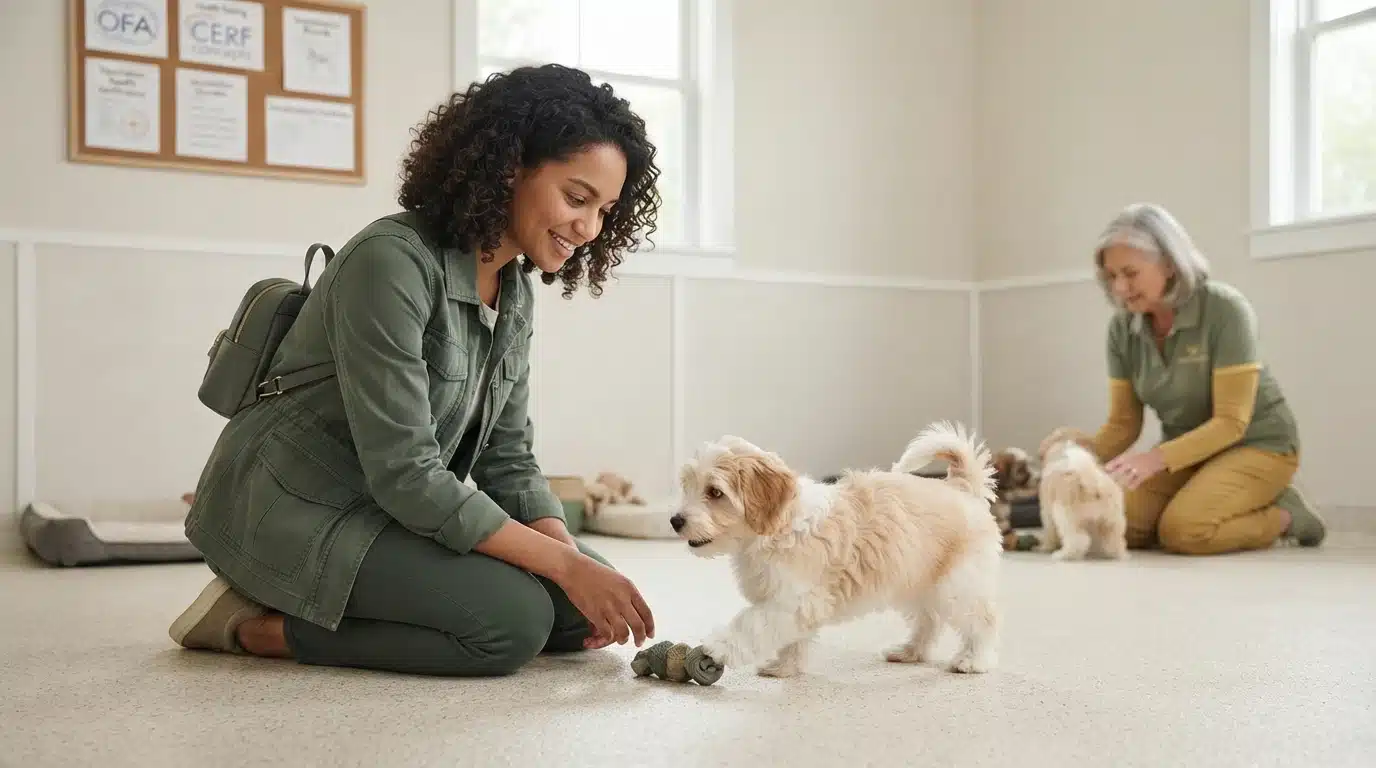
Weeks six to eight bring new people of different ages, genders and voices. A well-run program also starts car rides, crates, short solo moments and gentle body handling on a table, since small breeds like Havanese, Havapoo and Cavapoo need lifelong grooming cooperation. This overlaps the puppy fear period 8 to 11 weeks, so calm, positive exposures matter more than volume. Watch for signs of a well socialized puppy: curiosity, quick recovery after a surprise and relaxed tails. You can see these family raised puppy social signs clearly in a litter video or a visit.
Socialization Classes and the Vaccination Conversation
When can puppy socialization classes start? Earlier than most families expect. According to the AVSAB position statement, puppies can begin class as early as 7 to 8 weeks, with at least one set of vaccines given a minimum of 7 days beforehand, a first deworming, and an exam by a veterinarian. Waiting until every shot is done means the puppy socialization window largely closes first, and behavioral problems kill far more dogs than parvo. Pick classes that require vaccines, disinfect floors and keep playgroups small.
A week-by-week socialization schedule helps you keep that momentum at home after pickup.
Reading the Puppy in Front of You: Comfort, Curiosity and Stress
Marketing words tell you what a breeder believes. The puppy’s body tells you what the puppy has lived. Within a few quiet minutes of watching, you can sort what you see into three pictures: relaxed, curious, or worried. The American Kennel Club’s guide to dog body language notes that most of what a dog communicates is nonverbal, so your eyes beat any sales pitch.
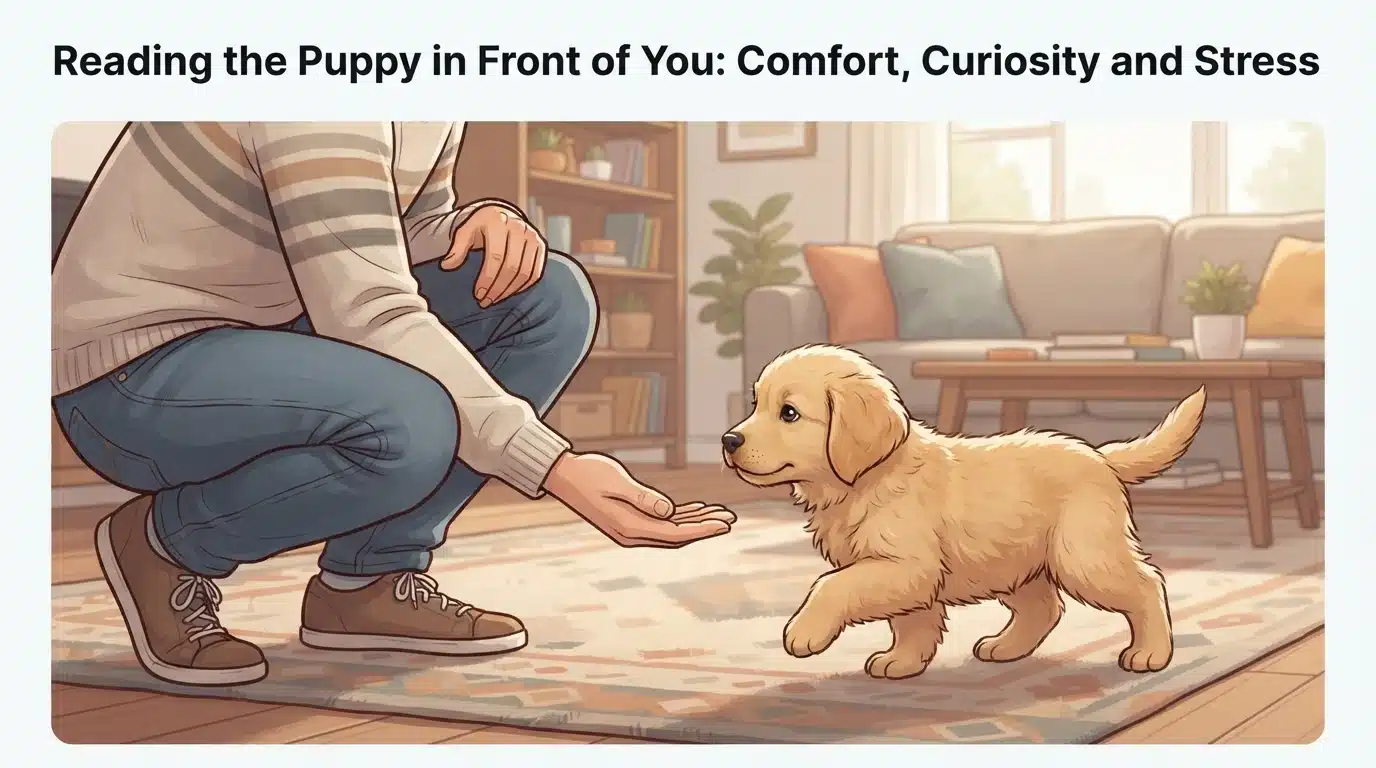
Relaxed, Curious, Worried: Three Different Pictures
A relaxed puppy has a soft face, a loose wagging body, and no trouble settling after play. A curious puppy approaches new people on its own, sniffs, and circles back for more. A worried puppy hangs back, but a well-raised one usually warms up within minutes when nobody pushes. All three are normal in a single visit. The pattern matters more than any one moment, and Havanese, Havapoo, and Cavapoo puppies tend to recover quickly when the home has been calm and social.
Stress Signals and When to Slow Down
Watch for these signs during a visit:
- Lip licking or yawning when nothing food-related is happening
- A tucked tail, crouched posture, or turning the head away
- Pacing, whining, or trying to hide behind a person or object
- Frozen stillness or whites of the eyes showing
When you see them, lower the difficulty and add distance: step back, sit on the floor, or let the puppy watch from across the room. One shy moment is fine. Repeated shutdown that never resolves is worth asking about. Researchers studying canine stress have found body language scales useful for exactly this kind of fear and anxiety reading.
Watching Without Testing
Resist the urge to flip the puppy over, grab its paws, or wave objects at its face to force a reaction. Those tests measure handling skill, not socialization, and they can rattle even a confident pup. Instead, let the household’s normal routine run. A puppy who recovers from a dropped dish or a door slam and comes back to check things out is showing you exactly what you came to see.
Small-Breed Details That Change What You Will See
Why Size Changes the Social Picture
Small companion breeds read differently than working breeds, so the same signs mean different things. A tiny puppy cannot play rough with adult dogs, so breeders use safe, short pairings instead. Watch for calm body handling, because Havanese, Havapoos and Cavapoos will need grooming for life. A pup that flails or nips at every touch learned early that handling feels scary.
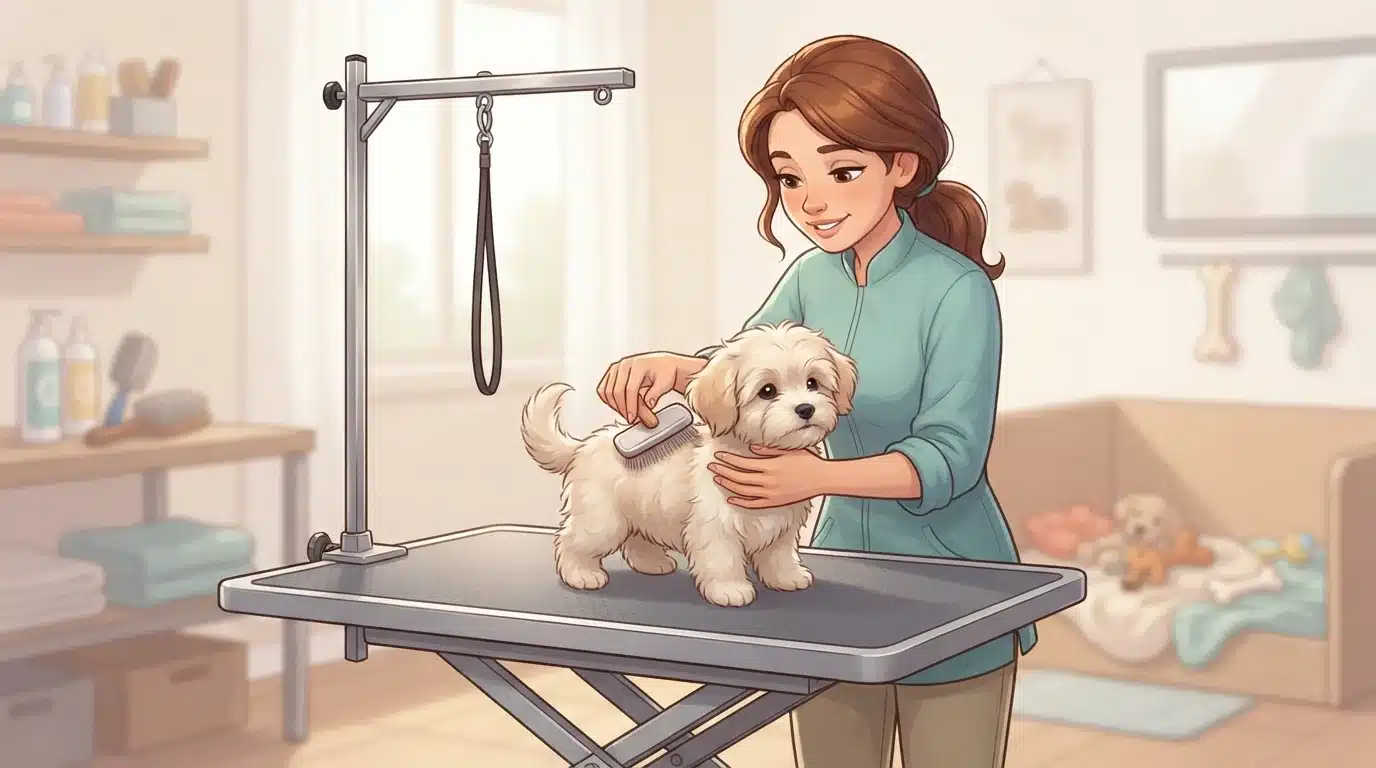
Havanese, Havapoo and Cavapoo: What to Ask Specifically
Ask breed-specific questions, not just general ones. For Havanese, ask how many litters the mother has raised and whether she lives in the home. For Havapoos and Cavapoos, ask which parent breed carries the calmer temperament in that pairing, since mixes vary. Request a short video of the puppy alone in a playpen and one of it meeting a new person. Each clip tells you more than a polished photo.
Daily Care Tasks as a Socialization Proxy
Routine care is your best window into a puppy’s social start. Ask how the breeder handles nail trims, teeth touches and ear checks during the first eight weeks. A well-started puppy tolerates brief paw and mouth handling without panic. If the breeder describes these tasks in detail, the puppy likely got daily, gentle exposure. Vague answers deserve a follow-up question.
What to Ask, Request and Verify Before You Pay
Marketing words like “home raised” cost a breeder nothing. The details below cost time, so ask for them and see what comes back.
Ten Questions That Reveal the Real Daily Routine
When you are comparing family raised puppies for sale near me, these questions work as a copy-and-go list for a call or visit:
- Where do the puppies sleep, and who cleans up?
- How many people handle each puppy daily?
- What sounds do they hear in a normal day?
- When did paw touching and grooming practice start?
- How do puppies react to a dropped pan or doorbell?
- How long do they recover after a startle?
- Have they ridden in a car?
- Have they met children or visitors?
- What happens during vet checks?
- How do you match a puppy to our home?
Vague answers are fine once. Vague answers to all ten are a pattern.
Records, Videos and Written Terms to Request
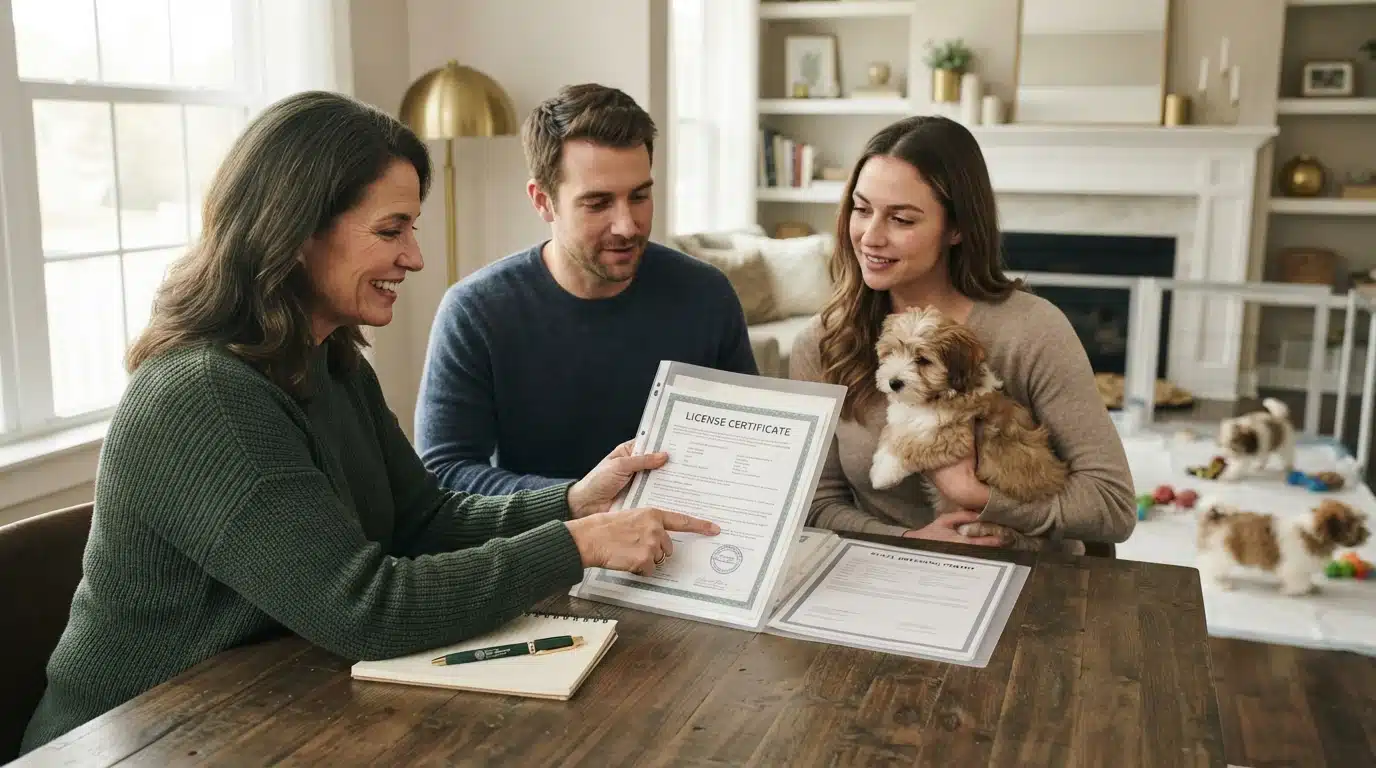
Ask for three things in writing. First, a short video of puppies being handled, including a paw touch and a startle with recovery, so you can judge signs of a well socialized puppy yourself rather than take claims on faith. Second, vaccine and deworming dates from the vet, not a homemade card. Third, the health terms and return policy on paper. A good breeder sends these without being pushed twice.
Verification Without Accusation
You are not interrogating anyone; you are screening for fit. Frame requests as care, not suspicion: “Could you send a quick clip of today’s handling?” Watch whether answers match the video and paperwork. Consistency across questions, clips and records is the strongest social proof a listing can offer, and a breeder who welcomes it is showing you exactly how they work.

Ready to see that social start for yourself? Browse the Havanese, Havapoo and Cavapoo puppies now available through Sage Puppies, then check pricing and reservation details to plan your next step. Ask about how each litter is raised, and choose the puppy whose first weeks already match what you just learned to look for.
Frequently Asked Questions
Q1: How do I know a puppy was raised around people?
Watch behavior, not adjectives. A handled puppy approaches strangers, accepts being picked up, tolerates paw and mouth touches, and recovers from a startle within seconds. Ask for a short handling video or judge it yourself during a visit.
Q2: What should I ask a breeder about early socialization?
Ask who handles each puppy daily, what sounds and surfaces they meet, when paw touching started, how they react to a doorbell, and how quickly they settle. Five direct questions reveal more than any listing phrase.
Q3: Can I raise a well-socialized puppy if I only see videos first?
Yes, if the clips are honest. Request one video of daily handling, including a paw touch and a startle with recovery, plus one of the puppy meeting a new person.
Q4: When can puppies start socialization classes?
Most can begin at 7 to 8 weeks with one vaccine set given at least 7 days before, a deworming, and a vet exam, per AVSAB guidance. Waiting until shots finish misses the key window.
Q5: Does family-raised guarantee a calm adult dog?
No. It describes where the puppy lived, not inherited temperament, health testing, or training. Treat it as one data point among many.
Q6: Are family raised puppies for sale near me always better than kennel-raised ones?
Usually, but only if the home follows a real handling plan. A busy kennel with structured socialization can beat a household that does little.
Conclusion
The phrase “family-raised” is a starting point, not proof. Real family raised puppy social signs show up in behavior: a puppy that approaches people, accepts handling, tolerates paw touches, and recovers from a startle within seconds. Labels like “kennel raised vs home raised” tell you where a puppy lived, while the handling routine tells you what it learned.
Trust the puppy in front of you, then confirm the story behind it. Ask the ten questions, request an honest handling video, and check vaccine and deworming records from a vet. Watch for quick recovery during the puppy socialization window, especially across the fear period at 8 to 11 weeks. A breeder who answers in detail and welcomes verification is showing you exactly how they work, before you pay.