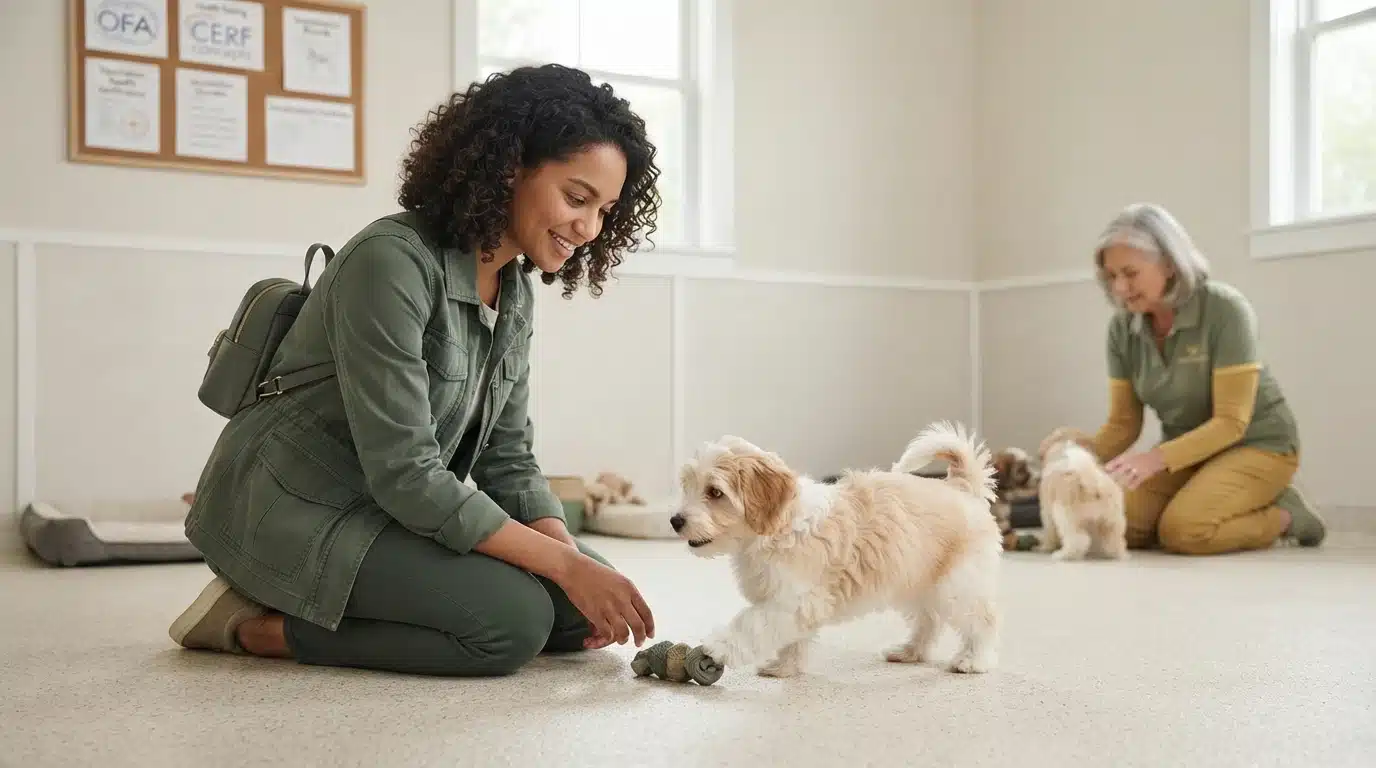
Quick Summary: Meeting the mother dog reveals more about a litter’s health, temperament, and upbringing than a conversation with the breeder alone, so set your criteria beforehand and observe her condition, behavior, and litter history. Verify every claim with health reports, vaccination and deworming records, and contract terms, and judge whether puppies live inside the home amid normal household activity. A live video visit can work if you can see the dam and whelping space, and breeders such as Sage Puppies should welcome these checks before you pay a deposit.
Most families arrive at a breeder’s home thinking about one thing: the puppy. But the visit holds a better question, and it belongs to the mother. Meeting the mother dog for ten quiet minutes, watching how she handles touch, food, and time away from her litter, tells you more about her puppies’ future temperament than an hour of breeder conversation. The problem is that few buyers know what to look for, or which questions close the gaps a friendly tour can hide. This guide gives you a visit protocol instead of a question dump. At each stage you will learn what to observe, what to ask, and what proof should back the answer, from dam temperament to health records. For families choosing among Havanese, Havapoo, and Cavapoo litters, including visits to Utah family breeders and video visits before a delivered puppy, these steps apply anywhere.
Step 1: Set Your Criteria Before You Walk In
Most buyers search for family-raised puppies for sale near me, visit a few litters, and decide on feeling alone. That is how people fall for the wrong puppy. Write your criteria down first, so the visit confirms facts instead of creating them.
Write Down What You Need From This Dog
List your non-negotiables before you meet anyone. Size, coat type, temperament around kids, and any family allergies belong on paper. If you want a Havanese, Havapoo, or Cavapoo, note what the breed standard says about size and personality, then rank your picks. The AKC’s breeder questions cover health testing, socialization, and temperament, and they work as a checklist template.
Decide in Advance What Counts as Proof
Every question needs an answer you can see or keep. Ask about the dam’s temperament, then request to meet her and watch how she responds to you. Ask about genetic health testing, then expect lab reports with names, not verbal reassurance. Ask about socialization, then ask for the litter’s records. No document means no proof.
Set Your Visit Boundaries
Decide your rules before the visit: you will meet the mother dog, see where puppies live, and review paperwork. If travel is not possible, a video visit with a breeder before committing works too, as long as you ask to see the dam and the whelping space live. The same questions apply to every litter, including our own South Jordan program. Applying your criteria the same way each time, whether you are reviewing questions to ask a family breeder from a printed list or memory, keeps one strong litter from talking you out of your list. For a fuller walk-through of what to observe in person, this guide on visiting a family-raised puppy covers the home environment in detail.
Step 2: Meet the Mother Dog and Read Her Condition and Behavior
The mother dog tells you more about a litter than any paperwork can. A breeder should offer her up freely, and the visit itself follows the same protocol you would use when evaluating a family-raised puppy. Watch first, handle second, ask third.
Watch Her Before She Knows You Are Watching
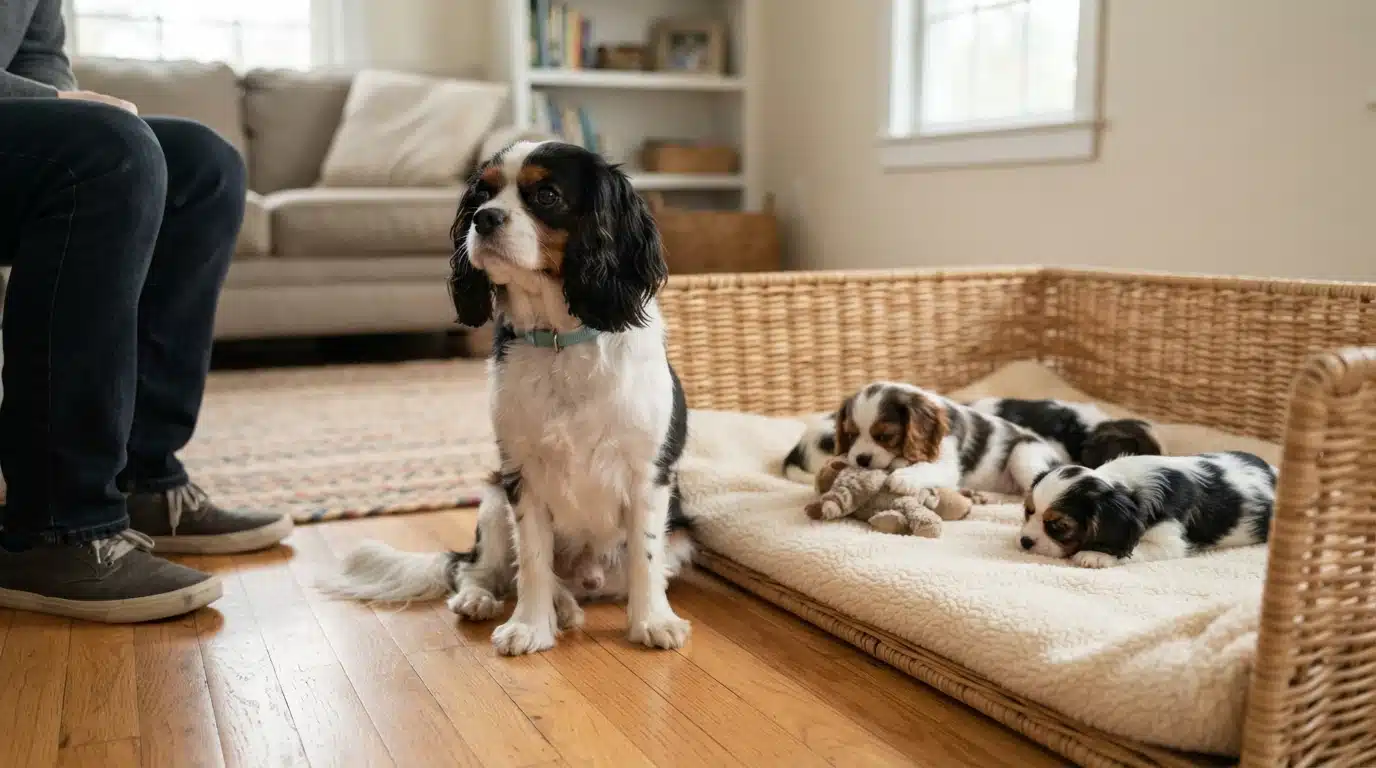
Spend your first few minutes simply looking. A healthy dam walks comfortably, holds her weight well after nursing, and keeps her coat clean without bald patches around the nipples. She should notice strangers and settle again, not cower or snap. Overly shy or growly behavior can mean a dog raised in a kennel rather than a home.
Key tip: Ask to see the mother where the puppies live. A dam kept in a separate room, garage, or outbuilding is a red flag worth pressing on politely.
Ask to Handle Her, and Ask to See Her Teeth and Body
You will read more in sixty seconds of touch than in an hour of talk. Ask to pet her, and run your hands over her ribs, hips, and spine. You should feel ribs under a soft layer, not sharp bones. Then ask directly: “Can I look at her teeth?” Clean gums and intact teeth suggest regular care.
| What You Check | Healthy Sign | Concern |
|---|---|---|
| Body condition | Ribs felt, not seen | Visible spine or hips |
| Coat | Clean, no bald patches | Matting, bare nipples |
| Demeanor | Curious, settles quickly | Cowering, hard staring |
Ask About Her Age, Her Litter History, and Her Recovery
Ask plainly: “How old is she, and how many litters has she had?” Responsible breeders follow the guidance of bodies like the Royal Kennel Club, which cautions against breeding a dam too young or too often. A good answer names her age, her litter count, and the spacing between them. Then ask how she recovered after this litter: her weight, her coat, her energy.
Warning: A breeder who cannot tell you the mother’s age or dodges the litter question is hiding a volume operation.
Ask What the Mother Dog Teaches the Puppies
Puppies learn calm behavior from their dam in the weeks before they leave. Ask how she interacts with the litter now, and whether she still corrects rough play. Dams that live in the house teach house manners, handling tolerance, and quiet time, which matters for companion breeds like a Havanese or Cavapoo. Meeting the mother dog here shows you exactly what your puppy has been absorbing since birth.
Step 3: Ask the Questions Only the Breeder Can Answer
Some answers live in the home itself. Others only come from the breeder’s mouth or paperwork. These questions close the gaps your eyes cannot cover, and a good breeder will answer every one of them without hesitating.

Questions About the Litter You Can Ask Out Loud
Start simple, because the answers reveal how the breeder runs things.
- How many litters do you raise each year, and where are the puppies born?
- How much time do puppies spend with people every day?
- What have you already started, such as crate exposure or house training?
- Which puppy in this litter fits a quieter home, and which one needs more activity?
Listen for specifics, not charm. Vague answers about temperament are a real warning sign.
Questions About Health Testing You Cannot Skip
Ask the breeder to show, not summarize. Which health testing documents should a breeder show you? Ask for this checklist:
- OFA or equivalent eye and patella results for both parents
- DNA test reports from a named laboratory
- Cardiac results where the breed standard calls for them
For Havanese, Havapoo, and Cavapoo parents, genetic reports matter most. Crossbred parents still need documented testing. Write down laboratory names so you can verify the reports later.
Questions About Veterinary Care and Paperwork
Ask for the vaccination and deworming log with dates and product names. Then ask which vaccines remain due and when. Request the puppy contract before you commit and read the health terms closely. A responsible program will explain what is covered and what is not, and will never promise a perfectly healthy dog forever. No honest breeder guarantees a lifetime without illness, so treat that claim as a red flag.
Questions About Placement, Support, and What Happens After
Last, ask how matching works. Who decides which puppy goes home with you, and based on what? Ask what support looks like after pickup: phone questions, feeding guidance, and return terms if the match fails. At Sage Puppies, matching is owner-managed from application onward, and good family breeders will describe a similar process with real limits attached.
Step 4: Verify What You Were Shown
A good visit earns trust, but paperwork confirms it. Before you leave, or before you send a deposit, sit down with the documents and check that they agree with each other and with what the breeder told you.
Match Names, Numbers, and Dates Across Documents
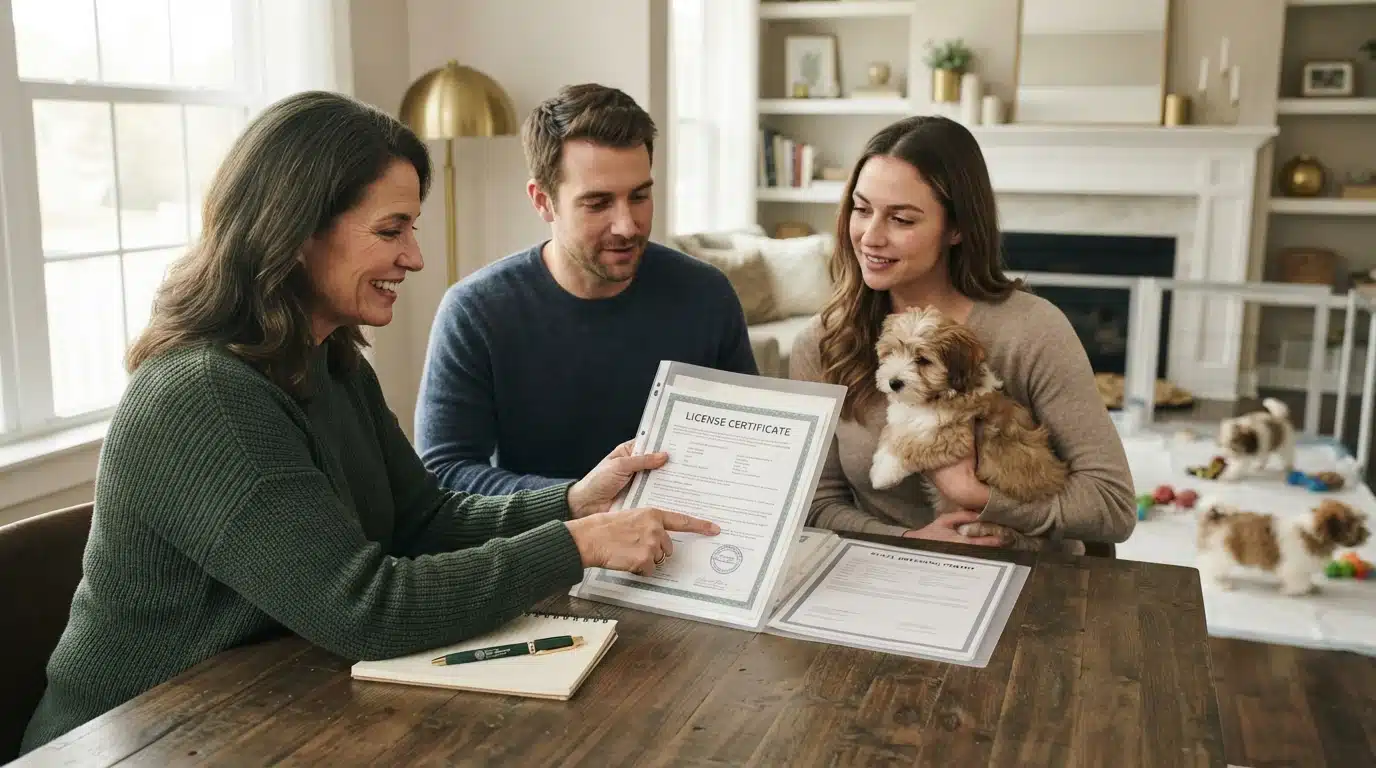
Lay out the health testing reports, the vaccination and deworming log, the vet records, and the contract side by side. The mother’s registered name should match across the genetic test reports and the pedigree. Dates matter too. A vaccination record dated after your visit tells you the litter was still in care, which is good. A deworming log with gaps tells you to ask why. If the contract promises a health guarantee, read the exact terms now, not after you have fallen in love with one puppy. Honest breeders expect this check and answer questions without irritation.
Check Licensing and Registration Reality
For purebred litters, such as Havanese, litter registration with the American Kennel Club requires an AKC-registered dam and sire of the same breed, so ask for the litter registration details and confirm them with the club. Note that Havapoos and Cavapoos are hybrids, so there is no hybrid litter registration; ask instead for the parents’ individual registrations and health test reports. Also ask whether the breeder’s operation requires a USDA license under federal thresholds, and what Utah rules apply locally.
For a look at buyer questions tied to your state, see our guide to questions to ask before you pay a deposit.

Use a Second Set of Eyes
Bring someone who loves you and lacks your enthusiasm. A calm friend will notice the missing rabies date or vague guarantee language while you are smitten with a seven-week bundle of fluff. Many buyers also send vet records to their own veterinarian for a quick review before pickup. A fifteen-minute read by a neutral pair of eyes has saved families from expensive mistakes.
Step 5: Judge the Home the Puppies Live In
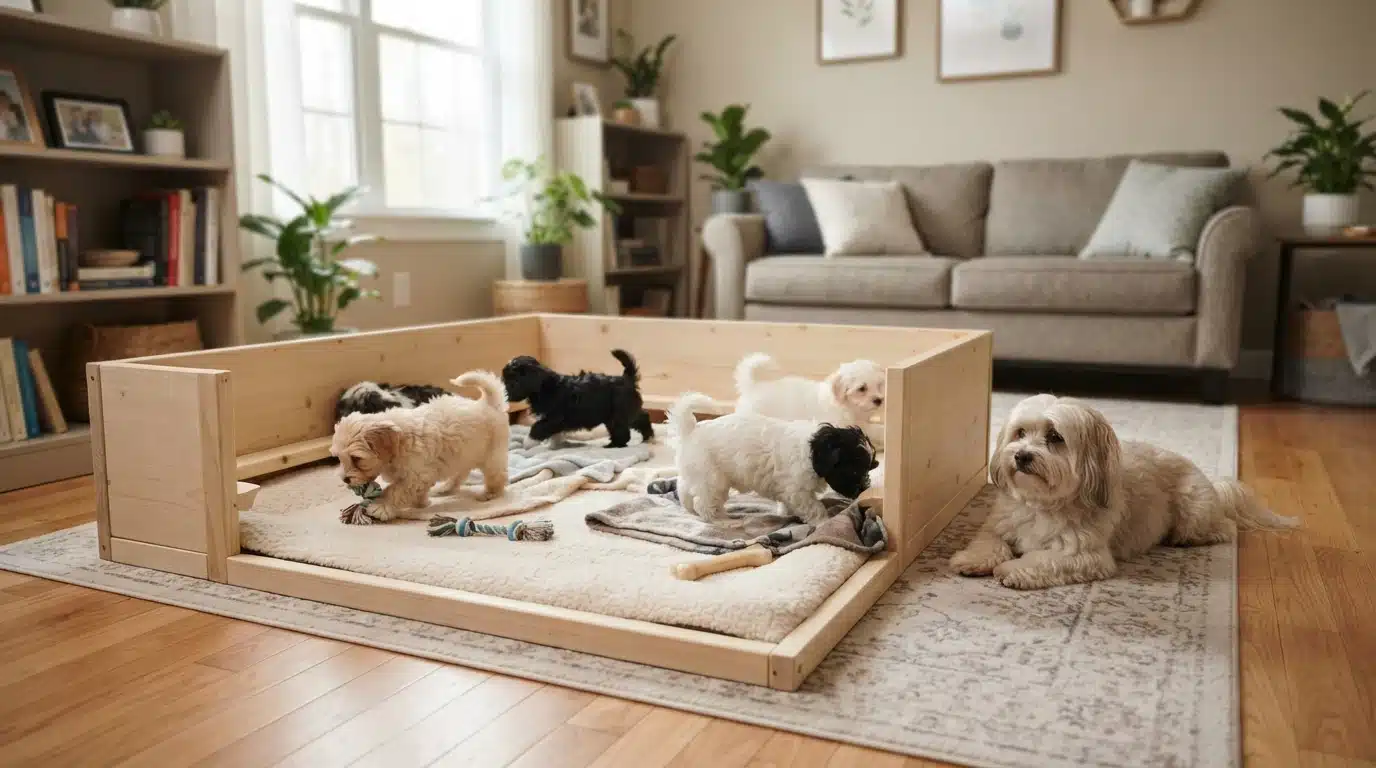
What should you look for in a family breeder’s home? A clean, safe space where puppies live inside the house, meet everyday sounds and people, and grow more independent each week. Worry signs include a separate kennel building, a strong odor, caged litters, and a mother kept away from visitors.
Look at Where the Puppies Spend Their Time
Good signals and red flags sit side by side on a visit, so compare them directly:
| Positive Signal | Concern Signal |
|---|---|
| Whelping area inside the home, clean bedding | Litter kept in a garage, shed, or kennel run |
| Fresh water, dry floor, no strong smell | Ammonia odor, damp bedding, crusty eyes |
| Puppies roam a puppy-proofed room | Puppies always confined to a crate |
| Mother rests nearby and watches visitors | Mother hidden away or defensive |
Trust your nose first. A home that smells like dogs is fine; one that stings your eyes is not.
Notice Whether the Home Is Actually a Home
Family-raised should mean the litter lives where life happens. Look for children’s toys, a TV, a doorbell, and vacuum marks. Puppies raised amid normal noise handle new homes far better, because the socialization window between four and eight weeks shapes adult confidence, per this canine socialization review. Programs like Sage Puppies raise litters inside the family’s own living space for exactly this reason.
Ask How the Litter’s World Expands Week by Week
Ask one direct question: “How does this litter’s world grow each week?” A thoughtful breeder will describe early socialization steps, from gentle handling to new surfaces, sounds, and handling by visitors. Weak answers sound like “they just play outside.” Early handling and household exposure are what family-raised puppies are supposed to deliver, so a breeder who plans it deliberately is showing you real practice, not marketing.
Step 6: Decide, Follow Up, and Protect the Decision
Send a Written Summary Within 24 Hours
Within a day of the visit, email the breeder a short recap: what you saw, what they answered, and any documents they promised to send, such as genetic health testing reports or the vaccination and deworming log. Ask them to confirm or correct anything in writing. This protects both sides. A breeder who answers promptly and openly is showing you how they will communicate after you take the puppy home. Silence or vague replies at this stage tell you just as much.
Know the Timeline for Deposits, Contracts, and Pickup
Before you pay anything, get the full sequence in writing: when the deposit is due, whether it is refundable, when the puppy contract is signed, and which health guarantee terms apply. Ask for the pickup date or delivery window, and what happens if the litter’s go-home date shifts. Read the contract before the deposit, not after. At Sage Puppies, for example, the reservation terms and pricing are laid out on the pricing and reservation page before any commitment. A clear paper trail turns a good visit into a safe purchase.
Common Mistakes to Avoid
Skipping the Visit Because the Puppy Is Available Now
Pressure to “decide today” is a red flag, not a bargain. A caring breeder welcomes questions and lets you meet the mother dog first, as puppy mill watchdogs explain. If travel is hard, ask for a live video visit instead. Never place a deposit on a litter you have not seen, in person or on camera.
Falling for the Story Instead of the Record
A warm phone manner proves nothing. Ask for the dam’s health testing paperwork, the vaccination and deworming log, and written contract terms you can read before paying. Breeders who dodge document requests are a known warning sign. Match what you hear against what you can see on paper, every time.

Ready to meet a mother dog raised in a family home? Sage Puppies invites you to ask every question above, in person or by video, before you commit. Start the application today and meet Cassie’s Havanese, Havapoo, and Cavapoo puppies, wisely bred and beautifully loved.
Frequently Asked Questions
Q1: What should I ask to see when visiting a family breeder?
Ask to see the mother dog in the space where the puppies live, plus health testing reports with laboratory names, the vaccination and deworming log, and the puppy contract. Every claim should come with a document you can keep or verify later.
Q2: Do I have to meet the mother dog before paying a deposit?
Yes. The dam’s temperament and condition reveal more than any conversation, so never deposit on a litter you have not seen. If travel is not possible, a live video visit works, as long as you see the mother and whelping space on camera.
Q3: Which health testing documents should a breeder show you?
- OFA or equivalent eye and patella results for both parents
- DNA test reports from a named laboratory
- Cardiac results where the breed standard calls for them
Q4: How old should the mother dog be, and how many litters is too many?
Responsible breeders avoid breeding a dam too young or too often. Ask for her age, litter count, and the spacing between litters, then check that her recovery after this litter looks complete.
Q5: Can a breeder guarantee my puppy will never get sick?
No. No honest breeder guarantees a lifetime without illness. Read the contract’s exact health terms before you pay, and treat a blanket lifetime promise as a red flag.
Conclusion
The mother dog settles most of your questions before anyone answers them. Meet her, watch how she moves and settles, and ask her age and litter history. Then back every claim with documents: genetic health testing reports, the vaccination and deworming log, and contract terms you have read before paying. Whatever a visit shows you, a written summary and a second set of eyes keep the decision honest. A breeder who welcomes these checks, in person or on video, is showing you exactly how they will treat your family after the puppy comes home.