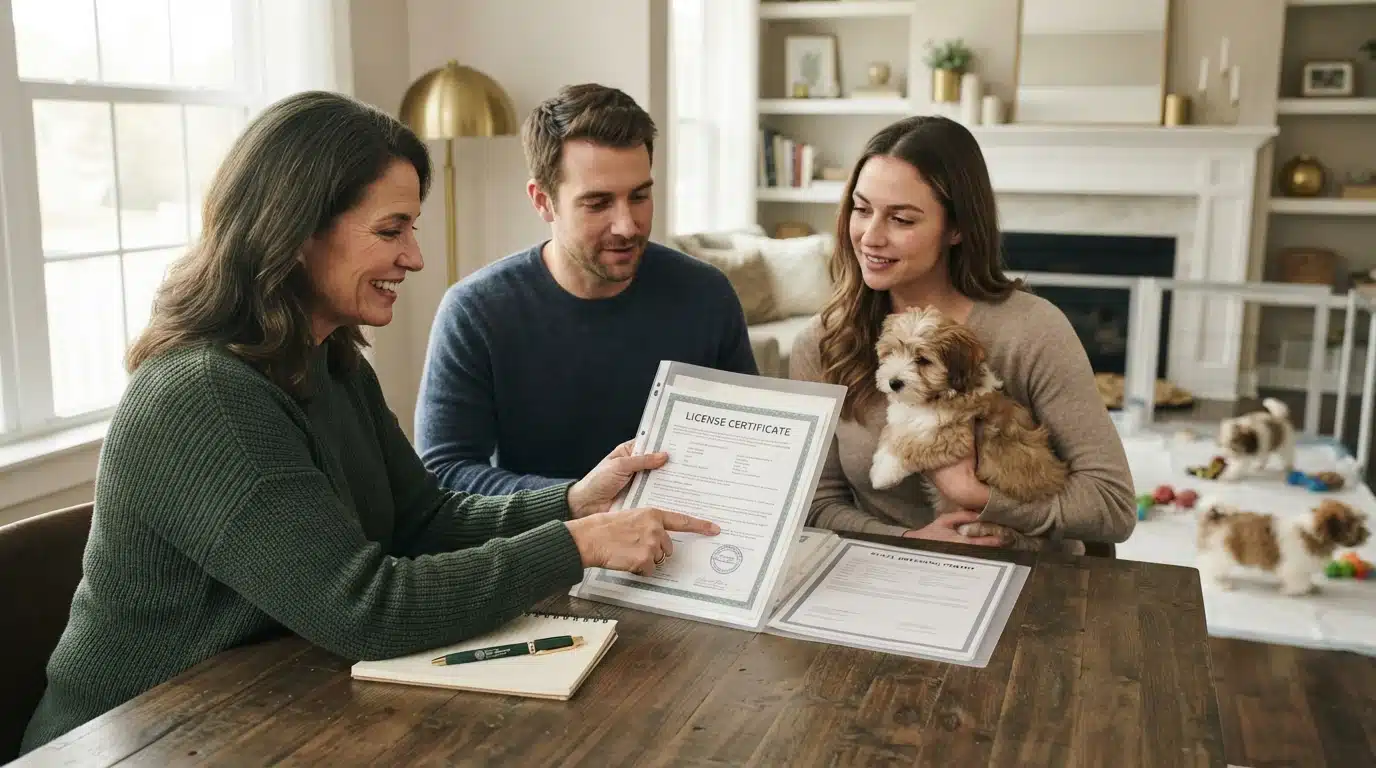
Quick Summary: A trustworthy family-raised puppy visit takes more than ten minutes: confirm where the puppies live, watch how they explore and recover from new surroundings, meet the mother, and compare the home with your own. Verify vaccination, deworming, veterinary exam, parent health-testing, contract, and deposit documents before paying, and treat pressure, vague answers, poor health signs, or refusal to allow a second visit as red flags. Sage Puppies is highlighted as a program that welcomes families into its South Jordan home to meet its Havanese, Havapoo, and Cavapoo puppies and evaluate them in person.
Most buyers spend ten minutes at a breeder’s front door, snap a photo of a litter tumbling on a rug, and leave with a puppy reserved. Ten minutes cannot tell you how the next eight years will go. The real answers live in what you notice during a longer family home visit: how the mother behaves, where the puppies sleep, and whether the paperwork holds up. This guide walks you through a family puppy visit in order, from the doorway to the vaccination records to the questions most people forget to ask. The criteria come from veterinary and animal-welfare guidance, adapted for small breeds like the Havanese, Havapoo and Cavapoo. Whether you are comparing family raised puppies for sale near you or driving to a breeder in Utah, these puppy visit tips help you judge the home itself, not the sales pitch. Use them on your first visit, then go back once more before you commit.
Step 1: Confirm Where the Puppies Actually Live
Before you fall in love with a face, confirm the puppies live where the breeder says they do. A family puppy visit should happen at the breeder’s home, not a parking lot or a neutral meet-up spot. Breeders who ask to “meet halfway” often have something to hide, because a real home shows everything: where the litter sleeps, how the mother acts, and how the puppies respond to ordinary household noise.

Questions That Reveal the Setup in the First Five Minutes
Ask where the puppies eat, sleep, and play right now. Ask whether the mother lives in the home full time, and ask to see the whelping area even if the litter has moved on. Then ask what the puppies hear in a normal day: vacuums, doorbells, kids, other pets. Honest answers come quickly and specifically. Vague answers like “they’re in a good space” tell you to keep asking.
What a Home-Raised Environment Looks Like in Person
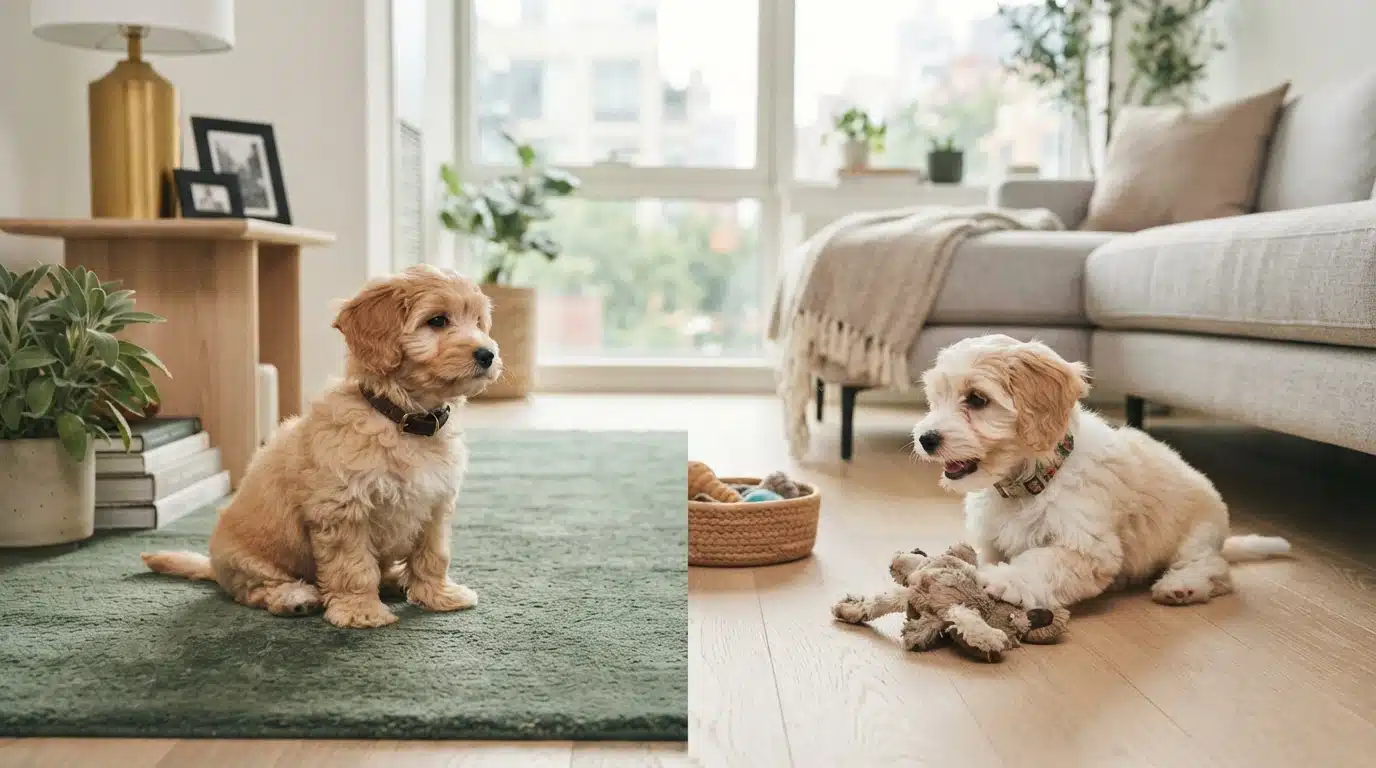
Look for evidence of daily life: a whelping pen in a lived-in room, toys scattered mid-play, potty pads or a yard path, and a mother dog who is calm around strangers. Research on early canine socialization shows puppies between 3 and 5 weeks are most drawn to unfamiliar people, so this window matters see this systematic review.
How to Tell if a Puppy Was Raised by People or in a Kennel
Watch the puppy, not the sales pitch.
| Home-raised markers | Kennel-raised markers |
|---|---|
| Approaches you, tail up, explores | Freezes, cowers, or hides |
| Settles quickly on laps or floors | Pants or trembles through the visit |
| Recovers fast after loud sounds | Panics at doors, vacuums, voices |
| Seeks hands and eye contact | Avoids touch, watches from corners |
Studies find puppies raised in the home tend to be more confident and less fear-aggressive than kennel-raised pups, and Patricia McConnell summarizes that research well. One litter can tell you more than any website. For a deeper walkthrough of what genuine home-raising involves, see what family-raised actually means.
Step 2: Observe How the Puppies Behave With You
Pictures and breeder descriptions only go so far. During your family puppy visit, sit on the floor and watch what each puppy actually does when a stranger joins the room. Behavior in the moment tells you more than any listing.
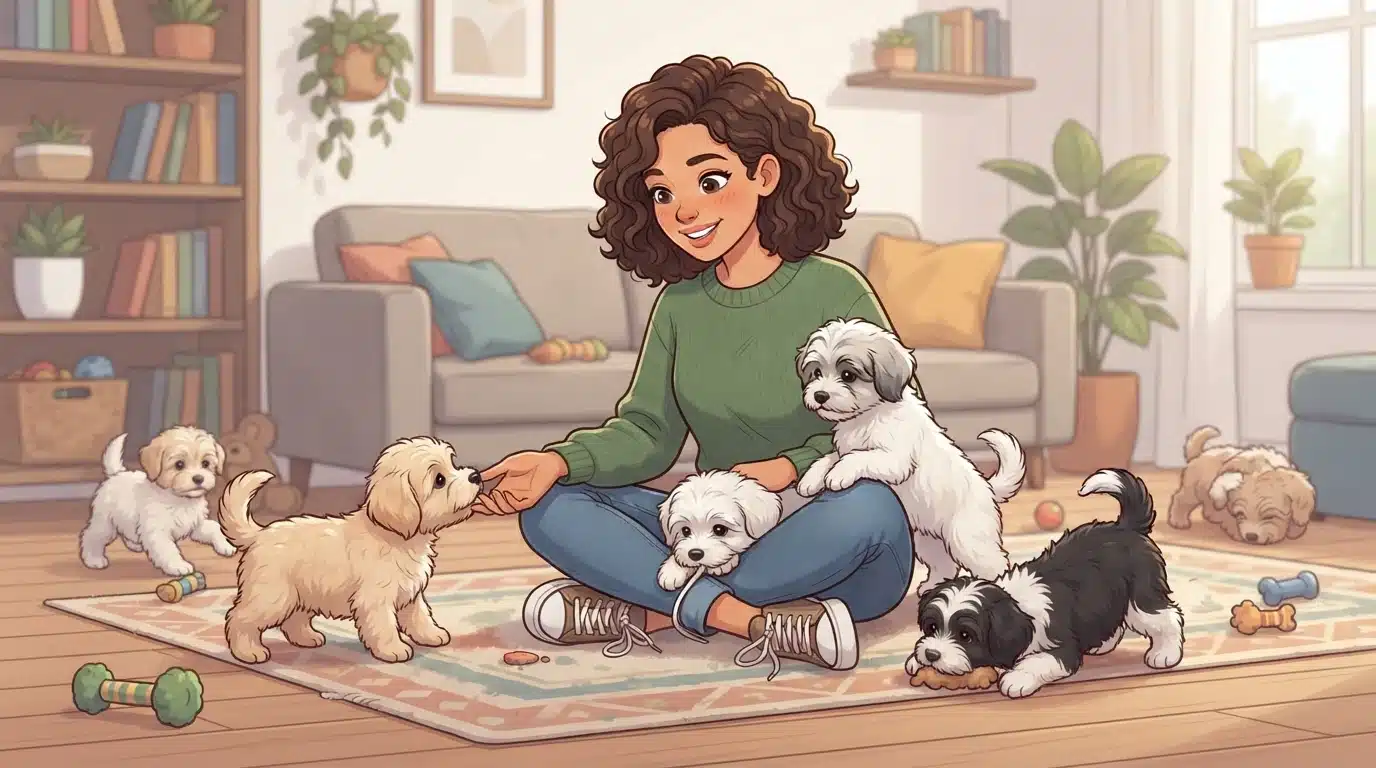
A 20-Minute Floor Observation Routine
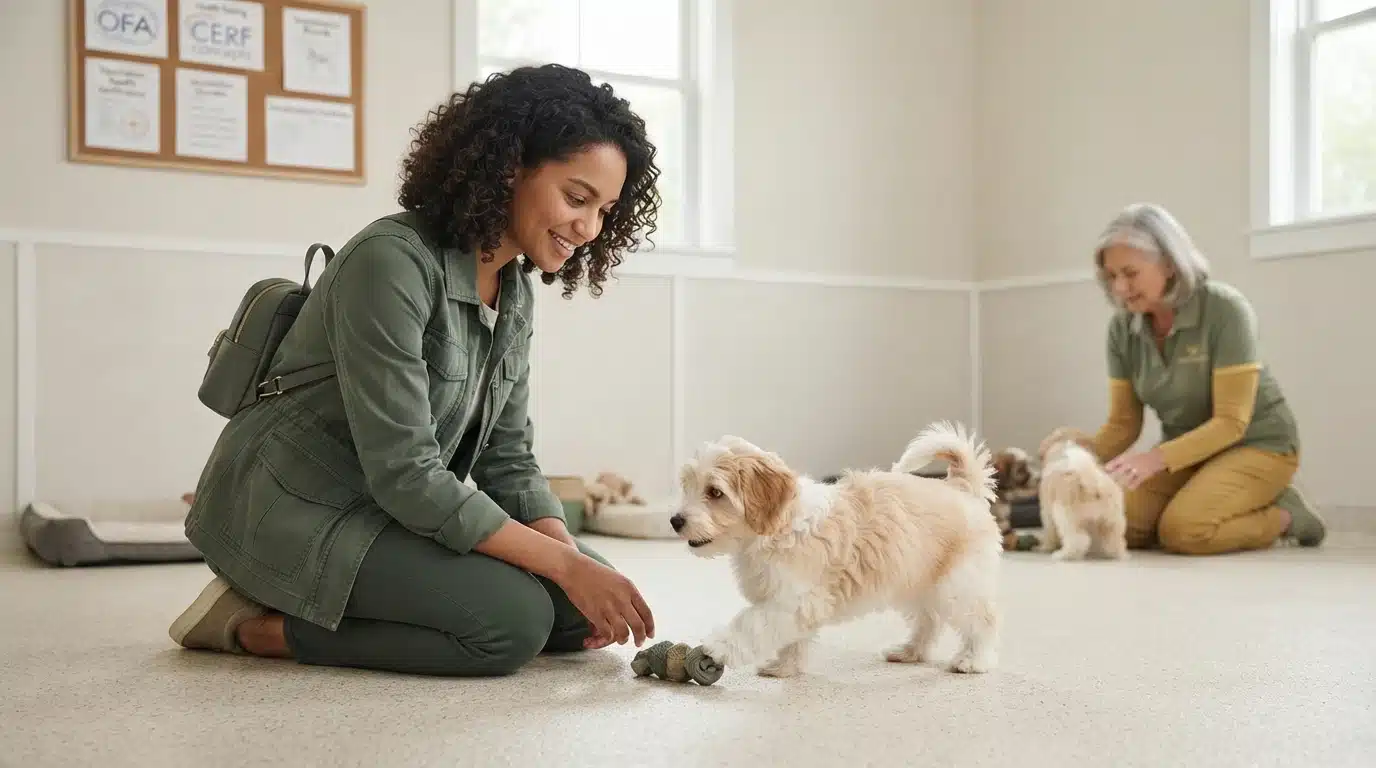
Plan on at least 20 minutes on the floor, without holding a phone or checking the clock. Healthy, well-socialized puppies will approach you within a few minutes, sniff, nibble your shoelaces, and then wander back to play. That cycle of curiosity, brief contact, and return to normal play is exactly what you want to see.
Also watch the litter as a group. Do they tumble, nap, and restart play without constant squabbling? A puppy that hides the whole time, or one that bites hard and will not settle, needs a closer look. Neither is automatically a dealbreaker, but you should ask the breeder about it.
Taking the Puppy to a New Room and Outdoors
Ask to carry one puppy to a quiet room, then to a fenced outdoor area. A confident puppy may pause, explore, and recover within a minute or two. A puppy that freezes, trembles, or shrieks for several minutes may struggle in a busy household. Recovery speed matters more than the first reaction, because every new home is a big change for a small dog.
Matching a Puppy’s Temperament to Your Household
Now compare what you saw to your real life. Calm lap-seeking puppies suit apartments and quieter homes. Bold explorers do well with active families and kids. If you want help thinking it through, this puppy temperament and size guide breaks down common small-breed traits. Match energy to lifestyle, not just cuteness.
Step 3: Meet the Mother and Assess the Parents
The mother tells you more about your future puppy than any photo or pedigree. Watch how she moves, how she greets you, and how she handles her litter. Breeders who refuse to let you meet her usually have a reason you would not like.
Confirming You Are Looking at the Dam
Ask which dog is the mother, then confirm it yourself. The dam should nurse the puppies, clean them, and react calmly when you sit nearby. A fit, healthy mother has clear eyes, a clean coat, and no visible ribs or stiffness. If the dog presented as the dam avoids the litter or the breeder swaps dogs mid-visit, treat that as a red flag and ask why.
Questions About the Mother’s Health and History
Ask how old she is, how many litters she has had, and when she will retire. A responsible program breeds a bitch only a limited number of times, then retires her. Ask about her health test results for both parents, including eye, knee, and heart screening, and whether results are listed publicly with the OFA. Request her last vet visit date and any medication she is on.
What the Sire’s Information Should Include
The father may live elsewhere, so expect paperwork instead of a meet-and-greet. Ask for his registered name, breeder, health testing certificates, and photos. For a Havapoo or Cavapoo, genetic panel results from both parents matter most. Ask why this pairing was chosen and what the breeder wanted to improve. Written records belong in the paperwork pile you will verify later, and a breeder who shares parent health details openly makes that step easy. Health-tested puppies come with proof, not just promises.
Step 4: Verify Health Records, Testing and Paperwork on Site
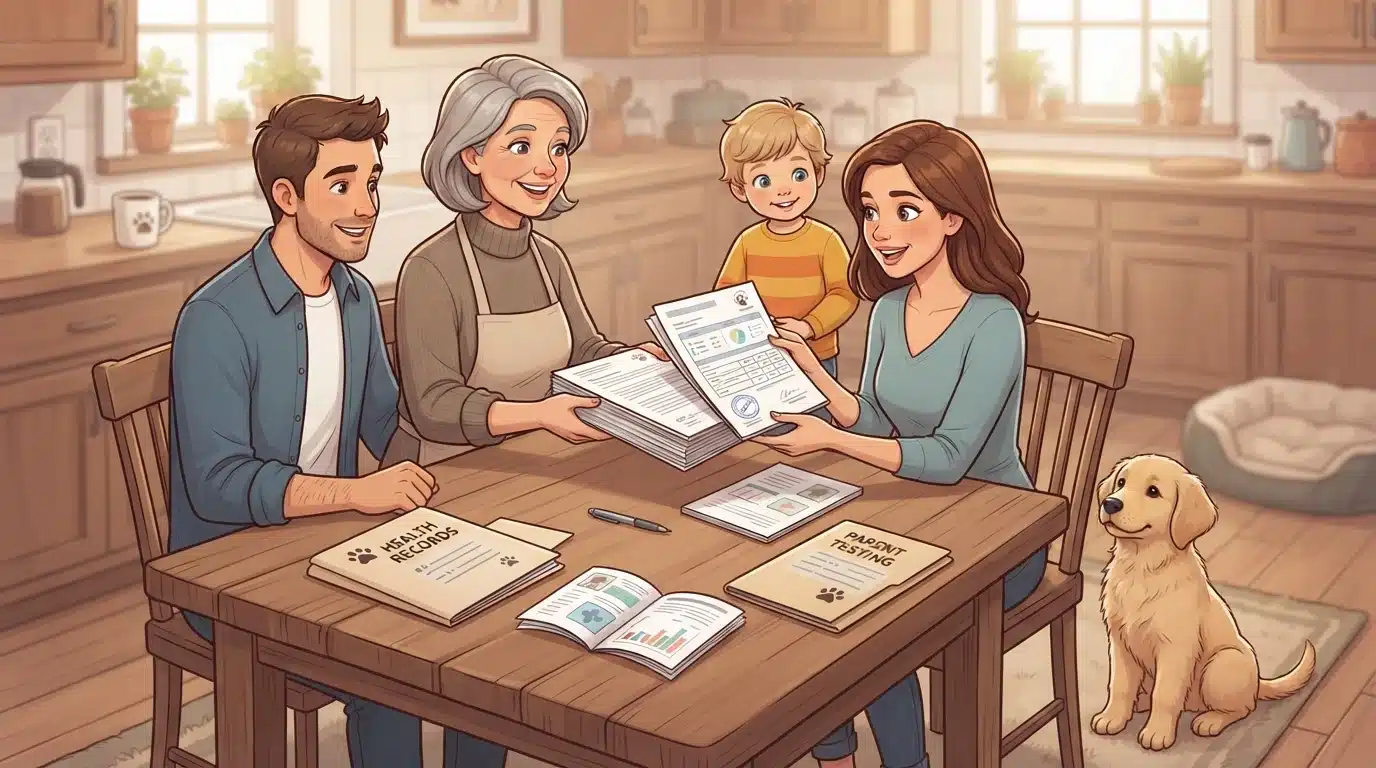
Ask for the paperwork while you sit with the puppy, not after you get home. A confident breeder will hand these over on the spot:
- Vaccination record with vaccine name, dates and the clinic’s details
- Deworming history, with dates and products used
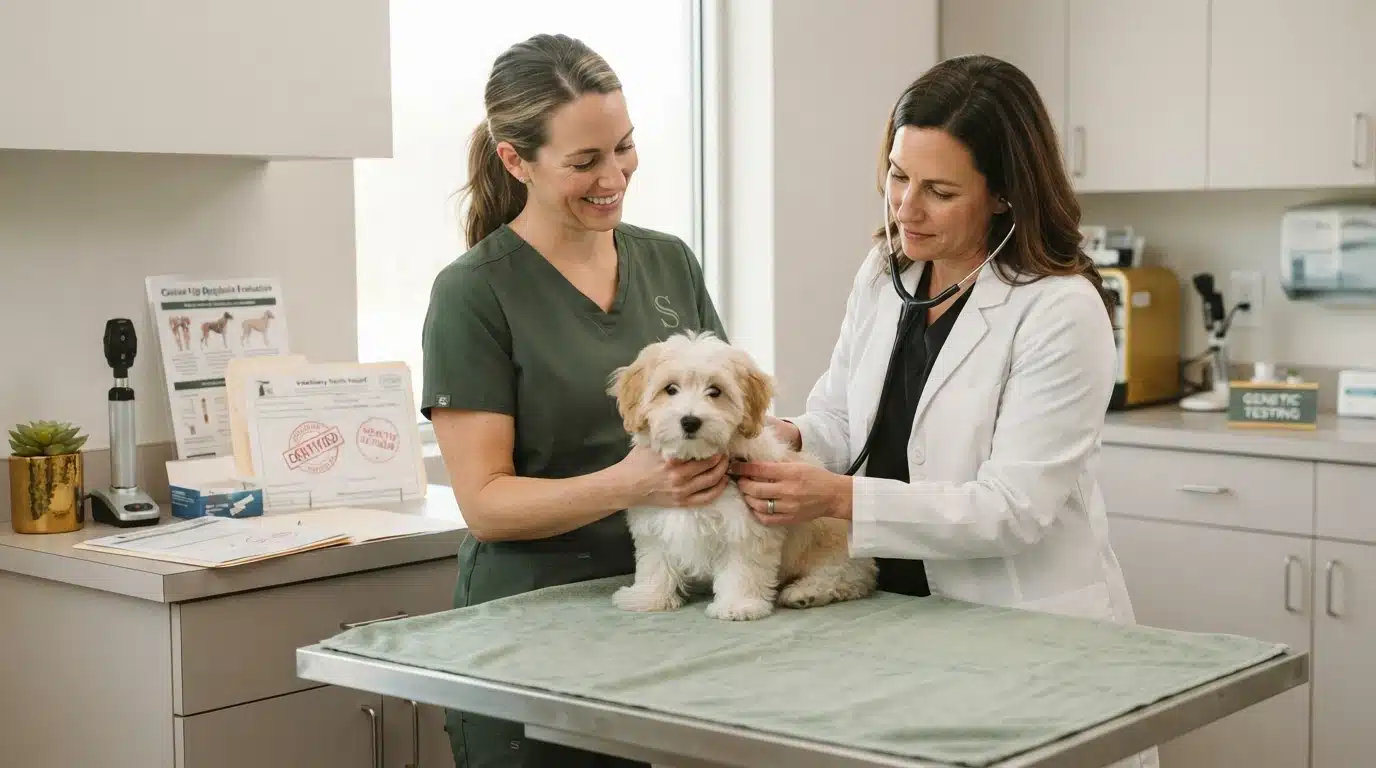
- Vet exam notes showing the puppy was checked, not just vaccinated
- Parent health testing results, such as OFA or genetic panels
- A written contract you can read in full before paying anything
Records to Request in the Room
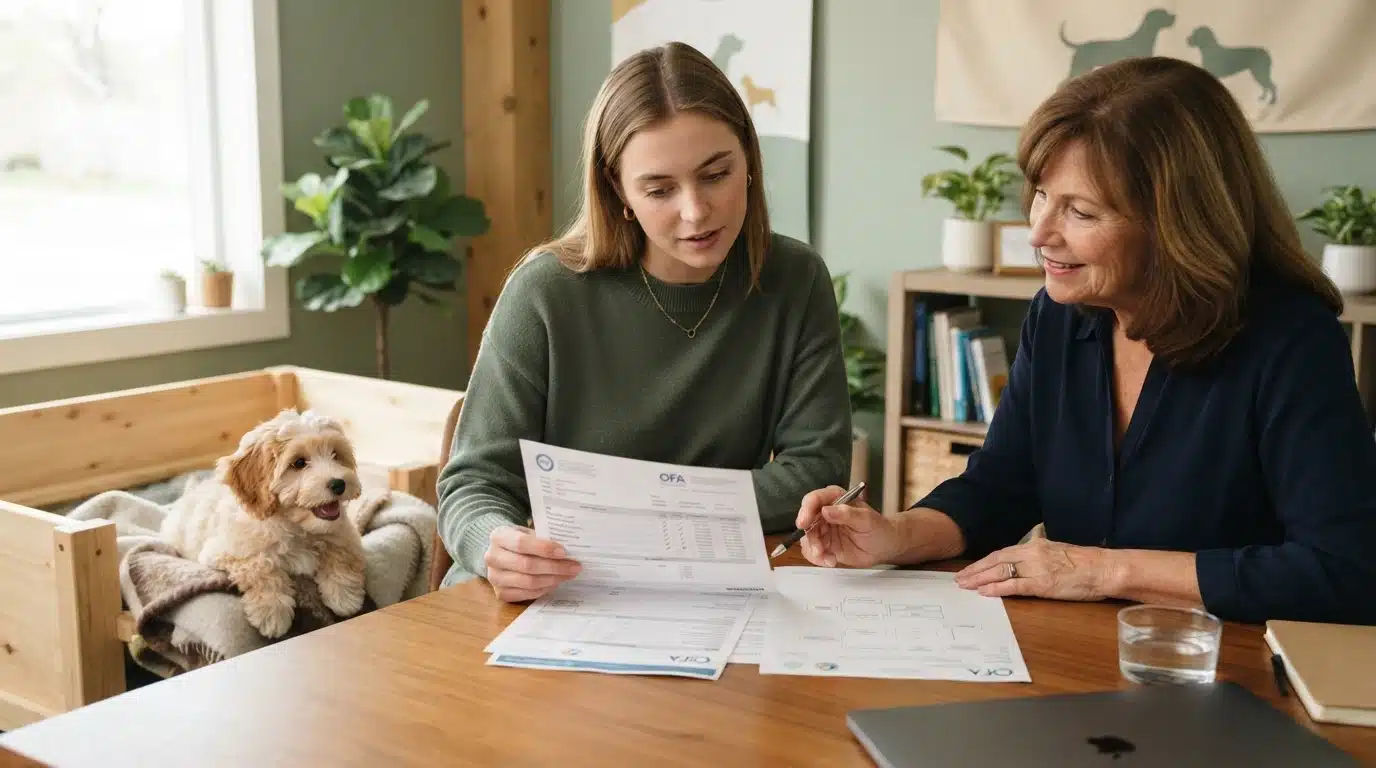
Keep the originals or take clear photos. A real record names the puppy, lists each vaccine with dates, and shows clinic contact details plus a vet’s signature. For the parents, ask what genetic health testing was done for the breed and see the actual results. A honest program like Sage Puppies walks you through these documents during the visit, because records you only hear about carry little weight.
How to Spot a Record That Does Not Add Up
Look for gaps rather than flaws. Dates out of order, a vaccine given too early, missing clinic information, or “vet checked” with nothing in writing all deserve questions. Parent testing that covers only one dog is another gap, since Havanese, Havapoo and Cavapoo breeders should screen both parents. None of these is proof of a problem, but each one should trigger a clear answer.
Contracts, Deposits and Guarantees Worth Reading Before You Leave
Read the contract in the room. Note what the health guarantee actually covers, how long it lasts, and what conditions void it. Then check the deposit terms: is it refundable, does it transfer to a future litter, and who decides if a puppy is withheld? The AVMA’s guidance for buyers is a useful reference for travel and health documentation questions. Photograph what you sign before you leave.
Step 5: Check the Home Against Your Own Home
A puppy raised in a calm, tidy, human-centered home adjusts faster to yours. Use the visit to compare the breeder’s household with the one waiting for the puppy.
What to Check During a Puppy Visit to Confirm the Home Is Right
Ask yourself these questions as you walk through:
- Noise level. Is the home reasonably quiet, or chaotic with shouting and blaring TVs?
- Clean surfaces. Are floors, crates and play areas clean without harsh chemical smells?
- Daily contact. Do puppies live near family activity, not isolated in a garage or back room?
- Handling. Are puppies picked up gently and set down calmly?
- Space to explore. Is there a safe area where puppies can roam, play and rest?
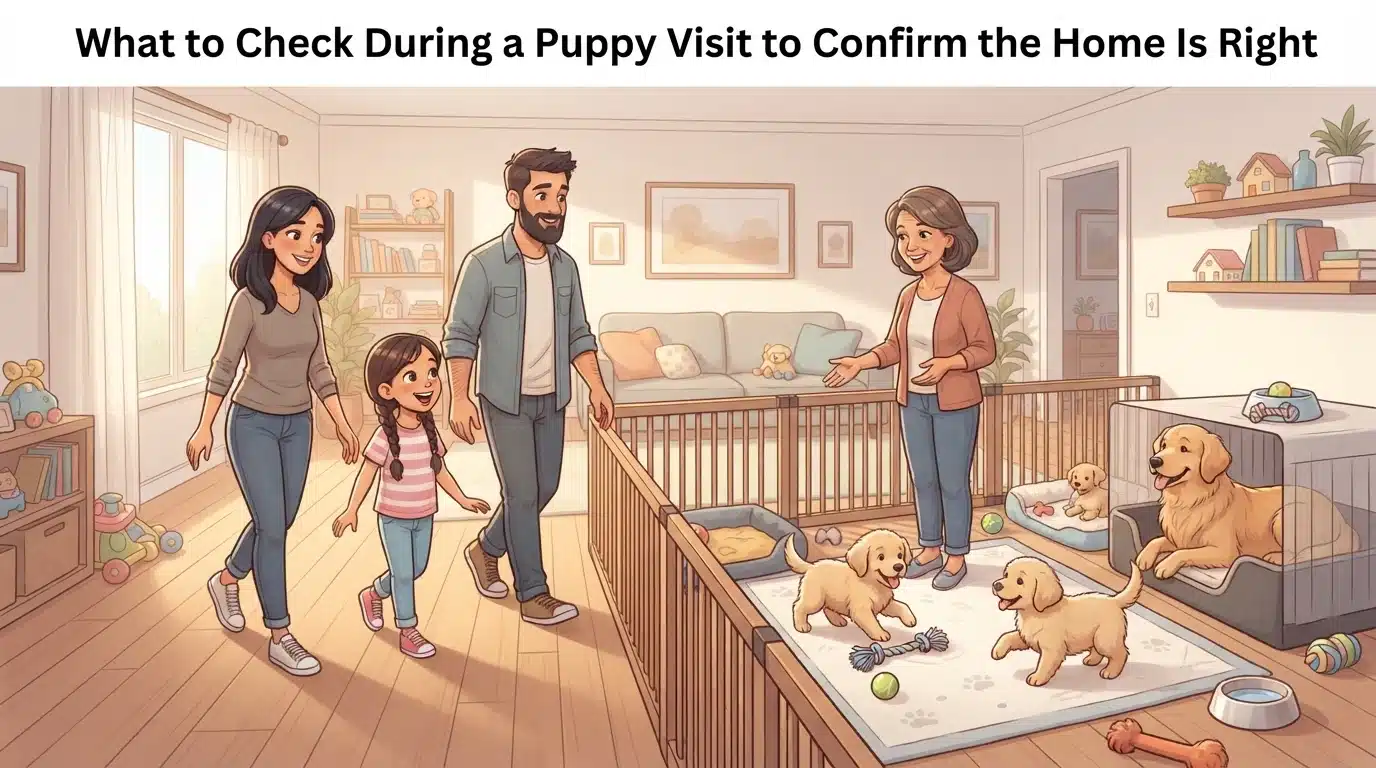
If the answers match your own home, the transition will feel familiar to the puppy.
Building a Simple Fit Comparison
Write two short lists before you leave: what the puppy’s current day looks like, and what its first week with you will look like. Note flooring, noise, people count and potty routine. The closer the lists, the smoother the first nights. Gaps are fine, but knowing them helps you prepare instead of being surprised.
Questions for Families Whose Puppy Will Travel
If your puppy ships or rides home with a courier, ask the breeder how travel is planned. Good questions: Who carries the puppy? How long is the trip? What food, bedding and potty breaks are scheduled? A careful answer shows the breeder plans the whole transition, not just the handoff.
Step 6: Red Flags to Watch For During the Visit
Most problems show up in one of three places: the home, the conversation, or the puppy itself. Scan each one before you talk about price or deposits.
Red flags when visiting a puppy breeder’s home:
- Home conditions: no chance to see where puppies live, strong odor, dirty bedding, overcrowded crates, no visible mother.
- Conversation: pressure to pay same day, refusal to answer parentage or health questions, vague paperwork, no contract.
- Health signals: discharge from eyes or nose, coughing, diarrhea, lethargy, ribs showing, limping or flinching.
Red Flags in the Home and the Conversation
A clean, calm space tells you more than any website. Watch for breeders who keep puppies locked away, refuse a walk through the whelping area, or seem vague about which dog is the mother. In conversation, treat pushiness as data: hard deadlines on deposits, all-cash demands, or “we just had the shots” with no records are all reasons to walk. A breeder who asks you questions is a good sign. If you cannot see the mother or the living area, the “family raised” story falls apart, no matter how warm the visit feels.
Health Signals That Deserve a Veterinarian, Not a Sales Conversation
Some signs need a vet, not a reassurance. Watch for eye or nose discharge, coughing, diarrhea, a swollen belly, low energy, or a puppy that hides from people. A limp or flinch also matters. Any one of these means the whole litter needs an exam before you commit. Ask when each puppy last saw a licensed veterinarian and request written records, since verbal assurances are hard to verify later.
Utah and Local Licensing Context Worth Asking About
Licensing rules vary by location. Utah has no state-level breeder license, so care standards come from city and county ordinances. Salt Lake City requires dog breeders to hold a license through animal services and renew it each year, and nearby cities have their own pet rules. Ask any Utah breeder, including programs in South Jordan, which local license they hold and whether county animal services knows about their program. A clear answer is a good sign. An evasive one is not.
Step 7: Finish the Visit Well and Plan the Next Step
Ask for a Second Visit Before Deciding
A good breeder will welcome a second visit, so ask for one before you pay anything. Come back with the whole family, including the person who was most hesitant the first time. Watch the litter again with fresh eyes: has each puppy grown, played and recovered from new things? A breeder who pushes you to decide today, or refuses a return trip, is telling you something important about how the sale works.
Collect the Information You Need to Continue at Home
Before you leave, get copies of the vaccination and deworming records, the puppy contract, any health guarantee terms, and the written deposit and refund policy. Ask which food the puppies eat so you can match it at home. Take photos of the parents’ health testing paperwork if you have not already. Written documents beat memory, so leave with everything in hand.
Next Steps Through the Application Process
Most reputable programs use an application and matching process rather than first-come picking. With a program like Sage Puppies, you submit an application, and the breeder matches you with the puppy whose temperament fits your household. Ask how deposits work, when pickup or delivery happens, and what support you get after you bring your puppy home.

When you find a breeder whose answers hold up under this visit protocol, the next step is simple. Sage Puppies welcomes families into its South Jordan home to meet its Havanese, Havapoo and Cavapoo puppies where they were raised. Submit an application, schedule your visit, and judge the program for yourself, floor time included.
Frequently Asked Questions
Q1: What should I check during a puppy visit to confirm the home is right for the puppy?
Watch noise level, clean surfaces, daily family contact, gentle handling, and safe space to explore. Then compare the puppy’s current routine to your own first week at home. The closer the two lists, the easier the transition.
Q2: How to tell if a puppy was raised by people or in a kennel
A home-raised puppy approaches you with its tail up, settles quickly, and recovers fast after loud sounds. A kennel-raised puppy often freezes, hides, trembles, or avoids touch. Watch the litter’s behavior, not the sales pitch.
Q3: Red flags when visiting a puppy breeder’s home
Refusing to show where puppies live, no visible mother, strong odor, pressure to pay same day, all-cash demands, or missing paperwork. Eye or nose discharge, coughing, or lethargy means the litter needs a vet exam.
Q4: Can I ask for a second visit before paying?
Yes. Good breeders welcome a return trip with the whole family before any deposit.
Q5: What paperwork should I take home?
Vaccination and deworming records, a written contract, health guarantee terms, deposit and refund policy, and parent health testing results. Photograph everything before you leave.
Conclusion
A good family puppy visit comes down to three checks: the puppies live where the breeder says, the mother is calm and visible, and the paperwork holds up on the spot. Watch how each puppy recovers from new rooms and sounds, meet the dam yourself, and photograph the vaccination, deworming and health testing records before you leave. Ask about Utah’s local licensing, and always request a second visit before paying anything. When a breeder welcomes all of this, you have found someone worth trusting with your Havanese, Havapoo or Cavapoo.