Quick Summary: A family-raised puppy is born and handled inside a home, gaining early exposure to ordinary noises, people, grooming and household activity, but the label alone proves nothing about health or training. Buyers should verify the living setup, vaccination and deworming records, parental health testing and contract terms before paying, then continue socialization and reward-based training after pickup. Sage Puppies raises Havanese, Havapoo and Cavapoo litters in a family home in South Jordan, Utah, sharing records before placement and offering pickup or nationwide delivery.
There is a moment in a home-raised litter’s first weeks when a puppy hears the vacuum cleaner, cries for half a second, then goes back to wrestling a sock while the household carries on around him. That small scene, not the words on a website, is what family-raised is supposed to describe. The problem is that anyone can print the phrase, so families searching for family raised puppies for sale near me rarely know what to verify. So what is a family raised puppy? In plain terms, it is a puppy whelped and raised inside a home, handled daily by people, and habituated to ordinary life: noise, children, other pets, and gentle grooming. It is not a health guarantee or proof of training. This guide explains what a home environment genuinely gives a small-breed puppy, what it cannot promise, and which evidence backs the claim. It also covers what changes in the first week with a puppy once he leaves that setting for yours. The examples draw on Sage Puppies, a small Utah program raising Havanese, Havapoo, and Cavapoo litters in a family home since 2025.
What a Family-Raised Puppy Is, and What It Is Not
The definition in plain language
So, what is a family raised puppy? It is a puppy born and raised inside a breeder’s home, not in a kennel building or outdoor run. The litter shares daily life with people: handled often, fed on a routine, and exposed to normal household sights and sounds during the first weeks. Home raised puppies raised this way meet the world early, and research on early socialization links that exposure to calmer adult dogs. Defining traits are simple:
- Born and sleeping inside the house
- Handled by adults and children every day
- Used to vacuums, doorbells, and kitchen noise
- Weaned onto solid food on a set routine
A day in the life of a home-raised litter
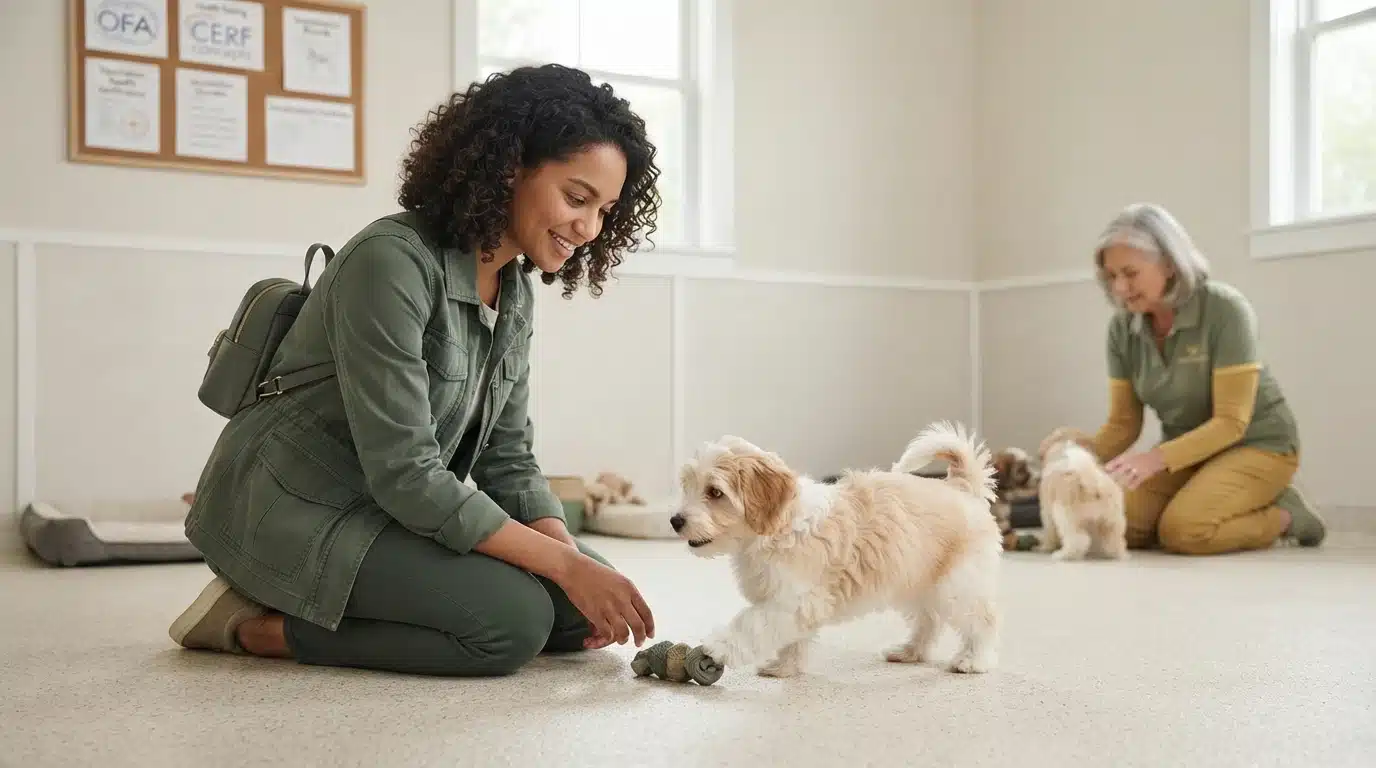
Picture the routine before you picture the promise. Puppies wake in a whelping box in a living area, crawl to their mother, and get weighed and handled during morning checks. Kids pass through, doors open and close, and a TV hums in the background. Meals arrive at set times, then weaning starts with soft food around three to four weeks. Short play sessions, gentle handling, and early crate naps fill the rest of the day. At a small program like Sage Puppies in South Jordan, Utah, the litter lives this rhythm inside the family’s own space.
Why the label is not proof of anything on its own
“Family-raised” is a marketing phrase. Anyone can type it into an ad. The label describes a setting, not the care inside it, so it guarantees nothing about health testing, socialization quality, or honesty. Ask to see where puppies live and how often they are handled. Videos, vet records, and parent photos tell you more than any wording, and our guide to choosing a family-raised puppy lists the exact questions worth asking before you commit.
What a Home Environment Genuinely Gives Your Puppy
Familiarity with the sounds of a real home
A puppy raised in a kitchen, not a barn, has already heard the soundtrack of daily life: the dishwasher, the doorbell, a television, kids running through a hallway. Puppies have a short window for learning what counts as normal, and sounds heard during that window stay ordinary later. A vacuum is just noise. That head start shows up in the first week home, when a house-trained pup settles faster instead of startling at every clatter.
Handling that builds a handleable dog
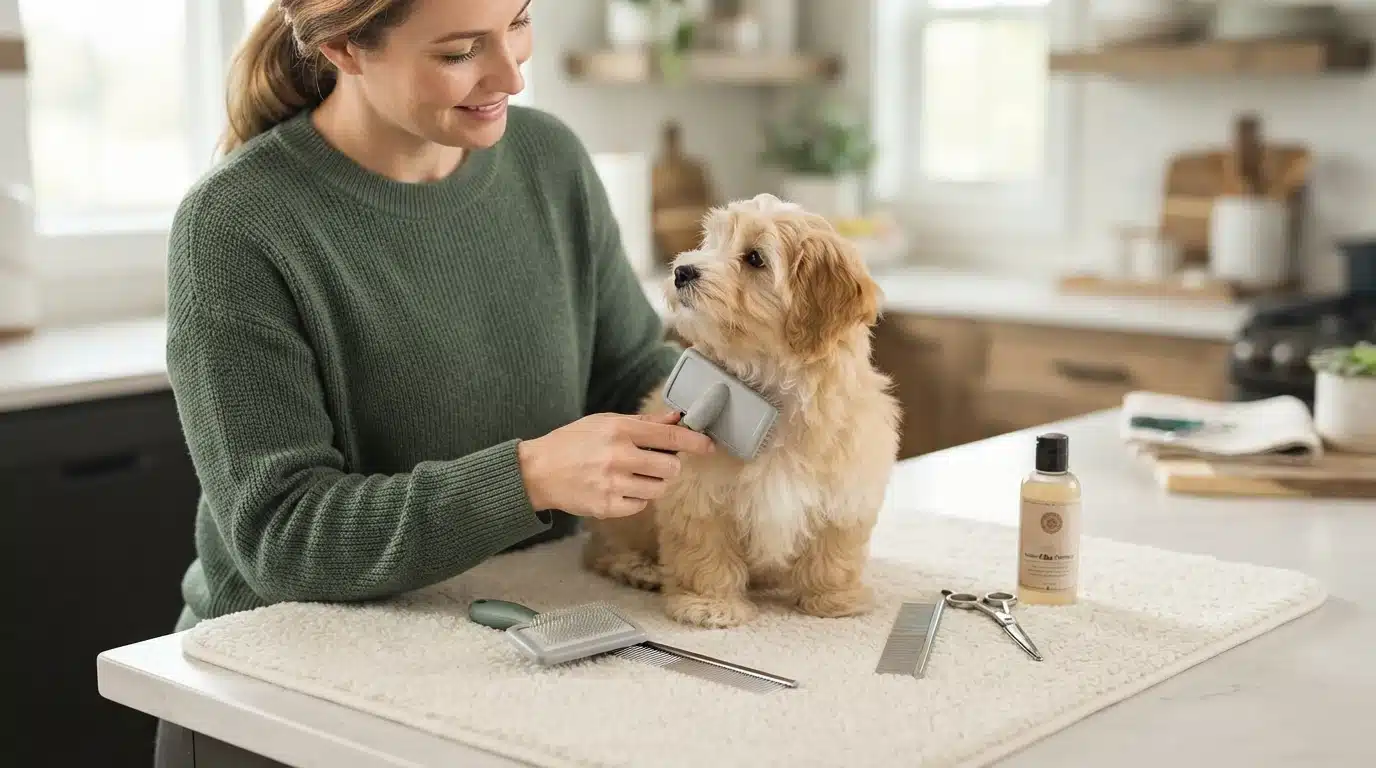
Home-raised litters get touched constantly. Fingers check ears, flip tiny paws, and run a brush down a fluffy coat, so grooming and vet exams feel routine instead of frightening. This matters most for small breeds like Havanese, Havapoos, and Cavapoos, which need regular coat care for life. A dog that learned early that hands mean gentle attention sits still for brushing. A dog that never did often fights the table.
Why early socialization matters more than most buyers expect
The American Veterinary Society of Animal Behavior states that behavioral issues, not infectious disease, are the leading cause of death for dogs under three, and it urges socialization before vaccines are complete. A breeder’s living room gives your puppy people of different ages, handling, and new surfaces during that window. Ask any breeder how puppies spend their days, not just where they sleep. For what home raising costs and why, see what a family-raised puppy costs.
What a Home Cannot Give You
Family-raised tells you about a puppy’s first eight weeks. It does not tell you everything. Here is what a loving home still cannot promise on its own.
Health comes from records, not from the setting
A warm living room cannot replace veterinary care. Puppies need a full vaccine series, usually starting at 6 to 8 weeks and finishing at 16 weeks or older, because maternal antibodies fade at different rates. Ask for vaccination and deworming records, and ask whether the parents were screened for inherited conditions. A house full of children proves nothing about a heart or a knee.
Temperament cannot be certified in a single visit
A puppy may romp happily through an hour-long visit and still grow into a shy or headstrong adult. Genetics, early socialization during the first three months, and your own training all shape the final result. Honest breeders will say so. They will describe what they observed, but they will not guarantee a personality, and neither should anyone else.
A home has its own stressors
Not every family-raised puppy grows up calm. A busy household can mean missed naps, rough handling by kids, or loud visitors at exactly the wrong stage. Good programs manage this with naps, gentle handling, and quiet time. That structure matters more than the word “home” on a website, so ask how the daily routine actually works before you fall for the setting alone.
How to Verify a Family-Raised Claim Before You Pay
Anyone can put “family raised” on a website. You verify it the same way you would check any big claim: ask questions that require specifics, request records in writing, and read the contract before money changes hands. Run this checklist against every breeder you talk to.
- Ask where the puppies sleep at night, and who handles them daily.
- Ask how many litters the home has per year, and how many adult dogs live there.
- Ask what the puppies experience by eight weeks: grooming touch-ups, crate time, vacuum sounds, kids or visitors.
- Ask to see the mother, live or on video, interacting with her puppies.
- Ask what happens if the placement does not work out.
A breeder raising puppies in a real home answers these instantly and in detail. Vague or defensive answers are your signal to slow down.
Questions that separate a real home program from a slogan
Ask for a walk-through of a typical day. Where do the puppies whelp, and where do they play? Who socializes them, and how many hours a day are they around people? A genuine home program describes ordinary life: laundry folding next to a playpen, car rides, nail trims. A kennel operation describes cleaning schedules. Trust the program that talks about individual puppies by name and temperament, not litters by number.
Records to request in writing
Ask for dated vaccination records showing each shot, the vaccine used, and the giving clinic. Request deworming dates and the product name. You also want vet exam results for the puppy and health testing results for both parents, such as patella and eye clearances for the breed. Written records let your own veterinarian confirm everything, so keep copies.
What to confirm in the contract and reservation terms
The contract should spell out the purchase price, deposit terms, what happens if you cancel, and any spay or neuter expectations. Look for a return clause: a good program takes a puppy back at any age. Confirm pickup or delivery details, including Utah pickup or nationwide delivery options, before you send money. Programs like Sage Puppies put these terms in writing up front, which is exactly the standard to hold any breeder to.
Bringing a Family-Raised Puppy Home
Preparing the house the way the breeder’s house worked
A family-raised puppy already knows rugs, tiled floors, doorbells and a running dishwasher. Copy that setup before pickup day. Build one small puppy area with a crate, a playpen and a potty spot, and place it near family activity rather than in a quiet back room. You also need a food bowl, water, chew toys and a plan for where the puppy sleeps. Ask the breeder how her own house ran, then mirror it.
The first days and first night
Keep the first week with your puppy calm and simple. Plan a short first week: setup done before pickup, the same food the breeder used, quiet handling, and a vet visit within a few days. Because the vaccine series usually finishes around 16 weeks, veterinarians recommend holding off on dog parks and unknown dogs until your vet clears the puppy. For the first night, put the crate beside your bed, add a warm blanket, and expect some crying that fades within a few nights.
Carrying the breeder’s work forward
Everything the breeder started, gentle handling, early grooming, and first house training habits, only lasts if you keep it up. Hold short, reward-based sessions every day, and let calm kids and visitors meet the puppy at home. Use the same phrases the breeder used for potty time. Book that first vet appointment within a few days and bring the vaccination and deworming records so your vet can finish the series on schedule. A Utah family picking up directly from Cassie can walk through all of this in person before taking the puppy home.
Family-Raised and Small Breeds: Havanese, Havapoo and Cavapoo
What a home environment does for a small, grooming-heavy breed
Havanese, Havapoos and Cavapoos are small, people-focused dogs with coats that need regular brushing, trimming and nail care. In a home setting, a puppy grows up with everyday sounds, hands and touch, which makes grooming feel routine instead of scary. Early, gentle handling of paws, ears and the face helps a small dog accept brushing and vet exams later. A home cannot promise a puppy will love the groomer, but it stacks the odds in your favor. It also teaches soft mouths and calm play, which matters more with a dog small enough to be hurt by rough handling.
Small size, full-sized socialization needs
Small breeds sometimes get less socialization because owners carry them everywhere or shield them from new things. That’s a mistake. The puppy socialization window, the first three months of life, shapes how a dog reacts to strangers, kids, other pets and new places for the rest of its life. A family-raised puppy meets these things naturally at home, but you still need to continue the work after pickup. Introduce new surfaces, sounds, people and short car rides at your puppy’s pace, and reward calm behavior rather than pushing through fear.
How Sage Puppies raises and places its litters
Sage Puppies, founded in 2025 in South Jordan, Utah, raises Havanese, Havapoo and Cavapoo litters in a family home rather than a kennel. Puppies are handled daily and matched to families through an owner-managed application process, with vaccination and deworming records shared before pickup. Families near Utah can arrange pickup, and nationwide families can plan delivery. You can dig into the details in Sage’s Havanese, Havapoo and Cavapoo breed guides before you apply.
Common Mistakes to Avoid
Paying for a word instead of evidence
“Family-raised” is easy to type. Some kennels use the phrase on their websites while the puppies still live in a separate building. So treat the words as a claim, not a fact. Ask where the litter sleeps, who handles the puppies daily, and whether you can visit or see a live video call. A breeder with a real home program answers without hesitation. Vague answers, stock photos, or “the mom is on site” with no detail are reasons to walk away.
Expecting the puppy to arrive finished
Even a well-raised puppy arrives as a work in progress. House training, crate comfort, and calm greetings take weeks of your consistency, not a week of luck. Small breeds need extra patience with potty breaks because their bladders are tiny. Also remember that socialization continues after you bring the puppy home, especially across the first three months. A great start matters, but it does not replace the training you do in your own house.
Skipping records, or assuming the home covered it
A loving home is not a medical plan. Ask for the puppy’s vaccination and deworming dates in writing, along with any vet exam notes, before you pay a deposit. Compare those dates to the usual schedule: the series starts at 6 to 8 weeks and finishes at 16 weeks or older. Keep every paper, and book your own vet visit within a few days of arrival.

If a family-raised Havanese, Havapoo or Cavapoo fits your home, the next step is simple. See our available puppies at Sage Puppies, then fill out the application. Cassie matches each puppy with the right family, and we’re glad to answer questions before you commit.
Frequently Asked Questions
Q1: What is a family-raised puppy, and what are the benefits?
A family-raised puppy is born and raised inside a breeder’s home, handled daily and used to ordinary sounds, people and pets. The benefit is early socialization during the critical first three months, which is linked to calmer, more handleable adult dogs.
Q2: How is family raised different from kennel raised?
Kennel-raised puppies live in a separate building or outdoor run with less daily human contact. Home-raised litters grow up with doorbells, vacuums, kids and handling, which builds early confidence. Always verify the setting rather than trusting the wording.
Q3: What records should I get before paying a deposit?
Ask for dated vaccination and deworming records, vet exam notes for the puppy, and health testing results for both parents, such as patella and eye clearances. Get everything in writing so your own veterinarian can confirm it.
Q4: Does family-raised mean the puppy is trained?
No. It describes the first eight weeks, not finished training. House training, crate comfort and calm greetings still depend on your consistent, reward-based work at home.
Q5: What questions verify a breeder’s family-raised claim?
Ask where the puppies sleep, who handles them daily, how many litters the home has per year, and what they experience by eight weeks. Request to see the mother interacting with her puppies, live or on video.
Q6: How soon should my puppy see a vet after coming home?
Book a visit within a few days of arrival. Bring the vaccination and deworming records so your vet can confirm dates and finish the series, which usually wraps up at 16 weeks or older.
Conclusion
A family-raised puppy is one born and raised inside a home, handled daily and used to normal life. That start builds confidence, but it promises nothing about health or training. Those come from written records, parent health testing, and a contract with a return clause. Verify the setting with direct questions, request vaccination and deworming papers in writing, and plan to continue socialization and reward-based training during the first three months at your house. A well-raised Havanese, Havapoo or Cavapoo arrives as a good beginning, not a finished dog. What you do in your own home completes the work that started in hers.